Category Archives: EUROPE

Smoke archeology finds evidence Humans visited Nerja Cave for 40,000 years
Smoke archeology finds evidence Humans visited Nerja Cave for 40,000 years

Smoke archeology finds evidence Humans visited Nerja Cave for 40,000 years

A new study by a team from the University of Córdoba reveals that Nerja is the European cave with the most confirmed and recurrent visits during Prehistory.

Humans have been visiting the Cave of Nerja for 41,000 years; for a few of them, it has been exploited as a tourist attraction, and for nearly the same amount of time, it has been the subject of scientific study.

Throughout its history, and even today, it continues to stun visitors and researchers from around the world.

The latest surprise from the cave, located in the province of Malaga, was just published in Scientific Reports by an international team including researchers from the University of Córdoba; Marian Medina, currently at the University of Bourdeux; Eva Rodríguez; and José Luis Sachidrián, a Professor of Prehistory and the scientific director of the Cave of Nerja.

They have managed to demonstrate that Humanity has been present in Nerja for some 41,000 years, 10,000 years earlier than previously believed, and that it is Europe’s cave featuring Paleolithic Art in Europe with the highest number of confirmed and recurrent visits to its interior during Prehistory.

This new research has managed to document 35,000 years of visits in 73 different phases, which means that human groups entered the cave every 35 years, according to their calculations.
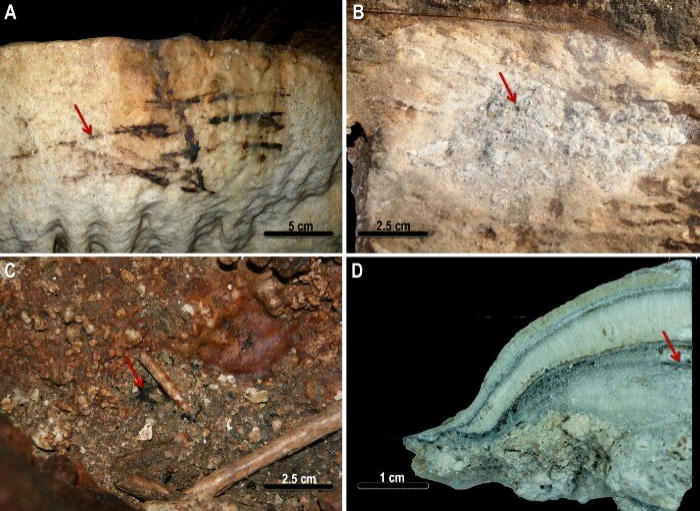
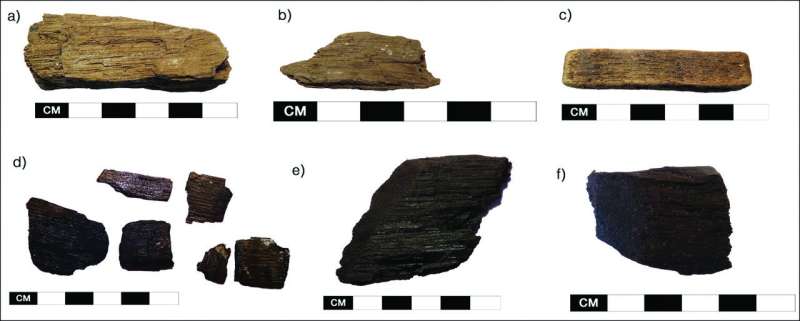
Image composition of the materials. (A) Black mark (dating number 33). (B) Micro-charcoal inside fixed lamp (dating number 43). (C) Scattered charcoals (dating number 54). (D) GN16-08 stalagmite section. The red arrows point to one of the samples, analyzed both by TEM–EDX and Raman micro-spectroscopy.

This level of precision has been made possible thanks to the use of the latest techniques dating the coals and remains of fossilized soot on the stalagmites of the Nerja Cave.

This is what has been called “smoke archaeology,” a new technique developed by the main author of the work, Marián Medina, from Córdoba’s Santa Rosa district, an honorary researcher at that city’s university, who has been reconstructing European prehistory for more than a decade by analyzing the remnants of torches, fires, and smoke in Spanish and French caves.

With the enthusiasm of one who loves what she does, Medina explains that the information that Transmission Electron Microscopy and Carbon-14 dating techniques can provide on man’s rituals and ways of life is impressive.

In this last work, 68 datings are presented, 48 totally new, of the deepest areas of the cave, featuring Paleolithic Art, and evidence of chronocultures never previously recorded has been found.

Furthermore, these “fire archaeologists” understand how to interpret the way the torches were moved based on the information detected under the microscope, inferring from it the symbolic and scenographic use that humans made of fire 40,000 years ago.

“The prehistoric paintings were viewed in the flickering light of the flames, which could give the figures a certain sense of movement and warmth,” explains Medina, who also underscores the funerary use of the Nerja Cave in the latter part of Prehistory, for thousands of years. “There is still much it can reveal about what we were like,” she says.

The study was published in Scientific Reports.
Underwater Temple Ruins Discovered in the Bay of Naples

Underwater Temple Ruins Discovered in the Bay of Naples

Underwater Temple Ruins Discovered in the Bay of Naples
The Ministry of Culture, academic and scientific organizations, and the underwater arm of the Carabinieri of Naples were instrumental in discovering the artefacts.

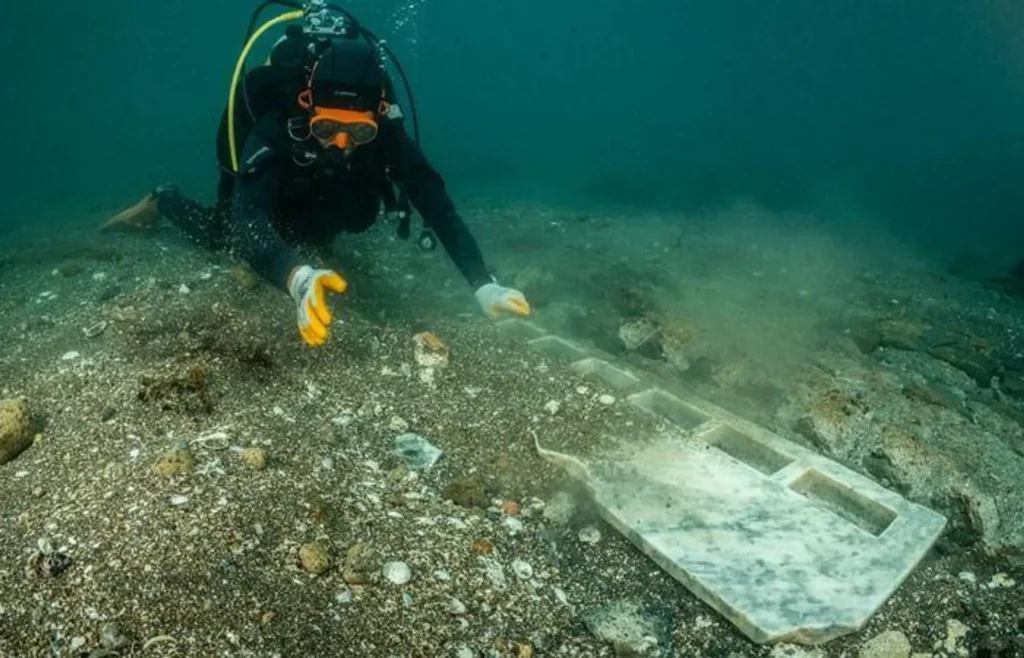
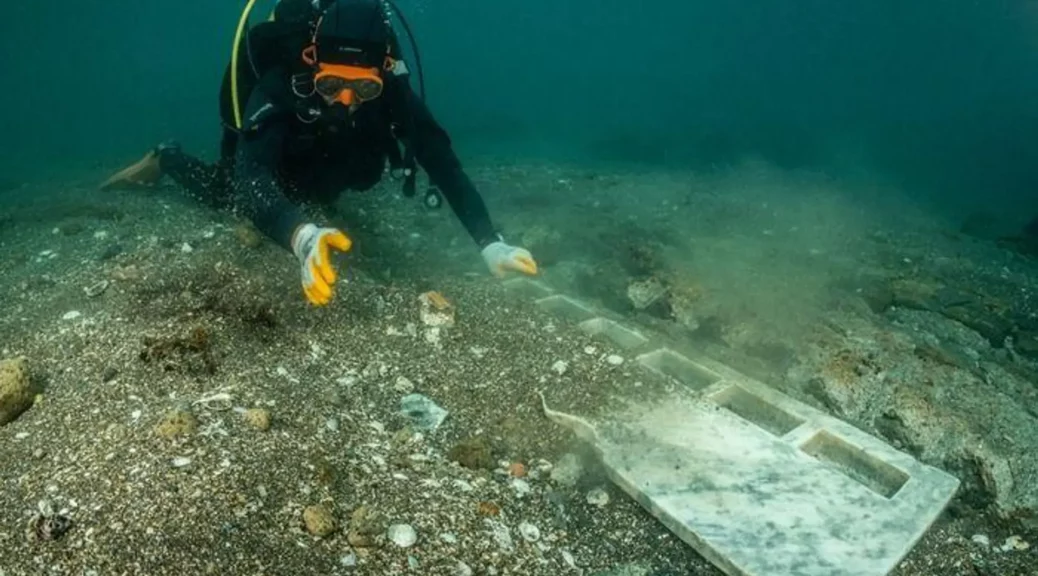
An ancient Nabataean temple with marble altars has been found in the Gulf of Pozzuoli outside Naples in the Italian region of Campania.

A statement from the Italian Ministry of Culture says: “The two marble altars of the Roman period, datable to the first half of the first century AD, are inserted inside the great Temple of the Nabataeans, now submerged.”

It is unclear when or if the ancient ruins will be removed from the seabed.

The Nabataean population was based in the desert areas of the Arabian Peninsula. Around 2,000 years ago they established a settlement at Pozzuoli, building up the largest commercial port in the Roman Mediterranean area, the ministry adds.

The Nabataean city there declined at the end of the fifth century.

“This is an extraordinary result and the fruit of the collaboration between peripheral bodies of the Ministry of Culture, the academic and scientific [organizations] in the region, and the underwater arm of the Carabinieri of Naples. 

Ancient Puteoli [ancient Pozzuoli] reveals another of its treasures, whose exact location was unknown up to now, which testifies to the richness and vastness of commercial, cultural, and religious exchanges in the Mediterranean basin in the ancient world,” says the Italian culture minister Gennaro Sangiuliano in a statement.

The discovery throws light on the layout of the Pozzuoli port, adds the ministry, revealing how the “sacred buildings” of the Nabataean community stood in very close contact with the long rows of warehouses intended to store the many goods in transit in the port headed towards Campania or redirected to Rome.

“These finds bring the total number of Nabataean altar slabs and altar bases found in this area of the sunken city to five since the first was discovered in the 18th century.

The first three—two bases and one slab—are now in the collections of the National Archaeological Museum of Naples and the Archaeological Park of Campi Flegrei at the Castle of Baiae,” according to a commentary on the History Blog.

Hoard of 1,000-year-old Viking coins unearthed in Denmark

Hoard of 1,000-year-old Viking coins unearthed in Denmark

Hoard of 1,000-year-old Viking coins unearthed in Denmark
The silver coins were found about 5 miles from the Fyrkat Viking ringfort, near the town of Hobro.

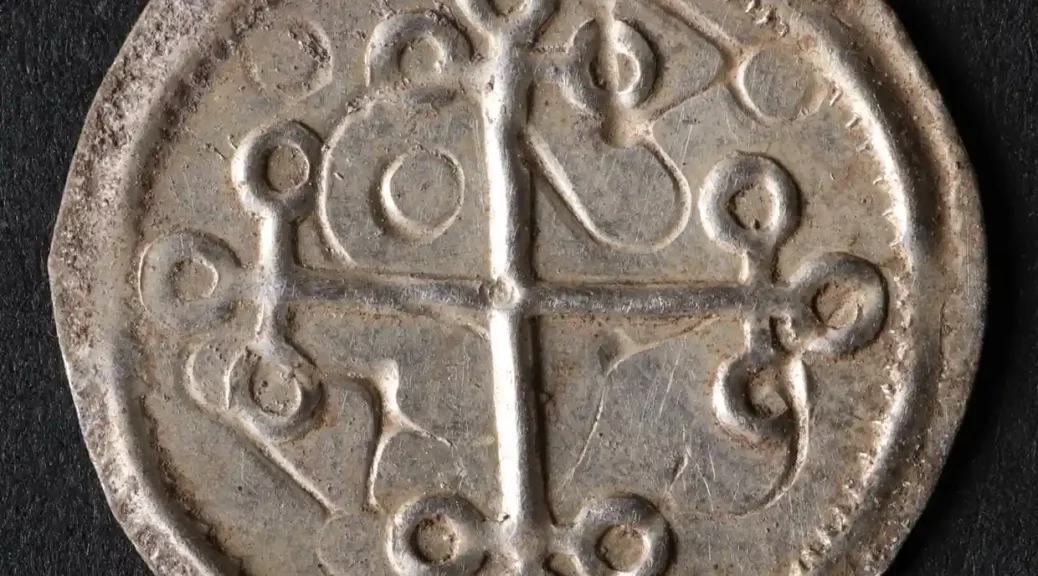
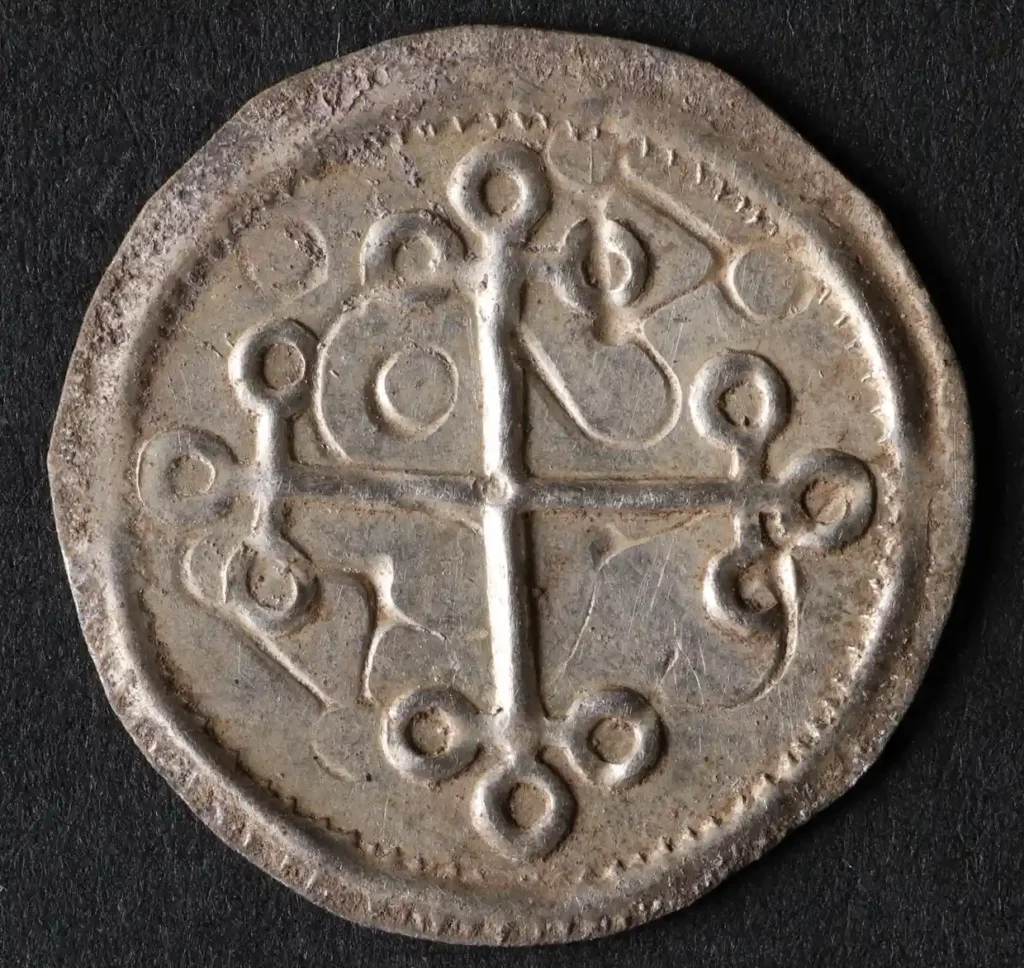
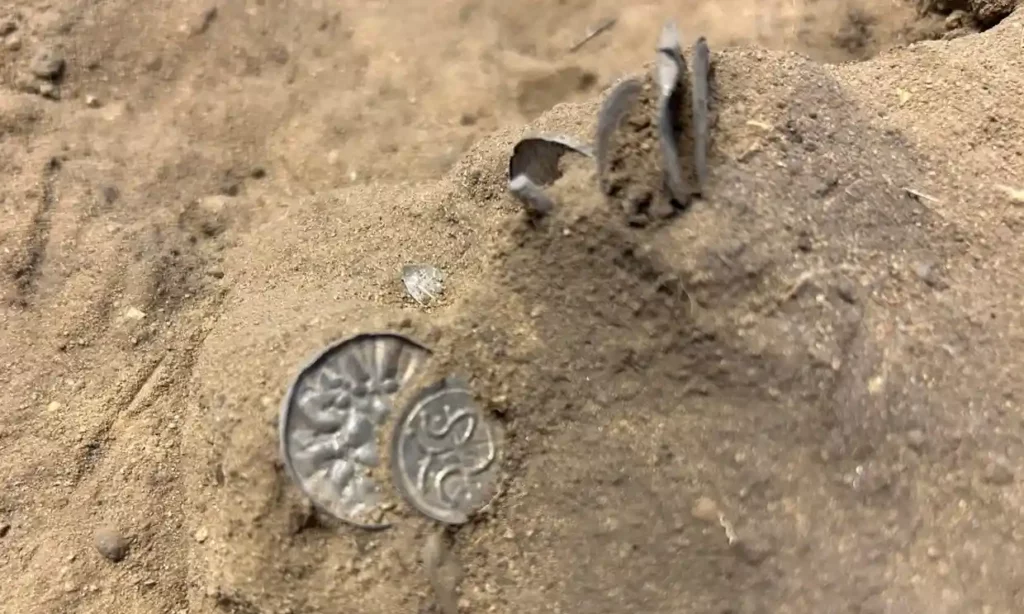
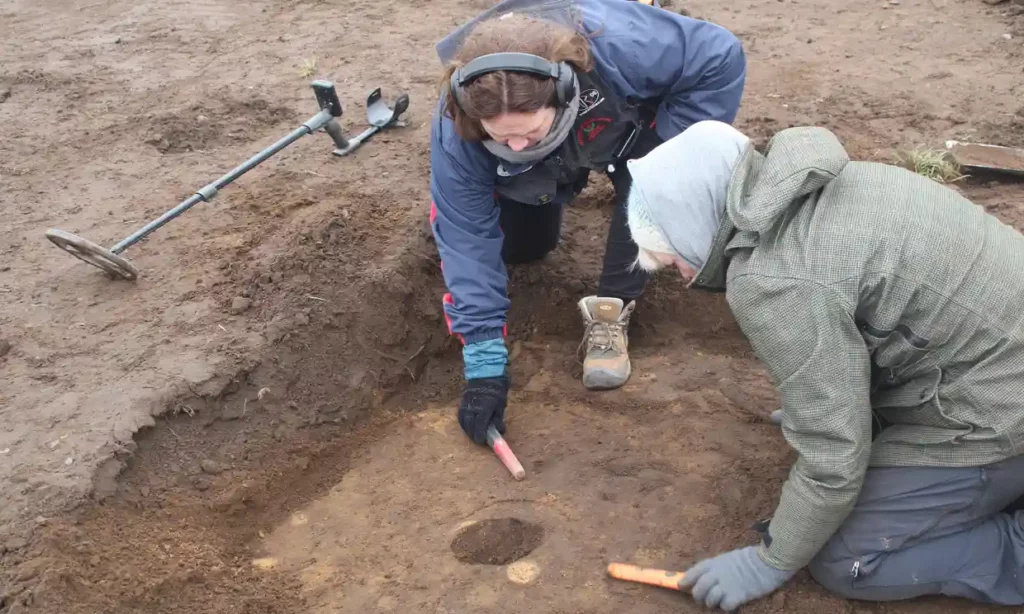
Nearly 300 silver coins believed to be more than 1,000 years old have been discovered near a Viking fortress site in north-west Denmark, a museum has said.

The trove – lying in two spots not far apart – was unearthed by a girl who was metal-detecting in a cornfield last autumn.

“A hoard like this is very rare,” Lars Christian Norbach, the director of the North Jutland Museum, where the artefacts will go on display, told Agence France-Presse.

The trove includes Danish, Arab and Germanic coins as well as jewellery from Scotland or Ireland.

The silver coins were found about 5 miles (8km) from the Fyrkat Viking ringfort, near the town of Hobro. From their inscriptions, they are believed to date back to the 980s.

The trove includes Danish, Arab and Germanic coins as well as pieces of jewellery originating from Scotland or Ireland, according to archaeologists.

Norbach said the finds were from the same period as the fort, built by King Harald Bluetooth, and would offer a greater insight into the history of the Vikings.

There could be a link between the treasure – which the Vikings would bury during wars – and the fort, which burned down during the same period, he said.

Archaeologists have said they will continue digging next autumn after the harvest. They hope to find the burial sites and homes of the troves’ one-time owners.

People working at the site.

The most pivotal stories and debates for Europeans – from identity to economics to the environment

The Vikings believed that burying their treasure allowed them to find it again after death.

The artefacts will go on public display in July at the Aalborg Historical Museum. The girl who made the discovery will receive financial compensation, the amount of which has not been made public.

2,000-year-old graves found in ancient necropolis beneath Paris Train Station

2,000-year-old graves found in ancient necropolis beneath Paris Train Station

2,000-year-old graves found in ancient necropolis beneath Paris Train Station

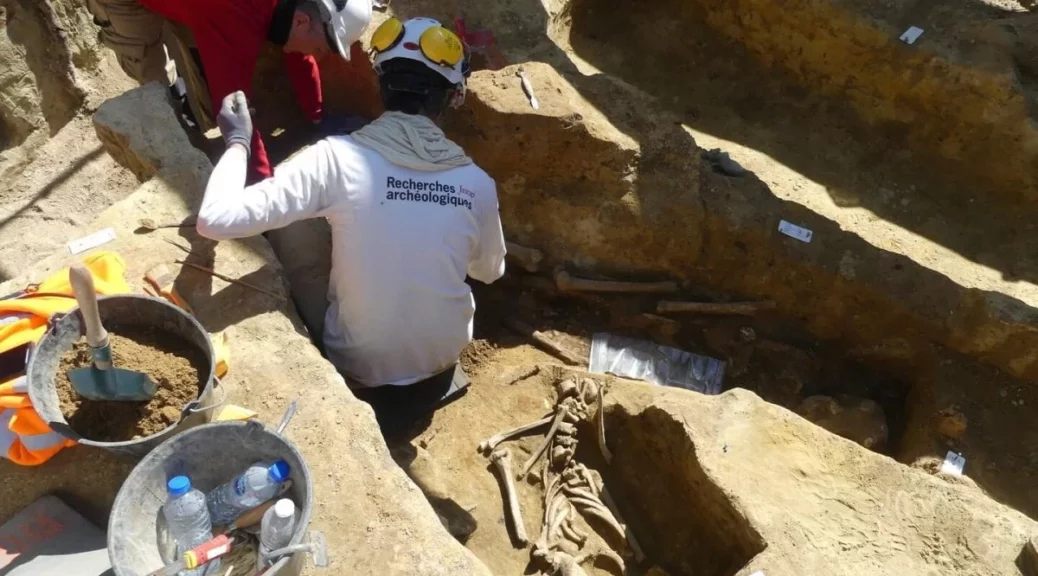
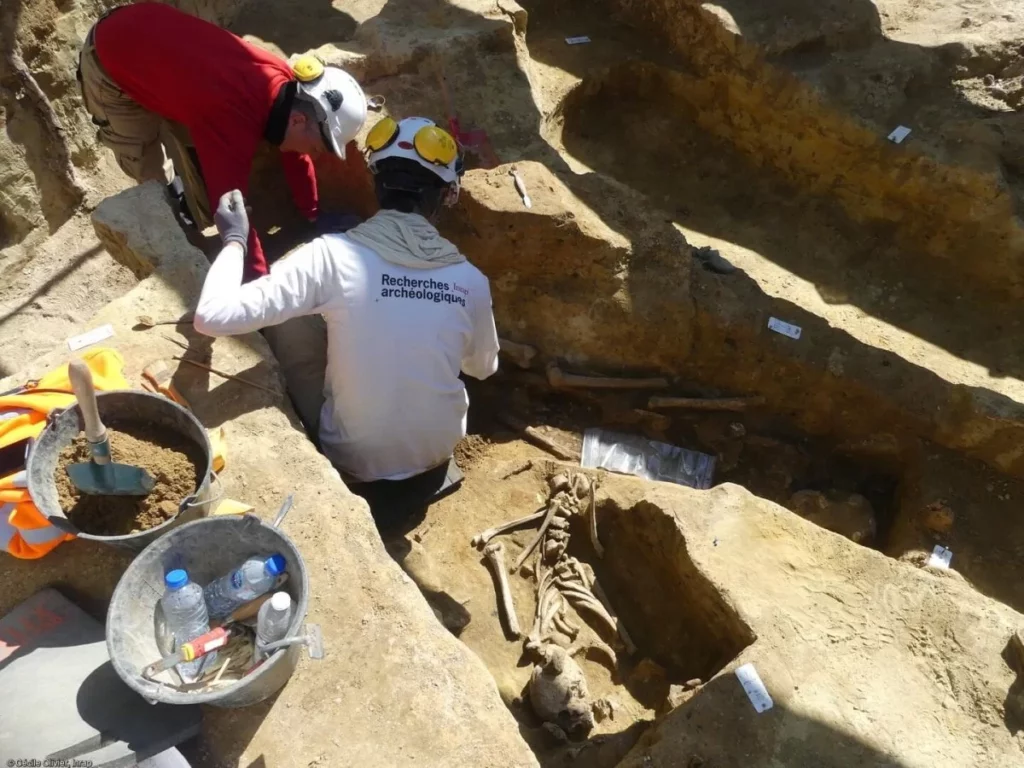
Archaeologists have discovered 50 tombs in an ancient necropolis just meters from a busy train station in central Paris, and these tombs belong to a lost necropolis of the Gallo-Roman city of Lutetia, the predecessor of present-day Paris.

These graves provide a rare look at life in Lutetia, the city that predated Paris by nearly 2,000 years.

Despite numerous road works over the years, as well as the construction of the Port-Royal station on the historic Left Bank in the 1970s, the buried necropolis was never discovered.

Only after plans for a new station exit were announced did France’s National Institute of Preventive Archaeological Research (INRAP) open a series of test trenches covering 200 square meters (2152.78 sq ft) of land around the station.

The excavation revealed burials believed to be part of the Saint Jacques necropolis dating back to the 2nd century, the research institute said in a news release.

Camille Colonna, an anthropologist at INRAP, told a press conference that there were already “strong suspicions” the site was close to Lutetia’s southern necropolis.

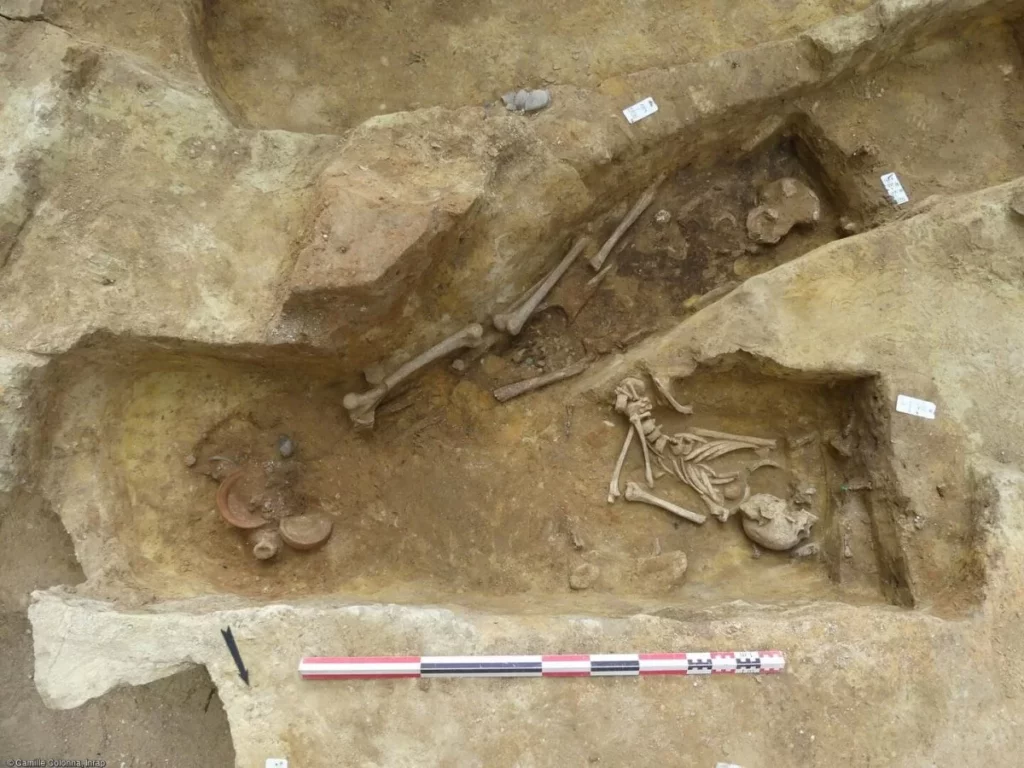
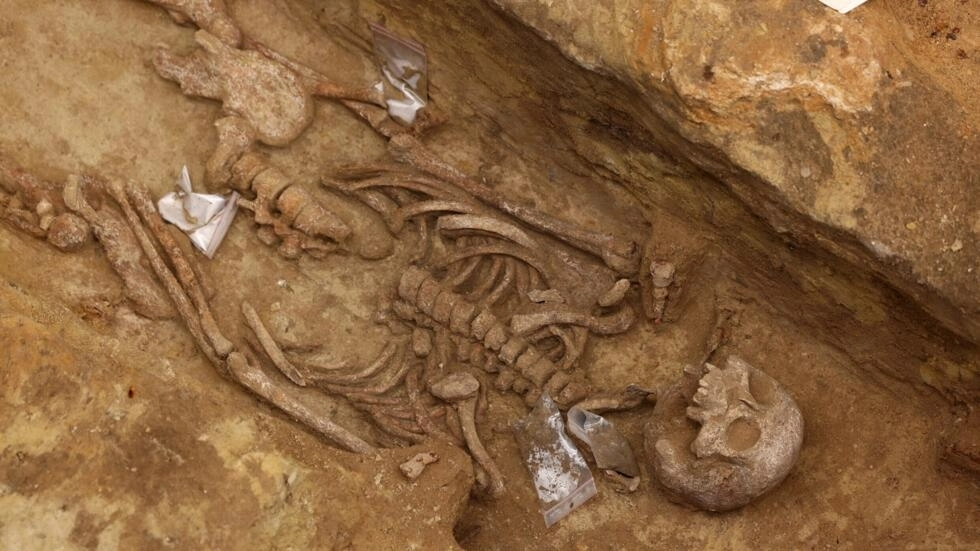
One of the skeletons unearthed in an ancient necropolis was found meters from a busy Paris train station.

The Saint Jacques necropolis, the most important burial site in the Gallo-Roman town of Lutetia, was previously excavated in the 1800s. However, only objects considered precious were taken from the graves, with the many skeletons, burial offerings, and other artifacts abandoned. The necropolis was then covered over and again lost to time.

The INRAP team discovered one section that had never before been excavated.

“No one has seen it since antiquity,” said INRAP president Dominique Garcia.

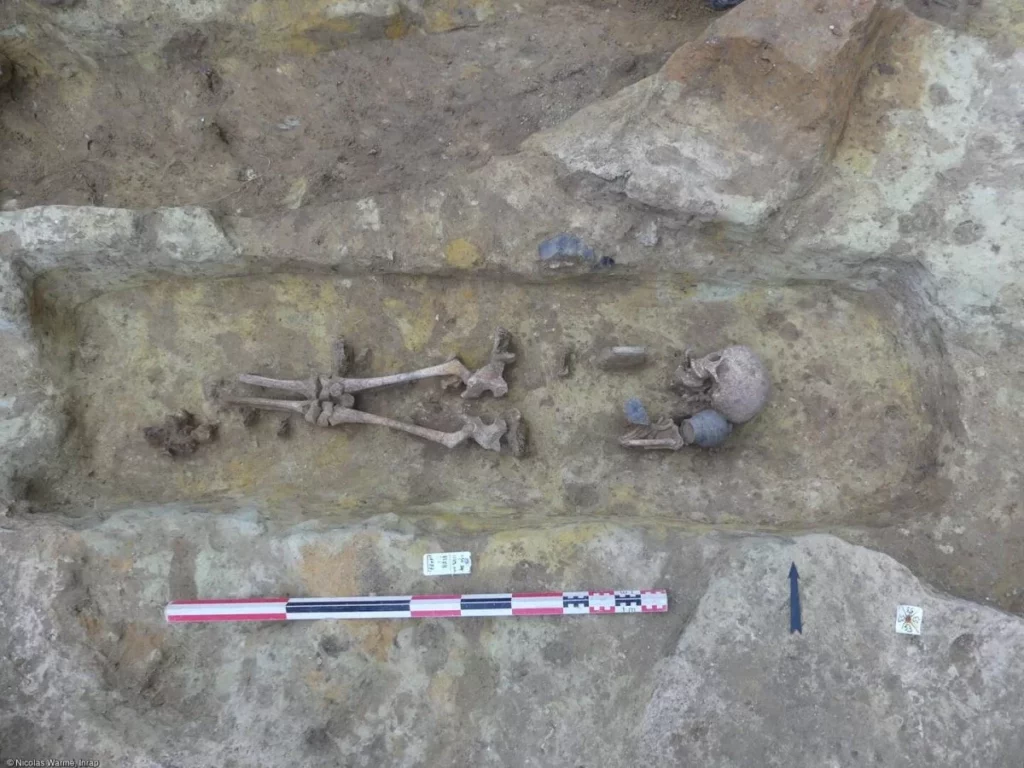
Colonna also stated that the team was “very happy” to have discovered a skeleton with a coin in its mouth, which allowed them to date the burial to the 2nd century A.D.

The excavation has uncovered 50 graves, all of which were used for burial — not cremation, which was also common at the time.

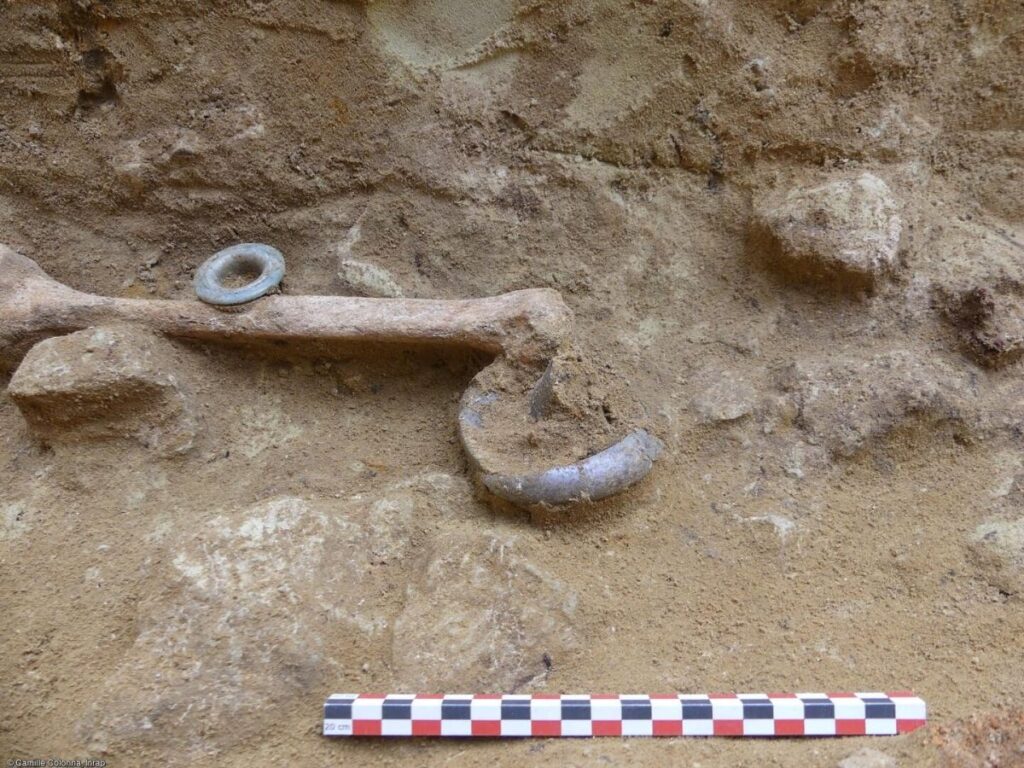
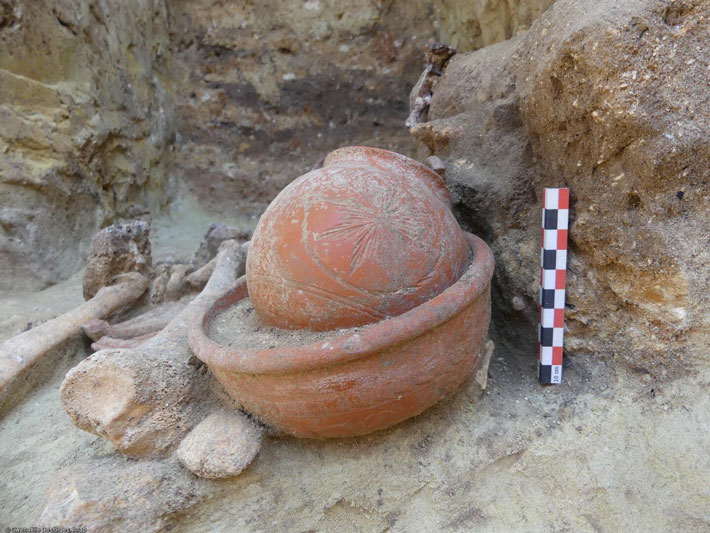
Glass container on deposit in a burial in the excavation of Boulevard Port-Royal in Paris. The burials of a large necropolis, located south of Lutèce in the 2nd century AD, have been unearthed.

The remains of the men, women, and children are believed to be Parisii, a Gallic people who lived in Lutetia, from when the town on the banks of the Seine river was under the control of the Roman Empire.

The Parisii were skilled in agriculture, metallurgy, and long-distance trading and lived in the area around the south banks of the Seine River in Paris during the 2nd century AD. The Parisii founded Lutetia (now Paris), and despite fierce resistance to the Roman conquest, they were subjugated in the first century BC.

Ceramic jewelry, hairpins and belts, jug goblets, dishes, glassware, and other grave goods have been recovered to help date the burials. According to INRAP, the positions of hundreds of small iron nails, that attached soles to leather shoes, informed the archaeologists that while some were placed on the feet of the interred, others had been buried with shoes on either side of the bodies as a type of offering.

Cross-checking of two burials from the excavation of the Boulevard de Port-Royal in Paris.

The entire skeleton of a pig was found inside one coffin, and the remains of another small animal were found inside what is thought to have been a sacrifice pit for the gods. Furthermore, a coin was found lodged inside the mouth of a buried person.

The coin, known as “Charon’s obol,” reflected the story of Charon in Greek mythology, in which a coin was given to the ferryman of Hades to transport the souls of the deceased across the river Styx.

INRAP president Dominique Garcia said that the ancient history of Paris was “generally not well known,” adding that the unearthed graves open “a window into the world of Paris during antiquity.”

Unlike the excavation in the 1800s, this time the team plans to remove everything from the necropolis for analysis.

Two unique mid-14th-century shipwrecks were discovered in Sweden

Two unique mid-14th-century shipwrecks were discovered in Sweden

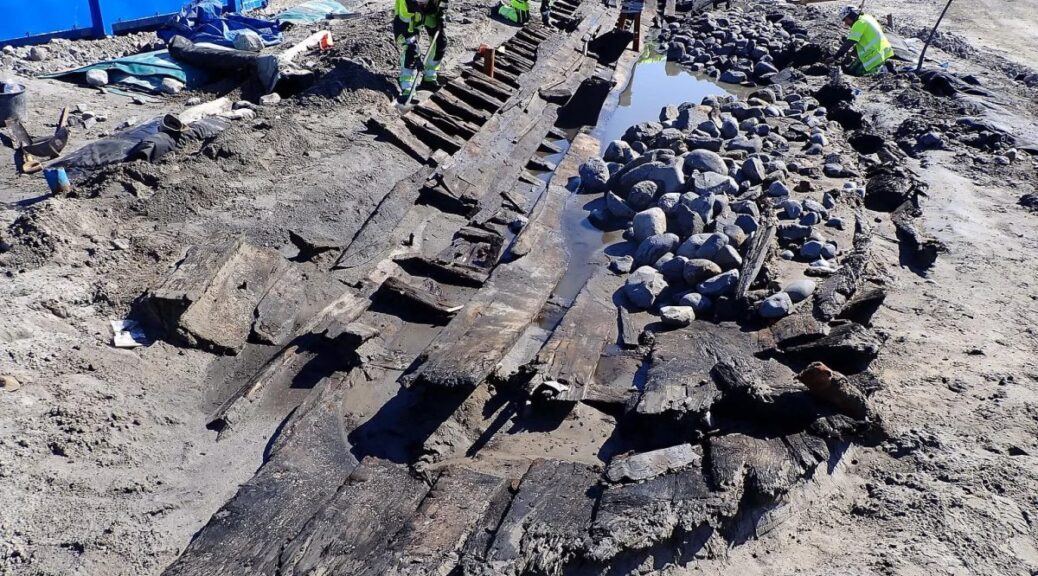
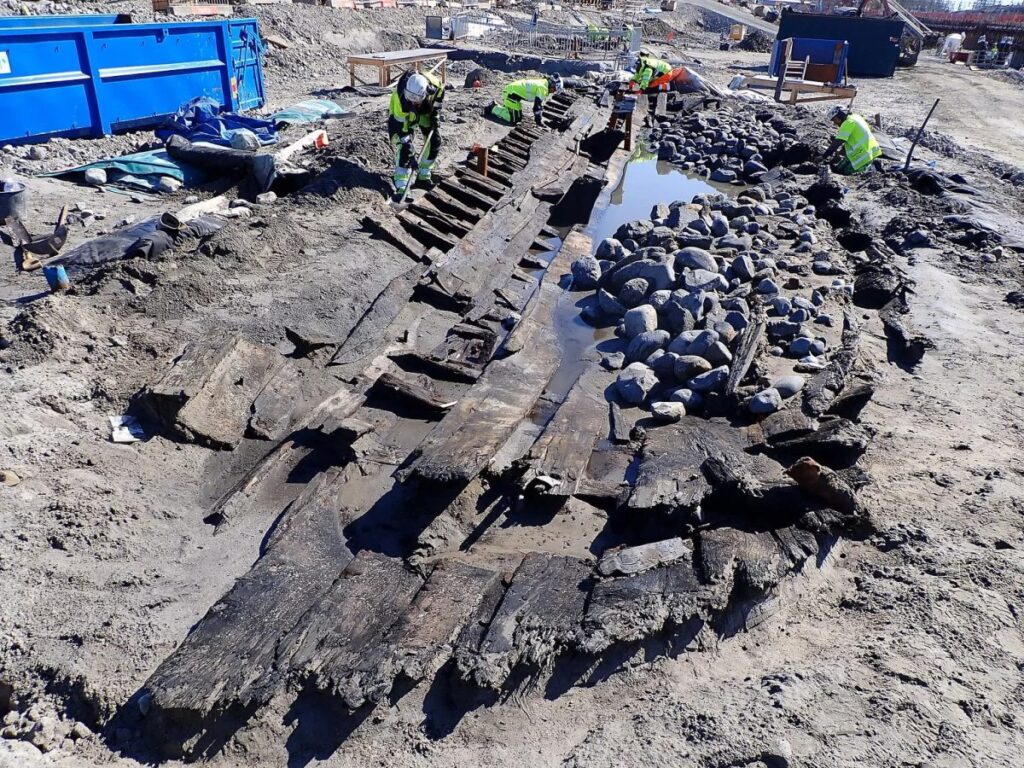
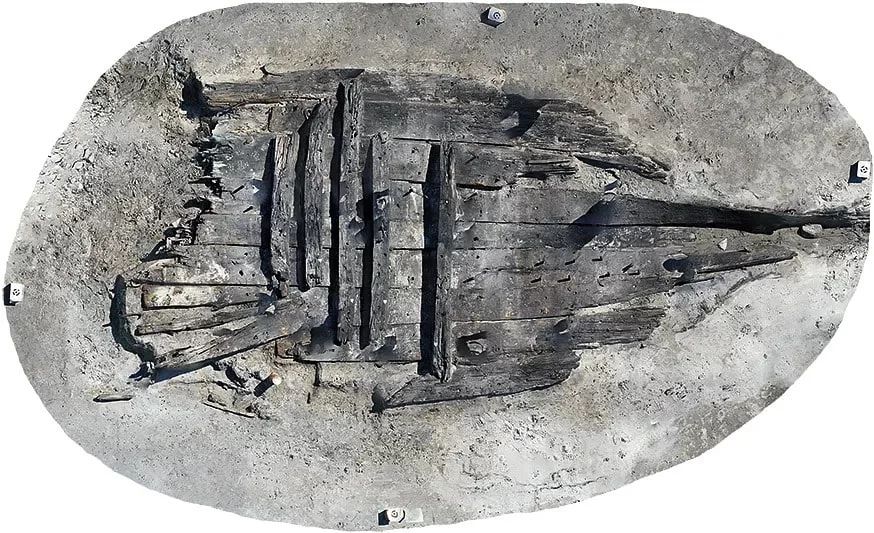
During an archaeological dig in western Sweden this summer, the remains of two medieval merchant vessels known as cogs were discovered. Analyses show that the ships were built outside of Scandinavia in the mid-14th century.

Two unique mid-14th-century shipwrecks were discovered in Sweden

The cogs were discovered by a team from Arkeologerna, which is part of the National Historical Museums of Sweden, during the construction of a railway tunnel in the town of Varberg.

Named Varbergskoggen 1 and Varbergskoggen 2, the first consists of the nearly complete port side that is about 20.5 meters long and 5 meters wide. The remains of the second ship are the forward end of the bottom of the hull, roughly 8 meters in length and 4.5 meters in width.

Elisabet Schager, archaeologist and project leader of the excavation say: “These wrecks are a very special discovery, both in Sweden and abroad, so it has been fantastic to find them. Before these two wrecks were discovered, only 7 other cogs were known in Sweden, and only around 30 are known in the whole of Europe.”

The first dendrochronological (tree-ring dating) samples show that Varbergskoggen 1 was constructed with lumber felled after 1346 in what is now the Netherlands, Belgium, and north-eastern France, while the smaller Varbergskoggen 2 was constructed with oak felled between 1355 and 1357 in northern Poland.

These results suggest that both vessels were in foreign waters, a long way from home, when they ultimately disappeared beneath the waves.

The remains of Varbergskoggen 2 from above.

Cogs were medieval single-masted transport vessels that are often associated with the Hanseatic League but were also used across the whole of Northern Europe. Often seen as the successor the Viking Age Knarr, cogs were designed to maximize cargo space.

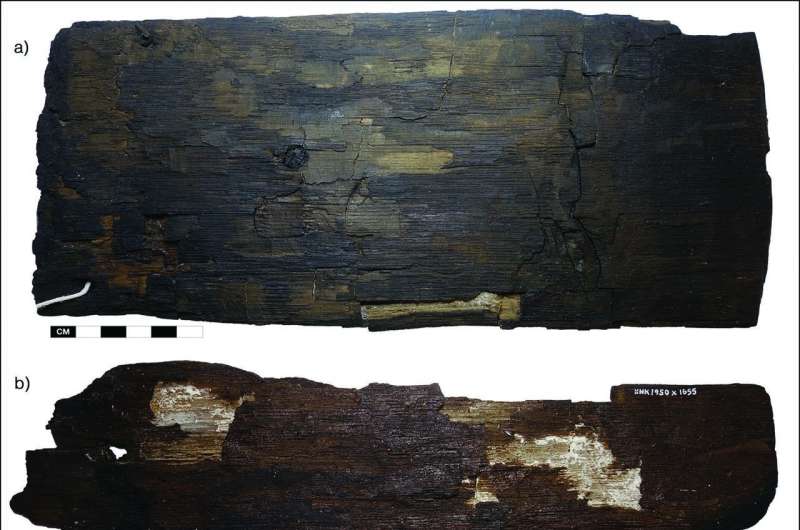
Several construction details were noted during the excavation of the wrecks, all of which are characteristics identifiable with traditional cog construction. For example, the bottom strakes of the vessels were built in the carvel style, while the sides are built in the more traditional clinker style. Furthermore, the caulking between the strakes was made with moss and secured with lathes. Also, the decks were supported with bulky crossbeams which stuck out the sides of the hull.

Archaeologists have also discovered a variety of fascinating artifacts in the wrecks, such as leather shoes and wood and ceramic housewares.

A rare cache of ship equipment and reserve parts were discovered aboard Varbergskoggen 1 (Varberg Cog 1, the larger of the two), protected from wreck plunderers by a pile of ballast stones.

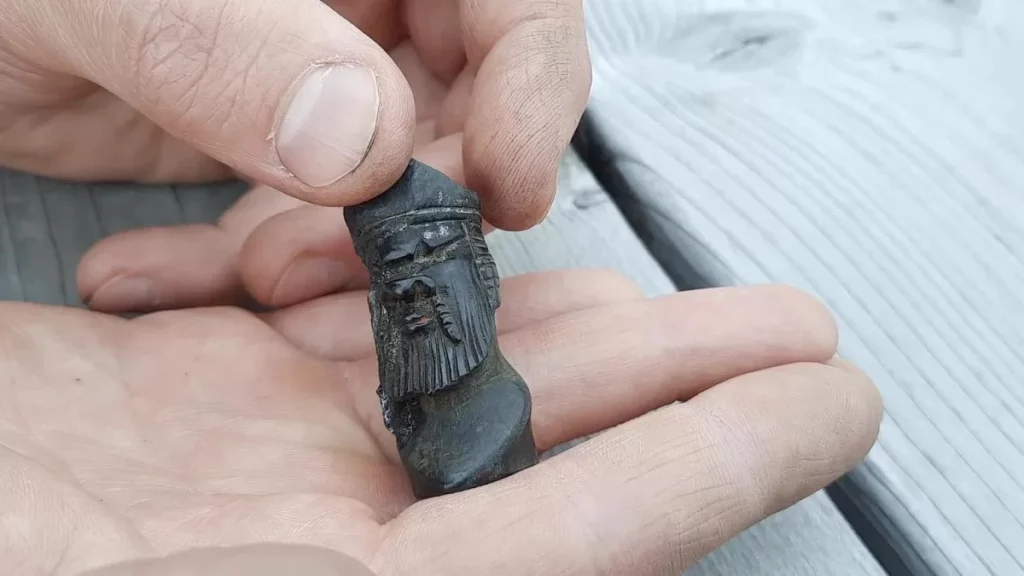
Small figurine was found in one of the cogs.

According to Schager the finds gives a detailed account of life at sea.

“We have a lovely assortment of personal objects that represent parts of the crew’s daily routines, like wooden bowls and spoons. A number of barrel lids, some of which have what appears to be maker’s marks carved in them, were also unearthed among the wreckage. We have collected and are analyzing soil samples as well, which will hopefully be able to identify the remnants of food and/or cargo. We will even search for parasitic remains, which could identify if animals were kept onboard, and if so, which species. We hope to be able to piece together where the cogs’ fateful journey originated, and where they were headed.”

The cause of the sinking of the cogs is still not clear.

“Once we have cleaned every timber from the wrecks, and critically analyzed them, we will hopefully be able to get to the bottom of the mystery.

The information we could gather from the initial excavation is that the larger Varbergskoggen 1 had rolled onto its port side in shallow waters while it was still rigged”, says Schager.

Study Suggests Greenland’s Norse Farmers Imported Wood

Study Suggests Greenland’s Norse Farmers Imported Wood

Study Suggests Greenland’s Norse Farmers Imported Wood

Archaeologists have used wood taxa analysis to distinguish between imported, drift and native wood from five Norse farmsteads on Greenland.

Historical records have long suggested that medieval Norse colonists on Greenland (AD 985–1450) relied on imported material such as iron and wood.

Until now, it has not been fully recognized where these imports of wood came from.

To study timber origins and distribution on Greenland, Lísabet Guðmundsdóttir from the University of Iceland examined the wood assemblages from five Norse sites in western Greenland, of which four were medium sized farms and one a high-status episcopal manor.

All sites were occupied between AD 1000 and 1400 and dated by radiocarbon dating and associated artifact types.

A microscopic examination of the cellular structure of the wood previously found by archaeologists on these sites enabled the identification of tree genus or species, and the results were published in the journal Antiquity.

The results show that just 0.27% of the wood examined were unambiguous imports, including oak, beech, hemlock and Jack pine. Another 25% of the total wood studied could be either imported or driftwood, including larch, spruce, Scots pine and fir.

Because hemlock and Jack pine were not present in Northern Europe during the early second millennium AD, the pieces identified from the medieval contexts in Greenland must have come from North America.

This confirms the historical sources, that the Norse did acquire wood from the east coast of North America. The sagas indicate that the explorers Leifurheppni, Þorleifurkarlsefni and Freydísall brought back timber from Vínland to Greenland.

In addition to the possibility of import, driftwood was one of the most important raw materials in Norse Greenland, making up over 50% of the combined assemblage.

Wood also came from Europe, likely including the oak, beech and Scots pine from this assemblage. Some may have come as ready-made artifacts, such as barrel staves, while reused ship timber could have been brought to use in buildings on Greenland.

Small Fort Found in Scotland on Rome’s Antonine Wall

Small Fort Found in Scotland on Rome’s Antonine Wall

Small Fort Found in Scotland on Rome’s Antonine Wall
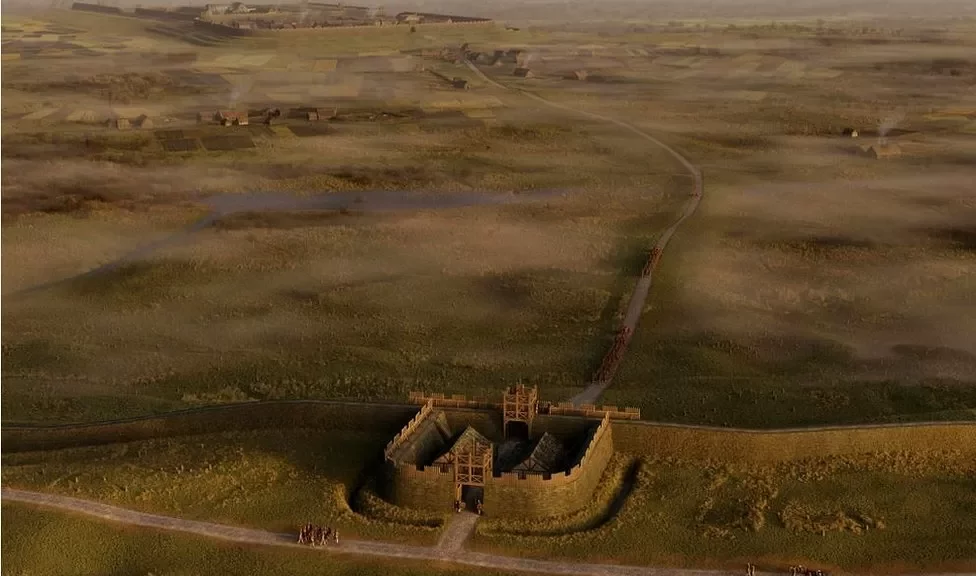
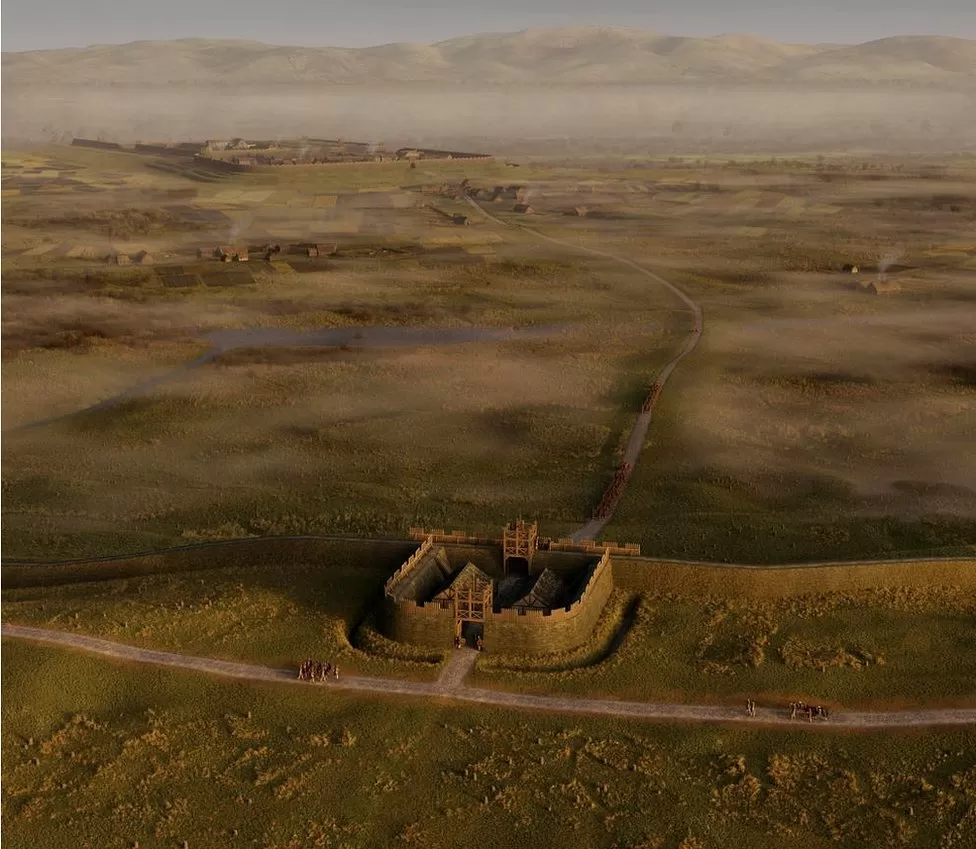
An artist’s impression of a Roman fortlet at a different location along the Antonine Wall

The remains of a Roman fortlet have been discovered in West Dunbartonshire.

New technology has enabled the archaeology team at Historic Environment Scotland (HES) to uncover the structure after attempts to find it failed in the 1970s and 1980s.

The fortlet once stood next to the Antonine Wall.

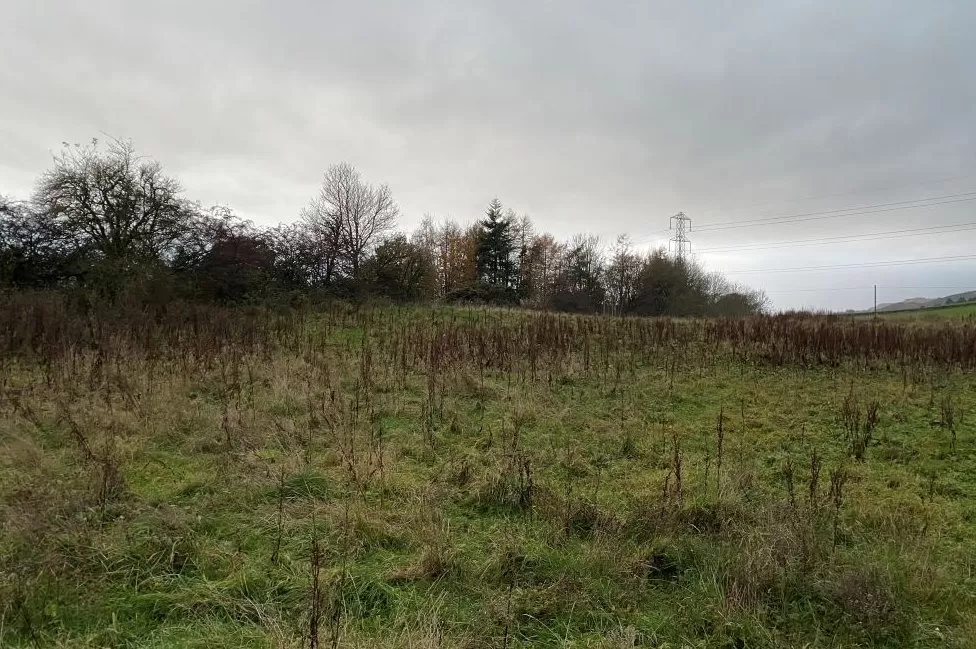
Its buried remains have now been uncovered in a field close to Carleith Primary School in Duntocher, Clydebank.

HES announced the breakthrough on World Heritage Day, the international celebration of cultural heritage.

The Antonine Wall was the frontier that the Romans constructed across central Scotland, and is one of Scotland’s six Unesco World Heritage Sites.

Details of the fortlet were thought lost for hundreds of years.

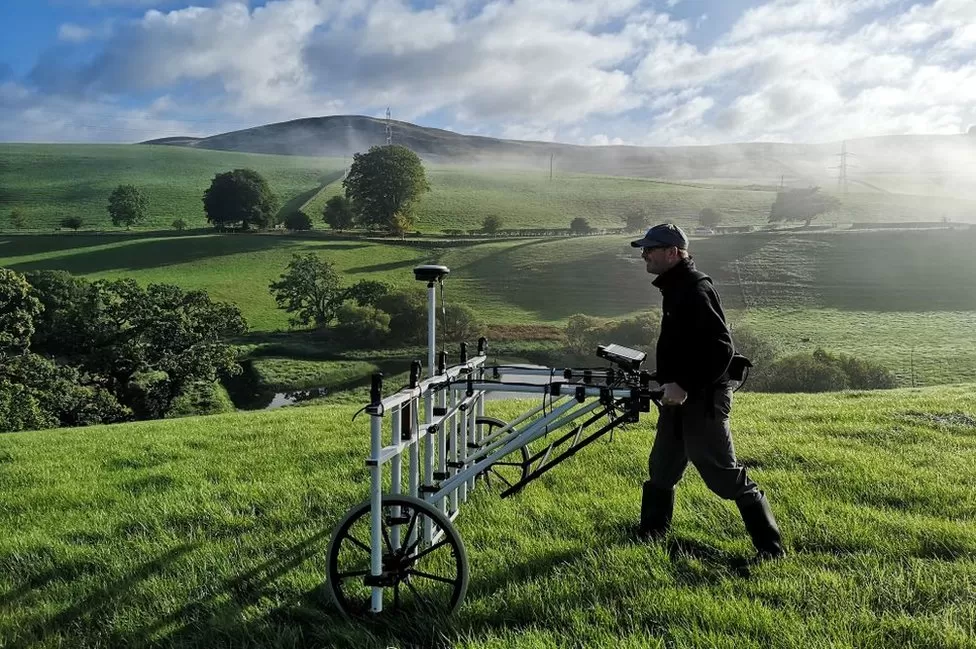
An archaeologist using gradiometry to uncover the fortlet

It was referenced in 1707 by antiquarian Robert Sibbald, who wrote that he had seen a fortlet in the area around Carleith Farm. Excavation teams looked for it decades ago, but the exact location remained unknown.

After employing gradiometry, a geophysical surveying technique which looks under the soil without the need for excavation, the discovery was made.

The technique measures small changes in the earth’s magnetic field to detect archaeological features otherwise invisible from the ground surface.

It allowed archaeologists to identify the stone base of the fortlet, which remains buried underground. On top of this base, turf would have been laid to build a rampart about 2m high.

This fortlet would have been part of several along the Antonine Wall.

In its prime, it would have been occupied by 10 to 12 Roman soldiers who were stationed at a larger fort nearby, likely to be Duntocher. They would have manned the fort for a week at a time before being replaced by another detachment.

The fortlet would have been made up of two small wooden buildings to house the soldiers staying there and will have been used for the 20 years (AD142 – AD162) that the Antonine Wall was defended as the northernmost frontier of the Roman Empire.

‘Detective work’

Commenting on the discovery, Riona McMorrow, deputy head of world heritage at HES, said: “It is great to see how our knowledge of history is growing as new methods give us fresh insights into the past.

“Archaeology is often partly detective work, and the discovery at Carleith is a nice example of how an observation made 300 years ago and new technology can come together to add to our understanding.”

Carleith Farm where the fortlet was discovered

This discovery has led to HES reviewing the site’s designation to ensure the fortlet is recognized and protected as part of the Antonine Wall.

The geophysical survey will also help to better understand and protect the wall.

While up to 41 fortlets may have lined the wall when it was built, only nine have previously been found.

HES said the discovery marks the tenth known fortlet and shows that there is still more to be discovered about the Roman monument and its functions.

2,000-Year-Old Parisii Cemetery Unearthed in France

2,000-Year-Old Parisii Cemetery Unearthed in France

One of the skeletons unearthed in an ancient necropolis found metres from a busy Paris train station © Thomas Samson/AFP/File

Just metres from a busy train station in the heart of Paris, scientists have uncovered 50 graves in an ancient necropolis which offer a rare glimpse of life in the French capital’s precursor Lutetia nearly 2,000 years ago.

Somehow the buried necropolis was never stumbled upon during multiple road works over the years, as well as the construction of the Port-Royal station on the historic Left Bank in the 1970s.

However, plans for a new exit for the train station prompted an archaeological excavation.

Camille Colonna, an anthropologist at France’s National Institute of Preventive Archaeological Research (INRAP), told a press conference that there were already “strong suspicions” the site was close to Lutetia’s southern necropolis.

The “Saint Jacques” necropolis, the largest burial site in the Gallo–Roman town of Lutetia, was previously partially excavated in the 1800s.

However, only objects considered precious were taken from the graves, with the many skeletons, burial offerings and other artifacts abandoned.

The necropolis was then covered over and again lost to time.

The INRAP team discovered one section that had never before been excavated.

“No one has seen it since antiquity,” said INRAP president Dominique Garcia.

Colonna said the team was also “very happy” to have found a skeleton with a coin in its mouth, allowing them to date the burial to the 2nd century AD. The excavation, which began in March, has uncovered 50 graves, all of which were used for burial — not cremation, which was also common at the time.

Ferryman of Hades

The remains of the men, women and children are believed to be Parisii, a Gallic people who lived in Lutetia, from when the town on the banks of the Seine river was under the control of the Roman Empire.

The skeletons were buried in wooden coffins, which were now only identifiable by their nails.  More than half were buried alongside offerings such as ceramic jugs and goblets.

Sometimes a coin was placed in the coffin, or even in the mouth of the dead, a common practice at the time called Charon’s obol.

In Greek mythology, Charon is the ferryman of Hades, and the coin was considered a bribe to carry the souls of the dead across the river Styx. The archaeologists also found shoes inside the graves, identifying them by the small nails that would be been in the soles.

Colonna said the shoes were placed “either at the feet of the dead or next to them, like an offering”.

Jewellery, hairpins, and belts were also discovered.

The entire skeleton of a pig and another small animal was discovered in a pit where animals were thought to have been sacrificed to the gods. Unlike the excavation in the 1800s, this time the team plans to remove everything from the necropolis for analysis.

“This will allow us to understand the life of the Parisii through their funeral rites, as well as their health by studying their DNA,” Colonna said.

Garcia said that the ancient history of Paris was “generally not well known”.

The unearthed graves open “a window into the world of Paris during antiquity,” he added.