Category Archives: EUROPE

425 Million-years-old Millipede Fossil Discovered In Scotland

425 Million-years-old Millipede Fossil Discovered In Scotland

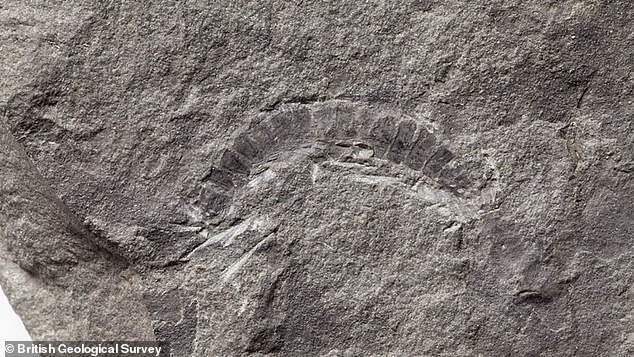
A 425-million-year-old fossilized millipede has been discovered by researchers as the world’s oldest ‘bug’.

The remains were discovered on Kerrera, a Scottish island, and show that bugs and plants evolved much more quickly than previously thought.

After examining the petrified bug, the researchers discovered that ancient creatures left lakes 40 million years ago to live in complex forest ecosystems.

Researchers used a technique to determine that the millipede is 75 million years younger than previously estimated by extracting zircons, which is a microscopic mineral needed to accurately date the fossils.
425 Million-years-old Millipede Fossil Discovered In Scotland
Researchers have discovered the world’s oldest ‘bug’ on record – a 425-million-year-old fossilized millipede. After analyzing the petrified insect, the team determined that the ancient creatures left lakes to live in complex forest ecosystems in just 40 million years

Michael Brookfield, a research associate at the University of Texas Austin’s Jackson School of Geosciences and adjunct professor at the University of Massachusetts Boston, said: ‘It’s a big jump from these tiny guys to very complex forest communities, and in the scheme of things, it didn’t take that long.’

‘It seems to be a rapid radiation of evolution from these mountain valleys, down to the lowlands, and then worldwide after that.’

Brookfield, who led the study, worked with co-authors Elizabeth Catlos, a professor in the Jackson School’s Department of Geological Sciences, and Stephanie Suarez, a doctoral student at the University of Houston. Together they made improvements to the fossil dating technique used in the study.

Following the analysis, the team determined the fossilized millipede is 425 million years old, or about 75 million years younger than the age other scientists have estimated the oldest millipede to be using a technique known as molecular clock dating, which is based on DNA’s mutation rate.  

Although it’s certainly possible there are older fossils of both bugs and plants, Brookfield said that the fact they haven’t been found – even in deposits known for preserving delicate fossils from this era – could indicate that the ancient millipede and plant fossils that have already been discovered are the oldest specimens.

If this theory is true, then experts can determine that both bugs and plants evolved much more rapidly than the timeline indicated by the molecular clock.  Previous work has dated insect deposits to just 20 million years later than the fossils. 

And by 40 million years later, there’s evidence of thriving forest communities filled with spiders, insects and tall trees.

Given their potential evolutionary significance, Brookfield said that he was surprised that this study was the first to address the age of the ancient millipedes.
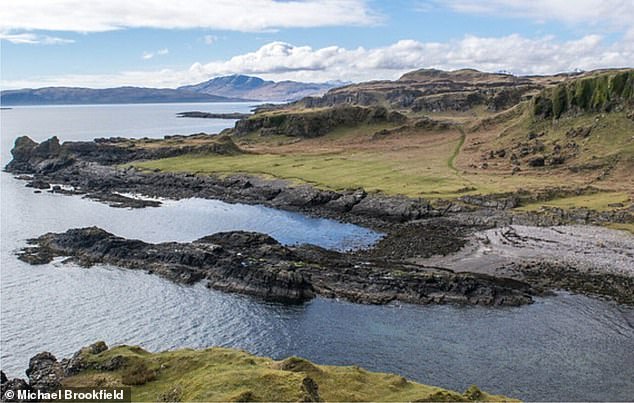
The remains were uncovered on the Scottish Island of Kerrera (pictured) and suggest bugs and plants evolved much faster than previously believed.

Suarez said a reason could be the difficulty of extracting zircons – a microscopic mineral needed to precisely date the fossils – from the ashy rock sediment in which the fossil was preserved. She improved the technique by separating the zircon grain from the sediment. 

Once zircons are released from the surrounding rock, the team was able to retrieve them with a pin glued to the tip of a pencil – a process the researchers said ‘involves an eagle-eye hunt.’

‘That kind of work trained me for the work that I do here in Houston,’ Suarez said. ‘It’s delicate work.’

She used the technique to find that a different millipede specimen, thought to be the oldest bug specimen at the time, was about 14 million years younger than estimated – a discovery that stripped it of the title of oldest bug.  Using the same technique, this study passes the distinction along to a new specimen.

Blue Eyes Originated 10,000 Years Ago In The Black Sea Region

Blue Eyes Originated 10,000 Years Ago In The Black Sea Region

A team of researchers from Copenhagen University have located a single mutation that causes the mysterious phenomenon of blue eyes.  And all blue-eyed people are genetically related to a person who lived in the Black Sea region sometime between 6 – 10,000 years ago.

The research was published in the Journal of Human Genetics. A mutation in a gene called OCA2 came into being nearly 8,000 years ago. It can be definitively traced back to an ancestor from the Black Sea.

Dr. Hans Eiberg claims that before this time, every human being had brown eyes.

Blue Eyes Originated 10,000 Years Ago In The Black Sea Region
“A genetic mutation affecting the OCA2 gene in our chromosomes resulted in the creation of a ‘switch,’ which literally ‘turned off’ the ability to produce brown eyes,” Eiberg said.

“A genetic mutation affecting the OCA2 gene in our chromosomes resulted in the creation of a ‘switch,’ which literally ‘turned off’ the ability to produce brown eyes,” Eiberg said.

When blue-eyed peoples from Jordan, Denmark and Turkey were examined, their genetic difference was traced back to the maternal lineage according to Eiberg’s team.

The brown melanin pigment is still dominant. However, following the last Ice Age, Europeans developed this rare mutation that differentiated them from the rest of the human race.

Ninety-five per cent of Europeans in Scandinavian countries have blue eyes. They are also found to have a greater range of hair and skin colour.

Comparatively, Europe has a wider variety of hair colour and skin pigment than is found in any other continent in the world. These mutations are recent as Europe was colonized only a few thousand years ago, say mainstream scientists.

Through interbreeding, the brunette with blue eyes was evidenced about 25,000 years ago. Researchers attribute this to ancient interbreeding with Neanderthals.

Although no Neanderthal DNA has been found in modern Homo Sapien-Sapien, mainstream science clings to this theory as fact because they haven’t come up with anything better.

“The question really is, ‘Why did we go from having nobody on Earth with blue eyes 10,000 years ago to having 20 or 40 per cent of Europeans having blue eyes now?” John Hawks of the University of Wisconsin-Madison said. “This gene does something good for people. It makes them have more kids.”

The Theopetra Cave and the Oldest Human Construction in the World

The Theopetra Cave and the Oldest Human Construction in the World

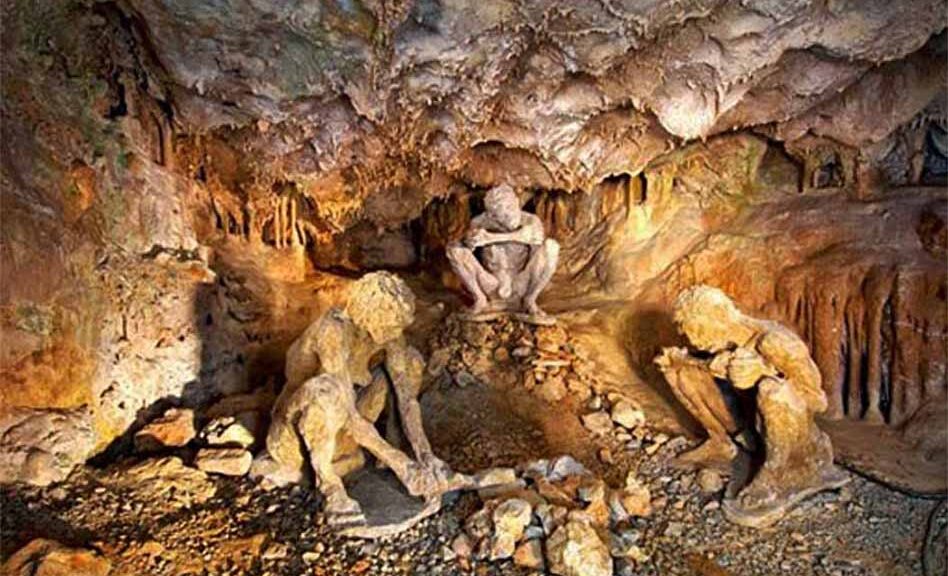
The Theopetra Cave is an archaeological site located in Meteora, in the central Greek region of Thessaly. As a result of archaeological excavations that have been conducted over the years, it has been revealed that the Theopetra Cave has been occupied by human beings as early as 130000 years ago. In addition, evidence for human habitation in the Theopetra Cave can be traced without interruption from the Middle Palaeolithic to the end of the Neolithic period. This is significant, as it allows archaeologists to have a better understanding of the prehistoric period in Greece.

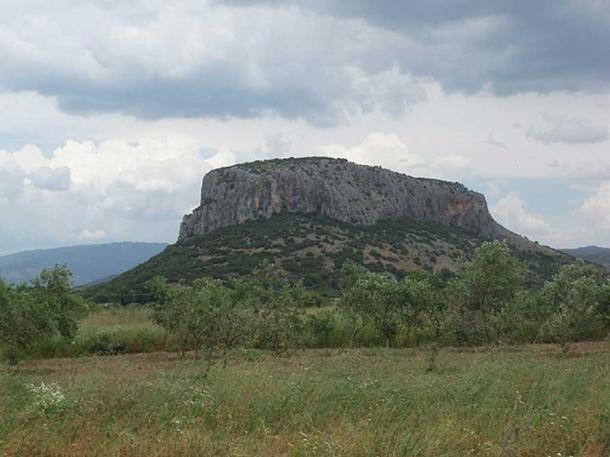
The cave is located on the slopes of a limestone hill overlooking Theopetra village.

Occupation of Theopetra Cave

The Theopetra Cave is situated on the northeastern slope of a limestone hill, about 100 m (330 ft above a valley. The cave overlooks the small village of Theopetra, and the Lethaios River, a tributary of the Pineios River, flows nearby.

According to geologists, the limestone hill was formed between 137 and 65 million years ago, which corresponds to the Upper Cretaceous period.

Based on the archaeological evidence, human beings only began to occupy the cave during the Middle Palaeolithic period, i.e. around 130000 years ago.

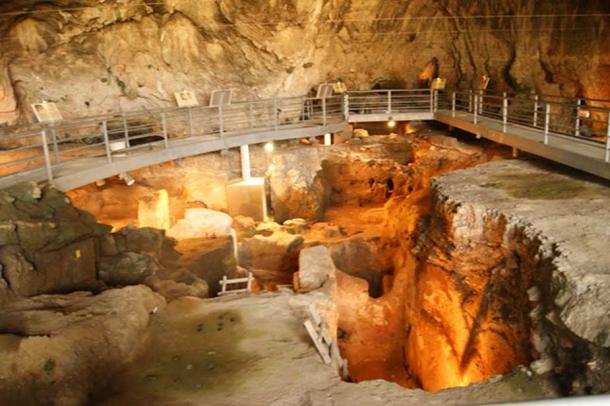
The cave itself has been described as being roughly quadrilateral in shape with small niches on its periphery and covers an area of about 500 sq meters (5380 sq ft). The Theopetra Cave has a large entrance, which allows light to enter abundantly into the interior of the cave.

The interior of the Theopetra Cave.

Investigation Begins

The archaeological excavation of the Theopetra Cave began in 1987 and continued up until 2007.

This project was directed by Dr. Nina Kyparissi-Apostolika, who served as the head of the Ephorate of Palaeoanthropology and Speleography when the excavations were being carried out.

It may be mentioned that when the archaeological work was first conducted, the Theopetra Cave was being used by local shepherds as a temporary shelter in which they would keep their flocks. It may be added that the Theopetra Cave was the first cave in Thessaly to have been archaeologically excavated, and also the only one in Greece to have a continuous sequence of deposits from the Middle Palaeolithic to the end of the Neolithic period. This is significant, as it has allowed archaeologists to gain a better understanding of the transition from the Palaeolithic to the Neolithic way of life in mainland Greece.

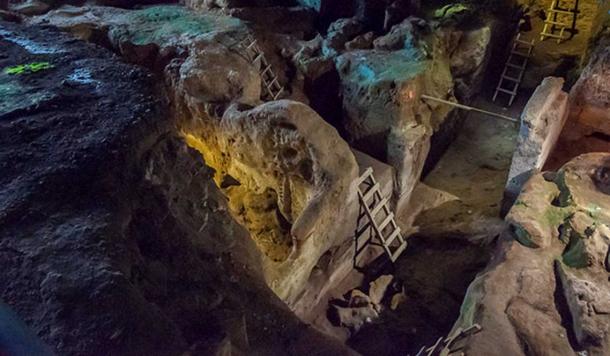
Excavations at the Theopetra cave began in 1987 under the direction of N. Kyparissi-Apostolika.

Several interesting discoveries have been made through the archaeological study of the Theopetra Cave. One of these, for instance, pertains to the climate in the area when the cave was being occupied.

By conducting micromorphological analysis on the sediment samples collected from each archaeological layer, archaeologists were able to determine that there had been hot and cold spells during the cave’s occupation. As a result of these changes in the climate, the cave’s population also fluctuated accordingly.

The World’s Oldest Wall

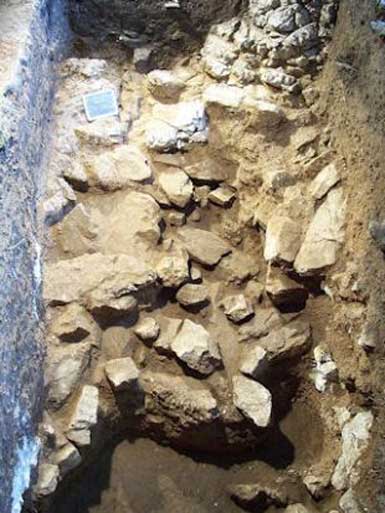
Another fascinating find from the Theopetra Cave is the remains of a stone wall that once partially closed off the entrance of the cave.

These remains were discovered in 2010, and using a relatively new method of dating known as Optically Stimulated Luminescence, scientists were able to date this wall to be around 23000 years old.

The age of this wall, which coincides with the last glacial age, has led researchers to suggest that the wall had been built by the inhabitants of the cave to protect them from the cold outside. It has been claimed that this is the oldest known man-made structure in Greece, and possibly even in the world.

The wall at Theopetra – is possibly the oldest existing man-made structure.

A year before this incredible discovery was made, it was announced that a trail of at least three hominid footprints that were imprinted onto the cave’s soft earthen floor had been uncovered. Based on the shape and size of the footprints, it has been speculated that they were made by several Neanderthal children, aged between two and four years old, who had lived in the cave during the Middle Palaeolithic period.

In 2009, the Theopetra Cave was officially opened to the public, though it was closed temporarily a year later, as the remains of the stone wall were discovered that year. Although the archaeological site was later re-opened, it was closed once again in 2016 and remains so due to safety reasons, i.e. the risk of landslides occurring.

A Large Copper Age Necropolis Discovered in Italian Town

A Large Copper Age Necropolis Discovered in Italian Town

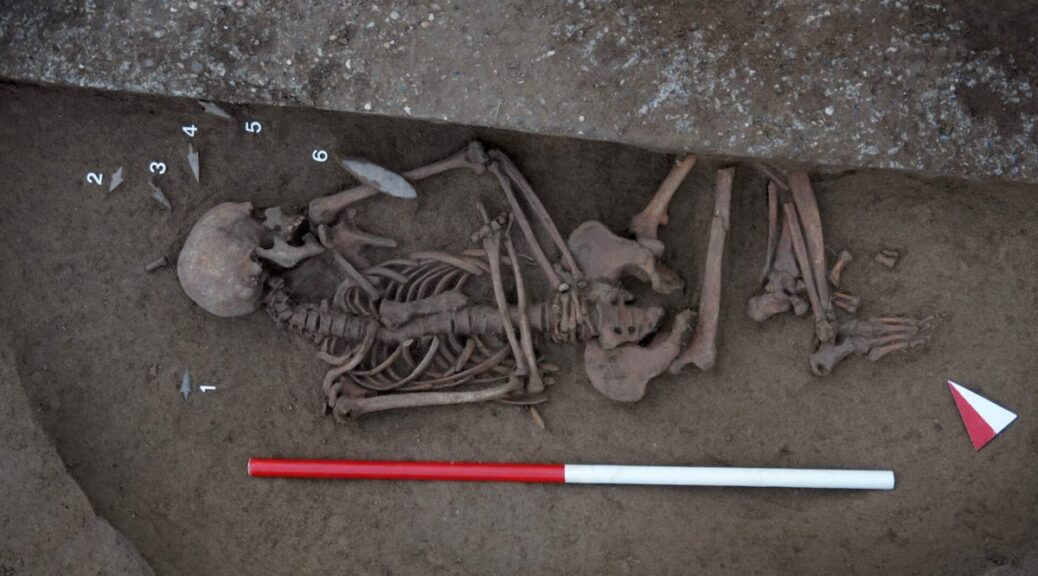
In the town of San Giorgio Bigarello, near the northern Italia city of Mantua, a large Copper Age necropolis dating back to about 5000 years ago has been discovered.

The discovery of the large necropolis has proved to be a surprise both in terms of the quantity of excavated tombs, a total of 22, and the archaeological data that promise to be very valuable for researchers.

The unexpected number of graves and the exquisitely crafted weapons discovered in some of them are likely to provide new insights into the prehistoric inhabitants of this region of northern Italy.

Excavated in November 2023 and January-February 2024, the first isolated tombs were, in fact, only a small portion of a larger cemetery, the precise dimensions of which have undoubtedly been lost over the ages.

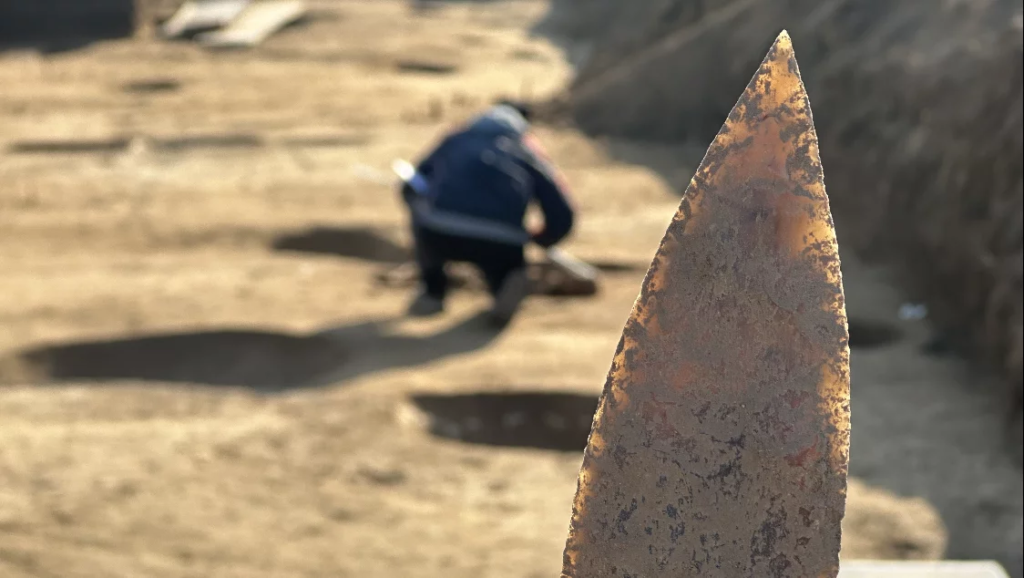
A variety of flint weapons were found in many tombs, including expertly crafted daggers, flawless arrowheads, and other blades.

Flint dagger from the archaeological excavations of the Copper Age necropolis in San Giorgio Bigarello, Northern Italy.

Aside from that, SAP archaeologists, working under the scientific guidance of Simone Sestito, the archaeological officer of the Soprintendenza Archeologia Belle Arti e Paesaggio di Mantova, and with the enthusiastic support of the town’s municipal administration, also discovered jewelry, such as necklace beads, made of materials that raise some preliminary questions regarding chronology and are most likely from the 4th millennium BCE.

The majority of the burials discovered at Bigarello are simple individual inhumations, with the deceased lying on their left sides, legs bent to their chests, and heads oriented northwest.

Since excavations began again in January, 19 more graves have been discovered, supporting the archaeologists’ theories that this was a cemetery rather than a few haphazard burials.

The 22 burials were discovered only 40 or so centimeters below the surface.

The region that is now Mantua was a part of the River Mincio basin during the Neolithic (c. 6000–4,000 B.C.) and Chalcolithic (c. 4000-1700 B.C.) periods.

The famous Neolithic double-burial, the Lovers of Valdaro, was discovered in San Giorgio Bigarello. It is certainly not new to archaeological finds of considerable value.

Archaeologists discovered floor mosaics with early Christian designs in Roman town of Marcianopolis, in Bulgaria

Archaeologists discovered floor mosaics with early Christian designs in Roman town of Marcianopolis, in Bulgaria

Archaeologists discovered floor mosaics with early Christian designs in Roman town of Marcianopolis, in Bulgaria

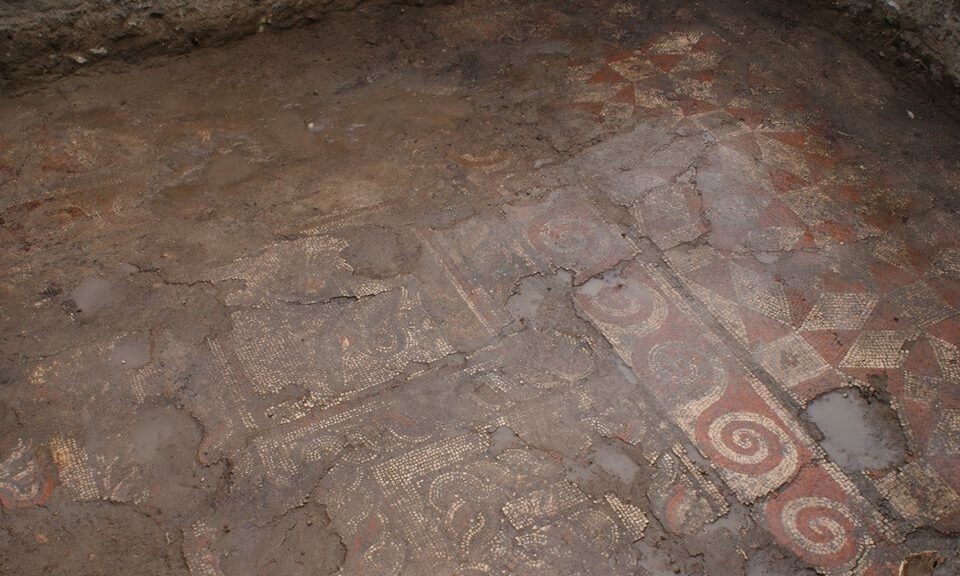
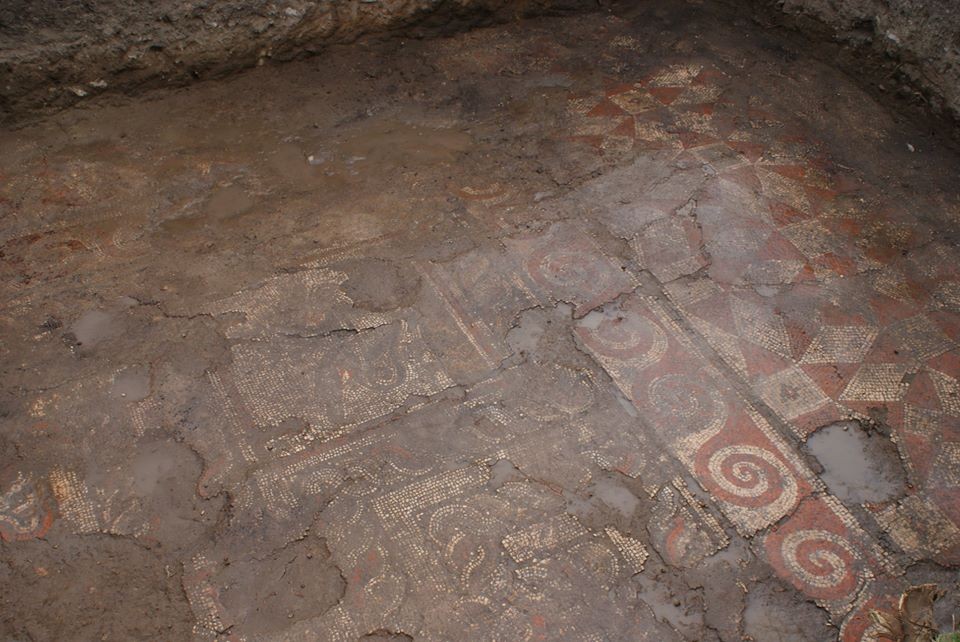
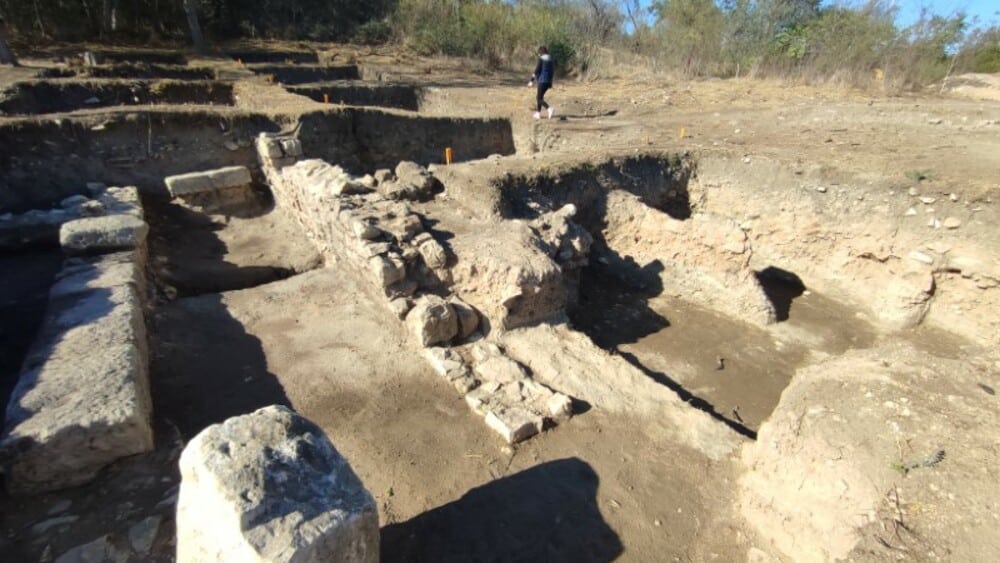
Archaeologists discovered floor mosaics with early Christian designs and nearly 800 artifacts in the archaeological reserve of Marcianopolis in Devnya, in the northeastern part of Bulgaria.

The Roman town of Marcianopolis (present-day Devnya) in northeastern Bulgaria appears to have originated as a Thracian settlement.

It was later inhabited by Hellenized settlers from Asia Minor and named Parthenopolis.

Roman Marcianopolis was established around 106 CE, following Trajan’s campaigns in Dacia to the north.

The settlement was named after his sister, Ulpia Marciana. At the crossroads between Odessos (modern Varna), Durostorum, and Nicopolis ad Istrum, as well as the location of plentiful springs, Marcianopolis became a strategically important settlement.

Diocletian’s administrative reforms in the late third century CE divided Moesia Inferior into Moesia Secunda and Scythia Minor, with Marcianopolis serving as the former’s administrative capital.

Marcianopolis experienced its most prosperous period during the middle of the fourth century CE. From 367 CE to 369 CE, the eastern emperor Valens used Marcianopolis as his winter quarters during campaigns against Visigoth incursions in the region. During this time, it served as the Eastern Empire’s temporary capital.

Floor mosaics with early Christian designs were found in the remains of a building. Archaeologists are not yet sure whether it was a public building or it belonged to a rich Roman citizen. 

Excavations in Devnya.

The tentative dating of the mosaics is in the first half of the 4th century AD.

The finds from the current archaeological season in Devnya contain another thousand bronze coins, several clay lamps and two clay vessels, which are awaiting scientific processing and restoration.

During the past archeological season, researchers restored bronze vessels discovered in the 1990s in a brick-walled tomb dating to the late 2nd – early 3rd century.

The vessels had a ritual use and were related to the personality of the person buried, Mosaic Museum director Ivan Sutev said in a statement to BTA.

They are richly decorated and the workmanship is exquisite, he added. The find includes a vessel for pouring liquids as offering to a deity, and a wine jug with a trefoil mouth (oenochoe). A simple kitchen pan was also found along with these.

All this leads archaeologists to suggest that a Roman citizen of Marcianopolis may have been laid to rest in the tomb, but that he may have had more specific functions: a soldier, a cook, or even a priest, Sutev said.

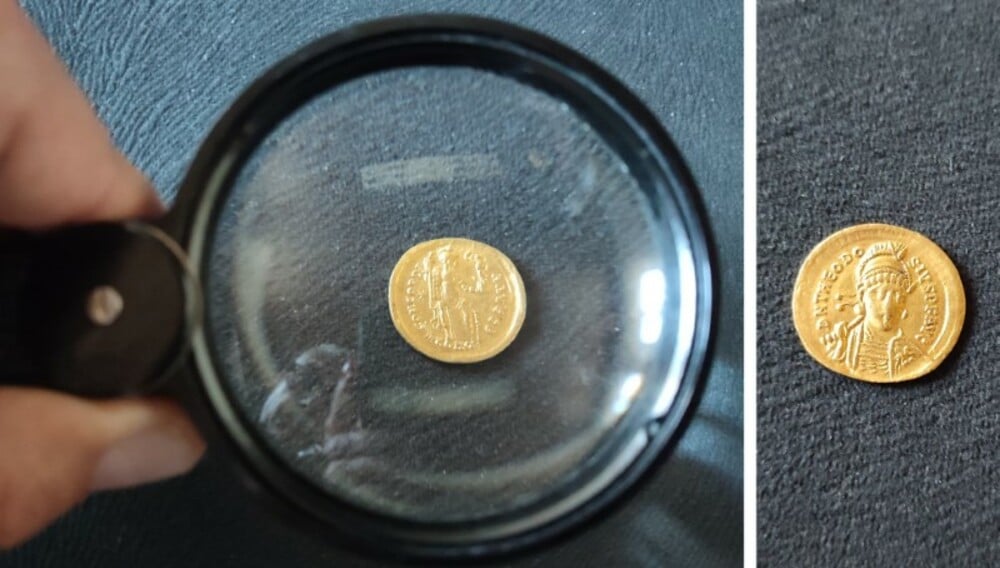
Gold solid coins.

Pottery that was discovered in the basilica’s environs during excavations in 2023 has since been restored. Among these are a mortarium vessel for liquids and an exquisite crater-shaped pot for liquids. These were located in the structure with the mosaic floors. Coins from the time of Emperor Theodosius II were also found scattered on the floor.

In 447, Attila’s Huns captured and destroyed Marcionopolis after conquering the entire Balkan Peninsula but failing to capture Constantinople. That is determined by 20 gold coins scattered on the floor of the building being studied.

On one side of the coins is an image of Theodosius II, while on the other is the patron goddess of Constantinople. Among the coins discovered during the Marcianopolis excavations were those from the city’s founding in the second century. The latter are dated to the sixth century, around the time of Emperor Justinian.

Undeciphered Rongorongo Script from Easter Island may Predate European Colonization

Undeciphered Rongorongo Script from Easter Island may Predate European Colonization

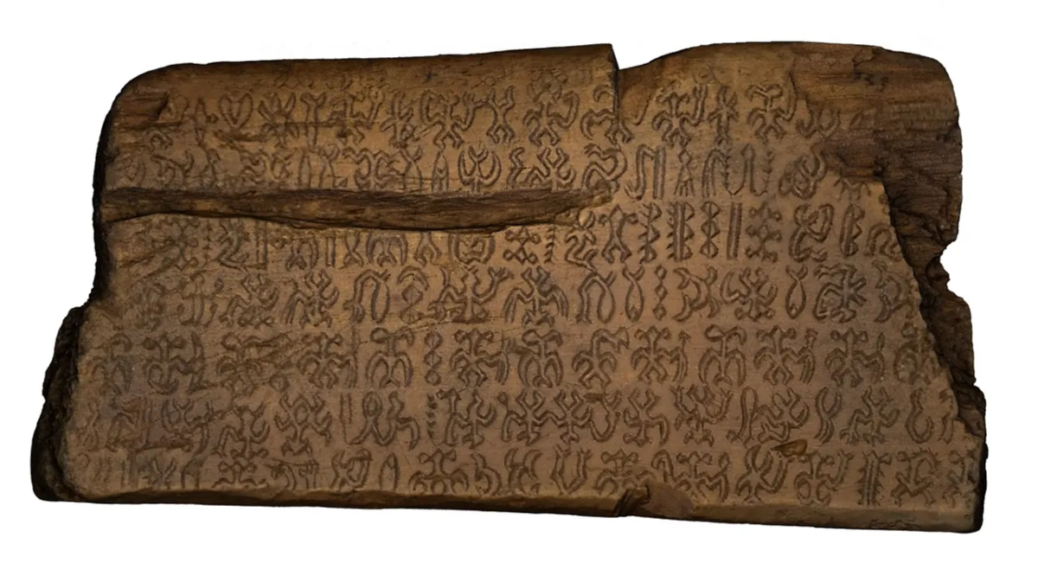
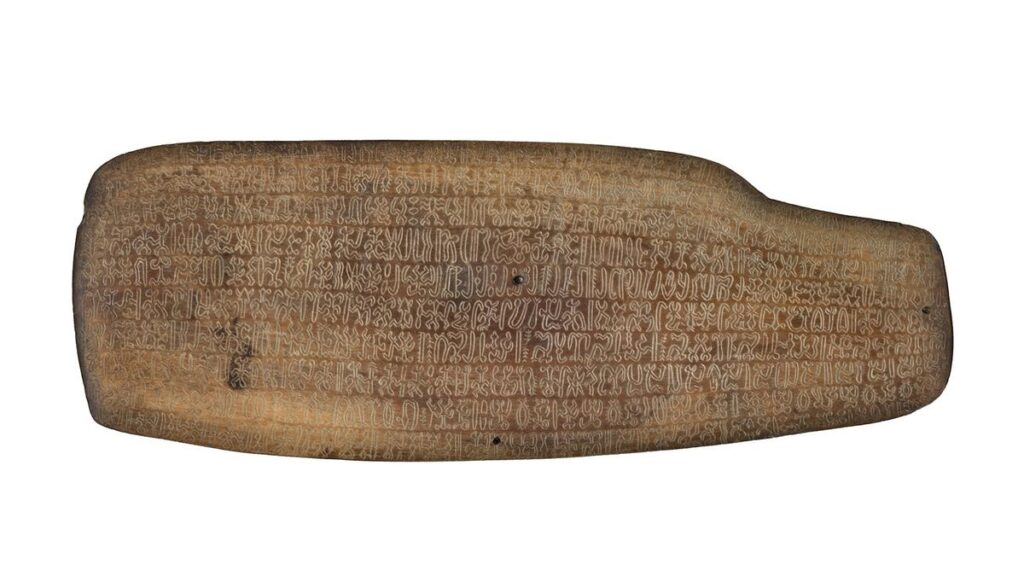
From the depths of history, a wooden tablet bearing the mysterious “rongorongo” script has been unearthed from the small, remote island of Rapa Nui (also called Easter Island).

This discovery, detailed in a study published in Scientific Reports on February 2nd, provides compelling evidence that the origins of this script predate European contact by more than two centuries, challenging previously held assumptions about its origins.

According to experts, this discovery supports the theory that the rongorongo script is one of the few independently invented writing systems.

The wooden tablet, along with three others, is part of a collection in Rome.

The tablet was among four tablets retrieved by Catholic missionaries in 1869. Recent radiocarbon dating conducted on these tablets at the University of Bologna has shed light on their origins.

Remarkably, the wood of one tablet was determined to have been cut down between 1493 and 1509, a significant timeframe preceding the European arrival in the 1720s.

Rapa Nui, which sits nearly 2,400 miles (3,800 kilometers) off the coast of Chile, was settled by humans between 1150 and 1280.

Although Europeans arrived in the 18th century, they didn’t notice the local glyph-based script until 1864.

The complex glyphs of the Rongorongo script are unlike any writing system found in Europe, suggesting it was an original creation by the Rapa Nui people.

There are 27 wooden tablets with roughly 15,000 characters and more than 400 different glyphs among the rongorongo inscriptions that have survived.  However, deciphering this ancient language remains a perplexing mystery.

Only 27 tablets inscribed with the intricate but undeciphered rongorongo script have survived, totaling approximately 15,000 characters and over 400 different glyphs.

The analysis also revealed that the wood on the oldest tablet came from a non-native tree species, possibly driftwood.

This discovery raises questions about the island’s ecological past and the resources available to its ancient inhabitants.

If additional research confirms that the Rongorongo script predates European contact, it would be yet another independent invention of writing in human history.

This would put the Rapa Nui people in the same league as the Sumerians, Egyptians, and Chinese, all of whom developed their own unique writing systems.

Rapa Nui is famous for its archaeological mysteries, including the massive stone heads known as moai, and many people have attempted — but failed — to decipher the rongorongo script.

“Historically speaking, if you borrow a writing system, then you keep it as close to the original as possible,” study lead author Silvia Ferrara, a philologist from the University of Bologna, said in an interview with Live Science.

Rafal Wieczorak, a chemist from the University of Warsaw who has studied other Easter Island tablets with Rongorongo writing on them, is excited about the implications of the dating results obtained by the German and Italian scientists. Namely, the implication that European contact had nothing to do with the script’s invention. But he also notes that further research will be needed to prove the case conclusively.

The wooden tablet, with its undeciphered script, stands as a symbol of the mysteries that continue to captivate us.

Excavation of Castle Site in Poland Uncovers Royal Kitchen

Excavation of Castle Site in Poland Uncovers Royal Kitchen

The Museum of Applied Arts in Poznań, Poland, doesn’t just house a collection of Italian, German, Western European, and Polish Baroque paintings. As it turns out, its centuries-old building also holds a medieval kitchen that once served royalty. 

Excavation of Castle Site in Poland Uncovers Royal Kitchen
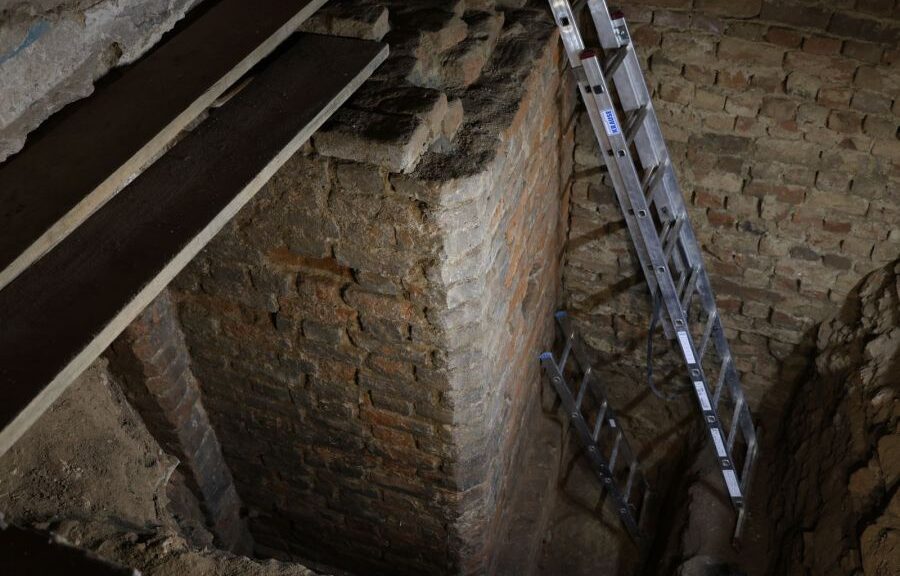
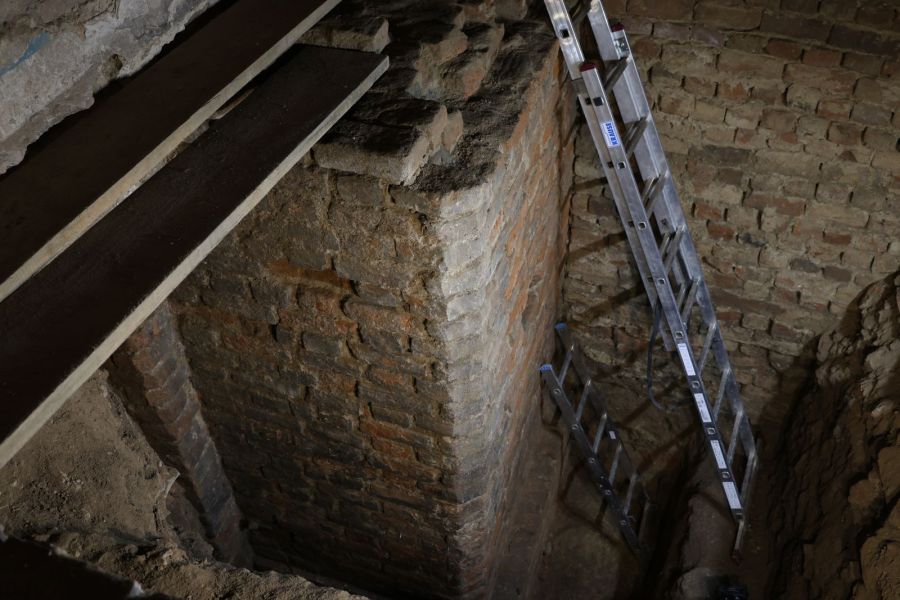
Lead archaeologist Artur Różański in the medieval royal kitchen uncovered in the basement of the Museum of Applied Arts in Poznań, Poland.

Archaeologists from the Adam Mickiewicz University in Poznań recently explored the basement of the museum’s administration building, discovering the remains of a kitchen. And it’s not just any kitchen, but a royal kitchen; researchers date the 10-by-16-foot room to the 14th or 15th century.

“We are dealing with, if not the oldest, then one of the oldest royal kitchens preserved in Poland,” the team emphasized in a statement.

This tracks with the construction of the Royal Castle by Duke Przemysł I in Poznań, which began in 1249.

The residence encompassed a tower, square, and south-facing entrance, all of it surrounded by a rampart.

Over the centuries, the castle was burned, rebuilt, sacked, and restored. Its remaining sections have variously served as state archives and government offices before, today, housing the Museum of Applied Arts.

The medieval royal kitchen uncovered in the basement of the Museum of Applied Arts in Poznań, Poland.

In the royal kitchen, the archaeology team turned up a massive Gothic pillar, measuring about nine-by-11 feet, which would have once accommodated a kitchen stove with a hood to filter exhaust gases.

According to historical written records, the space also once held a well in a corner. 

Outside, in the building’s courtyard, the archaeologists dug a huge trench to peer beneath the terrain.

They uncovered more than 6,000 artifacts, including pottery, animal bones, and fragments of hypocaustum tile, which indicated that the medieval castle was heated. The objects date back to the 16th century.  

The dig marks the resumption of a project, aimed at exploring the history of the Royal Castle, which was paused for almost two decades.

The team plans next to uncover the castle’s well, believed to be buried under six feet of rubble.  

‘World first’ intact Roman egg laid 1,700 years ago discovered by archaeologists

‘World first’ intact Roman egg laid 1,700 years ago discovered by archaeologists

‘World first’ intact Roman egg laid 1,700 years ago discovered by archaeologists
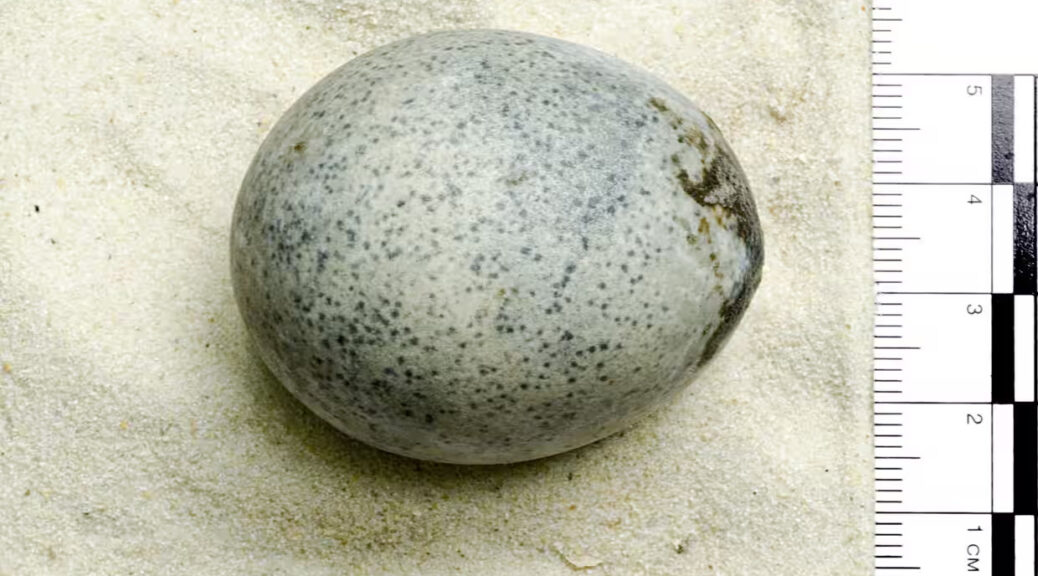
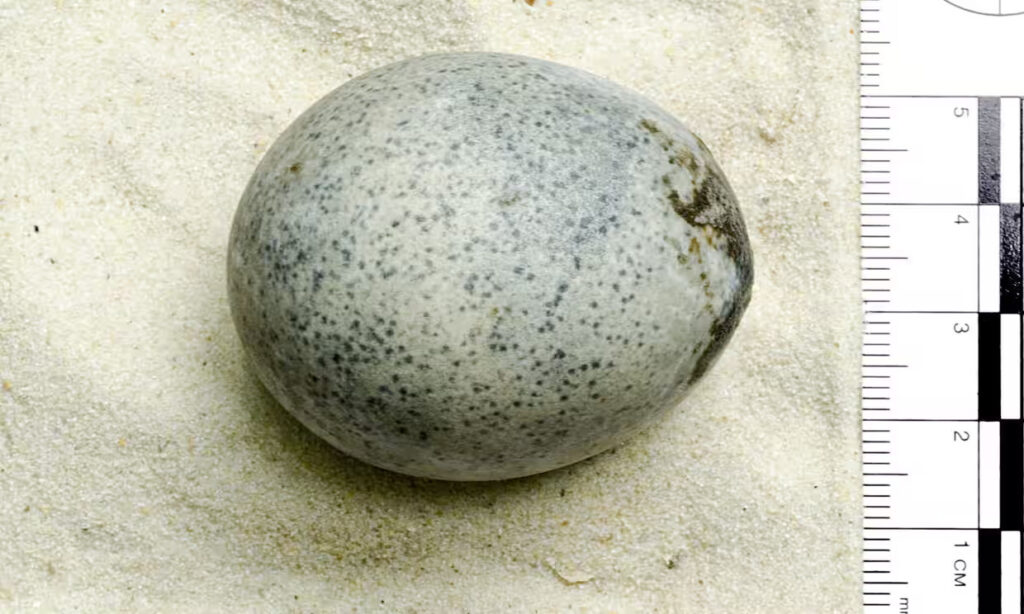
The egg is one of four that were found alongside a woven basket, pottery vessels, leather shoes and animal bone in 2010. Photograph: Oxford Archaeology

It was a wonderful find as it was, a cache of 1,700-year-old speckled chicken eggs discovered in a Roman pit during a dig in Buckinghamshire.

But to the astonishment of archaeologists and naturalists, a scan has revealed that one of the eggs recovered intact still has liquid – thought to be a mix of yolk and albumen – inside it, and may give up secrets about the bird that laid it almost two millennia ago.

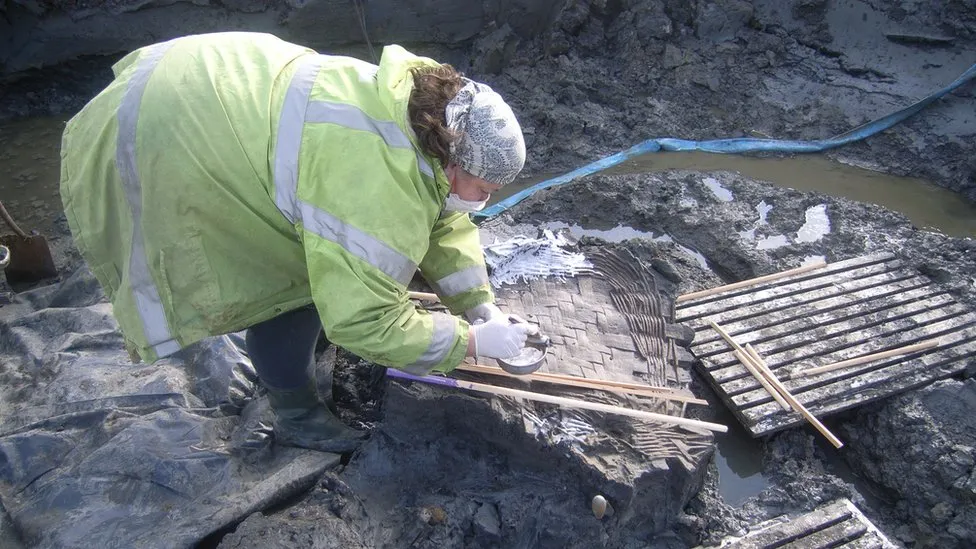
The “Aylesbury egg” is one of four that were found alongside a woven basket, pottery vessels, leather shoes, and animal bone in 2010 as a site was being explored ahead of a major development.

Despite the experts extracting them as carefully as possible, three broke, producing an unforgettable sulphurous smell, but one was preserved complete.

Edward Biddulph, the senior project manager at Oxford Archaeology, which oversaw the excavation, said it had been amazing enough to find what is thought to be the only intact egg from the period in Britain. “We do often find pieces of shells but not intact eggs,” he said.

Discussions were being held last year about how to display the egg when Dana Goodburn-Brown, an archaeological conservator and materials scientist, suggested they scan it to help decide how best to preserve it.

Biddulph said: “The egg turned out to be even more amazing. It still contained its liquid, the yolk and the white.” The yolk and albumen appear to have become mixed together.

“We might have expected it to have leached out over the centuries but it is still there. It is absolutely incredible. It may be the oldest egg of its type in the world.”

Biddulph said the egg had been deliberately placed in a pit that had been used as a well for malting and brewing. “This was a wet area next to a Roman road. It may have been the eggs were placed there as a votive offering. The basket we found may have contained bread.”

The egg has been taken to the Natural History Museum in London. Biddulph said it had felt a little daunting riding on the tube and walking around the capital with such an extraordinary and fragile egg in his care.

Archaeologists made the discovery during a dig that took place between 2007 and 2016 (Oxford Archaeology)

Douglas Russell, the senior curator of the museum’s birds’ eggs and nests collection, was consulted about how to conserve the egg and remove the contents without breaking it.

There are older eggs with contents, such as mummified ones, but Russell said it was believed to be the oldest unintentionally preserved egg. A tiny hole may be made in the egg to extract the contents and try to find out more about the bird that laid it.

Goodburn-Brown said: “The egg ranks as one of the coolest and most challenging archaeological finds to investigate and conserve. Being the temporary caretaker and investigator of this Roman egg counts as one of the major highlights of my 40-year career.”