All posts by Archaeology World Team

Meet The Megatherium: The Adorable 13-Foot Sloth That Ruled The Prehistoric Amazon
Meet The Megatherium: The Adorable 13-Foot Sloth That Ruled The Prehistoric Amazon

Meet The Megatherium: The Adorable 13-Foot Sloth That Ruled The Prehistoric Amazon
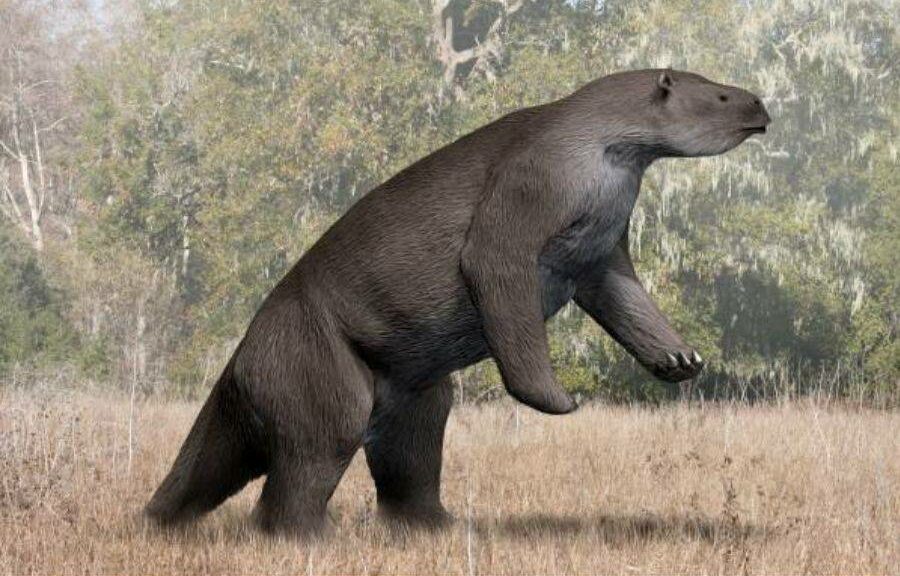
An artist’s rendering of a now-extinct Megatherium.

The year is 9,000 B.C. Humongous cave bears, saber-toothed tigers, and massive-antlered Irish elk roam the grasslands and forests of South America, but the biggest of all is the Megatherium, an elephant-sized ground sloth.

The Megatherium was one of the largest ground mammals ever to have existed. The Megatherium dominated the continent’s southern grasslands and lightly forested areas and was something of a king of the mammals for thousands of years before a mass extinction event wiped it from the planet.

Or did it?

Rediscovering The Megatherium

It would not be until 1788 that the Megatherium would be seen again after the mass extinction event that wiped out pre-historic animals like the wooly mammoth and saber-toothed tiger, too.

It was then that an archaeologist named Manuel Torres discovered a rare fossil specimen on the banks of the Luján River in eastern Argentina. Though he did not immediately recognize it, he deemed it worth further study and sent it back to his base of study at the Museo Nacional de Ciencias Naturales (The Spanish National Museum of Natural History) in Madrid, Spain. There, it was assembled into its most likely arrangement and mounted for display. A museum employee also created a thorough sketch of the animal to further study it.
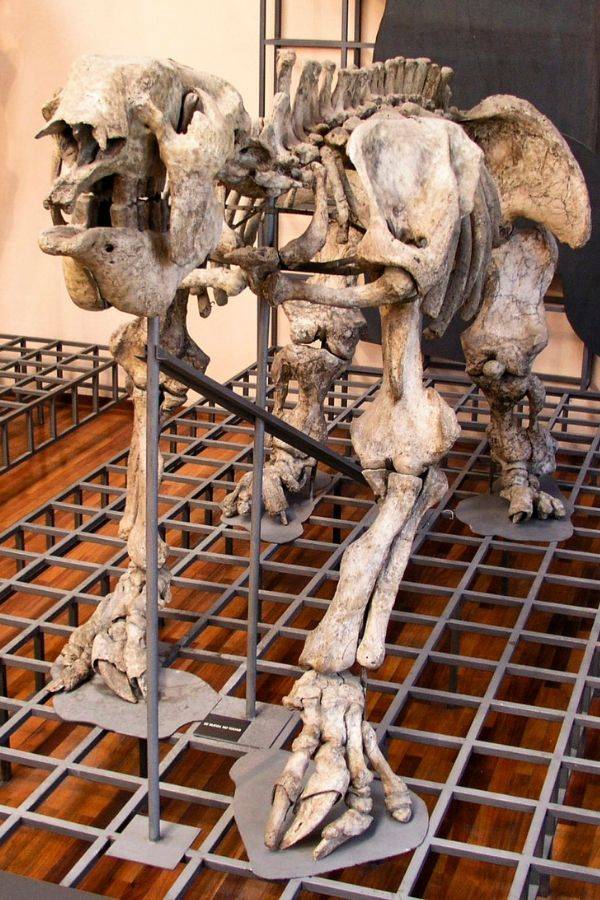
The original specimen found by Manuel Torres on display in Madrid.

Before long, the fossil caught the eye of esteemed French paleontologist Georges Cuvier. Cuvier was intrigued by the sketch of the creature and used it to further explore its anatomy and taxonomy, and over time, he managed to create a more complete picture of the Megatherium’s history. In 1796, just eight years after the Megatherium had been discovered, Cuvier published the first paper on it.

In this paper, Cuvier theorized that the Megatherium was a giant sloth, perhaps an early ancestor of the modern equivalent. Initially, he believed that the Megatherium used its claws to climb trees as modern-day sloths did. However, he later amended his theory and hypothesized instead that the sloth was much too large to climb trees and likely used its claws to dig subterranean holes and tunnels.

With this explanation, a picture of the Megatherium as it existed began to form; a sloth the size of an elephant, with giant, powerful claws, that lived mostly on and under the ground. With further study, scientists began to discover its habitat, diet, and reproductive cycle, and the picture became ever clearer.

The Megatherium likely lived across the continent of South America, from southern Argentina all the way to Colombia. Full grown, individual creatures likely weighed upwards of four tons — the weight of the average male elephant — making it the largest land mammal second only to the wooly mammoth. It probably walked most of its life on four legs, though it is believed that it could stand on its hind legs in order to reach treetops and high foliage to feed its herbivorous diet. When it stood, the Megatherium would have been upwards of 13 feet tall.

Due to its immense size, it’s likely that Megatherium moved slowly like the sloths of today. It was likely one of the slowest creatures in its environment. In looks, it was quite similar to the modern sloth, though with facial characteristics of another one of its descendants, the anteater. In fact, it was in part Megatherium’s resemblance to more modern creatures that got Darwin thinking about his theory of evolution.

The Megatherium lived in large groups, though individual fossils have been found in isolated locations such as caves. It gave birth to live young, as most other mammals do, and likely continued living in familial groups while their young matured. Due to the lack of predators – they outweighed (and could likely kill) saber-toothed cats and other small carnivores – they lived a quiet and probably diurnal lifestyle.

Further, the Megatherium wasn’t much of a picky eater. The gigantic herbivores didn’t have to compete with smaller mammals for food as they had the advantage of height and procuring food from distances that smaller mammals simply couldn’t. They could tolerate and adapt to various types of plants as well as allegedly nibble on the occasional carcass, which allowed the Megatherium to migrate and thrive all over the continent — for 5.3 million years.

So what, or perhaps who, led to this resilient mammalian force’s extinction?
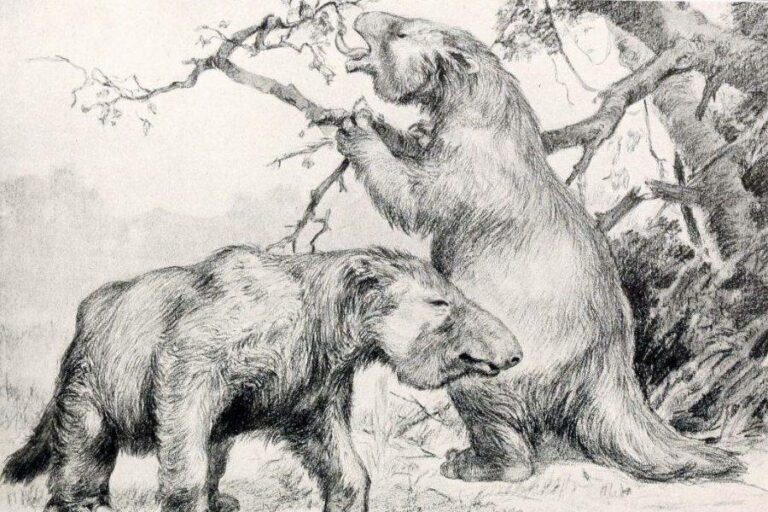
Another artist rendering of two Megatherium.

Extinction And Possible Survival

In roughly 8,500 B.C., the earth experienced a “Quaternary extinction event” during which most of the earth’s large mammals disappeared.

The Irish elk and saber-toothed tiger went extinct during this time as well as mammoths within the confines of continents, as some survived for several thousand more years in remote island areas. And, of course, the Megatherium went extinct during this time as well. These giant ground sloths were thought to have survived in more remote areas for at least another 5,000 years following this extinction, though.

Scientists are still not entirely sure what accounts for this mass extinctionas it does occur simultaneously with glacial-interglacial climate change. Instead, the extinction of the Megatherium seems more to have been the work of the emergence of mankind. Indeed, Megatherium fossils have been found with cut marks on them, suggesting that they were hunted by humans. Whatever the reasons for their disappearance, scientists have long believed that the elephant-sized sloths have been out of commission for at least 4,000 years.

However, rumors of giant sloths living deep in the jungles of South America have emerged. Those who live in and around the Amazon rainforest have long passed down stories of a dangerous beast they call the “mapinguari,” a giant sloth-like creature who is over seven feet tall, with matted fur and large, sharp claws. They claim it tramples foliage and brush and roars out of a giant, second mouth on its stomach.

Stomach-mouth aside, the description of the mapinguari is actually quite similar to descriptions of the Megatherium, and indeed several drawings of the mapinguari are hard to discern from those of the Megatherium. Some experts have theorized that the initial mapinguari sightings many years ago may, in fact, have been Megatherium that survived extinction by sequestering themselves within the shelter of the rainforest.
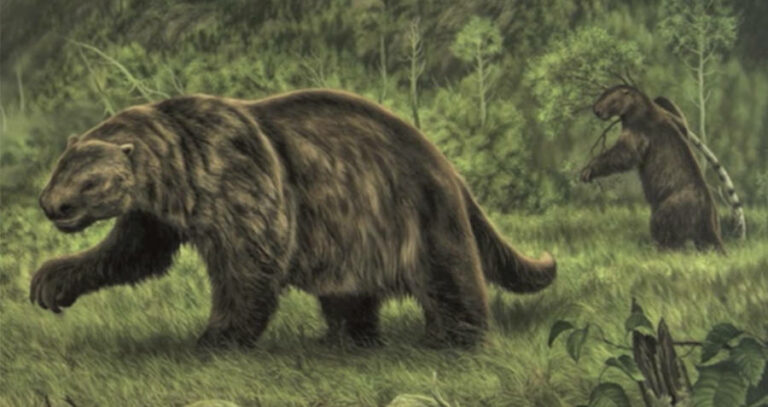
Artist’s rendering of what the giant sloth-like mapinguari could have looked like.

As many theorize that the mass extinction event was, in part, caused by a human invasion of their habitat, it would make sense that some could survive by avoiding populated areas. If the Megatherium truly did evade extinction, then the modern-day interpretation of the mapinguari is most likely an exaggerated report blown out of proportion through a generations-long game of telephone.

However, it could always be the case that the Megatherium truly did go extinct all those years ago and that the mapinguari, with its fetid breath and giant stomach-mouth, is truly roaming the Amazon and we are all in terrible danger.
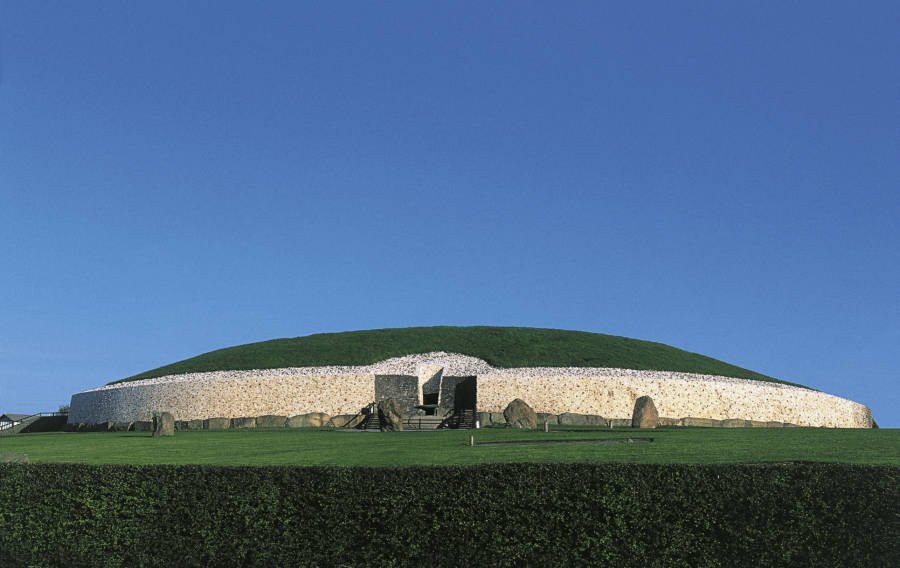
Newgrange: The Massive Irish Tomb That’s Older Than The Pyramids

Newgrange: The Massive Irish Tomb That’s Older Than The Pyramids

Yep, 5,000 years. That’s older than Stonehenge. It’s older than the great Egyptian pyramids, too. And five millennia later, it hasn’t lost any of its wonders.

Newgrange was built around 3200 B.C. — hundreds of years before the Great Pyramid of Giza (2500 B.C.) and Stonehenge (3000 B.C.).

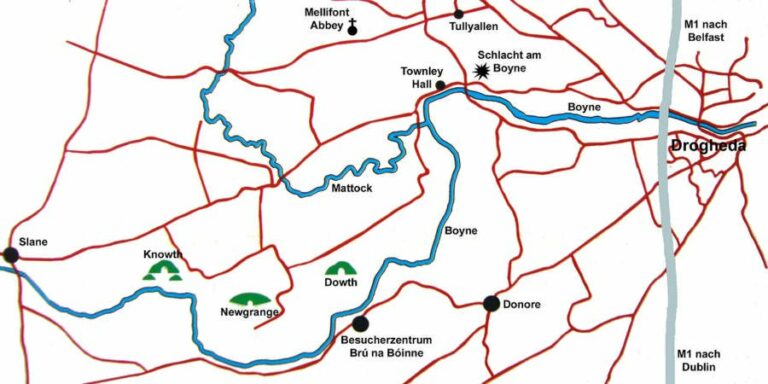
The massive hemispherical tomb is located in the Brú na Bóinne – Gaelic for the “palace” or “mansion” of the River Boyne. This 3-square mile area contains nearly a hundred ancient monuments, including two other large tombs, in addition, Newgrange, Knowth and Dowth.

A map of megalithic monuments in the Brú na Bóinne

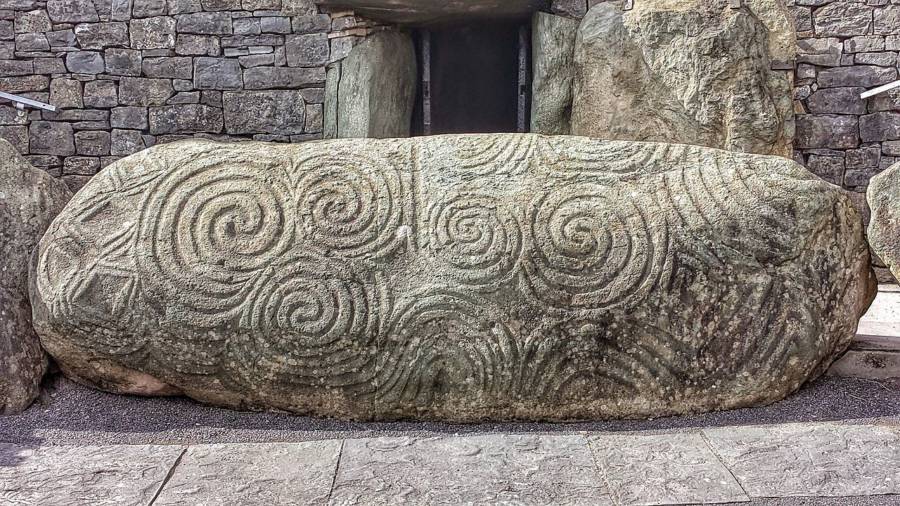
Arriving at the iconic tomb is a wow-moment, to say the least. Standing outside the 80-meter mound, shored up with spiral-engraved kerbstones and topped with white Wicklow quartzite, a guide reveals the myths and history behind the monument.

Newgrange could have been designed as a tomb or a temple – in reality, nobody knows which. The truth will be shrouded in mystery forever.

Let there be light…

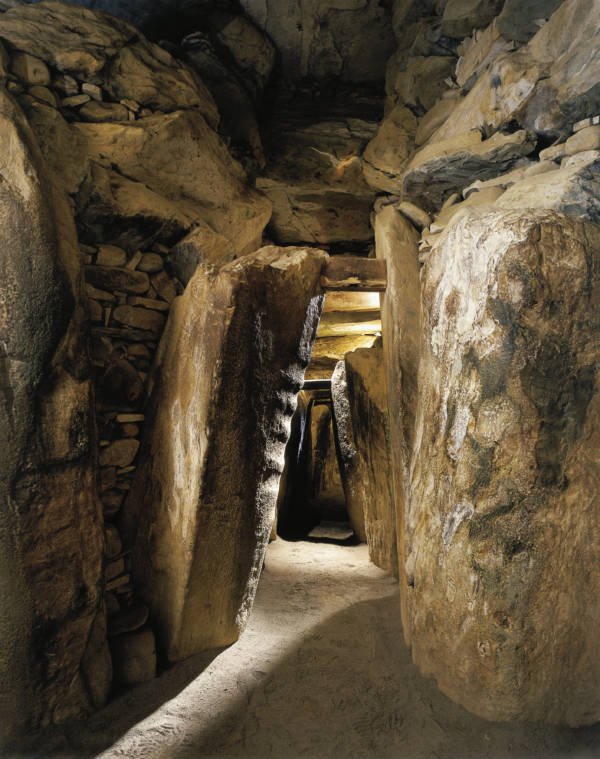
Once the scene has been set for you as a visitor, you’ll step inside the passage tomb itself, squeezing through standing stones carved with spiraling rock art and graffiti dating back to the 1800s (before Newgrange was taken into State care).

Ducking under beams of wood, you’ll emerge into the cool confines of a cruciform-shaped chamber like a stony igloo squirreled away within a hill.

The engraved stone at the entrance to Newgrange.

This inner sanctum is where a lucky few (chosen by lottery from thousands of applicants annually) huddle together to witness the annual winter solstice illumination.

The illuminated inner corridor of Newgrange.

At this moment, when megalithic engineering and nature lock sensationally into sync, a shaft of light can be seen snaking 19 meters up the passageway, ultimately bathing the chamber in light. There are goosebumps, to say the least…

If you’re not one of the lucky ones, don’t fret. All visitors are treated to a simulated solstice, with an orange beam of light artificially showcasing the effect. It’s a tantalizing little taster – little wonder legend suggests that this was the site where mythological hero Cú Chulainn was Born.

Subterranean secrets…

A young girl stands in front of the entrance to Newgrange in about 1905

Newgrange isn’t the only passage tomb in Ireland, of course. In fact, it’s not the only passage tomb at Brú na Bóinne. Together with nearby Knowth and Dowth, Newgrange has declared a Unesco World Heritage Site in 1993. Not bad for a site that once looked destined to become a quarry!

Not far away, near Oldcastle, County Meath, you’ll find a lesser-known cluster of passage tombs. Spotted around a handful of hills at Loughcrew are several cairns also dating from around 3,200BC. Because they’re more obscure and harder to get to, the Indiana Jones effect is all the more titillating.

If you get the sense that you’re being watched here, you may well be right. Some 60km away, atop of Slieve Gullian in County Armagh, the passage of another tomb points directly back towards Loughcrew.

Slieve Gullian’s two cairns lie on either side of a summit lake, with the southern tomb said to have a winter solstice alignment at sunset. On a good day, the views stretch as far as Dublin Bay.

Ukraine discovers a 5,000-year-old megalithic Stonehenge like monument!

Ukraine discovers a 5,000-year-old megalithic Stonehenge like monument!

Archaeological digs still reveal historical aspects that remain puzzling to some. Such is the case with these archaeologists who are on a mission in Ukraine in the village of Novooleksandrivka, about ten kilometres south of the city of Dnipro.

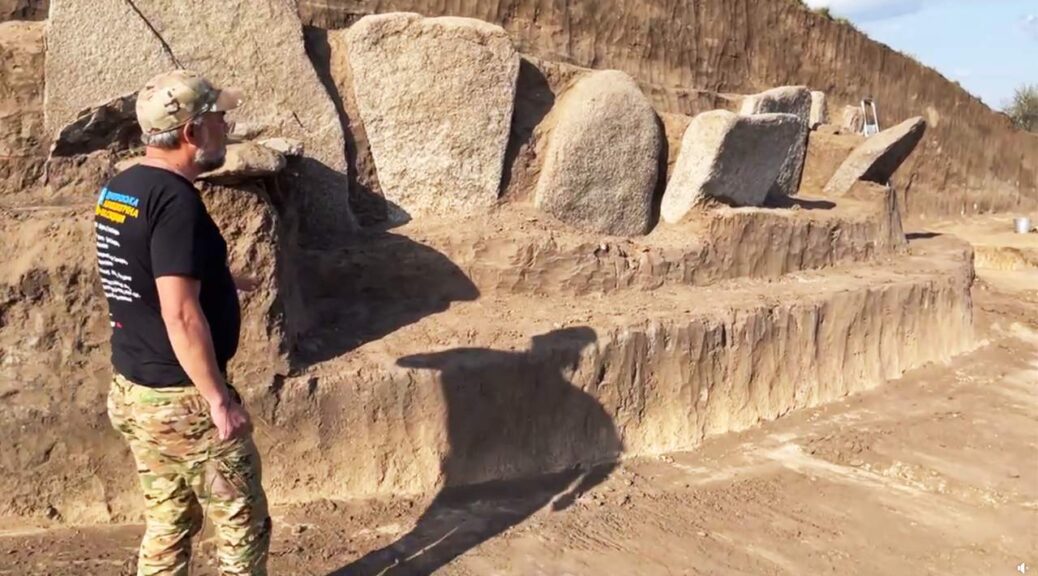
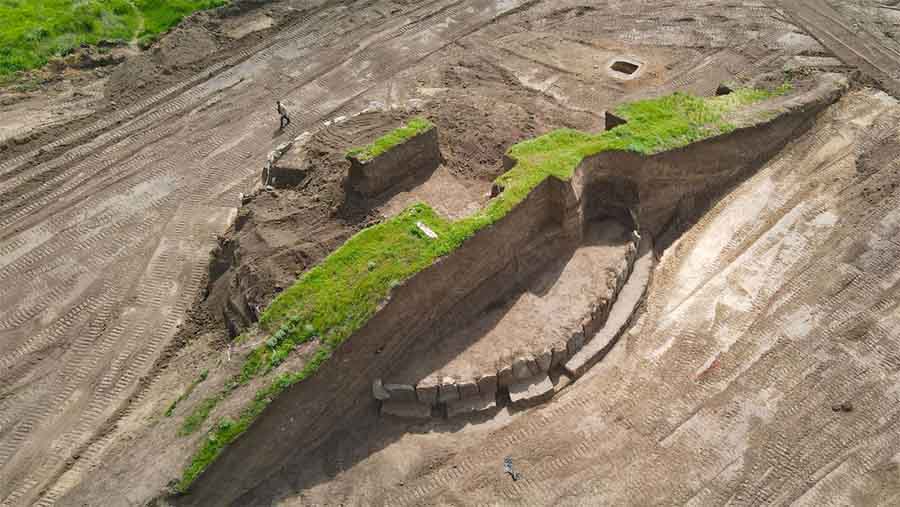
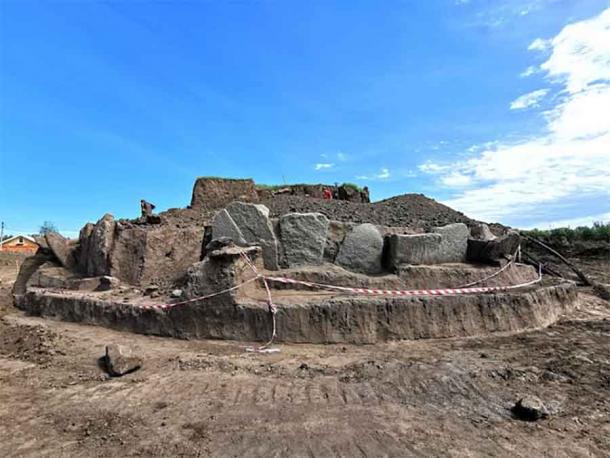
According to them, they discovered a place where blocks of stone several meters high form a circle. In archaeology, this is known as the Cromlech (megalithic monument made of menhirs in a circle) or Stonehenge, based on the one in the United Kingdom: The Stonehenge in Amesbury, which attracts millions of visitors every year. An original discovery for Ukraine!

The Stone Hill by Novooleksandrivka

The 5-channel television station reports that a 4,500 to 5,000-year-old burial mound has been discovered. “In the middle of the tumulus (Kurgan in Ukraine), archaeologists found a gigantic cromlech – stone blocks several meters high that form a circle.”

Ukrainian Burial Mound Dig Reveals 5,500-Year-Old Stonehenge-like Structure

According to the journalistic report, each block of stone weighs about a ton. The blocks are carefully cut into a circle. Compared to the pyramids of Egypt, this side would be even older than 500 years.

Novooleksandrivka would not be the first Stonehenge discovered in Ukraine, but it is the youngest. And most importantly, it seems to be the largest ever discovered.

The stone circle discovered within the Ukrainian burial mound.

Oleksandr Kolomiytsev, the spokesman for the regional road service, explains: “The construction involved moving a huge volume of earth and a considerable workforce.

It is possible that the person buried and protected by the Cromlech was highly regarded in society. This is the only way to explain the monumental character of this construction. “”

In fact, the various StoneHenge that has been discovered in the world all function as funerary memorials.

The Novooleksandrivka site was to become an open-air museum. A stroke of luck for Ukraine, which believes that this ancient monument can attract millions of tourists every year!

The secret of the British StoneHenge!

The StoneHenge in Amesbury, UK, was not built where it is now, according to a study in Cambridge University’s Antiquity magazine.

This observation follows the discovery of a place where large stones were excavated … But no trace of these stones nearby. They conclude that these stones were brought to the location of the current StoneHenge.

The circle was dismantled by Merlin and shipped by 15,000 men to Amesbury in the Salisbury Plain. Merlin wanted the Giants Dance Stones for their magical and healing properties. 

Indeed, if the UK location is already a major tourist hit, Ukraine could attract many historic tourists too! Ukraine is a beautiful country that bears the historical mark of Chernobyl! But there are so many other things to discover there: Kiev, for example, is a jewel!

7,000-Year-Old Native American ‘Bog Burial’ Found Off the Coast of Florida

7,000-Year-Old Native American ‘Bog Burial’ Found Off the Coast of Florida

The 167 bodies discovered in a pond in Windover, Florida started to stir up excitement in the archaeological world only after the bones were declared very old, and not the product of mass murder. Researchers from Florida State University came to the site, believing that in the swampland some more Native American bones had been found.

They believed the bones were between 500 and 600 years old. But then the bones were dated with radiocarbon. It turns out that these corpses were between 6,990 and 8,120 years old. The academic community was then incredibly excited. Windover Bog has proved to be one of the United States’ most significant archaeological discoveries.

In 1982, Steve Vanderjagt, the man who made the discovery, was using a backhoe to demolish the pond to create a new subdivision between Disney World and Cape Canaveral. A large number of rocks in the pond confused Vanderjagt since the region of Florida was not considered to be particularly rocky.

Getting out of his backhoe, Vanderjagt went to investigate and almost immediately realized that he had unearthed a huge pile of bones. He called the authorities right away. It was only thanks to his natural curiosity that the site was preserved. After the medical examiners declared them ancient, the specialists from Florida State University were summoned (another brilliant move by Vanderjagt- too often sites are ruined because experts are not called).

The pond that Steve stumbled upon.

Deeply intrigued, EKS Corporation, the developers of the site, financed the radiocarbon dating. Once the striking dates were revealed, the State of Florida providing a grant for the excavation.

Unlike the human remains found in European bogs, the Florida bodies are only skeletons – no flesh remains on the bones. But this does not negate their significance. Nearly half of the skulls contained brain matter. The majority of the skeletons were found lying on their left sides with their heads pointing westward, perhaps toward the setting sun, and their faces pointing to the north.

Most had their legs tucked up, as in the fetal position, however, three were lying straight. Interestingly, each corpse had a stake thrust through the loose fabric that enshrouded them, presumably to prevent them from floating to the surface of the water as decomposition filled them with air. This practical step was what ultimately protected the bodies from scavengers (animals and grave robbers) and kept them in their intended positions.

The find provides unparalleled insight into a hunter-gather community that existed 3,500 years before the Pyramids were built in Egypt. The skeletons and the artefacts found with them have been studied almost continuously in the decades since their discovery.

People Digging.

The research paints a picture of a hard but good life in pre-Columbian Florida. Though living mainly off what they could hunt and gather, the community was sedentary, indicating that whatever hardships they may have faced were small compared with the benefits of the area they chose to settle in.

Theirs was an incredibly caring society. Children’s bodies were almost all found to have small toys in their arms. One older woman, perhaps 50, showed signs of having several broken bones. The fractures occurred several years before her death, meaning that despite her handicap the other villagers cared for her and helped her even when she could no longer contribute significantly to the workload.

Another body, that of a 15-year-old boy, showed that he was a victim of spina bifida, a crippling birth defect where the vertebrae do not grow together properly around the spinal cord. Despite his many deformed bones, evidence suggests he was loved and cared for throughout his life. These discoveries are mind-boggling when one considers how many ancient (and even a few modern) societies abandon the weak and deformed.

Contents found within the corpses’ as well as other organic remains found in the bog reveal an ecosystem rich in diversity. 30 species of edible and/or medicinal plants were identified by paleobotanists; berries and small fruits were particularly important to the community’s diet.

One woman, perhaps 35 years old, was found with a concoction of elderberry, nightshade, and holly in the area where her stomach would have been, suggesting that she was eating medicinal herbs to try and combat an illness.

Unfortunately, the combination did not work and whatever afflicted the woman ultimately took her life. Interestingly, the elderberry woman was one of the few bodies stretched out, as opposed to curled up, with her face pointing downward. In other Native American traditions, elderberries were used to fight viral infections.

Archaeological site.

Another striking difference between the Windover Bog people and their European counterparts is that none of the Floridians suffered violent deaths. The bodies include men, women, and children.

Roughly half of the bodies were younger than 20 years old when they died but some were well over 70 years old. This was a fairly good mortality rate for the place and time.

The presence of brain matter in 91 of the bodies suggests that they were buried quickly, within 48 hours of death. Scientists know this because, given the hot humid climate of Florida, brains would have liquefied in bodies not buried quickly.

Somewhat amazingly, DNA analysis of the remains shows that these bodies share no biological affiliation with the more modern Native American groups known to have lived in the area.

Recognizing the limitations of modern technology, about half of the Windover site was left intact, as a protected National Historic Landmark, so that in 50 or 100 years’ researchers could return to the bog and excavate untouched remains.

A couple renovating a 115-year-old building discovered two 60-foot-long hidden murals

A couple renovating a 115-year-old building discovered two 60-foot-long hidden murals

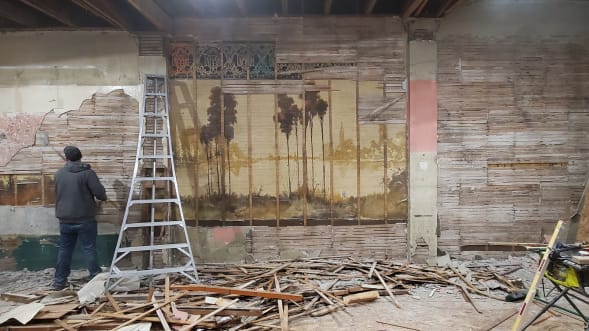
What started out as a couple’s renovation project to convert a historic building into a bar has turned into an effort to restore decades-old artwork in a small Washington town.

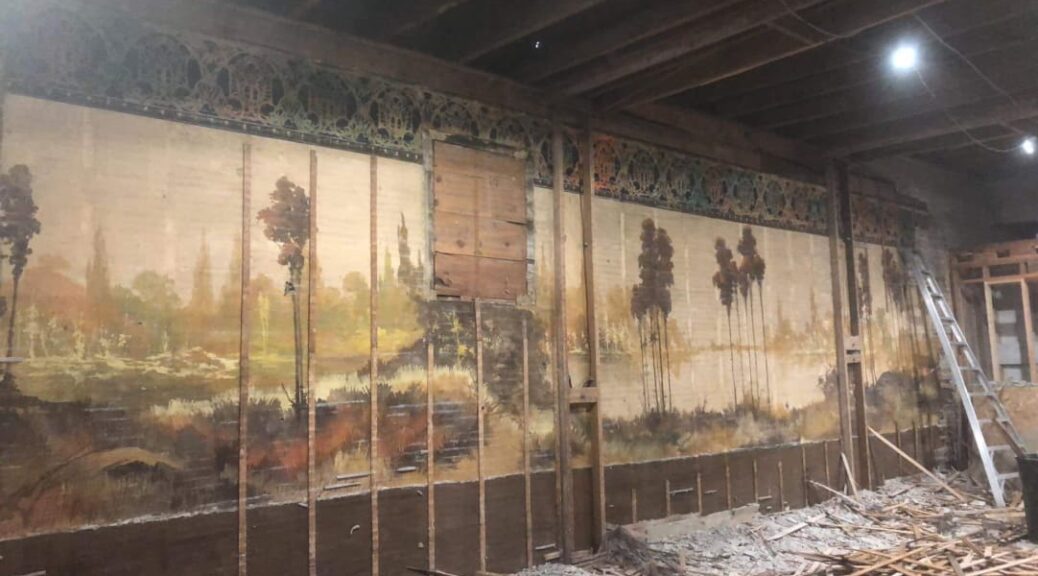
Nick and Lisa Timm purchased the building in Okanogan, located about four hours east of Seattle, at the end of 2021. This past week, they discovered 60-foot murals painted on canvases along its north and south walls.

“We were about 20 minutes from covering up the walls,” Nick told CNN on Wednesday. “I then was like ‘Well, let’s just look at what’s behind all this plaster.’”

A couple renovating a 115-year-old building discovered two 60-foot-long hidden murals

As the plaster peeled away, they discovered a giant mural — stretching 60 feet long and 20 feet high — depicting a lake, cabins and trees. One crew member threw out the idea that there could be another canvas on the opposite wall. Lo and behold, there was indeed a matching mural.

They found the murals at around 5 p.m. and had been working since 5 a.m., Nick said. But the team stayed for four more hours to uncover the rest of the artwork.

“It was like a lightning bolt of energy,” Nick said. “We were just hooting and hollering and pulling things down.”

Lisa and Nick Timm purchased the historical building at the end of 2021.

The Timms moved back to Okanogan last year to take care of Nick’s father, who was diagnosed with lung cancer. After he died in September, a family friend told the couple about the chance to purchase the building.

“One of our main goals moving back was to reenergize Okanogan and then this happened,” Nick said.

Dating back to around 1907, the building had served as a movie theatre, a pool hall and even a rooster fighting rink, according to Nick.

The couple’s plan was to turn the 3,000-square-foot space into a bar and gathering place for the community, building on Nick’s experience running bars and restaurants in Olympia.

“It’s funny how this worked out,” Nick said. “We were going to make it a historical showcase by bringing in a bunch of historical stuff about the area.”

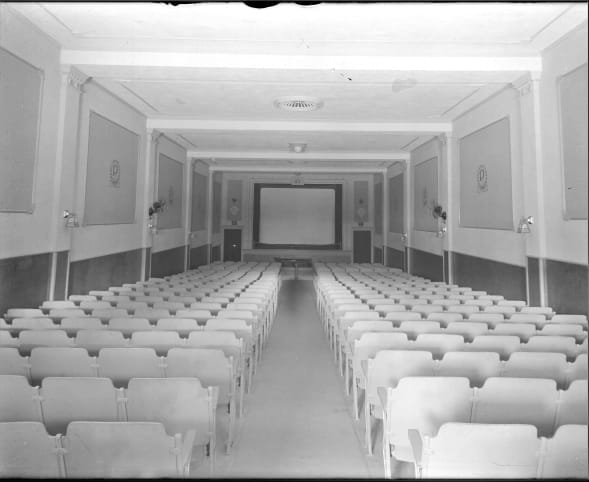
This photo, taken in June 1918, shows the building when it was a theatre.

After the Timms’ big find, the Okanogan County Historical Society was able to dig up a newspaper clipping from 1915 that reveals the original plan for the murals.

A local artist was set to paint the murals for what was the Hub Theatre at that time, according to the clipping, which was provided to CNN by the society.

“The new improvements at the Hub include 120 feet of panoramic landscape scenery in light tans,” the clipping reads.

The murals were discovered on both the north and south walls and span, in total, 120 feet.

Now, that panoramic scenery will be cautiously taken down, refurbished and rehung. Nick said some sections of the murals have extensive water damage that they want to get restored as quickly as possible.

It will likely be a pricey process. The couple has started a GoFundMe page to gain support from the community.

The Timms had hoped to open their renovated bar by the end of March, but it may now take until midsummer to finish work on the murals, Nick said.

The mural will be the centrepiece of the establishment, and the plan still is to fill the rest of the space with other historical items. Nick’s family has lived in the area for centuries, so many of the items have been passed down for generations. Other memorabilia have been donated by others in the community.

And Okanogan’s future gathering place already has a name: the Red Light Bar, an ode to the singular red light in town.

24,000-Year-Old Animal Found Alive After Being Preserved in Siberian Permafrost

24,000-Year-Old Animal Found Alive After Being Preserved in Siberian Permafrost

During the Upper Paleolithic era, a multicellular organism was frozen almost the time in history when humans first set foot into North America. About 24,000 years later, it has been found alive after sleeping for millennia. 

(FILES) In this file photo taken on April 12, 2019, Melting permafrost tundra at the town of Quinhagak on the Yukon Delta in Alaska. – As far back as he can remember, Willard Church Jr. has gone out ice fishing well into the month of April, chopping holes that were easily four feet deep into the Kanektok River near his home. But the waterway that runs along with the village of Quinhagak, in southwest Alaska, barely freezes now, a testament to the warming temperatures wreaking havoc on the state’s indigenous people and their subsistence way of life.

This turned out to be a very huge discovery and might have changed the theory of how long organisms and perhaps humans can be preserved for generations.

Discovery of Bdelloid Rotifer 

Bdelloid rotifer – a freshwater creature – is too tiny to see with the naked eye, measuring around 150 and 700 μm. The microorganism can be found in waters around the world. This animal survived being frozen for many years through a remarkable means of cloning itself multiple times through an asexual reproduction form called parthenogenesis, according to Accuweather.

This discovery, therefore, brought about questions on the reversible standstill lack of life theory or mechanism of the cryptobiosis.

These findings were done by researchers from the Soil Cryology Laboratory in Pushchino, Russia. It was discovered from a soil sample collected from permafrost in northeastern Siberian.

This age discovery was really surprising to the researcher as it felt really unbelievable that the animal was alive and doing well.

The permafrost sample of this creature was collected from the Alazeya River, which flows from Siberia into the Arctic. Researchers also confirmed that there was no movement of the bdelloid rotifer due to the icy nature of the ground.

Research Findings

“The takeaway is that a multicellular organism can be frozen and stored as such for thousands of years and then return back to life – a dream of many fiction writers,” Malvin, an author on this study stated.

He further talked about how big this discovery was and how it has totally changed the ideology of organism preservation.

This discovery might have been revolutionary and has added to the small number of organisms that have been found to be able to survive such extraordinary timespans but more are still yet to be uncovered.

The more complex an organism becomes, the more difficult it is to preserve alive, like in mammals, as per Smithsonian Magazine.

24,000-Year-Old Animal Found Alive After Being Preserved in Siberian Permafrost
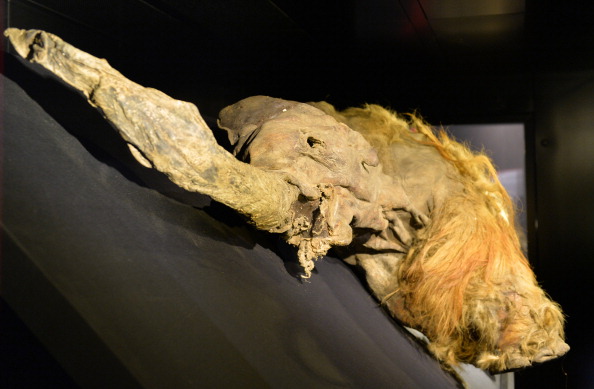
The frozen carcass of a 39,000-year-old female woolly mammoth named Yuka from the Siberian permafrost is displayed for an exhibition in Yokohama, suburban Tokyo, at a press preview before the opening. The carcass will be shown to the public during an exhibition at Pacifico Yokohama.

Other Organisms That Survived Extraordinary Timespans

In Russia, a pair of prehistoric nematodes, also called roundworms, were discovered and successfully revived, it is said to have been between 30,000 and 42,000 years old.

Studies have shown that over the years, a lot of organisms have been revived from their frozen state but what makes this new discovery more interesting is that none of these past organisms is as complex as the bdelloid rotifer.

Additionally, there have been discoveries on the dead but frozen larger species like the 20,000-year-old woolly rhino that was discovered by a Siberian farmer in the area of Yakutia in 2021 and the 57,000-year-old Pleistocene grey wolf puppy, the most perfectly preserved animal of its kind.

More research is still to be made on this study. The hope is that insights from these tiny animals will offer clues as to how better to cryo-preserve the cells, tissues, and organs of other animals, including humans.

Perfectly-preserved dinosaur embryo found inside the fossilized egg in China

Perfectly-preserved dinosaur embryo found inside the fossilized egg in China

A well-preserved dinosaur embryo has been found inside a fossilized egg. The fossilized dinosaur embryo came from Ganzhou, Jiangxi Province in southern China and was acquired by researchers in 2000.

Researchers at Yingliang Group, a company that mines stones, suspected it contained egg fossils, but put it in storage for 10 years, according to a news release.

When construction began on Yingliang Stone Natural History Museum, boxes of unearthed fossils were sorted through.

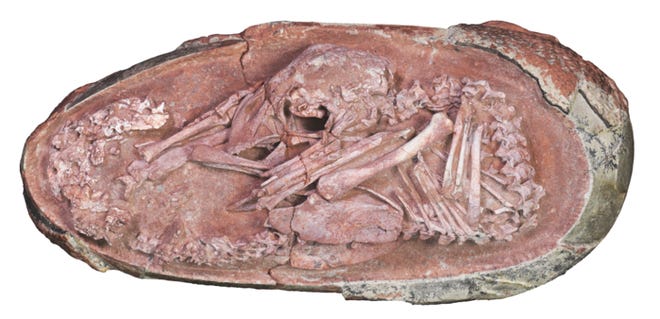
“Museum staff identified them as dinosaur eggs and saw some bones on the broken cross-section of one of the eggs,” Lida Xing of China University of Geosciences, Beijing, said in a news release. An embryo was found hidden within, which they named “Baby Yingliang.”

The embryo is that of the bird-like oviraptorosaurs, part of the theropod group. Theropod means “beast foot,” but theropod feet usually resembled those of birds. Birds are descended from one lineage of small theropods. 

Perfectly-preserved dinosaur embryo found inside the fossilized egg in China
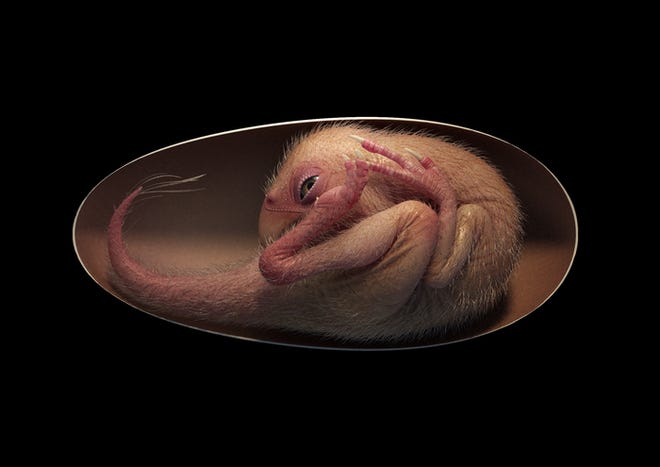
Reconstruction of a close-to-hatching oviraptorosaur egg.

In studying the embryo, researchers found the dinosaur took on a distinctive tucking posture before hatching, which had been considered unique to birds.

The study is published in the science journal.

Researchers say this behaviour may have evolved through non-avian theropods.

“Most known non-avian dinosaur embryos are incomplete with skeletons disarticulated,” said Waisum Maof the University of Birmingham, U.K.

“We were surprised to see this embryo beautifully preserved inside a dinosaur egg, lying in a bird-like posture. This posture had not been recognized in non-avian dinosaurs before.”

The oviraptorosaur embryo, which has been named “Baby Yingliang.”

While fossilized dinosaur eggs have been found during the last 100 years, discovering a well-preserved embryo is very rare, the researchers said in the release. 

The embryo’s posture was not previously seen in non-avian dinosaurs, which is “especially notable because it’s reminiscent of a late-stage modern bird embryo.”

The researchers will continue to study the rare specimen in even more depth.

They will attempt to image its internal anatomy. Some of its body parts are still covered in rocks. Their findings can also be used in more studies of fossil embryos.

Researchers Uncovered a 5,000-Year-Old Crystal Dagger Buried in Spain

Researchers Uncovered a 5,000-Year-Old Crystal Dagger Buried in Spain

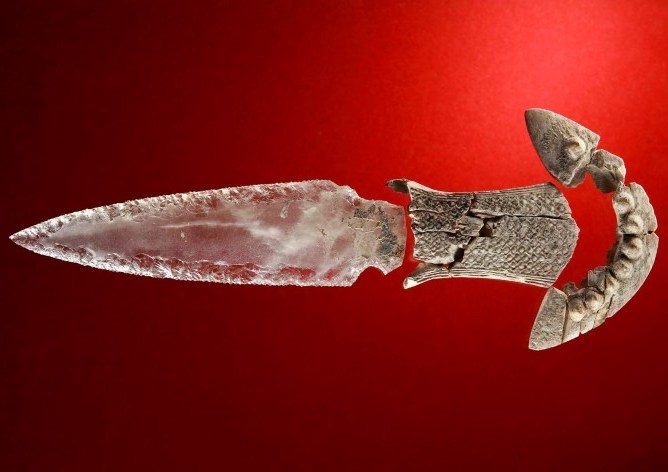
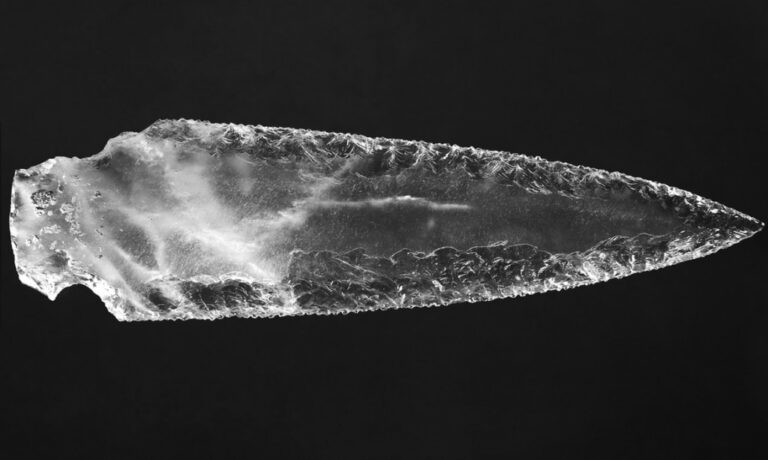
Inside an ancient tomb near Seville, researchers found the remains of several individuals buried in a ritualistic fashion, as well as a most striking artefact: a quite beautiful dagger made from rock crystal.

The intricately carved crystal dagger has been dated to at least 3000 BCE, making it the “most technically sophisticated and esthetically impressive collection of rock crystal material culture ever found in Prehistoric Iberia,” according to Spanish researchers who investigated the site.

Prehistoric humans in Europe made most of their tools from chert and flint. Tools made by knapping ‘rock crystals’ (macro-crystalline quartz) were far less prevalent, but nevertheless, people developed a technique for their manufacturing that appeared during late prehistory in certain European regions, such as the southwest Iberian Peninsula in the third millennium BCE.

Although rock crystal tools were more difficult to fashion and the raw materials weren’t as abundant as sedimentary rock, prehistoric people likely cherished them due to their social value.

Just as we stand in awe today at their sight, one would imagine that people were even more impressed by the thousands of years ago.

This particularly exquisite rock crystal tool, an 8.5-inch long dagger, was found in one of eight megalithic tombs from Valencina de la Concepción, a site near Seville in Spain that is considered one of the most significant for the study of Copper Age Iberia.

The tomb, known as the Montelirio tholos, was excavated between 2007 and 2010.

It is a great megalithic construction with a 39-meter (128-foot) corridor leading to the main chamber with a 4.75-meter (15.5-foot) diameter from which, through a narrow corridor, a secondary chamber is accessible.

Researchers Uncovered a 5,000-Year-Old Crystal Dagger Buried in Spain

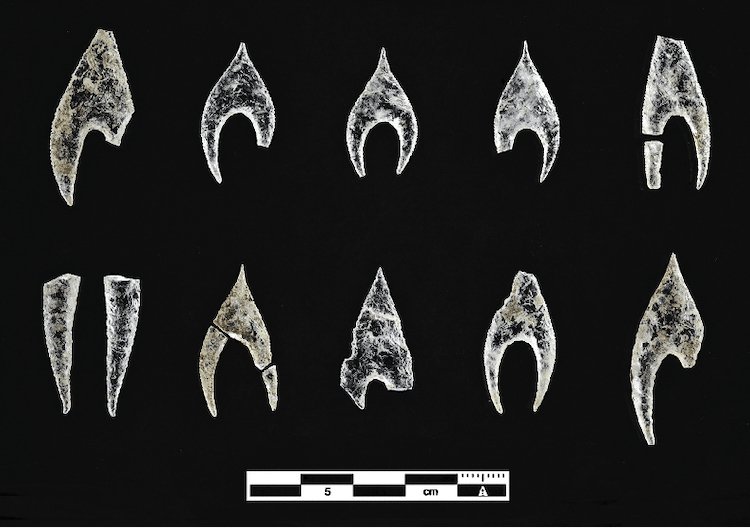
Researchers found the remains of at least 25 individuals, alongside numerous sumptuous grave goods, including shrouds and clothes made of tens of thousands of perforated beads and decorated with amber beads, as well as many flint arrowheads, found fragments of gold blades, ivory objects, and of course the dazzling crystal core.

The arrowheads, blade, and rock crystal dagger were found at the back of the main chamber. No other objects were found in the rest of the chamber, which is suspicious.

The accumulation of artefacts right next to the main chamber’s access corridor “suggest an offering similar to those discovered in the main corridor, where the arrowheads, although made of lower quality materials, were found in large groups associated with an altar and other offerings (plants),” said researchers at the University of Granada and the University of Seville in a study published in Quaternary International.

At least several females and one male-identified within Montelirio tholos are believed to have died due to poisoning.

The remains of the women were arranged in a circular fashion in a chamber next to the bones of the male, who may have been a person of high status. The dagger itself was found in a different chamber “in association with an ivory hilt and sheath.”

There are no sources of quartz of the kind used in the dagger near the site, which suggests the materials were sourced from far afield.

The researchers say this is another reason why these crystal daggers and arrowheads may have been reserved to a few elite individuals who could afford them, having a dual significance.

“On the one hand, it had a social significance due to the exoticism of the material and the fact that its transformation required very specific skills and probably some degree of technical specialisation. They probably represent funerary paraphernalia only accessible to the elite of this time period. The association of the dagger blade to a handle made of ivory, also a non-local raw material that must have been of great value, strongly suggests the high-ranking status of the people making use of such objects.”

“On the other hand, rock crystal must have had a symbolic significance as a raw material invested with special meanings and connotations. The literature provides examples of societies in which rock crystal and quartz as raw materials symbolise vitality, magical powers and a connection with ancestors.”