Is there an ‘underworld’ under the earth, according to a new archaeological find?
Excavations at the Yazlkaya Rock Temple in Turkey, which began over 200 years ago, have uncovered an ancient calendar and a map of the cosmos, both of which provide fascinating evidence.
The paintings in the strange stone carvings, which were probably made about 3,200 years ago, include details of an “underworld” sitting beneath the earth.
Watch an explanation from Luwian Studies University that researched the subject:
In the temple, discovered by a French archaeologist and historian Charles Texier as early as 1834, limestone carvings depicting more than 90 different figures, including animals, monsters and gods, have been found.
It took almost 200 years to decipher the paintings, but researchers have determined that the representations are of a cosmos that includes the Earth, the sky and the “underworld” that show the vitality of the creation myth.
On one wall there are drawings of the goddess of the sun and the goddess of the storm, where one can see that gods were placed in the painting higher than the other figures.
In contrast, on the eastern and western walls of the temple one can see the lesser people, the phases of the moon and the seasons, signifying “cycles and rebirth,” according to the researchers.
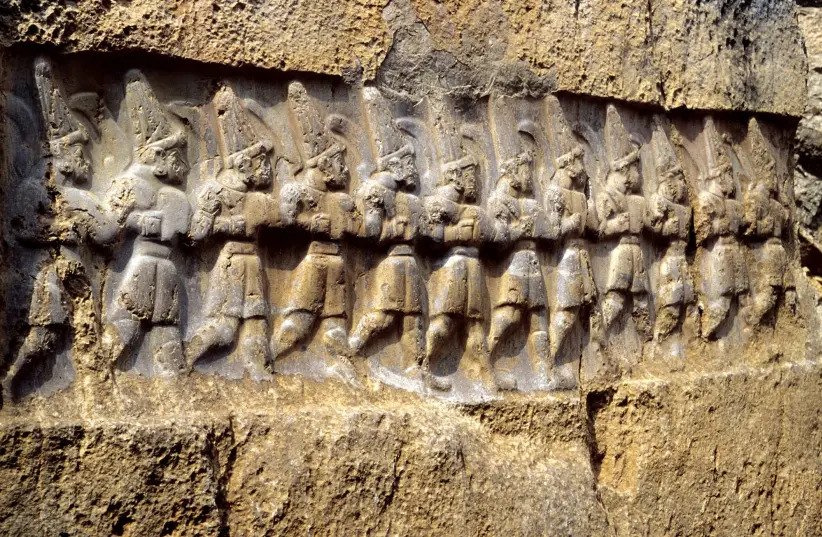
Relief with the twelve gods of the underworld at Yazılıkaya Rock Temple
According to estimates, scholars estimate that in those days there were about 17 deities, each with a line marking between the gods. Also, in one of the rooms of the temple was a painting dedicated to the “underworld,” with testimonies of the god of the sword.
“We believe the temple fully represents a symbolic image of the universe, including its static levels – earth, sky and underworld, as well as the cyclical processes of renewal – day and night or summer and winter,” one researcher explained in an interview in an article published in the Journal of Skyscape Archaeology.
Italy said Monday it had recovered from a Belgian collector hundreds of illegally gathered archaeological finds dating as far back as the sixth century BC, worth 11 million euros.
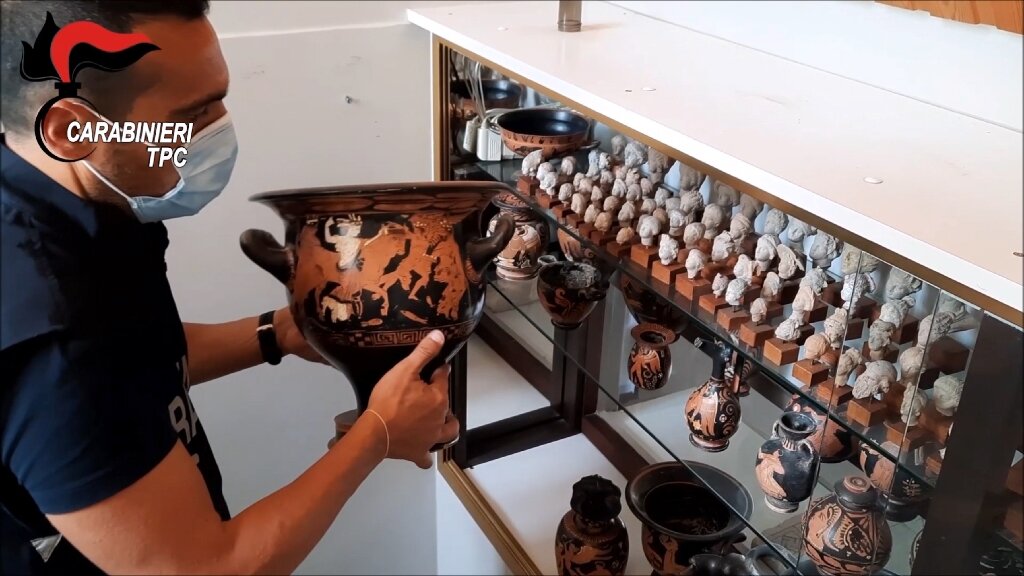
A police officer handles one of the nearly 800 archeological pieces ‘of exceptional rarity and inestimable value’ recovered from a Belgian collector.
The nearly 800 pieces “of exceptional rarity and inestimable value”, including stelae, amphorae and other works, came from clandestine excavations in Apulia in Italy’s southeastern tip, according to the Carabinieri police in charge of cultural heritage.
The investigation began in 2017 after a state archaeology lab in Apulia noticed in European art catalogues that decorative elements from a Daunian funerary stele belonging to a “wealthy Belgian collector” resembled those found within a fragment in a southern Italian museum.
That flat stone slab from Daunia—a historical region of Apulia—in the collection of the Belgian collector was missing a piece in its centre.
An official within the restoration lab noticed that the piece in the museum’s collection completed the design of a shield and a warrior on horseback that was missing on the stele.
“During the course of the search, a veritable ‘archaeological treasure’ was recovered, consisting of hundreds of Apulian figurative ceramic finds and other Daunian stelae, all illegally exported from Italy, which were then seized in Belgium,” read a statement from police.
Italy was able to repatriate the works after all the legal appeals of the collector were dismissed, police said.
Besides stelae, the collection includes vases painted with red figures, amphorae, black glazed ceramics, and numerous terracotta figurines. The pieces date back to between the sixth and third centuries BC.
Footprints of Last Dinosaurs To Walk on UK Soil 110 Million Years Ago Found in Kent
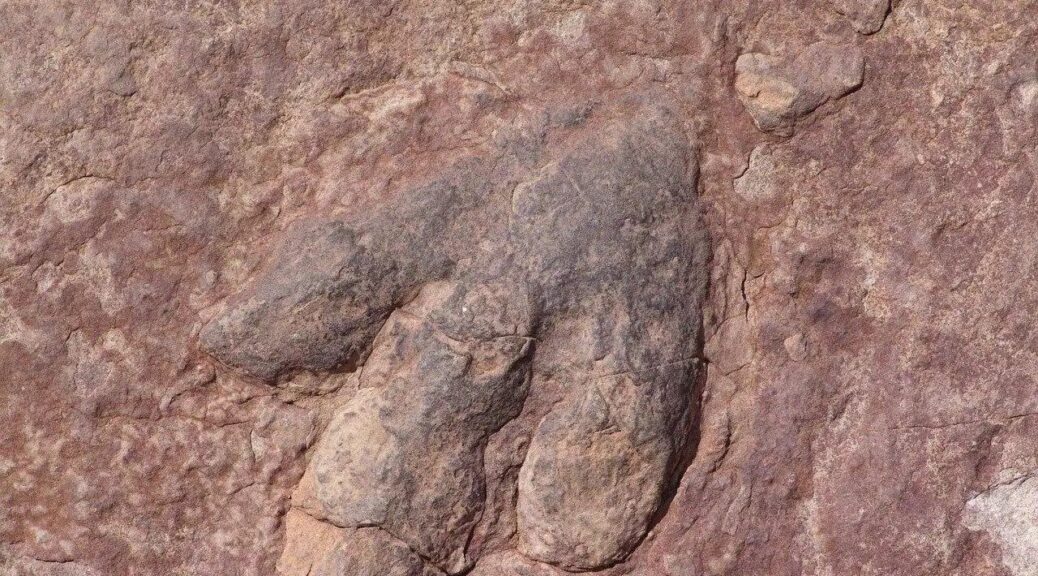
In the realm of palaeontology, there’s some exciting news! At least six different dinosaur species’ footprints have been unearthed – the very last dinosaurs to walk on UK land 110 million years ago!
Footprints Of Last Dinosaurs To Walk On UK Soil 110 Million Years Ago Found in Kent
These footprints have been discovered in Folkestone, a port town on the English Channel, in Kent, south-east England, reports PTI.
“This is the first time dinosaur footprints have been found in strata known as the ‘Folkestone Formation” and it’s quite an extraordinary discovery because these dinosaurs would have been the last to roam in this country before becoming extinct,’ said David Martill, Professor of Palaeobiology, at the University of Portsmouth.
“They were walking around close to where the White Cliffs of Dover are now – next time you’re on a ferry and you see those magnificent cliffs just imagine that,” he said.
Footprint fossils are formed by sediment filling the impression when a dinosaur’s foot pushes into ground
The study titled ‘The youngest dinosaur footprints from England and their palaeoenvironmental implications’ has been published in the journal ‘Proceedings of the Geologists’ Association” this week.
In fact, some of these unique footprints are also on display at the Folkestone Museum.
According to the study, these newly discovered dinosaur footprints can be referred to as theropod, ornithopod and possibly ankylosaur dinosaurs.
These dinosaur footprints were discovered by researchers in the cliffs and on the foreshore in Folkestone.
The town suffers through stormy conditions that affect the cliff and coastal waters. This is why it’s constantly revealing new fossils.
According to Philip Hadland, Collections and Engagement Curator, at the Hastings Museum and Art Gallery and the lead author on the paper, “Back in 2011, I came across unusual impressions in the rock formation at Folkestone. They seemed to be repeating and all I could think was they might be footprints”.
He further added, “this was at odds with what most geologists say about the rocks here, but I went looking for more footprints and as the tides revealed more by erosion, I found even better ones.
More work was needed to convince the scientific community of their validity, so I teamed up with experts at the University of Portsmouth to verify what I’d found.”
Plague Victims Identified in Individual Graves in England
In the mid-14th century, Europe was devastated by a major pandemic – the Black Death – which killed between 40 and 60 per cent of the population. Later waves of plague then continued to strike regularly over several centuries.
Plague kills so rapidly it leaves no visible traces on the skeleton, so archaeologists have previously been unable to identify individuals who died of plague unless they were buried in mass graves.
Whilst it has long been suspected that most plague victims received individual burial, this has been impossible to confirm until now.
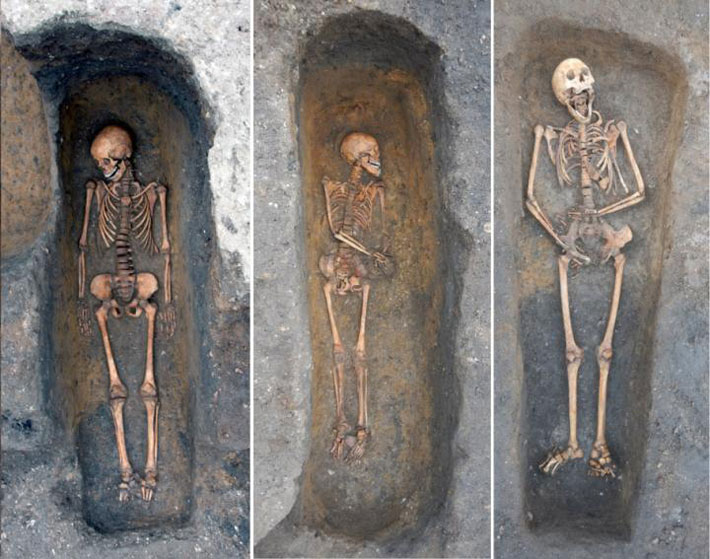
By studying DNA from the teeth of individuals who died at this time, researchers from the After the Plague project, based at the Department of Archaeology, University of Cambridge, have identified the presence of Yersinia Pestis, the pathogen that causes plague.
These include people who received normal individual burials at a parish cemetery and friary in Cambridge and in the nearby village of Clopton.
Reconstruction of plague victim from All Saints, Cambridge
Lead author Craig Cessford of the University of Cambridge said, “These individual burials show that even during plague outbreaks individual people were being buried with considerable care and attention.
This is shown particularly at the friary where at least three such individuals were buried within the chapter house. Cambridge Archaeological Unit conducted excavations on this site on behalf of the University in 2017.”
“The individual at the parish of All Saints by the Castle in Cambridge was also carefully buried; this contrasts with the apocalyptic language used to describe the abandonment of this church in 1365 when it was reported that the church was partly ruinous and ‘the bones of dead bodies are exposed to beasts’.”
The study also shows that some plague victims in Cambridge did, indeed, receive mass burials.
Yersinia Pestis was identified in several parishioners from St Benet’s, who were buried together in a large trench in the churchyard excavated by the Cambridge Archaeological Unit on behalf of Corpus Christi College.
This part of the churchyard was soon afterwards transferred to Corpus Christi College, which was founded by the St Bene’t’s parish guild to commemorate the dead including the victims of the Black Death. For centuries, the members of the College would walk over the mass burial every day on the way to the parish church.
Cessford concluded, “Our work demonstrates that it is now possible to identify individuals who died from plague and received individual burials.
This greatly improves our understanding of the plague and shows that even in incredibly traumatic times during past pandemics people tried very hard to bury the deceased with as much care as possible.”
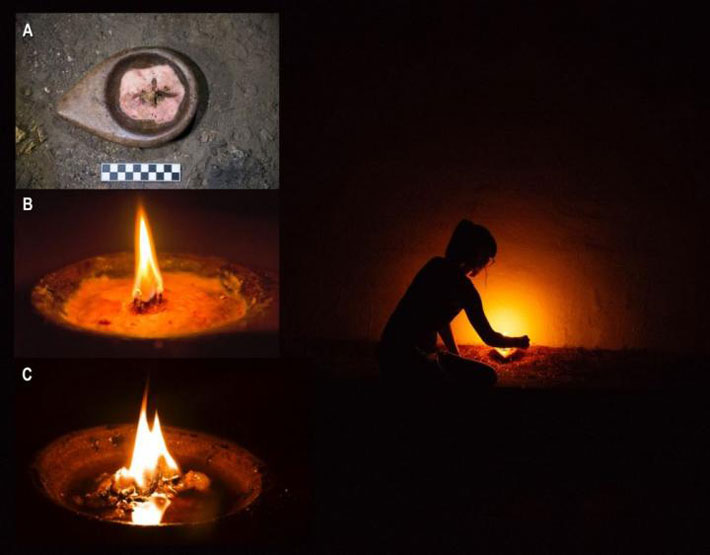
According to a Public Library of Science statement, a team of researchers led by Mª Ángeles Medina-Alcaide of the University of Cantabria tested possible sources of light employed by Paleolithic peoples to reach the deepest, darkest areas of caves.
Humans need light to access the deepest areas of caves–and these visits also depend on the type of light available, like light intensity and duration, area of illumination, and colour temperature all determine how the cave environment can be used.
In this study, Medina-Alcaide and colleagues use archaeological evidence of lighting remains found across several Paleolithic caves featuring cave art in Southwest Europe to experimentally replicate the artificial lighting systems presumably used by the original human cave dwellers, allowing immediate empirical observations.
The authors conducted their experiments at Isuntza 1 Cave in the Basque region of Spain. Their replicated lighting was based as much as possible on archaeological evidence found in similar Paleolithic caves and included five replicated torches (made variably from ivy, juniper, oak, birch, and pine resins), two stone lamps using animal fat (bone marrow from cow and deer), and a small fireplace (oak and juniper wood).
They found that the different lighting systems all had diverse features, suggesting their likely selection and use across different contexts.
Wooden torches made of multiple sticks worked best for exploring caves or crossing wide spaces since they projected light in all directions (up to almost six meters in the experiments), were easy to transport and didn’t dazzle the torchbearer despite having a light intensity of almost five times greater than a double-wicked grease lamp.
Torchlight lasted for an average of 41 minutes in this study, with the shortest-lived torch burning 21 minutes, and the longest burning 61 minutes. The torches tended to function irregularly and required close supervision when burning–though they were easy to relight via oxygenation (moving the torch quickly from side to side).
Set of photographs of stone lamp experiment.
The authors found the main torch disadvantage was the amount of smoke production. In contrast, grease lamps worked best for lighting small spaces over a long period–with a light intensity similar to a candle, they were able to light up to three meters (or more if larger or multiple wicks were added).
Though grease lamps weren’t well-suited for transit due to their dazzling effect and poor floor illumination, they burned consistently and without much smoke for well over an hour, complementing the use of torches.
The authors made one fireplace, a static system, which burned very smokily and was extinguished after 30 minutes. They note that the location was likely not appropriate due to air currents in the cave.
The authors note that the practical insights and observations gained from their experimental replications are invaluable for a deeper understanding of what it may have been like to access the darkest parts of inhabited caves, especially to create art, and emphasize that future experimental lighting studies will be useful in continuing to unravel our ancestors’ activities in their caves.
The authors add: “The artificial lighting was a crucial physical resource for expanding complex social and economic behaviour in Paleolithic groups, especially for the development of the first palaeo-speleological explorations and for the origin of art in caves.”
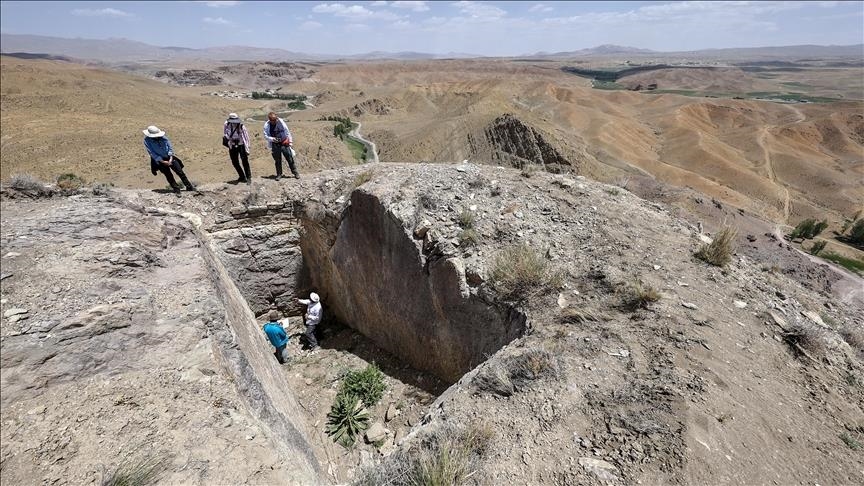
Archaeologists have discovered a 2800-year-old Urartian Castle in eastern Turkey
Archaeologists have discovered the remains of a castle dating back 2,800 years ago on a mountain at an altitude of 2,500 meters (8,200 feet) in the Gürpınar district of eastern Turkey’s Van province.
According to their examinations, the findings show that the castle had been used by different civilizations since the Urartians.
The remains were unearthed during an excavation project sponsored by Van Yüzüncü Yıl University. A large cistern with a depth of 6.5 meters, a length of 6.5 meters and a diameter of 2.5 meters, walls and ceramic artefacts were also found in the castle.
The remains of the newly-discovered castle’s walls, Van, eastern Turkey.
Archaeologists examine the remains of the castle on a mountain, Van, eastern Turkey
“Although it is believed to be dated back to the Urartian era like the Van Castle, we see that it was mostly used in the Middle Ages,” Rafet Çavuşoğlu, the head of the excavation team and an archaeology professor at Van Yüzüncü Yıl University, told Anadolu Agency (AA).
“We understand from the ceramic pieces, the cistern and the city walls that this place was built about 2,800 years ago,” he said.
He added that limestone rock and sandstone were used in the construction of the walls in the area.
The newly found castle will contribute to the historical richness of the district, Hayrullah Tanış, district mayor of Gürpınar, said. “In cooperation with Van Yüzüncü Yıl University, we made an important discovery here.
We found a new castle witnessing the Urartian period and the Middle Ages. This discovery excites us in terms of tourism and culture,” Tanış added.
Perfect 215-million-year-old dinosaur print found by a girl, 4, on Welsh beach
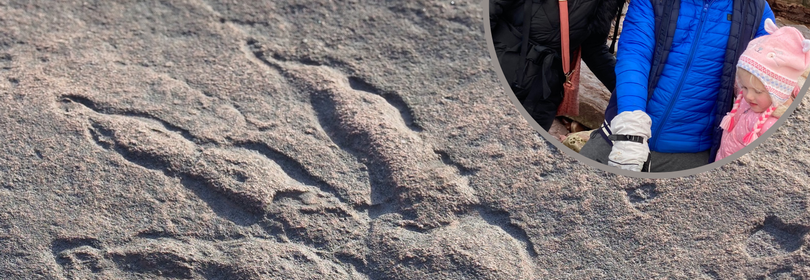
A girl from Wales discovered a well-preserved 215 million-year-old dinosaur print, described as the ‘finest of its type found in 10 years. After making the discovery on a beach at Bendricks Bay near Barry, four-year-old Lily Wilder has been hailed by researchers.
The girl, from Llandough, near Cardiff, found the fossilised rock as she walked out with her dad, Richard, 47.
The print is just over 3.9 inches long and was made by a two-footed dinosaur currently unknown to science.
Lily Wilder with her mum Sally and dad Richard and the dinosaur footprint she found on Bendricks Bay Barry
The creature that created it is thought to have stood about 75cm tall and 2.5m long.
Experts called it ‘the finest impression of a 215-million-year-old dinosaur print found in Britain in a decade.
The footprint as it was found by Lilly Wilder, 4
It was so perfect Mum Sally, 38, said they initially thought it was a carving made by artists.
She said: ‘Lily saw it when they were walking along and said, “daddy look”.
‘When Richard came home and showed me the photograph, I thought it looked amazing.
‘Richard thought it was too good to be true. I was put in touch with experts who took it from there.
‘We weren’t even sure it was real.
‘I was imagining an artist had gone down and scratched it out, but I knew dinosaur footprints had been found along that piece of the coast before, so I just thought I’d ask some people.
‘I found this fossil identification page on Facebook and I posted it on there and people went a bit crazy.
‘It’s all been so exciting, discovering that it’s actually what they thought it was.’
It was inspected after Sally and their husband Richard reported the finding to experts, including palaeontologists, who specialise in dinosaurs.
Karl-James Langford, of Archaeology Cymru called it ‘the finest impression of a 215-million-year-old dinosaur print found in Britain in a decade.’
He added: ‘It’s so perfect and absolutely pristine, it’s a wonderful piece.
‘I would say it’s internationally important and that is why the museum took it. I would say it’s the best dinosaur footprint found in the UK in the past 10 years.’
A spokesman from the National Museum in Cardiff said the detail in the fossil was of great value to science.
‘Its spectacular preservation may help scientists establish more about the actual structure of their feet as the preservation is clear enough to show individual pads and even claw impressions.’
DNA shows Scythian warrior mummy was a 13-year-old girl
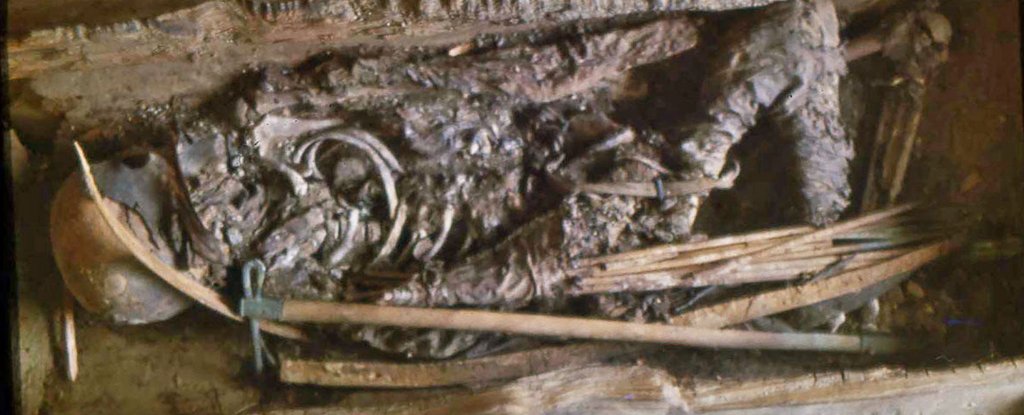
Remains of the young ancient Scythian warrior
The story of a clan of warrior women was formed in Greek mythology during a time when there were ancient gods, warriors, and rulers. These powerful female combatants from Asia Minor said to be daughters of the gods, have captured people’s imaginations for ages and continue to pervade popular culture today as mythical Amazon warriors.
For a long time, these warrior women were assumed to be figments of ancient imaginations, but archaeological evidence has since revealed that the warrior women, who may have inspired these myths, really did exist. Late last year, an archaeological discovery of two women thought to be nomadic Scythians from around 2,500 years ago (4th century BCE) was revealed. They were buried in what’s now the western Russian village of Devitsa, with parts of a horse-riding harness and weapons, including iron knives and 30 arrowheads.
“We can certainly say that these two women were horse warriors,” said archaeologist Valerii Guliaev of the Russian Academy of Sciences’ Institute of Archaeology at the time.
The Scythian remains with the headdress.
They were found in a burial mound with two other women – one aged between 40-50 years old, who wore a golden headdress with decorative floral ornaments. The other, aged 30-35, was buried alongside two spears and positioned like she was riding a horse.
“During the last decade, our expedition has discovered approximately 11 burials of young armed women. Separate barrows were filled for them and all burial rites which were usually made for men were done for them,” explained Guliaev.
Plate from headdress made from an alloy of 65-70 percent gold.
Now, another team from Russia has mapped the genome of 2,600-year-old Scythian remains that had been discovered in a wooden sarcophagus with an array of weapons back in 1988.
“This child was initially considered to be male because with him were found characteristics [usually attributed to male] archaeological finds: an axe, a bow, arrows,” archaeologist Varvara Busova from the Russian Academy of Sciences told ScienceAlert.
But the child’s DNA revealed the remains were actually female. “That means we can say with some probability that [Scythian] girls have also participated in hunting or military campaigns,” Busova added.
The warrior girl was buried in Siberia’s modern-day Tuva republic, with an axe, a birch bow and a quiver with ten arrows – some wood, bone or bronze tipped. Due to the larch coffin sealing tightly against fresh air, her remains were partially mummified.
The Scythian girl’s battle axe.
“This young ‘Amazon’ had not yet reached the age of 14 years,” said lead author of the new research, archaeologist Marina Kilunovskaya from the Institute for the History of Material Culture, Russian Academy of Sciences.
The girl was clothed in a long fur coat, a shirt, and trousers or a skirt. Using a scanning electron microscope, the researchers found her coat was composed of a patchwork of skins from a rodent related to Jerboa. And carbon dating of other grave items placed the burial complex from 7th-5th centuries BCE, which is early Scythian times.
Busova said the research team would now like to get more accurate dating of the young warrior girl’s remains, investigate the composition of the metal grave objects, and work to restore and conserve what they have found. They’re also hoping CT scans of the remains may give them clues on how the young female warrior died.
The young warrior’s arrows.
The finding “unwittingly brings us back to the myth about the Amazons that have survived to this day thanks to Herodotus (Herod. IV: 110-118),” the team wrote in their paper.
The ancient Greek historian Herodotus claimed Amazons fought the Scythians, but it seems they could actually be the Scythian women who trained, hunted and fought alongside their male counterparts.
“About one-third of all Scythian women are buried with weapons and have war injuries just like the men,” historian Adrienne Mayor told National Geographic in 2014.
“They lived in small tribes, so it makes sense that everyone in the tribe is a stakeholder. They all have to contribute to the defence and to war efforts and hunting.”
Through the centuries, myths of the Amazons have been embellished with outrageous claims, from cutting off their own breasts to improve their archery, to murdering their male children.
But we now have the opportunity to learn more about the true female warriors behind the myths thanks to modern archaeological studies and DNA techniques.