Category Archives: EUROPE

Ancient Necropolis Found on Croatian Island

Ancient Necropolis Found on Croatian Island

The protective investigation in the garden of the Radoevi Palace in the town of Hvar on the Croatian island of the same name has been concluded after two months of intensive archaeological labour.

The research, which was spurred by the upcoming construction of the new Hvar City Library and Reading Room, has resulted in a spectacular discovery.

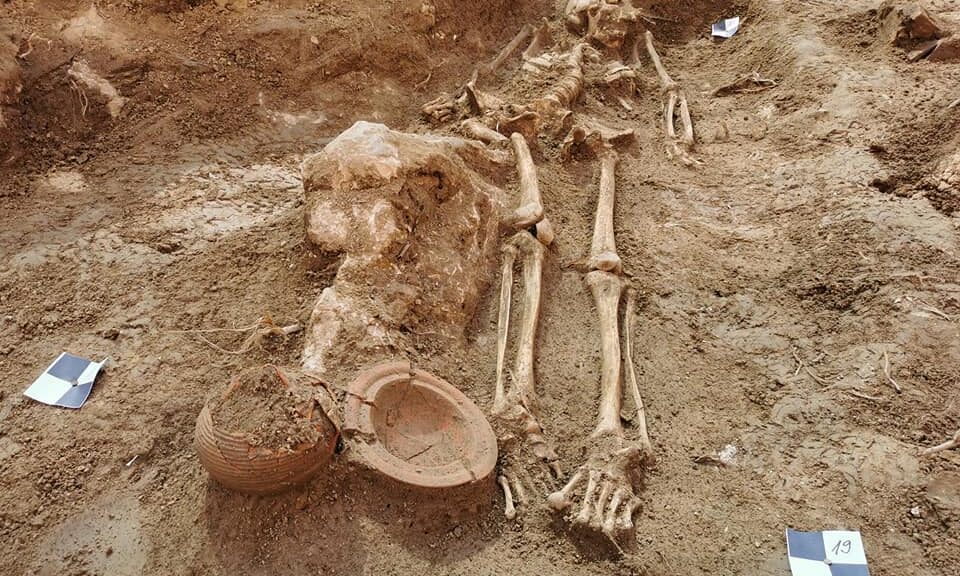
According to preliminary results, a late antiquity necropolis from the second half of the 4th and the beginning of the 5th century was found, as well as the eastern branch of the ramparts of a late antique settlement with a city gate dating to the end of the 5th century.

On an area of 65 square meters, 20 graves with osteological remains of 32 people were discovered.

The basic types of late antiquity tombs included: simple tombs in earthenware, tombs in amphorae, tomb structures made of roof tiles, as well as one masonry tomb in which 12 skeletons were found. 

What particularly emphasises this necropolis is its exceptional preservation, as well as the very valuable and complete grave, finds, Kantharos reported.

Most of the tombs were decorated with one or more ceramic jugs and lamps, glass bottles and vessels, money and other small utensils. 

Preliminary analysis of these findings provided a preliminary dating of the necropolis itself but also hinted at completely new insights into local/regional late antique ceramic production as well as trade links, through documented imports, some of which were first recorded in the Adriatic.

Just before the end of the research, an older ancient wall was found in the deepest layers, which according to the African sigilate is preliminarily dated to the 2nd century.

Of all the traces of late antique life found in Hvar so far, this is really the most significant and richest site, which vividly shows all the archaeological splendour of grave finds and gives us, for now, the most detailed insight into funeral customs of that period, but also new knowledge about urbanism, Dalmacija Danas said.

The expert team consisted of Eduard Viskovic, Joško Barbarić, Marko Bibić, and Jure Tudor, with the scientific assistance of dr. sc. Marina Ugarković, Ph.D. Josip Baraka Perica.

‘Exceptionally high’ number of decapitated bodies found at Roman burial site

‘Exceptionally high’ number of decapitated bodies found at Roman burial site

'Exceptionally high' number of decapitated bodies found at Roman burial site
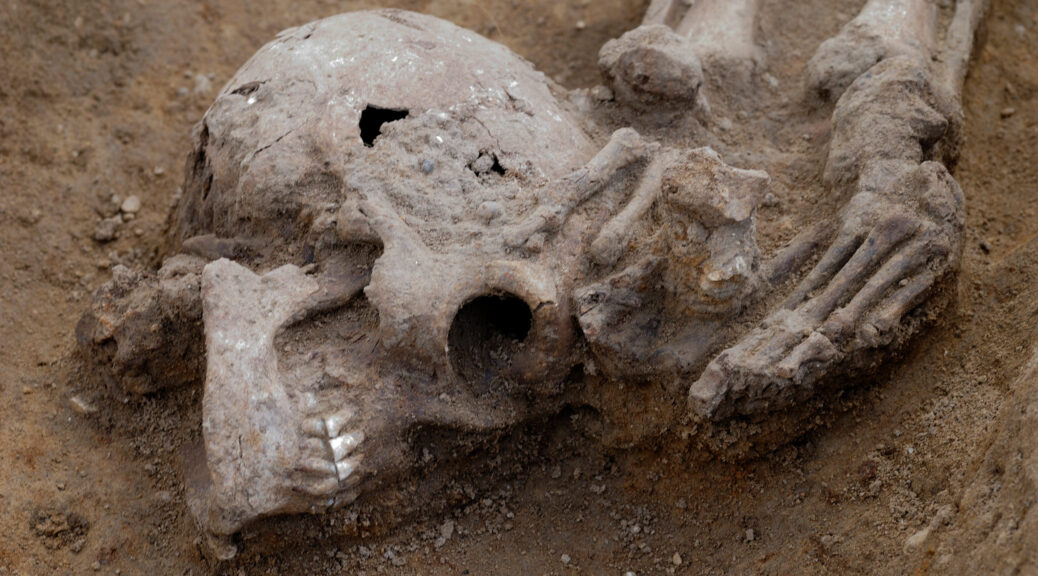
One of the decapitated skeletons found at Knobb’s Farm.

Ancient Romans left an enduring mark on present-day Britain. Crumbling stone walls across the island speak to their once-vast empire. But a cemetery uncovered in Cambridgeshire highlights another legacy of Roman rule — its brutality. Here, archaeologists discovered a high number of decapitated skeletons, likely belonging to people who somehow offended their conquerers.

Archaeologists from the Cambridge Archaeological Unit made the discovery at Knobb’s Farm in Cambridgeshire, some 70 miles north of London. There, between 2001 and 2010, they unearthed three Roman-era cemeteries from the third century.

But these cemeteries stood out. Of the 52 burials, 17 were decapitated, and 13 were buried face down. And now, researchers are pointing out the significance of the macabre site.

“Knobb’s Farm has an exceptionally high proportion of decapitated bodies and prone burials (33 per cent and 25 per cent) when compared with burial grounds locally and across Roman Britain,” noted a study published in the journal Britannica in May 2021.

The people buried at Knobb’s Farm also seemed to have died violent deaths. Isabel Lisboa, the archaeologist who led the excavations, noted that they were likely alive when beheaded.

A graphic showing that this skeleton was hit with a “blow was directed obliquely downwards from behind and to the left,” indicating that he was kneeling when he died.

Some of the skeletons even bore marks of more extreme violence. One man had several deep cuts in the back of his skull, suggesting that someone had subdued him with a sword before chopping off his head. And one woman’s skeleton bore cut marks on her face, arms, and legs.

“It is not possible to distinguish whether [her injuries] were made immediately before death (resulting from, for example, torture or flaying) or after death (for example, from corpse mutilation, post-mortem ‘punishment’ or ritual de-fleshing of the body),” noted the study.

So why does Knobb’s Farm contain so many beheaded skeletons? It likely has to do with both the age of the skeletons and their location.

Some decapitated skeletons had their skulls placed at their feet, perhaps to keep their spirits from rising.

For 400 years — until about 410 A.D. — the Roman Empire ruled over present-day England. But their grip on power started to slip in the third century. As a result, anyone who dared defy the Romans could face extreme punishment.

“Any hint of insurrection against the Roman state would’ve been dealt with extremely violently,” explained Chris Gosden, a professor of European archaeology at the University of Oxford.

Indeed, the number of crimes in Britain that Romans felt worthy of the death penalty more than doubled in the third century — and quadrupled in the fourth century.

As such, researchers also noted that Roman cemeteries of the first and second centuries contained roughly 5 per cent decapitated bodies. But cemeteries that date between the third and fifth centuries contain almost 10 per cent.

Archeologists at the burial site.

Plus, the people who worked at Knobb’s Farm served a particularly important purpose to the Roman Empire — they helped supply the Roman Imperial Army. They bore unusual scrutiny from authorities.

“Roman laws seem to have been applied particularly harshly at Knobb’s Farm because it was associated with supplying the Roman army, so there were many decapitations,” explained Lisboa.

“Crimes normally would have been let go, but there were probably tensions with the Roman army.”

Because people living in the area supplied meat and grain to Roman troops, Roman authorities harshly punished any wrongdoing. Crimes that merited the death penalty, according to Gosden, could range from murder and theft to merely desecrating a shrine.

Over the centuries, the charges brought against those killed at Knobb’s Farm have been lost. But archaeologists do have a couple of clues about the people themselves. By studying their DNA and tooth enamel, researchers believe that Romans recruited people from far-flung regions like present-day Scotland, and the Alps.

And because they were buried among non-decapitated skeletons, researchers suspect that they had people who loved and cared for them.

“They were not buried as outcasts — they were buried in the normal rite with miniature pots around their heads,” Lisboa noted.

Indeed, despite the brutality of Roman rule in England, it seems that the Romans did allow their subjects one small mercy. Roman law permitted friends and families of executed criminals to request their bodies’ return for a proper burial.

The shackled skeleton may be the first direct evidence of slavery in Roman Britain

The shackled skeleton may be the first direct evidence of slavery in Roman Britain

The shackled skeleton may be the first direct evidence of slavery in Roman Britain
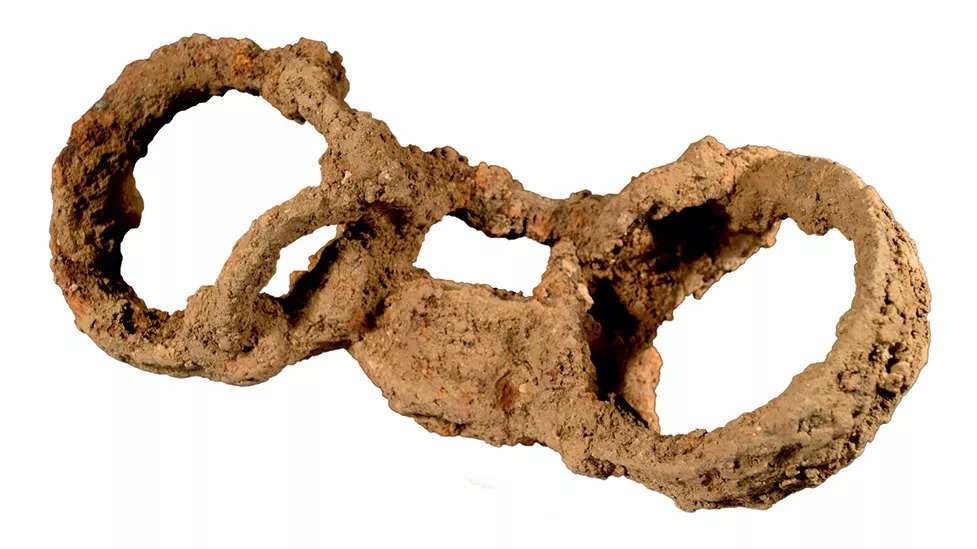
The Great Casterton Roman burial shackles were found locked around the skeleton’s ankles.

His ankles secured with heavy, locked iron fetters, the enslaved man appears to have been thrown in a ditch – a final act of indignity in death.

Now the discovery of the shackled male skeleton by workers in Rutland – thought to have been aged in his late 20s or early 30s – has been identified as rare and important evidence of slavery in Roman Britain and “an internationally significant find”.

It was also desperately grim, said Chris Chinnock, one of the archaeologists working on the project, but was important because it “forces us to ask questions that we wouldn’t ordinarily ask”.

Builders came across the bones when they were constructing a conservatory at a house in Great Casterton. Police were called and subsequent radiocarbon dating showed the remains were from between AD226 to AD427.

Archaeologists from the Museum of London Archaeology (Mola) were called in and have been researching the skeleton, with their findings published on Monday in the journal Britannia.

No one doubts that slavery existed during the Roman occupation of Britain but discovering direct archaeological evidence is another matter. Most of what is known come from inscriptions. “To have the opportunity to study the body of a person who quite probably was a slave is really important,” said Michael Marshall, a finds specialist at Mola.

Roman soldiers direct people to build a road in Roman Britain. From a painting by Paul Hardy.

The Great Casterton discovery is the first of its type in Britain, described by researchers as the clearest case of a burial of an enslaved individual found in the UK. “This burial is exceptionally unusual,” said Marshall.

Precisely who the man was will never be known but a number of informed guesses can be made. “It could be the dead person was somebody who had earned the ire of other people,” said Marshall. “Equally it could be that the people who buried him were tyrannical and awful. We can’t really understand the moral dimensions.”

The team have been examining a number of theories including that the shackles might have been added after the man died to demean him or brand him as a criminal in the afterlife.

The few skeletons found with shackles in other countries are normally the victims of natural disasters and have not been buried. That is not the case in Great Casterton, say archaeologists.

The burial position is an awkward one, said Chinnock, with the skeleton slightly on his right side and his left side and arm elevated on a slope. There is a Roman cemetery just 60 metres away, suggesting a conscious decision not to bury him properly. The likely explanation is that he has been thrown in a ditch and covered over.

A diagram of the Great Casterton shackled burial.

Chinnock, an expert in ancient bones, said the man appeared to be between 26 and 35 and had led a physically demanding life. A bony spur on an upper leg bone may have been caused by a fall or blow or be the result of a life filled with excessive physical activity. The injury had healed by the time he died and the cause of his death remains unknown.

The Mola team say the identity of the man will never be known but “the various pieces of evidence present the most convincing case for the remains of a Roman slave yet to be found in Britain”.

A number of questions remain around the Great Casterton man but it was clear, Marshall said, that it was “extraordinary” evidence of mistreatment. “For living wearers, shackles were both a form of imprisonment and a method of punishment, a source of discomfort, pain and stigma which may have left scars even after they had been removed.”

See Also: MORE ARCHAEOLOGY NEWS

It was difficult to get away from the conclusion that the people who disposed of the shackled man “really hated him and were really keen to make that obvious, whether to other people or in the longer, more spiritual sense”.

Los Millares- The Largets Known Fortified Neolithic Settlement in Europe

Los Millares- The Largets Known Fortified Neolithic Settlement in Europe

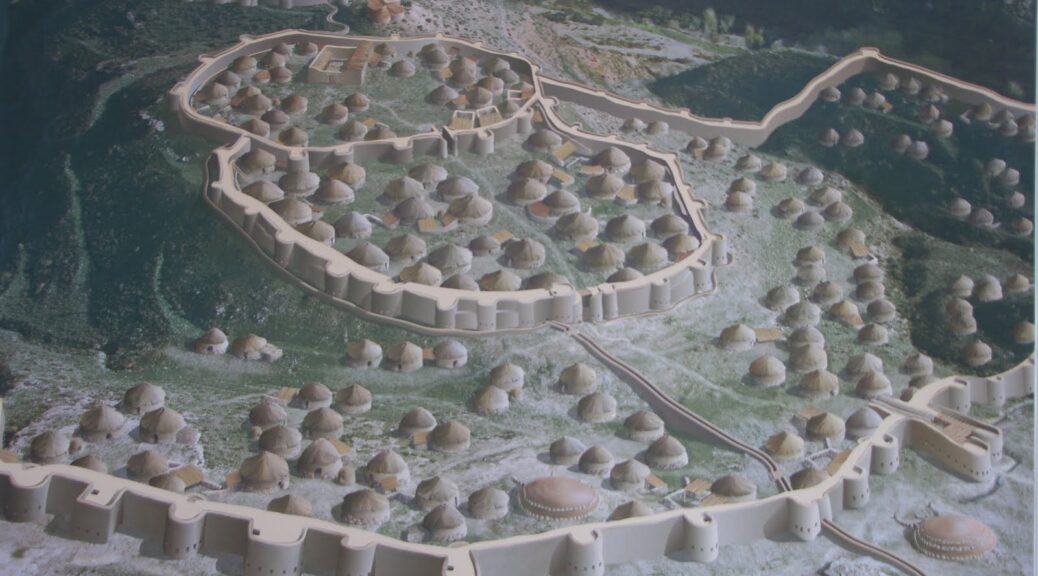
Just 17km from Almería between Santa Fe de Mondujar y Gádor lies Los Millares, the largest known European fortified Neolithic settlement, dated c. 3,200-2,300 BC. The site includes a settlement and a cemetery with over 80 megalithic tombs.

Los Millares- The Largets Known Fortified Neolithic Settlement in Europe

Three walls and an inner citadel with an elaborate fortified entrance make up part of extensive fortifications at Los Millares. Thirteen nearly circular enclosures were forts protecting it. Within the three walls are 80 passage graves.

Los Millares was constructed in three phases, each phase increasing the level of fortification. The fortification is not unique to the Mediterranean area of the 3rd millennium; other sites with bastions and defensive towers include the sites of Jericho, Ai, and Aral (in Palestine) and Lebous, Boussargues and Campe of Laures (in France).

It consists of a settlement, guarded by numerous outlying forts and a cemetery of passage tombs and covers around 5 acres. 

Three concentric walls with four bastions surrounded the settlement itself; radiocarbon dating has established that one wall collapsed and was rebuilt around 3,025 BC. A cluster of simple dwellings lay inside the walls as well as one large building containing evidence of copper smelting.

Finally, the fortified citadel at the very top of the spur has only been investigated so far by means of various pilot trenches, which have revealed walls up to six metres thick, confirming the great importance of the structure. Within its grounds, there is a deep hollow, which is thought to be a water cistern but so far has not been excavated.

Los Millares was discovered in 1891 during the course of the construction of a railway and was first excavated by Luis Siret in the succeeding years.

Antonio Arribas and Fernando Molina from the University of Granada later excavated Los Millares from 1978-1995, and analysis continues on the massive amounts of information collected.

The strategic sequence of the site shows that the settlement went through various phases of occupation. The first was during the early copper age (3,200 to 2,800 B.C.) when the three interior walls were constructed.

The second was during the middle copper age (2,800 to 2,450 B.C.), when the innermost wall was demolished and the outer wall constructed, together with most of the small forts outside the settlement itself. Finally, in the late copper age (2,450 to 2,250 B.C.) the first bell beakers appeared, a form of pottery that was produced henceforth on a large scale in the village.

During this late period, some profound social upheaval brought about a gradual decline in the size of the settlement, whose inhabitants gradually retired towards the fortified citadel. The site appears to have been finally abandoned around 2,250 B.C.

Over eighty megalithic tombs are visible outside the settlement. The majority are of the type mentioned above, but tombs without corbelled roofs also exist.

The chronology of tomb construction and use is unclear, but analysis of tomb forms, sizes, numbers of burials, contents, and distributions suggests that the dead were selected for interment and that social ranking had emerged, with higher-ranked groups being buried in tombs located close to the settlement.

Similar Tholos Tombs are common in Mycenaean remains, and a connection is commonly suggested. They are also present at other places in Spain, noticeably at the Cueva de Viera, which sits beside the great Cueva de Menga passage mound. Holed stones are also a common feature of dolmens in the Caucasus region of Russia where hundreds are visible.

Large sheets of slate that were punched through and rounded off to make the entrances we see today, divided entrances. The chambers of the Tholos were lined with vertical slabs of slate, often painted red, sometimes with small niches present (used for the burial of children). The graves were finally covered over with conical mounds of earth and stones.

Many were given an outer skirting of slabs or masonry to strengthen the structure. Almost all the tombs were orientated east of southeast, except for a small group of seven mounds that were orientated southwest.

The tombs were collective with the number of skeletons discovered ranging from a dozen to over a hundred. Burial offerings included objects such as ivory and ostrich eggshell, copper tools, pottery vessels, arrowheads and flint knives.

The presence of such great quantities of mineral resources in the region is likely to be part of the reason for the existence of Los Millares in the first place. The parallel with the Minoans continues in the addition of arsenic as an antioxidant to their copper products. Arsenic is readily available in the local region of Sierra de Gador. Among the buildings dedicated to specialised activities, two areas have been identified as having once housed metallurgical workshops. While along the northern stretch of the outer wall there are several squares and round buildings dedicated to this, the best-preserved workshop is situated in a large rectangular building attached to the inner facade of the third line of fortification. Of considerable size, about 8m long by 6.5m wide, it was built with a solid masonry technique, with a door opening to the east. Inside are the remains of three structures: a mass of 1.3m in diameter with fragments of copper ore, a furnace delineated by a ring of clay with a depression at its centre to put the pot furnaces, and a small structure with slabs of slate in its northeast corner. It is suggested that this building was never roofed, as there is no post-holes present.

Melting Norwegian glacier releases 500-year-old perfectly preserved wooden box full of candles

Melting Norwegian glacier releases 500-year-old perfectly preserved wooden box full of candles

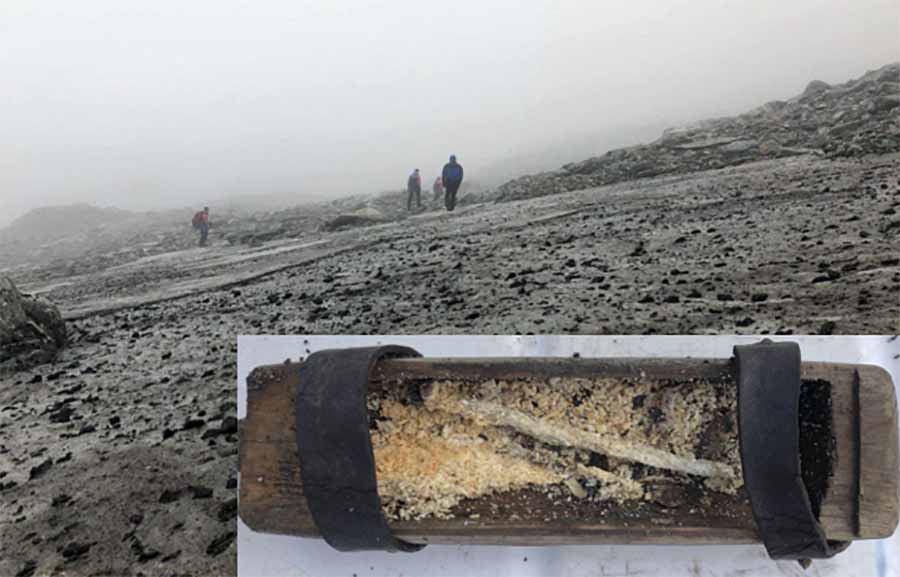
Archaeologists have discovered the remains of a beeswax candle used to assist Vikings to find their farms in a 500-year-old wooden box discovered in a perfectly preserved form when a glacier in Norway melted.

Archaeologists removed the tight lid of the pine box with the leather straps, uncovered in Norway’s Lendbreen ice patch, discovering the candle that was essential to Vikings hundreds of years ago.  

The team suggests the box – which was first uncovered in 2019 – was used to transport the long candles that were used by Vikings to light the path between their main farm and summer farm.

The Lendbreen ice patch has become a sought-out destination for archaeologists since 2011 when teams discovered thousands of artefacts sticking out from the melting Norwegian glacier.

At first, the team thought it was a tinderbox that was lost accidentally in the pass, but a further analysis proved otherwise, The History Blog reports.

The box found at the Lendbreen ice-patch containing a well-preserved beeswax candle.

‘It is radiocarbon-dated to AD 1475-1635, so 400-500 years old,’ glacial archaeologists from the Secrets of the Ice team shared in a statement. 

‘The content of the box was analyzed at the Museum of Cultural History in Oslo: We were in for a big surprise – the content is beeswax!

‘What we are seeing inside the box is very likely the remains of a beeswax candle.’

Candle boxes were a common item among Vikings that were used to house expensive beeswax candles as Vikings made their travels to different farms. 

The melting glaciers, brought on by climate change, is creating a valuable archaeological site in Norway, which was an ancient passageway used by Vikings for thousands of years and littered with forgotten artefacts. 

The Lendbreen ice patch has produced more than 6,000 artefacts since archaeologists began investigating the area.

Last November, teams unearthed nearly 70 arrow shafts, plus shoes, textiles and reindeer bones on a mountainside in Jotunheimen, about 240 miles from Oslo.

Last November, teams unearthed nearly 70 arrow shafts, plus shoes, textiles and reindeer bones on a mountainside in Jotunheimen, about 240 miles from Oslo
Clothes, tools, equipment and animal bone have also been found by a team in Norway’s mountainous region.

Based on radiocarbon dating, the oldest arrows are from around 4100 BC, with the most recent dating from 1300 AD.

Clothes, tools, equipment and animal bone have also been found by a team in Norway’s mountainous region, according to the journal Antiquity. 

Researchers collected a haul of more than 100 artefacts at the site includes horseshoes, a wooden whisk, a walking stick, a wooden needle, a mitten and a small iron knife.

Although a warming world is revealing these extraordinary relics, archaeologists are in a race against time because the ice is what is keeping them preserved.

Archaeologist Regula Gubler told AFP in October 2020: ‘It is a very short window in time. In 20 years, these finds will be gone and these ice patches will be gone.’

‘It is a bit stressful.’

She explained that materials like leather, wood, birch bark and textiles can be destroyed by erosion.

And the only reason they have stayed preserved is because of the ice.

Ukraine discovers a 5,000-year-old megalithic Stonehenge like monument!

Ukraine discovers a 5,000-year-old megalithic Stonehenge like monument!

Archaeological digs still reveal historical aspects that remain puzzling to some. Such is the case with these archaeologists who are on a mission in Ukraine in the village of Novooleksandrivka, about ten kilometres south of the city of Dnipro.

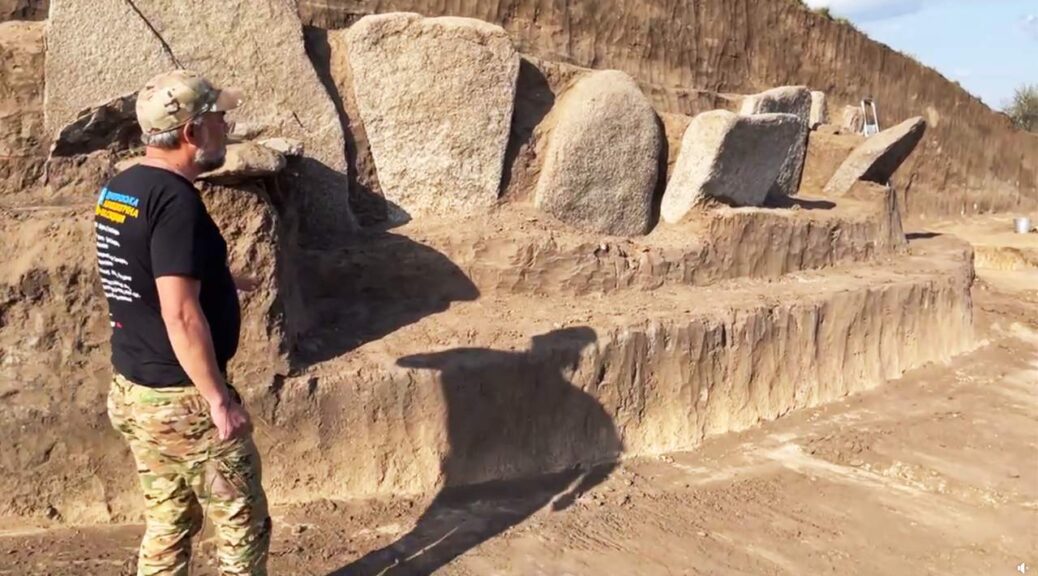
According to them, they discovered a place where blocks of stone several meters high form a circle. In archaeology, this is known as the Cromlech (megalithic monument made of menhirs in a circle) or Stonehenge, based on the one in the United Kingdom: The Stonehenge in Amesbury, which attracts millions of visitors every year. An original discovery for Ukraine!

The Stone Hill by Novooleksandrivka

The 5-channel television station reports that a 4,500 to 5,000-year-old burial mound has been discovered. “In the middle of the tumulus (Kurgan in Ukraine), archaeologists found a gigantic cromlech – stone blocks several meters high that form a circle.”

Ukrainian Burial Mound Dig Reveals 5,500-Year-Old Stonehenge-like Structure

According to the journalistic report, each block of stone weighs about a ton. The blocks are carefully cut into a circle. Compared to the pyramids of Egypt, this side would be even older than 500 years.

Novooleksandrivka would not be the first Stonehenge discovered in Ukraine, but it is the youngest. And most importantly, it seems to be the largest ever discovered.

The stone circle discovered within the Ukrainian burial mound.

Oleksandr Kolomiytsev, the spokesman for the regional road service, explains: “The construction involved moving a huge volume of earth and a considerable workforce.

It is possible that the person buried and protected by the Cromlech was highly regarded in society. This is the only way to explain the monumental character of this construction. “”

In fact, the various StoneHenge that has been discovered in the world all function as funerary memorials.

The Novooleksandrivka site was to become an open-air museum. A stroke of luck for Ukraine, which believes that this ancient monument can attract millions of tourists every year!

The secret of the British StoneHenge!

The StoneHenge in Amesbury, UK, was not built where it is now, according to a study in Cambridge University’s Antiquity magazine.

This observation follows the discovery of a place where large stones were excavated … But no trace of these stones nearby. They conclude that these stones were brought to the location of the current StoneHenge.

The circle was dismantled by Merlin and shipped by 15,000 men to Amesbury in the Salisbury Plain. Merlin wanted the Giants Dance Stones for their magical and healing properties. 

Indeed, if the UK location is already a major tourist hit, Ukraine could attract many historic tourists too! Ukraine is a beautiful country that bears the historical mark of Chernobyl! But there are so many other things to discover there: Kiev, for example, is a jewel!

Prehistoric Teeth Pendants Worn in Ancient Dance 8,000 Years Ago Incite Body Movements

Prehistoric Teeth Pendants Worn in Ancient Dance 8,000 Years Ago Incite Body Movements

“Ornaments composed of elk teeth suspended from or sown onto clothing emit a loud rattling noise when moving,” says auditory archaeologist and Academy of Finland Research Fellow Riitta Rainio from the University of Helsinki.

“Wearing such rattlers while dancing makes it easier to immerse yourself in the soundscape, eventually letting the sound and rhythm take control of your movements. It is as if the dancer is led in the dance by someone.”

Rainio is well versed in the topic, as she danced, for research purposes, for six consecutive hours, wearing elk tooth ornaments produced according to the Stone Age model.

Rainio and artist Juha Valkeapää held a performance to find out what kind of wear marks are formed in the teeth when they bang against each other and move in all directions.

The sound of a tooth rattler can be clear and bright or loud and pounding, depending on the number and quality of the teeth, as well as the intensity of movement.

Prehistoric Teeth Pendants Worn in Ancient Dance 8,000 Years Ago Incite Body Movements
Adult male from grave 76a in Yuzhniy Oleniy Ostrov drawn as if he were alive during a dance session: 140 elk teeth on the chest, waist, pelvis, and thighs rattle rhythmically and loudly.

Microanalysis demonstrates that tooth wear marks are the result of dancing.

The teeth worn out by dancing were analyzed for any microscopic marks before and after the dancing. These marks were then compared to the findings made in the Yuzhniy Oleniy Ostrov graves by Evgeny Girya, an archaeologist specialized in micro-marks at the Russian Academy of Sciences.

Girya documented and analyzed the wear marks in the elk teeth found in four graves chosen for the experiment. Comparing the chips, hollows, cuts and smoothened surfaces of the teeth, he observed a clear resemblance between teeth worn out by dancing and the Stone Age teeth.

However, the marks in the Stone Age teeth were deeper and more extensive. According to Girya, the results show that the marks are the result of similar activity.

Archaeological research recently showed how prehistoric pendants incited sounds and body movements in ancient dance about 8,000 years ago.

“As the Stone Age teeth were worn for years or even decades, it’s no surprise that their marks are so distinctive,” Girya says.

Associate Professor of Archaeology Kristiina Mannermaa from the University of Helsinki is excited by the research findings.

“Elk tooth rattlers are fascinating since they transport modern people to a soundscape that is thousands of years old and to its emotional rhythms that guide the body.

You can close your eyes, listen to the sound of the rattlers and drift on the soundwaves to a lakeside campfire in the world of Stone Age hunter-gatherers.”

See Also: MORE ARCHAEOLOGY NEWS

A total of 177 graves of women, men and children have been found in the Yuzhniy Oleniy Ostrov burial site, of which more than half contain several elk tooth ornaments, some of them composed of over 300 individual teeth.

A Long-Lost Legendary Roman Fruit Tree Germinated From 2,000-Year-Old Seeds

A Long-Lost Legendary Roman Fruit Tree Germinated From 2,000-Year-Old Seeds

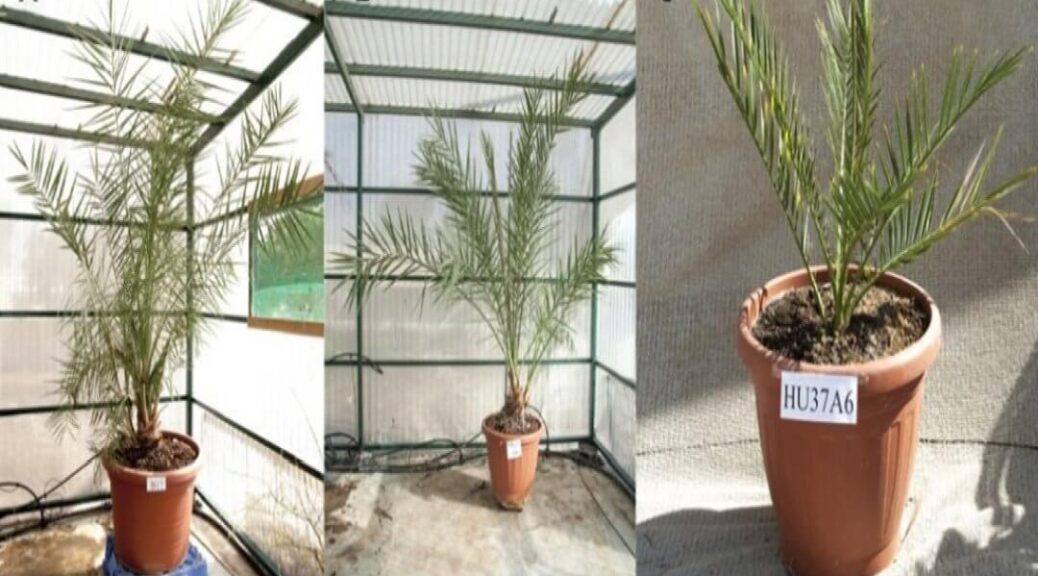
Plants have been produced from date palm seeds that have been buried for 2,000 years in old ruins and caves. This extraordinary achievement demonstrates the kernels’ long-term vitality after being nestled in succulent Judean dates, a fruit variety that has been lost for millennia. The findings suggest that it might be a good option for examining the lifetime of plant seeds.

From those date palm saplings, the researchers have begun to unlock the secrets of the highly sophisticated cultivation practices that produced the dates praised by Herodotus, Galen, and Pliny the Elder.

“The current study sheds light on the origins of the Judean date palm, suggesting that its cultivation, benefiting from genetically distinct eastern and western populations, arose from local or introduced eastern varieties, which only later were crossed with western varieties,” the researchers wrote in their paper.

“These findings are consistent with Judea’s location between east-west date palm diversification areas, ancient centres of date palm cultivation, and the impact of human dispersal routes at this crossroads of continents.”

In an ancient palace-fortress built by King Herod the Great, and caves located in southern Israel between the Judean Hills and the Dead Sea, archaeologists retrieved hundreds of seeds from the date palm (Phoenix dactylifera).

Then, a team of scientists, led by Sarah Sallon of Hadassah Medical Organisation in Israel, sorted through this bounty. They selected 34 seeds they thought were the most viable. One was separated out as a control; the remaining 33 were carefully soaked in water and fertiliser to encourage germination. After this process, one more was found to be damaged, and was subsequently discarded; the remaining 32 seeds were planted.

Of these, six of the seeds successfully sprouted. They were given the names Jonah, Uriel, Boaz, Judith, Hannah and Adam. (A previous attempt by Sallon and colleagues published in 2008 produced a single sapling; it was named Methuselah.)

Seedlings in hand, the scientists could now run tests and analyses they couldn’t perform on seeds alone. First, they collected fragments of the seed shells still clinging to the roots of the plants. These were perfect for radiocarbon dating – which confirmed the seeds date back to between 1,800 and 2,400 years ago.

Then, the researchers could conduct genetic analyses of the plants themselves, comparing them to a genetic database of current data palms. This showed exchanges of genetic material from eastern date palms from the Middle East and western date palms from North Africa. This suggests sophisticated agricultural practices – deliberate breeding to introduce desirable traits into the cultivated trees.

“Described by classical writers including Theophrastus, Herodotus, Galen, Strabo, Pliny the Elder, and Josephus, these valuable plantations produced dates attributed with various qualities including large size, nutritional and medicinal benefits, sweetness, and a long storage life, enabling them to be exported throughout the Roman Empire,” the researchers wrote.

“Several types of Judean dates are also described in antiquity including the exceptionally large ‘Nicolai’ variety measuring up to 11 centimetres (4.3 inches).”

Indeed, the researchers found that the ancient seeds were up to 30 per cent larger than date seeds today, which probably meant the fruit was larger, too.

And, of course, there’s the seemingly miraculous germination after so many centuries. As anyone who buys seeds for their garden knows, seeds deteriorate; the longer you have a packet of seeds sitting in storage, the fewer will germinate when you finally plant them.

If scientists can discover how the date seeds retained their viability for so long, that could have important implications for agriculture.

The once-rich date groves gradually declined after the fall of the Roman Empire. Judean dates could still have been cultivated in the 11th century CE, the researchers said, but certainly, by the 19th century, the groves were completely gone.

Now, those famous dates may make a comeback – at least for scientific purposes.

See Also: ARCHAEOLOGY NEWS

“As new information on specific gene-associated traits (e.g., fruit colour and texture) is found, we hope to reconstruct the phenotypes of this historic date palm, identify genomic regions associated with selection pressures over recent evolutionary history, and study the properties of dates produced by using ancient male seedlings to pollinate ancient females,” the researchers wrote.

“In doing so, we will more fully understand the genetics and physiology of the ancient Judean date palm once cultivated in this region.”