Category Archives: EUROPE

Remarkable 3,900-Year-Old Suit Of Bone Armor Found In Siberia

Remarkable 3,900-Year-Old Suit Of Bone Armor Found In Siberia

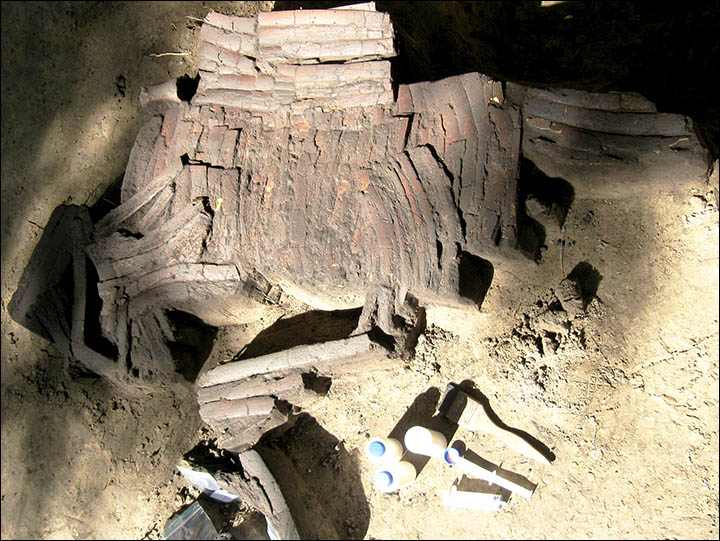
Archaeologists are intrigued by the discovery of the complete set of well-preserved bone armour which is seen as having belonged to an ‘elite’ warrior. The armour was in ‘perfect condition’ – and in its era was ‘more precious than life’, say experts.

‘It was more precious than life, because it saved life’.

It was buried separate from its owner and no other examples of such battle dress have been found around Omsk. The analysis is expected to determine its exact age but Siberian archaeologists say it dates from 3,900 to 3,500 years ago. 

Nearby archaeological finds are from the Krotov culture, lived in a forest-steppe area of Western Siberia, but this bone armour more closely resembles that of the  Samus-Seyminskaya culture, which originated in the area of the Altai Mountains, some 1,000 km to the south-east, and migrated to the Omsk area. The armour could have been a gift, or an exchange, or was perhaps the spoils of war.

Boris Konikov, the curator of excavations, said: ‘It is unique first of all because such armour was highly valued. It was more precious than life because it saved a life. 

‘Secondly, it was found in a settlement, and this has never happened before. There were found separate fragments in burials, like on Rostovka burial ground.’

Currently, the experts say they do not know which creature’s bones were used in making the armour. Found at a depth of 1.5 metres at a site of a sanatorium where there are now plans to build a five-star hotel, the armour is now undergoing cleaning and restoration.

‘We ourselves can not wait to see it, but at the moment it undergoing restoration, which is a long, painstaking process. As a result, we hope to reconstruct an exact copy’, Boris Konikov said. 

Scientist Yury Gerasimov, a research fellow of the Omsk branch of the Institute of Archaeology and Ethnography, said: ‘While there is no indication that the place of discovery of the armour was a place of worship, it is very likely. Armour had great material value. There was no sense to dig it in the ground or hide it for a long time – because the fixings and the bones would be ruined.

‘Such armour needs constant care. At the moment we can only fantasise – who dug it into the ground and for what purpose. Was it some ritual or sacrifice? We do not know yet.’

Gerasimov, who is engaged in the restoration, said: ‘Each armour plate in the ground was divided into many small fragments, which are held only by this ground. The structure was removed from the excavation, in ‘monolith’ as archaeologists say – namely, intact with the piece of ground, not in separate plates, and taken to the museum. 

‘Now we need to clean these small fragments of bone plates, make photographs and sketches of their location, and then glue them in a full plate.’

He is certain that the armour belonged to a ‘hero’, an ‘elite warrior who knew special methods of battle’ and would have ‘given good protection from weapons that were used at the time – bone and stone arrowheads, bronze knives, spears tipped with bronze, and bronze axes’. 

Lots to do – Siberian archaeologists have months to assemble parts of the armour together. Pictures: Maria Savilovitch, Yuri Gerasimov

The archaeological site where the armour was found includes a complex of monuments belonging to different epochs. There are settlements, burial grounds, and manufacturing sites. Burials have been found here from the  Early Neolithic period to the Middle Ages. 

The site, beside the Irtysh River, is now owned by Popov Omsk Radio Factory which has supported the archaeological research.

Konikov, who worked on the site as a researcher for many years and is now a representative of the plant, supervising the excavations, said: ‘Our goal is to save the site, to research it and to promote it. 

‘We organise excursions for schoolchildren and draw the attention of citizens to this unique site.’
Ottoman-Era Bath and Byzantine Doorway Found in Greece

Ottoman-Era Bath and Byzantine Doorway Found in Greece

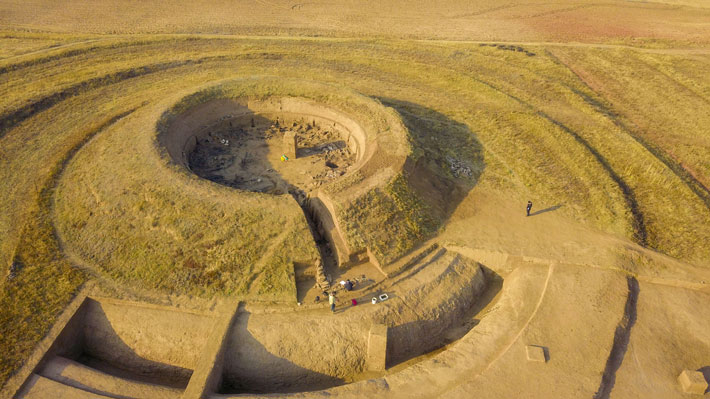
According to a statement released by Greece’s Ministry of Culture and Sports, restoration work and surveys at the site of the medieval castle of Mytilene, which is located on the island of Lesbos, revealed a sixteenth-century A.D.

A new gate to an ancient city was recently unearthed at Mytilene’s iconic castle on the Greek island of Lesvos.

The findings, which date from the 6th to 7th centuries AD, shed new light on life on the island of Lesvos, especially regarding the defence of the island in those times.

Pavlos Triantaphyllides, the head of the Ephorate, notes that the findings can be considered of special importance for the defence architecture of the Castle of Mytilene during early Byzantine history and of Mytilene as a whole.

Triantaphyllides probably says that it has now been established that the pre-Byzantine gate of the Castle is connected to the hitherto-unknown Byzantine settlement of Melanoudi, which was prominent in the area until its conquest by the Ottomans.

Entering the castle from Epano Skala, an Ottoman bath from the 16th century was found, which experts say is in “very good condition.” The bath was owned by Haireddin Pasha Barbarossa, who was originally from Mytilene.

The earliest bath ever found on Lesvos

This is the earliest bath that has ever been found on the island of Lesvos and it features vaulted areas of hot, lukewarm and cold baths with the necessary fire pits underneath, as shown by the short columns which supported the floor of the baths.

The area underneath recently-unearthed baths at Mytilene castle.

According to the Ephorate, it will be covered with a canopy and will eventually be open to the public at some point in the future. The archaeologists state that the most important discovery, however, lies beneath the foundations of the baths. The early Byzantine gate of the 7th century AD was located there, leading to Melanoudi, a well-known Byzantine town that we did not know the precise location of until today.

Gate leading to a new city underneath the castle

This is simply because the oldest medieval remains uncovered thus far until now had been those dating back to the 14th century. “While it had been considered that the lower part of the castle was wallless, the new excavation findings come to show us the walls of the lower castle,” explains Triantaphyllides.

“This gate is made of amazing marble from an ancient material, being recycled from previous use. It has a total height of 3.20 meters (10.5 feet), and a width of 2.05 meters (6.7 feet) and a depth of two meters (6.5 feet).

“A total of nine slabs of local grey-white marble were used for its construction, while cavities in the lintel indicate the existence of a wooden door, adapted with swivels,” the archaeologist notes.

“Its pilasters are decorated with ribbons and a convex wave, while the lintel has a convex cornice,” adds the Curator of Antiquities.

What was the town of Melanoudi?

According to Triantaphyllides, Melanoudi must have had around 1,000 inhabitants in its heyday. He states the medieval inhabitants of the city of Mytilene “had to contact from the northern port through the port that still exists today. If you remember, some remains of the Hellenistic wall are still preserved in the sea today, which seem to have been used during the Middle Ages.

“On the other side of the walls there were baths, there were houses,” he says.

“Certainly there are some Christian temples that we have not identified at the moment,” the archaeologist says. “For the early phase of the city in the 6th and 7th century the excavation research which we hope to continue in the next period of time with other funds will give us a lot of information.

“We are talking about the 7th-century Byzantine settlement that existed inside the castle and was by the sea.”

According to these recent findings, the Byzantine city was located down four meters from the current surface of the ground where people walk today inside the castle.

“It is very impressive as a find and unfortunately in Greece we do not know many similar examples with the early Byzantine fortifications because it is an extremely difficult period, this is the period of transition from paganism to Christianity where archaeological evidence is usually scarce,” notes Triantaphyllides.

Restoration ongoing in the area; bicycle trail proposed

In the lower castle area, a new bicycle path will be created as part of the co-financed European program of Sustainable Urban Regeneration. Under the auspices of the NSRF 2014-2020 of the North Aegean Region, a new traffic pattern will also be created for the area.

In a short time, the bicycle road that will go to the project will be completed by the municipality. Two Ottoman-era homes are already being restored; one of these will serve as a centre of information and documentation for the entire history of the island of Lesvos. The second house offer space for educational programs for children, who will be also able to explore the ancient and medieval-era ruins in special tours led by archaeologists.

“We will explain to the children how they were built, how the houses, the temples, the walls were built. And the children will be given a complete picture of what this medieval castle of Mytilene was like,” says Triantaphyllides.

Archaeologists Solve Mystery of 5,600-Year-Old Skull Found in Italian Cave

Archaeologists Solve Mystery of 5,600-Year-Old Skull Found in Italian Cave

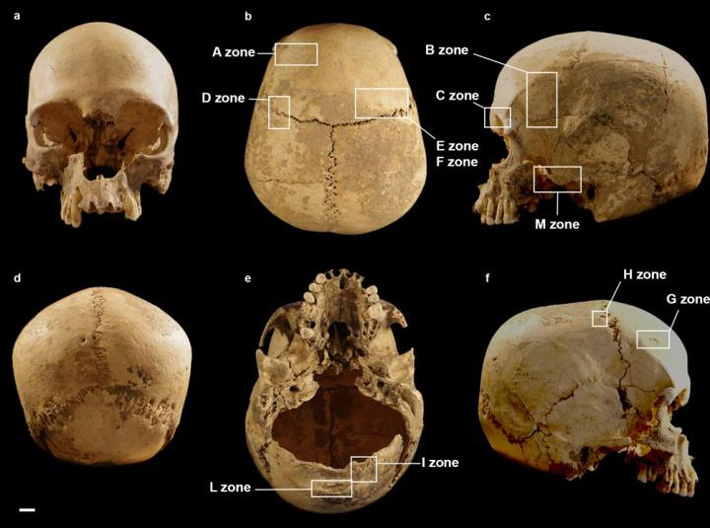
A Stone Age woman’s skull took an unlikely trip after she died 5,600 years ago when mud and water washed it away from her gravesite and into the craggy rocks of a steep cave in what is now Italy, according to a recent analysis.

Archaeologist Lucia Castagna recovers the 5,600-year-old human skull at the top of a vertical shaft in the Marcel Loubens cave, in the Bologna area of northern Italy.

When archaeologists found the skull, its resting spot in the cave shaft was so hard to reach that only one archaeologist, using rock climbing equipment, could squeeze into the space to recover it. During later analysis, the researchers found that the skull was very scratched up; at first, they couldn’t make heads or tails of what had happened to the ancient woman. 

But, after determining which of the skull’s lesions were likely caused by humans and which were likely incurred as the skull tumbled against various rocks, the researchers came up with a possible scenario.

Once this woman died, people in her community likely dismembered her corpse — a funeral practice performed at other burials from this time period and region. After people separated the woman’s skull from the rest of her body, environmental forces swept it away into the cave, the researchers suggested. 

Archaeologists discovered the lone skull in 2015 in northern Italy’s Marcel Loubens cave. Caves are common sites for ancient burials, but archaeologists couldn’t find any other human remains there, even when they returned in 2017 with climbing equipment to retrieve the skull. 

A CT (computed tomography) scan and analysis of the skull itself revealed that the woman was between the ages of 24 and 35 when she died, while radiocarbon dating indicated that she lived between 3630 and 3380 B.C., during the New Stone Age, or Neolithic period. To put that into perspective, this woman lived just before Ötzi the Iceman, whose mummified remains date to 3300 B.C. and were also found in northern Italy.

What happened?

Several traumatic lesions on the woman’s skull helped the researchers piece together her strange story. One dent — which showed signs of healing, meaning it was incurred when she was alive — may have been made forcefully with tools, as there were parallel grooves below it, the researchers said.

Perhaps this woman had undergone cranial surgery, such as trepanation — a technique employed during the Neolithic and later in which holes are made in the skull, they said. A smudge of red ocher pigment found on this dent may have been placed there for therapeutic or symbolic reasons, the team noted.

Other lesions indicated that the soft tissues on her skull had been cut and scraped off after she died, as these lesions showed no signs of healing, the researchers said. This practice has been documented at other Neolithic burials in Italy; for instance, at Re Tiberio Cave in northern Italy, the long arm and leg bones of up to 17 Neolithic human skeletons were arranged in order, and their heads were missing — clues that these people’s body parts might have been separated and rearranged after death.

Other Neolithic remains found at nearby caves also show evidence of cranial scrape marks that were made after those people died, the researchers said.

Archaeologists Solve Mystery of 5,600-Year-Old Skull Found in Italian Cave
Some of the marks seen on the woman’s skull predated her death, while others were likely left by natural forces following her burial.

Life during the Neolithic was challenging, so it’s no surprise that the woman wasn’t in the best health. Tiny holes on top of her skull may be related to inflammation, possibly from chronic anaemia (iron or vitamin B12 deficiency), the researchers said.

The woman also had two dense, ivory-like spots on her skull, which were likely benign tumours. Even her tooth enamel was underdeveloped, suggesting that she had health problems when her permanent teeth were developing in early childhood. She also had several cavities, possibly due to a diet high in carbohydrates, the researchers said.

Rocky tumble

Other damage and encrusted sediment on the woman’s skull told another story — essentially, that natural forces moved the woman’s cranium after her burial. After the woman was laid to rest, the dismembered skull rolled away, probably with water and mud that was flowing downhill toward a sinkhole. 

“After a long and bumpy ride, [the skull] accidentally ended up in the cave,” the researchers said in a statement. Over time, the sinkhole’s geological activity created a cave, where the skull sat for 5,600 years until it was discovered by modern archaeologists.

The skull’s resting spot is “unusual,” but “the authors are able to provide a plausible scenario of how the skull ended up in this cave,” said Thomas Terberger, an archaeologist at the Lower Saxony State Office for Cultural Heritage, in Hannover, Germany, who wasn’t involved in the study. But the origin of some of the skull’s lesions is still murky, he said.

“I have the feeling the authors themselves, who did a very good job, are not 100% sure about this,” Terberger told Live Science in an email. “It is not always easy to distinguish between striations (caused by transport in the sediment/rocky ground) and cut marks.”

Even though this skull represents just one individual, “case studies like this are important to show the huge variety of postmortem episodes that can actually happen to skeletal remains, initiated by natural or anthropogenic [human-caused] factors,” Christian Meyer, lead researcher at the OsteoArchaeological Research Center in Germany, who wasn’t involved in the study, told Live Science in an email.

Archaeologists Find A 2,500-Year-Old Grave In Siberia That Contains An Ancient Warrior Couple

Archaeologists Find A 2,500-Year-Old Grave In Siberia That Contains An Ancient Warrior Couple

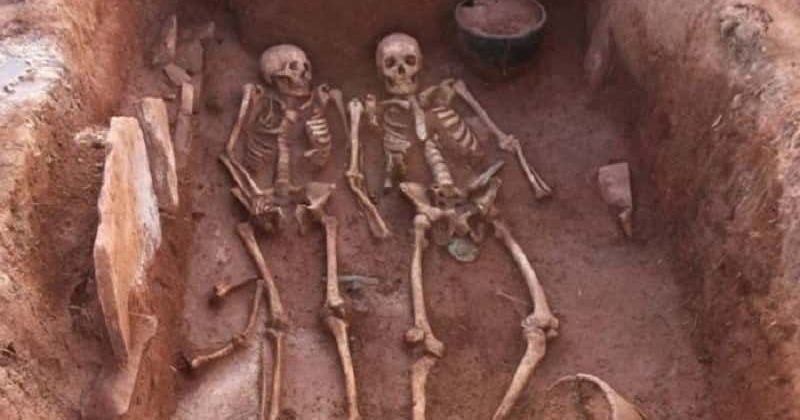
On an investigation to a 2,500-year-year-old tomb of an ancient warrior and princess was discovered in Siberia. The pair are believed to have died in their 30s and were buried with a baby and an ‘elderly’ servant woman, archaeologists say.

The woman may have been 60 years of age when she died, as she died and was entombed in a crumpled position under the feet of the couple, who may have been spouses.

Remains of the child were scattered throughout the grave, which archaeologists say probably happened when rodents ate the flesh of the deceased. 

Experts unearthing the find in southern Siberia say the four people probably succumbed simultaneously to the same infection, and the servant was buried alongside them to look after the family in the afterlife. 

The warrior couple, the woman specifically, maybe proof of the lost Scythian civilisation, which inhabited the region of modern-day Russia until 2,200 years ago.

The pair are believed to have died in their 30s and were buried with a baby and an ‘elderly’ servant woman, archaeologists say. The elderly woman was likely in her 60s when she died. The bones of the child were scattered throughout the grave, probably by rodents

The fighter woman in the grave was buried with the same weaponry as the man, the researchers say, which is unusual.  In surviving records and other graves from the same time frame and location, female warriors were buried with a bow and arrows, long-range weapons, 

But the woman in the newly unearthed grave was armed with a long-handled weapon, either a hatchet or an axe, and a short sword. These weapons are best suited for hand-to-hand combat and a bloody melee and this difference is indicative of the Scythian culture, researchers say.   

Dr Oleg Mitko, head of Archeology at Novosibirsk State University, said: ‘We have an impressive set of weaponry. 

‘We found close fight weapons in a female grave, which is not so typical. The woman had a battle-axe.. so she was a part of warrior strata.’

Senior researcher Yuri Teterin said: ‘The man had two axes and two bronze daggers.

‘It is a brilliant burial in that there is an authentic bronze weaponry.’ The man also had a bronze mirror, the researchers say.

Wooden handles of the weapons have no survived millennia in soil, but the metallic elements have. The couple, the baby and servant, are from the Tagar culture, part of the Scythian civilisation, researchers believe. 

In contrast to other female warriors from ancient Siberia, the female in the grave was armed in with a long-handled weapon, either a hatchet or an axe, and a short sword. These weapons are best suited for hand-to-hand combat
The couple, the baby and servant, are from the Tagar culture, part of the Scythian civilisation, researchers believe

The older woman had two broken teeth and her possessions were only a broken comb and a small ceramic vessel, indicating she had little personal wealth.  

Larger ceramic vessels – believed to have been full of food – were also discovered which were filled with mutton and beef, researchers say. 

When they were buried 2,500 years ago, the grave goods and food would have been buried alongside the people because it was believed it helped people in the afterlife.

Scientists say there is no immediate evidence of battle wounds to suggest a cause of death, but further research will be undertaken.

One theory is that they succumbed to an infection at the same time, leading to them all being buried simultaneously. The ancient Greek historian Herodotus left a detailed account of the Scythians and their young women warriors.

But physician Hippocrates added that a young woman would cease her role as a fighter after ‘she takes to herself a husband’.

‘They do not lay aside their virginity until they have killed three of their enemies, and they do not marry before they have performed the traditional sacred rites.’

‘Yet in this case, the woman warrior appears part of a family unit.

Archaeologist Anatoly Vybornov said: ‘Both male and women took part in hostilities. Violence was an acceptable and legal way to solve the problems then.’ 

New technique reveals hidden detail in an ancient Etruscan painting

New technique reveals hidden detail in an ancient Etruscan painting

Multi-illumination hyperspectral extraction (MHX) has been used to reveal previously unseen details in 2,500-year-old Etruscan tomb paintings, according to a Live Science report.

For instance, they found new details in a painting from the “Tomb of the Monkey” and scenes of an underworld in another work of art.

The Etruscans created detailed paintings, but the passage of time has meant that many of them are now only partly visible and that much of their colour has been lost. 

New technique reveals hidden detail in an ancient Etruscan painting
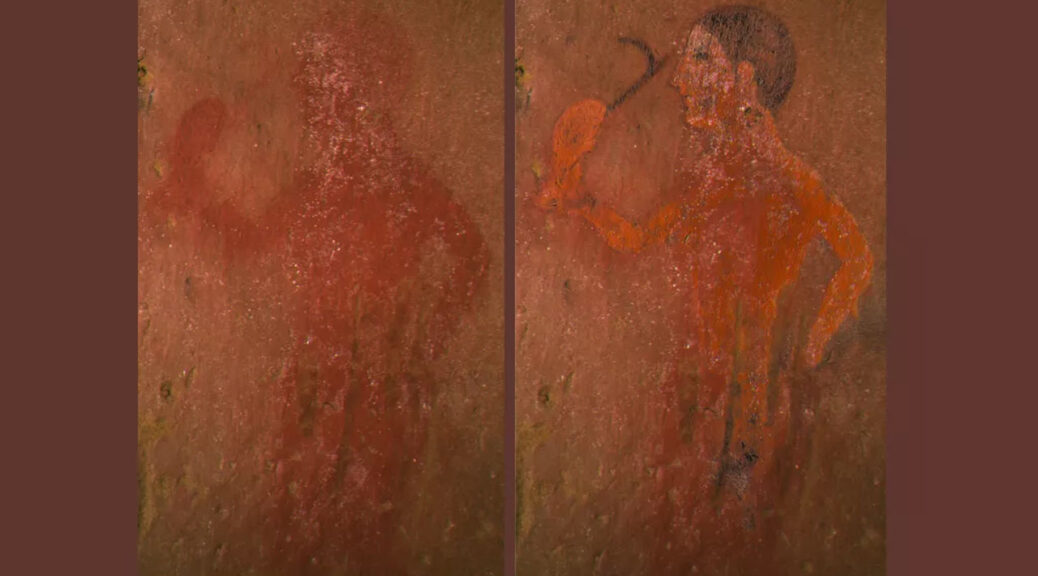
Using a new technique to restore this Etruscan painting (left) from the 2,500-year-old “Tomb of the Monkey,” researchers revealed what it really looked like so long ago (right).

“A major issue is the significant loss of information on the polychromy [colours] of the preserved paintings, with special regard to some specific colours owing to their physical-chemical composition,” Gloria Adinolfi, a researcher at Pegaso Srl Archeologia Arte Archeometria (a research institute), said in a presentation given Jan. 8 at the virtual joint annual meeting of the Archaeological Institute of America and the Society for Classical Studies. 

The fact that some colours survive the passage of time better than others can give a distorted view of what ancient paintings looked like at the time they were painted, Adinolfi said. For example, some shades of green tend not to survive well, whereas red often does, she said.

“Red oaks usually seem to be more resistant so that sometimes reds are dominant and alter the correct perception of the original polychromy of the pictorial decoration,” Adinolfi said. 

Revealing ancient paintings

To reveal the paintings, the scientists used a technique called multi-illumination hyperspectral extraction (MHX), which involves taking dozens of images in the visible, infrared and ultraviolet bands of light and processing them using statistical algorithms developed at the National Research Council of Italy in Pisa, said team member Vincenzo Palleschi, a senior researcher at the research council. 

The technique can detect Egyptian blue, a colour developed in ancient Egypt that “has a very specific response in a single spectral band,” Palleschi said. The team also analyzed the residual remains of other remaining colours to help determine what colours were in the painting. 

By combining the MHX and colour analyses, the team revealed vanished scenes from ancient Etruscan paintings.

The researchers unveiled several examples during the presentation, including details of paintings depicting the Etruscan underworld showing rocks, trees and water. 

In the Tomb of the Monkey, so named because a painting in the tomb shows a monkey on a tree, the researchers uncovered details of a painting depicting a person.

To the naked eye, the painting looks like a red blur, but after the MHX and colour analyses were complete, the painting clearly showed a person carrying an object and details of their hair and face.

The tomb was discovered in the 19th century but now, with the new technology, the painting has become much more visible. 

The team’s research is ongoing, and more paintings may be revealed in the future. 

Hiker Accidentally Discovers 1,200-Year-Old Viking Sword in Norway

Hiker Accidentally Discovers 1,200-Year-Old Viking Sword in Norway

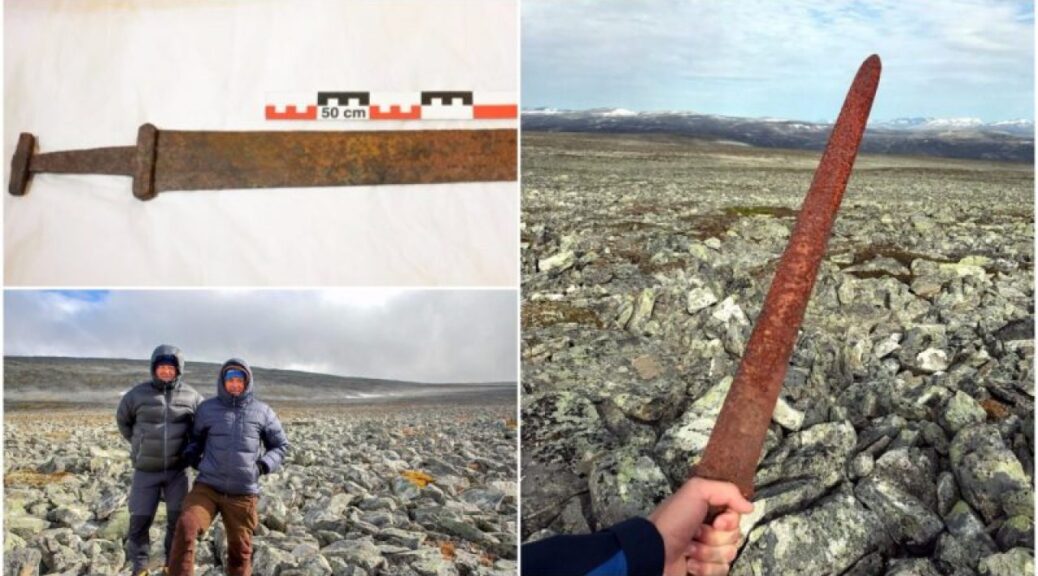
After hiking across the plateau that covers the region between the west and east sides of Norway, Goran Olsen sat down to take a break. That’s when he spotted a rusty sword blade lying under some rocks on the well-travelled mountain path.

While hiking on a mountain path in south-central Norway, a man recently stumbled on a well-preserved Viking sword that archaeologists say dates back to A.D. 750.

Archaeologists have identified Olsen’s find as a type of Viking sword made circa A.D. 750. That makes it some 1,265 years old, though the scientists have warned this is not an exact date.

Double-edged and made of wrought iron, the sword measures just over 30 inches long (77 centimetres). Though covered in rust, and lacking a handle, it is otherwise in excellent condition.

A hiker is dwarfed by the landscape of the mountain plateau where the Viking sword was found

The Haukeli mountains are covered in snow and frost at least six months out of the year and experience little humidity in summer, conditions that may explain why the sword is so well preserved. As County Conservator Per Morten Ekerhovd told CNN: “It’s quite unusual to find remnants from the Viking Age that are so well-preserved…[the sword] might be used today if you sharpened the edge.”

Beginning in the 8th century, many Vikings left their native homes in Denmark, Norway and Sweden, using advanced navigational technology to spread out across Europe and beyond. Famous—and feared—for their violent attacks on coastal cities and towns, they were also skilled traders and daring explorers who founded the first colony in Greenland and reached North America some 500 years before Christopher Columbus.

The Viking Age endured until the late 11th century, leaving a lasting impact on Western society and the world.

Viking law mandated that all free men were required to carry weapons and be prepared to wage war at all times. Of the most common weapons—swords, spears and battle-axes—swords were the most expensive to make. With their decorated hilts of silver, bronze or copper, Viking swords functioned as status symbols.

According to the pagan beliefs of many Vikings, a sword was a sacred object that could help its bearer enter heaven. After attaining the highest honour of dying in battle, the heroic Viking warrior, with his sword in hand, would feast with the gods in a special place known as Valhalla.

Many later Viking sword blades were emblazoned with specific markings, believed to be the names of their creators. Of the thousands of Viking swords that have been discovered across Scandinavia and northern Europe—most excavated from burial sites or found in rivers—some 170 have been marked with the name Ulfberht.

Their superior quality shocked archaeologists, as the technology needed to produce such pure metal would not be invented for another 800 years. In order to liquefy iron ore and remove impurities (known as “slag”), modern metalworkers heat it to 3,000°F (1,650°C); carbon is then added in order to strengthen the brittle iron.

In medieval times, when ovens could not achieve high-enough temperatures to liquefy the iron, metal workers would have to remove slag by pounding it out, a much less effective process.

With very little slag, and high carbon content, the Ulfberht blades are made of what’s known as “crucible steel,” a state-of-the-art metal that would not be seen in Europe again until the Industrial Revolution.

Experts believe the crucible steel used by the Vikings may have come from the Islamic world. Warriors in Central Asia had been using swords of material similar to that of the Ulfberht for centuries before the Viking Age, and a robust trade route known as the Volga connected Scandinavia with northern Iran from the early 9th to the mid-11th century.

Last March, researchers announced that a ring recovered from a 9th century Viking grave a century ago bears an Islamic inscription meaning “for/to Allah,” providing a rare physical link between the two worlds.

The sword Olsen discovered in Haukeli is not branded, and is missing its handle, but is still a strong blade. Experts believe it could be from a Viking burial site, or it could have belonged to a traveller who died in an accident or succumbed to frostbite. Either way, they say, its owner would likely have been a high-status member of Viking society.

The sword is now at the University of Bergen, for preservation and research purposes. Archaeologists are planning an expedition to the site of Olsen’s discovery for next spring, once the snow melts, in order to see if they can uncover any more artefacts.

Bronze Age Spear Discovered on the Island of Jersey

Bronze Age Spear Discovered on the Island of Jersey

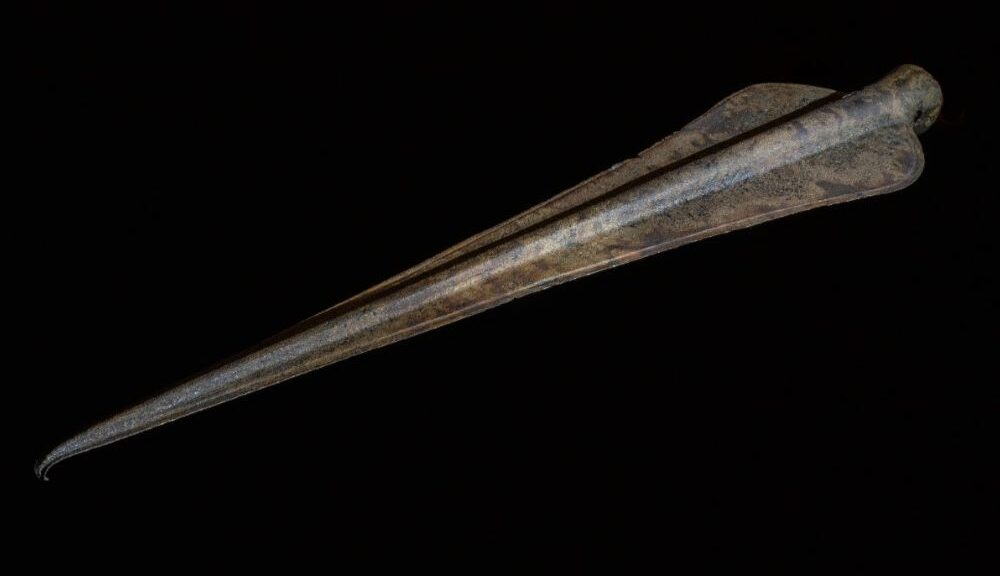
A metal detector on a Jersey beach reportedly discovered a 13-inch-long copper spearhead, which is about 3,000 years old, experts claim. According to recent studies, The ‘rare and complete’ spearhead, which still has remnants of the wooden shaft still attached, dates back to the Late Bronze Age, somewhere between 1207 and 1004 BC.

Bronze Age Spear Discovered on the Island of Jersey
The rare copper alloy spearhead (pictured) dating back thousands of years to the Late Bronze Age has been discovered in Jersey.

However, it was discovered in the August of last year near Gorey Harbour in Jersey, but archaeologists have only now confirmed its age with the results of radiocarbon dating. It is completely different due to its size and the fact that it’s so well preserved – likely due to protection from the air by the black sand from which it was pulled.

It was found on the beach at Gorey by Jay Cornick, a Jersey-based metal detectorist and electrical engineer. Cornick brought it to independent trust Jersey Heritage to be recorded, in line with recommended best practice for non-treasure finds there.

It’s thought to be unique to the Channel Islands and a rare find in Britain.  This spearhead is completely different from everything else we have,’ said Olga Finch, curator of archaeology at Jersey Heritage. 

‘The spearhead is a really exciting find for Jersey – it is unique and very rare in terms of its large size and the fact that it is intact. The Bronze Age items we already have in our collection are mainly from hoards, which are usually great deposits of metal tools and weapons but mostly broken up and used. 

‘It also doesn’t fit with what we already know about this period of time so we’re wondering if it was deposited as part of a ritual or an offering. 

‘Our next step is to work with experts elsewhere and look at the location of the find to discover what new stories we can find out about the Bronze Age in Jersey.’ 

Paul Driscoll, Archaeology and Historic Environment Record Officer at South Gloucestershire Council, has studied and researched the Bronze Age collections at Jersey Heritage and more widely in the Channel Islands. 

‘The spearhead is in such good condition,’ Driscoll said.

‘Many of the spears in the Jersey Heritage collection are broken – I think deliberately in prehistory as they are uniform in their breakage and thus unlikely to be random.

‘There are, however, a few intact examples but none that parallel this one.’ Conservation work on the spearhead was carried out by Jersey Heritage’s Museum Conservator Neil Mahrer, who said he had never seen anything like it in his career.

‘To see this spearhead in one piece was incredible and the wood inside the spear shaft was so well preserved that we were able to use it to discover that it dated back to over 3,000 years ago,’ he said.

Mahrer sent the wood to York Archaeological Trust, which used carbon dating to approximate the date of the wood and therefore the artefact as a whole.  York Archaeological Trust also discovered the wood used as field maple, commonly used in the Bronze Age. 

When Cornick found the artefact last summer it was buried point-down one of the lowest tides of the year when his metal detector went over it.  

“It was a good 15 inches to 18 inches deep,’ he told the Telegraph.

‘It was at a 45-degree angle and when I dug it I saw the end of it and just pulled it out. 

Neil Mahrer, Jersey Museum conservator, with the spear. He said: ‘To see this spearhead in one piece was incredible’

‘It came out with a sucking sound. It was deep enough into the black, clayey sand that doesn’t move with the tide that it may have been there since it went in.

‘When I found the spear I didn’t think it was that important or that old. 

‘My initial thought when I dug it out was that it was a modern fishing spear and probably less than 100 years old so it was just thrown in my bag until I got back to the car.

‘Then I looked again and thought it might have a little bit of age to it.’     

The Bronze Age spearhead is now on display in the case of a new find at Jersey Museum & Art Gallery, which is in Saint Helier in the island’s south. 

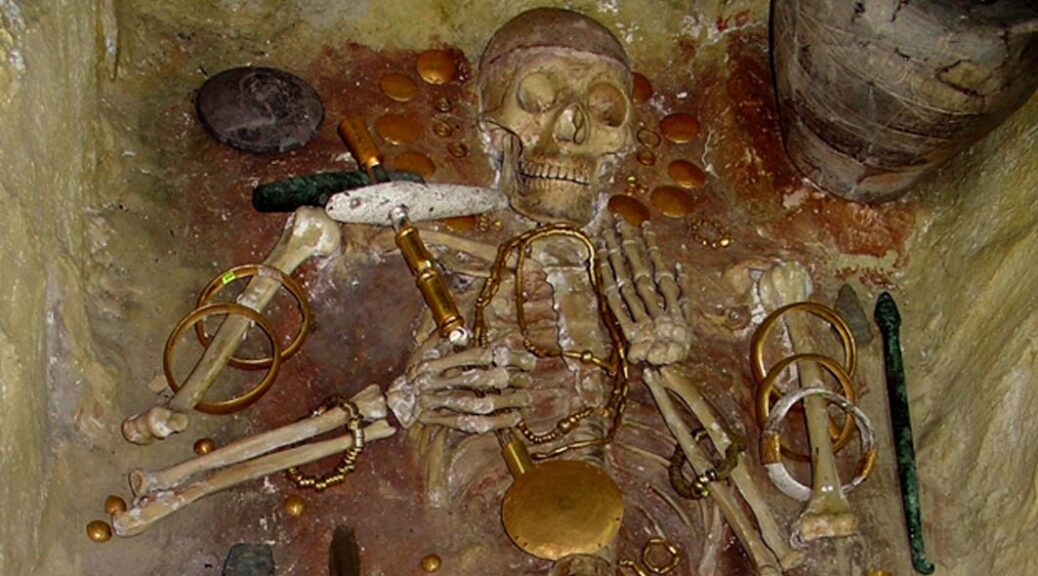
The Varna Man, who lived around the 5th Millennium BC, is the wealthiest burial at that time

The Varna Man, who lived around the 5th Millennium BC, is the wealthiest burial at that time

The site, located on the outskirts of the Black Sea resort of Varna, was discovered accidentally when tractor operator Raicho Marinov was cutting a trench to lay an electric cable for a local factory.

He suddenly noticed small squares of shiny yellow metal, bracelets of the same material, green-coloured artefacts, and flakes of flint.

Rushed to the local museum, the objects were soon identified as prehistoric stone tools, corroded copper axes, and, clearly associated with them, golden ornaments. The association was what mattered: the implication was that the gold artefacts were older than any others ever discovered anywhere.

The Varna man burial has some of the world’s oldest gold jewelry.

Museum curator Michail Lazarov and Sofia University professor Georgi Georgiev immediately set about organising a rescue excavation, and the museum’s young archaeologist, Ivan Ivanov, was appointed to lead it.

Ivanov’s team eventually uncovered 281 graves, more than half with grave goods, 18 of them exceptionally rich, and one of them among the richest graves ever excavated.

The date of the cemetery has recently been pushed back to the 5th millennium BC. A radiocarbon determination now gives it as c.4500 BC.

The discoveries

About 200 crouched or, far more commonly, extended inhumations have been uncovered in the two-thirds of the cemetery so far excavated. Both males and females are represented.

The bodies were placed in flat graves formed of shallow pits without mounds. The remaining graves are ‘cenotaph graves’ – where nobody is present but where grave goods have been laid out – or ‘mask graves’, where a life-size ceramic mask has been substituted for an actual body.

Three cenotaph graves, three mask graves, and a number of the inhumations are extremely rich. The total assemblage includes 3,000 gold artefacts weighing over 6kg.

The richest burial is of a man in his mid-40s buried with no less than 990 separate gold objects, including beads, rings, and a variety of decorations for body, clothing, and hair, among them a penis sheath. This man was also buried with copper axes, other copper tools, and a sceptre in the form of a perforated stone axe or mace.

In addition to gold and copper, the exotic materials represented among the grave goods include graphite, spondylus shell, dentalium shell, carnelian, and marble. Ceramic containers were also present in many graves.

The deductions

Varna implies three major developments in the mid-5th millennium BC. First, given the range of exotic material, Varna must have been part of an extensive trading network, allowing some members of this Early Chalcolithic community to become rich and powerful.

Second – presumably because of its role in trade – the Varna community appears to have developed extreme social differentiation at a very early date, judging by the fact that most graves contain no or few grave goods, while a minority are exceptionally rich. The social gap between the many unfurnished inhumations and the Grave 43 man seems huge.

A reconstruction of Grave 43 at Varna.

Third, on the evidence of Grave 43 – by implication that of a warrior, a ruler, and perhaps, given the common character of early chieftainship, some sort of priest-king – the transition from a more matriarchal Neolithic to a more patriarchal Chalcolithic/Bronze Age form of social organisation was well advanced at Varna.

The presence of bull-shaped objects among the goldwork – most of which is otherwise non-representative – coupled with the penis sheath certainly implies a cultural preoccupation with virility and male power.