Category Archives: WORLD

An 8,000-Year-Old Platform in Britain Could be the Oldest Boat-building site Ever

An 8,000-Year-Old Platform in Britain Could be the Oldest Boat-building site Ever

The Maritime Archaeological Trust has discovered a new 8,000-year-old structure next to what is believed to be the oldest boat building site in the world on the Isle of Wight.

Director of the Maritime Archaeological Trust, Garry Momber, said: “This new discovery is particularly important as the wooden platform is part of a site that doubles the amount of worked wood found in the UK from a period that lasted 5,500 years.”

The site lies east of Yarmouth, and the new platform is the most intact, wooden Middle Stone Age structure ever found in the UK.

The 8,000-year-old wooden platform following reconstruction.

The site is now 11 meters below sea level and during the period there was human activity on the site, it was dry land with lush vegetation. Importantly, it was at a time before the North Sea was fully formed and the Isle of Wight was still connected to mainland Europe.

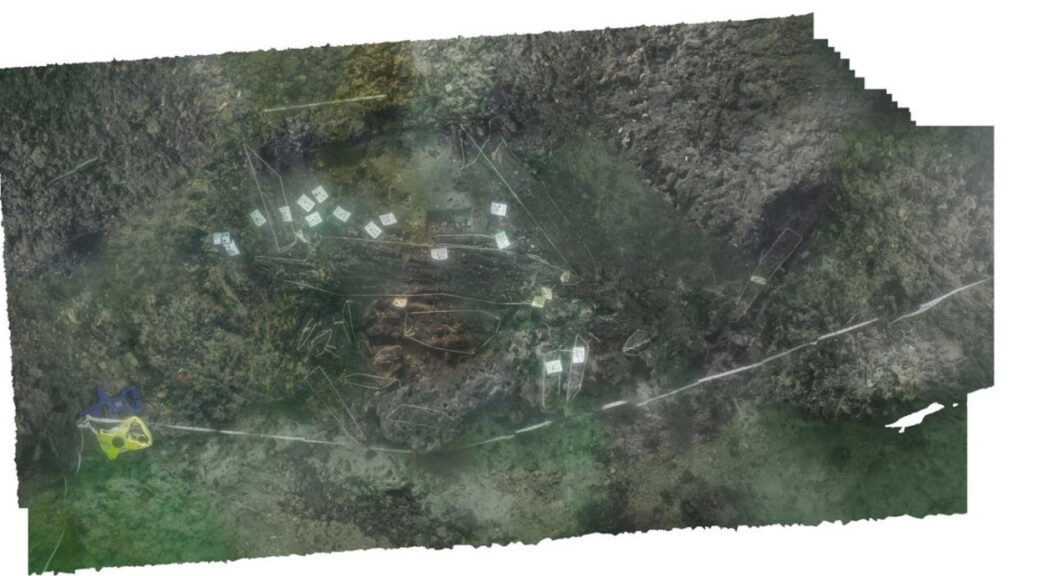
The site was first discovered in 2005 and contains an arrangement of trimmed timbers that could be platforms, walkways or collapsed structures.

However, these were difficult to interpret until the Maritime Archaeological Trust used state of the art photogrammetry techniques to record the remains. During the late spring, the new structure was spotted eroding from within the drowned forest.

The first task was to create a 3D digital model of the landscape so it could be experienced by non-divers. It was then excavated by the Maritime Archaeological Trust during the summer and has revealed a cohesive platform consisting of split timbers, several layers thick, resting on horizontally laid round-wood foundations.

An 8,000-Year-Old Platform in Britain Could be the Oldest Boat-building site Ever

Garry continued “The site contains a wealth of evidence for technological skills that were not thought to have been developed for a further couple of thousand years, such as advanced woodworking. This site shows the value of marine archaeology for understanding the development of civilization.

Yet, being underwater, there are no regulations that can protect it. Therefore, it is down to our charity, with the help of our donors, to save it before it is lost forever.”

The Maritime Archaeological Trust is working with the National Oceanography Centre (NOC) to record and study, reconstruct and display the collection of timbers. Many of the wooden artefacts are being stored in the British Ocean Sediment Core Research facility (BOSCORF), operated by the National Oceanography Centre.

As with sediment cores, ancient wood will degrade more quickly if it is not kept in a dark, wet, and cold setting. While being kept cold, dark, and wet, the aim is to remove salt from within wood cells of the timber, allowing it to be analysed and recorded.

This is important because archaeological information, such as cut marks or engravings, are most often found on the surface of the wood and are lost quickly when timber degrades. Once the timbers have been recorded and have desalinated, the wood can be conserved for display.

Dr Suzanne Maclachlan, the curator at BOSCORF, said “It has been really exciting for us to assist the Trust’s work with such unique and historically important artefacts. This is a great example of how the BOSCORF repository is able to support the delivery of a wide range of marine science.”

When diving on the submerged landscape Dan Snow, the history broadcaster and host of History Hit, one of the world’s biggest history podcasts, commented that he was both awestruck by the incredible remains and shocked by the rate of erosion.

Historian Dan Snow inspecting the 8,000-year-old wooden platform off the coast of the Isle of Wight, UK.

This material, coupled with advanced woodworking skills and finely crafted tools suggests a European, Neolithic (New Stone Age) influence. The problem is that it is all being lost. As the Solent evolves, sections of the ancient land surface are being eroded by up to half a metre per year and the archaeological evidence is disappearing.

Research in 2019 was funded by the Scorpion Trust, the Butley Research Group, the Edward Fort Foundation, and the Maritime Archaeology Trust. Work was conducted with the help of volunteers and many individuals who gave their time and often money, to ensure the material was recovered successfully.
Decorative Roof Tiles from Tang Dynasty Temple Analyzed

Decorative Roof Tiles from Tang Dynasty Temple Analyzed

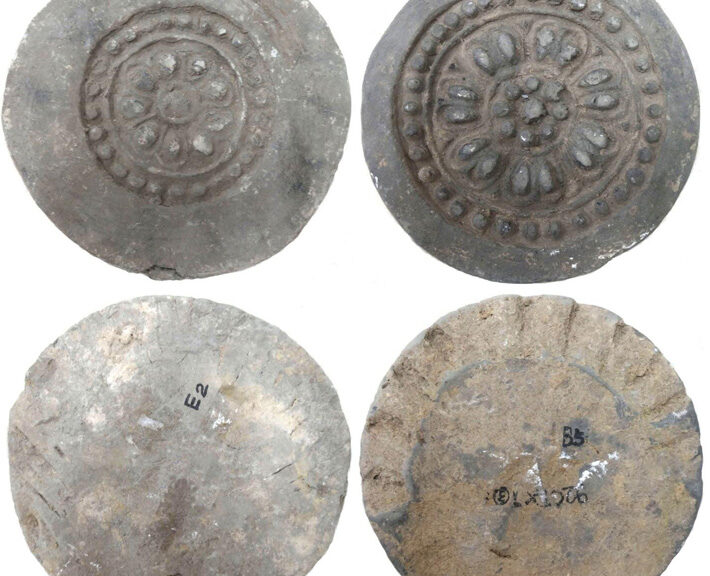
According to a statement released by Kanazawa University, researchers from Kanazawa University and the Chinese Academy of Social Sciences examined the end caps of more than 400 curved roof tiles recovered from Ximing Temple, which is located at the site of the Tang Dynasty (A.D. 618–907) imperial capital in central China.

Decorative Roof Tiles from Tang Dynasty Temple Analyzed

Any visitor to China will have noticed the spectacular roofs on buildings dating from imperial times. However, the question of how these roof tiles were produced has attracted relatively little attention from archaeologists.

Now, a team of researchers has conducted a major study of tile ends unearthed at the Ximing Temple in Xi’an, yielding exciting insights into their production.

In a study published in Archaeological Research in Asia, researchers from Kanazawa University and the Chinese Academy of Social Sciences have revealed the significance of minute variations in the tile ends used in the roof of the famous Ximing Temple in Xi’an, built during the Tang dynasty (618-907 AD) when Xi’an (then known as Chang’an) was the imperial capital.

The researchers conducted an investigation of 449 tile ends with lotus patterns from various periods during the Tang dynasty that had been recovered from the Ximing Temple.

Basic information about tile ends and imbrices. The figure shows the structure of a tile end and how tile ends and imbrices are used.

“We were interested in the variations in the tile ends, both those within the conscious control of the artisans who made the tiles, such as whether to use simple or complex lotus patterns and those outside their control, such as the marks left by the deterioration of the molds used to make the tiles,” says lead author of the study Meng Lyu.

“We discovered that the degree of minor variation in the tile ends increases significantly in the later samples,” adds author Guoqiang Gong.

“This suggests to us that there was a shift away from the centralized manufacturing of imperial building materials during the Early Tang period toward one in which small private artisans played an important role in the Late Tang period.”

Intriguingly, the study has revealed traces of the coming together of two distinct cultural traditions. “We found that there were, in fact, two separate production systems at work to make the title ends,” notes author Chunlin Li.

“One produced tile ends with compound petal patterns and curved incisions, whereas the other made end tiles with simple petal patterns and scratched incisions.”

These two styles may ultimately have their origins during an earlier historical period when the Northern Wei dynasty was divided into two regimes on either side of the Taihang mountain range.

This study demonstrates that studying the roof tiles of China’s grand imperial buildings can reveal a great deal about the circumstances of their production and yield insights into larger historical questions.

2,700 Year Old Yogi in Samadhi Found in Indus Valley Civilization Archaeological Site

2,700 Year Old Yogi in Samadhi Found in Indus Valley Civilization Archaeological Site

While Yoga is being sold by Corporate Gurus today, it is necessary to remember that Yoga as a system of Spiritual development was in vogue probably by or before the Rig Veda which is dated around 5000 BC.

However, I have provided information that the Vedas date back much earlier, going back to at least 75000 years. While there is no specific reference to Yoga is found in the Vedas, Yoga seems to have been in vogue during that period or earlier.

And while Shiva is not mentioned in detail in the Vedas the Tamil literature speaks of Him. Evidence about Thiruvannamalai in Tamil Nadu is 3.94 Billion years and Jwalapuram in Telangana, India being 74000 years old has come to light.

Lord Shiva.

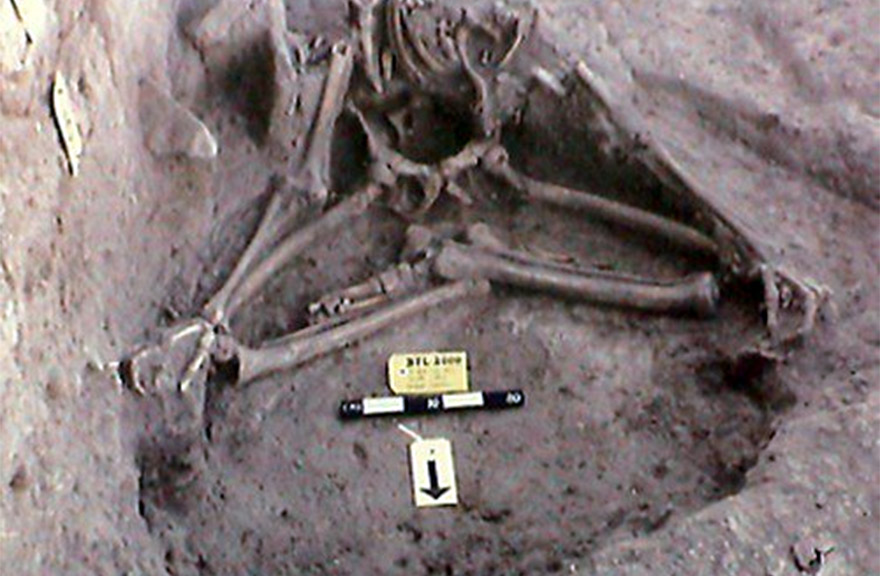
The 2,700-year-old skeletal remains of an ancient yogi sitting in samadhi have been found in an Indus valley civilization archaeological site located at Balathal, Rajasthan.

Many Indus Valley seals depict pictures of yogis sitting in the lotus position. Here are two examples showing ancient yogis sitting in meditation and keeping their hands on their knees as done in modern yoga meditations. If we see the skeletal remains of the yogi above, we can note that his fingers are in gyana mudra (with the thumb touching index finger), resting on his knees as well.

2,700 Year Old Yogi in Samadhi Found in Indus Valley Civilization Archaeological Site
Yogi Remains in Baithal, Padmasana and with Gyan Mudra

Balathal is an archaeological site located in Vallabhnagar tehsil of the Udaipur district of Rajasthan state in western India. This site, located 6 km from Vallabhnagar town and 42 km from Udaipur city, was discovered by V. N. Misra during a survey in 1962-63. Excavation began in 1994 jointly by the Department of Archaeology of the Deccan College Post-graduate and Research Institute, Pune and the Institute of Rajasthan Studies, Udaipur.

Excavation of sites from the 4,500-year-old Ahar culture provide clues to the link between the Harappans and their predecessors. That it existed at all was a surprise – a fortified enclosure of mud and brick, comparable to the citadels of the Harappans, spread over 500 sq m. It was filled with ash and cow dung. A people called the Ahars had built it in Balathal near modern Udaipur some 4,500 years ago.

Carbon dating established that they had lived in and around the Mewar region in Rajasthan between 3,500 and 1,800 B.C. They were Mewar’s first farmers, older even than the Harappans. But why had they built a fort only to fill it with ash and cow dung? To solve the mystery, a team of Indian archaeologists excavating the site went on removing layer after layer of civilisation.

The mystery deepened. They found five skeletons, four in layers between 2,000 B.C. and 1,800 B.C. That was the age of stone and copper, the chalcolithic age. This was the first time human skeletons had been found at any Ahar site. The Ahars, it had been thought, cremated their dead. And the Harappans buried theirs.

There are 90 sites of Ahar – a rural society. The recent round of excavations is establishing that Ahar culture and Harappan civilisation were different though contemporary and related. This village life emerged much before the mature Harappan era.

Harappa’s progress in the mature Harappan period (2,500 B.C.) helped the rural Ahar people to flourish and develop their own township and stone and brick houses. On the scale of civilisation, they emerged far ahead of other chalcolithic cultures in the subcontinent.

And they may be the missing link to show how the Indus people made such a quantum leap from small rural communities to an advanced civilisation.

Ahar culture flourished predominantly in the Mewar region of Rajasthan, on the eastern side of the Aravallis, and in undulating rocky plateaus and plains along the Banas River and its tributaries.

In modern Rajasthan, Ahar sites have been reported in Udaipur, Chittorgarh, Dungarpur, Bhilwara, Rajsamand, Bundi, Tonk and Ajmer dotting10,000 sq km. “There is a commonality in all 90-sites located in Southeastern Rajasthan and parts of Madhya Pradesh,” says Jaipur-based Rima Hooja, a scholar on Ahar culture.

Their name comes from a mid-1950s excavation led by R.C. Aggarwal, former director of archaeology, Rajasthan, at Ahar near Udaipur. A few years later, one excavation was carried out at Gilund in Rajsamand and then the focus shifted to the Harappans.

The Deccan College, Pune and Institute of Rajasthan Studies, Rajasthan Vidyapeeth, Udaipur turned their attention to Ahar culture in 1994 and began excavations in Balathal. Deccan College and the University of Pennsylvania began digging in Gilund in 1999 and the Jaipur circle of Archaeological Survey of India (ASI) began excavation at Ojiyana in Bhilwara in 2000. And discoveries began pouring in.

Gwen Robbins, a biological anthropologist from the University of Oregon, USA, in her ongoing preliminary analysis of the bones, found the first skeleton uncovered was of a male. Dead at the age of 50, he suffered from joint disease and had lost all but four of his teeth at least five years before death. On closer inspection of the remains, a left mandible and a few cranial fragments were found to be of a second individual aged 35 whose sex couldn’t be determined.

The third skeleton was of a female approximately 35 years of age. The fourth was of a 35-year-old woman, and it caught the archaeologists’ interest. It had been buried with a small earthen lota (pot) near the head. Why was the lota there? “I am certain that the fortified enclosure had a ritual function,” says Dr V.N. Mishra, former principal of the Deccan College, who led the excavations: “You don’t find such selective burials in cow dung and ash anywhere else.”

The fifth skeleton, from a different era, was of an adult male 35 to 40 years old and had been buried in a seated position that resembles the modern samadhi burial of sadhus who renounce the world. The ritual of burial in ash and cow dung raises the need to look at related traditions in present-day Hindu communities such as Gosain and Jogi which bury their dead.

2,800-Year-Old Urartu Jars Uncovered In Eastern Turkey

2,800-Year-Old Urartu Jars Uncovered In Eastern Turkey

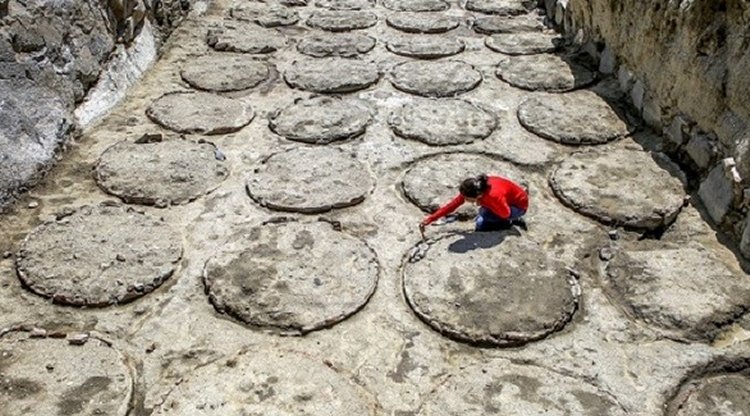
At this time, using the common hand tool trowel, some researchers are looking into the secrets of an ancient kingdom. Historians believe they have discovered ruins that are estimated to be over 2,800 years old in the eastern Van region, Turkey.

The pithos burial chambers, which are like large ceramic jars, are thought to be from the Kingdom of Urartu, which ruled the country from the mid-ninth century BC until its defeat by the Medes.

Vans was the capital of the Urartian Kingdom until it fell early in the sixth century BC. 

2,800-Year-Old Urartu Jars Uncovered In Eastern Turkey
Painstaking: Archaeologists believe these 2,800-year-old pithos tombs from the Kingdom of Urartu

Every summer a team of around 50 archaeologists take part in an annual excavation at Van Fortress in a bid to uncover treasures that have been buried for thousands of years.

With permission from the country’s Ministry of Culture and Tourism university teams have been working together.

They are currently working at the top of the fortress, where a palace was located, and the northern quarter.

‘Our work is aimed at repairing and further protecting Old Van City,’ Dr Erkan Konyar from Istanbul University said according to Todays Zaman.

‘We are carrying out work to protect the areas that we have worked on in previous years. ‘

Just 38km from Van excavation work is also taking place at Urartu Castle. This year they discovered part of the walls.

Head of Excavation Doç. Dr Mehmet Işıklı, told Hurriyet Daily News: ‘This made us very excited, as even though these walls witnessed great earthquakes, their architecture remained quite robust and unchanged.

The pithos tombs, which are like large ceramic jars. Pictured: An archaeologist working to uncover the resting place
The ancient site where the pithos tombs were discovered thought to be from the Kingdom of Urartu, which ruled from the country from the mid-ninth century BC

Archaeologists Discover Additional Dead Sea Scroll Fragments In Desert Caves

Archaeologists Discover Additional Dead Sea Scroll Fragments In Desert Caves

Archaeologists in Israel have found new fragments of a Dead Sea Scroll for the first time in 60 years. The parchment fragments, which number in the hundreds, were most likely buried in a desert cave between 132 and 136 A.D., during the unsuccessful Bar Kokhba rebellion against the Romans.

Archaeologists Discover Additional Dead Sea Scroll Fragments In Desert Caves
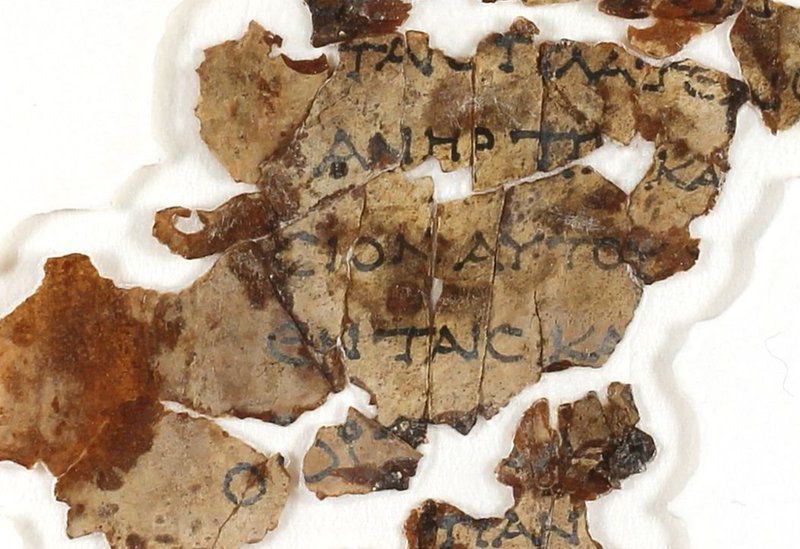
Part of the Twelve Minor Prophets scroll, written in Greek.

The 80 or so fragments are inscribed with Greek translations of verse from the biblical books of Zechariah and Nahum, according to Ilan Ben Zion of the Associated Press (AP).

Researchers with the Israel Antiquities Authority (IAA) found the nearly 2,000-year-old scrolls in the Cave of Horror, a site in the Judean Desert that derives its name from the 40 skeletons discovered there during excavations in the 1960s.

The Dead Sea Scrolls, a collection of Jewish manuscripts penned between the third century B.C. and the first century A.D., include the oldest known fragments of the Hebrew Bible. Modern researchers first learned of the texts’ existence in the 1940s, when local Bedouin shepherds happened upon a set of the scrolls in the Qumran Caves.

According to Haaretz’s Ruth Schuster and Ariel David, the newly discovered bits of parchment appear to be missing sections of a scroll found in the Cave of Horror in 1952. Like the fragments, that scroll bears lines from the Twelve, a book of the Hebrew Bible that contains the writings of 12 minor prophets.

Archaeologists found the scroll fragments at a site known as the Cave of Horror.

Aside from the name of God, which appears in Hebrew, the new scroll fragments are written entirely in Greek. Scholars say the find sheds light on the evolution of biblical texts from their earliest forms.

“When we think about the biblical text, we think about something very static. It wasn’t static. There are slight differences and some of those differences are important,” Joe Uziel, head of the IAA’s Dead Sea Scrolls unit, tells the AP. “Every little piece of information that we can add, we can understand a little bit better.”

The discovery was part of an Israeli government project launched in 2017 to survey the caves of the Judean Desert and recover artefacts before looters could steal them. Per an IAA statement, researchers had to rappel down a sheer cliff to reach the Cave of Horror, which is surrounded by gorges and located some 260 feet below a clifftop.

“The desert team showed exceptional courage, dedication and devotion to purpose, rappelling down to caves located between heaven and earth, digging and sifting through them, enduring thick and suffocating dust, and returning with gifts of immeasurable worth for mankind,” says IAA Director Israel Hasson in the statement.

As part of the new research, archaeologists explored a number of desert caves in the area. In addition to the scroll fragments, reports Amanda Borschel-Dan for the Times of Israel, they found an array of artefacts dating to the Bar Kokhba revolt, which saw Jewish rebels using the caves as hideouts.

Highlights of the discovery include a cache of coins bearing Jewish symbols like a harp and a date palm, arrowheads and spear tips, sandals, fabric, and lice combs.

Cache of coins from the period of the Bar Kokhba revolt against Rome.
An archaeologist at the Israel Antiquities Authority (IAA) shows ancient lice comb from the Bar Kochba Jewish revolt period, excavated from an area in the Judean Desert, after conservation work is done at the IAA’s Dead Sea conservation laboratory in Jerusalem, March 16, 2021.

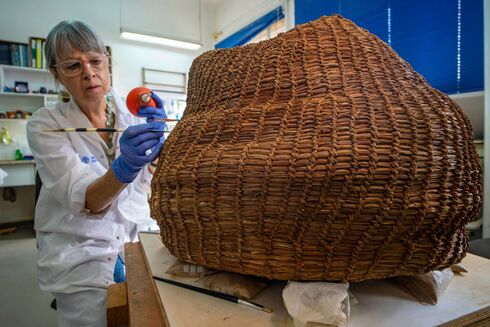
The team found far older items, too. Youth volunteers participating in the exploration of one of the Muraba’at Caves, for instance, discovered a huge, 24- to 26-gallon basket made 10,500 years ago. As Ella Tercatin writes for the Jerusalem Post, experts think the woven vessel is the oldest of its kind found to date.

Researchers working in the Cave of Horrors also found the 6,000-year-old remains of a child whose body was naturally mummified in the dry cave. Based on a CT scan, they estimate that the individual, likely a girl, was between 6 and 12 years old. They were buried in the fetal position in a shallow pit, with cloth tucked around their body.

“It was obvious that whoever buried the child had wrapped [them] up and pushed the edges of the cloth beneath [them], just as a parent covers [their] child in a blanket,” says IAA prehistorian Ronit Lupu in the statement. “A small bundle of cloth was clutched in the child’s hands.”

Most of the Dead Sea Scrolls, discovered in caves along the coast of the Dead Sea in what’s now Israel and the West Bank, date to between the second century B.C. and second century A.D. Per the Leon Levy Dead Sea Scrolls Digital Library, the scrolls have helped scholars understand different Jewish sects that were active during that period.

As Andrew Lawler reported for Smithsonian magazine in 2010, researchers found around 15,000 scroll fragments between the late 1940s and early 1960s.

Some of the scrolls include texts that are remarkably similar to later versions of biblical books, but with some subtle differences and additional material. Others set out regulations, forming the basis for legal commentaries in the Talmud.

Hasson says that the discoveries point to the importance of putting resources into a continued exploration of the caves.

“We must ensure that we recover all the data that has not yet been discovered in the caves before the robbers do,” he adds in the statement. “Some things are beyond value.”

Oldest woven basket in the world found in Israel dates back 10,000 years

Oldest woven basket in the world found in Israel dates back 10,000 years

Archaeologists in Israel have discovered several 2,000-year-old biblical scroll fragments, a 6,000-year-old skeleton, ancient coins and what is thought to be the world’s oldest woven basket in a cave, the Israel Antiquities Authority (IAA) announced Tuesday.

The basket was found empty and closed with a lid. Only a small amount of soil was retrieved in it and the researchers hope it will help identify what the vessel contained.

A perfectly preserved large woven basket dating back some 10,500 years was unearthed in the Judean Desert, the Antiquities Authority announced Tuesday.

The 10,500-year-old basket as found in Muraba‘at Cave.

Experts believe the artefact is probably the oldest of its kind ever uncovered. It was excavated in a Judean Desert cave by the IAA in cooperation with the Civil Administration’s Archaeology Department.
“This is the most exciting discovery that I have encountered in my life,” Dr Haim Cohen said during a press briefing at the IAA lab in Jerusalem.

Materials from four different parts of the basket were analyzed to date. The researchers concluded that the object was manufactured around 10,500 years ago during the Pre-Pottery Neolithic period.

“The basket has a capacity of some 92 litres,” Cohen said. “We do not know yet which type of plant was used to make it, but we are looking into it. However, we can already say that two people wove it and that one of them was left-handed.”

The basket was found empty and closed with a lid. Only a small amount of soil was retrieved in it, and the researchers hope it will help identify what the vessel contained.

According to Cohen, the ancient people who manufactured it probably did not live in the cave but rather used it for storage.

The archaeologists found evidence that antiquities looters had probably arrived some 10 km. from the artefact, but they stopped excavating just before reaching it.

The rescue operation aims at surveying hundreds of caves in the Judean Desert to trace and preserve the antiquities that are still hidden there before they are retrieved and sold on the private market, as has happened in the past.

“Organic materials usually do not have the ability to survive for such long periods,” Dr Naama Sukenik from the IAA’s Organic Material Department told The Jerusalem Post. “However, the special climatic condition of the Judean Desert, its dry weather, have allowed for dozens of artefacts to last for centuries and millennia.”

Among other items, the archaeologists have found fragments of textiles still carrying their bright colours dating back to the Roman period, parts of sandals, a small comb with 2,000-year-old lice stuck between its teeth, seeds and pieces of rope.

Dozens of scroll fragments from a biblical scroll dating back some 2,000 years were also unearthed in the first discovery of its kind in decades.

About half of the area still remains to be surveyed and shed further light into life in Israel over the course of millennia.

Chinese mummy suggests brain surgery was carried out 3,600 years ago

Chinese mummy suggests brain surgery was carried out 3,600 years ago

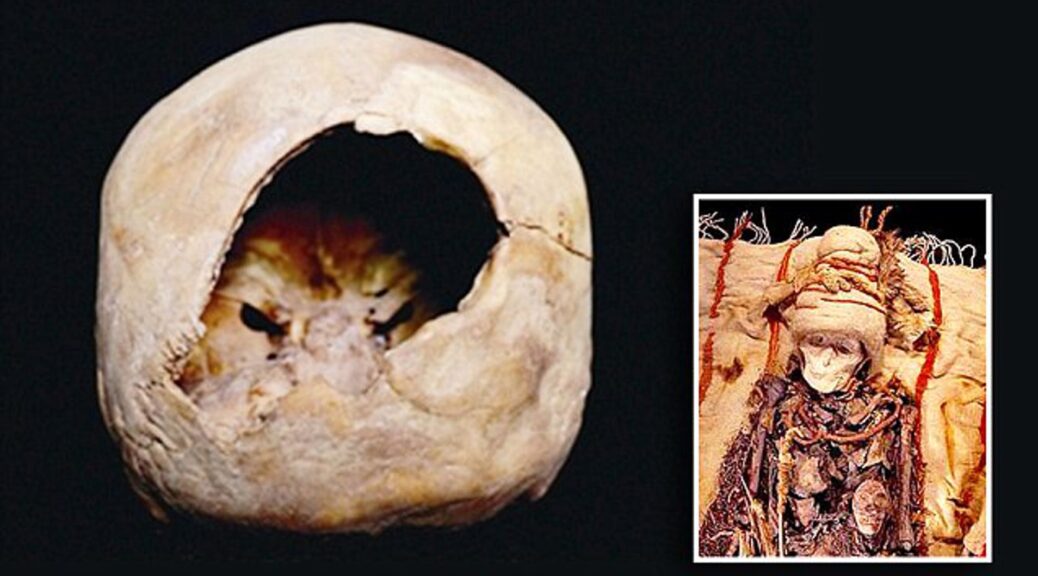
A three-and-a-half-millennia-old skull has uncovered evidence of an early form of brain surgery. The mummified woman’s perforated skull was discovered in the Xiaohe tomb in China’s Xinjiang Uygur Autonomous Region.

Experts said that the hole, which measures around 2 inches (50mm) in diameter, was most likely an early form of craniotomy. The amount of skull removed depends on the type of surgery being performed, and the flap is later replaced using screws.

It may have also been a form of trepanation, which involves the removal of a piece of bone from the skull. This procedure has been performed since prehistoric times, and cave paintings indicate that ancient people believed the practise would cure epileptic seizures, headaches and mental disorders.

The perforated skull (pictured) was discovered as part of a mummified body of a woman in the ‘Little River’ Xiaohe tomb complex.  Experts said that the hole, measuring around 2 inches (50mm) in diameter, was most likely an early form of craniotomy – a procedure that involves removing bone to get access to the brain
The wound suggests that the female (pictured), who died in her 40s, must have lived for at least a month, or even longer, after receiving the surgery

Lead archaeologist Zhu Hong who made the discovery said: ‘[The wound] suggests the female, who died in her 40s, must have lived for at least a month, or even longer, after receiving the surgery.’

He added there were also signs of healing tissues around the wound. The mummy dates back to 1,615 BC and is one of the hundreds discovered in the Xiaohe ‘Little River’ Tomb complex.

Lying 108 miles (175 km) west of the ancient city of Loulan, the site was first explored in 1934 by Swedish archaeologist Folke Bergman, but not fully excavated until 2005.

Dating of the area has shown it goes back to approximately 2,000 BC, although tests have revealed the bodies contain DNA from the east and west. 

In particular, males were found to have chromosomes typically found in Northern and Eastern Europe, alongside DNA found in Siberia. The massive burial site has more than 330 graves and contains the largest number of mummies ever found in the world.

These tombs include adults and children as well as 15 intact mummies, although approximately half of the tombs were said to have been looted by grave robbers. 

The majority of the coffins found on the site were made of wood, and were shaped like boats, buried upside down. This practice is similar to how the Egyptians believed boats would take Pharaohs to the land of the ‘Gods’

The massive burial site has more than 330 graves and contains the largest number of mummies ever found in the world. These tombs include adults and children as well as 15 intact mummies. The majority of the coffins found on the site were made of wood, and were shaped like boats (pictured) buried upside down

Clothes and jewellery found in the tomb were also buried alongside the mummies, in small baskets, and the bodies were wrapped in cowhide and wool. 

This prevented sand from getting inside the corpses.  In addition to the wood coffins, four clay-covered rectangular coffins were also found, surrounded by stakes. 

And six of the coffins were found to contain wooden ‘bodies’, rather than corpses.  Each of these wooden sculptures was the same shape and were designed to look like males.  Sexual iconography was everywhere at the site, with posts representing phalluses and vulvas placed in front of each grave. 

Sientists recreated ancient brain surgery to understand medical techniques that existed almost 2,500 years ago. A team of experts in Russia spent the past year examining skulls found with intricate surgical holes in a bid to fathom out how early nomadic doctors carried out their work.

This practice is similar to how the Egyptians believed boats would take Pharaohs to the land of the ‘Gods’. Clothes and jewellery found in the tomb were also buried alongside the mummies, in small baskets, and the bodies (pictured) were wrapped in cowhide and wool. This prevented sand from getting inside the corpses
Scientists recreated ancient brain surgery on a modern skull (shown) to understand medical techniques that existed almost 2,500 years ago. A team of experts in Russia spent the past year examining skulls found with intricate surgical holes in a bid to fathom out how early nomadic doctors worked.
Evidence from ancient skulls (pictured) suggest they are among the earliest ever examples of trepanation – an ancient form of neurosurgery

Evidence suggested they were among the earliest ever examples of trepanation – the oldest form of known neurosurgery – with the procedures skillfully carried out. The oldest samples of skulls with boreholes drilled into them were found in a burial site in France dating back to 6500 BC.

But it was also used by the Ancient Egyptians, Chinese, Indians, Romans, Greeks and the early Mesoamerican civilisations. Even the ‘father of medicine Hippocrates advocated the process in his 400 BC tome ‘On Injuries of the Head’.

The procedure was carried out by Aleksei Krivoshapkin according to ancient methods used in the Altai Mountains on the skull of a woman who had died of natural causes shortly before.

Analysis of the skulls of ancient patients found that the operations were carried out with only one tool, a bronze knife, with the surgeons, carefully scraping at the skull, yet leaving behind only minimal traces of their work.

The Oldest Mummies in The World Are Turning Into Black Slime

The Oldest Mummies in The World Are Turning Into Black Slime

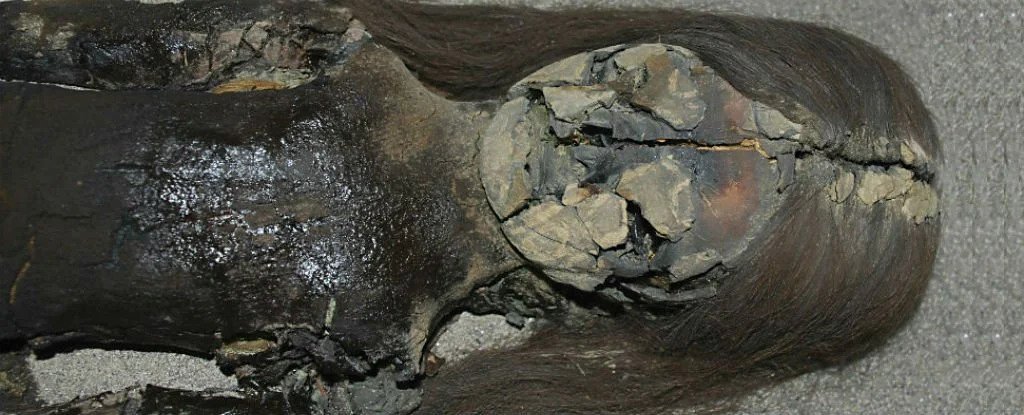
Climate change is converting the world’s oldest mummies into black slime, which were buried more than 7,000 years ago in the arid desert of northern Chile. Increasing humidity has been observed to cause an outbreak of bacteria living on the preserved skin of Chinchorro mummies, according to scientists.

The Oldest Mummies in The World Are Turning Into Black Slime
The preserved skin on the outside of Chinchorro mummies in Arica, northern Chile, have begun to rapidly degrade as bacteria and humid air is turning it into black slime, as can be seen in the photograph above

The bacteria then feeds on the ancient skin, causing it to break down into black slime. Researchers say that rising humidity levels in Arica, Chile, is putting the 120 Chinchorro mummies at the University of Tarapacá’s archaeological museum at risk.

However, they warn that hundreds of other mummies buried just beneath the sandy surface in the valleys throughout the region are also under threat. Professor Marcela Sepulveda, an archaeologist at the University of Tarapacá, said: ‘In the last 10 years, the process has accelerated.

‘It is very important to get more information about what’s causing this and to get the university and national government to do what’s necessary to preserve the Chinchorro mummies for the future.’

The Chinchorro mummies are in some cases nearly 4,000 years older than those found preserved from ancient Egypt. The oldest mummy discovered in the Atacama desert dates to 7020BC while the oldest in Egypt dates to 3,000BC.

However, the practice of preserving the dead with mummification became popular among the Chinchoro around 5,000 BC, with children and babies often being the most elaborately preserved. The Chinchorro were prehistoric people who lived in scattered communities and used fishing to help them survive on the desert coast of Chile and Peru.

It is thought they began preserving their dead though mummification as part of a religious act designed to bridge the world between the living and the dead.

An estimated 282 mummies have now been recovered from the dry, sandy soil in the region, but scientists say there could be hundreds more buried there.

Preserved corpses are often found as the shifting sand exposes their bodies. Arica and the surrounding Atacama Desert is one of the driest places in the world and the town receives less than 0.02 inches of rain a year.

The skin on the head of this Chinchorro mummy at the San Miguel de Azapa Museum in Arica, Chile has begun to break down due to the damage being caused by bacteria growing as humidity in the area increases.

It is this dry climate that has helped preserve the mummies for more than 7,000 years. However, the region has been growing slowly damper in recent years.

Scientists at the University of Tarapacá museum first noticed black slimy patches appearing on the preserved skin of the Chinchorro mummies around ten years ago.

As time has gone on they have degraded at ‘an alarming rate’ as the preserved skin has broken down into black slime.

Researchers at Harvard School of Engineering and Applied Sciences have now conducted a series of tests to find out what was causing the degradation. They found that bacteria normally found growing on the human skin appeared to become ‘supercharged’ when placed on mummy skin in high humidity.

They found that mummies need to be kept at between 40 per cent and 60 per cent humidity to prevent degradation from occurring. If the humidity falls below this level, acidification could also damage the mummies.

Some of the Chinchorro mummies, like the one above buried in a coffin made from reeds, show highly sophisticated preservation thousands of years before mummification began to be used in ancient Egypt

Museum staff are now fine-tuning the temperature and humidity to help preserve the mummies in their extensive collection. Professor Ralph Mitchell, a biologist at Harvard who led the work, said: ‘We knew the mummies were degrading but nobody understood why.

‘This kind of degradation has never been studied before.

‘With many diseases we encounter, the microbe is in our body, to begin with, but when the environment changes it becomes an opportunist.’

Professor Mitchell and his colleagues are now keen to find ways to help protect the mummies still preserved out in the desert.