All posts by Archaeology World Team

How DNA has shed light on the Irish pharaoh and his ancient tomb builders

How DNA has shed light on the Irish pharaoh and his ancient tomb builders

A team of Irish geneticists and archaeologists reported that a man whose cremated remains were interred at the heart of Newgrange was the product of a first-degree incestuous union, either between parent and child or brother and sister.

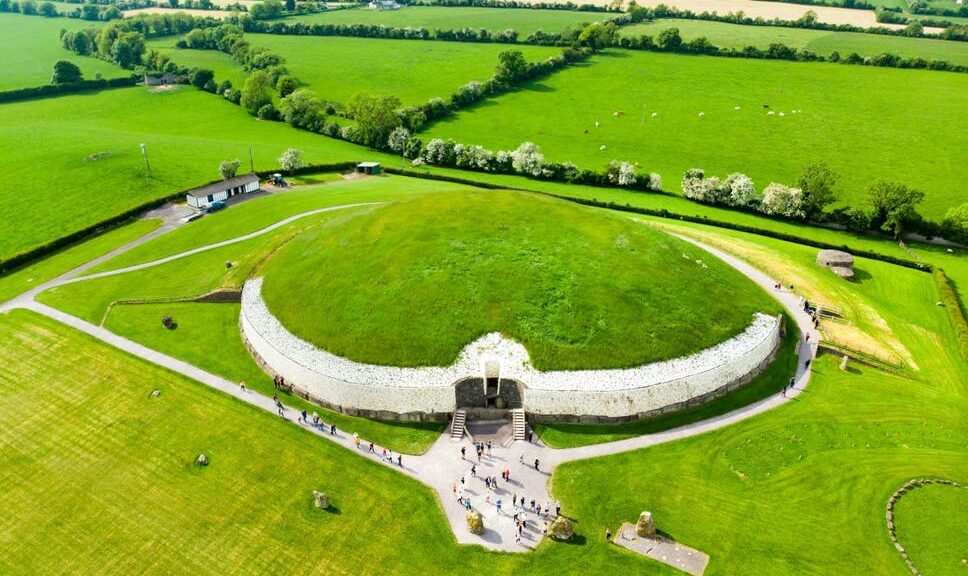
A photo provided by Ken Williams shows the central burial chamber at Newgrange, a 5,000-year-old Irish tomb in the valley of the River Boyne, near Dublin. In a new analysis of ancient human DNA from Newgrange, researchers found evidence of brother-sister incest that suggests the existence of a ruling elite.

The finding, combined with other genetic and archaeological evidence, suggests that the people who built these mounds lived in a hierarchical society with a ruling elite that considered themselves so close to divine that, like the Egyptian pharaohs, they could break the ultimate taboos.

In Ireland, more than 5,000 years ago people farmed and raised cattle. But they were also moved, like their contemporaries throughout Europe, to create stunning monuments to the dead, some with precise astronomical orientations.

Stonehenge, a later megalith in the same broad tradition as Newgrange, is famous for its alignment to the summer and winter solstice. The central underground room at Newgrange is built so that as the sun rises around the time of the winter solstice it illuminates the whole chamber through what is called a roof box.

Archaeologists have long wondered what kind of society built such a structure, which they think must have had a ritual or spiritual significance. If, as the new findings indicate, it was a society that honoured the product of an incestuous union by interring his remains at the most sacred spot in a sacred place, then the ancient Irish may well have had a ruling religious hierarchy, perhaps similar to those in ancient societies in Egypt, Peru, and Hawaii, which also allowed marriages between brother and sister.

In a broad survey of ancient DNA from bone samples previously collected at Irish burial sites thousands of years old, the researchers also found genetic connections among people interred in other Irish passage tombs, named for their underground chambers or passages. That suggests that the ruling elite were related to one another.

Daniel G Bradley, of Trinity College, Dublin, a specialist in ancient DNA who led the team with Lara M Cassidy, a specialist in population genetics and Irish prehistory also at Trinity College, said the genome of the man who was a product of incest was a complete surprise. They and their colleagues reported their findings in the journal Nature.

Newgrange is part of a necropolis called Bru na Boinne, or the palace of the Boyne, dating to around 5,000 years ago that includes three large passage tombs and many other monuments. It is one of the most remarkable of Neolithic monumental sites in all of Europe.

Of the site’s tombs, Bradley said, “Newgrange is the apogee.” It is not just that it incorporates 200,000 tons of earth and stone, some brought from kilometers away. It also has a precise orientation to the winter sun.

On any day, “when you go into the chamber, it’s a sort of numinous space, it’s a liminal space, a place that inspires a sort of awe,” Bradley said.

That a bone recovered from this spot produced such a genomic shocker seemed beyond coincidence. This had to be a prominent person, the researchers reasoned. He wasn’t placed there by accident, and his parentage was unlikely to be an accident. “Whole chunks of the genome that he inherited from his mother and father, whole chunks of those were just identical,” Bradley said. The conclusion was unavoidable: “It’s a pharaoh, I said. It’s an Irish pharaoh.”

David Reich of Harvard University, one of the ancient DNA specialists who has tracked the grand sweep of prehistoric human migration around the globe, and was not involved in the research, called the journal article “amazing.”

“I think it’s part of the wave of the future about how ancient DNA will shed light on social structure, which is really one of its most exciting promises,” he said, although he had some reservations about evidence that the elite was genetically separate from the common people, a kind of royal family.

Bettina Schulz Paulsson, a prehistoric archaeologist at the University of Gothenburg in Sweden, said the researchers’ finding that suggested a religious hierarchy was a “very attractive hypothesis.”

The paper is rich with other detail, including the discovery that an infant had Down syndrome. The authors believe this is the oldest record of Down syndrome. Chemical tests of the bone also showed that the infant had been breastfed and that he was placed in an important tomb. Both of those facts suggest that he was well cared for, in keeping with numerous other archaeological finds of children and adults with illnesses or disabilities who were supported by their cultures.

Cassidy said they also found DNA in other remains that indicated relatives of the man who was a child of royal incest were placed in other significant tombs. “This man seemed to form a distinct genetic cluster with other individuals from passage tombs across the island,” she said.

She said “we also found a few direct kinship links,” ancient genomes of individuals who were distant cousins. That contributed to the idea that there was an elite who directed the building of the mounds. In that context, it made sense that the incest was intentional. That’s not something that can be proved, of course, but other societies have encouraged brother-sister incest.

“The few examples where it is socially accepted,” she said, are “extremely stratified societies with an elite class who are able to break rules.”

Study Examines Norman Influence on English Diet

Study Examines Norman Influence on English Diet

The latest science approaches have been used by historians from Cardiff University and the University of Sheffield to provide new insight into life during the Norman Conquest of England.

Until now, the story of the Conquest has primarily been told from the evidence of the elite classes of the time. But little has been known about how it affected everyday people’s lives.

A variety of bioarchaeological methods were used in the research team, which included academics at Bristol University, to associate human and animal bones recovered from sites across Oxford, along with ceramics used for cooking.

The 11th-century cook would sometimes roast pork or chicken but most often turned it into a stew.

Their results suggest only short-term fluctuations in food supplies following the Conquest which didn’t adversely affect the population’s overall health.

There is evidence the Norman invasion led to more controlled and standardized mass agricultural practices. Pork became a more popular choice and dairy products were used less. But on the whole, a diet dominated by vegetables, cereals beef, and mutton remained largely unchanged.

Dr. Elizabeth Craig-Atkins of the University of Sheffield’s Department of Archaeology said: “Examining archaeological evidence of the diet and health of ordinary people who lived during this time gives us a detailed picture of their everyday experiences and lifestyles.

Despite the huge political and economic changes that were happening, our analysis suggests the Conquest may have only had a limited impact on most people’s diet and health.

“There is certainly evidence that people experienced periods where food was scarce. But following this, an intensification in farming meant people generally had a more steady food supply and consistent diet. Aside from pork becoming a more popular food choice, eating habits and cooking methods remained unchanged to a large extent.”

Researchers used a technique called stable isotope analysis on bones to compare 36 humans found in various locations around Oxford, including Oxford Castle, who had lived between the 10th and 13th centuries.

Signals from the food we consume are archived as chemical tracers in our bones, allowing scientists to investigate the quality and variety of a person’s diet long after they have died.

The team found that there wasn’t a huge difference between the health of the individuals, who were alive at different points before and after the Conquest.

Levels of protein and carbohydrate consumption were similar in the group and evidence of bone conditions related to poor diet — such as rickets and scurvy — were rare. However, high-resolution analysis of teeth showed evidence of short-term changes in health and diet in early life during this transitional phase.

Isotope analysis was also used on 60 animals found at the same sites, to ascertain how they were raised. Studies of pig bones found their diets became more consistent and richer in animal protein after the Conquest, suggesting pig farming was intensified under Norman rule. They were likely living in the town and being fed scraps instead of natural vegetable fodder.

Fragments of pottery were examined using organic residue analysis. When food is cooked in ceramic pots, fats are absorbed into the vessel, allowing researchers to extract them.

The analysis showed that pots were used to cook vegetables like cabbage as well as meat such as lamb, mutton, or goat across the conquest. Researchers say the use of dairy fats reduced after the Conquest and that pork or chicken became more popular.

Dr. Richard Madgwick, based in Cardiff University’s School of History, Archaeology and Religion, said: “To our knowledge, this is the very first time globally that human osteology, organic residues analysis and isotope analysis of incremental dentine and bone have been combined in a single study.

“It is only with this innovative and diverse suite of methods that we have been able to tell the story of how the Conquest affected diet and health in the non-elite, a somewhat marginalized group until now.”

The dietary impact of the Norman Conquest: A multiproxy archaeological investigation of Oxford, UK, is published in the journal PLOS ONE.

Rancher finds the strange rock on his farm, it was not what he had in mind at all

Rancher finds the strange rock on his farm, it was not what he had in mind at all

A rancher came across an old bone sticking out of his desert property near La Flecha in the Patagonia region of Argentina four years ago. With the recent news of exciting dinosaur finds in that country in mind, he scratched around some more. Then he went to a local museum to ask paleontologists to come to look for more fossils.

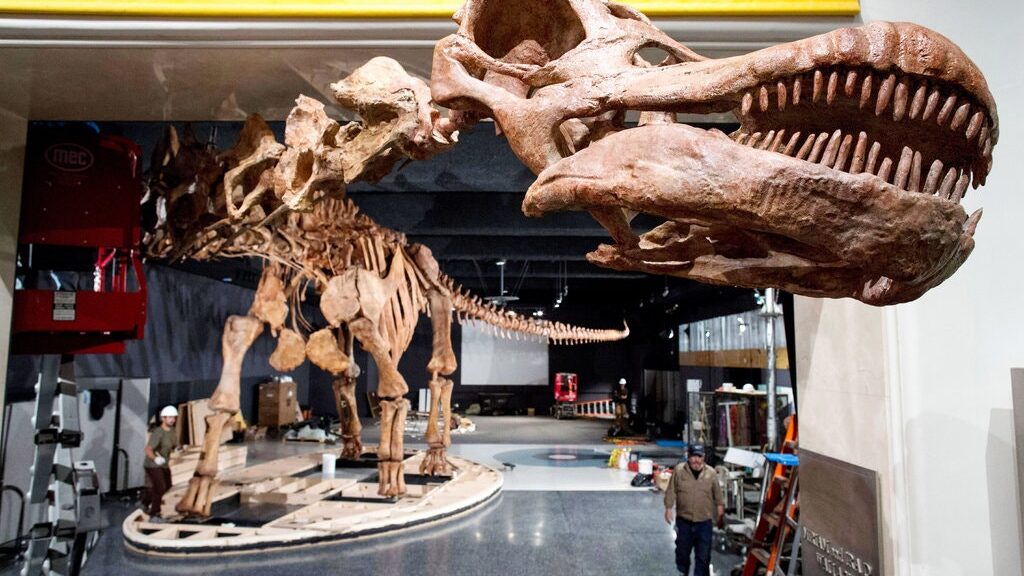
The head of the Titanosaur sticks out into the hallway at the American Museum of Natural History in New York. The discovery that led to the exhibit started with a find by a rancher in the Patagonia region of Argentina.Credit…

Many important dinosaur discoveries are made by non-experts in just this casual way. The rancher’s find soon led to the exposure of skeletal remains of six of the biggest titanosaurs. These herbivores lived about 100 million years ago, in the Late Cretaceous Period, on all continents, including Antarctica. They seemed especially plentiful in southern lands.

Now, the most imposing one of these dinosaurs from the far south of South America, assembled from 84 fossil pieces excavated from the rancher’s land, is the newest eyeful of ancient life on display at the American Museum of Natural History in Manhattan. The hulking skeleton cast made its debut as a permanent attraction. Museum officials and scientists called it a must-see addition to the ranks of such popular icons as the institution’s great blue whale and the fierce Tyrannosaurus rex.

“There’s nothing like finding a great new fossil, especially such a huge one,” said Michael J. Novacek, the museum’s senior vice president, provost of science and a curator of paleontology.

The dinosaur on which the Titanosaur cast is based was excavated in the desert near La Flecha, Argentina. Paleontologists at Argentina’s Paleontological Museum Egidio Ferugilio did much of the excavation.

The new research is expected to yield insights into the physiology of dinosaurs and how they were able to grow and function as such large creatures.

“Paleontology has become less geological and more biological in the last 20 years or so,” said Mark A. Norell, chairman of the paleontology division at the museum and a leading dinosaur researcher. He cited the field’s new “geochemical tools” for determining diet, growth patterns, and locomotion. “All of us are simply biologists who work on fossils,” he added.

The exhibit is not only a centerpiece for the museum’s fossil collections but also the start of a wide range of dinosaur programs for the year, including symposiums and another exhibition, “Dinosaurs Among Us,”

The Patagonian skeleton was not an easy fit in its New York home. At 122 feet in length, it was a bit too long for the gallery. Part of its 39-foot-long neck extends through an opening in a wall toward the elevator banks as if to welcome visitors to the fossil floors.

This titanosaur was a young adult, gender undetermined. Its appetite for all kinds of vegetation must have been prodigious. Based on bone sizes, researchers estimated that this individual weighed 70 tons — as much as 10 African elephants, the heaviest land animals today. Think of its possible heft if it were fully grown. Think of it satisfying its huge appetite by stretching its long neck to graze far and wide. With only a few shifts in position, it might have mowed the equivalent of all the grass in Yankee Stadium in a morning.

Weight was also a factor in preparing the skeleton cast for display, a task undertaken by Research Casting International in Canada. The actual mineralized fossils were too heavy to mount. Instead, all “bones” are made from lightweight fiberglass based on digital copies of the original fossils.

Much of the grueling excavation leading to the discovery was done by teams led by José Luis Carballido and Diego Pol, paleontologists at Paleontological Museum Egidio Feruglio in Argentina. They began excavating for months at a time after the rancher’s visit. Sometimes it took a week of digging to isolate a single femur or a forelimb. Thighs and upper arms are critical to judging the size and weight of a dinosaur.

Dr. Pol said the excavations revealed that at least six of these giant individuals, all young adults, had died at the site of what had been a flood plain near a river. Their deaths had happened at three distinct times, anywhere from a few years to centuries apart. Like many herding animals, they may have become isolated from the group and died of stress and hunger near their watering hole.

“That’s when we realized this was a once-in-a-lifetime discovery,” Dr. Pol said. Dinosaurs are the big game to fossil hunters, and these were some of the biggest plant-eating dinosaurs ever found.

The size and distinctive shape of an eight-foot femur of one specimen astonished scientists. This appeared to be a previously unknown titanosaur species, yet unnamed. Dr. Pol said a report that is being prepared may soon propose a formal species name.

In a bravura moment, Dr. Pol had his picture taken stretched out on the ground beside the femur, about the size of a living room couch. The photograph caught the attention of paleontologists at the natural history museum in New York, where Dr. Pol had done his Ph.D. research. “Maybe we can get that thing,” one said. “That would look great for a renovated dinosaur gallery,” another said.

Early last year, Dr. Novacek signed the deal with the Argentine museum to build the full-size skeleton cast for permanent display in New York. On a visit a few days before the titanosaur’s unveiling, workers were applying finishing touches as Dr. Norell paused at the entrance, under the watchful eye and toothy jaw of the star attraction.

A section of neck was rolled out of the basement garage of the museum. Scientists were astonished by the size and distinctive shape of the find.

“I guarantee you are going to remember this first impression,” Dr. Norell said. “Seeing something like this, you don’t quite have anything to compare its size and aspect with.”

He was right. The dinosaur was inexpressibly strange and big. Once again, we are reminded of what we know: Dinosaurs mostly were big, an engaging mystery and a challenge. The titanosaur’s arrival at the museum may inspire a new understanding of these incredible creatures. It is exciting enough to walk a corridor to the fossil galleries in anticipation of meeting it and spending some time with old friends of fond memory.

Dr. Novacek is not bothered by some skepticism that the specimens are from the biggest dinosaur discovered so far and that these may soon be eclipsed in size by new excavations.

“Every time we find the biggest dinosaur,” he said, “we soon find a bigger one in the next dig.”

How Thonis-Heracleion resurfaced after 1,000 years underwater

How Thonis-Heracleion resurfaced after 1,000 years underwater

The Egyptian city of Thonis-Heracleion was the main port of entry to the Mediterranean Sea between the eighth century BCE and the fourth century BCE. By the eighth century CE, what remained of the city sank into the sea and eventually became a distant memory. Without any trace, except for a few references in historical writings, the forgotten ruins rested undisturbed until the 21st century.

In 2000, the European Institute of Maritime Archaeology, led by renowned archaeologist Franck Goddio, finally discovered the city’s treasures in the depths of the Abu Qir Bay.

For thirteen years, Goddio and his team methodically excavated and explored the sunken city. They also found more than 64 shipwrecks and 700 anchors in the Abu Qir Bay.

This red granite statue of a pharaoh is over 5 meters and 5.5 tons.

The high number of maritime relics led researchers to believe that Heracleion was a mandatory port of entry for trade between the Nile and the Mediterranean.

This is also supported by the discovery of weights from Athens, which would have been used to make important measurements of goods. Never before had such weights been found among archaeological sites in Egypt.

History of Thonis-Heracleion

For more than four centuries until the foundation of Alexandria in 331 BCE, Thonis reigned supreme over the Canopic portion of the Nile River. The Greek historian Diodorus of Sicily wrote about Thonis-Heracleion in his great work, Bibliotheca Historica, between 60 BCE – 30 BCE.

Sometime in the fifth century BCE, Herodotus wrote that the Greek god and hero, Heracles, actually first stepped foot onto Egypt at this port city. Thus, the Greeks gave Thonis the name Heracleion and built a grand temple dedicated to him. Herodotus also said Paris and Helen of Troy visited the port city.

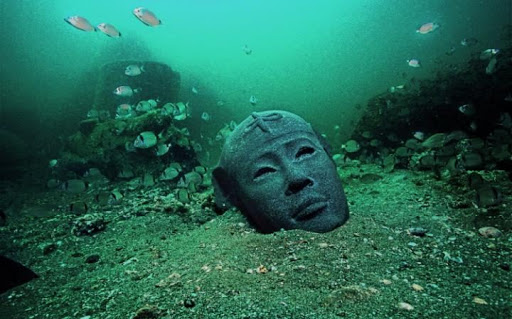
Head of the statue of Ptolemaic queen presumed to be Cleopatra II or III. 3rd century.

Religious Center of Worship

There are commonalities in the accounts of the old historians. Most significant of these is that the city boasted a huge temple constructed to honor the heroic god Heracles, hence the name, Heracleion.

The city was both a bustling trade port and a religious center of worship. Sixteen-foot stone sculptures and sarcophagi believed to contain mummified animals were discovered. This reinforces the idea that this divine city was a prominent religious site. Additionally, the annual Mysteries of Osiris celebration took place at the temple. The three large statues pictured below are a pharaoh, his queen, and the god Hapy, from left to right. They stood at the entrance to the temple.

The Egyptians had their own version of Heracles and, so, shared this godlike hero. Herodotus identifies Heracles with the Egyptian god Shu. Still, others claim Sesotris was the forerunner of the Greek hero. In all cases, this mythical god-hero signified strength.

It seems to reflect the belief by both the Egyptians and the Greeks that they were strong, proud people, as unconquerable as the mighty Hercules himself. What better way to signify Heracleion’s strength than to essentially deem it the seat of a god? And so it was that their beloved Heracles became the focal point of the thriving port city and center of trade.

Port Business

In addition to serving as a place of worship, many official business transactions took place here. Ships from various parts of the ancient world dropped their anchors and unloaded their merchandise before returning home with a fresh supply of Egyptian goods to take back with them. Officials collected taxes and fees, and a huge amount of value traded hands. The Nile was also easily defensible from this location.

Goddio with stele, 1.9 meters high, commissioned by Nectanebo (378-362BC)

The Demise of the Temple City

Thonis-Heracleion suffered from a flaw that undermined its overall strength. The Egyptians built the city upon a portion of the Nile delta. The region was particularly susceptible to subsidence, flooding, a rising sea level, and earthquakes that had the ability to trigger enormous tidal waves. As a result, these natural circumstances waged a centuries-long battle with the port.

Beginning in the second century BCE, the splendid city started sinking into the depths of the sea. Some have theorized that flooding and the excessive weight of the city contributed to its sinking.

The structures and religious statuary of which the Egyptians were so proud literally equaled millions upon millions of pounds. Additionally, the land under which those structures resided was in a perpetual state of flux due to the flooding common in the delta.

End of a City and Its Symbolism

As civilization evolved and the first millennium of the Common Era came and went, humanity approached the dawn of the Age of Reason when science and monotheism countered the age of gods and mythical heroes. It seems the sinking of this ancient Egyptian port and temple serves as a perfect metaphor for the sunset of mankind’s devotion to its old gods and reverence for ancient mythology.

One of the First Known Chemical Attacks Took Place 1,700 Years Ago in Syria

One of the First Known Chemical Attacks Took Place 1,700 Years Ago in Syria

The systematic use of chemical weapons was a characteristic feature of the First World War. Chemical gases of various lethality, including mustard gas, phosgene, and tear gas, were used to disable and kill enemy defenders. Although chemical weapons played a major role during the Great War, its usage can be dated to a much earlier period of history.

The Greek myth of Heracles, in which a hero spills his arrows into his blood of Hydra, to make them poisonous, includes one of the earliest references to the use of chemical weapons. It has also been claimed that poisoned arrows were mentioned by Homer in both his epics, the Iliad and the Odyssey.

In the ancient civilizations of the East, evidence of the use of chemical weapons also appear. In India , for example, poisons can be used in the Mahabharata and the Ramayana during warfare.

Manuscript illustration of the Battle of Kurukshetra from the Mahabharata.

Moreover, recipes for poisonous weapons can be found in Kautilya’s Arthashastra, which dates to India’s Mauryan period. In China, there are writings that describe the use of toxic gases by defenders of a city.

The toxic fumes, produced by burning balls of mustard or other toxic vegetables, are pumped into tunnels dug by a besieging army using bellows.

Returning to the Western world, the use of poisonous fumes may be traced to the Peloponnesian War, which took place during the 5 th century B.C. During one of the battles between the Spartans and the Athenians, the former burnt a mixture of wood, pitch and sulphur under the walls of the latter, hoping that the fumes would incapacitate the defenders, and thus disabling their ability to resist the Spartan assault.

The examples provided thus far have been obtained through the surviving literary evidence. For the earliest available archaeological evidence of the use of chemical weapons, however, one would need to look at the site of Dura-Europos, which is located on the bank of the Euphrates River in Syria. Dura-Europos was a Roman city that fell to the Sassanians around the middle of the 3 rd century A.D.

The ancient site of Dura-Europos on the Euphrates River in Syria.

Although there are no literary records about the final siege, archaeology provides a clue as to what happened. Dura-Europos was excavated during the 1920s and 30s by French and American archaeologists.

Among the features found by the archaeologists were mines, one dug by the Persians and another dug by the Romans as a counter. In addition, the piled bodies of at least 19 Roman soldiers and a lone Sassanian soldier in the tunnel were also found.

The initial interpretation was that a fierce battle ensued in the tunnel, where the Sassanians successfully repelled the Roman defenders. After the battle, the Sassanians destroyed the counter-mine by setting fire to it, as evidenced by the presence of the sulphur crystals and bitumen in the tunnel.

Fortifications at Dura-Europos, Syria .

In 2009, a re-examination of the evidence led to a re-interpretation of the events that happened during the siege. As the tunnels were too narrow for effective hand-to-hand combat, doubts were cast on the established interpretation. Furthermore, the position of the Roman bodies, stacked deliberately into a pile, suggests that this was not the place where they fell.

The alternate interpretation, as suggested by Prof. Simon James, an archaeologist at the University of Leicester, was that the Sassanians employed toxic gases to kill the Roman defenders. When sulphur and bitumen were thrown onto a fire, it became a choking gas and turned into sulphuric acid when breathed in by the Roman defenders. Within minutes, the Romans who were in the tunnel were dead.

This happened when the Sassanian mine was broken in by the Romans, whose counter-mine was right above theirs. The lone Sassanian soldier may have been a victim of his own weapons and died of the poison gasses as well.

Once the tunnel was cleared, the Sassanians stacked the Roman bodies at the mouth of the counter-mine as a shield wall, and proceeded to destroy this mine, so that they could resume their sapping work.  

Illustration showing the proposed use of toxic gas at Dura-Europos.

The archaeological finds at Dura-Europos reveal that chemical warfare was already in use during ancient times, and provides the first physical evidence that the literary sources lack.

How often such chemical weapons were used is another question. Is Dura-Europos a unique example of the use of chemical weapons, or were such weapons more widely used? Perhaps more archaeological evidence will emerge that will provide an answer.

The second sphinx buried in sand in Egypt Giza plateau, pyramid much older than believed, researchers

The second sphinx buried in sand in Egypt Giza plateau, pyramid much older than believed, researchers

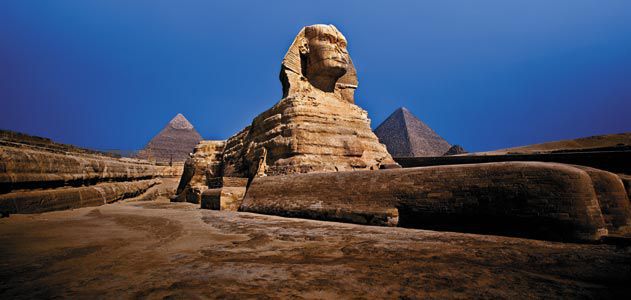
It is one of the most prominent structures in the world and for decades has been the Sphinx – the legendary and giant statue of what seems to be a lion with a human face. It has captured the imaginations of archaeologists, photographers, and visitors on the Giza plateau of Egypt.

But there could be a second Sphinx built around the same time as the one known to the world — but this Sphinx has been hidden for thousands of years in the sands of Giza.

Two British historians, Gerry Cannon and Malcolm Hutton are now suggesting this theory: Who says that unlike numerous examples of smaller Sphinx structures and illustrated depictions of Sphinxes found in Egypt, the Sphinx of Giza is a rarity in that it stands alone, according to a report by the Egypt Today online site.

Every other Sphinx dating from ancient Egypt has been part of a pair, believed to represent the “duality” of male and female, the report says — also representing the duality of the sun and moon.

Ancient Egyptians believed that at the end of every day the sun traveled underground and reemerged as the moon, with a Sphinx protecting each end of the journey.

“Every time we have to deal with the solar cult, we should discuss of one lion and one lioness facing each other, posing parallel to each other or sitting in a back-to-back position,” said Egyptologist Bassam el-Shammaa, whose 2011 ebook, Quest for the Truth: Discovering The Second Sphinx forms the basis for the current Cannon and Hutton theory.

Cannon and Hutton also say that the Sphinx is much older than the current estimated age of approximately 4,600 years.

In fact, rather than the generally accepted belief that the Sphinx was constructed sometime between 2,700 B.C. and 2,500 B.C., though the exact date has not been pinpointed, Cannon and Hutton say that the structure could not have been built at that time.

In fact, they place the construction of the Sphinx prior to Earth’s most recent Ice Age — sometime earlier than 10,000 B.C. If their theory is correct, the Sphinx would be about eight millennia older than experts currently believe.

“The Sphinx had to have been carved when there was no sand there. You can’t carve a rock when it’s under the sand,” Cannon told the British Express newspaper. “When it was not under the sand was about 12,000 years ago and the Egyptians weren’t there.”

The researchers also say that the pyramids of Giza, which the Sphinx is apparently positioned to guard, would have been built at approximately the same time as the Sphinx — meaning that the ancient Egyptian civilization recorded by history was not the origin of the remarkable structures.

An earlier, prehistoric civilization that was perhaps wiped out by the ice age, must have built the Sphinx and pyramids, the pair of authors say.

The ancient giants of Nevada and the mystery of lovelock cave

The ancient giants of Nevada and the mystery of lovelock cave

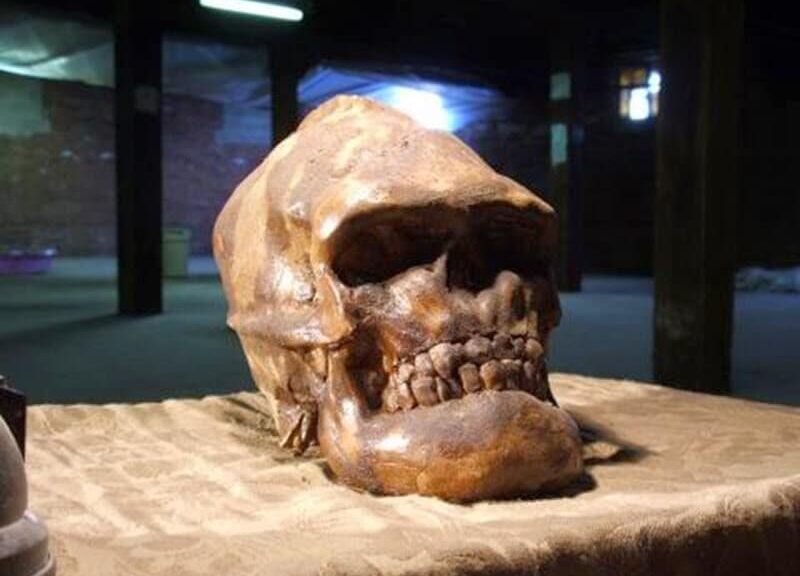
For more than a century, a story has persisted about the skeletons of giants being found in Lovelock Cave in northern Nevada. For many years, human remains were put on display in museums here and elsewhere, but that changed. Most of the bones and skulls that were once considered to be historical artifacts have been returned to tribes for burial.

If oversized bones from the so-called Lovelock giants ever existed, they are no longer available to the public. But their story behind the legend persists. Slicing through the bone-dry Humboldt sink on a long dirt road, it’s hard to imagine that all of it was once underwater.

Remnants of a vast ancient lake can still be seen in the distance. For generations of first Americans, this was a lush paradise of tules, fish, and waterfowl. Humans have climbed the same narrow path up the jagged mountain for more than 4,000 years. That’s how long indigenous peoples lived in and around the Lovelock Cave.

The roof of the cave is coated with soot from countless campfires lit by ancestors of the Paiutes. According to tribal lore, a race of red-headed giants made its last stand in the cave.

Reporter George Knapp: “Among today’s Paiutes, do most say the giants were real?”

Devoy Munk: “All that I’ve talked to say yes. I’ve haven’t heard anybody say no.”

Devoy Munk, a Lovelock historian, has spent all of her 80-plus years in Lovelock. Her family’s home today houses a small museum, jam-packed with artifacts and depictions documenting centuries of native culture and pioneer life.

Munk has earned the trust of Paiute elders who say the stories are true, and that the red-headed interlopers not only killed but ate their ancestors.

“My Indian friends tell me they were cannibals, that they set traps. They dug holes in pathways where they walked, covered them, and then Indians would fall in, and they said the best parts to eat were the thighs,” Munk said.

On Internet sites and alien-themed TV shows, the gruesome legend has blossomed, but it’s hardly new. Versions have been told and retold in magazines, even scholarly journals for more than a century.

Famed Nevadan Sarah Winnemucca first wrote in her acclaimed book that the Paiutes waged a three-year war against a tribe of red-headed cannibals before trapping — then killing — the last of them inside lovelock cave.

Her book doesn’t mention giants, and mainstream archeologists have vigorously rejected the entire story, to the point that the state museum in Winnemucca admonishes visitors at its front entrance that the red-headed giants are a myth.

“There have been skeletons pulled out of the Reid collection,” said Bill Snodgrass. “They found some in there roughly 6’2″. When you think about it, back then, six-foot was a very tall individual.”

Snodgrass is the curator of the Marzen House Museum in Lovelock and thinks there is a reasonable basis for parts of the story. In the early 20th century, guano miners began excavating the Lovelock Cave and uncovered thousands of artifacts along with mummified remains including a few specimens much taller than the typical Paiute of centuries past.

Later scientific excavations found troves of native antiquities along with bones. Some human remains were destroyed. Others went to museums for display. A few, Snodgrass says, were consumed in bizarre initiation rituals. He adds there is evidence — including basketry — of an unknown culture that lived near the cave. Records show some of them had red hair.

“I can’t say who they were, redheads or not. Some say uric acid changes the color of hair, but there was definitely a different people here,” Snodgrass said.

Many, if not most, of the visitors who end up at the Marzen House Museum, have questions about the red-headed cannibals. The locals still enjoy the debate.

Reporter George Knapp: “The two of you disagree but it’s a friendly disagreement?”

“Oh yes. We’ve had this discussion and he hasn’t convinced me and I haven’t convinced him,” Munk said. Whether the red-headed giants ever existed, visits to the two museums are worth the drive. 

Gigantic 2,000-Year-Old Geoglyph of an Orca Is One of the Earliest in Peru

Gigantic 2,000-Year-Old Geoglyph of an Orca Is One of the Earliest in Peru

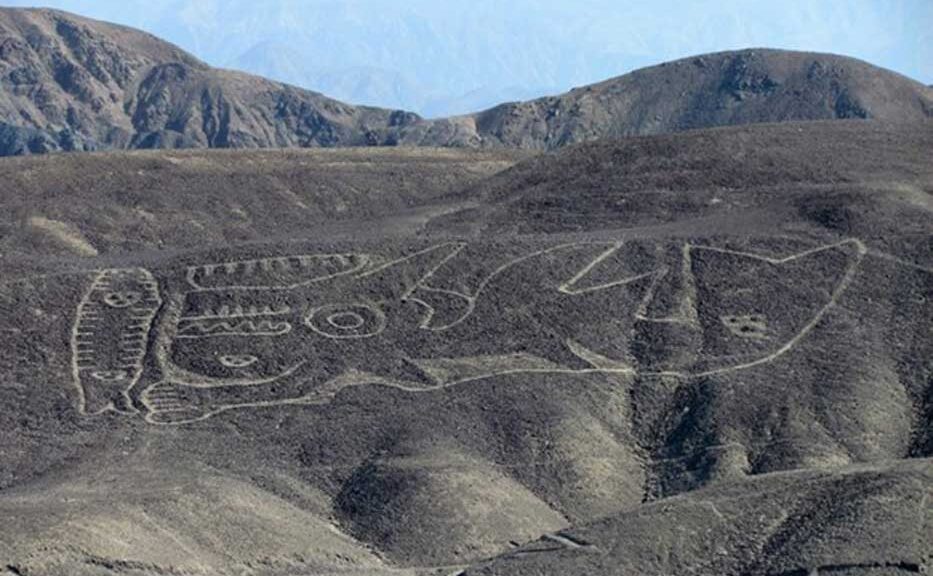
A giant geoglyph of the killer whale, carved to a desert hillside in the remote Palpa region of southern Peru after being lost to science for over 50 years, has now been rediscovered by archeologists.

The rediscovered orca geoglyph lies on a desert hillside in the remote Palpa region of southern Peru.

According to the researchers, the 230-foot-long (70 meters) orca figure – considered a powerful, semimythical creature in ancient Peruvian lore — may be more than 2,000 years old, according to the researchers.

It is said to be one of the oldest geoglyphs in the Palpa region, older than those in the Nazca region known for its vast collection of ancient ground markings– the Nazca lines – which include animal figures, straight lines, and geometric shapes.

Archaeologist Johny Isla, the head of Peru’s Ministry of Culture in Ica province, which includes the Palpa and Nazca valleys, explained that he saw a single photograph of the orca pattern for the first time about four years ago. He’d seen it while researching studies of geoglyphs at the German Archaeological Institute in Bonn.

The photograph appeared in an archaeological catalog of geoglyphs printed in the 1970s, which was based on research carried out in Palpa and Nazca by German archaeologists in the 1960s, Isla said.

But the location and size of the orca geoglyph were not well-described in the catalog, Isla told Ancient Origins in an email.

As a result, he said, the glyph’s whereabouts in the desert hills of the Palpa Valley, about 250 miles (400 kilometers) south of Lima, were by then unknown to local people or to scientists.

After returning to Peru, Isla looked for the orca geoglyph on Google Earth and then on foot. “It was not easy to find it, because the [location and description] data were not correct, and I almost lost hope,” he said. “However, I expanded the search area and finally found it a few months later,”

Orca art

After documenting the rediscovery, Isla led a team of six specialists from Peru’s Ministry of Culture in an effort to clean and restore the orca geoglyph in March and April this year.

Before the restoration, the geoglyph was disappearing due to erosion and the passage of time. “Being drawn on a slope, it is easier [for it] to suffer damage than [for] those figures that are in flat areas, such as those of the Nazca Pampa,” he said.

Until the restoration this year, time and erosion had almost obliterated the ancient orca geoglyph to untrained eyes.

The creators of the orca drew it on the hillside in negative relief by removing a thin layer of stones to form the outline of the figure. This is similar to the technique used by the people of the Nazca culture to create geoglyphs from about 100 B.C. to A.D. 800.

But some contrasting parts of the rediscovered pattern, such as the eyes, were created out of piles of stones, the researchers said. This technique was used by people of the older Paracas culture, who occupied the region from around 800 B.C. to 200 B.C.

Soil tests have indicated that the orca geoglyph dates from around 200 B.C. The style of the pattern and its location on a hillside, rather than on a plain, suggest that it may be one of the oldest geoglyphs in the region, said one of Isla’s colleagues, Markus Reindel of the German Archaeological Institute, in an interview in a German newspaper.

Isla said that before the restoration earlier this year, it would have been hard for a layperson to see the orca. “With the eyes of an archaeologist, and after having seen the photo in the catalog and later in Google Earth, it was not very difficult,” he said. “However, [for] the eyes of a person without these advantages, it was a bit difficult.”