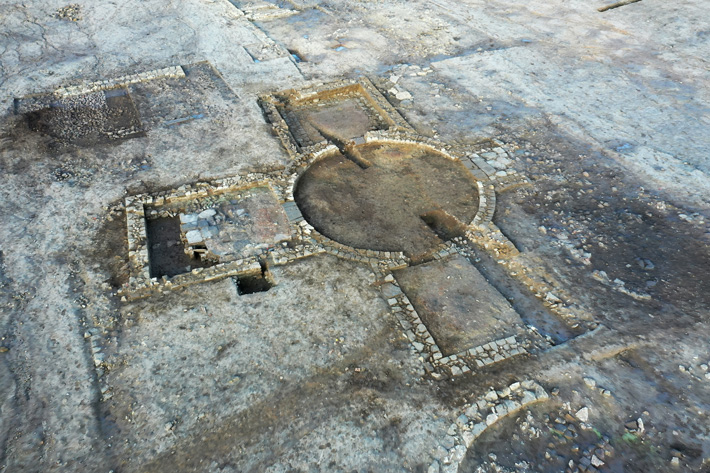
BBC News reports that a large villa complex with its own bathhouse has been discovered at a construction site in northern England. Keith Emerick of Historic England said the house, which has a circular central room flanked by additional rooms, is the first of its kind to be found in Britain.
Keepmoat Homes, which was hoping to develop a new housing estate in the Eastfield area of the North Yorkshire region, found the ruins of the settlement.
But the importance of the find may well have caused a headache for bosses of the firm, with Historic England saying it’s ‘easily the most important discovery of its kind.
The site will be reburied under a public space in the new housing development
Historians believe they’ve identified a whole complex of buildings. It includes a tower-shaped structure, which is thought to have had rooms and a bathhouse leading from it.
They are continuing to study the site, but so far it’s thought it would have been built by a wealthy landowner and could have become a religious building, a ‘stately home cum – gentleman’s club’, or even a combination of both.
Keith Emerick, inspector of ancient monuments at Historic England, said: ‘One of the descriptions we had was that it is something like a religious building that is almost like a gentleman’s club, there’s a bathhouse as well. So it’s a really interesting hybrid building at the moment.’
He added:
These archaeological remains are a fantastic find and are far more than we ever dreamed of discovering at this site. They are already giving us better knowledge and understanding of Roman Britain.
We are grateful to Keepmoat Homes for their sensitive and professional approach to helping ensure the future conservation of this important historical site.
Emerick told The Guardian: ‘It’s not like a jigsaw, where each new discovery adds to the picture, each new discovery actually gives a twist to the kaleidoscope and changes the picture entirely. This is a really exciting discovery and definitely of national importance.’
The complex of buildings includes a circular room and a bathhouse
Not only is it a first for Britain, but it could also be a first for the whole of the former Roman Empire.
Emerick added: ‘I would say this is one of the most important Roman discoveries in the past decade, actually. Easily.’
Keepmoat Homes have changed the initial plans and will not build on top of the site, but will still build in the area.
Historic England hopes the remains will be accessible to the public in future.
In the UK found children’s shoes which is 600 years old
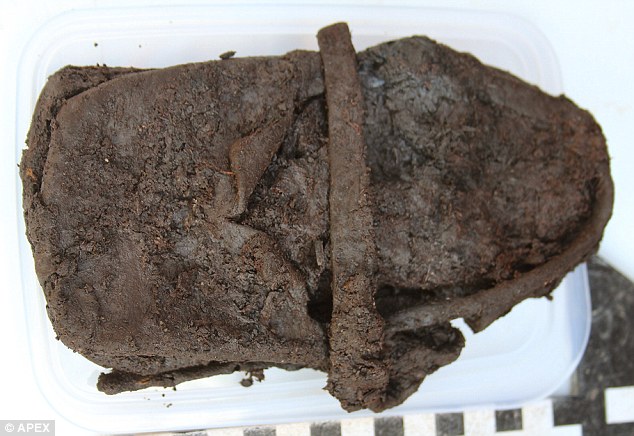
A child’s shoe discovered during an excavation in Devon maybe hundreds of years old. When archaeologists discovered the ancient footwear during a dig in Newton Abbot, they were shocked.
The leather shoe, which has been well-preserved in the site’s clay soil, maybe from the 1400s.
The team involved in the dig have voiced their excitement at finding such an everyday object intact after centuries in the ground.
Archaeologists carrying out a dig in the heart of Newton Abbot in Devon have unearthed an ancient leather shoe which could date back to the 1400s
‘It’s this day-to-day stuff which is exciting,’ said Simon Sworn, of Cotswold Archaeology and the site’s senior archaeological project officer.
‘The job is not all about kings under car parks,’ he added.
Along with the shoe, a number of other artifacts have been unearthed at the site.
Other historic treasures include an iron spur from a child’s boot, three wooden barrel bases, and a 27 inch (70 cm) diameter Dartmoor granite millstone, used to grind wheat into flour.
‘We will keep going down until we hit natural geology – or water at the site makes it unsafe,’ added Mr. Sworn.
The team is hoping to uncover more household artifacts dating back to the 13th century when Newton Abbot was a hastily built new town of its day.
Other historic treasures include an iron spur from a child’s boot, three wooden barrel bases and a 27 inch (70 cm) diameter Dartmoor granite millstone, used to grind wheat into flour (pictured)
Mr. Sworn explained: ‘As the name suggests, Newton Abbot was essentially founded as a medieval new town but there is some evidence for 6th/7th-century activity in the immediate vicinity of the site so we may find earlier remains lurking below the medieval burgage plots.’
He added: ‘We’ve been learning a lot about how the town developed and how it came to be the place we live in – and who the people were who made Newton Abbot what it is today.’
A number of well-preserved wooden barrels were found in waterlogged the clay soil (pictured)
Conditions at the site (pictured) have enabled artifacts to be so well preserved due to a lack of oxygen in the soil
Conditions at the site have enabled artifacts to be so well preserved due to a lack of oxygen in the soil.
The waterlogged conditions have enabled organic materials such as leather and wood, which would have rotted long ago, to last for centuries.
‘I’ve never worked on a site where so much local interest has been shown,’ added Mr Sworn.
He added: ‘A lot of perceptive questions have been asked – and we’ve been happy to answer them.
‘Over the next few weeks, we will gradually peel away the medieval layers and go deeper.’
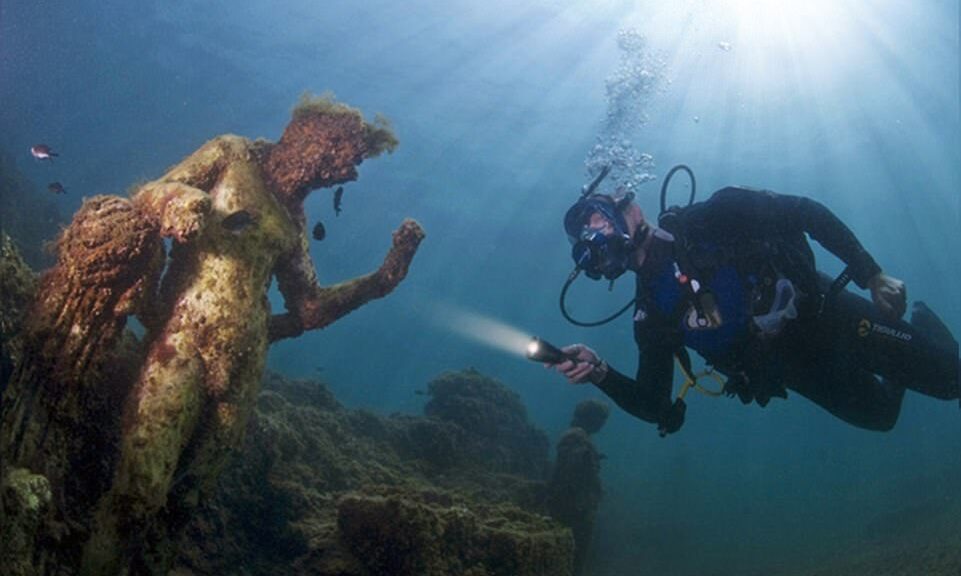
The sunken Roman city now lies beneath the waves off of Italy
The sunken city of the Caesars, which has been lost beneath the waves off Italy’s west coast for 1,700 years, has been revealed in stunning new photographs taken by divers who were given permission to explore the region. According to historians, Baiae was ancient Rome’s Las Vegas for the super-rich, with sprawling mansions and a reputation for luxury and wickedness.
Baiae was the Las Vegas for the super-rich of ancient Rome, covered in sprawling mansions and synonymous with luxury and wickedness, historians claim. The 1st Century city has been revealed in stunning new photographs taken by divers who were allowed to explore the area
However, when volcanic activity forced the coastline to retreat 400 meters inland, driving the entire city underwater into what is now the Gulf of Naples in modern-day Italy, most of it was lost to the sea. The site has since been re-discovered, 1,700 years after disappearing beneath the waves on the west coast of Italy. Divers were allowed to explore the site recently and snapped photos of the treasures that can still be found in the underwater city.
Antonio Busiello, who lives in Naples, photographed the site and found that roads, walls, mosaics, and even statues had survived the ravages of time.
Incredibly, parts of the city are still in-tact 1,700 years later. Pictured above, a diver shows off a tiled floor that was discovered in a search of the city
The 45-year-old said: ‘The beautiful mosaics and the villas and temples that have reemerged or still underwater show the opulence and wealth of this area.
‘It was considered one of the most important Roman cities for centuries. Pliny the Younger used to live here and from here, across the gulf, he witnessed and described the 79 AD eruption of Mount Vesuvius that destroyed Pompeii and Herculaneum.’
He added: ‘Diving here is like a dive into history, looking at ancient Roman ruins underwater is something hard to describe, a beautiful experience indeed.’
Among the sights now visible are the Pisoni and Protiro villas, where intricate white mosaics as well as residential rooms can be seen
In its heyday, Baiae was frequented by famous Romans including Julius Caesar, Nero, Pompey the Great, Marius, and Hadrian – who died there. Among the sights now visible are the Pisoni and Protiro villas, where intricate white mosaics, as well as residential rooms, can be seen.
There’s also the Nymphaeum of Punta Epitaffio, where divers swim among the statues of Ulysses and his helmsman Baius, for whom Baiae was named. A documentary released earlier this year, titled Rome’s Sunken Secrets, followed a series of dives led by underwater archaeologist Dr. Barbara Davidde and involving historians and scientists from across the world. They revealed vast villas, priceless statues, and breathtaking mosaics, as well as heated spas, cobbled streets, and even a nymphaeum – a grotto of pleasure – in the city that lies 150 miles south of Rome and 50 north of Pompeii.
Walls of estates in the ancient city sit just below the water’s surface off the coast of western Italy. Divers can now explore the region
One significant find was a section of lead water pipe just a few inches in diameter inscribed ‘L Pisonis’. This pinpoints the exact location where one of the greatest scandals in Roman history unfolded. As classics professor Kevin Dicus explains, ‘L Pisoni’s was the mark of the Piso family. The villa it was attached to was almost certainly the property of Gaius Calpurnius Piso, who was a close friend of Emperor Nero.
‘Ancient texts tell us that Piso plotted to murder the emperor at his holiday villa in Baiae so he could become emperor instead, but he had a change of heart at the last minute. When Nero learned about the plan, he ordered Piso to commit suicide.
The sunken city of the Caesars, lost for 1,700 years beneath waves off of Italy’s west coast, has been revealed in stunning new photographs taken by divers who were allowed to explore the area. Baiae was the Las Vegas for the super-rich of the 1st Century’s ancient Rome, covered in sprawling mansions and synonymous with luxury and wickedness, historians claim.
But as time passed, much of it was lost to the sea as volcanic activity caused the coastline to retreat 400metres inland, forcing the entire city underwater into what is now the Gulf of Naples in modern-day Italy. The site has since been re-discovered, 1,700 years after disappearing beneath the waves on the west coast of Italy. Divers were allowed to explore the site recently and snapped photos of the treasures that can still be found in the underwater city.
Antonio Busiello, who lives in Naples, photographed the site and found that roads, walls, mosaics, and even statues had survived the ravages of time. The 45-year-old said: ‘The beautiful mosaics and the villas and temples that have reemerged or still underwater show the opulence and wealth of this area.
‘It was considered one of the most important Roman cities for centuries. Pliny the Younger used to live here and from here, across the gulf, he witnessed and described the 79 AD eruption of Mount Vesuvius that destroyed Pompeii and Herculaneum.’
He added: ‘Diving here is like a dive into history, looking at ancient Roman ruins underwater is something hard to describe, a beautiful experience indeed.’ In its heyday, Baiae was frequented by famous Romans including Julius Caesar, Nero, Pompey the Great, Marius, and Hadrian – who died there.
Among the sights now visible are the Pisoni and Protiro villas, where intricate white mosaics, as well as residential rooms, can be seen. There’s also the Nymphaeum of Punta Epitaffio, where divers swim among the statues of Ulysses and his helmsman Baius, for whom Baiae was named. A documentary released earlier this year, titled Rome’s Sunken Secrets, followed a series of dives led by underwater archaeologist Dr. Barbara Davidde and involving historians and scientists from across the world.
They revealed vast villas, priceless statues, and breathtaking mosaics, as well as heated spas, cobbled streets, and even a nymphaeum – a grotto of pleasure – in the city that lies 150 miles south of Rome and 50 north of Pompeii. One significant find was a section of lead water pipe just a few inches in diameter inscribed ‘L Pisonis’. This pinpoints the exact location where one of the greatest scandals in Roman history unfolded.
As classics professor Kevin Dicus explains, ‘L Pisoni’s was the mark of the Piso family. The villa it was attached to was almost certainly the property of Gaius Calpurnius Piso, who was a close friend of Emperor Nero.
‘Ancient texts tell us that Piso plotted to murder the emperor at his holiday villa in Baiae so he could become emperor instead, but he had a change of heart at the last minute. When Nero learned about the plan, he ordered Piso to commit suicide.
‘So we now know where the assassination attempt would have taken place. For the archaeologists, it was like finding the Holy Grail.’
Piso’s villa had its own jetty and two huge bath complexes, but that was nothing compared to the opulence at another estate the team discovered. Slowly revealed over many dives was a mansion so luxurious archaeologists believe it was the Imperial Villa specially built for Emperor Claudius.
‘So we now know where the assassination attempt would have taken place. For the archaeologists, it was like finding the Holy Grail.’ Piso’s villa had its own jetty and two huge bath complexes, but that was nothing compared to the opulence at another estate the team discovered.
Slowly revealed over many dives was a mansion so luxurious archaeologists believe it was the Imperial Villa specially built for Emperor Claudius.
Late Roman Era Sarcophagus Found By Turkish Farmer
A project in Turkey to stop illegal excavations has resulted in the discovery of rare sarcophagi. To detect the looters, the authorities used the new surveillance technologies, which in turn led to these unexpected discoveries.
The findings are related to Aphrodisias and may have originated from a part of the ancient city that was previously unknown.
Turkish authorities have been notified of possible illegal excavations in Karacasu, a town near Aphrodisias, a Hellenistic-era city and a UNESCO World Heritage Site, in western Turkey.
After being tipped off about suspicious activity, Turkish authorities conducted surveillance which led to the impressive discovery of an illegal dig which had unearthed the sarcophagi in Turkey.
Officials decided to monitor the activities of the looters by setting up motion-sensitive cameras to detect any possible criminal activity. Drones were also employed as part of the operation.
After weeks of surveillance, a group of men was detected in the area. The local gendarmerie investigated and uncovered signs of an illegal excavation in an olive grove. Further investigations revealed a half-unearthed sarcophagus.
The authorities immediately placed the site under their protection. Further investigations also revealed another sarcophagus and an altar.
The district governor Ahmet Soley is quoted by Archaeology News Network as saying that groups of people were coming from elsewhere and were engaging in suspicious activity. “As a result of the gendarme’s work, the places to be excavated were found and two sarcophagi, along with an altar, were discovered in the area.”
However, the treasure hunters behind the illegal excavation got away. Greece in High Definition reports Soley as saying that “the perpetrators of the illegal diggings are still unclear.”
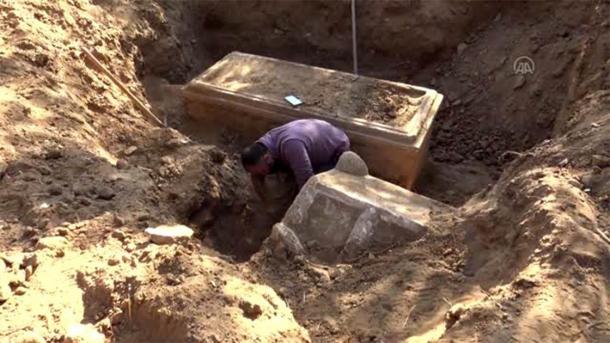
One of the sarcophagi is better preserved than the other and still has many of its original decorations. According to Greece in High Definition, the Provincial Culture and Tourism Director Umut Tuncer announced that “there is a Medusa relief among others that have not yet been identified on one of the sarcophagi.” The identity of the person who was buried in this tomb has not been established.
Authorities excavating one of the impressive sarcophagi discovered near Karacasu in western Turkey.
Given the size of the sarcophagus, it is likely that the person interred was a member of the local elite. Tuncer is quoted by Archaeology News Network as explaining that the authorities believe that “the person in this sarcophagus was an important figure of the region.” It is estimated that the burials date back to at least 2,300 years ago to the Hellenistic era.
The finds are probably connected to the city of Aphrodisias, an ancient Greek City named after the Goddess of Love, Aphrodite.
The city grew wealthy because of its rich agricultural hinterland. Aphrodisias was also famed for its marble and its school of sculptors.
The city became part of the Roman province of Caria and it was favored by Sulla and Julius Caesar. As a result, it was largely autonomous. The city’s name after the rise of Christianity was “changed to Stavropolis and then Caria, and it became the seat of the metropolitan bishop of Caria,” explains an entry in the Encyclopaedia Britannica.
It went into decline and was abandoned during the Seljuk Turk invasions of Anatolia in the Middle Ages.
The discovery of the sarcophagus means that it is likely that other burials could be found. But that’s not all! Experts also believe that the sarcophagus has revealed a new part of the city. This could mean that even more important finds and long-lost structures could be recovered at a future date.
The remains of the city of Aphrodisias are now part of an archaeology park, the centerpiece of which is the remains of a temple of Aphrodite. Thanks to its UNESCO designation, the park is very popular with tourists which has become increasingly important for the local economy.
The unexpected find has created excitement amongst local authorities as “the discovery of a new metropolitan area creates great potential in terms of regional tourism,” highlights Tuncer in Archaeology News Network.
The thrilling discoveries demonstrate the threat posed by illegal excavations and how technology can play a critical role in the prevention of this crime.
Research uncovers how Christianity changed Anglo-Saxon burial practices
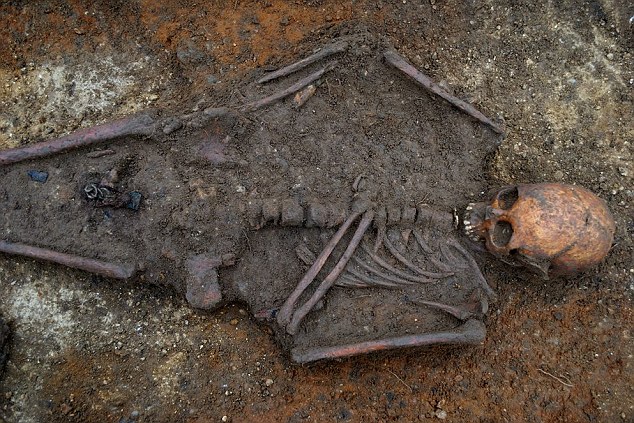
In a field three miles south of Cambridge, the bones of a mysterious Anglo-Saxon princess who died thirteen and a half centuries ago have been discovered. She died at the age of 16 and was buried with a small solid gold Christian cross encrusted with garnets on her chest, lying on a special high-status funerary bed.
The skeleton and a Christian cross were found in Trumpington Meadows, Cambs a site that has been confirmed as one of the UK’s earliest Christian burial sites.
Her true identity has yet to be revealed. However, she was most likely a member of one of the period’s newly Christianized Anglo-Saxon royal families.
She was buried fully clothed, her bronze and iron chatelaine (belt hook) and purse, still attached to her leather belt.
A clue to the circumstances of her death is the presence of three other individuals buried in separate graves alongside her (two women aged around 20 and one other slightly older individuals of indeterminate sex, but conceivably female).
Skeleton of an Anglo-Saxon teenager who was buried with the Trumpington Cross.
It’s likely that they died at the same time – probably from some sort of epidemic. Significantly, the Anglo-Saxon Chronicle mentions that England was devastated by the plague in 664 AD (around the very time that the archaeological evidence also suggests they died).
The archaeological investigation – carried out by Cambridge University Archaeological Unit – has also revealed that they were interred adjacent to a high-status settlement consisting of a 12-meter long timber hall and at least half a dozen other buildings with substantial semi-subterranean storage cellars.
Among the finds unearthed were fragments of posh French-originating shiny black ceramic wine jugs – in England a type of pottery previously found mainly on monastic sites.
The female graves, the high-status nature of the site, and the Christian burial rite all combine to suggest that the princess and her companions may well have been nuns – and that the settlement may have been part of a nunnery.
It’s known that the various newly Christianized Anglo-Saxon monarchs of the time competed with each other to establish monasteries and nunneries as proof of their Christian piety. Indeed it’s conceivable that the princess’s parents enrolled their daughter in such a nunnery to further demonstrate their commitment to their new faith (a common practice at the time).
The area itself probably enjoyed some sort of royal or otherwise elevated status inherited from Roman and immediately post-Roman times when it formed part of a native Romano-British territory centered on Cambridge and known as the Granta Saete – the territory (saete) of the River Granta (now more often known as the Cam).
Just 500 meters to the north of the princess’s grave in the village of Grantchester (derived from the ‘Granta Saete’ territorial name) – the site of what was once a substantial Roman villa, the owners of which conceivably became the area’s ruling family.
Historians believe that the Roman villa, the high-status Anglo-Saxon settlement, and the princess’s grave were in one of several quasi-independent mini-kingdoms which acted as buffer states between the larger kingdoms of East Anglia and Mercia (central England).
The princess may well, therefore, have been the daughter of a mid-7th-century king of Mercia or East Anglia or of one of the buffer states in between.
Continuing scientific investigations over the next few months are expected to reveal more information about the princess, her companions, and the site as a whole. Isotopic tests are likely to reveal their geographical origins by demonstrating where they had spent their early childhoods.
Other isotopic analyses will reveal their diet. Efforts will also be made to reconstruct aspects of the princess’s clothing from fragments of mineralized textile which survived in her grave.
“This is an incredibly important and exciting discovery which is already shedding remarkable new light on the early years of English Christianity,” said Alison Dickens, a senior manager at the Cambridge University Archaeological Unit.
The excavation carried out near the village of Trumpington, south of Cambridge, and the ongoing scientific investigations, have been funded by the Trumpington Meadows Land Company – a joint housing development venture between London’s Grosvenor property company and USS, the UK-wide universities pension scheme.
Seahenge: A Subaquatic Monument of the European Bronze Age
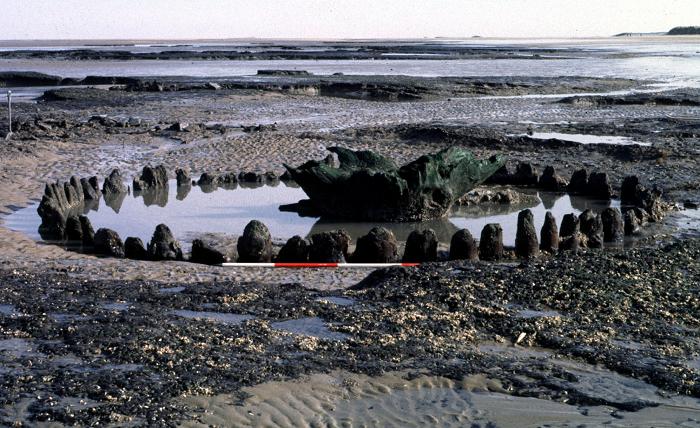
Seahenge, which is also known as Holme I, was a prehistoric monument located in the village of Holme-next-the-Sea, near Old Hunstanton in the English county of Norfolk.
A timber circle with an upturned tree root in the center, Seahenge was apparently built in the 21st century BC, during the early Bronze Age in Britain. Contemporary theory is that it was used for ritual purposes.
The structure was perceived to be under threat from damage and erosion from the sea – as such it was fully excavated. This involved the removal of the timbers, a program of stratigraphic recording, and environmental sampling.
The structure comprised an elliptical circumference of fifty-five large oak posts and one smaller upright timber, set around an inverted oak tree.
Maximum diameter of 6.78m, with the tree, set slightly southwest of the center.
The central tree had two holes cut through the trunk on opposite sides, with a length of honeysuckle rope passed through the holes and tied in a knot.
A maximum of twenty-five trees was used to build the structure. Evidence of woodworking was recovered, including felling, trimming, splitting, and flattening.
422 pieces of wood debris were found, including woodchips. Toolmarks recorded from a total of fifty-nine possible tools; the maximum number of tools used is probably nearer 51.
The toolmarks are probably the largest assemblage of Early Bronze Age toolmarks yet recorded in Britain.
The structure was built at a single point in time. Dendrochronological dating of fifty-five samples revealed that the timber circle was constructed in the spring or early summer of 2049 BC, during the Early Bronze Age.
The environmental analysis demonstrated that the structure was built on a salt marsh. During the Bronze Age, freshwater reed swamp and alder carr spread over the saltmarsh and the monument itself.
Two timbers (context 35=37 and 65) may have been the first timbers set in place. These were placed on a southwest to northeast alignment, in the approximate direction of the midsummer rising sun and midwinter setting sun. This may have been deliberate or unintentional.
All but one of the circumference timbers were placed with their bark facing outwards. The timber with the split face facing outwards must have had significance.
The structure has been interpreted in various ways. These include a monument to mark the death of an individual, the death of a tree or the regenerative failure of trees, and the commemoration of an event, life, or the culmination of a celebration or festival.
The fragmentary remains of the timber circle are now in the King’s Lynn Museum.
Victoria Cave: The underground Dales cavern that changed history
Victorian excavators were particularly fascinated by ‘bone caves’ where there might be a possibility of finding evidence for the earliest humans along with long-extinct animals.
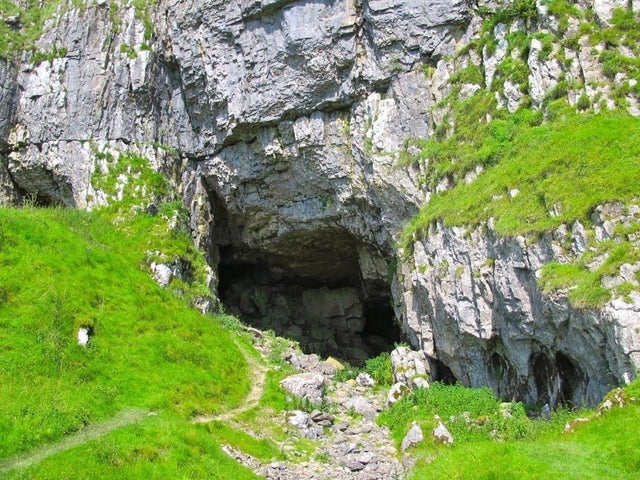
The cavern near Settle is home to the skeletons of mammoths and Roman remains. Described as an ‘archaeologist’s dream’, Victoria Cave is made of limestone and can be found east of Langcliffe, in Ribblesdale.
It was discovered by chance in 1837 – the year Queen Victoria was crowned – and since then has yielded a number of incredible finds. It’s been completely excavated and has provided vital information about climate change over thousands of years.
Victoria Cave, the most famous of the ancient truncated caves that lie along Langcliffe Scar above Settle, although it was unknown until 1837 and discovered purely by chance. Stephen Oldfield
An amazing discovery
A group of men from Settle was out walking their dogs in 1837 when one of them disappeared inside a foxhole. Its owner, Michael Horner, followed and found himself in a passage that led to a cave with Roman objects clearly visible on the ground.
The original entrance discovered by Michael Horner: an ancient passage that once continued towards the camera and beyond. Stephen Oldfield
The artificial entrance leading to the excavated main chamber. Stephen Oldfield
He returned with his employer, Joseph Jackson, and the pair discovered a deeper chamber sealed from daylight. 20-year-old plumber Joseph had no knowledge of archaeology but began a large-scale candlelit excavation of the cave.
In 1840, he contacted Roman expert Charles Roach Smith, who visited the site just before Joseph dug up a hyena’s jawbone. A Victorian fascination with ‘bone caves’ soon developed, and the hunt for evidence of early man and the animals they had eaten began.
The excavated Main Chamber of Victoria Cave – once completely blocked by glacial sediment and containing the remains of animals over 120,000 years old. A passage known as Birkbeck’s Gallery can be seen leading off at the back. Stephen Oldfield
Charles Darwin himself even took an interest in Victoria Cave, and he became involved in another dig in 1870 that was linked to his emerging theories about human evolution. By this time, Joseph Jackson had become a full-time, eminent archaeologist.
Victoria Cave looked set to become a crucial archaeological and geological site – but two of the scientists involved later fell out over its contents.
The repercussions from the dispute, which centered around their conflicting views on cyclical climate change, led to Victoria Cave falling out of favor with the scientific community and it was gradually forgotten.
In the 1930s, the cave was re-discovered when a local greengrocer set up a society for cave explorers in his father’s pig yard. Tot Lord and his group collected as many of the artifacts as possible from the earlier digs and uncovered further remains.
His family has taken possession of the collection and archive material, and Victoria Cave returned to international prominence, with its importance highly valued. It offers the first proof that the Ice Age was cyclical and the final record of wild lynx living in Britain.
A prehistoric cache
Ancient bones found inside the cave, which is managed by the Yorkshire Dales National Park Authority, include those of mammoths, hippos, rhino, elephants, and spotted hyenas who lived in the Dales over 130,000 years ago – when the climate was warm enough to support species that are nowadays more commonly found in Africa.
After the last Ice Age, evidence that a brown bear had hibernated in the cave was uncovered, and reindeer bones were found. One of the key discoveries was a key indicator of the first human life in the Dales – an 11,000-year-old antler harpoon point used for hunting the deer.
Scene outside Victoria Cave 130,000 years ago.
This barbed harpoon point is made from deer antler and was found during the 19th-century excavations of Victoria Cave. The tip is broken. It dates to around 11,000 years ago and it probably arrived in the cave embedded in a scavenged or dying animal that had been hunted by the first known inhabitants of the Yorkshire Dales. An antler rod and ‘lance point’ were also found.
Roman remains
The area seems to have later been inhabited by the Romans – artifacts such as brooches, coins, and pottery from the period were buried in the cave, some of them imported from France and Africa.
Experts believe the cave could have been a religious shrine, with a workshop outside. Some of the items have been put on display at the Craven Museum in Skipton.
Access to the cave is limited as the roof is dangerously unstable, but walkers can visit the entrance.
45,000-year-old Skull From Czech Cave May Contain Oldest Modern Human Genome
In the heart of the limestone region of Bohemian Karst in the Czech Republic stands the steep frontal walls of the Koněprusy Caves, within which researchers found the “golden horse” — what they claim are the remains of the earliest modern human in all of Europe.
The genome sequence from a skull found in the cave system is over 45,000 years old, which is roughly around the time modern humans migrated out of Africa and into Eurasia according to the study’s authors who published their findings Tuesday in Nature Ecology & Evolution.
The subject specimen, named Zlatý kůň (golden horse in Czech) by researchers, belonged to a population of non-African people that lived during the last glacial period whose ancestors no longer exist in the present day.
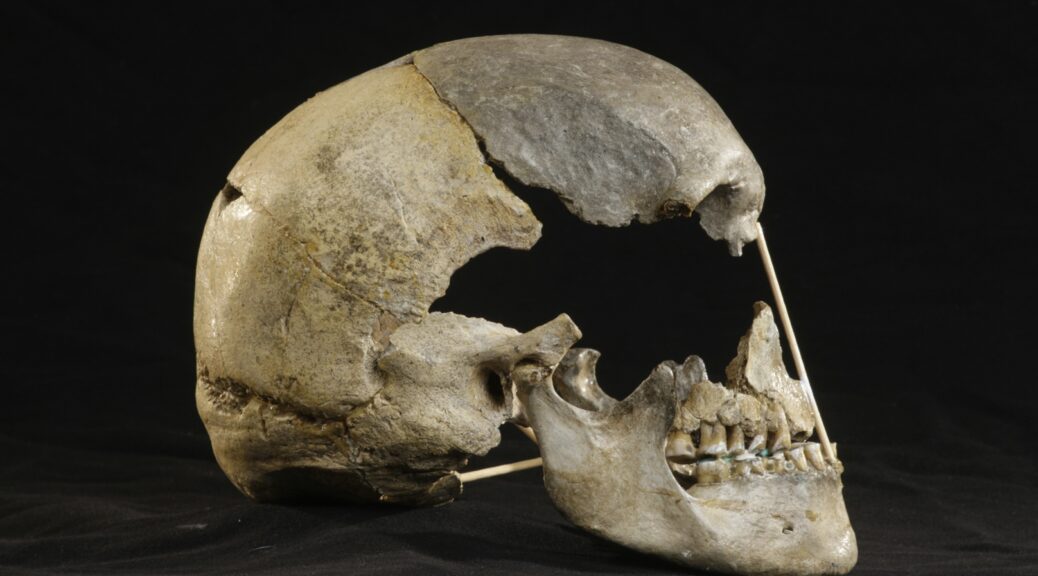
Lateral view of the mostly-complete skull of Zlatý kůň.
Zlatý kůň has long been the subject of scrutiny and also of at least one mix-up, thanks to a cow.
Zlatý kůň is a largely complete skull that was found with other skeletal remains in 1950 inside the cave system that is the present-day Czech Republic.
Previous observers thought that Zlatý kůň was at least 30,000 years old. Now, other ancient artefacts have been traced back to around the time when the first modern humans settled in Europe and Asia more than 40,000 years ago, according to the study’s authors.
There was “Ust’-Ishim, a Siberian individual who showed no genetic continuity to later Eurasians” and who’s DNA was around 45,000 years old, the study notes.
Frontal view of the Zlatý kůň skull.
Zlatý kůň was thought to be an ancient specimen, but radiocarbon dating showed results that dated to as recent as 15,000 years ago. But if Zlatý kůň could tell her own story she would have said that wasn’t the full picture.
“We found evidence of cow DNA contamination in the analyzed bone, which suggests that a bovine-based glue used in the past to consolidate the skull was returning radiocarbon dates younger than the fossil’s true age,” Cosimo Posth, co-lead author of the study, said in a statement.
Simply put, another researcher at a previous date used animal glue to hold together Zlatý kůň’s skull. But it wasn’t the animal DNA that intrigued researchers at the Max Planck Institute for the Science of Human History.
They were interested in the Neanderthal DNA because Zlatý kůň carried the same amount of Neanderthal DNA as Ust’-Ishim. On average, Zlatý kůň’s DNA ancestry segments were much longer.
Kay Prüfer, the study co-author from the Max Planck Institute for Evolutionary Anthropology, said Zlatý kůň lived closer to the time when Neanderthals were interbreeding with modern humans.
Prüfer said in an email that Zlatý kůň does not belong to any present-day groups. One theory is Zlatý kůň’s group was wiped out by another catastrophic event.
“We speculate that a large volcanic eruption that happened in Italy (about) 39,000 years ago may have contributed to their and the European Neandertals demise,” said Prüfer.
The volcanic eruption would have drastically changed the climate in the northern hemisphere and made it extremely difficult to survive in large swaths of Ice Age Europe.
“It is quite intriguing that the earliest modern humans in Europe ultimately didn’t succeed,” study lead author Johannes Krause and director at the Max Planck Institute for Evolutionary Anthropology said in a statement.
Zlatý kůň’s own demise is unclear. Researchers found hyena chew marks on her skull and then there was the cow mix-up, but DNA tests show that she beat out Ust’-Ishim by a few hundred years to be one of the oldest modern humans in Europe, according to the study’s authors.