Category Archives: EUROPE

Discovery of massive island ritual site where people gathered 5,500 years ago

Discovery of massive island ritual site where people gathered 5,500 years ago

The discovery of a cursus monument site at Tormore on the Isle of Arran, which is more than a kilometer long, is helping to reshape Neolithic history in Scotland with such landmarks usually associated with the east coast.

The previously unknown large Neolithic ritual site has been found on the Isle of Arran.

Cursus monuments were often defined by long lines of timber posts, forming a long rectangle, and were amongst the most spectacular features in the Neolithic landscape.

The posts may have served as a procession route, perhaps to honour the dead. Some were burned to the ground in an almighty display which is believed to have been part of the ceremonies associated with these huge monuments.

Dave Cowley, Rapid Archaeological Mapping Programme Manager at Historic Environment Scotland, who discovered the site following a laser scan of Arran, described the cursus monument as a “cathedral of the day”.

He said: “I think if you asked the survey team what they thought they were most likely to find on Arran, I would bet you no one would say a Neolithic cursus monument

“There is no other on Arran, it’s unique on the island, there is one more in Kilmartin Glen and that is pretty much it for the western seaboard.

“What this example at Tormore tells is there are probably actually many more on them but because they were built from timber, you are not likely to see them in the unimproved peat landscape of the west coast.

The site of the cursus monument was discovered after these two parallel lines, marked here by red arrows, were picked up by a laser scan of Arran landscape.

“Arran has got some cracking Neolithic and Bronze Age archaeology but we are still surprised that this monument is here.

“It adds a whole additional dimension to what the archaeology of the Neolithic on Arran can tell us. It is like finding a whole new layer in a box of chocolates of new things.”

Mr. Cowley detected the site after picking up two lines of mounds, which lie roughly parallel and stand 30 to 40 centimeters high, and which run for around a kilometer.

He said: “When you look at the topography, it very slightly runs to the crest of a ridge. They have been very careful about how they have positioned this monument. There probably was a superstructure here but we won’t know for sure without excavation.

“It would have had an impact. There is an element of design to it, a form of landscape architecture.

“It does seem likely that there were timber elements built into it. Whether or not it was set on fire we just don’t know at the moment. “

Mr Cowley said the monuments probably brought together “quite dispersed populations together in a communal activity” and that different community built different parts of the monument.

The site was discovered following an aerial laser scan of the site using Light Detection and Ranging (Lidar) technology, which uses laser pulses to measure objects.

Images can then be reworked by filtering out vegetation or by changing the way it is lit which can then reveal previously unknown characteristics in the land. More than 1,000 unknown archaeological sites have been found on Arran using the technology.

Survey Reveals Viking-era Site in Northern Norway

Survey Reveals Viking-era Site in Northern Norway

Arne Anderson Stamnes, an archaeologist at the NTNU University Museum, was observed methodically making his way back and forth across the fields just east of the campsite in the municipality of Bodø in November 2019. He is towing a ground-penetrating radar device behind the four-wheeler he is driving.

Survey Reveals Viking-era Site in Northern Norway
The ground was frozen and the field was covered with a fine layer of snow – ideal conditions for this type of archaeological research.

GPR sends electromagnetic signals down into the subsurface, and some of these signals are reflected back when they encounter structures deeper down in the ground. This is how archaeologists obtain a kind of X-ray of objects two to three meters below the surface.

Stamnes quickly finds that the ground here is content-rich, to put it mildly. The results are astonishingly good and they whet your appetite for more, says Nordland county archaeologist Martinus A. Hauglid.

One of the region’s largest burial mounds

“Our findings included traces of 15 burial mounds, and one of them appears to contain a boat grave. Both the size and design of the burial mounds are typical of the period 650 to 950 CE—that is, what we call the Merovingian Period and Viking Age,” says Stamnes.

“A lot of the mounds are big. The largest burial mound has an inner dimension of 32 meters and must have been a towering presence in the landscape,” he says.

In fact, this giant mound is one of the largest burial mounds known in the region. But this isn’t what aroused the greatest enthusiasm among archaeologists. Previous studies indicated the presence of a plowed over burial ground right here, and this was an important reason why Bodø municipality and the Nordland County Council wanted to investigate the area with GPR.

What they didn’t know beforehand was that an ever-so-small mystery lurked underground. Or perhaps we should say many mysteries.

The study area was full of discoveries.

Intriguing mystery

As Stamnes trawls back and forth across the fields, more and more oval ditches appear on the screen, totaling 32 in all. You may not think oval ditches sound particularly mysterious or sexy—it’s not like you hear the Game of Thrones theme song in the background when someone whispers “oval ditches.” However, this is actually something that has not been seen before.

“I’ve asked a few of my colleagues, but so far haven’t found anything similar to this find in other excavations. So it’s difficult to conclude what it might be,” Stamnes says.

“The shape and the fact that most of the ditches have a clear orientation with the short end towards the sea—probably also the dominant wind direction—make it likely that this was a type of house foundation,” he said.

He adds that the GPR images do not show any traces of buried firepits inside the ditches, which indicates that they might have had a more temporary function.

“Maybe they served as a kind of market stall. It’s also possible to interpret such constructions as semi-permanent house foundations, also called “búðir”, which are known from assembly places in Iceland.

Still impossible to say what the ditches are

Archaeologist Jørn Erik Henriksen at the Norwegian Arctic University Museum says that it’s not possible to say anything more definitive about what the oval ditches are until excavations have been made. However, he thinks Stamne’s interpretation is interesting.

Our findings included traces of 15 burial mounds. The size and design of the burial mounds are typical of the period 650 to 950 CE.

“I’m fascinated by the idea that there might be stalls connected to larger crowds gathering on the site,” says Henriksen. The GPR surveys also revealed 1257 pits of various sizes. It’s even harder to say for sure what all these are. Most likely they’re a bit of everything—from cooking pits and post holes to nothing special.

“What we can say is that these pits are another sign that this area has been packed with human activity,” says Stamnes.

Seat for chiefdom?

According to some theories, the area around the earlier Bodin municipality—including the scanned areas—was once the seat of a chiefdom that had sovereignty in the Salten district.

So the question is: does the archaeological investigation confirm this hypothesis?

Henriksen says he’d like to see similar investigations done at other contemporaneous central sites in the area before uncritically proclaiming this as the power headquarters.

“However, the findings have in no way weakened the hypothesis that this place was the center of power in Salten, on the contrary!” he says.

The scanned area is seen from above. Previous studies indicated the presence of a ploughed burial ground right here.

A mighty family

In any case, there is little doubt that a powerful family lived here, based on the size and number of the tombs gathered in one burial ground. Eight of the burial mounds are circular in shape, while seven are oblong. Long mounds are often interpreted to be female graves, so judging by the numbers, the burial ground contains an even gender balance.

“Five of the round grave monuments have a diameter greater than 17.5 meters, where the largest measures about 32 meters. The long mounds are between 17.7 and 29 meters long,” Stamnes says.

“Building such large tombs is resource-intensive, so it’s plausible that the people buried here had great power and influence, both locally and regionally,” he says.

County archaeologist Hauglid agrees.

“Bodøgård was the seat of the sheriff—and later the county governor—in the Nordland region from the beginning of the 17th century, while Bodin church nearby is a stone church from the Middle Ages. The burial ground that has now been discovered testifies that a political-religious power center has existed here since the Late Iron Age.

“A new city quarter has given us the chance to explore an area we’ve long been curious about. We can even see from aerial photos that there’s something under the ground. The findings from the investigation have yielded a long-awaited and exciting mystery,” says Ingrid Nøren, the manager for the New City—New Airport project in Bodø municipality.

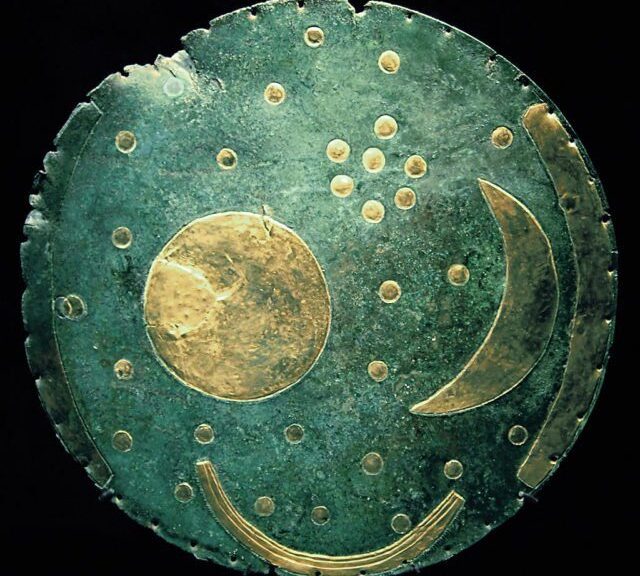
Dated to c. 1600 BC, the Nebra sky disk is one of the most important archaeological finds in the 20th century

Dated to c. 1600 BC, the Nebra sky disk is one of the most important archaeological finds in the 20th century

In the eastern German town of Halle, the 3,600-year-old Sky Disk of Nebra, the world’s oldest image of the cosmos, is the centerpiece of Europe’s greatest Bronze Age exhibition. When it was brought to the German public’s notice in 2002, having been found in the state of Saxony-Anhalt two years earlier, it caused a worldwide sensation.

Now the Sky Disc of Nebra — a bronze disc with gold-leaf appliques representing the sun, moon, stars, and a ship — is back in the limelight, at the opening of a blockbuster show entitled “The Forged Sky: The Wide World in the Heart of Europe 3,600 Years Ago.”

For the first time the disc, which is around 32 centimeters (12 inches) in diameter and weighs about 2 kilos (1 pound), will be on public view in its fully restored state.

Dated to c. 1600 BC, the Nebra sky disk is one of the most important archaeological finds in the 20th century
Archeologists have dated the disc to 1600 B.C.

1,600 artifacts

In addition to the oldest concrete representation of the cosmos known to date, the Forged Sky exhibit, at the State Museum of Prehistory in the town of Halle, will feature the Sun Chariot of Trundholm (Denmark) and 1,600 more of the most important archeological finds representing Europe in the Bronze Age.

When it was discovered, the Sky Disc was considered a key find not only for archaeology but also for astronomy and the history of religion. Deposited some 3,600 years ago, it was found on the summit of the Mittelberg hill, near the wooded area of Nebra in eastern Germany, together with valuable swords, jewelry, and tools.

The find initiated a new presentation of the Bronze Age world in Central Germany. The natural riches of this region — copper, salt, and fertile soils — formed the power basis for the resident Early Bronze Age princes, who exchanged goods from all regions of Europe. Mighty tombs, extensive bronze treasures, gold jewelry, and unique display weapons survive as their status symbols, and a representative sample of them is pulled together for the current blockbuster show.

Crowds expected

“Peoples’ interest in the disc since it was unearthed two years ago has not let up,” Saxony-Anhalt state archeologist Harald Meller told the DPA news agency. He explained: “We put the show together in record time, 18 months.”

Meller said he expects 100,000 people to visit the exhibit. If there is enough interest, he said, the show will be extended. The objects on view have been donated by 68 museums in 18 countries.

“Most of the objects, like burial offerings, cult objects, gold jewelry, and various decorated armaments, have never before been out on loan, and they will only be gathered together like this for the show in Halle,” Meller told DPA. Aside from European countries, Lebanon also loaned some pieces to the show.

Sun chariots and golden boats

For example, the organizers got special permission to borrow the 3,400-year-old Sun Chariot of Trundholm from its home at the National Museum in Copenhagen, for the duration of the Halle show.

Sun Chariot of Trundholm, Denmark

The National Museum had previously decided that, for security reasons, the 50 centimeters long, 30 centimeters high Sun Chariot should never again leave Denmark. Similarly, the 88 super thin golden ships from Nors, Denmark, are so brittle that they hardly ever leave the National Museum, according to museum director Flemming Kaul.

But having a group of artifacts from around Europe is important, because “We show that … there is a long process of developing knowledge about religion and astronomy in Europe, which is part of the history of mankind,” Meller said.

The disc itself was a cult object and describes the world view during the Bronze Age. People imagined the earth as a disc, with a dome-shaped sky covering it. A cluster of seven dots has been interpreted as the Pleiades constellation as it appeared 3,600 years ago.

A Nebra baker made this reproduction of the sun disc out of butter cream and marzipan.

At the same time, the piece is thought to be related to primitive observatories, one of which is the “German Stonehenge” in the nearby town of Goseck.

Archeologists believe the disc may have been used in the pre-calendar Bronze Age as an instrument for determining seasonal changes.

The popularity of the disc has led to a boom in reproductions. Demand for €800 ($990) copies of the disc is booming: “There are already 50 on order, and the fabricator can barely keep up with production,” Meller said.

On the other hand, the disc’s popularity can’t stanch the flood of lawsuits that followed its discovery. Although the copyright case was decided in favor of the state of Saxony-Anhalt, there is still a suit before the Halle appeals courts against two suspected fencers from North-Rhine Westphalia who claim the Sky Disc is a fake that was found outside of Germany.

The disc was found on July 4, 1999, by two convicted grave robbers. In February 2002 it was bought along with other Bronze objects from art fencers in a police operation in Switzerland.

Bulgarian Gangsters Busted for Looting 4,600 Ancient Artifacts from Historical sites

Bulgarian Gangsters Busted for Looting 4,600 Ancient Artifacts from Historical sites

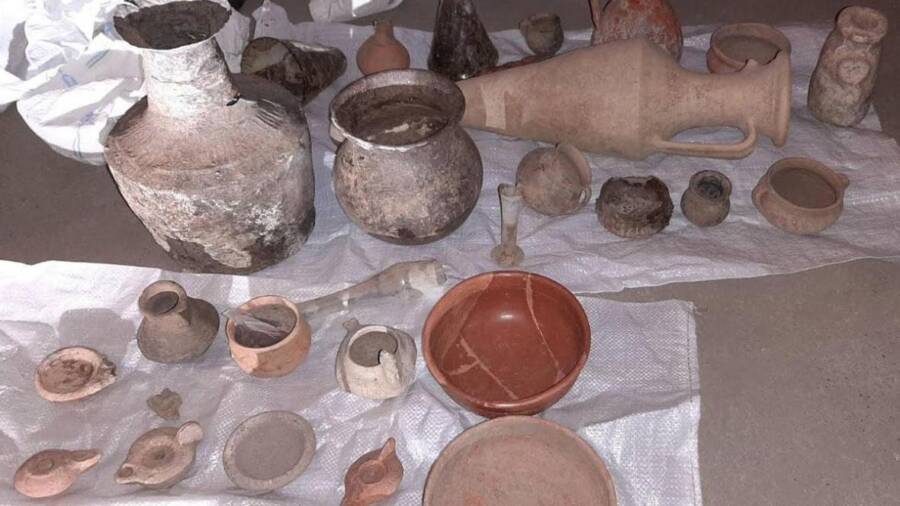
After two years of investigation by Bulgarian, British, and German authorities, an international crime ring planning to smuggle thousands of ancient artifacts into England has been caught. According to The Times, the 4,600 items ranged from spears and coins to funeral urns, ceramics, and arrowheads.

The artifacts span from the Bronze and Iron Age to the Middle Ages. Some of the relics were illegally excavated from Roman-era military camps in Bulgaria. They were then smuggled into Germany, with the ultimate goal being legitimate sales in the London art market.

According to Heritage Daily, the gang chose Germany as its transit country and hired private U.K. transportation companies to bring the goods into England. Little did they know that Bulgarian police received a tip-off in March 2018 — after which surveillance on the group began in earnest.

Were it not for the successful sting operation on behalf of authorities from three different countries, the eight individuals now under arrest would’ve made several millions of euros. The remarkable goods, meanwhile, would have been likely been dispersed across private homes around the world.

A task force came together to stop the smugglers, coordinated by Europol and conducted by the General Directorate for the Fight against Organized Crime of the Bulgarian Ministry of Internal Affairs.

EuropolThe trove of looted artifacts contained arrowheads, ceramics, spears, funeral urns, ancient coins, and more.

They worked for hand in hand with the British Metropolitan Police, as well as the German State Criminal Police of Bavaria, under an umbrella operation called MEDICUS.

As the existence of the looted goods wasn’t officially known, proving their illicit origin is difficult to do. With forged provenance and documentation on top, the legal ownership of these artifacts would appear entirely legitimate to auction houses or interested parties.

Only diligent surveillance and monitoring of the group allowed authorities to confirm their suspicions. Five of the eight gang members were arrested before leaving Bulgaria. Three of them were permitted to enter the U.K., thus committing the crime of smuggling goods across, before being arrested.

The group of three was detained after entering the U.K. in Dover. Two men aged 19 and 55 and one 67-year-old women were arrested. According to The Southend Standard, the charge was suspicion of handling stolen goods, and the artifacts concealed in the suspects’ vehicle quickly confirmed as much.

EuropolThree of the smugglers were caught entering the U.K. in Dover, with the other five apprehended in Bulgaria.

“The arrests were made as part of an ongoing investigation into the theft of cultural artifacts in Europe which is being led by detectives from the Met’s art and the antique unit,” the Metropolitan Police said.

This sting operation dates to October 2019, but Europol has only now felt assured enough that publishing any details won’t jeopardize other operations nor the trials of these eight individuals. Europol explained in a statement that auction houses are commonly part of such illegal sales.

“This case confirms that the most common way to dispose of archaeological goods illegally excavated is by entering the legitimate art market,” the agency said.

Last month, the arts and crafts chain Hobby Lobby was caught having illegally purchased an ancient tablet inscribed with part of the Epic of Gilgamesh.

On top of that, the $1.6 million artifacts were only one of the thousands of relics looted and smuggled from Iraq that the company had illegally bought.

Hopefully, more time and effort is spent on preventing this seemingly ubiquitous practice. Cultural artifacts belong to the people of their countries — and should be displayed for them to cherish and learn from. At least in this latest case, it appears that this kind of justice is being fought for.

2,000-year-old remains of infant and pet dog uncovered in France

2,000-year-old remains of infant and pet dog uncovered in France

Excavations in France revealed an apparently well-off child and their pet dog that had been buried in the 2,000s BCE making this find over 2,000 years ago. The infant, believed to be a year old, was found in Aulnat in the Auvergne region of central France by a team surveying for a planned airport expansion.

The remains date back to the first century AD when France would have been under Roman rule.

They were accompanied by numerous objects — including clay jars, animal parts, and a small toy — as well as a puppy wearing a decorative collar.

2,000-year-old remains of infant and pet dog uncovered in France
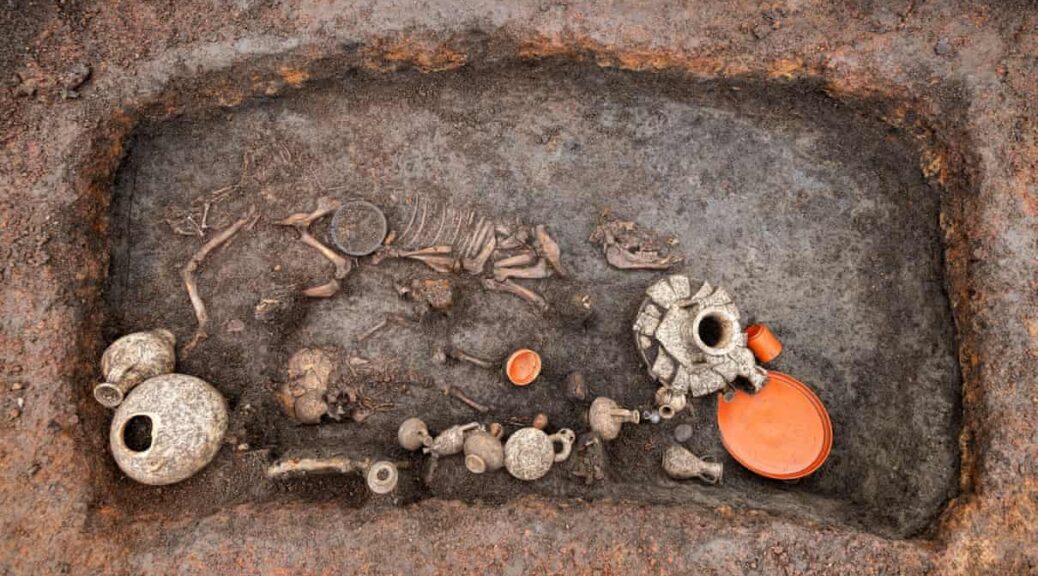
The 2,000-year-old remains of an infant, estimated to be about a year old, were found in Aulnat in the Auvergne region of central France. The body was surrounded by a plethora of animal offerings and objects, suggesting they were of high social standing

‘Such a profusion of crockery and butchered items, as well as the personal effects that followed the child to his grave, underline the privileged rank to which his family belonged,’ according to the National Institute for Preventative Archaeological Research (INRAP).

This gravesite was discovered in December as part of preventive excavations carried out by INRAP before construction at Clermont-Ferrand airport.

Evidence of a wooden coffin was uncovered in the grave, surrounded by animal sacrifices including half of a pig, different cuts of pork and two headless chickens.

Twenty terra cotta vases and assorted glass pots in the grave may have contained medicine, cosmetics, or the child’s portion of the funereal banquet, while researchers believe a foot-long iron hoop attached to a bent metal rod was a toy or part of a game.

Archaeologists uncovered the burial site while surveying the area for a planned expansion at Clermont-Ferrand airport.

A baby tooth belonging to an older child was also found, possibly belonging to an older sibling.

The skeleton of a puppy was found at what would have been the base of the coffin, wearing a collar with bronze decorations and a small bell.

‘A dog’s association with a young child is well documented in a funeral context, but here it is the collar and bell that are unusual,’ according to archaeologists.

They call the discovery ‘exceptional’ and believe it’s the oldest child’s burial site discovered in France.

A wider view of the excavation site

It dates to the reigns of either Emperor Augustus (27 BC – 14 AD ) or Tiberius (14 -37 AD), just decades after the birth of Jesus.

In Roman-era Gaul — modern-day France, Belgium, and parts of western Germany — adults would have been cremated, but children were often buried on family lands.

Head archaeologist Laurence Lautier said the sheer number of offerings buried with the child was unusual.

‘In this type of tomb we often find one or two pots placed at the foot,’ Lautier told AFP. ‘Here there are around 20 as well as many food offerings.’

That denotes a high social class, Lautier said, ‘ a family that was clearly very rich.’

Since November, surveys of the area have turned up items from the Iron Age, High Middle Ages, and other eras. The digs are expected to end next month.

6,500-Year-Old Oven With Heating, Hot Water System Is Similar to Modern Technology

6,500-Year-Old Oven With Heating, Hot Water System Is Similar to Modern Technology

As many modern homeowners know central heating and cooling Charlottesville systems are a vital component of a building. From fireplaces to hot air systems to cooling vents, there have been many conditioning systems built and utilized over the centuries and many have considered the latter two to be more modern inventions. Though this latest archeological finding may make many historians question this idea.

The 6,500-year-old oven was unearthed in an ancient home during an archeological dig at a Neolithic site in Bapska, a village in eastern Croatia, which experts say is one of the most important in Europe.

6,500-year-old oven with heating and hot water system in Croatia
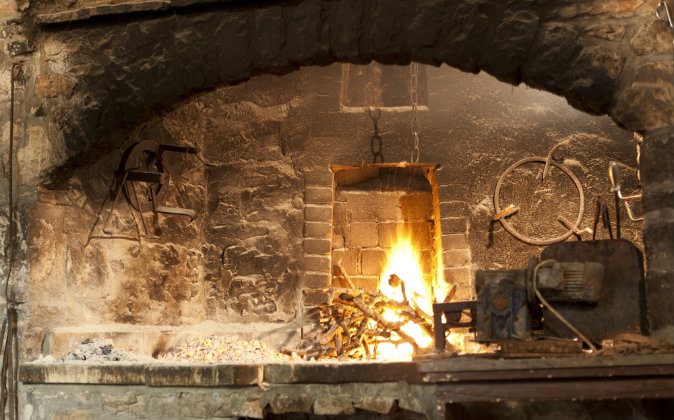
The 6,500-year-old oven unearthed during an archaeological dig at a Neolithic site in Bapska, Croatia.

Experts say the oven provided cooked food, hot water, and central heating for their dwelling, just like a modern-day Aga.

Just imagine if it had slowly started to decline in its efficiency, or even worse, stopped working? You would be missing out on a lot of services that can help to make a house a home, and it’s not like in this day and age where you can look for a home warranty coverage plan (check here for more info) to add extra protection to the appliances in case they should break or need repairing. It’s very likely that you would be left with nothing, which makes it even more extraordinary to see that it has been discovered all these years later.

Marcel Buric – from the Department of Prehistoric Archaeology at Zagreb’s Faculty of Philosophy – said the find was significant because the kiln was covered to protect the rest of the building from fire.

Mr. Buric said: ‘This discovery is important. Because the houses of this period are made of wattle and daubed with a roof made of hay using an open fireplace was dangerous. But a roofed fireplace, like the one in Bapska, besides being safer, also had other advantages.

‘It was permanently heated all day long and as the residents came home after a day in the fields they ate hot food cooked by the oven, washed in warm water, and went to sleep in a room heated by the same kiln. Just like some kitchen ovens today.’

Archaeologists also found a smelted piece of iron ore by the kiln, thought to date back thousands of years before man learned to smelt and work iron.

Mr. Buric said: ‘It’s not possible to say what it was used for but it is a significant find.’

The 6,500-year-old oven had a covered stone frame and worked in a similar way to an AGA.

But elsewhere in the same prehistoric house, scientists found the scene of a more sinister fire.

The cremated remains of a baby aged around 15 months are believed to be the result of a human sacrifice.

Mr. Buric said: ‘We know that such sacrifices were made to ensure the growth of crops by giving life and putting it back into the earth. The more treasured the life, say a baby, the better the result, or so they thought.’

Earlier excavations on the site had revealed a set of deer antlers on the walls of one home, believed to be the world’s first known hunting trophy.

Mr. Buric said: ‘This whole area was a melting point where different cultures from across Europe met and exchanged ideas.’

Elk Teeth Offer Clues to Prehistoric Clothing in Russia

Elk Teeth Offer Clues to Prehistoric Clothing in Russia

According to a statement released by the University of Helsinki, archaeologist Kristiina Mannermaa and her colleagues analyzed more than 4,000 elk incisors recovered from 8,200-year-old graves on an island in northwestern Russia’s Lake Onega.

Many of the graves contain an abundance of objects and red ochre, signifying the wish to ensure the comfort of the buried also after death.

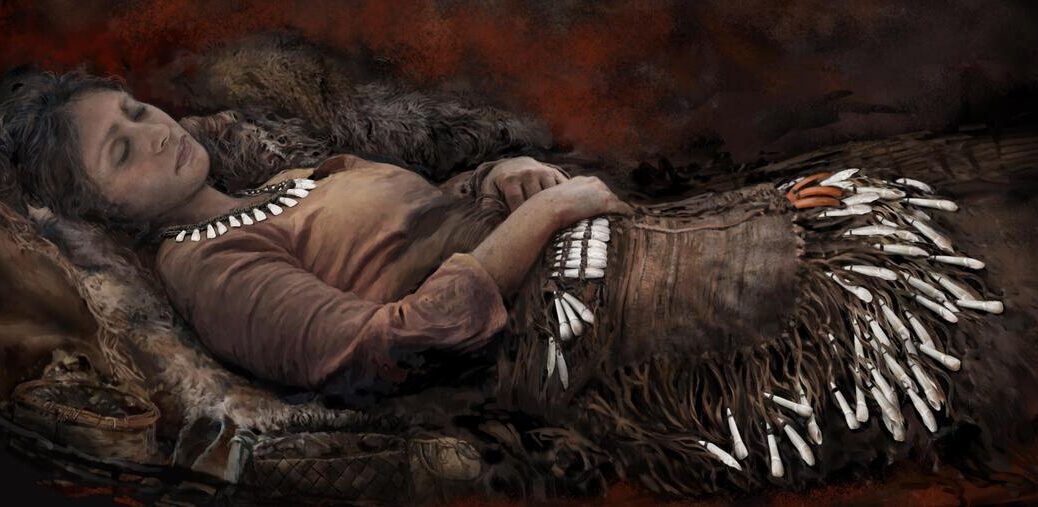
Pendants made of elk incisors were apparently attached to clothing and accessories, such as dresses, coats, cloaks, headdresses, and belts. Although no clothing material has been preserved, the location of the elk teeth sheds light on the possible type of these outfits.

Elk teeth, thousands of them, were used by the YOO people to make their unique elk teeth pendants.

A people of grooved elk tooth pendants

A study headed by archaeologist Kristiina Mannermaa aimed to determine who the people buried in outfits decorated with elk tooth ornaments were, and what the pendants meant to them.

The study analyzed the manufacturing technique of a total of more than 4,000 tooth ornaments or the way in which the teeth had been processed for attachment or suspension.

Elk Teeth Offer Clues to Prehistoric Clothing in Russia
Stone Age People’s Fascination With Elk Teeth Pendants Examined

The results were surprising, as practically all of the teeth had been processed identically by making one or more small grooves at the tip of the root, which made tying the pendants easier.

Only in two instances had a small hole been made in the tooth for threading, both of which were found in the grave of the same woman.

The tooth pendants found in graves located in the Baltic area and Scandinavia from the same period as the Yuzhniy Oleniy Ostrov graves are almost exclusively perforated. Perforation is the surest way of fastening the pendant, but making holes in the narrow tip of a tooth is more laborious than grooving.

The oldest artifact ever found in Eurasia is an elk tooth pendant. It was discovered in the Altai region of Russia in an Denisovan cave.

Archaeological and ethnographic research has shown that humans have been using decorations almost always and everywhere in the world, for several different purposes. To many indigenous peoples in Eurasia, including the Sámi communities, decorations have been and still are an important way of describing a person’s identity and origin.

They are not only aesthetic details but also connected to inter-community communication and the strengthening of intracommunity uniformity.

External elements such as ornaments can also influence the names which neighbouring groups use to refer to a community. In fact, Kristiina Mannermaa calls the people found in the burial site the people of grooved elk tooth pendants.

“Even though there are pendants made of beaver and bear teeth in the graves, the share of elk teeth in them is overwhelming,” Mannermaa says.

The highest number of elk teeth were found in the graves of young adult women and men, the lowest in those of children and elderly people. In other words, elk tooth ornaments were in one way or another linked to age, possibly specifically to the peak reproductive years.

Elk was the most important animal in the ideology and beliefs of the prehistorical hunter-gatherers of the Eurasian forest zone, and their limited availability made elk teeth a valuable material to ancient hunters.

Elks were not brought down very often, and not all members of the community contributed to hunting. It may be that a single individual was given all of the incisors of a caught elk.

Elks have a total of eight incisors, six permanent ones in the lower jaw, and two permanent canines in the shape of incisors. At times, corresponding deciduous teeth were also processed into ornaments.

The largest ornaments required the teeth of at least 8 to 18 elks.

The study was published in the Archaeological and Anthropological Sciences series. In addition to Mannermaa, Riitta Rainio from the University of Helsinki as well as Evgeniy Yurievich Girya, and Dmitriy Gerasimov from Peter the Great’s Museum of Anthropology and Ethnography contributed to the study.

Inside the Mysterious Underground City, That’s 5,000 Years Old

Inside the Mysterious Underground City, That’s 5,000 Years Old

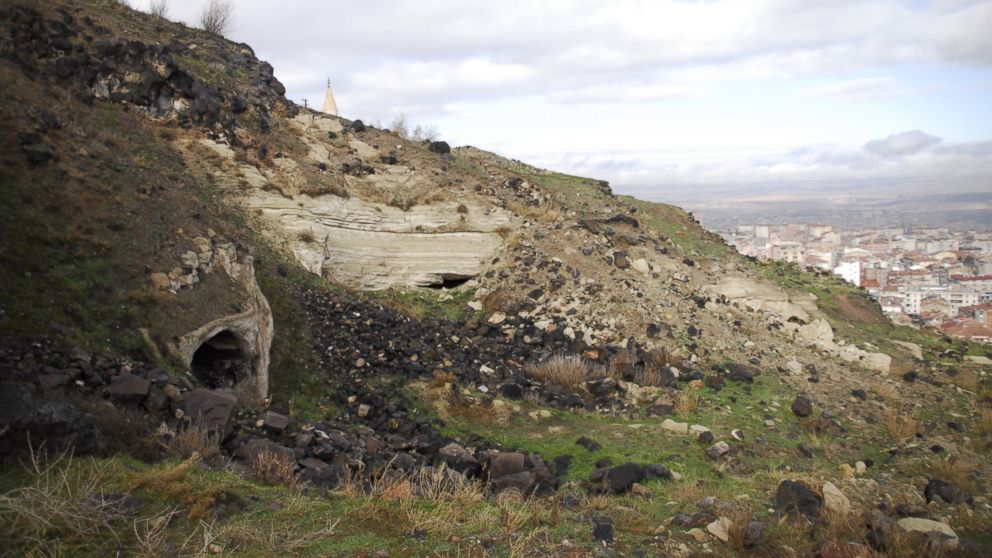
Underground city partly submerged underwater and estimated to be around 5,000 years old was discovered by municipality crews trying to determine the cause of flooding in several houses in the Avanos district of Turkey’s central Nevşehir province, located at the heart of the historic Cappadocia region.

Inside the Mysterious Underground City, That's 5,000 Years Old
Researchers discovered these ruins from an underground city in Turkey’s Central Anatolian region

Owners of some 15 houses in the Çalış township of Avanos, which is inhabited by 2,200 people, informed the local municipality that their houses were filling up with water and they could not figure out why or where the water was coming from.

Municipality crews started discharging water from the homes while searching for the cause of the flooding, using heavy-duty machines to open the entrances of a tunnel closed for safety decades ago and long forgotten by locals.

A view of the underground city newly discovered in Turkey’s Central Anatolian province of Nevsehir, Turkey

After making more way into the tunnel, crews and locals found an underground city partially covered in clear water, which had caused the flooding, and saw that the houses were situated right on top of the flooded city’s rooms and tunnels.

Initial examinations revealed that the underground city had three floors and comprised of homes, tunnels and places of worship stretching for five kilometres, in addition to a small human figurine believed to be an icon.

The parts of the underground city closer to the surface was being used by locals as an animal shelter until the beginning of the 20th century but later abandoned by them. Alaaddin Sarıtaş, a local from Çalış, told Demirören News Agency that the underground city was actually rediscovered 25 years ago when a child fell inside the tunnel but its entrances were later covered with soil to prevent further accidents.

Local tales referred to the underground city as Gir-Gör, which translates into English as “Enter and See.”

The underground city is located some 80 kilometres away from Cappadocia’s famous underground cities Derinkuyu and Kaymaklı.

The mayor of Çalış Kazım Yılmaz told Anadolu Agency that the underground city covers some 1.2 million square meters. “Those who had been there in the past say it is some 600 meters by 2 kilometres in size,” he said, adding that technical analysis by archaeologists is needed to reveal its origins and exact dimensions.

A view of the underground city newly discovered in Turkey’s Central Anatolian province of Nevsehir, Turkey

It is impossible to clear the rubble and empty the water through municipality means, Yılmaz said, adding that they will apply to the cultural property protection board for the site to be registered as a historical site and ask for the Ministry of Culture’s help to open the underground city to tourism.

The mayor noted that the ground level of the underground city was full of soil that came through the main entrance, and about two meters in length.

Yılmaz added that there were two other sites near the township, which are believed to be large underground cities.

Sarıtaş said that there were foreigners who had arrived in the township with maps trying to find the lost underground city, mentioning a source of “healing water” and “Ceasar’s bath.”

Ahmet Yılmaz, a local, also said that he used to crawl through the tunnels as a child and reach an area containing rooms.

The core of the historic Cappadocia region, currently falling under Ürgüp, Göreme and Avanos districts of Nevşehir and the Güzelyurt district of Aksaray, is located in the middle of a once-active volcanic area in central Anatolia. In addition to its iconic fairy chimneys and other natural rock formations over the course of millions of years, the soft volcanic rocks in the area enabled humans to carve out homes, places of worship, commercial buildings and even cities, thus making the region one of the earliest continuously inhabited sites in the world.

The region, famous for its wineries in its semi-arid climate and on volcanic soil, had lured the greatest states of the time, including the Hittites, Phrygians, Persians, Romans, Byzantines, Seljuks and Ottomans. It was also one of the earliest regions to adopt Christianity and survive from prosecution by building underground cities and settlements.

Despite existing historic settlements and continuous archaeological interest in the region, Cappadocia is believed to contain countless historical sites and artefacts yet to be discovered.

The region is a tourism hotspot with boutique hotels and hot air balloon tours and has seen a significant rise in the number of tourists in recent years, especially from Japan and China.