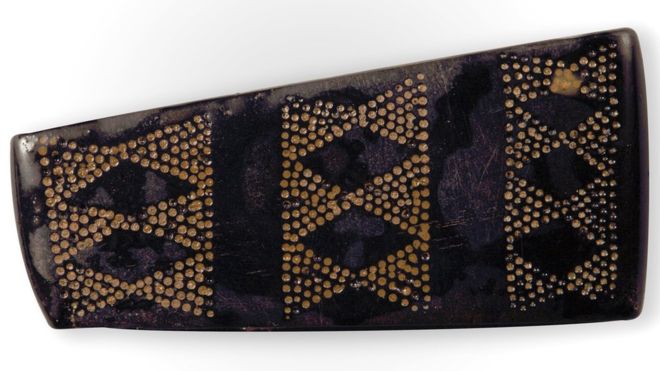
Category Archives: EUROPE

‘Remarkable’ Roman villa found buried under a field in North Wales

‘Remarkable’ Roman villa found buried under a field in North Wales

A Roman villa near Rossett was discovered – the first of its kind ever to be discovered in northeast Wales. The find, made by Wrexham Museum, the University of Chester and Archaeological Survey West, represents an exciting addition to our knowledge of the area during the Roman period.

With the partnership of local metal detectorists who found Roman material on the site, the site was uncovered, this sparked a remote sensing survey which revealed clear evidence of a buried structure.

The remains appear to be of a fairly typical form with a number of stone and tile buildings surrounding a central courtyard, the survey also suggested its association with a field system, a trackway and other related buildings and structures.

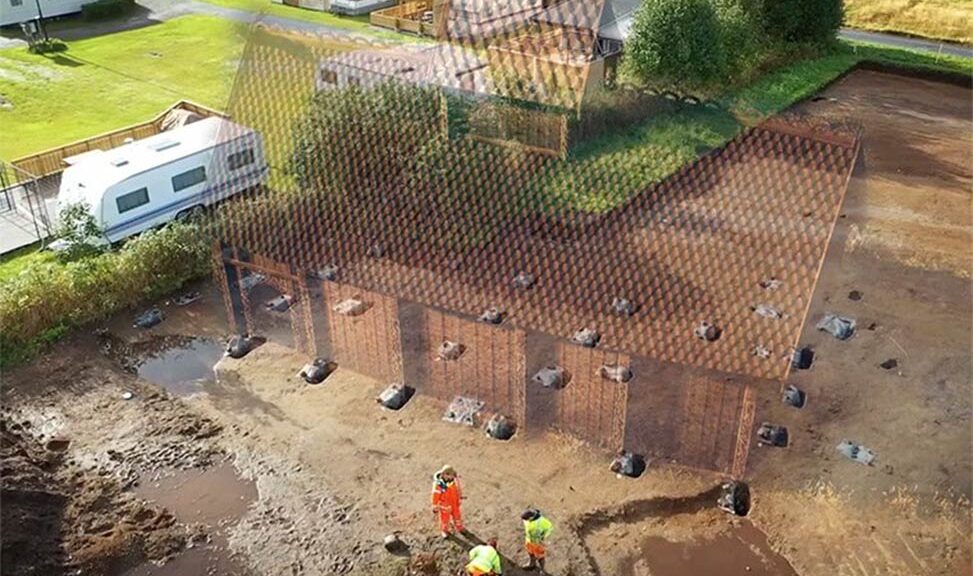
The Rossett field under which the Roman villa is buried
The outline of the villa through satellites

Fieldwalking at the site has yielded artefacts from the late 1st century to the early 4th century AD, suggesting that the villa was occupied for the majority of Roman rule in Britain.

The Roman army invaded Britain in AD 43 and quickly pushed northwards and westwards across the country. The fortress at Chester was established around AD 74 and with relative peace came the establishment of a network of towns and rural settlements.

Roman soldiers

Most villas were essentially farming establishments, although ranged from relatively simple in design to very grand with mosaic floors, bathhouses and underfloor heating systems.

The discovery of architectural fragments found during fieldwalking suggests that this villa may incorporate at least some of these grander features.

The layout of the Roman villa found in Rossett.

Dr Caroline Pudney, senior lecturer in Archaeology at the University of Chester, said: “This exciting discovery potentially alters our understanding of north east Wales in the wake of the Roman conquest.

“Previous interpretations suggest that most people in this area either lived in settlements associated with Roman military sites or in quite simple farmsteads that continued to utilise Iron Age roundhouse architectural forms. The identification of the villa now questions this narrative.”

Councillor Hugh Jones, lead member for people at Wrexham Council and the local Member for the Rossett ward, said: “This discovery is remarkable and just goes to underline the significant number of fantastic archaeological discoveries that have taken place in and around Rossett in recent years, whether it be Bronze Age such as the wonderful Burton Hoard or the Roman lead pig (or ingot) that is currently on display at the Museum.”

The museum and the university are now planning a programme of work to further investigate the site over the next few years subject to funding and appropriate permissions.

The work on the project to date has been funded by the Roman Research Trust and supported by Wrexham Museum and the University of Chester.
Spanish Farmer Finds 3,000 Years Old Lion Sculpture While Ploughing His Olive Grove

Spanish Farmer Finds 3,000 Years Old Lion Sculpture While Ploughing His Olive Grove

On a farm in Cañablanquilla, near San Sebastián de Los Ballesteros (Córdoba, Spain), farmer Gonzalo Crespo was working in the family olive grove when his tractor hit what he thought was a large stone.

Spanish Farmer Finds 3,000 Years Old Lion Sculpture While Ploughing His Olive Grove

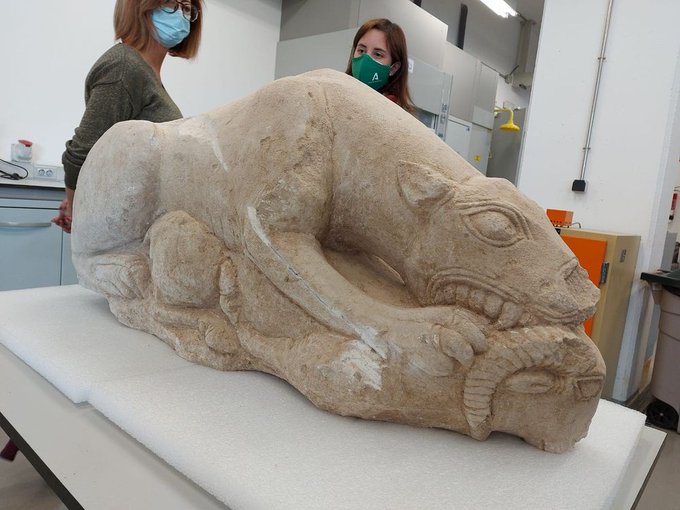
When he stopped to inspect what it was he had hit, he was amazed to see a large statue of a lioness capturing her prey.

“I was doing a job and I noticed that the tractor had caught something harder than normal. I thought it was a stone, but when I got closer, I was surprised”, the farmer told Europa Press

What was found is an archaeological piece of “great value” and around 2,400 years, according to a spokesperson for the Culture and Historical Heritage of the Junta de Andalucía, Cristina Casanueva.

The statue, carved in limestone, resembles a lioness or wolf attacking another animal.

It is thought to be from the year 4BC and remains in perfect condition.

The artefact was transferred to the Archaeological Museum of Cordoba where it will be examined by experts for Culture and Historical Heritage.

“It is necessary to evaluate its state, apparently well preserved, in order to establish future restoration procedures and an in-depth study that allows its enhancement”, said Casanueva.

4,000-Year-Old Jet Necklace Found At Isle Of Man Round Mounds Dig

4,000-Year-Old Jet Necklace Found At Isle Of Man Round Mounds Dig

During an archaeological excavation on Man Isle, a 4,000-year-old necklace was discovered. The piece of jewellery, located in the west of the island, consists of 122 beads of 1cm and 5cm each which are “intricately” decorated.

4,000-Year-Old Jet Necklace Found At Isle Of Man Round Mounds Dig
Sand on the beads from the burial site will be removed as part of the conservation process

Centred in Whitby, North Yorkshire, it is the first of its kind to be found on Man Island. The necklace was crescent-shaped and made of several strings when completely assembled.

The Round Mounds of the Isle of Man project hopes to discover more about Bronze Age burial practices and the island’s connections with other parts of the British Isles.

The beads were found alongside skeletal remains

The excavation of the ancient burial sites has been running for four years. More than 40 experts and students from two UK universities worked on this year’s four-week dig near Kirk Michael.

The cremated remains of seven people have been found on the site to date but this was the first time an “inhumation”, or skeletal remains, has been uncovered.

Rachel Crellin, of the University of Leicester, is leading the project alongside Chris Fowler of Newcastle University. She said that although the necklace was “undeniably beautiful”, the “real value” of the find was the burial itself.

The grave would allow the team to “connect it up to this story about Britain and Ireland,” Dr Crellin added.

The “deliberate” placing of stones, thought to be a grinding stone and cutting block, next to the body could be of “particular significance” regarding “things like food, productivity and fertility,” Dr Fowler added.

The necklace was found in a grave about 6.5 feet (2m) below the top

Funding for the project was provided by Manx National Heritage (MNH) and the two universities.

MNH Director Edmund Southworth said it was “hoped” the “very fragile” necklace would be put on display, but that would be “some considerable time away”.

The piece will now be digitally reconstructed, while scientific analysis will be carried out on the human remains.

There are intricately carved patterns on the prehistoric beads
Two new 26ft (8m) trenches were excavated this year alongside one first opened up last year

A man picking mushrooms in the Czech republic discovers a rare 3000-year-old sword

A man picking mushrooms in the Czech republic discovers a rare 3000-year-old sword

A man hunting for mushrooms found came away with more than just a bunch of fungus – he discovered two rare Bronze Age weapons. Roman Novák was foraging for fungi after a rainstorm in Jesenick, a small town about 150 miles from Prague when he noticed a piece of metal jutting out of the ground.

Examining it closer, Novák realized it was part of a sword, dating back some 3,300 years ago. 

Digging some more, he also uncovered a bronze axe from the same era nearby. The discovery has led local archaeologists to plan an excavation in the area.

A man foraging for mushrooms in a rural part of the Czech Republic uncovered a bronze sword dating to 1300 BC when the Urnfield culture was just developing in Central Europe.

‘It had just rained and I went mushroom-picking,’ Novák told Radio Prague International. As I went, I saw a piece of metal sticking out of some stones. I kicked it and found that it was a blade, part of a sword.’

Archaeologists who examined both pieces say they date to about 1300 BC when Central Europe’s Urnfield culture was just emerging and Jeseník would have been sparsely populated.

Unlike later iron swords, which are hammered into shape while still red hot, bronze swords were made by heating the metal until it turned into a liquid and then pouring it into a mould.

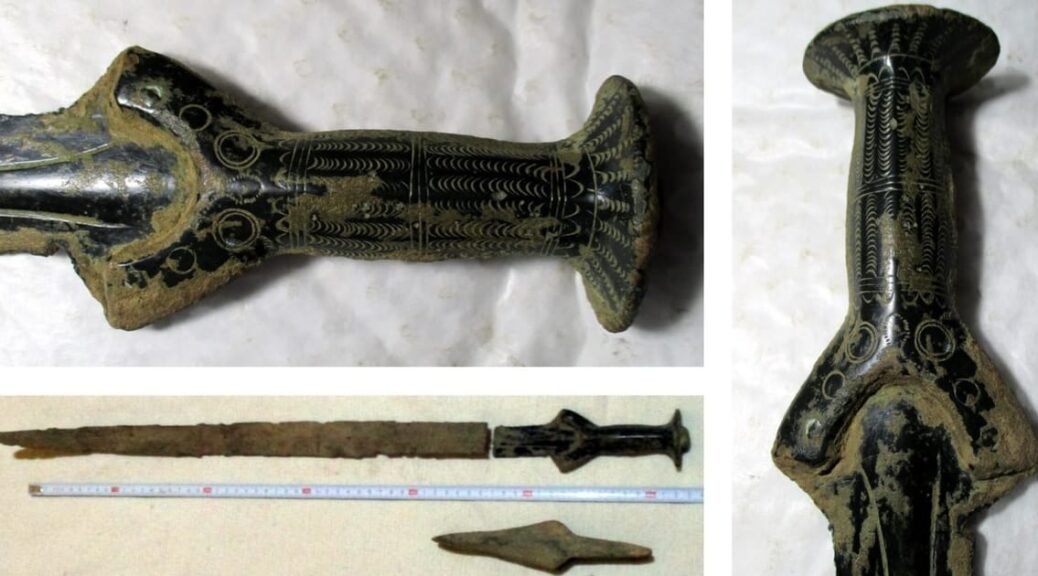
The sword has an octagonal handle, with a bronze hilt intricately carved with circles and crescents. The blade, which is broken near the base but otherwise intact, resemble weapons used mainly in what is now Northern Germany.

The sword has an octagonal handle, with a bronze hilt intricately carved with circles and crescents

‘They were obviously trying their best, but the quality of the casting was actually pretty low,’ said Jiří Juchelka, director of archaeology at the nearby Silesian Museum. ‘X-ray tests show that there are many small bubbles inside the weapon.’

Because of that, Juchelka believes the sword was more ceremonial than something used in combat.

Nevertheless, it’s only the second of its kind found in the region.

‘It is like a puzzle,’ said Milan Rychlý of Jesenick’s Ethnographic Museum. ‘We just have four little shards from the story that took place right now, so we have to start piecing everything together.’

When the excavation of the area is complete, all the items will go on display at the two museums.

The weapons were uncovered in a forest in the Czech Republic’s eastern Jesenick District.

Mushroom picking after it rains is a popular hobby in Eastern Europe: Last month a man foraging in north-central Poland literally stumbled across a trove of 17th-century silver coins.

Bogusław Rumiński’s bike got stuck in a rut while he was riding in his tiny village of Jezuicka Struga.

When he put his hands out to stop his fall, Rumiński landed on dozens of silver pieces dating to the reign of King John II Casimir Vasa. The coins, which are in excellent condition, were minted between 1657 and 1667, shortly after the Deluge, an era of frequent wars involving Russia, Poland and Sweden.

Another mushroom hunter in Poland uncovered dozens of silver coins from between 1657 and 1667, minted during the reign of King John II Casimir Vasa.

Later searching with a metal detector turned up even more coins, bringing the total to 86. Because of the coins’ fine condition, experts believe they were hidden shortly after being produced.

Ancient Viking ship buried an Iron Age cemetery uncovered by scientists

Ancient Viking ship buried an Iron Age cemetery uncovered by scientists

A Viking ship that was laid to rest centuries ago wasn’t alone underground. A feast hall and a cult temple were also buried at the cemetery site, hinting at the elite standing of the community that conducted the burials. 

Archaeologists discovered the ship in 2018, after conducting surveys with ground-penetrating radar (GPR) at Gjellestad in southeastern Norway. Since then, further scans and excavations uncovered more clues about the site and the people who created it centuries ago. 

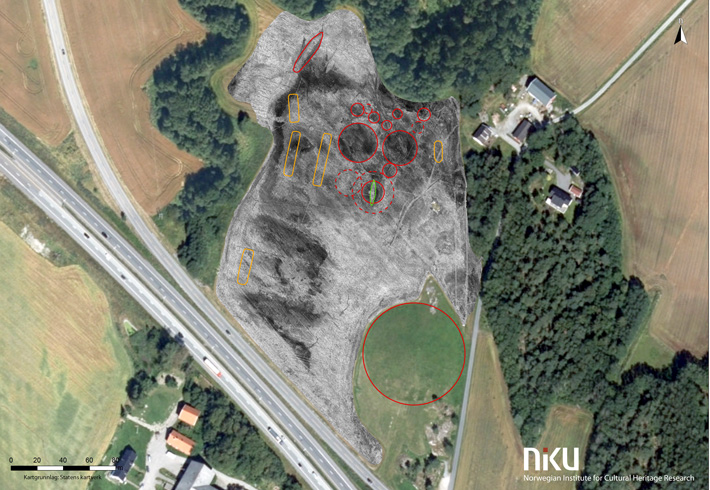
GPR scans revealed a total of 13 burial mounds including the ship grave; some of these circular mounds were 98 feet (30 meters) wide. Other burials included buildings that may have been used in rituals, scientists reported in a new study.

The researchers found the mound cluster to the north of a large, previously excavated Iron Age mound — Jell Mound — which dates to about 1,500 year ago (radiocarbon dating revealed that the ship was buried hundreds of years later, likely around the ninth century). Linking Jell Mound to a larger network of burials suggests that Gjellestad was an important cemetery that stood for centuries, according to the study.

In 2017, a gold ornament found near Jell Mound hinted that Gjellestad was a site of some significance. Pendants such as these were often included in burials of high-status women during the Iron Age, around A.D. 1 to A.D. 400, according to the study.

Numerous funerary mounds once studded the landscape around Gjellestad, but many of these were plowed up by farmers during the 19th century, the scientists wrote. However, even after a mound has been destroyed, GPR can still reveal its former location — and what was buried there.

The discovery was made by experts from the Norwegian Institute for Cultural Heritage Research (NIKU) at Gjellestad in southeastern Norway
Gold pendant found near the Jell Mound. This type or ornament was common in high-status female burials from A.D. 1 to A.D. 400.

Near the ship grave, GPR located two large circular mounds, with seven smaller mounds clustered to the north. Four rectangular “settlement structures” lay to the west; the longest was 125 feet (38 m) in length. One of the smaller buildings may have been a farmhouse; another may represent a temple; and the largest building was similar in structure and size to feasting halls found in other Viking settlements, the scientists reported.

“The only structure that can be securely dated to the Viking Age at Gjellestad is the ship burial but, taking the whole site into consideration, we can probably say that it was important for the elite to exhibit their status through lavish and carefully planned burial rituals,” said lead study author Lars Gustavsen, an archaeologist with the Norwegian Institute for Cultural Heritage Research (NIKU).

“We believe that the inclusion of a ship burial in what was probably an already existing — and long-lived — mound cemetery was an effort to associate oneself with an already existing power structure,” Gustavsen told Live Science in an email.

A grave situation

The ship burial itself was highly unusual. Viking burials of boats measuring under 39 feet (12 m) are common, but finding a ship this large — 66 feet (20 m) in length — is exceptionally rare. In fact, only a handful of such burials are known across Norway, Gustavsen said.

The last excavations of large Viking ships took place more than a century ago, during the late 19th and early 20th centuries. This is the first such ship to be found through GPR-scanning technology, which bodes well for discovering more ship burials that are still hidden, according to the study.

But why did Vikings bury their ships? “We do not really know for certain,” Gustavsen said. “Since these were societies whose identity was closely tied to the sea and seafaring, the ship could, in this specific context, be seen as a vessel transporting the dead from the realm of the living to the realm of the dead,” he said. 

“Or it could simply be a display of wealth, or to demonstrate that one belonged to a certain social and political class.”

Archaeologists mapped the Gjellestad site using data collected by GPR scans.

After the ship’s discovery in 2018, the team partially excavated the ship and quickly realized that damp conditions combined with periods of drought had left the ship badly decomposed and riddled with fungus, Live Science previously reported. 

Over the summer of 2020, archaeologists mounted a full excavation to recover and preserve what they could of the decaying ship. In October, the team found something unexpected: animal bones, according to a statement published by the University of Oslo’s Museum of Cultural History.

“The animal bones are relatively large in size, so we think that they are the remains of an ox or a horse that has been sacrificed to be part of the burial,” museum representatives said in the statement. “Although the topmost layers of the bones are heavily decomposed, they seem to be better preserved further down. This indicates that it is quite likely that things are better preserved deeper into the ship burial.”

Work on the site is still underway, and is expected to be completed in December, according to Gustavsen.

‘Mona Lisa of ancient age’ found in Southern Turkey

‘Mona Lisa of ancient age’ found in Southern Turkey

According to a report in the Hurriyet Daily News, a floor mosaic featuring a woman’s portrait has been unearthed in the southern province of Osmaniye’s Kadirli district, turkey.

By a team of researchers led by Ümit Kayişoğlu of the Osmaniye Museum Directorate.

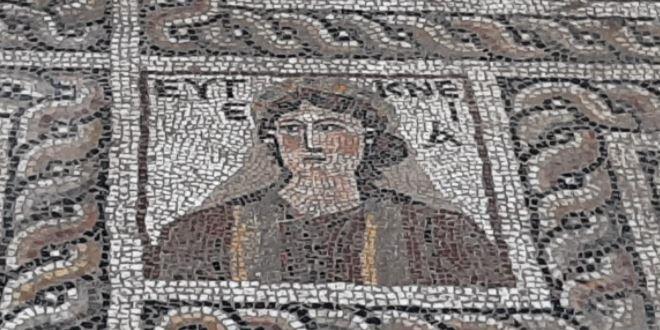
He said that the woman’s pose resembles that of Leonardo da Vinci’s “Mona Lisa of the ancient age,“ attracts attention with its stance, look and similarity to the world-famous Mona Lisa painting.

‘Mona Lisa of ancient age’ found in Southern Turkey
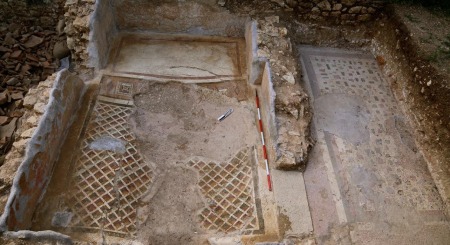
A mosaic area unearthed during the excavations conducted by the Osmaniye Museum Directorate in the southern province of Osmaniye’s Kadirli district has proved a rival to the ancient city of Zeugma with its awe-striking features.

The mosaic area is believed to have once decorated the floor of a villa between the first and the second centuries, and the female figure is thought to have been the owner of the villa.

“We can call this mosaic the Mona Lisa of Kadirli,” said archaeologist Ümit Kayışoğlu.

“This mosaic area is the only known mosaic area with human figures in Osmaniye. This is the remains of a villa built in the first and second centuries A.D.”

Stating that they have been carrying out devoted work in the mosaic area since 2015, he said, “As the Osmaniye Museum Directorate, we started many excavations when the ruins of the ancient city of Flaviapolis on which the Kadirli district was founded were declared a third-degree site in 2015.”

Describing the mosaics found, he said: “There are four different types of mosaics here.

There is a lady in the middle of one of the mosaics, and we call this person Kadirli’s Mona Lisa. Because her look and stance are reminiscent of the original one.”

Oldest Viking Crucifix Uncovered In Denmark

Oldest Viking Crucifix Uncovered In Denmark

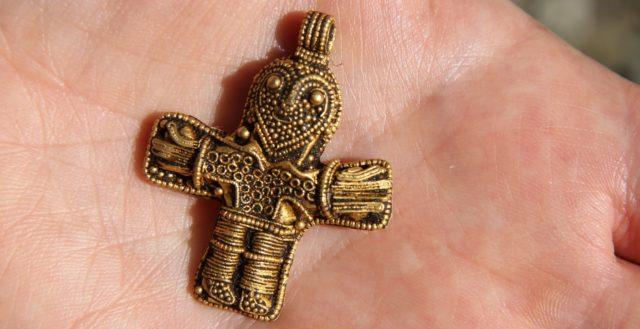
The tiny gold items, created in the picture of Christ on the cross, are thought to make up Denmark’s oldest crucifix.

This newly Found crucifix will show that Danes adopted the Christian faith earlier than previously thought.

An uncommon Viking crucifix pendant was Found in a Danish field by an amateur metal detectorist two weeks before Easter.

The small gold item, created in the shape of a man with outstretched arms, resembles the Picture of Christ on the cross.

It’s approximated to be Denmark’s oldest crucifix.

Dating back to the first half of the Tenth century, the pendant is evidence of early Christianity in Denmark, according to experts at the Viking Museum situated at Ladby, where the crucifix is currently kept.

It is said by the museum to be older than Harald Bluetooth’s runic stone in Jelling.

The stones in the town of Jelling have a figure on the cross to demonstrate respect to Harald Bluetooth’s conversion of the Danes to Christianity. Up until now, the large rune stones were calculated to date back to 965 AD.

They were thought to be the earliest Images of Jesus on the cross in Denmark.

The precious item was Found by Dennis Fabricius Holm in the fields near a church village of Aunslev, on the Danish island Funen.

It is very lucky that a piece of jewelry this small persevered for the last 1,100 years in the earth.

The figure measures only 1.6 inches in height and weighs about 0.45 ounces.

While the back surface is even, the front is made of finely jointed gold threads and small filigree pellets. Located at the top is a small eye for a chain to be attached.

It is stated by the museum that it looks similar to the gilded silver cross that was Found in 1879 in Birka, close to Stockholm in Sweden. It was in a female’s grave from the Viking Age.

This silver cross dated back to the first half of the Tenth century. Yet the Aunslev cross is the first Danish specimen that is in full figure.

It was most likely worn by a Viking woman. It has not yet been decided if the cross was to display that she was a Christian or if it was just a part of the pagan Vikings’ style.

As indicated by the Swedish archaeologist Martin Rundkvist, who first announced the discovery on his blog, the crucifixes are too much alike for more than 1 or 2 people to have created them.

The first crucifix was Found at Birka close to Stockholm. Yet the second, third, and the fourth one were discovered close to Hedeby, Denmark. This is probably where all of them were produced.

The Aunlev cross will be placed on exhibit at the Viking Museum in Ladby, until the Easter holiday. Then it will be conveyed to a lab for further preservation.

In the summer it will become part of an exhibit in the exhibition that will display several recent Viking Age discoveries that were made using metal detectors.

Jelling stones
A stunning, solid gold crucifix unearthed by a hobbyist with a metal detector may be the oldest Jesus on a cross in Denmark.

Viking temple to Thor and Odin unearthed in Norway

Viking temple to Thor and Odin unearthed in Norway

Archaeologists have uncovered a Viking temple devoted to Ancient Norse gods like Thor. In Norway, the ruins of the 1,200-year-old pagan temple have been dug up and provide a rare insight into the Viking religion.

The Old Norse “god house” was built from wood about 1200 years ago to worship gods like Odin, Thor, and Freyr. Post-holes that show its distinctive shape, including its central tower, have been unearthed at the site.
The god house (shown here in a digital reconstruction) was strongly built of beams and walls of wood; some lasted for hundreds of years. It included a central tower, patterned on Christian churches seen in lands further south.

Archaeologists have dated the remains of the large wooden building to the end of the 8th century. They think it would have stood 40 feet high and was 45 feet long and 26 feet wide.

That’s just over half as tall as Buckingham Palace.

It’s thought sacrifices and feasts would have occurred inside to honour the gods during the midsummer and midwinter solstices.

A large white penis-shaped stone was previously found near the site and was linked to ancient fertility rituals.

This is the first Old Norse temple to be found in Norway.

Old Norse is the ancient language associated with the Vikings.

Archaeologist Søren Diinhoff of the University Museum of Bergen told Live Science: “This is the first time we’ve found one of these very special, very beautiful buildings.

“We know them from Sweden and we know them from Denmark. … This shows that they also existed in Norway.”

He added: “It is a stronger expression of belief than all the small cult places. “This is probably something to do with a certain class of the society, who built these as a real ideological show.”

The temple was unearthed during a dig taking place before planned housing

The foundations of the ancient building, or “god house” as they’re often called, were unearthed last month in a Norwegian riverside village called Ose.

Digging was happening there in preparation for new houses.

Traces of early agricultural settlements were also found nearby. They dated to the earlier time of around 2,000 to 2,500 years ago.

The remains of the temple date to a later time when the area is thought to have been dominated by elite wealthy families.

It is thought the families would have led the cult worship.

Experts think the elite likely wanted a “god house” built based on more Christian structures with a high tower on top.

Before this time, Viking gods were more commonly worshipped in simplistic settings.

The wood of the temple no longer remains but you can see the postholes where the main beams would have stood and the area where the tall tower would have been.

Evidence of cooking pits and animal bones fit in with the theory that feasts and sacrifices occurred there.

Food, drink, animal sacrifices and precious metals were often offered to Old Norse gods. The worshippers would then feast and enjoy the goods themselves because they knew the gods couldn’t come and join them.

Instead, wooden figurines may have been used to represent the gods. Popular Old Norse gods include storm god Thor and war god Odin.

Norway’s kings enforced Christianity from around the 11th century so burned down a lot of Old Norse temples and religious sites. There’s no current evidence to suggest the Ose temple was burned down.