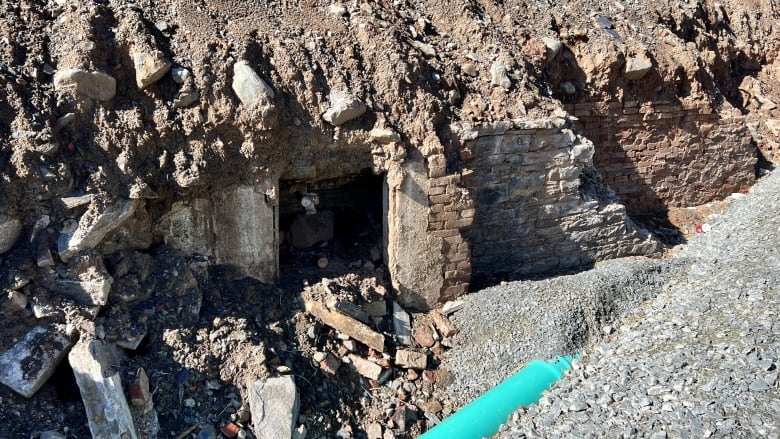
Construction crews working on the Cogswell Interchange project in Halifax have uncovered a coal chute from the 1800s used for storing heating fuel.
When digging began on the Cogswell Interchange project near downtown Halifax, some unique discoveries were bound to be found. The British established the Town of Halifax in 1749 and that history resurfaces from time to time. Recent excavations to add a new detour road in the area revealed a small part of daily colonial life.
“It was discovered at the time of us finding an old building foundation made of brick and stone,” said Donna Davis, project manager with the Cogswell District project.
“Basically it is a cavity that was used to store coal, so it’s called a coal chute or coal port.”
Davis said coal chutes were common in the 1800s to provide heating fuel and it’s believed coal was dumped into the chute through a grate at road level.
“We don’t know if the building would have been residential, commercial or industrial,” said Davis. “There were a mix of buildings in that area and our archeologist is continuing to find out more about the structure and what its origins might have been.”
An archeologist working with the Cogswell Interchange project is researching the history of the site where the coal chute was discovered. (Paul Palmeter/CBC)
It’s believed the coal chute would have been built in the mid- to late-1800s.
Davis said there are old maps that show the area near the Halifax waterfront was populated with numerous industrial and commercial structures in that era and some residential properties, too.
The work on the Cogswell Interchange is still in its infancy as the expected completion date is still four years away. Davis said there will likely be more interesting discoveries to come.
More underground discoveries are expected to be made before the Cogswell Interchange project is completed in 2026.
“When we come across something like that, construction stops and we have the archeologist come in to tell us what we’ve uncovered and to tell us how to proceed,” said Davis. “In most cases, we have to properly catalog what it is that we’ve found.”
Davis said a number of old, large brick storm sewer tunnels have also been discovered.
A new construction project app will be rolled out this fall where pictures and information on the discoveries will be shared with the public.
The proposed redevelopments for the Cogswell District will include more green space.
The Cogswell Interchange was built in the late 1960s to early 1970s and officially opened in 1972.
Much of the interchange is being demolished to make way for a new Cogswell District neighbourhood, connecting Halifax’s downtown and waterfront with the north end. It will convert the existing road infrastructure into a mixed-use neighbourhood.
Researchers Return to Age of Exploration Shipwreck
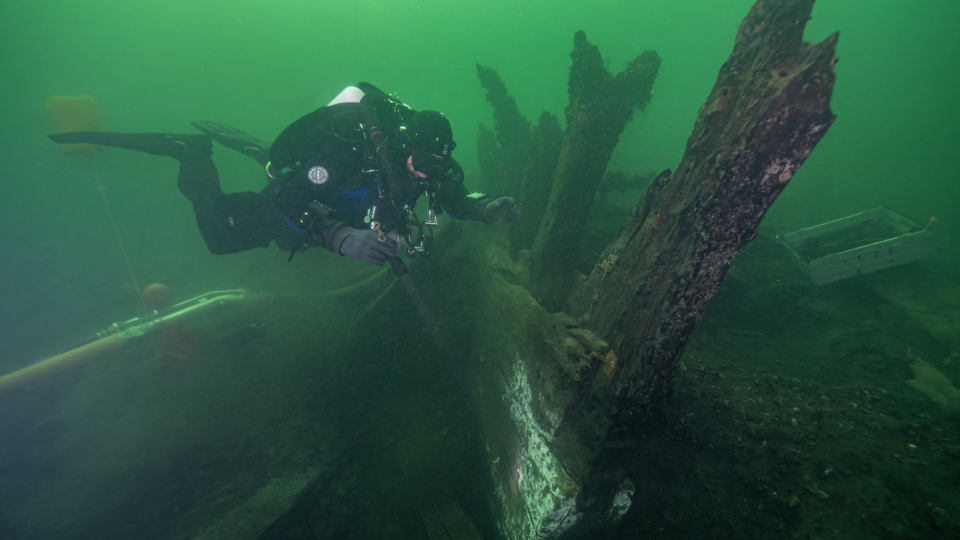
New excavations have coaxed more secrets from Gribshunden, the flagship of the Danish-Norwegian King Hans which mysteriously sank in 1495 off the coast of Ronneby, Sweden.
The wreck is internationally significant as the world’s best-preserved ship from the Age of Exploration – a proxy for the vessels of Christopher Columbus and Vasco da Gama.
During August and September, a scientific team from Lund University, Blekinge Museum, and the Danish Viking Ship Museum excavated portions of the wreck.
Recovered artefacts include artillery, handguns, and major components of the steering gear and stern castle. 3D models of key structural components have allowed the first digital reconstructions of the ship.
Digital scanning
“No other ship from the time of exploration has survived this intact,” says scientific leader Brendan Foley from Lund University. “Gribshunden delivers new insights into those voyages. We now understand the actual size and layout of those ships that changed the world. And more, we glimpse how this vessel operated as King Hans’ floating castle.”
Lund University PhD candidate Paola Derudas and Viking Ship Museum specialist Mikkel Thomsen combined 3D models of the artillery, rudder, tiller, and keel to recreate the sterncastle.
This is the section of the ship the king and noblemen likely occupied, in addition to gunners and steersmen. Comparisons of this tightly confined section with medieval castles on land suggest that hierarchical divisions of space must have been relaxed while the king was at sea.
Maritime archaeologist Mikkel Thomsen from the Danish Viking ship Museum
In the bow of the ship, 3D models of the stem post and hawse pieces (through which the anchor lines passed) provide clues about the forecastle’s functions of crew accommodation, ship handling, and fortification. Oddly, no artillery has been found there. Was it salvaged after 1495, or were the ship’s guns mounted only in the rear half of the vessel?
King Hans’ ambition was to unify the entire Nordic region under his crown. In this pursuit, Gribshunden was essentially for new technology. The vessel was among the first warships built specifically to carry artillery. Hans personally voyaged on the ship throughout his realm and beyond: to Norway, Gotland, and Sweden.
The ship was his administrative centre for months at a time, while simultaneously displaying regal power at each port of call. Often the ship was the centre of a squadron or fleet: in 1486, more than 600 Danish noblemen and senior clergy on dozens of ships accompanied Hans to Norway, where he established a new mint.
On Gribshunden’s final voyage, it led another squadron toward a political summit in Kalmar, Sweden, where Hans expected to be elected king of Sweden and fulfil his vision of a Scandinavian union. The ship was loaded with prestigious goods to impress the Swedish council, and many of those items await archaeological discovery.
“Another big puzzle remains: what really caused Gribshunden to sink?”, Foley asks. “Medieval documents state there was fire and an explosion, but we have not seen any signs of that. Maybe next year’s excavation will provide evidence of the catastrophe”, he concludes.
Archaeologists find remains of a man and his slave killed in the Pompeii eruption
The men may have escaped the first volcanic eruption that destroyed the city but died in the blast the next day.
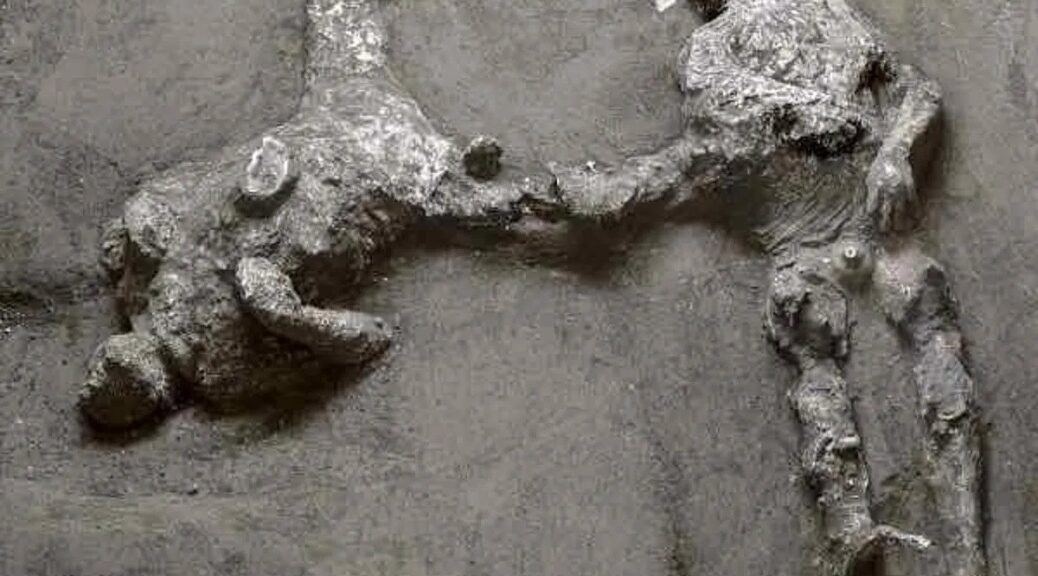
Here are the plaster casts of what archaeologists believe was a wealthy man and his male slave fleeing the volcanic eruption of Vesuvius nearly 2,000 years ago.
The deadly eruption of Mount Vesuvius in Pompeii happened nearly 2,000 years ago, but more evidence from that horrifying event continues to reveal itself even now.
Partial male skeletons from that time period have been unearthed, officials at Italy’s Pompeii archaeological park said on Saturday.
During an excavation of ruins about 700 meters (about 2,300 feet) northwest of Pompeii, two skeletons were found lying next to each other in a layer of grey ash at least 6.5 feet (2 meters) deep.
Archaeologists poured plaster into the empty spaces left by the decaying bodies in the ash.
This technique, pioneered in the 1800s, better shows the victims’ bodies but also makes the remains “seem like statues,” Massimo Osanna, an archaeologist who is director of the archaeological park operated under the jurisdiction of the Italian Culture Ministry, explained to AP News.
The skeletons were found in a side room of a suburban villa along an underground corridor called a cryptoporticus.
“The victims were probably looking for shelter in the cryptoporticus, in this underground space, where they thought they were better protected,” Osanna said.
Studying the skulls and teeth, archaeologists have determined one of the men was between the ages of 18 and 25.
The young man also had a spinal column with compressed discs, which led archaeologists to hypothesize he may have done manual labour as a slave.
Here’s a glimpse of one of the male skeletons found at the dig in Pompeii.
The impression of fabric folds left in the ash layer also shows the younger man may have been wearing a short, pleated wool tunic.
The other male skeleton had a strong bone structure, especially in his chest area.
He was estimated to have been between the ages of 30 and 40. He may have been wearing a tunic as well as a mantle over his left shoulder.
Archaeologists believe these two men died suddenly, according to a statement, not during the first eruption but instead during the second pyroclastic flow, a violent, energetic flow that struck Pompeii and the surrounding area in the early hours of Oct. 25, leading to the death of the survivors who were still present in the city and countryside.
St. Peter’s Birthplace Possibly Discovered By Archaeologists
In a stunning claim, archaeologists believe they have discovered the home of Peter and Andrew, principal followers of Jesus Christ.
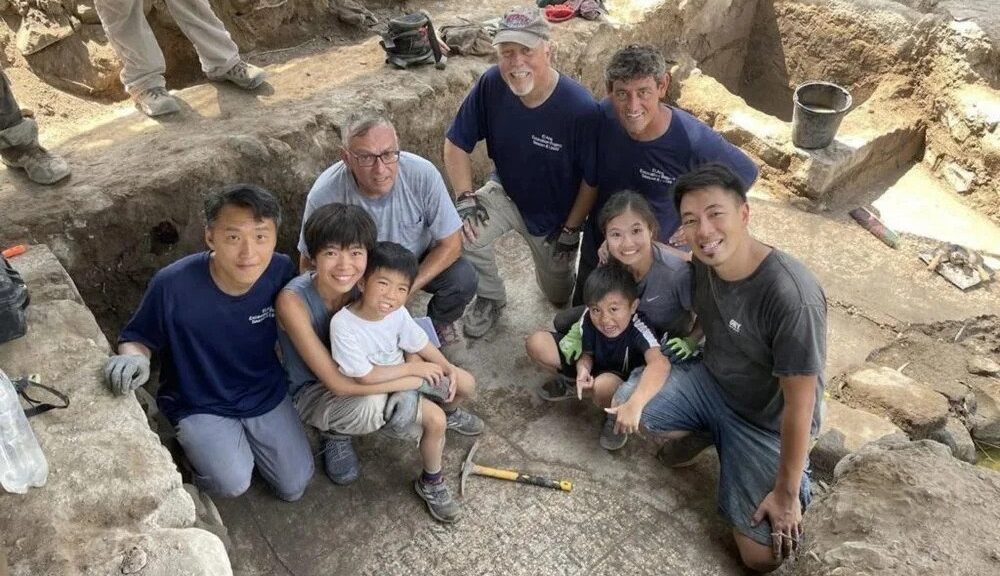
A team led by archaeologists Mordechai Aviam and Steven Notley brought to light a large Greek inscription at a basilica of the Byzantine era of 1,200 years ago. The inscription refers to the donor “Constantine, the servant of Christ,” as well as an intercession naming St. Peter “chief and commander of the heavenly apostles.”
Constantine was emperor of Rome (306-337 AD) and was the first Christian ruler of the empire. The inscription is framed by a round medallion that is part of a larger mosaic floor consisting of tiles called “tesserae” that once graced the sacristy of the church. The floor also features swirling patterns of flowers.
A 1,500-year-old mosaic believed to be above Peter and Andrew’s home, in Galilee, Israel, in October 2021. Archaeologists had uncovered for the first time mosaic floors from a lost, legendary basilica reportedly built over the house of Jesus’ apostles Peter and Andrew in biblical Bethsaida.
As used by Christian writers of the Byzantine, or Roman Empire of the East, the title “chief and commander of the apostles” refers to Apostle Peter.
“This discovery is our strongest indicator that Peter had a special association with the basilica, and it was likely dedicated to him. Since Byzantine Christian tradition routinely identified Peter’s home in Bethsaida, and not in Capernaum as is often thought today, it seems likely that the basilica commemorates his house,” said Notley of Nyack College in New York City.
Archaeologist Mordechai Aviam cleans the inscription in Galilee, Israel, in August 2022. Archaeologists from Kinneret College in Israel and Nyack College in New York uncovered a large Greek inscription during excavations of what is being called the “Church of the Apostles,” a Byzantine period basilica at el Araj/Beit haBek believed to be built over the apostle’s Peter’s and Andrew’s home.
The archaeologists have dubbed the site the “Church of the Apostles.” The excavation took place in the Betiha nature preserve in Israel, undertaken by Nyack College and Kinneret College of Israel, and was sponsored by the Center for the Study of Ancient Judaism and Christian Origins, the Museum of the Bible, the Lanier Theological Library Foundation, and HaDavar Yeshiva.
It is part of efforts to seek the biblical Jewish village of Bethsaida, and its connections to the modern Beit HaBek (al-A’raj) area.
“One of the goals of this dig was to check whether we have at the site a layer from the 1st century, which will allow us to suggest a better candidate for the identification of Biblical Bethsaida. Not only did we find significant remains from this period, but we also found this important church and the monastery around it,” said Mordechai Aviam of Israel who directed the dig.
According to the team, the uncovering of the ancient inscription underscores the belief that the basilica is the same one described by Bishop Willibald of Eichstätt, an 8th century A.D. Catholic churchman who wrote that the church was built over the house of Peter and Andrew.
While Willibald was travelling from Capernaum on the shore of the Sea of Galilee to the village of Kursi, he overnighted at a place he was told “is Bethsaida from which came Peter and Andrew. There is now a church where previously was their house.”
Roman artefacts found at the site appear to support the witness of the Jewish historian Flavius Josephus, who wrote his seminal work “Jewish Antiquities” during the First Century of the Christian era that the village of Bethsaida became a Roman polis or town bearing the name Julias.
The uncovered inscription from the Church of the Apostles, in Galilee, Israel, in August 2022. Archaeologists from Kinneret College in Israel and Nyack College in New York uncovered a large Greek inscription during excavations of what is being called the Church of the Apostles, a Byzantine period basilica at el Araj/Beit haBek believed to be built over the apostles Peter’s and Andrew’s home.
According to the Gospel of Matthew, Peter was the first to declare the messiahship of Jesus and was thus considered the chief of the apostles.
The Catholic Church considers St. Peter the first of a line of popes extant until the present day. The prominence of St. Peter is demonstrated by the Basilica of St. Peter on Vatican Hill in Rome, over the place where he was crucified.
According to the excavators at what they believe is the Church of the Apostles, “It seems his home was likewise commemorated in Bethsaida.”
The archaeologists are cleaning up the site and hope to find further inscriptions confirming it as a shrine to the first pope, as well as its connections to ancient Israel.
Decorative Heater Unearthed at 16th-Century Castle in Poland
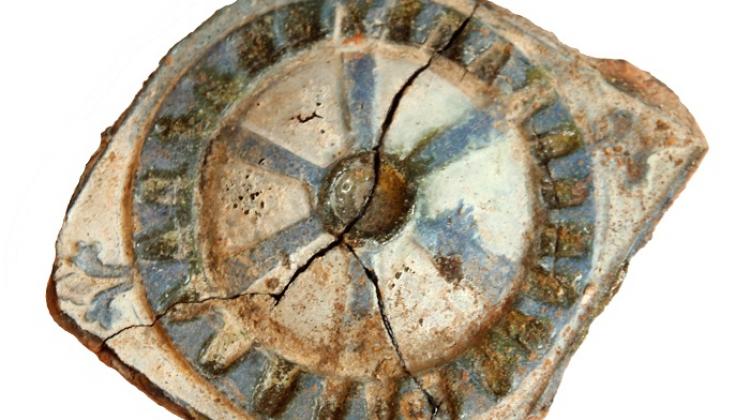
Fragment of a cocklestove tile.
Beautiful Renaissance cockle stove tiles with the quality and style matching those from the Wawel Royal Castle in Kraków have been discovered during research in the ruins of the stronghold in Żelechów (Masovian Voivodeship).
The research was conducted in August by archaeologists and historians from the Institute of Archeology and Ethnology of the Polish Academy of Sciences and the Institute of History of the Polish Academy of Sciences.
During this season, they focused on exploring the remains of the 16th-century court and the earlier, late medieval buildings located in the same place. The structures were part of a wooden castle.
Aerial view of this year’s excavations in Żelechów.
The head of research Wojciech Bis from the Institute of Archeology and Ethnology of the Polish Academy of Sciences told PAP – Science in Poland that excavations made it possible to determine that the wooden building used in the 16th century was destroyed by fire.
The archaeologists unearthed burnt beams and layers of burnt clay, which could have covered the walls and floor of the structure.
However, the most spectacular find – according to the researchers – turned out to be the remains of a cockle stove, which probably heated the representative room of the court.
Fragment of a cockle stove tile.
Bis said: “Among its remains, we found numerous, beautifully decorated tiles with rich geometric, plant and animal patterns. There were also images of fantastic animals, including griffin, human figures and coats of arms.”
Several hundred fragments of tiles have survived. They were mostly covered with colourful enamel: green, yellow, white and blue. According to the researchers, they probably ornamented a single cockle stove, the clay base of which has also survived.
So far, the researchers are unable to say where they originated from.
Fragment of a cocklestove tile.
However, the researchers say stoves covered with similar tiles decorated the Renaissance interiors of the Wawel Royal Castle. Some of them, especially decorative tops or tiles with rosette motifs, are almost identical stylistically to those at Wawel.
Research project participant, historian Maciej Radomski from the Institute of Archeology and Ethnology at the Polish Academy of Sciences, said: “This proves that this building served representatives of the then social elites of the Commonwealth.”
In addition to Renaissance tiles, scientists found fragments of ceramic vessels. Among them were thin-walled table dishes designed for serving meals and kitchen utensils for the preparation of dishes.
They included pots and pans on three legs. In addition, numerous post-consumption animal bones with traces of cutting and chopping were found, mainly from pigs and oxen. This is evidence of abundant feasts at the castle.
Fragment of a cocklestove tile.
Archaeologists also discovered coins. The oldest of them is the silver penny Wenceslaus IV (1378-1419), as well as several copper schillings minted during the reign of John II Casimir, called Boratyki. In addition, interesting finds from the researchers’ point of view were two spurs discovered near the 16th-century court building, probably lost in the muddy surroundings of the buildings.
The wetland, swampy area promotes the preservation of many artefacts, including wooden structures. Many of them have survived to this day, which is not a common phenomenon among the remains of buildings from hundreds of years ago, the researchers emphasise.
The search for the Żelechów castle took several years. Historians knew from a few mentions that there was a stronghold in this town in the Middle Ages. Its relics were located a few years ago with ALS and other methods that do not even require driving a shovel into the ground. It is located northwest of the Żelechów market, near fish ponds.
The excavations started in 2017. In subsequent seasons of excavations, the researchers managed to unearth well-preserved wooden fragments of the medieval castle. It was previously thought that underground there were massive brick or stone remains of the foundation of the structure.
Archaeological excavation in Żelechów.
The castle was not lucky. It was probably built in the mid-15th century and most likely abandoned by the Ciołek family at the beginning of the 16th century. According to the researcher, disagreements between magnates contributed to this. The seat of the Ciołek family was temporarily taken over by Feliks of Zielanka.
Before the middle of the 16th century, the castle probably returned to the hands of previous owners, but soon a significant part of the buildings was consumed by fire. It continued to function in some form and operated until the mid-17th century, as evidenced by coins from the later period discovered during excavations, the researchers believe.
Numerous volunteers, members of the Żelechów Historical Society, the Municipal Engineering Department in Żelechów and the Volunteer Fire Brigade in Żelechów were involved in this year’s research. The implementation of research was financially and organizationally supported by the Żelechów municipality. Excavations were conducted courtesy of the plot owner, Stanisław Kawka.
1.8-Million-Year-Old Tooth Found in the South Caucasus
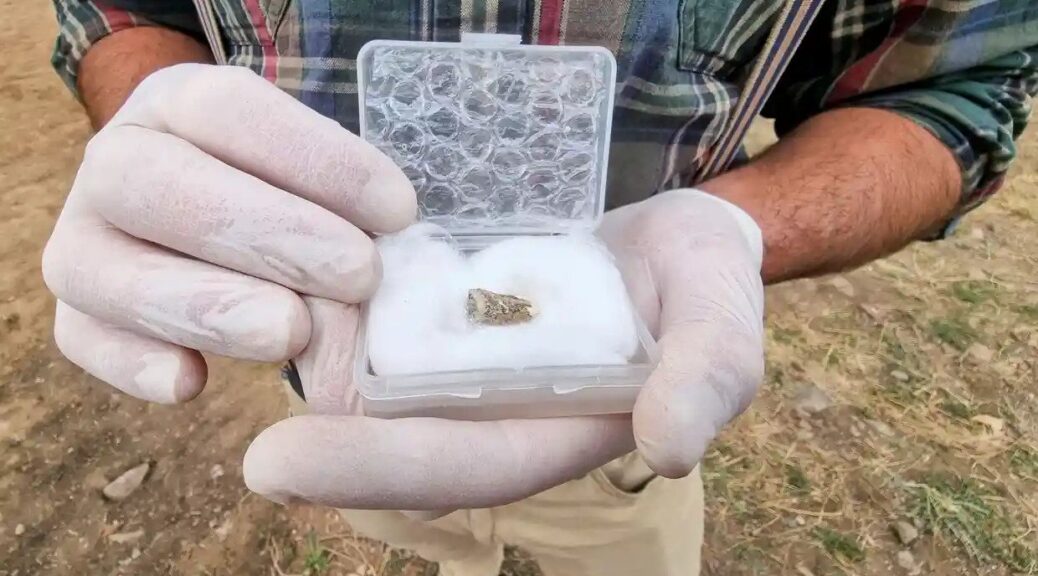
The 1.8m-year-old tooth was found near Orozmani, Georgia.
Archaeologists in Georgia have found a 1.8m-year-old tooth belonging to an early species of human that they say cements the region as the home of one of the earliest prehistoric human settlements in Europe, and possibly anywhere outside Africa.
The tooth was discovered near the village of Orozmani, which lies about 60 miles south-west of the Georgian capital, Tbilisi, and is near Dmanisi, where human skulls dated to 1.8m years old were found in the late 1990s and early 2000s.
The Dmanisi finds were the oldest such discovery anywhere in the world outside Africa, and changed scientists’ understanding of early human evolution and migration patterns.
The latest discovery at a site about 12 miles away provides yet more evidence that the mountainous south Caucasus area was probably one of the first places early humans settled after migrating out of Africa, experts said.
“Orozmani, together with Dmanisi, represents the centre of the oldest distribution of old humans – or early Homo – in the world outside Africa,” the National Research Centre of Archaeology and Prehistory of Georgia said.
The dig site near Orozmani.
Giorgi Bidzinashvili, the scientific leader of the dig team, said he thought the tooth belonged to a “cousin” of Zezva and Mzia, the names given to the people whose near-complete 1.8m-year-old fossilised skulls were found at Dmanisi.
Jack Peart, a British archaeology student who found the tooth at Orozmani, said: “The implications not just for this site but for Georgia and the story of humans leaving Africa 1.8m years ago are enormous.
It solidifies Georgia as a really important place for paleoanthropology and the human story in general.”
The oldest Homo fossils anywhere in the world date to about 2.8m years ago – a partial jaw discovered in modern-day Ethiopia.
Scientists believe early humans, a hunter-gatherer species named Homo erectus, probably started migrating out of Africa about 2m years ago.
Ancient tools dated to about 2.1m years have been discovered in modern-day China, but the Georgian sites are home to the oldest remains of early humans yet recovered outside Africa.
Remains of up to 100 children were found during a dig at a holy site in Wales
The remains were found in a long-lost holy site in Pembrokeshire.
The bodies of 100 children have been discovered in what is believed to be an ancient burial ground.
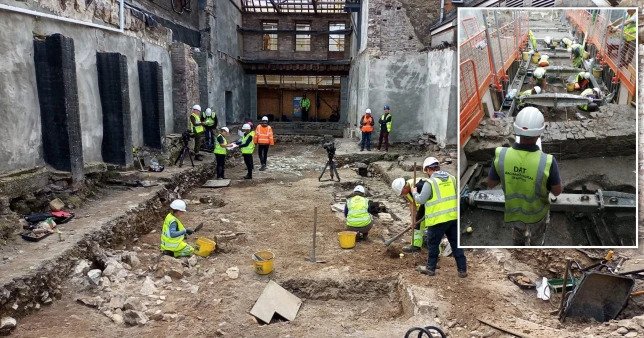
Archaeologists in Haverfordwest, Pembrokeshire, made the grim discovery.
They had been excavating an area surrounding the mysterious St Saviours, a suspected friary which dates back more than 600 years.
Archaeologists found hundreds of skeletons at the historic site. Experts explained that ‘extraordinarily, one-third of these remains are infants under the age of four.’
A strange puncture wound was even found in one of the skulls excavated, the Western Telegraph reported.
The injury could have been caused by ‘projectile fired’ which could indicate ‘the first suggestion of medieval warfare in the town’.
St Saviours itself was stumbled upon by builders digging foundations for a new bar in Haverfordwest.
Archaeologists made the gruesome discovery
Head of the Dyfed Archaeological Trust, Fran Murphy, says financial transactions recorded by a local church indicate the existence of the friary.
There could be around 300 corpses at the ancient burial ground, but the Trust is hesitant on putting an exact finger on the total just yet.
‘We know it’s there because of a series of monastic references, mainly records about money,’ said Miss Murphy.
‘At its height, there were apparently eight friars who were part of the friary before it was dissolved and passed into private hands.
‘It was dissolved in the 1530s with one of the friars scrubbing his name from the list of friars at the priory which is peculiar and might have been a protest to its closing.’
The medieval friary is thought to date back more than 600 years
The friary of the Dominican Order is believed to have stood in Haverfordwest for about three centuries.
The Dominicans, or Black Friars, had a different agenda than most monastic orders in that they went amongst the population, preaching, praying and teaching.
DAT Archaeological Services started work at the site known as Ocky Whites in February and is scheduled to be at the site until next January.
The old Ocky Whites building is currently being redeveloped into a three-storey local food and beverage emporium with a bar and rooftop terrace.
Archaeologists in Prague uncover the ancient 7000-year-old neolithic structure
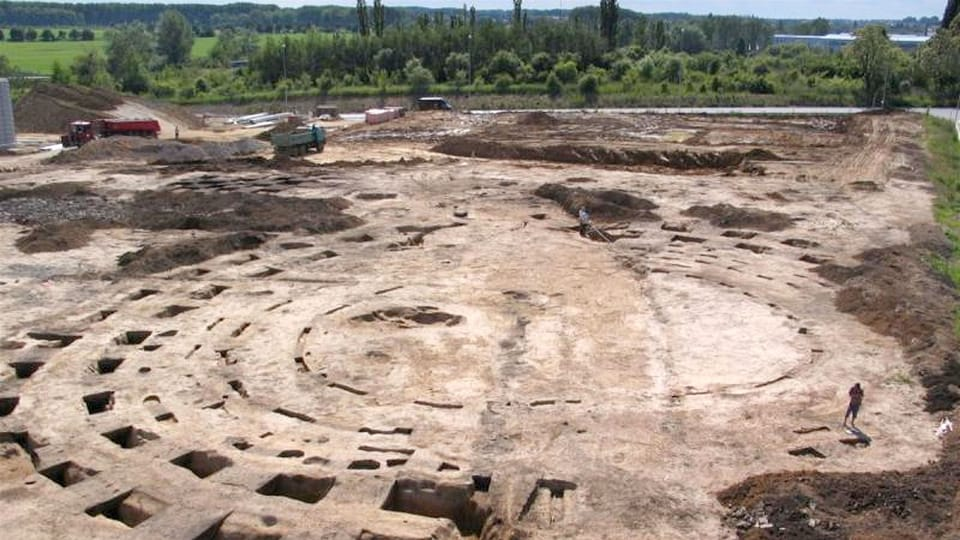
Archaeologists in Prague are currently uncovering a monumental building from the Stone Age. The so-called roundel, built around 7,000 years ago, is located in the district of Vinoř on the outskirts of the city.
Experts are hoping that the research will reveal more information about these mysterious ancient structures.
Roundels are large circular structures from the Neolithic period, that were constructed between 4600–4900 BC. That makes them the oldest monumental buildings in Europe, far older than the Egyptian pyramids or England’s Stonehenge.
One such roundel is currently being examined in Prague’s district of Vinoř. So far, research has shown that the structure is exceptionally well-preserved. Archaeologists were surprised to discover intact remains of the palisade troughs into which the central wooden structure was originally embedded.
Despite these findings, it is still unclear what purpose these structures have served, says Miroslav Kraus, who is in charge of the research:
“One such theory is that it could have been used as an economic centre, a centre of trade. It could also have been a centre of some religious cult, where rites of passage or rituals connected to the time of year were performed.
“Roundels were built during the Stone Age when people had not yet discovered iron. The only tools they could use were made of stone and animal bones.”
To date, around 200 roundels have been found all over central Europe, with 35 of them located on the territory of the Czech Republic. The roundel in Vinoř, which measures 55 metres in diameter, has an unusual floor plan with three separate entrances.
What makes its research unique is that archaeologists have uncovered the structure almost in its entirety, says Mr. Kraus:
“We have the opportunity to uncover nearly the whole structure, or rather what remained of it. At the same time, I should note that part of the structure was revealed back in the 1980s, during the laying of gas and water pipelines.”
The so-called roundel, built around 7,000 years ago, is located in the district of Vinoř on the outskirts of Prague.
Thanks to the extent of the research, archaeologists will be able to take samples for dating and analyses from various parts of the original structure, says Mr. Kraus.
The so-called roundel, built around 7,000 years ago, is located in the district of Vinoř on the outskirts of Prague|Photo: Archaeological Institute of the Academy of Sciences
“It would be great to discover something that would indicate the actual function of the building. However, it is very unlikely, since none of the previously researched roundels had revealed such information.
“It would also be great to find something that would suggest its real age. So far, radiocarbon dating of samples collected from roundels has put their age somewhere between 4900 years to 4600 BC. That is a pretty wide time span.”
The research of the Vinoř roundel is due to carry on until the end of September. Archaeologists have previously discovered a Neolithic settlement northeast of the roundel that had been used for 300 to 400 years.
The so-called roundel, built around 7,000 years ago, is located in the district of Vinoř on the outskirts of Prague.