Frozen moss reveals fatal final journey of 5,300-year-old ice mummy
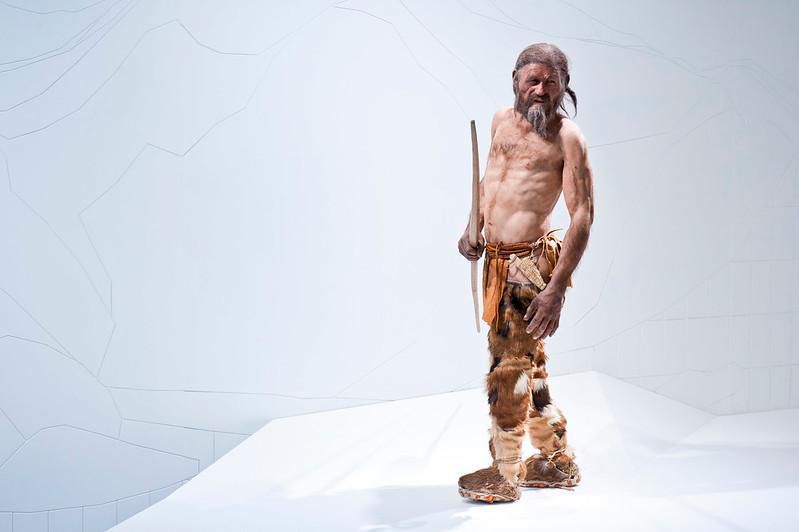
According to a study released on October 30th, 2019, in the open-access journal PLOS ONE by James Dickson of the University of Glasgow (UK) and colleagues at the University of Innsbruck, Alongside the famous Ötzi, the Iceman is buried, at least 75 species of bryophytes -mosses and liverworts — which hold clues to Ötzi’s surroundings.
Ötzi Iceman is a remarkable 5,300-year-old human frozen ice specimen that has been found in the Italian Alps at around 3,200 meters above sea level.
He was frozen alongside his clothing and gear as well as an abundant assemblage of plants and fungi. In this study, Dickson and colleagues aimed to identify the mosses and liverworts preserved alongside the Iceman.
Otzi is an incredibly well-preserved glacier mummy that’s 5,300 years old.
Today, 23 bryophyte species live the area near where Ötzi was found, but inside the ice, the researchers identified thousands of preserved bryophyte fragments representing at least 75 species.
It is the only site of such high altitude with bryophytes preserved over thousands of years.
Notably, the assemblage includes a variety of mosses ranging from low-elevation to high-elevation species, as well as 10 species of liverworts, which are very rarely preserved in archaeological sites.
Only 30% of the identified bryophytes appear to have been local species, with the rest having been transported to the spot in Ötzi’s gut or clothing or by large mammalian herbivores whose droppings ended up frozen alongside the Iceman.
From these remains, the researchers infer that the bryophyte community in the Alps around 5,000 years ago was generally similar to that of today.
Furthermore, the non-local species help to confirm the path Ötzi took to his final resting place. Several of the identified moss species thrive today in the lower Schnalstal valley, suggesting that Ötzi traveled along the valley during his ascent.
This conclusion is corroborated by previous pollen research, which also pinpointed Schnalstal as the Iceman’s likely route of ascent.
Dickson adds, “Most members of the public are unlikely to be knowledgeable about bryophytes (mosses and liverworts). However, no fewer than 75 species of these important investigative clues were found when the Iceman (aka Ötzi) was removed from the ice.
They were recovered as mostly small scraps from the ice around him, from his clothes and gear, and even from his alimentary tract.
Those findings prompted the questions: Where did the fragments come from? How precisely did they get there? How do they help our understanding of the Iceman?”
7,000-year-old Fortress Found Under the Yumuktepe Mound, Turkey
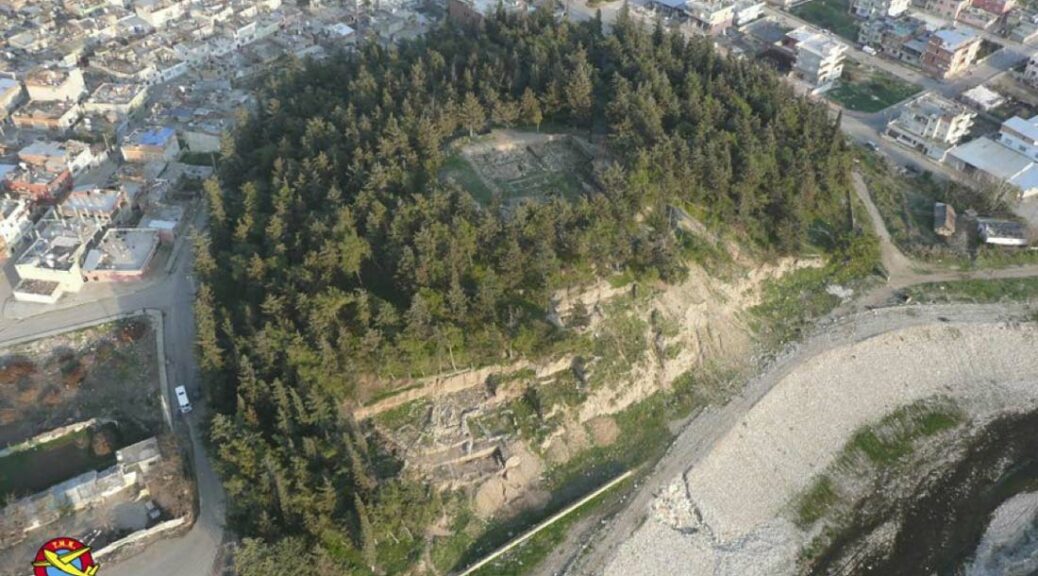
At the Yumuktepe mound in southern Turkey’s Mersin province, a fortress wall dating back 7000 years from the Chalcolithic period was unlodged.
Map of the Hittite Empire at its greatest extent, Mersin and the Yumuktepe mound is located on the southern coast
As an ongoing settlement 9,000 years since the neolithic era, the Yumuktepe Mound is extremely important.
Two and a half months of excavations at the mound are coming to an end on Friday.
In this year’s excavations, a group of 30 people led by Isabella Caneva-a professor of archeology at the University of Salento in Lecce, Italy – focused on Neolithic and Chalcolithic periods
Caneva said that the 7-meter fortress wall discovered this season can now be shown to the public.
A fortress wall dating 7,000 years back to the Chalcolithic Age has been unearthed at the Yumuktepe Mound in southern Turkey’s Mersin province.
While every year’s excavations have provided historical insights, this year’s dig produced especially “striking” Neolithic and Chalcolithic findings, Caneva said.
Caneva said the layer in Yumuktepe Mound is special in that it contains very special architecture.
Similar seal as to what was discovered at the Yumuktepe mound.
The fortress wall was made with a variety of materials, including a 1.5-meter-thick support wall made of limestone at the bottom, 2 meters of well-cut stones and 3 meters of mudbrick.
Previous excavations had discovered the existence of the castle, dating back to 5,000 B.C., but the team did not uncover the wall until this season’s deeper dig in the area.
“We didn’t know that there was such technology in that period in technical terms. Now we see it and it’s a special structure.
There was certainly a special product being made there because a normal village would not require such a thick and solid wall,” Caneva said, explaining that the village is the oldest site in the world known to produce molten copper.
“This is a very important product. Later on, there was a war for metal. It was an important technology and a valuable substance. Tools, flashy objects and weapons were all made with copper,” she said.
The team also discovered that homes in the Neolithic period were built in a certain way, continuously constructed on top of one another, for 2,000 years.
Caneva expressed hopes that the site will be developed into an open-air museum for visitors in the future.
Spanish Armor Plate Discovered in North Carolina, U.S.A
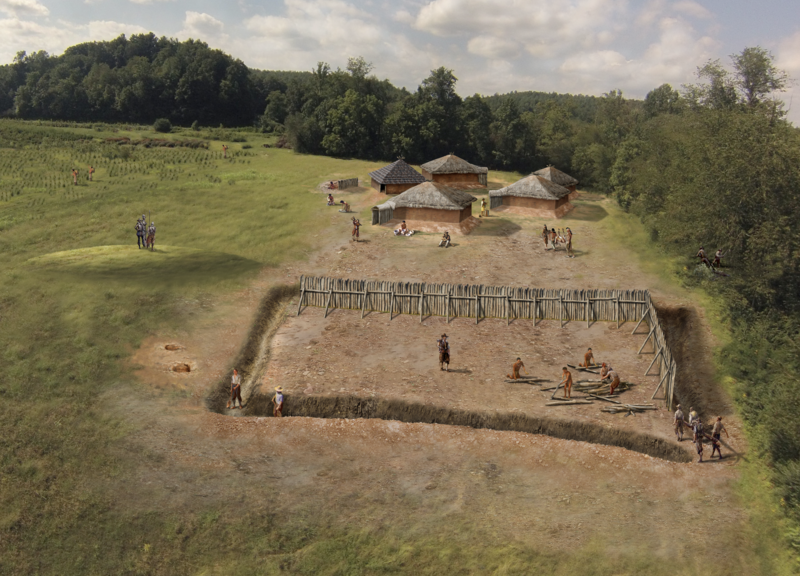
Spanish soldiers took over the Native city of Catwba, Joara, about 60 miles east of Asheville, on an excursion from Florida about 450 years ago.
Fort San Juan is the first known European settlement to be established in the south-east of the USA about fourteen years before the British came to Jamestown. In Appalachia, Spanish became the first European language.
The story of Spanish soldiers coming to Catawba is, like much of American colonial history, characterized by colonization and ethnocentrism.
David Moore, an archeology teacher at Warren Wilson College, said: “There’s this sense of who is the other,” For nearly three decades Moore has been the executive archeologist, who has been leading research and excavations at the Barry site. Fort San Juan was about the size of a modern-day basketball court. He says the remains of the structure are more intact than any other colonial fort in North America.
The site of the Spanish army’s Fort San Juan near Morganton.
“In effect, it’s 100 percent intact. We have the entire outline of it,” Moore said. “Unfortunately, plowing over the years has destroyed the upper levels of it, but it’s still far more intact than any other Spanish colonial fort. “
When Spanish explorer Captain Juan Pardo and his men arrived in 1566, they declared the Catawba Indians, who didn’t speak their language, new subjects of the king. The Spaniards forced the natives to construct the soldier’s homes and provide them meals. While the two groups lived side-by-side, the relationship was fraught by mounting mistrust and resentment.
“So this relationship of two groups understanding each other very poorly, trying to figure out what to do with the other was constantly in the air,” Moore said.
The tension ultimately propelled the Catawba to force the Spanish army out, changing the course of American history. The absence of the Spaniards allowed for English colonists to move inland and take their place. It’s how the English language gained a foothold in the region.
“That colonial experience continued to be detrimental for native peoples,” Moore said. “The effects of the slave trade, of diseases, and of the political, economic and social disruption of tribal groups that ended up collapsing a social and political system that had been in place for nearly a thousand years.”
There’s one particular artifact Moore’s team found that offers a snapshot of the Spaniards’ suspicion — and superstition.
“We found a small piece of scrap metal, almost square in shape, and about an inch and a half in diameter,” Moore said. They discovered it was a small plate of armor, the kind that was sewn into garments during the medieval period. It was placed vertically in the soil, next to a post in the framework of a Spanish soldier’s house.
A vest lined with a jack of plate armor believed to be English or Scottish, from 1590.
Moore and his team were perplexed by the armor until one historian reached out offering multiple references in Medieval European literature. Metal objects were commonly placed in the frames of homes to fend off black magic.
“A Spanish soldier had placed this in the building to ward off witches, especially because Indian women were feeding them,” Moore said. “Many people think of native peoples being uncivilized, but here we have modern Europeans employing this kind of folklore to ward off magic.
That wasn’t lost on Catawba Indian Beckee Garris when she first learned about the Spaniard’s supernatural object. “I kind of laughed, because, in all cultures, there’s a bad person, or a particularly bad spirit, if you want to call it that,” Garris said.
Garris is a storyteller. She also makes Catawba pottery, much like the fragments scattered across the archaeological site. Garris says she makes pots the same way her ancestors did 500 years ago — without a kiln and with clay harvested from the same spot.
“It not only touches my heart, but it also touches my soul that our buried history is coming to light again. We are learning about ourselves now as well about our past,” Garris said. “Before European contact, there was no written history. Everything was passed down orally, and you had to hide who you were because of prejudices and laws that were made by the government.”
David Moore shows WCU students a rendering of the Spanish fort during a visit to the excavation site in September.
Bringing visibility to these early American stories still is a work in progress. The English settlers’ arrival in Jamestown exactly 400 years ago is commonly seen as the beginning of European colonization in the US.
“This is something that we struggle within the US. White folks are not the first folks to have been here,” Paul Worley, Western Carolina University associate professor of global literature, said. He recently took students from Latinx Studies composition and literature classes to the excavation site.
“Given the current moment in the United States, I think it’s a fairly radical thing to go back and talk about these histories,” Worley said. “Both on the Native American side and both on the Spanish colonial side. Because these are both histories that are frequently denied or ignored altogether.”
Worley wants students to think about US history from a multicultural and multilingual perspective – to consider writings from Spanish explorers, Native Americans and enslaved Africans. And maybe, he says, resurrecting those narratives will reframe the retelling of America’s story, both past, and present.
For the archaeologist, there are still lessons to be learned from the Joara-Fort San Juan site. “450 years ago this tragedy unfolds because people don’t acknowledge the humanness of each other. That’s certainly a lesson we’re still trying to learn today,” David Moore said.
Well-Preserved Byzantine Church Uncovered in Israel
The Church of the Byzantine Age was discovered by Israeli archeologists on Wednesday in a neighborhood west of Jerusalem.
The Israel Antiquities Authority showed some of the objects of the almost 1.500-year-old church after three years of excavations.
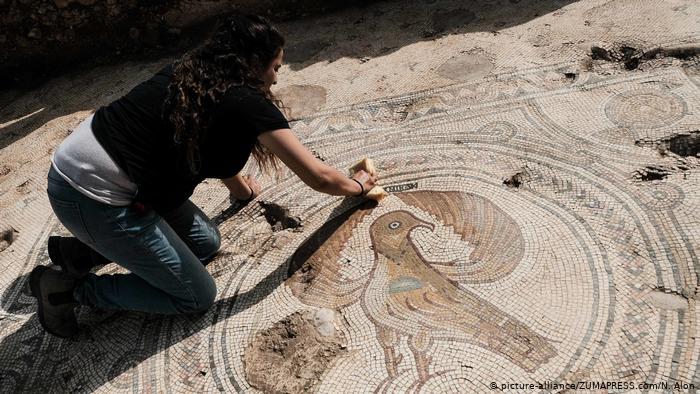
During this discovery, scientists found many sophisticated mosaics depicting birds, fruit and plants and vivid frescoes on the church walls.
The church was also elaborately designed, including a marble chancel and a calcite flowstone baptismal.
One floor mosaic contains an eagle, a symbol of the Byzantine Empire.
“We know of a few hundred churches in the Holy Land but this church by far surpasses most of them by its state of preservation and the imperial involvement which funded it,” said Benjamin Storchan, the excavation’s director.
One of the Greek inscriptions said the church was dedicated to an unnamed ‘glorious martyr’
Mystery martyr
An inscription in the courtyard says the site is dedicated to a “glorious martyr,” although researchers are still puzzling over their identity.
An underground crypt below the main area of the church is believed to have contained the martyr’s remains.
“The martyr’s identity is not known, but the exceptional opulence of the structure and its inscriptions indicate that this person was an important figure,” Storchan said.
The site was likely a popular destination for pilgrims and was well-funded by the Byzantine empire
Another inscription on the site revealed that Byzantine emperor Tiberius II Constantinus helped fund the church’s expansion.
Researchers believe the site was likely a popular destination for pilgrims until it was abandoned during the Muslim Abbasid caliphate in the 9th century AD.
Following the collapse of the Byzantine Empire, the entrances to the church were sealed with large stones.
Excavators were able to move the heavy stones, revealing glass lamps and a piece of the vault where the nameless martyr is believed to have been buried.
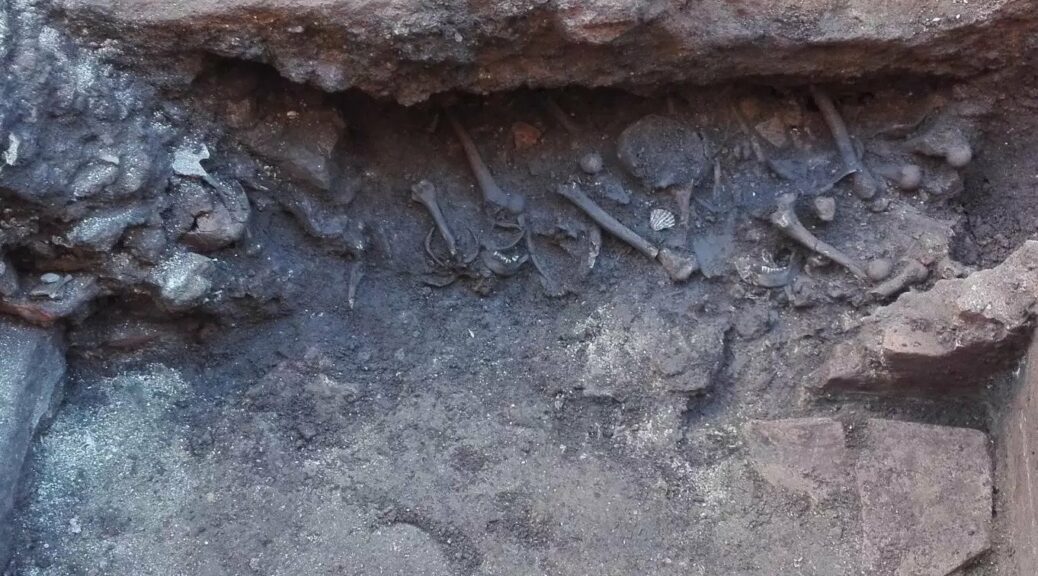
ROME, ITALY—BBC reports that medieval burials were unearthed during utility work on the Via del Governo Vecchio in central Rome.
The graves had been damaged by previous construction projects.
According to Archeological Superintendence the city found two graves dating from the Middle Ages during gas works on Via del Governo Vecchio in the center of Rome, a road near Piazza Navona.
The first tomb, partially destroyed by gas and sewage pipes, contained two human skeletons: one belonging to a woman (25-30 years) with a shell in her hand, and a man (30-40 years).
Besides the female skeleton is a bronze coin dating from the late 11th and 12th centuries, and other fragments of shells.
The second burial site consists of several graves set against a brick wall thought to be associated with the Church of St. Cecilia at Monte Giordano, which was built in A.D. 1123 and demolished in the early seventeenth century.
The second tomb, particularly damaged by modern-day infrastructural works, comprises a cemetery area with dividing sections against a brickwork wall whose graves appear to date to Mediaeval times.
The scallop shells found next to the skeletons contain two holes suggesting their use as necklaces traditionally worn by the pilgrims in the Middle Ages.
These elements lead experts to believe the find was a cemetery for pilgrims, located along the ancient Via Papalis pilgrimage route to St Peter’s.
The burial chambers probably belonged to the medieval Church of S. Cecilia at Monte Giordano, whose origins date back to 1123 but which was demolished in the first half of the 17th century to make space for the Oratorio dei Filippini designed by Francesco Borromini.
Ornately-tattooed 3,000-year-old mummy discovered by archaeologists
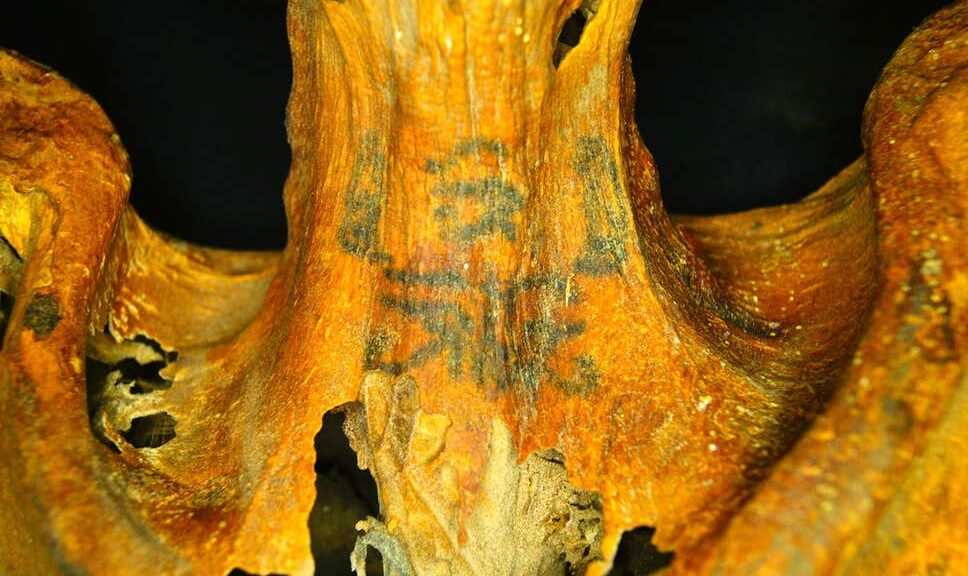
In 2016, an ancient Egyptian mummy with symbolic tattoos was discovered by a team of archeologists, they thought were first of their kind.
The 3000-year-old mummified woman was tattooed with various symbols, including cows, lotus and divine eyes, which could represent her religious status or practices.
It was the first time that researchers had an Egyptian mummy with tattoos showing recognizable objects rather than abstract patterns and designs that made this discovery significant!
The mummy, as the team pointed out, was uncovered at a site near the western bank of River Nile.
Between 1550 BC and 1080 BC, the area was home to a village, known as Deir el-Medina, which was populated by the artisans and workers responsible for building the royal tombs of the Valley of the Kings.
It was while examining the skeletal remains at the Deir el-Medina site that Stanford bioarchaeologist Anne Austin, who was working at the time for the French Institute of Oriental Archaeology, first stumbled upon the fascinating symbols on the mummy’s neck.
She initially thought the markings had been drawn on the woman’s neck.
As Austin explained, it was customary in ancient Egypt to put amulets around the deceased’s neck for burial.
At times, the amulets were simply painted or even tattooed on the torso, as was probably the case with this mummy.
According to the team, further analysis using infrared scanning revealed a bunch of other markings that were quite possibly intended as permanent skin adornments than just ritualistic designs.
Along with archaeologist Cédric Gobeil, Austin cataloged over dozens of these symbols, some of which had clear religious significance. Speaking about the find, Austin said at the time:
As we started to analyze the markings on the arms, we realized that these markings were shrunken and distorted. Therefore, they must have been made prior to mummification… Several are associated with the goddess Hathor, such as cows with special necklaces. Others — such as snakes placed on the upper arms — are also associated with female deities in ancient Egypt.
Wadjet eyes, which are basically divine eyes representing God’s protection, were tattooed all over the mummy’s neck, shoulders, and back.
Along the mummified female’s neck, these marks might have also pertained to what are known as nefer symbols, or “the sign of beauty and goodness”. Austin said:
At the nearby site of Deir el-Bahri, the combination of the Wadjet and nefer have been interpreted as a formula for the phrase ‘to do good.
As the researchers pointed out, the tattoos’ position along the mummy’s throat (as in voice box) seems to suggest that the woman invoked the power to do good, every time she spoke or sang.
The discovery, according to Austin, alluded to the symbolic nature and role of tattooing in ancient Egypt. She went on to say:
Interestingly, all of the tattoos found so far have been exclusively on women, though we are curious to see if that trend continues as more tattoos are identified.
And finally, in case you are wondering, in spite of these particular set of tattoos being around 3000-years old, they are not the oldest known tattoos ever discovered by archaeologists.
That honor actually belongs to the 5300-years old Ötzi the Iceman, who was found quite unintentionally by a group of hikers in 1991 in the Oetztal Alps (in modern-day north Italy).
Ancient City of ‘Mahendraparvata’ Hidden Beneath Cambodian Jungle
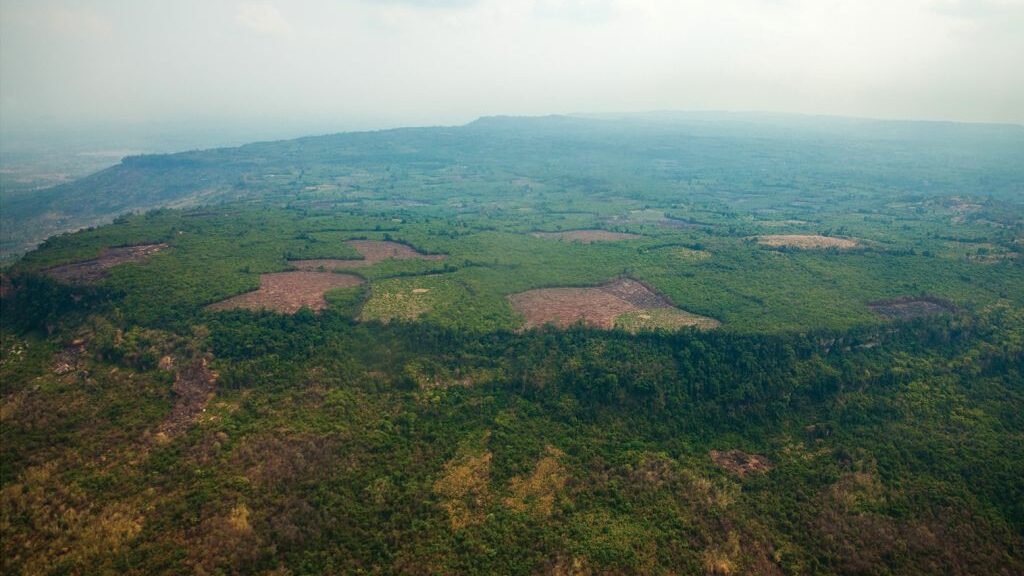
The “lost city of Cambodia” was eventually rediscovered by researchers. The city was officially called Mahendraparvata and was the first capital of the Angkorian Empire–a Hindu Buddhist empire that had been in Southeast Asia from the 9th to the 15th centuries.
Although archeologists and historians have been aware of several decades of the old city of Mahendraparvata, they did not know exactly where it stood before now.
The international research team was able to locate the old lost town under the Cambodian Jungle, thanks to laser scanning (or lidar) and ground surveys.
Angkor
More precisely, the city was found in the Phnom Kulen plateau which is located to the north-east of Angkor.
According to their paper, “The mountainous region of Phnom Kulen has, to date, received strikingly little attention.”
It went on to read, “It is almost entirely missing from archaeological maps, except as a scatter of points denoting the remains of some brick temples.”The researchers went into further details on their findings in their paper which can be read in full here.
Between 2012 and 2017, the team conducted several Lidar survey flights over that area and were able to find numerous archaeological features that hadn’t been noticed during the ground surveys.
The researchers used light detection and ranging, or lidar, to create maps of Mahendraparvata.
They noticed several features from the lost city that was around 50 square kilometers and were laid out in a grid-like pattern of linear axes.
The researchers explained it further by stating, “Dams, reservoir walls and the enclosure walls of temples, neighborhoods and even the royal palace abut or coincide with the embanked linear features.”
A map showing the study area.
Jean-Baptiste Chevance, who is from the Archaeology and Development Foundation in the UK as well as the first author of the paper, told Newsweek, “The Ancient Khmer modified the landscape, shaping features on a very large scale – ponds, reservoirs, canals, roads, temples, rice fields, et cetera.”
He went on to say, “However, the dense forest often covering the areas of interest is the main constraint to investigating them.”
While the city was designed in an elaborate and sophisticated way, it did not last long as the Khmer Empire moved its important operations to Angkor which was their new capital city.
Team member Damian Evans, who is from the French School of the Far East, told New Scientist, “The city may not have lasted for centuries, or perhaps even decades,” adding, “But the cultural and religious significance of the place has lasted right up until the present day.”
An aerial view of Mahendraparvata as well as a photo of a temple site can be seen here.
8,000-Year-Old Pearl, Found In Abu Dhabi, Is World’s Oldest.
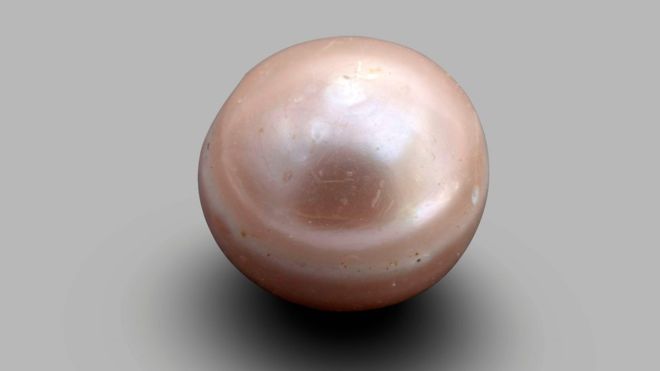
An 8,000-year-old pearl that archaeologists say is the worlds oldest will be displayed in Abu Dhabi, according to authorities who said Sunday it is proof the objects have been traded since Neolithic times.
Dubbed the ‘Abu Dhabi Pearl’, it was found in layers carbon-dated to 5800-5600 BCE, during the Neolithic period.
This finding proves that pearls and oysters have been used in the UAE nearly 8,000 years ago and is the first confirmed evidence of pearling discovered anywhere in the world.
The small pearl was found in the floor of a room during excavations at Marawah Island
The Abu Dhabi Pearl, on loan from the Zayed National Museum collection, will feature in the special exhibition 10,000 Years of Luxury, taking place at Louvre Abu Dhabi from October 30, 2019, to February 18, 2020.
Mohamed Khalifa Al Mubarak, Chairman of DCT Abu Dhabi, said: “The Abu Dhabi Pearl is a stunning find, testimony to the ancient origins of our engagement with the sea.
The discovery of the oldest pearl in the world in Abu Dhabi makes it clear that so much of our recent economic and cultural history has deep roots that stretch back to the dawn of prehistory.
Marawah Island is one of our most valuable archaeological sites, and excavations continue in the hope of discovering even more evidence of how our ancestors lived, worked and thrived.”
Prior to the Abu Dhabi Pearl discovery, the earliest known pearl in the UAE was uncovered at a Neolithic site in Umm al-Quwain.
Ancient pearls from the same time have also been found at a Neolithic cemetery close to Jebel Buhais in the emirate of Sharjah. The carbon dating indicates that Abu Dhabi Pearl is older than both these discoveries.
Aside from the priceless Abu Dhabi Pearl, significant finds from the Marawah site have included an imported ceramic vase, beautifully worked flint arrowheads and shell and stone beads.
Numerous painted plaster vessel fragments were also discovered and represent the earliest known decorative art yet discovered in the UAE. At the beginning of 2020, a major new excavation will take place at the site to further uncover its secrets.
Experts have suggested that ancient pearls were possibly traded with Mesopotamia (ancient Iraq) in exchange for highly-decorated ceramics and other goods. Pearls were also likely worn as jewellery by the local population, as indicated by the finds at Jebel Buhais in Sharjah.
The art of pearling required in-depth knowledge of pearl beds and their locations and expert seafaring skills.
Once these were mastered by the ancient inhabitants of Marawah, pearling was to remain a mainstay of the UAE’s economy for millennia.
The Venetian jewel merchant Gasparo Balbi, who travelled through the region, mentions the islands off the coast of Abu Dhabi as a source of pearls in the 16th century. The industry flourished until the 1930s.