A papal bull discovered in a former cemetery dated to the 14th century
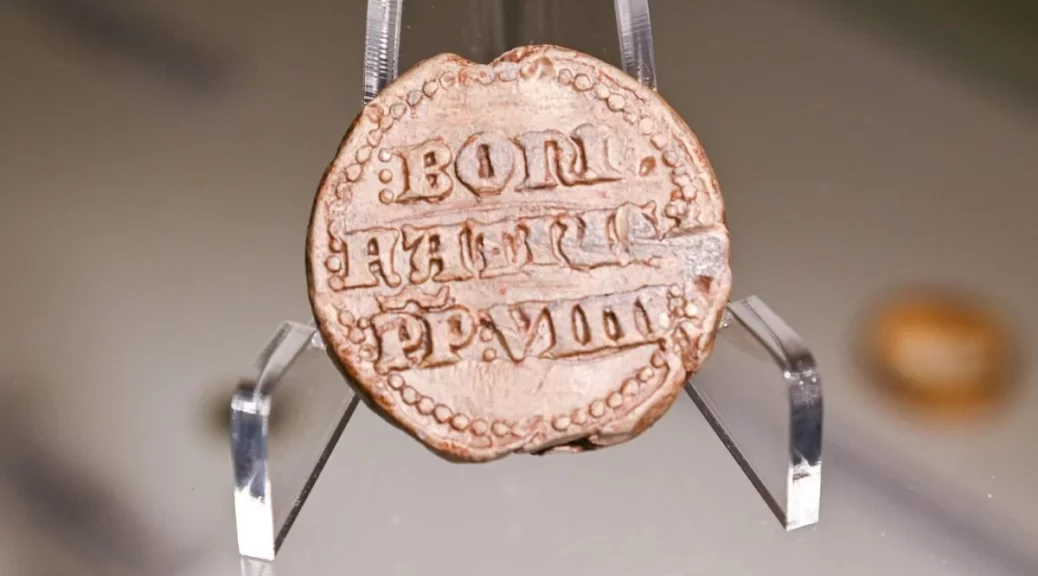
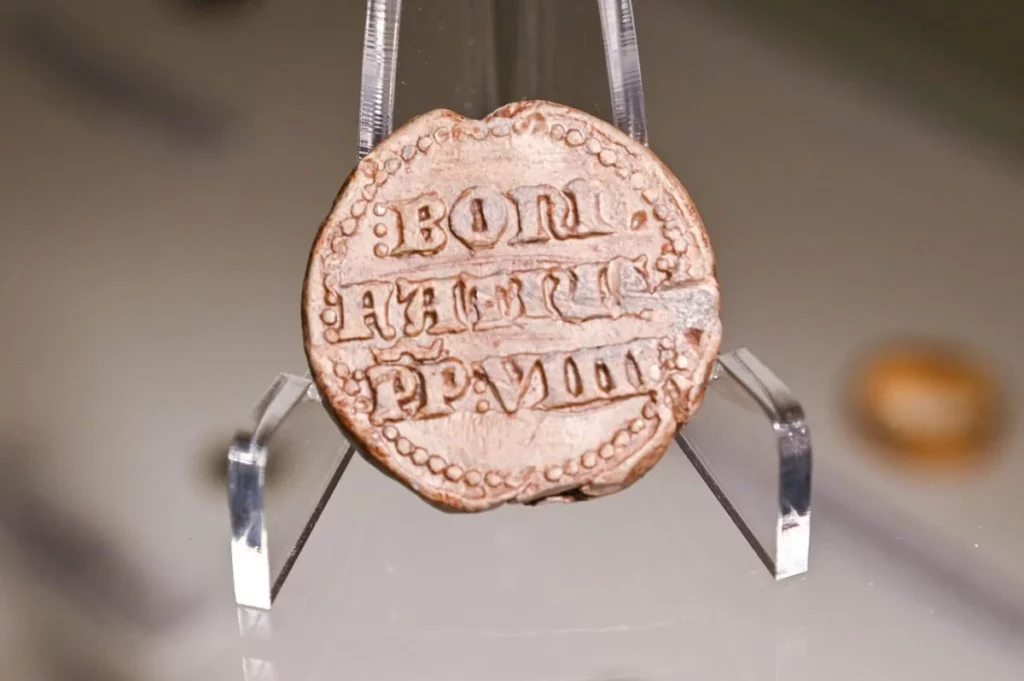
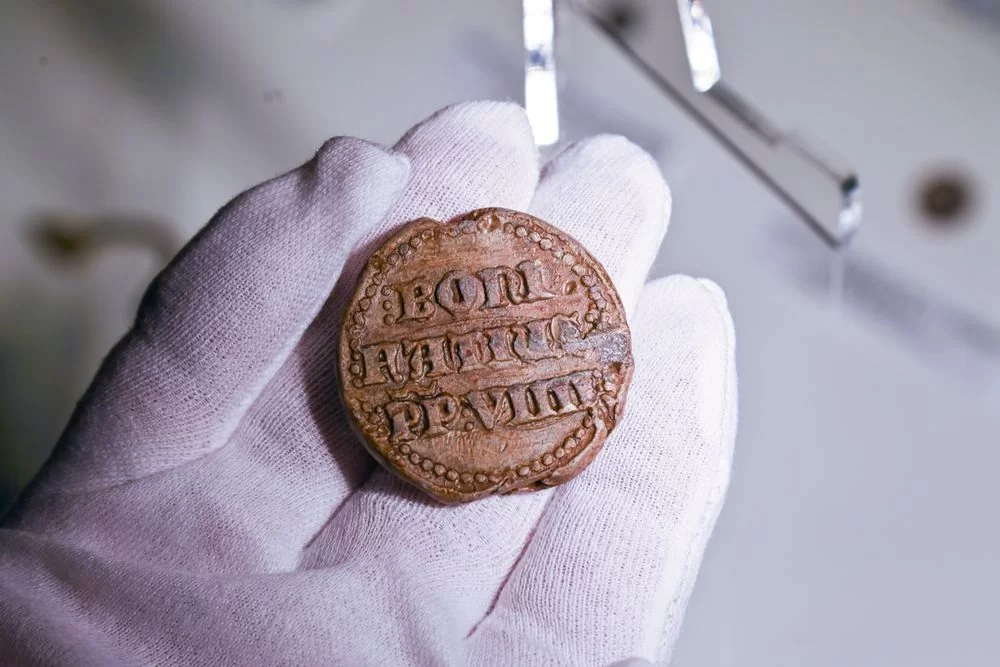
A medieval bull found in 2021 in Budzistów village (Kołobrzeg district), Poland has been restored and placed on display in the Museum of Arms in Kołobrzeg.
Found by the PARSĘTA Exploration & Search Group two years back, the decree was uncovered in the area of the former cemetery in Budzistowo.
“This is the most valuable find we have made in our six years of existence,” said Jan Orliński from the PARSĘTA Exploration and Search Group.
Continuing, Orliński added: “I’ve always been interested in papal bulls and I was intrigued as to why there was nothing like that in Kołobrzeg… When I saw what I had found, I was really excited.”
The group immediately recognized what it was and handed it over to the Museum of Arms in Koobrzeg, with whom they had been working for several years. It was then transported to a specialist workshop in Kraków for a meticulous conservation process.
Dating from the 14th century, the papal bull was found in 2021 in a former cemetery by the PARSĘTA Exploration & Search Group.
It was during this that scientists determined that it dated from the reign of Pope Boniface IX (1350-1404).
Dr. Robert Dziemba, the head of the Kołobrzeg History Department, said: “By studying the physio-chemical compositions of the bull, we were able to find it was original.
The most important thing for us was the reverse as it contained information as to which Pope issued the decree. Because of this, we now know that it was issued by Pope Boniface IX.”
Dziemba added: “Even the most interesting artifacts take on a different meaning when they are placed in the right historical context. We knew we had made a great discovery, but we wanted to establish its links to Kołobrzeg.”
According to historians, the bull was possibly kept in the Budzistowo monastery. Chemical compounds used in its manufacture, which were mostly pure lead, were traced to Sardinia, Cyprus, Greece, and Spain.
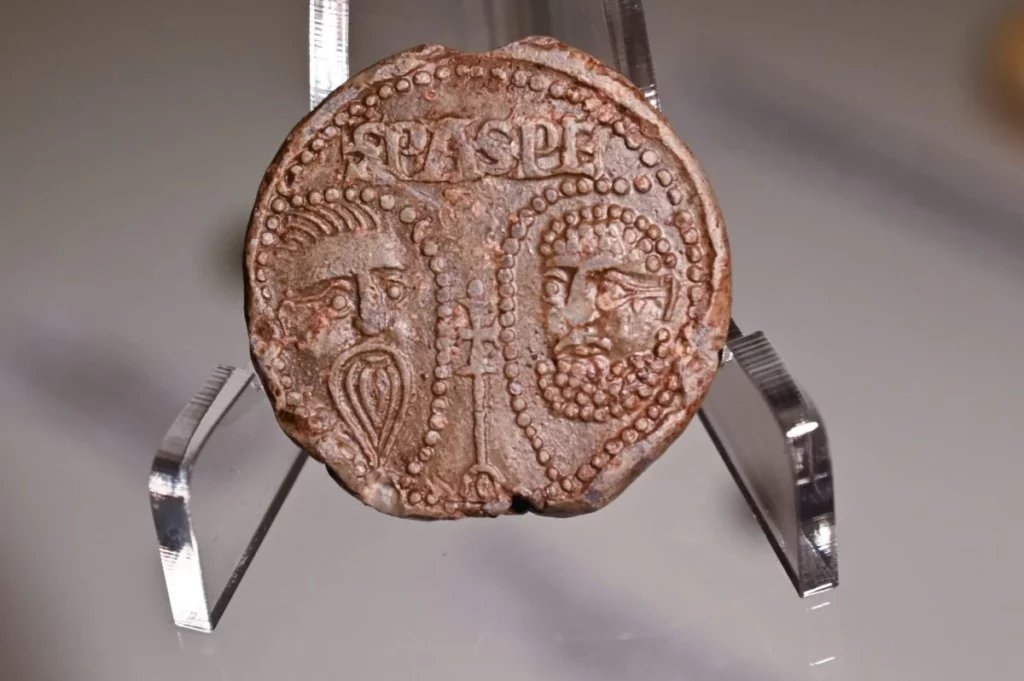
The bull also features the images of Saint Peter and Saint Paul.
The bull’s potential connections to the former monastery in Budzistowo, though, have piqued researchers’ interest. It was Johann Friederich Wachsen who noted that Pope Boniface IX granted a letter of indulgence to the resident Benedictine nuns in 1397, according to the chronicles he wrote in the 18th century.
Usually attached by silk strings, papal bulls were hung on parchment and scrolls on which papal edicts, privileges, and indulgences were written as a means of authentication. Also featuring images of Saint Peter and Saint Paul, Dziemba speculates that this particular papal bull may have been lost in the 16th century.
Archaeologists in Turkey have discovered an unusual mosaic. It depicts a mythological hero from Troy
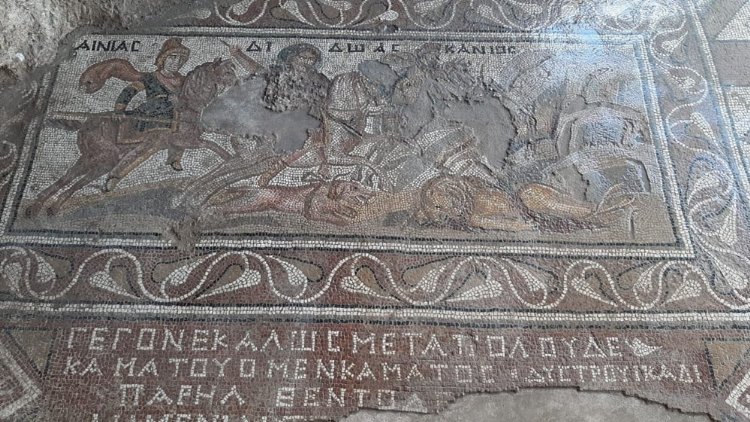
A large mosaic depicting the legendary Trojan hero Aeneas, the protagonist of Virgil’s epic poem “The Aeneid” and the ancestor of the Roman people, has been unearthed in the southern Turkish city of Osmaniye.
The mosaic was discovered during a foundation excavation of a construction site revealing the remains of a Roman villa.
There is no other example of this mosaic in the world, according to the experts. The mosaic area is thought to have been built in the first and second centuries A.D. to adorn the floor of a villa from that time period.
Cezmi Yurtsever, a historian and an author, described the Aeneas mosaic as “unique in the world.”
“In 2015, it was announced that historical artifacts and mosaics were found on the floor of a building in the center of Kadirli district. Then many archaeologists came here and carried out excavations in the area.
During these excavations, mosaic scenes were found on the floor of the building. In one scene, a warrior was riding a horse holding a spear, and there was a woman depiction with the inscription of Dido, the reputed founder of Carthage, who was going on a lion hunt with the warrior.
The name of this warrior is Aeneas, a great Trojan hero. He was an important figure after Hector, the prince of Troy,” he said.
Yurtsever also noted that the scene depicting Aeneas fighting with Leon was discovered in the same area.
“This place was the ancient Flaviapolis city built during the Roman era and according to our determinations, this mosaic was made in the A.D. 3rd century. For this, after the Trojan War, about 1,500 years ago, the discovery of a mosaic in the ancient Flaviapolis city during the Roman period depicting a hero of the Trojan War is a peerless discovery for archeology and history.”
Aeneas is a legendary Trojan hero in Greek and Roman mythology. According to legend, Aeneas was a Trojan prince and a son of the goddess Aphrodite (Venus in Roman mythology).
During the Trojan War, Aeneas fought on the side of the Trojans and was one of the few Trojan warriors to survive the fall of Troy. After the war, he led a group of Trojan on a long journey, eventually landing in Italy where he founded the city of Lavinium.
Aeneas is best known as the protagonist of Virgil’s epic poem, the Aeneid, which tells the story of his journey and the founding of Rome.
1,500-year-old secret underground passage uncovered in Istanbul
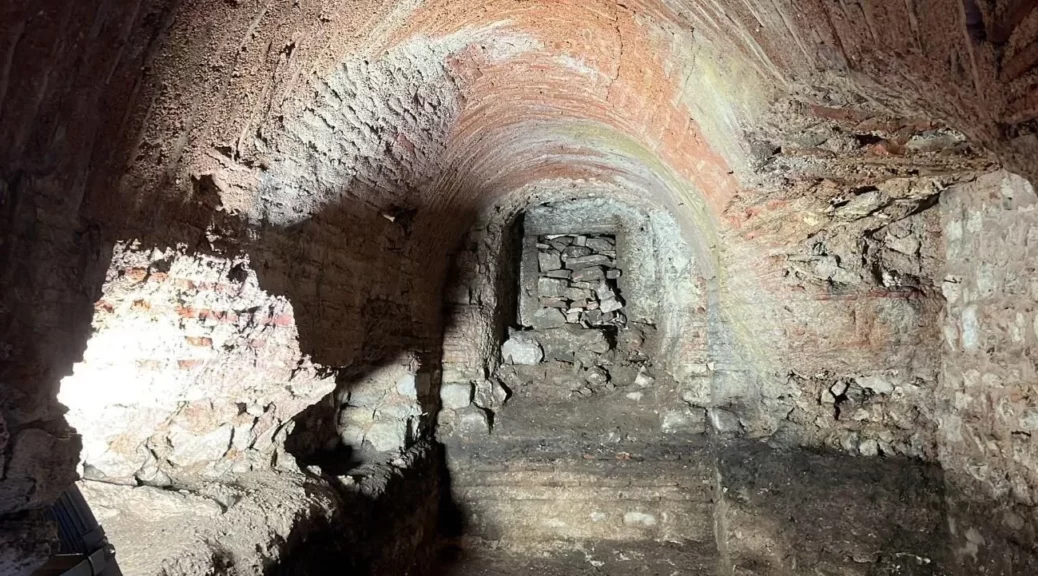
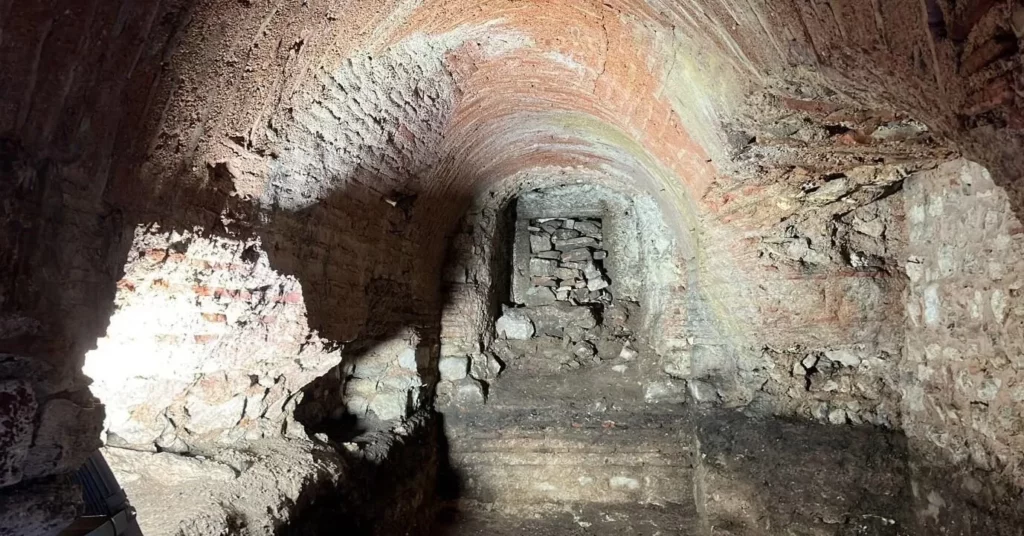
During the ongoing excavations in the ruins of Saint Polyeuktos Church in Istanbul’s Saraçhane neighborhood, which was destroyed during the Latin invasion, a 1,500-year-old underground passage has been discovered.
A previously unknown underground passage about 20 meters (65 feet) from the nearby Haşim Işçan Passage was discovered.
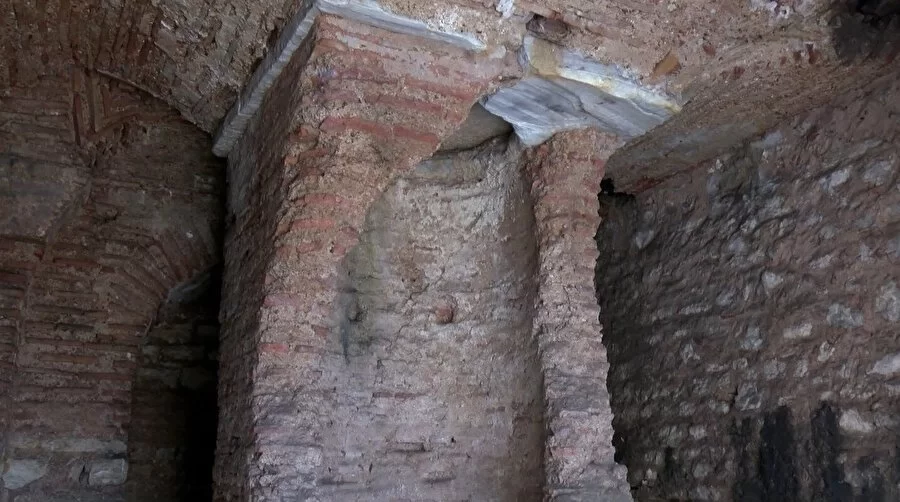
The carved marble blocks and reliefs in the underground passage, which contains mosaics and stone inlays, have impressed researchers.
Mahir Polat, Deputy Secretary-General of the Istanbul Metropolitan Municipality (IBB), stated that the structure is an excellent example of the city’s architecture that has withstood the test of time and the wrath of earthquakes.
“What is one of the most important aspects of this discovery of a 1,500-year-old passage? Dozens of tremors have passed in these 1,500 years in Istanbul, which is currently struggling with earthquake risk.
This structure has managed to survive all these earthquakes. Türkiye should learn the secret and have knowledge of this,” Polat explained.
The 1,500-year-old underground tunnels discovered in Istanbul, Türkiye. Photo: DHA Photo
Polat pointed out that the main structure of St. Polyeuktos was destroyed, but its infrastructure remains intact.
“The earthquake memory of the city is also here. If you want to see Istanbul’s earthquake memory, what happened in the Fatih district is a good example,” he added.
Reminding that civil engineers and scientific consultants who specialize in earthquakes also assisted in the municipality’s excavation works, Polat stated that the experts would also share a report documenting the earthquakes the area witnessed in the past.
“The mortar with a mixture known as Horasan mortar from the period.
We know it is important in terms of the technology of that period.
We also examined the surface samples of the structure, such as stone, plaster, and possible gypsum, in the laboratory to determine their composition and archaeometry,” Polat added.
During the excavation works in the area, apart from the statue, the teams also found 681 bronze coins, stamped bricks, marble pieces, ceramics, oil lamps, glass, and metal artifacts.
Storms uncover precious marble cargo from a 1,800-year-old Mediterranean shipwreck in Israel
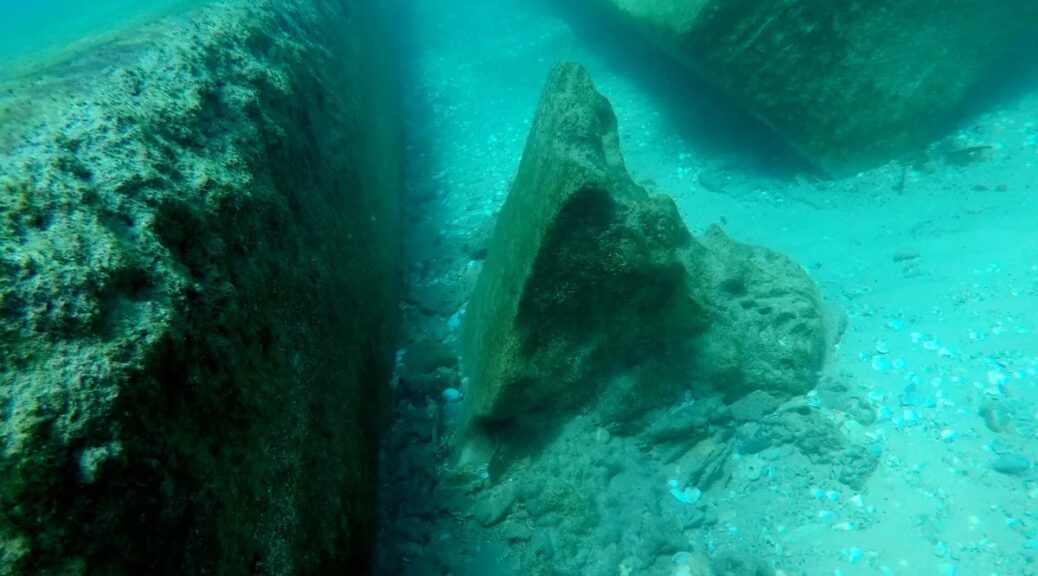
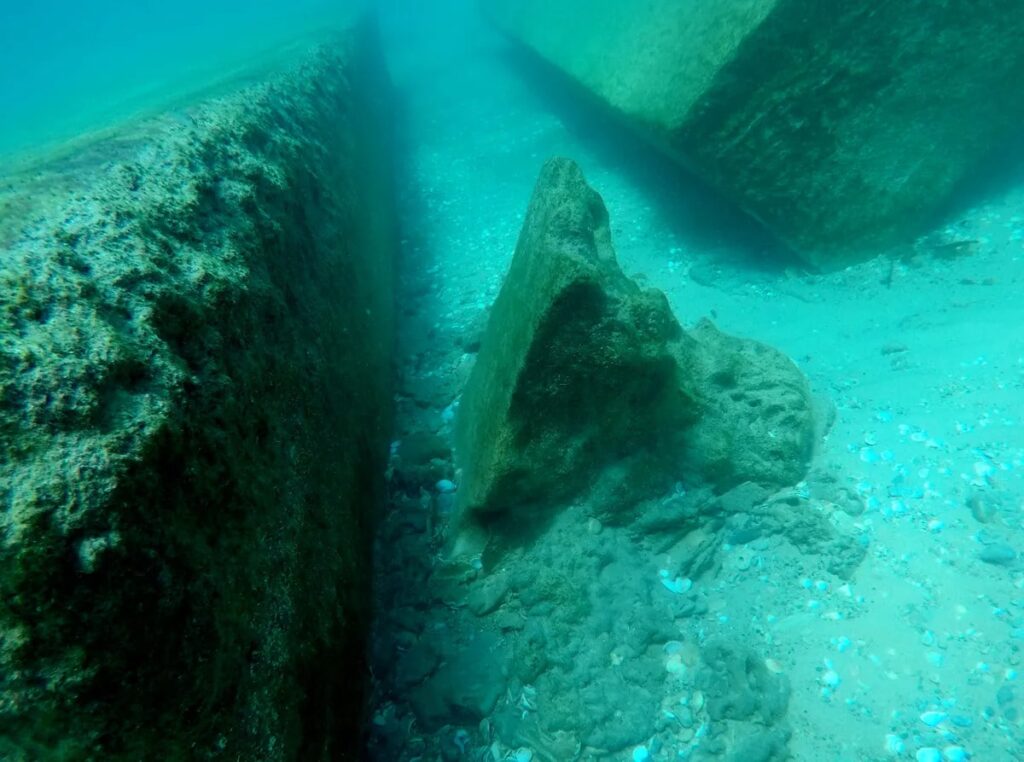
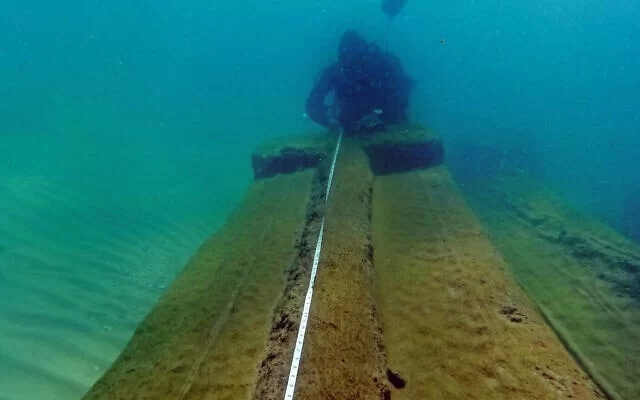
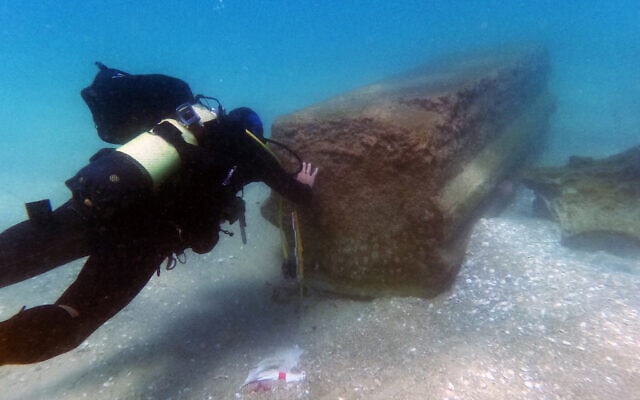
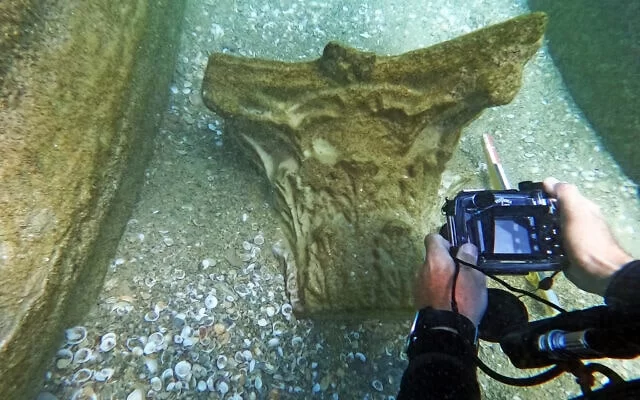
Numerous rare marble artifacts have been found at the site of a 1,800-year-old shipwreck in shallow waters just 200 meters off the coast of the Israeli coastal town of Beit Yanai.
Approximately three weeks ago while swimming, recreational sea swimmer Gideon Harris took a dive of about four meters and stumbled upon a treasure trove of marble columns.
This is the oldest sea cargo of its kind ever discovered in the Eastern Mediterranean, dating back to the time of the Roman Empire.
The huge haul includes approximately 44 tons of Roman-period marble architectural pieces, the Israel Antiquities Authority (IAA) said in a statement.
The raw materials were most likely from Turkey and were on their way to a port in the southern Holy Land; archaeologists hope to find ship wood remains during excavations next week.
The marble blocks may have been intended to become part of an elaborate public building—perhaps a temple or theater.
An Israel Antiquities Authority archaeologist checks out pieces of 1,800-year-old marble from a shipwreck off the shore of Beit Yanai in central Israel. Photo: Israel Antiquities Authority’s Theft Prevention Unit
The IAA believes that this shipwrecked cargo, which was exposed during winter storms that swept away centuries of sand, is the oldest of its kind known in the Eastern Mediterranean.
The merchant ship was probably destined for a port along the coast of the southern Levant, but ran into trouble en route, Koby Sharvit, director of the underwater archaeology unit at the IAA, said in the statement.
Initial underwater site investigations have uncovered decorated Corinthian capitals, additional partially carved capitals, as well as a massive 6-meter marble architrave or door lintel in the ship’s hold.
An Israel Antiquities Authority archaeologist checks out pieces of 1,800-year-old marble from a shipwreck off the shore of Beit Yanai in central Israel. Photo: Israel Antiquities Authority’s Theft Prevention Unit
“From the size of the architectural elements, we can calculate the dimensions of the ship; we are talking about a merchant ship that could bear a cargo of at least 200 tons,” said Sharvit.
“These fine pieces are characteristic of large-scale, majestic public buildings. Even in Roman Caesarea, such architectural elements were made of local stone covered with white plaster to appear like marble. Here we are talking about genuine marble,” Sharvit explains.
Sharvit, the IAA’s underwater archaeology unit director, confirmed that there are no visible remains of the ship on the sea floor. He stated that the IAA will begin an underwater excavation with students from the University of Rhode Island next week in the hopes of discovering waterlogged wood from beneath the massive marble blocks, or a nearby underwater sand dune that may have buried and preserved parts of the ship.
Photo: Israel Antiquities Authority’s Theft Prevention Unit
A 3,000-year-old Egyptian figurine sensationally unearthed in a former SS hospital
The figurine is part of a long-lost collection of antiquities that has been the subject of a search by specialists for decades.
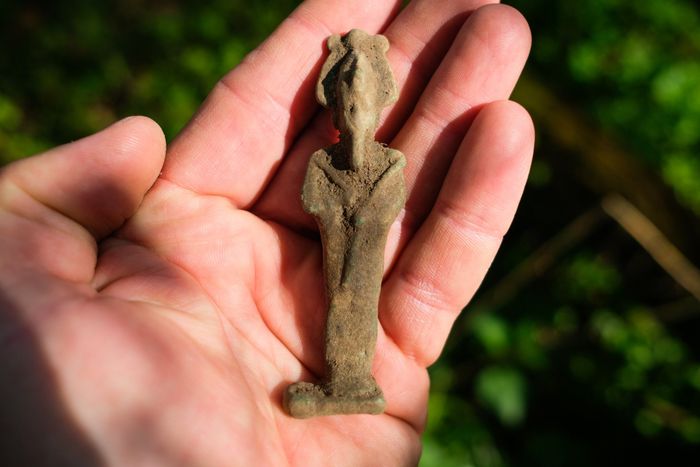
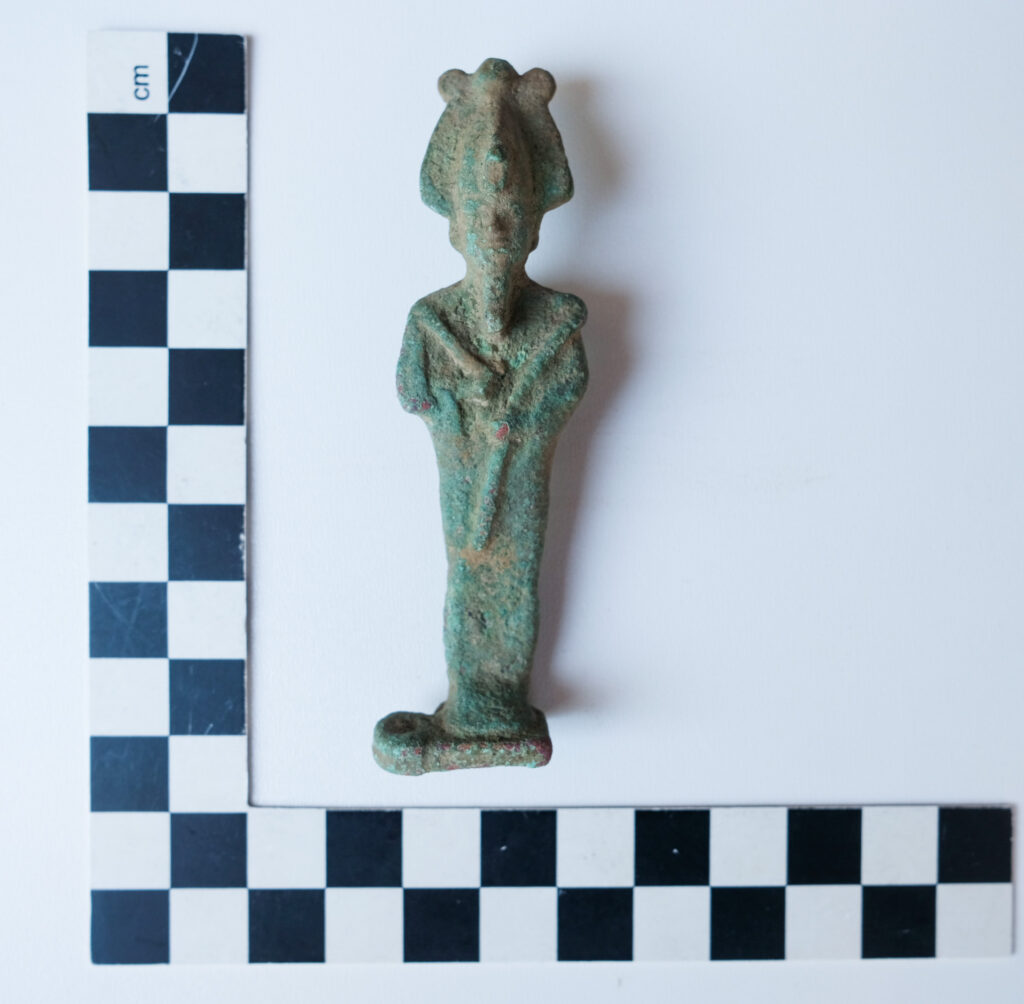
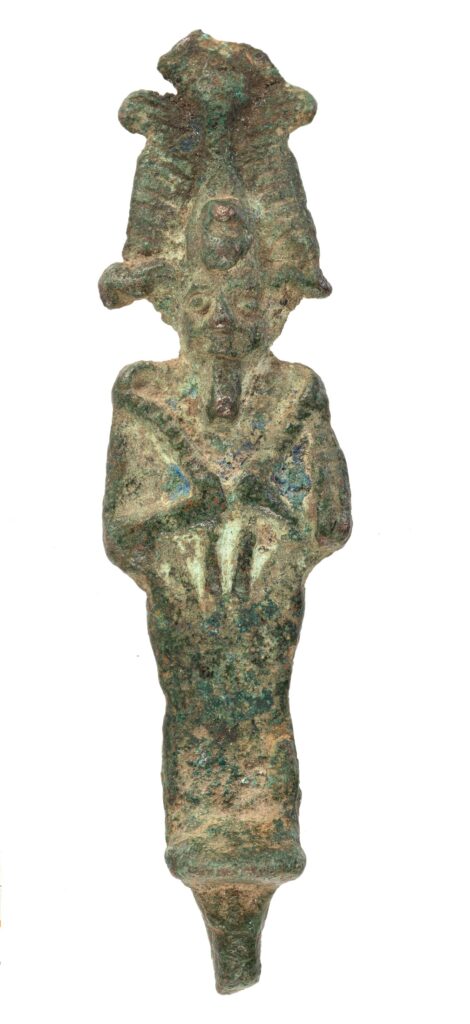
In a stunning discovery, a three-thousand-year-old ancient Egyptian figurine of the god Osiris has been unearthed in a former Nazi SS hospital in the Lublin province. The figurine is part of a long-lost collection of antiquities that have been the subject of a search by specialists for decades.
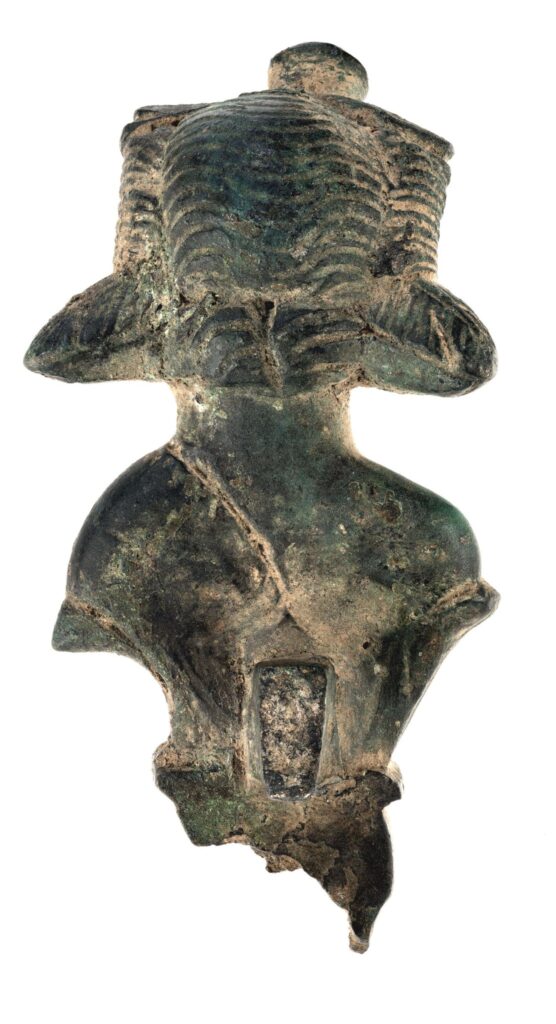
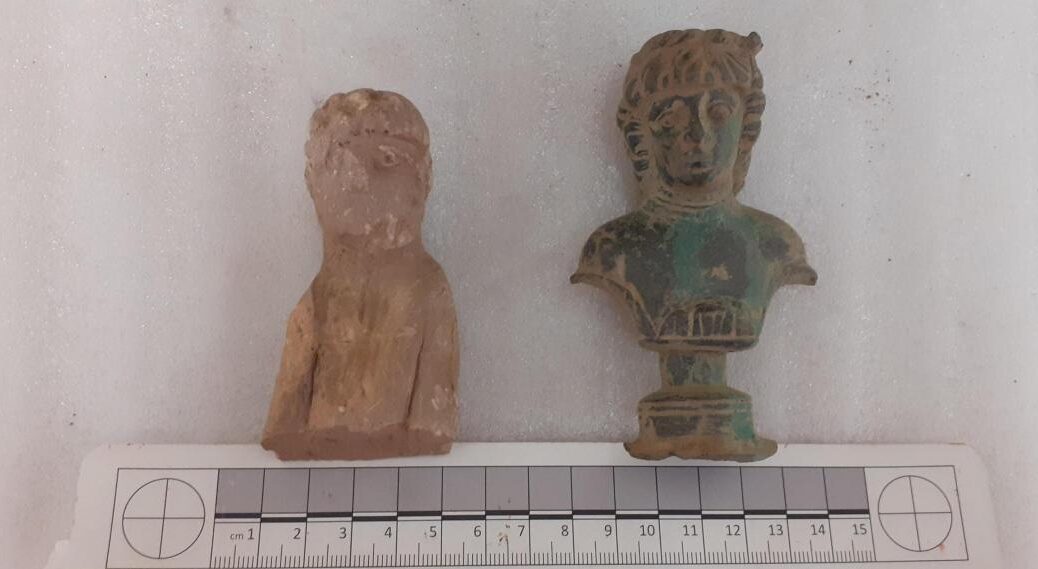
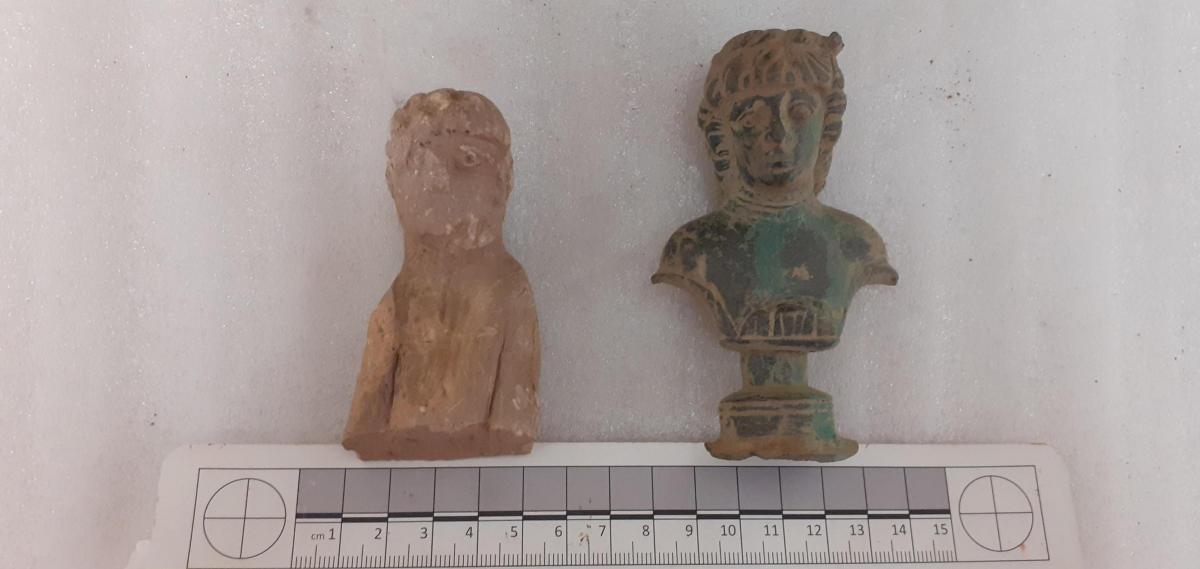
In the village of Kluczkowice about 30 km west of Lublin, researchers found two figurines depicting Osiris, the Egyptian god of death. The researchers also discovered a bust of Bacchus, who, according to Roman mythology, was the god of wine.
Researchers also discovered a bust of Bacchus, who, according to Roman mythology, was the god of wine.
Finding ancient Egyptian and Roman antiquities in Poland is highly unusual. Therefore, after the discovery last year, the objects needed to be thoroughly analyzed.
“Such an unprecedented find in our area raised doubts about the authenticity of the relics,” the Lublin voivodeship heritage protection office reported.
A few days ago the heritage protection specialists were finally able to announce the discovery as genuine.
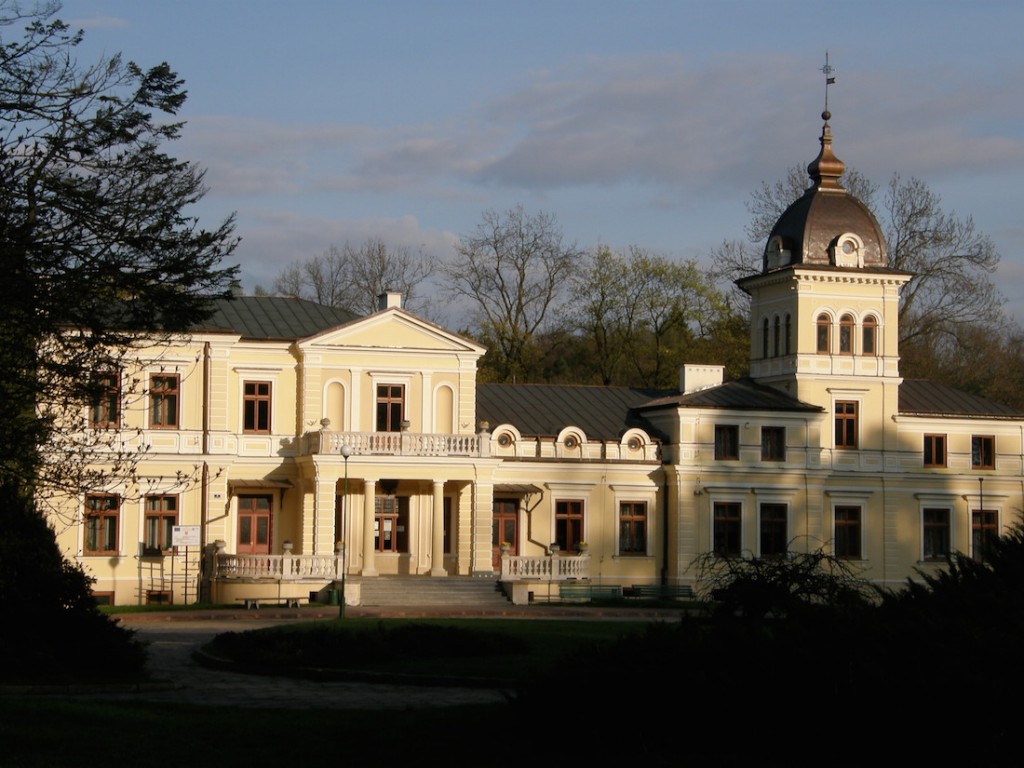
The finds were made in the palace in Kluczkowice which, until 1942, was owned by the Kleniewski family.
“Thanks to cooperation with the National Museum in Lublin and scientists from the Department of Archaeology at Warsaw University, it was possible to confirm that we are dealing with original objects from ancient Egypt and ancient Rome,” they reported.
In May last year, local treasure hunter Krzysztof Kozłowski led an exploration on the grounds of the palace in Kluczkowice with the permission of the heritage protection office when he discovered a bronze figurine.
After immediately alerting heritage protection authorities, Dr Łukasz Miechowicz of the Polish Academy of Sciences went to the site to search the area.
After 1942, the palace was used as a hospital by the SS.
“Suddenly, 10 meters away from the first figurine of Osiris, we came across another one,” he said. “It is sensationally well preserved.”
The specialists dated the figure of Osiris to the 1st millennium BC and the bust of Bacchus to the 1st century AD.
Meanwhile, Dr. Lukasz Miechowicz of the Institute of Archaeology and Ethnology of the Polish Academy of Sciences in Warsaw was able to confirm that the relics were part of a collection of antiquities that were kept in the palace in Kluczkowice until World War II by its then residents, the Kleniewski family.
Specialists dated the figure of Osiris to the 1st millennium BC.
Dr. Miechowicz believes that the figures were purchased by Maria Kleniewska when she travelled to Egypt in 1904 with her four daughters and brought back to Poland as artifacts that she intended to display in a chamber of antiquities.
They stayed in Helaun, which in the interwar period was popular with affluent Poles. In 1932, Marshal Józef Piłsudski stayed there for treatment.
“She writes about it in her memoirs, which have been published. Her health declined, and it was a fashionable resort among wealthier families at the time. She also travelled a bit and did some sightseeing, from Alexandria to Cairo,” Dr. Miechowicz added.
Although the finds were first made last year, it’s only now that they have been authenticated by analysts.
The bust of Bacchus was most likely a fragment of a Roman tripod, a similar example of which was discovered in the 18th century near Vesuvius in Italy, and is now in the collection of the British Museum in London.
The Kleniewski family lived in the palace in Kluczkowice until 1942 when their property was confiscated by the occupying Germans and handed over to the SS. The family then left for Warsaw, taking with them only personal belongings.
In the same year, the palace became a place of convalescence for German soldiers who had been injured at the front. After the war, the palace was thoroughly looted and the collection of antiquities has been lost ever since.
The ancient figurines will be donated to the National Museum in Lublin after further analysis.
Historians now believe the family members hurriedly hid some of the precious items in the grounds before leaving the palace.
Dr. Miechowicz said that he had been looking for traces of this collection for years.
“Capturing traces of a valuable collection that was lost years ago is of great importance for science, cultural heritage, and tourism,” he said.
The ancient figurines will be donated to the National Museum in Lublin after further analysis.
Roman Incense Container Unearthed in Northern England
Archaeologists working on a Cockermouth site uncovered some “particularly spectacular finds” in the final days of their nine-week project.
The nine-strong team of experts has been working in riverside fields off Low Road and behind the Lakes Home Centre.
The Ecus team, from Barnard Castle, was called in by landowner Bob Slack who is keen to put some flood defences in the area.
In the first few weeks they discovered evidence of a Roman foundry, marching camp and small village, said Mr Slack.
They later discovered a bust, steelyard weight, coins, pottery and also the foundations of a building and flagged floors.
In the final week, they came across a copper-alloy incense container, which Ecus project officer Julie Shoemark described as “an exceptionally rare find”.
“The site has produced a wealth of information about the Roman inhabitants of the vicus and last week revealed some particularly spectacular finds,” she said.
“Firstly, we have a highly polished tiny stone figurine which has unfortunately not survived intact. What remains depicts a naked male rendered in typically ‘Romano-British’ style with simply carved large almond eyes and a distinctive spiked hairstyle.
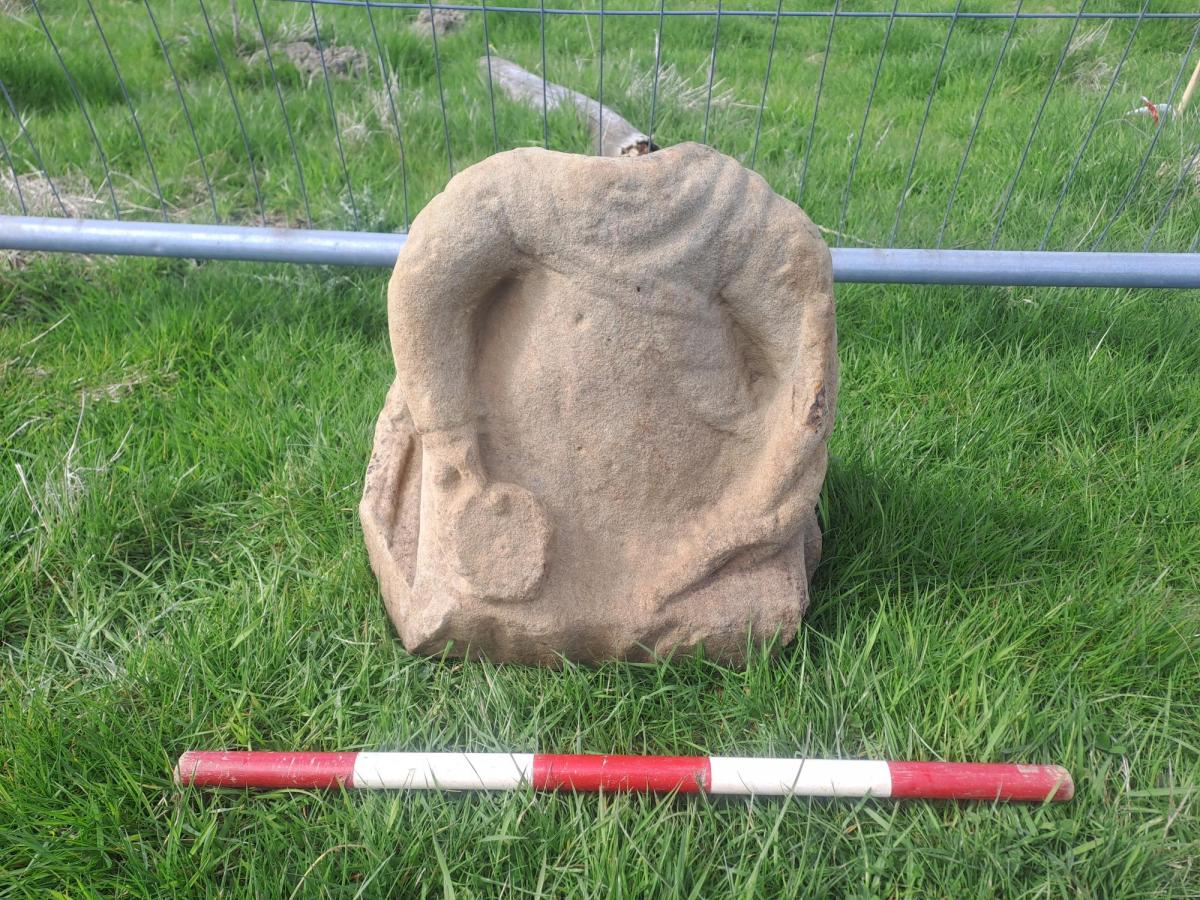
“Secondly, a stone sculpture of a seated female figure was recovered from a rubble deposit. She has unfortunately lost her head, however, enough remains to tell us who she is.
“She wears a pattered mantle and carries a patera (a shallow bowl used for libations) in her right hand and a cornucopia containing an ear of wheat in her left. These attributes identify her as the goddess Fortuna, the goddess of luck, but also closely associated with the harvest in agricultural communities.”
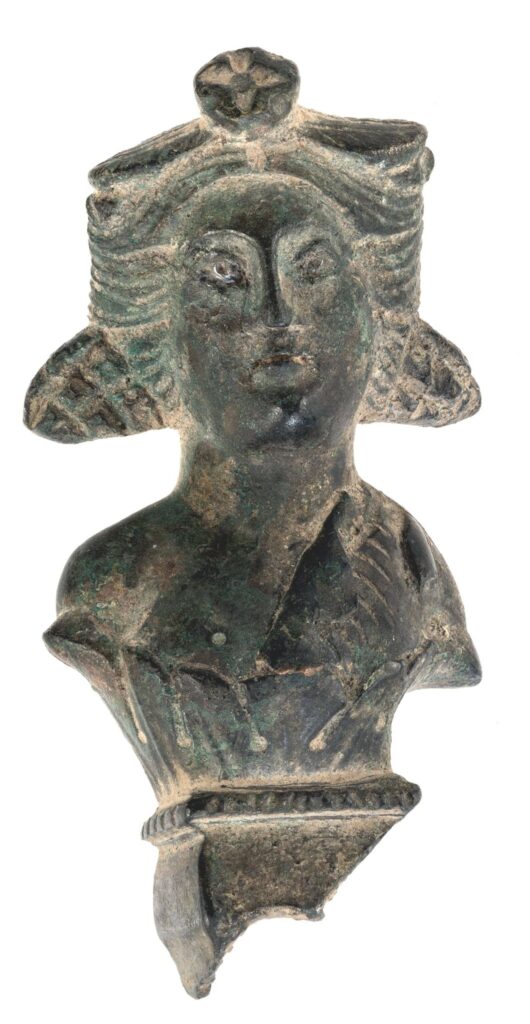
The most striking find was a copper-alloy balsamarium (incense container).
“This is an exceptionally rare find, being one of only a handful excavated in Britain to date,” said Ms Shoemark.
“It is in the form of a bust of the youthful Bacchus, the god of wine, although the features appear to have been modelled after depictions of Antinous, the lover of Emperor Hadrian.
“In addition to being exceptionally rare, this artefact is in superb condition, missing only the lid which would have sat atop the head.”
The only other example of a balsamarium of similar design was recovered from the River Eden, Carlisle and is on display at Tullie House.
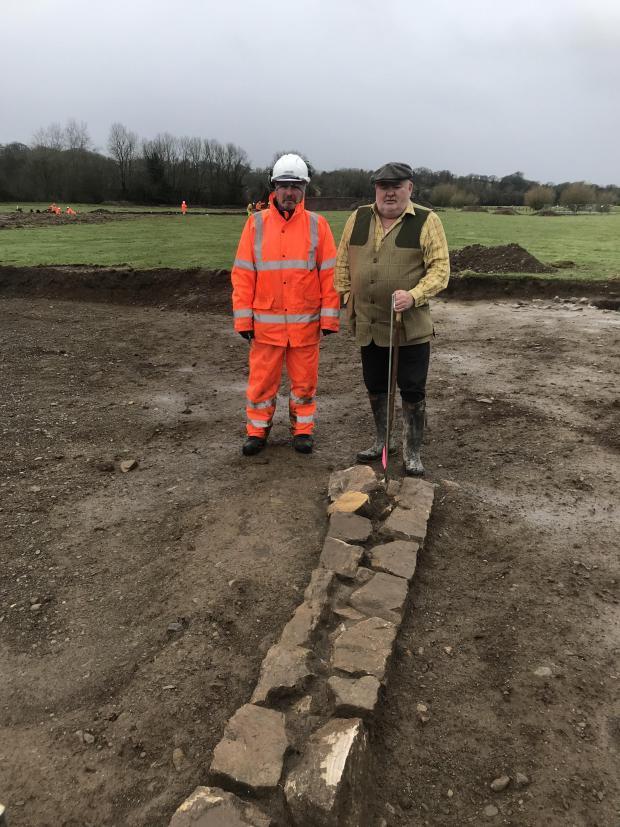
Landowner Bob Slack and archaeologist Eddie Dougherty on the site
Bacchus is most widely known as the god of winemaking but is also associated with agriculture, particularly orchards, and fertility.
“We previously had an exquisite steelyard weight depicting Silenus, the satyr companion of Bacchus, so we now have a nice group of finds carrying the running theme of agriculture and fertility, which would have been central to the lives of this community,” said Ms Shoemark.
“Together these and the other artefacts from the excavation are allowing us to build a picture of the history of the site and its inhabitants.
“We look forward to sharing the full results following specialist research and assessment of the assemblage in due course.”
The land, which will be covered with soil and reseeded, is in a flood zone so cannot be developed. Mr Slack has planning permission for 27 homes adjacent to the Lovells development on Low Road.
Neolithic Ritual Cache Discovered in Ukrainian Cave
Mykhailo Sokhatskyi investigating Verteba Cave: Artifacts suggest it was a hiding place because who would want to live here.
Caves have provided shelter for humans and our predecessors for at least two million years. They served as dwellings, hiding places, possibly shrines, and for the last 50,000 years, as a canvas for our art. Now new discoveries in the uninviting Verteba Cave in Ukraine bring us a new glimpse into human history, at the dawn of agriculture in Eastern Europe.
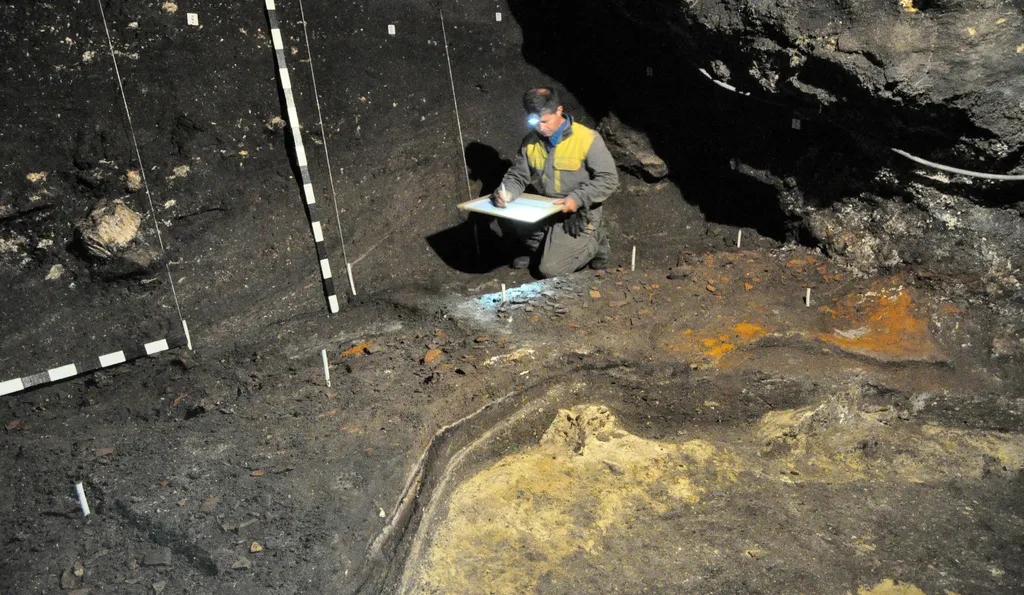
The discoveries, dating to about 5,000 years ago, were made in March by archaeologists from the Borschivskyy Local History Museum in Ukraine, led by Sokhatskyi Mykhailo, a leading scholar of the Trypillian culture and director of the museum. They shed rare light on the enigmatic Cucuteni-Trypillian culture that dominated territories in Ukraine, Romania and Moldova for over 2,000 years.
The Cucuteni-Trypillian culture is known to have been highly developed for its time, the late Neolithic and Chalcolithic. Some of their settlements were extraordinarily large; they farmed and husbanded domestic animals and had pottery and metallurgical skills.
Little however is known about their ritual life due to the scarcity of Trypillian burials. But now some hints have been unearthed at Verteba Cave – including a hidden collection of female figurines.
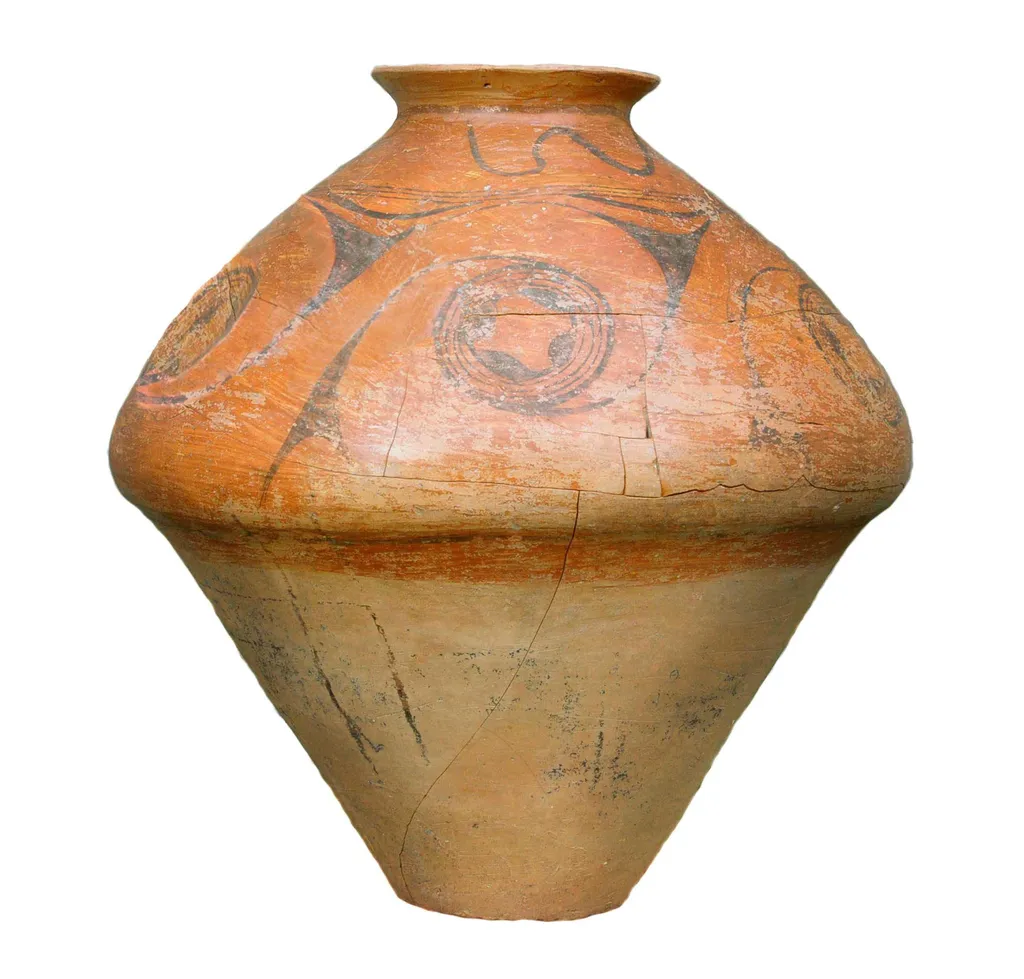
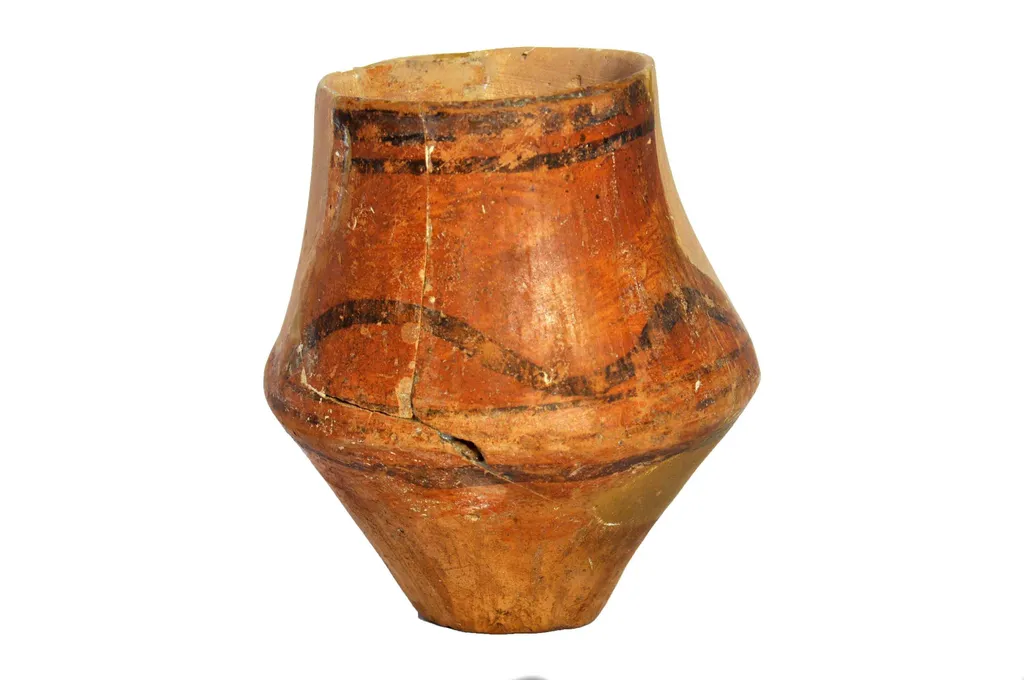
Beautifully ornamented Trypillian pottery found in Verteba Cave
‘Pompeii on the Dniester’
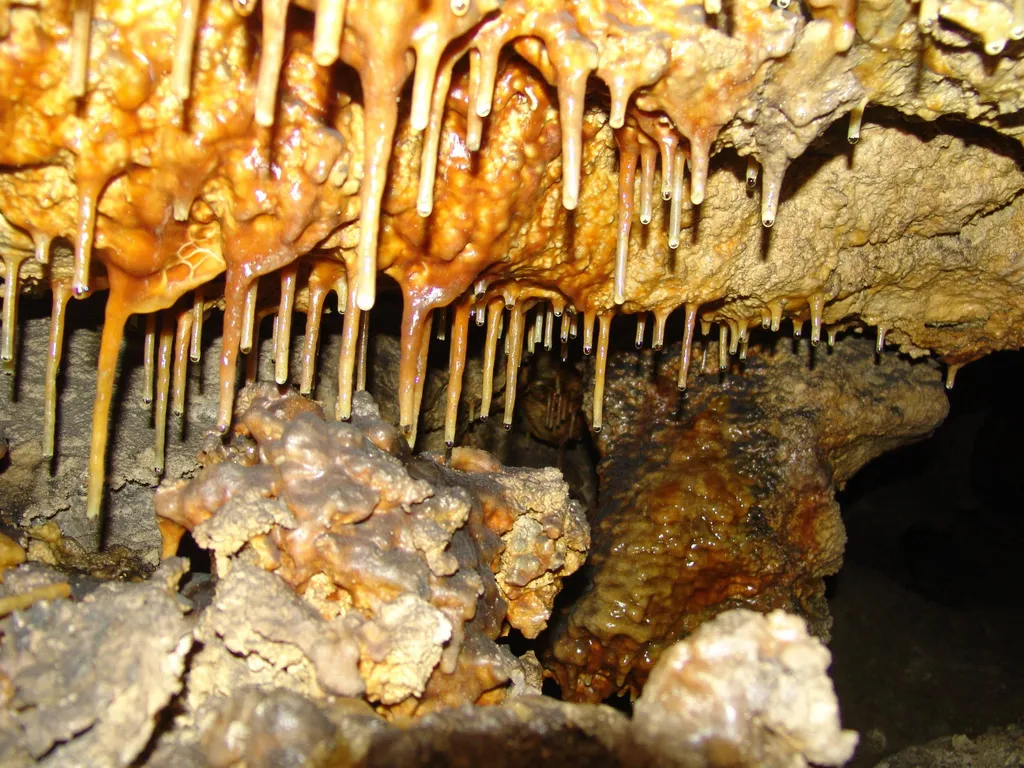
Verteba Cave is about 9 kilometers (5.6 miles) long and features occasional small stalactites and stalagmites in maze-like tunnels. Its entrance is near the village of Bilche-Zolote, north of the Dniester River in western Ukraine. In fact, the cave has been undergoing archaeological investigation since its discovery in 1829 and gained the soubriquet of “Pompeii on the Dneister” not because of volcano-stricken bodies strewn about but because of the sheer abundance of material from antiquity.
Finds over the years included elaborately ornamented pottery vessels, anthropomorphic and zoomorphic clay figurines, tools made of flint, bone, and stone, copper knives, and various ornaments made of bones and shells. Many are on display inside the cave, which has effectively become an underground museum of Trypillian culture, complete with guided tours.
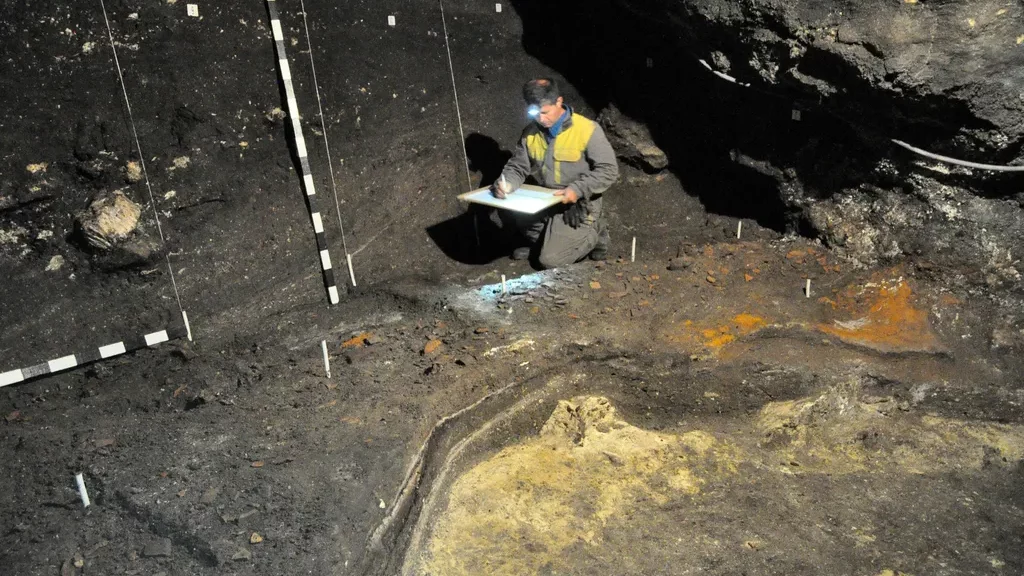
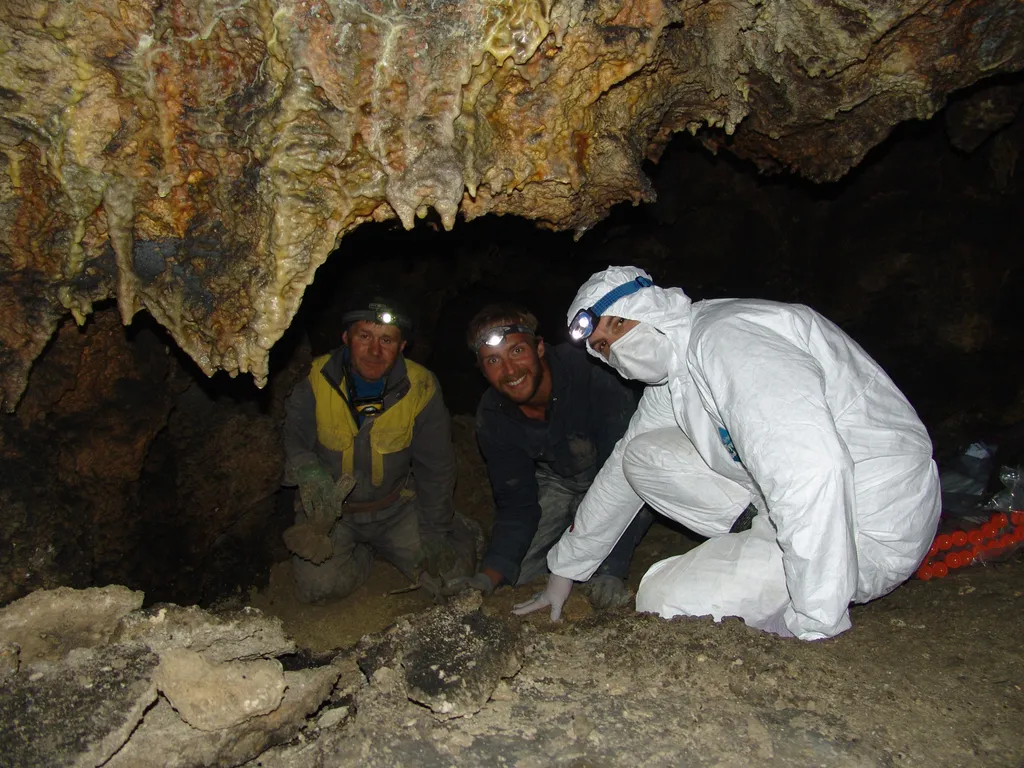
The team excavating inside the cave Cave Verteba
However, the earlier excavations were not systematic. Archaeological layers got mixed in the process, and valuable data was lost. (Archaeology is the art of destruction, some say, which is why modern archaeological research never excavates whole sites but rather only a slice of them, leaving the rest for future archaeologists equipped with advanced techniques and knowledge.)
Then excavations starting in 1996 found layers undisrupted by previous research, which could be studied using modern methods, guided by almost 200 years of acquired data on the cave.
Female figurines found in previous excavations at Verteba Cave
Stressful times and ‘talking bones’
The unique quality of the Verteba Cave for scholars of the Trypillians is the discovery of three layers of the culture, each separated by a sterile layer. The research concluded that between 6,000 to 4,600 years ago, various groups associated with this culture, differentiated mainly by pottery style, used the cave intermittently, altogether occupying the cave for about 800 years.
What brought these early farmers here, to this unpleasant maze of darkness?
Dank, pitch black, and altogether unwelcoming, but also small stalactites in Verteba Cave
Verteba is not hospitable in any way. It consists of narrow pitch-black labyrinths, and is very humid. Nobody with options would have wanted to live there or stay long. The requisite conclusion, scholars suggest, is that its primary function was as a refuge; but based on the amounts and density of the materials retrieved in the cave, when people did come, it was in large numbers.
Many scholars believe that the late Trypillian period was a turbulent time and indeed the occupation layers in the cave correlate with known migrations to the area by adjacent tribes. Many Trypillian settlements from that time were fortified and surrounded by moats, or were built on high terraces next to rivers.
Cave Verteba
Moreover, the biological evidence found over the years may be scanty but it’s telling. Analysis of 21 Trypillian skulls found between 2008 to 2012 revealed that 12 had head traumas that had to have occurred at death or close to it, because they showed no signs of healing.
Theoretically, at least some of the traumas could have resulted from accidents. Still, osteological research on the position of the injuries and comparison to known markers of violent trauma says violence is the more plausible cause in most cases.
Furthermore, examination of the inhabitants’ teeth and long bones suggested they led a stressful life, at least more so than their predecessors. Their remains indicate that the Verteba cave dwellers were shorter and experienced significantly more enamel defects than Ukraine’s earlier Mesolithic and Neolithic populations, which is indicative of malnutrition and/or disease early in life, during tooth formation.
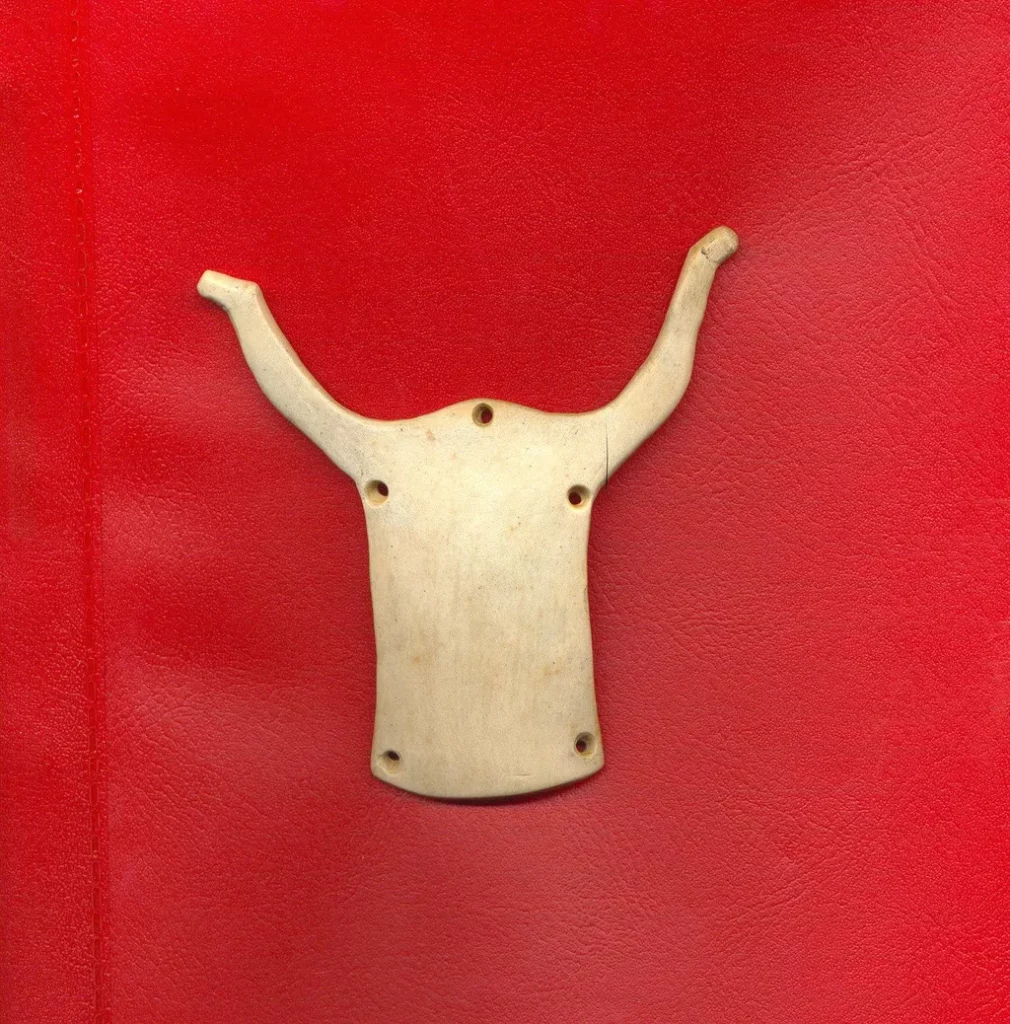
Bone plate amulet from Verteba Cave
The Trypillian economy was based on agriculture and husbandry alongside hunting and foraging. The Neolithic revolution brought a new way of life, with new stresses. As populations grew and resources became limited, the evidence indicates that people suffered from malnutrition and illness associated with living in dense conditions.
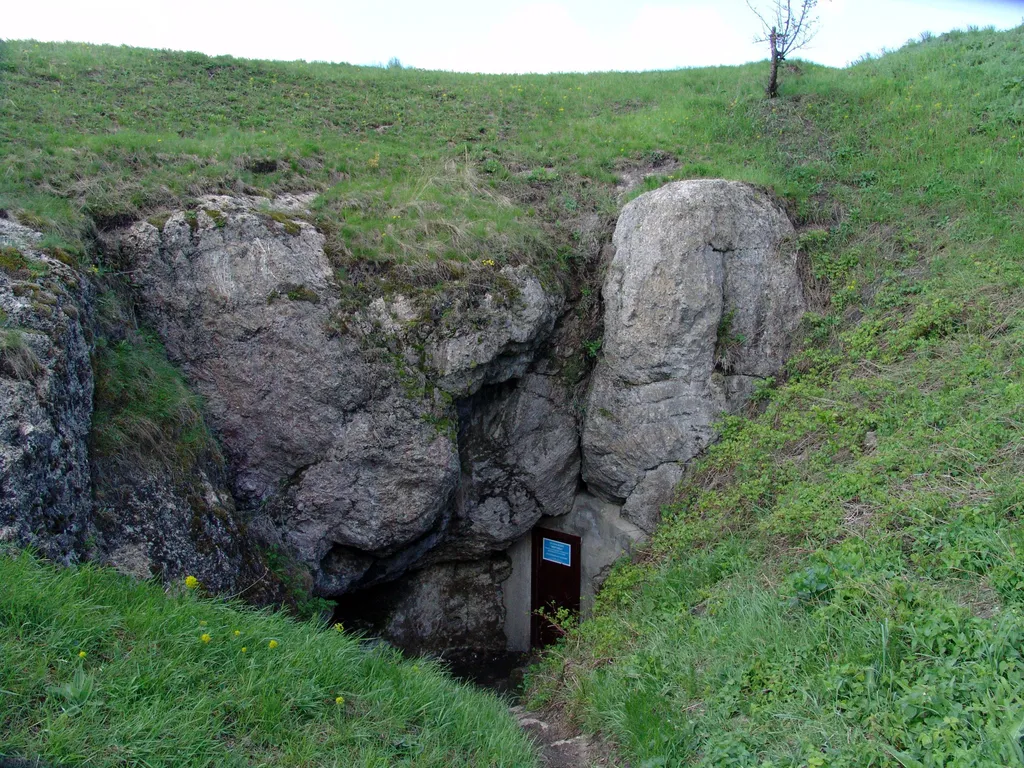
Based on all this, the archaeologists think the cave served to hide in times of conflict likely arising from migration episodes, driven partly by the new way of life. Supporting this thesis, the cave mouth is inconspicuous, at the bottom of a sinkhole in the middle of a flat plateau, making it a perfect hiding spot. Nowadays, the cave has only one entrance but Sokhatskyi and the team discovered that it had several during the Neolithic period.
The entrance to Verteba Cave
The Trypillians weren’t the only ones to hide in the cave system. Around 3,000 years later, others would find refuge in it again – Jews hiding from the Nazis during World War II. An exhibition of items they left behind, like the Trypillians before them, is in process in the underground museum in this extraordinary cave, no place to spend one’s life but a wonderful place to hole up.
An interlude with boars
All that said, hiding wasn’t the only thing the Trypillians did inside Verteba, Sokhatsky surmises. It was also a place of worship and burial. Throughout history, people have sought sanctuary in holy sites, such as churches and temples, he adds.
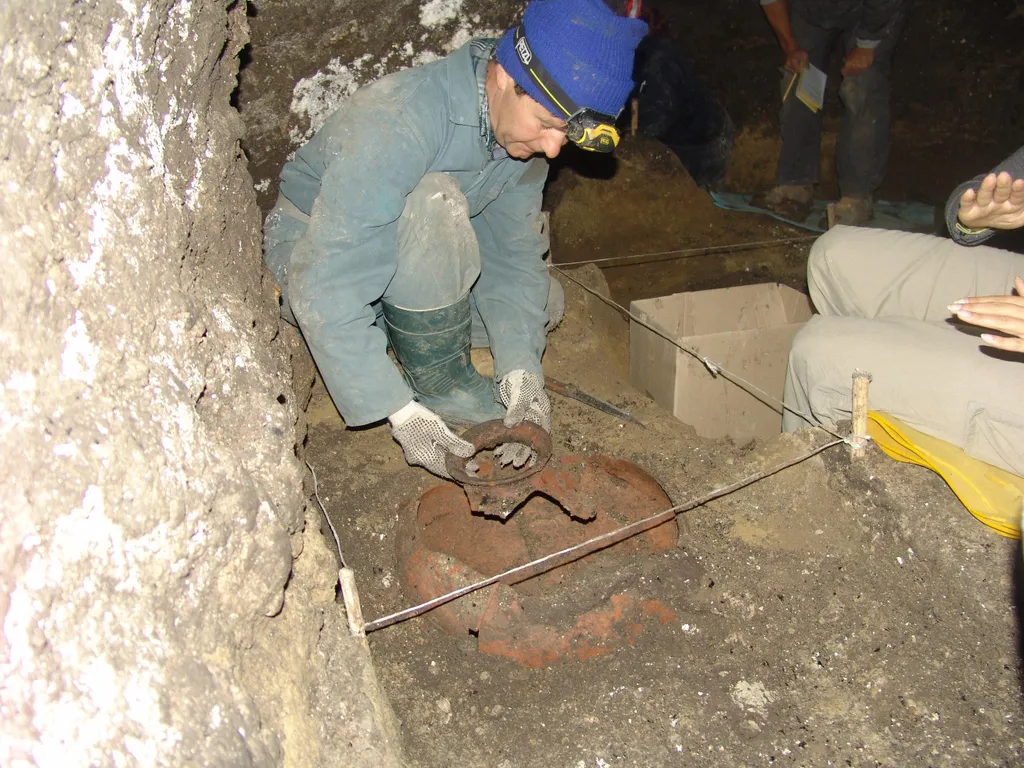
Among the finds in March, the archaeologists found an enormous clay storage jar with white organic material on its bottom that has yet to undergo analysis. And they noticed a niche in a wall that had been missed, a small one into which only a hand could fit.
Finding the storage jar in Verteba Cave.
Inside it they revealed five female clay figurines, placed closely together, Sokhatskyi says.
“Female figurines are not rare in Trypillian contexts, and hoards of figurines are known, but these were sheltered by the tusks of a wild boar,” he says.
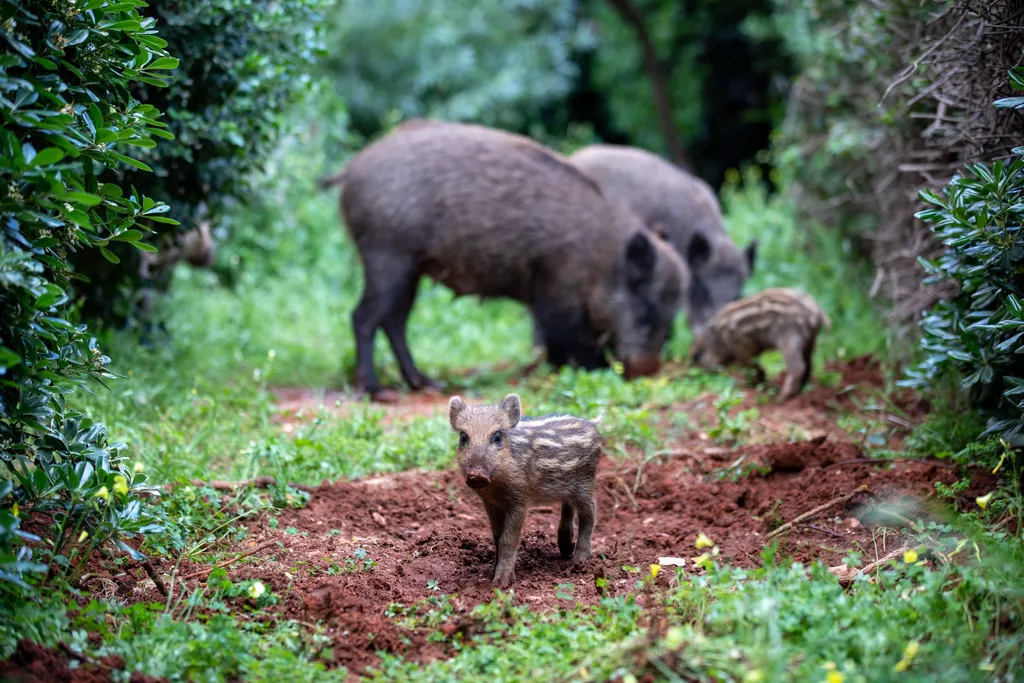
Adult and baby boars in Haifa
Searching the literature produced no parallels, he says.
In general, boar remains are rare within Trypillian complexes. Their tusks have been found within some Early and Middle Trypillian graves but this culture’s rituals seemed to have been focused more on domesticated animals like cattle, sheep, goats, and dogs. When wild animals were represented, they are usually bears or deer.
Verteba is “late Trypillian” and in that context, this find is unique, the archaeologist explains. In Verteba, the team also found jewelry and tools (for pottery production) made of boar teeth, and in 2016, they found a small clay boar figurine.
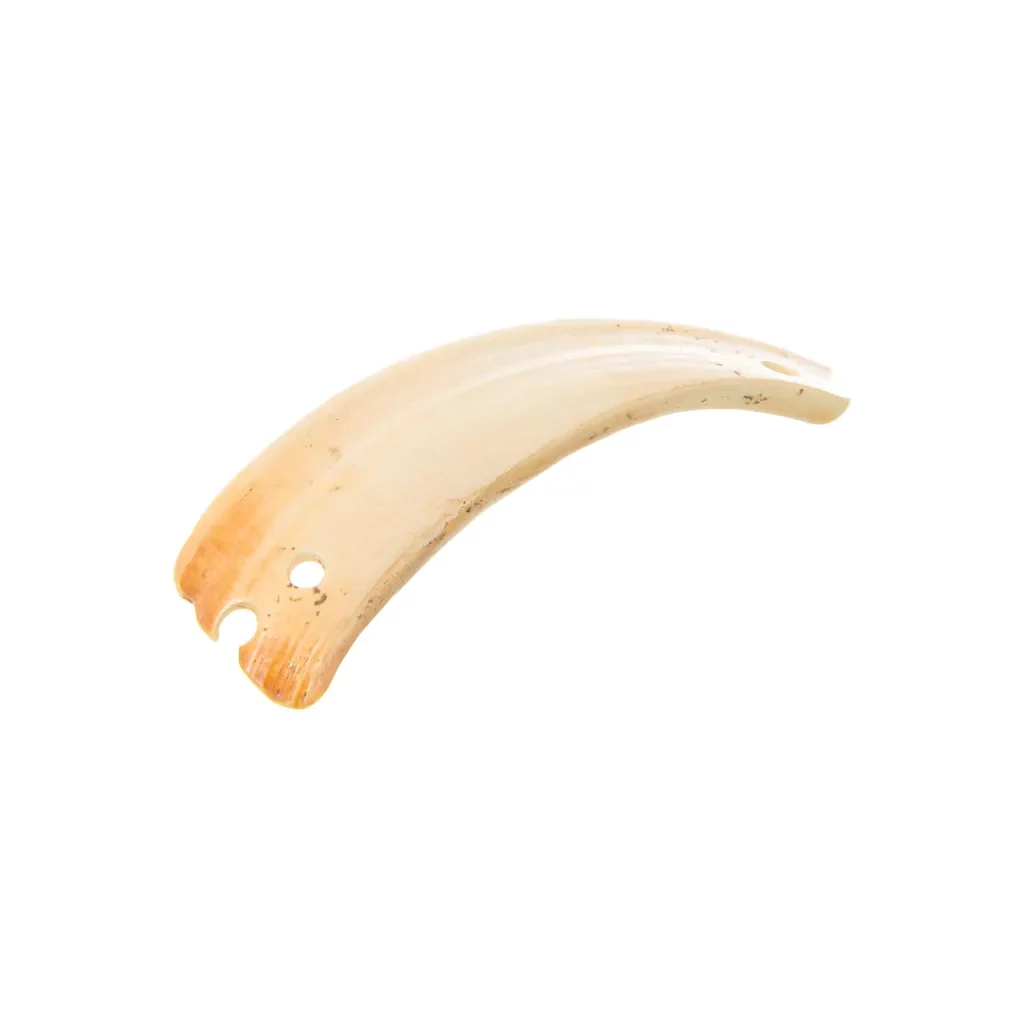
Boar tusk with perforations suggesting it had been used as a pendant or other item of adornment
For some reason, the boar may have played an important role for the people in the cave. One possibility is the persistence of old traditions, also suggested by the habit of the Trypillians returning to old pottery ornamentation traditions, Sokhatskyi suggests. Perhaps it is that very thing, preserving tradition, that enabled them to preserve their culture for all these years.
Staging of religion on rock paintings that are thousands of years old in southern Egypt desert
Egyptologists at the University of Bonn and the University of Aswan want to systematically record hundreds of petroglyphs and inscriptions dating from the Neolithic to the Arab period and document them in a database.
The desert in southern Egypt is filled with hundreds of petroglyphs and inscriptions oldest dating from the fifth millennium B.C. and few have been studied.
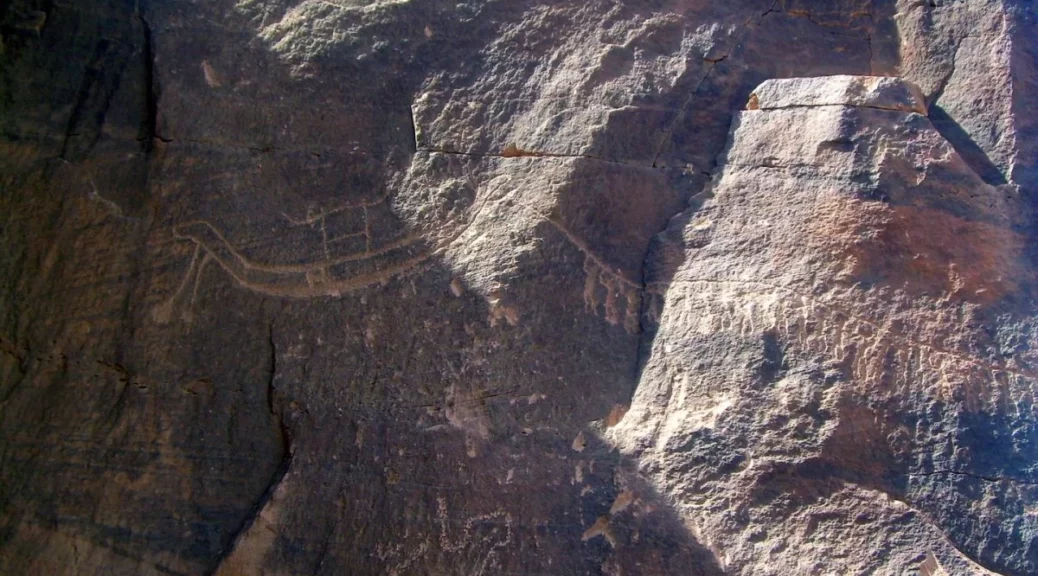
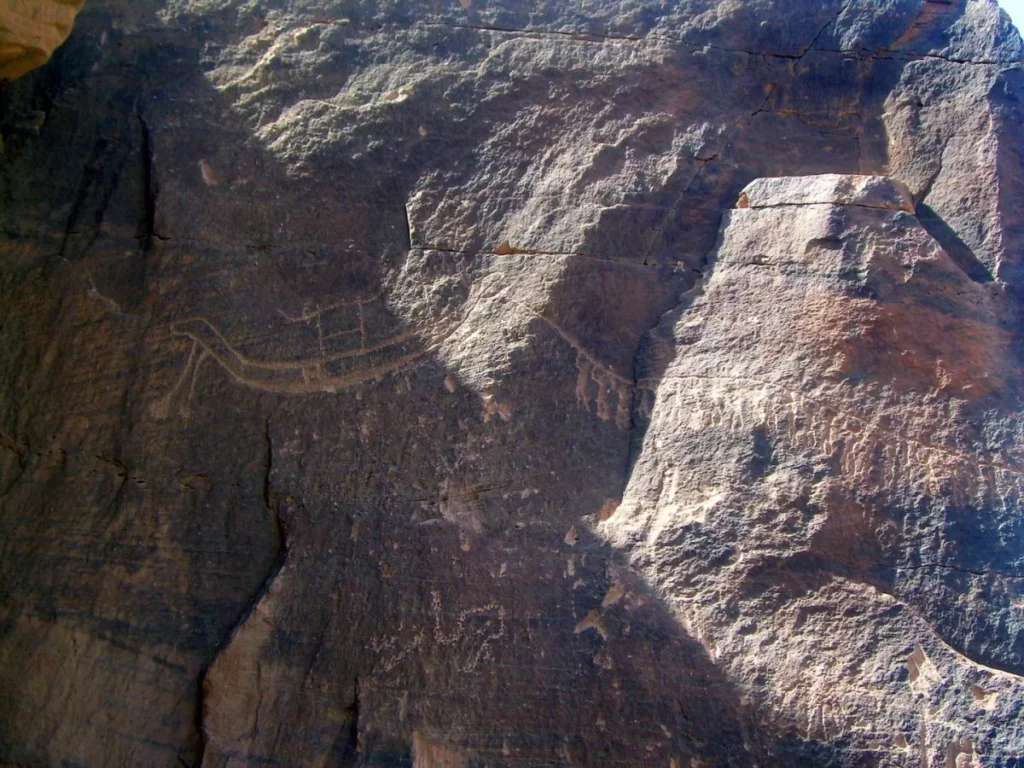
A more than 5,000-year-old rock painting that shows a boat being pulled by 25 men on a rope among them stands out in particular.
“The first newly discovered sources shed new light on the pre-Pharaonic period of the Fourth Millennium and the importance of the socio-cultural periphery,” says Egyptologist Prof. Dr. Ludwig Morenz of the University of Bonn.
Mohamed Abdel Hay Abu Baker, who was specifically responsible for researching the rock images at the Aswan Inspectorate, among the images captured during his explorations in the field, one, in particular, stood out to the Egyptologist from the University of Bonn.
It is depicted over the bumps and edges of the rock, how a boat is pulled by 25 men with raised arms on a rope. A ritual is obviously impressively shown here – namely the great procession of an image of the gods, according to Morenz.
This is clear from image details, he said: the boat with shrine and standard and, in particular, the cattle horns, which are typical of sacred imagery. “This rock image gives us insights into the sacred design of an apparently remote landscape, the Wadi al Agebab, which is still largely unknown in research,” says the Egyptologist.
The entire later Pharaonic culture is based on the beginnings of the pictorial staging of religion. Morenz: “Here, the high importance of religion and especially the cult of the gods in the still pre-Egyptian society of the second half of the Fourth Millennium is revealed as a culture-creating factor.”
Rock image – with ruler boat procession, ca. 3200 BC, Wadi al Agebab.
Documentation
“This cultural treasure in the northeast of Aswan has been largely undocumented, let alone published,” says Egyptologist Prof. Dr. Ludwig Morenz of the University of Bonn.
The petroglyphs are found in numerous and often remote locations in dried-up river valleys, called “wadis” in Arabic. At the same time, the petroglyphs, which are sometimes inconspicuous at first glance, are under severe threat, especially from current quarrying activities in the desert.
“Especially in recent years, there has already been serious destruction of this cultural asset,” says Morenz, who is also a member of the Cluster of Excellence Bonn Center for Dependency and Slavery Studies (BCDSS) and the Transdisciplinary Research Area “Present Pasts” at the University of Bonn.
“Such losses can hardly be prevented completely, given the vastness of the area, but all the more important is at least good documentation.”
In the course of his doctoral studies at Aswan University in Aswan, Abu Baker will now work together with the University of Bonn to create a comprehensive database with an image archive on rock images. For this purpose, the University of Excellence Bonn supports the inspector of the Egyptian Ministry of Antiquities for one year with a scholarship from excellence funds of the federal and state governments. Prof. Morenz is the second supervisor of the dissertation.