Category Archives: EUROPE

Obsidian ‘Spirit Mirror’ Used by Elizabeth I’s Court Astrologer Has Aztec Origins

Obsidian ‘Spirit Mirror’ Used by Elizabeth I’s Court Astrologer Has Aztec Origins

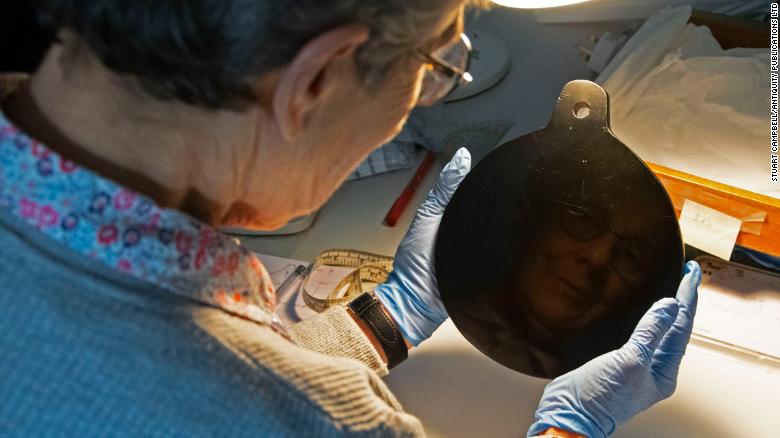
According to a recent study, an obsidian “spirit mirror” used by a confidant of Queen Elizabeth I was actually a product of Aztec culture. The obsidian mirror, made of volcanic glass, and three other comparable items at the British Museum were discovered to have Mexican origins after an examination.

Obsidian ‘Spirit Mirror’ Used by Elizabeth I’s Court Astrologer Has Aztec Origins
Researcher Elizabeth Healey holds John Dee’s obsidian mirror.

The obsidian mirror with the Elizabeth I connection belonged to John Dee, an adviser of hers from when she became queen in 1558 and through the 1570s. Dee served as the queen’s astrologer and also consulted with her on science. This included Dee acting “as an advocate of voyages of discovery, establishing colonies and improving navigation,” said Stuart Campbell, study author and professor at the University of Manchester.

John Dee is a remarkable historical figure, a Renaissance polymath — interested in astronomy, alchemy and mathematics — and confidant of Elizabeth I,” Campbell wrote in an email. “Later he became involved in divination and the occult, seeking to talk to angels through the use of scryers (those who divine the future), who used artefacts — like mirrors and crystals.”

Dee may have bought the mirror in Bohemia (now part of the Czech Republic) in the 1580s.

While it had been previously suspected that the mirror had been made by the Aztec culture, there were no records accompanying the object to show how it came into Dee’s possession.

A team of researchers used geochemical analysis to target the four obsidian objects with X-rays. This in turn caused the objects to emit X-rays, helping the scientists determine their composition by revealing the elements of the obsidian. In addition to Dee’s mirror, they studied two other Aztec mirrors and a rectangular slab of obsidian.

The analysis showed that all four were made using Mexican obsidian. Dee’s mirror and a similarly designed mirror were made using obsidian from Pachuca, a city that is a source of obsidian the Aztecs used. The third mirror and the slab are made of obsidian from the town of Ucareo, another obsidian site in Mexico.

A study on the findings was published Wednesday in the journal Antiquity. The researchers estimate that Dee’s mirror is about 500 years old, most likely made in the final decades before the Spanish conquest of Mexico in 1521, Campbell said.

“We know that Spanish conquistador Hernán Cortés sometimes commissioned items from Aztec craftsmen so he could send them back to the Spanish court,” Campbell said. “So it is even possible that some of the circular mirrors like John Dee’s were specially made by Aztec craftsmen at the time of the conquest of the Aztec Empire to send back to Europe.”

This figure shows Tezcatlipoca, Lord of the smoking mirror, with circular obsidian mirrors on his temple, his chest and his foot highlighted.

While researchers haven’t been able to pinpoint the obsidian mirrors’ intended use in Aztec culture, depictions remain that show circular obsidian mirrors made at this time.

“They’re shown particularly in drawings of the god Tezcatlipoca, in place of a missing foot, or attached to his chest or head,” Campbell said. “The mirrors that have survived may well have actually been attached to statues of the god.

Tezcatlipoca was the god of divination and providence, amongst several other things, and the obsidian mirrors were probably much more than simply symbols of power — they also seem likely to have been used for divinatory purposes.”

Tezcatlipoca’s name also means “smoking mirror.”

The Aztecs believed that obsidian had spiritual significance, and it was used in their medicinal practices, as well as a way to ward off bad spirits or even capture souls by using the reflective nature of the volcanic glass.
Items of such significance to the Aztecs would have been intriguing to the Europeans exploring Mexico.

Aztec codices created around the time of the Spanish Conquest depict mirrors, apparently in frames.

“The 16th century was a period in which new exotic objects were being brought to Europe from the New World, and opening up exciting new possibilities in the intellectual world of the period,” Campbell said.
Dee, the first person known to use the term “British Empire,” would have been fascinated by the idea of the mirrors if he heard stories of how the Aztecs used them, Campbell said. Dee had an interest in the occult early on, and once he obtained the obsidian mirror, he used it to try communicating with spirits, according to the study.

John Dee was a mathematician, astrologer, alchemist and advisor to England’s Elizabeth I.

Understanding the origins of the obsidian mirror can help researchers retrace the paths of such objects from a time when appropriation occurred frequently.

“To me, it helps us understand something of the way in which the European voyages of discovery and engagement with other parts of the world, often through disastrous conquest, was matched by intellectual attempts to understand how the world worked,” Campbell said. “Novel artefacts brought back to Europe from the Americas entered collections of nobility and of intellectuals, and were used and appropriated in the efforts of people, who — like John Dee — saw themselves as scientists, to understand the world in new ways.”

During his time as Elizabeth’s confidant and adviser, she visited him several times at his home, Campbell said. Dee was considered to be one of the reigning intellectuals of that period; he had the largest library in England and one of the greatest in Europe, Campbell said.
“The surviving record of (the library) is actually of major importance in understanding 16th- and early 17th-century intellectual thought,” Campbell said.

To Dee, the supernatural was indistinguishable from science. “It may have been his growing interest in those areas of study that gradually undermined his role in the court by the end of the 1570s,” Campbell said.
Treasure hunters explode 2500-year-old Lycian Rock-cut Tombs in Turkey

Treasure hunters explode 2500-year-old Lycian Rock-cut Tombs in Turkey

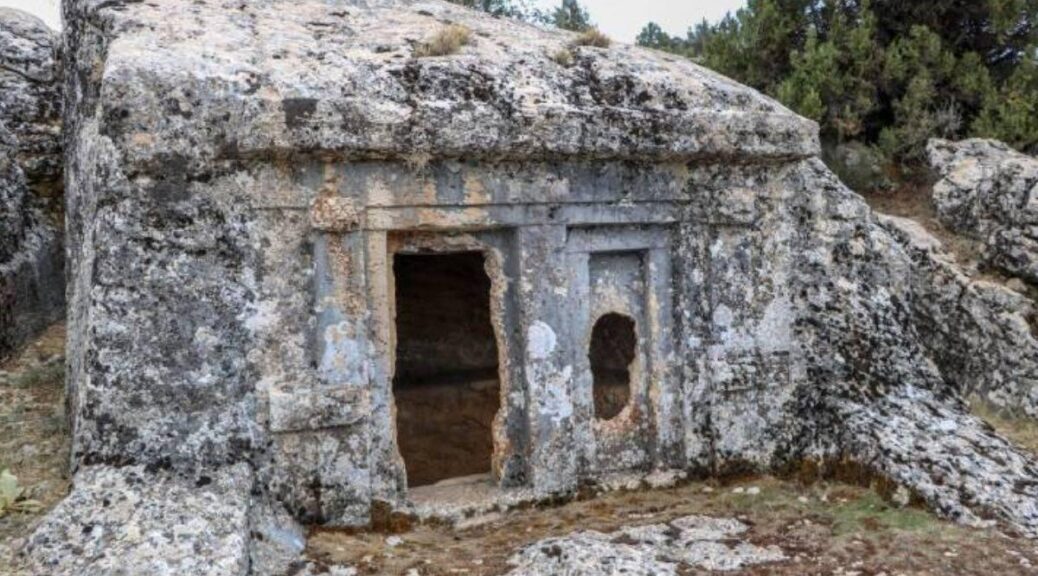
Treasure hunters have exploded the entrance of a 2,500-year-old rock-cut tomb, one of the six ancient sepulchres in the Elmalı district of the southern province of Antalya.

“These are cultural heritages, we must protect them to leave to the next generations,” Durmuş Altan, an archaeologist, told Demirören News Agency on Oct. 6.

According to Altan, who is also the head of the provincial directorate of cultural and social affairs, there are six rock tombs in the neighbourhood.

“Four of them are from the Lycian period,” he said and added: “Today’s Armutlu was in the territory of the then Lycia Kingdom.”

“The meticulous cut of the rock tombs shows that there was once a genuine settlement in the area,” he added.

But the latest state of the rock tombs is not pleasant. Doomed to their destiny, the rock tombs were damaged with writings on them.

Treasure hunters recently flattened the entrance of a rock tomb with explosives, the archaeologist noted.

Treasure hunters explode 2500-year-old Lycian Rock-cut Tombs in Turkey
The entrance to this ancient Lycian rock-cut tomb in Turkey was recently blasted open with dynamite.

“They think they can find sculptures or gold here in the region. These people, unfortunately, damage the cultural assets,” he added.

Few written records remain from the distinctive Lycian culture.

Lycia was located in the region that is now the Antalya and Muğla provinces, on Turkey’s southern coast, and also in Burdur province, which lies further inland. Given that there are few written records left by the ancient Lycians, not much is known about the civilization. What we do know is that they had a distinct culture that had unique aspects not found elsewhere in the ancient world.

One of the most extraordinary aspects of Lycian culture was the striking tombs they built and Ancient Origins wrote a great article about these remarkable tombs a few years ago.

The Lycians made rock-cut, sarcophagus, and pillar tombs. Of these three known types, rock-cut tombs are the most common. The earliest Lycian rock-cut tombs dating to the 5th century BC.

The Lycians believed that a mythical winged creature would carry them into the afterlife, and this is perhaps one of the reasons their tombs were carved directly into rock faces, often a cliff.

Fascinatingly, the Lycian tombs were usually carved to resemble the façade of their houses. They often had one or two stories and sometimes even three. The tombs sometimes held more than one body, most probably of people related to each other, thus extending family ties into the afterlife.

The mythological reliefs sometimes carved on the rock-cut tombs also tell us something about their religious beliefs. The Lycian tombs, rock-cut or otherwise, are thus a precious relic of an ancient culture that has not left behind many written records to help us understand them better. Archaeologist Durmuş Altan’s distress at the callous damage done to one of them by treasure seekers is, therefore, most understandable.

READ ALSO: 1,800-YEAR-OLD ROCK TOMBS FOUND IN TURKEY’S ANCIENT CITY BLAUNDUS

Of course, this is not the first time that ancient tombs and monuments have been broken open by treasure hunters. Tomb robbery goes all the way back to antiquity and has occurred all over the world.

One of the most well-known examples is from Egypt where most of the tombs in the Valley of the Kings were looted within a hundred years of their being sealed. In modern times, robbing ancient tombs is sometimes the work of organized gangs.

It is hoped that episodes like the latest tomb raid in Elmali will be prevented in future by greater cooperation between governments, UNESCO, and other world heritage bodies. As Altan stated, these are sacred heirlooms, and we owe it to future generations to leave them in even better shape than we found them ourselves.

Who Were the First People to Arrive in the Azores?

Who Were the First People to Arrive in the Azores?

A group of international academics discovered evidence that people inhabited islands in the Azores archipelago 700 years earlier than previously thought. The group explains their research of sediment cores taken from lakes on some of the archipelago’s islands in their report, which was published in Proceedings of the National Academy of Sciences.

Who Were the First People to Arrive in the Azores?
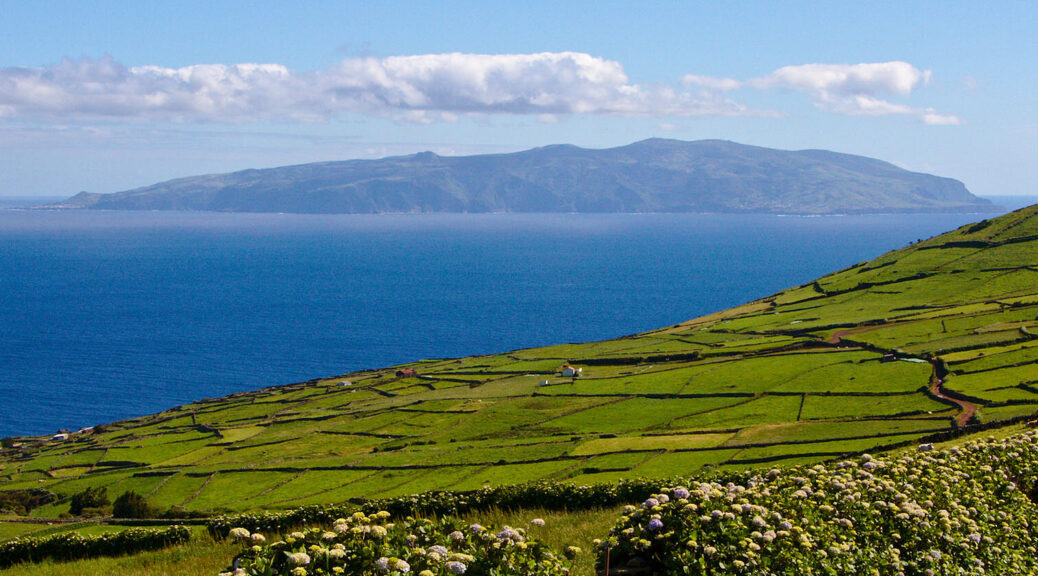
Landscape view of Pico (foreground) and Faial (background) Islands.

Due to the absence of other evidence, historians have believed that people first arrived in the Azores in 1427, when Portuguese sailor Diogo de Silves landed on Santa Maria Island.

Soon thereafter, others from Portugal arrived and made the archipelago their home. In this new effort, the researchers found evidence that humans were living on some of the islands in the Azores approximately 700 years earlier.

Looking to learn more about the history of the Azores, the researchers began collecting sediment samples from several of the lakes on the islands and studying them to see what they might reveal.

Sediment samples can serve as historical evidence because the material in the air that falls to the surface of a lake and then to the lake bottom is covered over by new layers of sediment as time passes.

Analysis of the sediment cores showed an increase in 5-beta-stigmasterol in a core layer dated to a time between 700 CE and 850 CE, taken from Peixinho Lake. The compound is typically found in the faeces of livestock, such as cows and sheep—neither of which lived in the Azores prior to the arrival of humans.

They also saw upticks in charcoal particles (suggesting large fires had been burning) along with a dip in native tree pollens.

READ ALSO: ‘SUNKEN ATLANTIS PYRAMID’ DISCOVERED OFF AZORES COAST IN PORTUGAL

The findings suggest someone had burned down the forest to provide more land for livestock. The researchers found similar evidence in cores taken from Caldeirão Lake, which is on a different island, though it appeared approximately a century later. And they found evidence of non-native ryegrass in the sediment taken from a lake on a third island.

Lake Caldeirão inside the collapsed caldera of Corvo Island.

The findings present strong evidence of humans inhabiting the archipelago hundreds of years before the Portuguese arrived.

The researchers theorize that they were likely Norse seafarers, noting their accomplishments in sailing up and down the coasts of many parts of Europe.

Skeleton with bird skull in its mouth identified as a 12-year-old Scandinavian girl from 17th century

Skeleton with bird skull in its mouth identified as 12-year-old Scandinavian girl from 17th century

When long-dead human remains are found buried in unusual circumstances, anthropologists are usually able to piece together why. But the bones of a child that lived just a couple of hundred years ago in Poland are proving to be a bit of a head-scratcher.

The Tunel Wielki Cave is located within Ojców National Park. There are over 400 caves within the area which is also known for its rock formations

In a shallow grave in Tunel Wielki Cave, located in Sąspowska Valley in the Kraków-Częstochowa Upland, the body of a young child was found buried all alone. The only other human bones in the cave were over 4,500 years old, so it wasn’t a location in regular use for burials.

It’s the only modern human found buried in a cave in the region, archaeologists believe.

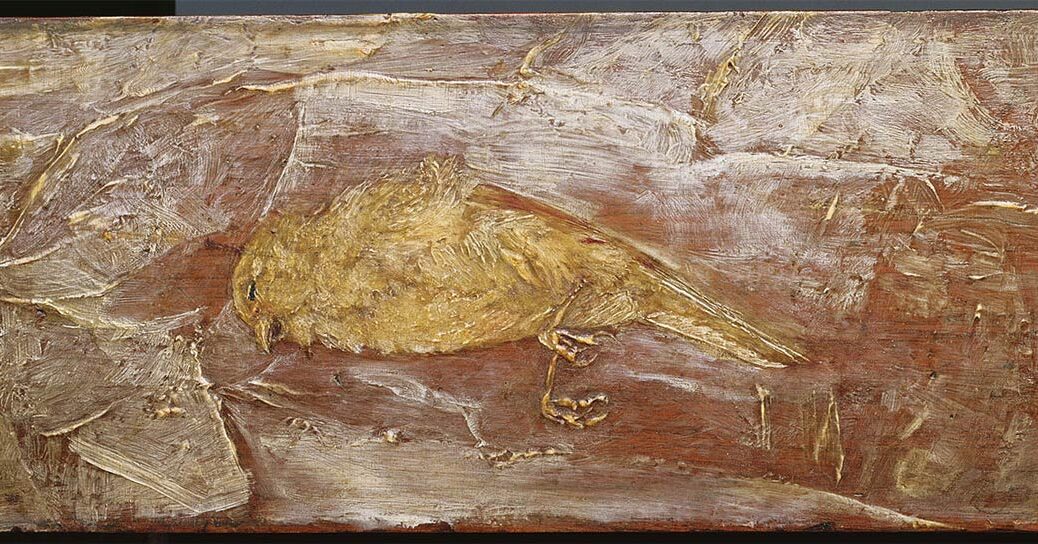
But it gets even weirder: the skull of a small bird, a chaffinch (Fringilla coelebs), was found in the child’s mouth, and another chaffinch skull was found next to its cheek.

The skeleton is not fresh, exactly. The remains were first discovered 50 years ago during excavations of the caves, but almost all the finds had been placed in storage pretty much immediately without ever having been examined or described.

Archaeologist Małgorzata Kot from the Institute of Archaeology at the University of Warsaw had embarked on a project to analyse these artefacts when she stumbled upon the remains.

“When we opened another dusty box from an old research project, we found small child’s bones,” she told Science in Poland, a science outreach website run by the Polish government’s Ministry of Science and Higher Education.

“Their discoverer, professor Waldemar Chmielewski, never published the details of this find, he only included a photograph of it in a book published in the 1980s.”

Dr. Malgorzata Kot came across the mysterious remains while looking through artefacts from old research projects in the storage rooms of the University of Warsaw.

Radiocarbon dating suggests the child was buried in the later half of the 18th century CE, or very early in the 19th century, and died at about the age of 10. Preliminary examination of the bones also suggests that the child was suffering from malnutrition.

As for why it was buried in a cave all by itself, with the heads (or skulls) of chaffinches, that’s still an utter enigma.

“This practice is not known among the ethnologists we have asked for opinions. It remains a mystery why the child was buried in a cave in this way, not in a cemetery in a nearby village,” Kot said.

The bird skulls had already been described in an earlier paper, but the authors had not known that they had been found as part of a human burial, since this burial has never before been described in published research.

“We returned to [the bird] skulls, but the new analysis did not show anything that could at least explain why the chaffinch heads accompanied the child. For example, there are no traces of cuts on the skulls. We only know that these were the remains of adult birds,” Kot said.

This bizarre mystery raises many questions, and unfortunately, there’s a serious hindrance to the team’s quest to find more answers – the child’s skull is missing. It was sent to anthropologists in Wrocław straight after excavation, and no one knows what became of it.

Sadly, the dozens of caves in the Sąspowska Valley have been extremely damaged by humans since the child was interred.

During the late 19th and early 20th centuries, farmers removed much of the sediment from the caves to use as fertiliser, damaging countless artefacts dating back to at least the Palaeolithic, including human remains and Neanderthal tools.

Industrial exploitation of the caves has been banned for decades, but there’s no telling how much damage had already been done – or if there were any clues that may reveal why these much more recent remains had been buried there and in such a strange way.

The team intends to conduct a more thorough series of DNA tests on the remaining bones to see if it yields any more clues about the child’s tragic end. So it may not be the last we hear of this strange burial.

12,000-year-old massive underground tunnels are real and stretch from Scotland to Turkey

12,000-year-old massive underground tunnels are real and stretch from Scotland to Turkey

Is it possible that ancient cultures were interconnected thousands of years ago? According to thousands of underground tunnels that stretch from North Scotland towards the Mediterranean the answer is a big yes.

While the reason behind these sophisticated tunnels remains a mystery, many experts believe that this huge 12,000-year-old network was built as a protection against predators and other dangers 12,000 years ago.

Some experts believe that these mysterious tunnels were used as modern-day highways, allowing the transition of people and connecting them to distant places across Europe.

In the book Secrets Of The Underground Door To An Ancient World (German title: Tore zur Unterwelt) German archaeologist Dr Heinrich Kush states that evidence of huge underground tunnels has been found under dozens of Neolithic settlements all over the European continent. These tremendous tunnels are often referred to as ancient highways.

According to Dr Kusch, the fact that many of these tunnels still exist today, after 12,000 years indicates that the tunnels must have been both complex and huge in size.

“Across Europe, there were thousands of them says Dr Kusch,” in Germany, we have discovered hundreds of meters of underground tunnels. In Austria, we have found hundreds more. These underground tunnels can be found everywhere across Europe and there are thousands of them.” Said the German archaeologist.

While some of the tunnels are relatively small- some of them measure over a meter in width, there are other tunnels that have been found with underground chambers and storage areas.

The fact that these tunnels have been found points towards incredible ancient ingenuity which is anything but what history books tells us today. Ancient mankind had the knowledge and tools to build complex structures over ten thousand years ago.

Evidence of that is the Pyramids of Bosnia in Europe and their incredible underground tunnels that go on for kilometres.

Dr Kusch states that ‘Across Europe, there were thousands of these tunnels – from the north in Scotland down to the Mediterranean.

They are interspersed with nooks, at some places it’s larger and there is seating, or storage chambers and rooms. They do not all link up but taken together it is a massive underground network.’

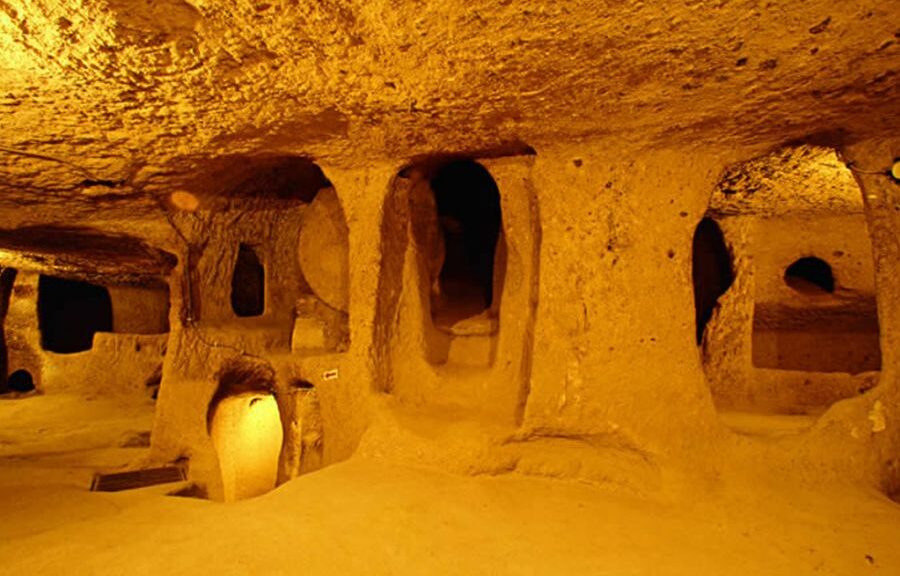
Cappadocia in Turkey is another incredible example. The underground city of Derinkuyu is another piece of evidence that points towards the perfection and long-lost construction methods of our ancestors.

The underground city of Derinkuyu is perhaps one of the greatest achievements in underground construction together with the huge network of tunnels.

The geological features of the stone from Derinkuyu is something that is very important; it is very soft. Thus, the ancient builders of Derinkuyu had to be very careful when building these underground chambers providing enough pillar strength to support the floors above; if this was not achieved, the city would have collapsed, but so far, archaeologists have not found evidence of any “cave-ins” at Derinkuyu.

12,000-year-old massive underground tunnels are real and stretch from Scotland to Turkey

Other ancient monuments such as Gobekli Tepe are more pieces of crucial evidence that point towards incredible skills and knowledge by people who inhabited our planet over ten thousand years ago.

According to Dr Kusch, chapels were often built at the entrances to the underground tunnels because the Church were afraid of the heathen legacy the tunnels might have represented, and like many other things, the church wanted to make sure word about the tunnels was kept as a secret.

In some of the tunnels, writings have been discovered which refer to these underground tunnels as gateways to the underworld.

Archaeologists Extract 1,300-Year-Old Wooden Ski From Norwegian Ice

Archaeologists Extract 1,300-Year-Old Wooden Ski From Norwegian Ice

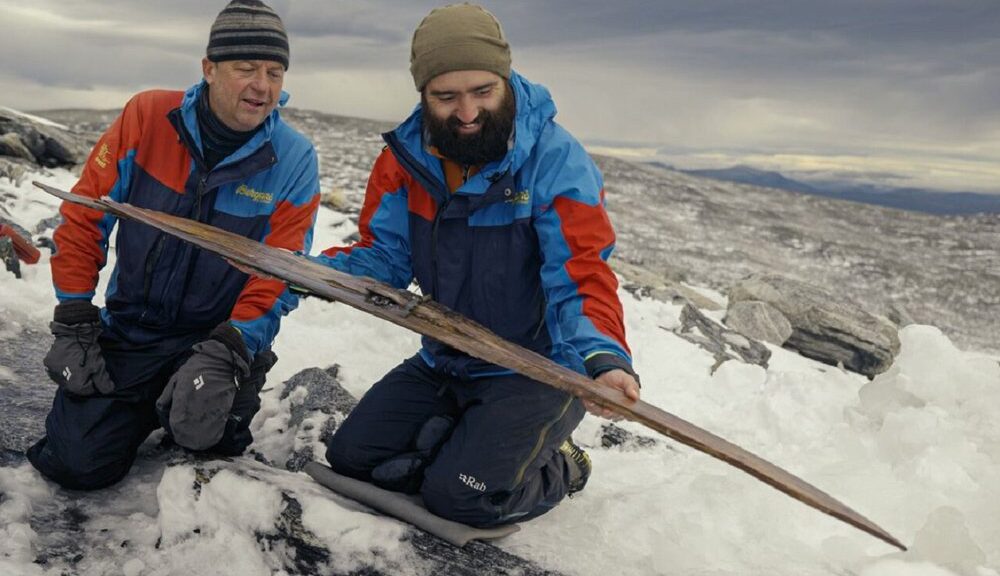
The long-lost ski of a pair used more than 1,300 years ago has been discovered on a Norwegian mountain top. The first ski was uncovered in 2014 and seven years later, the Digervarden ice patch melted enough to reveal its wooden counterpart – together they make the oldest pair of skis ever to be found.

On September 26, a team of Norwegian archaeologists led by the Secrets of Ice program hiked three hours up Mount Digervarden to the spot where the first ski was discovered.

Using GPS position and photos taken from the initial visit, the researchers located the second ski under the ice, which they chipped away with an axe and melted with boiling water to break the artefact free.

Archaeologists Extract 1,300-Year-Old Wooden Ski From Norwegian Ice
The second ski was better preserved than the first, perhaps because it was buried more deeply in the ice.

The Digervarden ice patch is in Reinheimen national park, located in Nordberg, Norway. It is a popular archaeological site that has revealed several ancient treasures once used thousands of years ago.

However, the reason these forgotten items are surfacing is due to climate change melting the once-solid ice sheets. The newly discovered ski is 187 cm long and 17 cm wide, 17 cm longer and 2 cm wider than the first ski found in 2014.

Archaeologist Lars Holger Pilø, who was part of the excavation, wrote in a blog post that the preservation of the new ski is much better, which may be due to it being deeper in the ice.

The skis may have belonged to a hunter or traveller.
Close-up view of the repaired foothold of the 1,300-year-old ski Espen Finstad / Secrets of the Ice
In November 2020, Pilø and his colleagues found a trove of artefacts on a mountainside in Jotunheimen in Norway. The items included nearly 70 arrow shafts (pictured), shoes, textiles and reindeer bones

‘That may account for some of the differences in dimensions between the two skis,’ Pilø shared.

The long wooden plank features three twisted birch bindings, a leather strap and a wooden plug through the hole in the foothold.

The ski found in 2014 only had one twisted birch binding and a leather strap through the hole.

Both skis have a hole through the tip.  

There are slight differences in the pair, one being that the back end of the new ski, while the one found in 2014 is straight. Interestingly, the new ski shows signs of repairs and a piece of the back end is missing that could still be frozen in the ice.

‘Whether it broke when lost or while inside the ice may be possible to say at a later stage based on a careful study of the edge of the break,’ Pilø shared in the post.

‘The skis are not identical, but we should not expect them to be. The skis are handmade, not mass-produced.

‘They have a long and individual history of wear and repair before an Iron Age skier used them together and they ended up in the ice 1300 years ago.’

In November 2020, Pilø and his colleagues found a trove of artefacts on a mountainside in Jotunheimen in Norway. The items included nearly 70 arrow shafts, shoes, textiles and reindeer bones. 

The heads were made from a variety of materials — iron, quartzite, slate, mussel shell and even bone. 

Several still had the twine and tar used to affix them to a wooden shaft. 

Gate to Temple of Zeus Unearthed in Magnesia, Turkey

Gate to Temple of Zeus Unearthed in Magnesia, Turkey

Archaeologists have been excavating Magnesia for decades. The ancient Greek city in Turkey’s Aydin province is home to two temples: one dedicated to Artemis, and the other, to Zeus.

Archaeologists found the entrance gate for the Zeus Temple in the ancient city Magnesia, located in Aydin’s Germencik district in western Turkey. The excavations that continue in the Ortaklar neighbourhood are being led by Associate Professor Gorkem Kokdemir of Ankara University Archaeology Department.

“I have been working on the Magnesia excavations for 23 years, since 1998,” Kokdemir tells TRT World. The excavations were being led by Professor Orhan Bingol, and when he retired, the Ministry of Culture and Tourism saw me fit for the job.”

According to Kokdemir, Magnesia was first dug up during the erstwhile Ottoman Empire’s reign. A German archaeologist, Carl Humann, in the 1890s, around 1891-1892, on behalf of the German government – who also dug in Bergama, and many other cities in western Anatolia – excavated Magnesia.

“He spends two years in Magnesia and digs up the Zeus Temple, the one we rediscovered and is now in the news, in the agora,” Kokdemir says on the phone. “It is significant because of architectural history. It is dated back to the 3rd century BC, one of the earliest temples of the Hellenistic period.”

Magnesia in Turkey’s Aydin province was first dug up before the establishment of the Republic of Turkey by a German archaeologist.

Kokdemir adds that Humann “reveals the architectural elements of this temple and he takes about ten per cent of the temple to Berlin. He takes many goods to Berlin such as sculptures and inscriptions, along with parts of the Zeus Temple. Today in Berlin’s Pergamon Museum there is on display the Zeus temple’s parts 5.5-6 metres tall, they have been completed with 90 per cent imitation parts. You can see this temple when you go to the museum today.”

Kokdemir tells TRT World that the Zeus Temple is one of the most important sacred areas of Magnesia, one of the most important temples.

“There is the Artemis sacred space there, there is also a sacred agora, the Zeus Temple is in the sacred agora. It is very significant, it is the second important cult [of Magnesia].”

“In ancient cities, people worship not just one deity, they worship multiple gods or goddesses. In Magnesia the first deity is Artemis, and the second deity is Zeus,” he clarifies.

Kokdemir says the archaeological team is once more excavating the Zeus Temple to access the architectural information, to complete the missing information and to reintroduce the temple to archaeological literature: “It has been underground for a hundred years. It was only seen during Humann’s time and shortly after was buried under four metres of soil.”

The Magnesia excavation team expects to find 60 to 70 per cent of the original materials of the Zeus Temple, planning to carry out a good restoration project and to revive it with five metres pillar height and seven-seven and a half metres including the roof and will make it a proper sight to visit.

Parts of the Zeus Temple in Magnesia are in Berlin, while most of it is being dug up in Turkey’s Aydin province.

Asked about the significance of Magnesia as a city, Kokdemir says it was set up about 2,400 years ago, in the 4th century BC. “Its most striking aspect is the temples built for gods and goddesses and the festivals and games organised for these deities.”

Of the structures in Magnesia, the Artemis temple is the biggest temple, which is open to visitors. Kokdemir says it is the fourth largest temple in Anatolia, following Ephesus’ Artemis Temple – one of the seven wonders of the world–, the Apollo Temple in Didyma, and the Artemis Temple in Manisa, in Sardes.

“The Artemis Temple in Magnesia was built by a prominent architect of its time, think of him like Sinan the Architect was to the Ottoman legacy, an architect of antiquity called Hermogenes. His masterpiece is the Artemis Temple,” Kokdemir enthuses.

Kokdemir notes another detail about the Artemis Temple. “In the 3rd century BC, 2300 years ago, there were games organised that were the equivalent of the most important games in the Mediterranean region, Delphi Apollo Games. A grand organisation. Participants from Italy, from Greece, from many points in Anatolia, from the islands, joined in these games that last five days. The games spoke of the significance of Magnesia and also helped the city grow and thrive.”

Kokdemir points out that there are still many places in Magnesia to be excavated. While they expect the Zeus Temple to be restored to its full glory in a couple of years contingent on funding, there is also the hippodrome with 50,000 capacity, he says. “We may have to wait for 15-20 years to completely experience the amazing city that is Magnesia, but it will be worth it.”

Roman-Era Venus Statuette Unearthed in England

Roman-Era Venus Statuette Unearthed in England

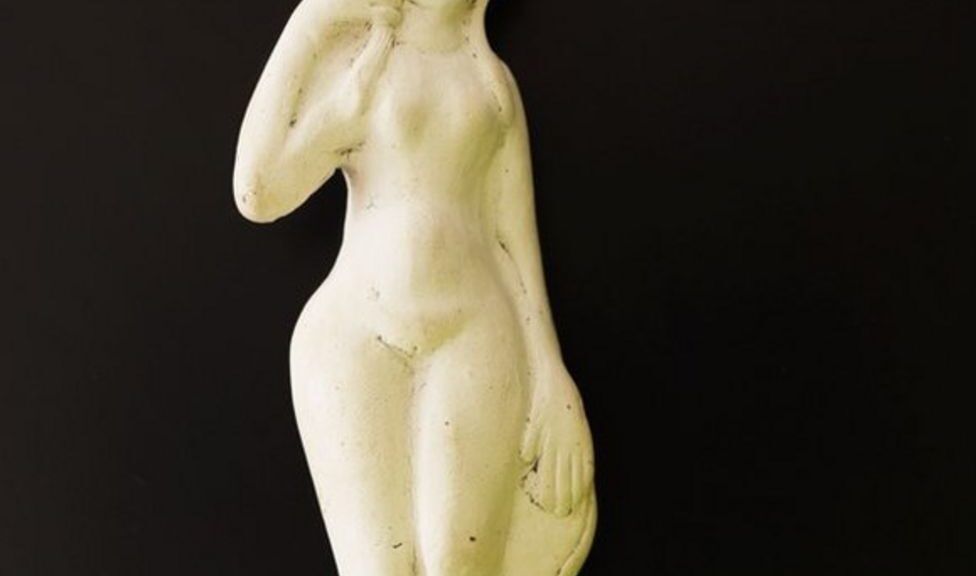
BBC News reports that an excavation ahead of a construction project in the centre of southwestern England’s city of Gloucester has uncovered a 1,800-year-old figurine thought to depict Venus, the Roman goddess of love.

The statuette was discovered in Gloucestershire at the site of the new £107m development, the Forum.

It is one of many finds at the site dating back to Roman times and is believed to be a depiction of Venus, the Roman goddess of love.

17cm-high, the pipeclay figurine dates to the first or second Century

Archaeologist Anthony Beechey said: “This has been the most exciting find of my career in archaeology so far.

“The figurine provides a really important tangible link between the people of Gloucester and their past.”

The archaeologists believe the 17cm-high figurine would have been worshipped as a religious icon.

Andrew Armstrong, city archaeologist at Gloucester City Council, said: “This figurine is in incredibly good condition and a wonderful find for Gloucester.

“We know pieces like these were made in central France and the Rhineland/Mosel region of Germany during the first and second centuries.

“It seems certain the figurine is from this period and is a representation of Venus. She would most likely have stood in someone’s home shrine for the goddess.”

More remains of the city’s medieval Whitefriars Carmelite Friary were also found

Lead archaeologist Marino Cardelli described the find as of “inestimable historical value… a testimony of the city’s history and culture”.

The development of the Forum is the largest regeneration project Gloucestershire has seen for a generation and will create a new social and digital quarter.

The statuette was excavated alongside evidence of the city’s ancient heritage, including the stone foundations of a number of buildings that may have formed part of a large Roman suburb outside the city walls.

Councillor Richard Cook, leader of Gloucester City Council, said: “The Forum site is truly proving a treasure trove of archaeological finds which give us a fascinating insight into how Gloucester has changed over time.

“By bringing forward a development to shape the city as a future-ready digital hub, we are also illuminating its long and intriguing history.”