Category Archives: EUROPE

66-Million-Year-Old Dinosaur Skin Impression Discovered In Spain

66-Million-Year-Old Dinosaur Skin Impression Discovered In Spain

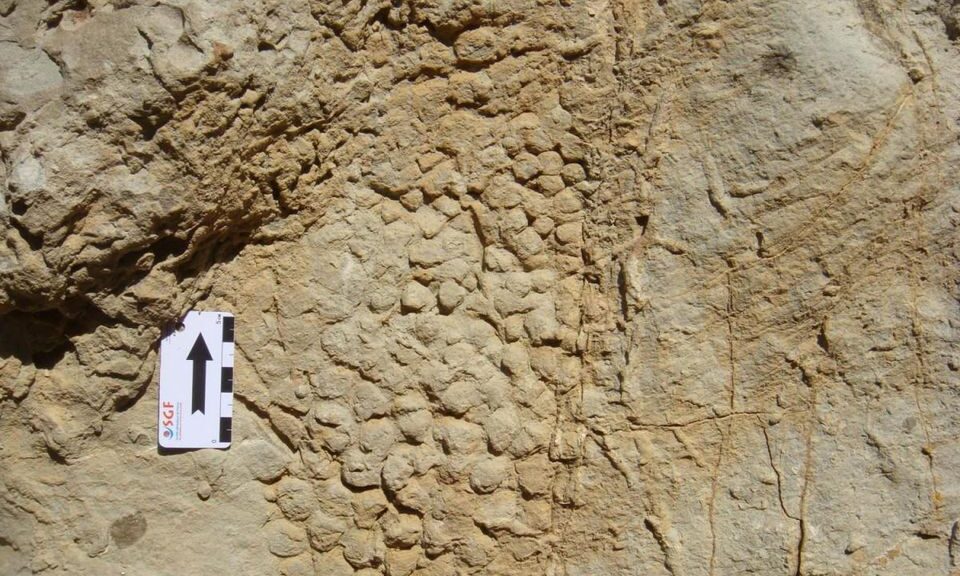
In Spain, detailed skin impressions of a giant dinosaur discovered 66 million years ago in a muddy riverbank have been discovered. The fossil was created over centuries by sand petrifying into sedimentary rock, and it clearly shows the pattern of massive scales that once lined the creature’s hide.

skin
Detailed skin impressions of a massive dinosaur that rested in a muddy river bank some 66 million years ago have been uncovered in Spain. The fossil was formed by sand petrifying into sedimentary rock over millennia and distinctively shows the pattern of large scales that once lined the creatures hide

The prints are thought to have been left by a titanosaur that lived during the Late Cretaceous period, just before dinosaurs went extinct.

‘This is the only registry of dinosaur skin from this period in all of Europe, and it corresponds to one of the most recent specimens, closer to the extinction event, in all of the worlds,’ said lead researcher Victor Fodevilla, from the Autonomous University of Barcelona.

‘There are very few samples of fossilized skin registered, and the only sites with similar characteristics can be found in the United States and Asia.’

Instead, the team envisions the creature that made the impressions with a huge four-footed sauropod, possibly a Titanosaurus – one of the biggest animals ever to walk the Earth.

And researchers found footprints near the site that support the titanosaur theory.

‘The fossil probably belongs to a large herbivore sauropod, maybe a titanosaur, since we discovered footprints from the same species very close to the rock with the skin fossil,’ said Fodevilla.

A titanosaur, a silhouette representing the size of a hatchling titanosaur, relationship to a human at birth, tiny titanosaur babies weigh about as much as average human babies, 6 to 8 pounds. But in just a few weeks, they’re shedding the tiny descriptor and are at least the size of golden retrievers, weighing 70 pounds, knee-high to a person. And by age 20 or so, they’re bigger than school buses

The discovery was made in the village of Vallcebre, near Barcelona, in an area that was once the bank of an ancient river. It is thought the dinosaur left an imprint of its scales when it laid down in the mud to rest. Over time, the region where the animal left its prints was eventually covered with sand.

And over the course of thousands of years, the area petrified to form sandstone, preserving the astonishing impressions recently discovered by the researchers. 

Since the sand acted as a mold, what is seen on the rock is a relief from the animal’s original skin. 

How the process happened is unique, as the Late Cretaceous period corresponds to the moment shortly before dinosaurs became extinct, there are few places on Earth containing sandstone from this period.

Characterizing these dinosaurs is very important in order to understand how and why they disappeared. Two skin impressions were found, one about 20 centimetres across and the other five centimetres, separated by a distance of 1.5 meters.

And experts believe they were made by the same animal.

The ‘rose’ pattern of the scales is characteristic of certain dinosaurs, said the researchers, who describe their find in the journal Geological Magazine.  

‘The fact that they are impression fossils is evidence that the animal is from the sedimentary rock period, one of the last dinosaurs to live on the planet,’ said Fondevilla.

‘When bones are discovered, dating is more complicated because they could have moved from the original sediment during all these millions of years.’ 

This discovery also verifies the excellent fossil registry of the Pyrenees in terms of dinosaurs living in Europe shortly before they became extinct. 

‘The sites in Berguedà, Pallars Jussà, Alt Urgell and La Noguera, in Catalonia, have provided proof of five different groups of titanosaurs, ankylosaurids, theropods, hadrosaurs and rhabdodontids,’ said Àngel Galobart, head of the Mesozoic research group at the ICP and director of the Museum of Conca Dellà in Isona. 

‘The sites in the Pyrenees are very relevant from a scientific point of view since they allow us to study the cause of their extinction in a geographic point far away from the impact of the meteorite.’ 
5,000-year-old grave reveals mass murder of Bronze Age family

5,000-year-old grave reveals mass murder of Bronze Age family

Despite the fact that all 15 people discovered in a Bronze Age mass grave in southern Poland were killed by a head blow, their bodies were buried together with great care and consideration.

Genetic evidence now indicates that these people belonged to the same extended family, providing new light on a tumultuous period in European prehistory.

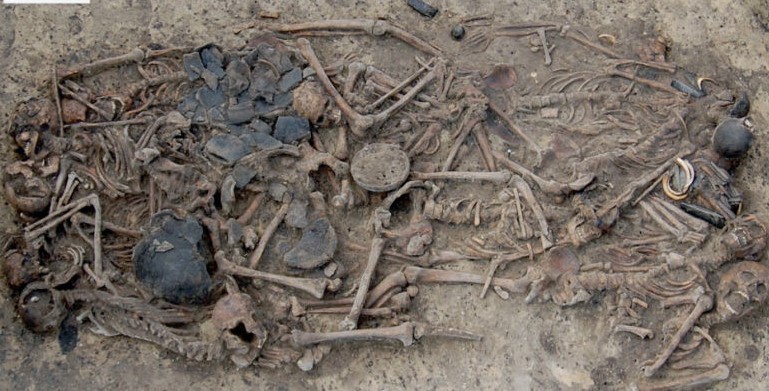
In 2011, a tragic grave near the southern Polish village of Koszyce was found. The remains of 15 men, women, and infants, as well as valuable grave goods, were found in the grave, which was radiocarbon dated to between 2880 and 2776 BCE. Many of the skeletons had sustained serious cranial trauma.

5,000-year-old grave reveals mass murder of Bronze Age family
The grave in Koszyce, southern Poland, holds the remains of 15 people and the grave goods that were buried with them.

The reason for the killings could not be determined, with archaeologists at the time suggesting these individuals were murdered during a raid on their settlement.

To shed more light on this mystery, a team of researchers from the University of Copenhagen, the University of Aarhus, and the Archaeological Museum in Poznan, Poland, conducted a genetic analysis of the remains.

The results, published late last week in the Proceedings of the National Academy of Sciences, suggests all but one of these individuals were closely related, and that the individuals were positioned in the grave according to their kin relationships.

All 15 skulls exhibited fatal cranial fractures. No defensive wounds, such as injuries to the upper limbs, were detected, which suggests these individuals were captured and executed, and not killed in hand-to-hand combat, according to the new study.

Importantly, the new evidence suggests these people, who are associated with the Globular Amphora Culture (a group that lived in central Europe from around 3300 to 2700 BCE), were not genetically related to a neighbouring group known as the Corded Ware Culture. 

The researchers still aren’t sure what happened, but they guess that the killings were territorial in nature. This particular time period marked the transition from the Late Neolithic period to the Bronze Age, as early farmers were developing more complex societies.

But it was also a turbulent and violent time, as European cultures were coming into contact with incoming cultures from the east, including from the Asian steppe. The expansion of the Corded Ware groups may have resulted in this gruesome incident.

“We know from other gravesite discoveries that violent conflicts played out among different cultural groups at this time,” archaeologist Niels Johannsen of Aarhus University said in a University of Copenhagen press release. “However, they have never been as clearly documented as here. All the violence and tragedy aside, our study clearly demonstrates that family unity and care meant a lot for these people, some 5,000 years ago, both in life and in death.”

Indeed, the new genetic analysis identified these 15 individuals as part of a large extended family. Overall, four nuclear families were documented—mothers and children for the most part. The individuals were buried according to family relationships; mothers were buried with their children, and siblings were positioned next to each other.

The oldest individual, for example, was buried alongside her two sons, aged 5 and 15. A woman in her early 30s was buried with her teenage daughter and 5-year-old son. Four boys, all brothers, were laid down next to each other. Clearly, the bodies were buried by someone who knew the deceased.

Importantly, fathers and older male relatives were missing from the grave, “suggesting that it might have been them who buried their kin,” wrote the authors in the new study.

“Our suggestion is that they weren’t at the settlement when the massacre occurred and that they returned later, and subsequently buried their families in a respectful way,” said biologist Morten Allentoft of the University of Copenhagen in a statement.

Only one individual, an adult female, was not genetically related to anyone in the group. However, she was positioned in the grave close to a young man, which suggests “she may have been as close to him in life as she was in death,” wrote the authors.

“The presence of unrelated females and related males in the grave is interesting because it suggests that the community at Koszyce was organized along patrilineal lines of descent, adding to the mounting evidence that this was the dominant form of social organization among Late Neolithic communities in Central Europe,” the authors wrote in the study.

Typically, patrilineal societies are associated with the practice of women marrying outside of their social group and residing with the man’s family (i.e. female exogamy). Several previous studies have suggested that patrilineal domestic arrangements did in fact prevail in several parts of Central Europe during the Late Neolithic, according to the new paper.

A brutal episode from a particularly brutal period in human history. It’s a scene that wouldn’t be out of place on Game of Thrones, but unfortunately, this tragedy was all too real.

Remains of Medieval Bridge Discovered in Ljubljana, Slovenia

Remains of Medieval Bridge Discovered in Ljubljana, Slovenia

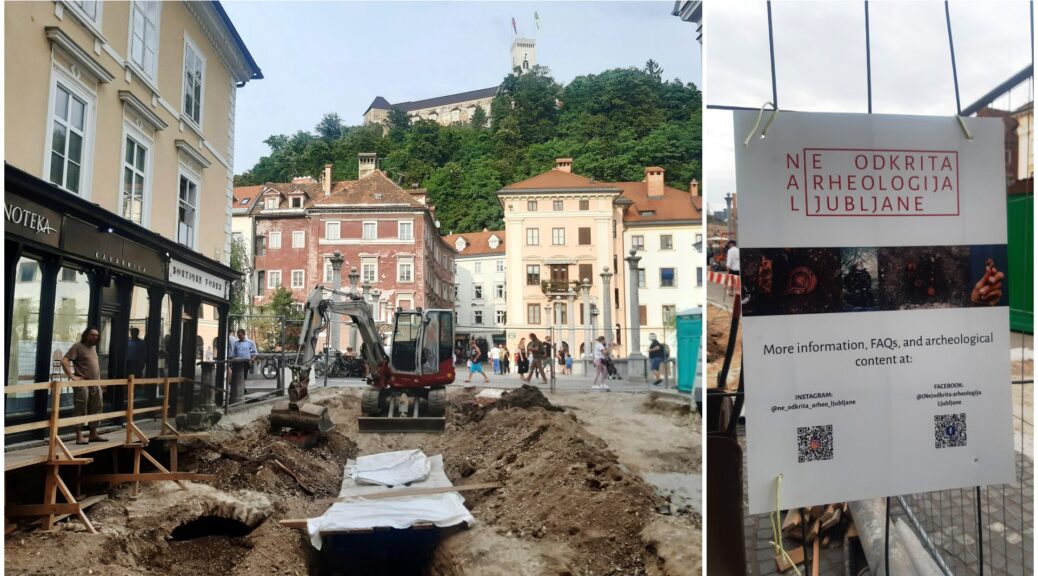
Slovenian archaeologists have discovered several finds along the river Ljubljanica during the renovation of the Zlata Ladjica house, including the foundations of the Butcher’s Bridge, which has since the Middle Ages been replaced by the current Shoemaker’s Bridge. 

Archaeologists have discovered the foundations of the medieval Butcher's Bridge on Jurčič Square in Old Ljubljana, which stood on the site of the current Shoemaker's Bridge, which arouses the interest of walkers. More interesting stories about bridges were given by archaeologist Martin Horvat from

The find did not come as a surprise because the Butcher’s Bridge in what is now Jurčič Square was known from historical records, yet it is the first material evidence to prove its existence, Martin Horvat, an archaeologist at the Ljubljana Museum and Galleries (MGML), told the STA on Tuesday.

The Butcher’s Bridge was first indirectly mentioned around 1280 when a piece of information appeared about an Old Bridge, located where the Triple Bridge stands now.

Archaeologists have discovered the foundations of the medieval Butcher’s Bridge on Jurčič Square in Old Ljubljana, which stood on the site of the current Shoemaker’s Bridge, which arouses the interest of walkers.

The mention of the Old Bridge meant a new bridge – the Butcher’s Bridge – must have been built by then where the Shoemaker’s Bridge is now.

“At first it was very probably fully made of wood, including the foundations on both river banks,” said Horvat.

Still, the newly discovered foundations are from sometime later, probably the 14th century. They are made of a kind of bricks, while the bridge itself was probably made of wood.

In the second half of the 19th century, the bridge was replaced by an iron bridge and renamed after Mayor Johann Nepomuk Hradecky, while in the 1930s, the current Shoemaker’s Bridge was built there, designed by architect Jože Plečnik.

The bridge names reflected the business being done there: butcher’s shops on the Butcher’s Bridge were mentioned in the 16th century but were banned from it at the start of the 17th century for the smell and water pollution.

The bridge was then occupied by other craftsmen, increasingly by shoemakers, hence the name the Shoemaker’s Bridge.

The excavations in Jurčič Square have also led to the discovery of the remains of Roman and Medieval riverbanks, while a bit earlier, archaeologists were surprised to discover finds related to a blacksmith’s shop from the 12th century.

Another interesting find is a giant sewage pipe from the end of the 17th or early 18th century.

The archaeologists started working in Jurčič Square around two months ago to supervise the start of construction work.

While the excavations have been completed there, they have moved to the other side of the Zlata Ladjica (Golden Ship) house, where they expect to come across more finds related to the blacksmith’s shops as well as more of the riverbanks from the Middle Ages and later.

In the Middle Ages, one to three metres of the riverbank was “acquired” by way of using various materials to narrow the river, Horvat explained.

He also highlighted that this area – known as the Breg – used to be Ljubljana’s main port for all goods transported on the Ljubljanica, with all the needed facilities such as warehouses or customs offices, some of whose foundations Horvat hopes will be found.

Medieval Castle Remains Uncovered in England

Medieval Castle Remains Uncovered in England

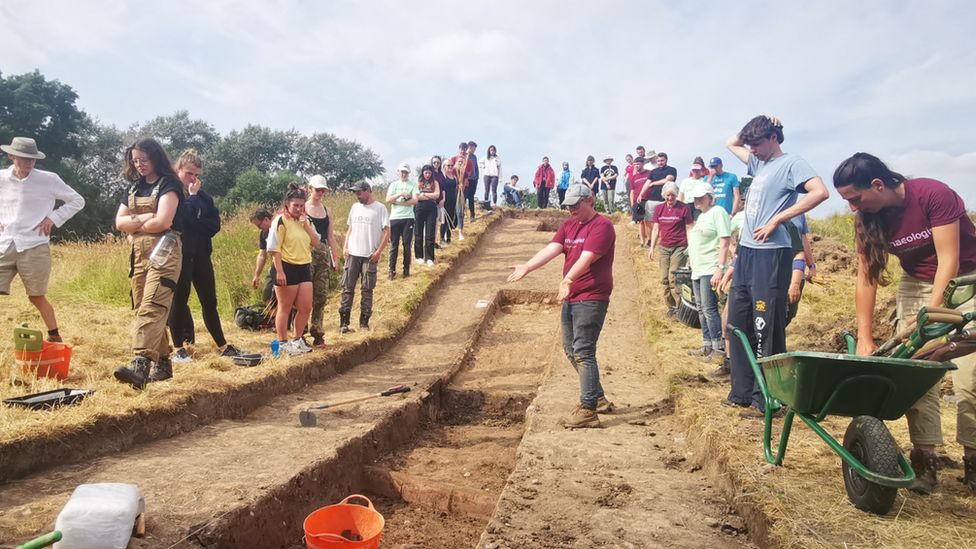
Archaeologists have discovered the ruins of a castle that they believe dates from the 13th century. They’ve been working on a mound of land in Wem, Shropshire, that belongs to Soulton Hall, an Elizabethan mansion.

Medieval Castle Remains Uncovered in England
The remains are thought to date back to 1250

The hall was built in the 16th Century, but experts believe the castle remains could date back as far as 1250. Site manager Nat Jackson, of Dig Ventures, said the find was “just amazing”.

“We found what we think might possibly be a castle on the mound.

“We’ve got a substantial wall and substantial blocks of wood dating to about the 13th to 15th century. It’s very, very, exciting,” he told BBC Radio Shropshire.

A stone wall was uncovered at Soulton Hall

A test dig on the previously untouched mound was carried out in 2019, but teams returned in July to continue excavation work. Tim Ashton, the landowner, said his family have been curious about the lumps in the land for over 100 years.

“We’ve always had questions, my grandfather was born in the 1920s and always wondered what it was,” he said.

“The team is fairly comfortable in the time because of the objects we’ve been finding.

“The finds are all from that period, a pilgrims badge, ceramics, and ampulla which is a medieval way of carrying holy water and it was not made for a great deal of time.

“The moat bridge is colossal and we can be confident of the dating on that,” he said.

A pilgrims badge was among the medieval items found

Mr Jackson added: “We think it was quite a small one, dominating the road to Wem and there would have been a moat around it.

“We think we might have found the evidence of the bridge that went over the moat, but this is for further exploration next.”

Dig Ventures has been working with Cardiff University students in their field school.

Students from Cardiff University have been helping out at the site

Mr Ashton said for many of the students, have never met in person since beginning their course due to the pandemic, but others, could not graduate from their course without the field experience.

“They have had very little access to the field, some of them couldn’t graduate until they came to the dig, we’ve been planning it for eight months.

“It’s one of the first teaching digs [taken place since the pandemic] and they essentially found a perfectly preserved timber structure.”

Roman Weapons Unearthed at Punic Site in Spain

Roman Weapons Unearthed at Punic Site in Spain

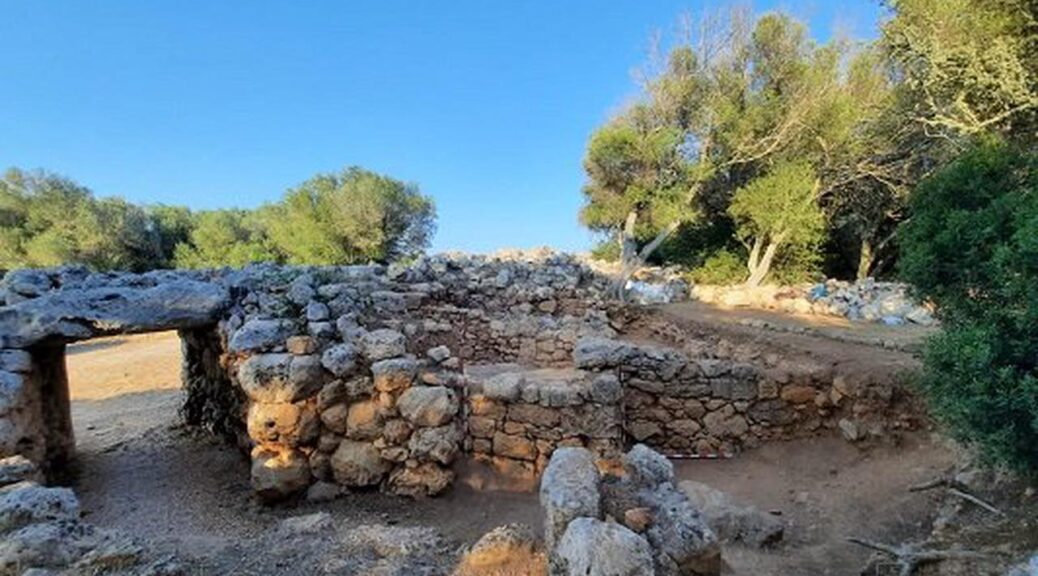
Archaeologists digging near the ancient Talayotic settlement of Son Catlar in Menorca, Spain have unearthed a treasure trove of artefacts from Roman soldiers, dating back to around 100 B.C. 

The discovery, which happened in late July, includes an assortment of items found at the site, according to a statement from the University of Alicante. 

Included in the find were ‘weapons, knives, three arrowheads, spearheads, projectiles, surgical tools, a bronze spatula probe, and so on,’ the statement explained.

Son Catlar is the largest Talayotic settlement in the area, surrounded by a stone wall that measures 2,850 feet (870m) in length, according to Heritage Daily. 

Occupation in the area started between 2,000 and 1,200 B.C. and lasted until the late Roman period, which ended around 476 A.D. 

Archaeologists digging near the Talayotic settlement in Menorca, Spain have unearthed a treasure trove of artefacts from Roman soldiers
Other items include three arrowheads, spearheads, projectiles, surgical tools, a bronze spatula probe and more

It’s likely that the stone barrier was built several hundred years prior, between the 5th and 4th centuries, B.C., according to Spanish news outlet La Vanguardia.

It’s possible that the Roman soldiers, who conquered the area in the second century B.C., associated the stone barrier with Janus – the Roman god of doors, gates and transitions – given how superstitious they were, Heritage Daily added.   

‘This type of gate was characteristic of Punic culture, and it was used as a defence system to protect against possible sieges by the Romans,’ the statement from the university explained. 

‘Roman soldiers were very superstitious and used to perform these rites. At that time, the world of gates was charged with magic.

The Romans gave a sacred value to the gates of the cities, and sealing one definitively would entail certain actions of a magical nature.’    

The dig leader, Fernando Prados, suggested it was the Roman superstitions that may have led to the discoveries being in such good condition, as the soldiers believed they had a ‘magical protective character … against evil spirits when sealing doors.’ 

‘The conservation of the entire perimeter of the wall at Son Catlar makes the site a source of great value, as it provides a great deal of scope for studying the archaeology of conflict and war,’ Prados added in the statement.  

The wall also has sentry boxes and square towers known as Talayots, which gives the region its name, according to the World Heritage Convention. 

It was built using cyclonic masonry, which according to the WHC, meant it was constructed ‘without mortar,’ only using the blocks themselves.

The wall was later strengthened, possibly due to the Roman conquest of the territory or the Punic Wars, the university added. 

The Punic Wars took place from 264 to 146 B.C., and artefacts stemming from these times have been recovered in recent years. 

In 2013, archaeologists found a treasure trove of items, including helmets, weapons and ancient bronze battle rams found off the Sicilian coast from 2013, from the First Punic War. 

Anglo-Saxon Sword Pyramid Found in England

Anglo-Saxon Sword Pyramid Found in England

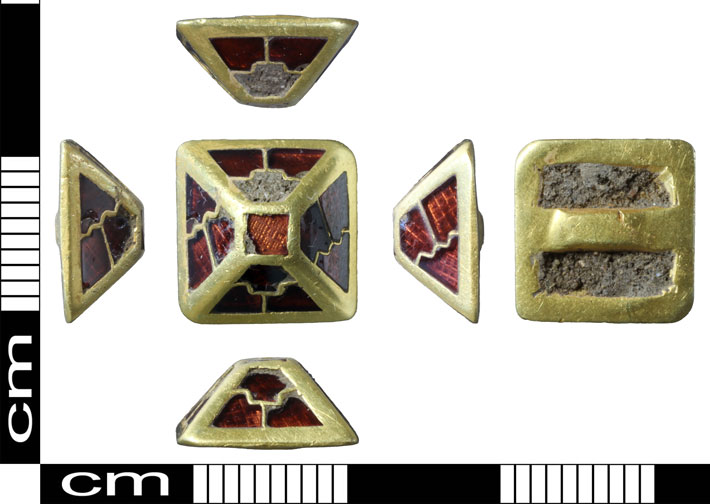
A gold and garnet sword pyramid lost by a Sutton Hoo-era lord “careening around the countryside” on his horse has been discovered by a metal detectorist. The Anglo-Saxon object was found in the Breckland area of Norfolk in April.

Anglo-Saxon Sword Pyramid Found in England
A metal detectorist discovered the mount on 11 April

Finds liaison officer Helen Geake said the garnets are Indian or Sri Lankan, revealing the far-flung nature of trade links in the 6th and 7th Centuries.

Sword pyramids come in pairs so its loss “was like losing one earring – very annoying”, she said.

The tiny 12mm by 11.9mm (0.4in by 0.4in) mount dates to about AD560 to 630, at a time when Norfolk was part of the Kingdom of East Anglia.

Dr Geake said: “It would have been owned by somebody in the entourage of a great lord or Anglo-Saxon king, and he would have been a lord or thegn [a medieval nobleman] who might have found his way into the history books.

“They or their lord had access to gold and garnets and to high craftsmanship.”

The extremely fine foil on its back is believed to have been created by techniques like a modern pantograph, used to reduce the size of the design.

The mounts were part of the system that bound a sword to its scabbard.

“It’s believed they made it a bit more of an effort to get the sword out of the scabbard, possibly acting as a check on an angry reaction,” Dr Geake said.

Norfolk finds liaison officer Helen Geake said it revealed the remarkable craft skills of the Anglo-Saxons

A more ornate pair were discovered at the early 7th Century ship burial at Sutton Hoo, which recently featured in the Netflix movie The Dig.

They are less commonly found in graves, but are “increasingly common” as stray finds, probably as accidental losses. Dr Geake said: “Lords would have been careening about the countryside on their horses and they’d lose them.”

The find has been reported to the Norfolk Coroner, as required by the Treasure Act.

study confirms ancient Spanish cave art was made by Neanderthals

Study confirms ancient Spanish cave art was made by Neanderthals

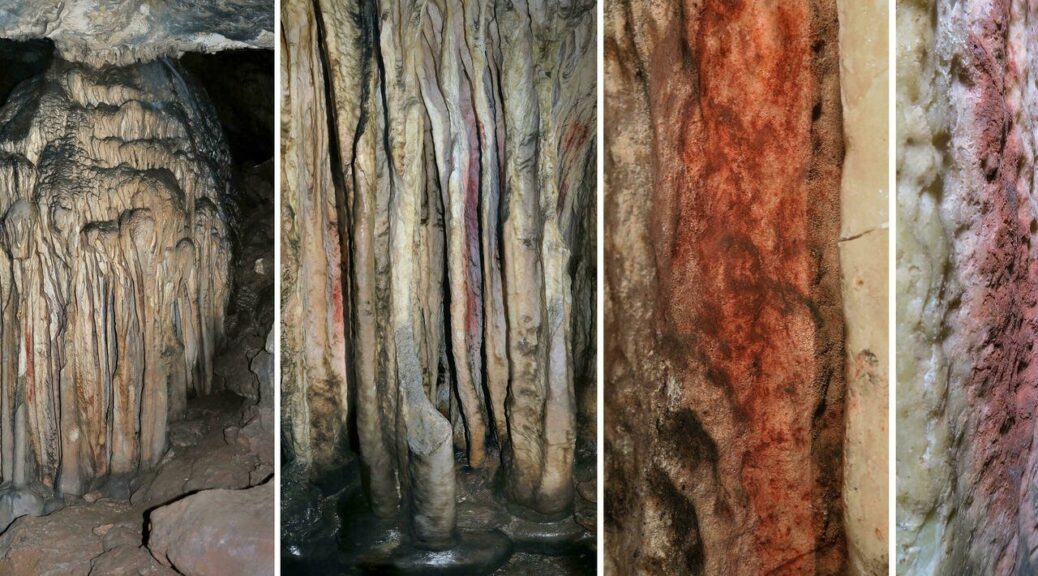
A study of the pigments used in wall paintings in the Cueva Ardales caves in southern Spain originated from Neanderthals. The cave was discovered in 1821 when an earthquake exposed the cave entrance.

Pedro Cantalejo, director of the Andalusian cave of Ardales, looks at Neanderthal cave paintings inside the cavern on March 1, 2018.

In 1918, the famous prehistorian Henri Breuil visited the cave and discovered the first Palaeolithic paintings and engravings.

The research, “The symbolic role of the underground world among Middle Palaeolithic Neanderthals” published in PNAS (Proceedings of the National Academy of Sciences of the United States of America) was conducted by Àfrica Pitarch Martí and her colleagues from Collaborative Research Center 806 “Our Way to Europe”, where they performed a geoscientific analysis on red pigments from a massive stalagmitic pillar in the cave system.

Study confirms ancient Spanish cave art was made by Neanderthals
This combination of pictures obtained on July 29, 2021, shows a general view and close-up of a partly coloured stalagmite tower in the Spanish cave of Ardales, southern Spain Joao Zilhao UNIVERSITY OF BARCELONA/AFP

The edges of the pillar show an entire series of narrow sinter plumes. In these sinter curtains alone, red paint spots, dots, and lines were applied in 45 places.

The objective was to characterise the composition and possible origin of the pigments.

The results showed that the composition and arrangement of the pigments cannot be attributed to natural processes, but that they were applied by spraying and in some places by blowing.

The researchers found that the nature of the pigments does not match natural samples taken from the floor and walls of the cave, suggesting that the pigments were brought into the cave from outside.

Dating of the pigment suggests that they were applied on two separate occasions, the first being more than 65,000 years ago, whilst the other has been dated to 45,300 and 48,700 years ago during the period of Neanderthal occupation.

The cave paintings found in three caves in Spain, one of them in Ardales, were created between 43,000 and 65,000 years ago.

According to the authors, these are not art in the strict sense, but rather markings of selected areas of the cave whose symbolic meaning is unknown.

Turkish Archaeologists Find Byzantine Castle at Akyaka, Western Turkey

Turkish Archaeologists Find Byzantine Castle at Akyaka, Western Turkey

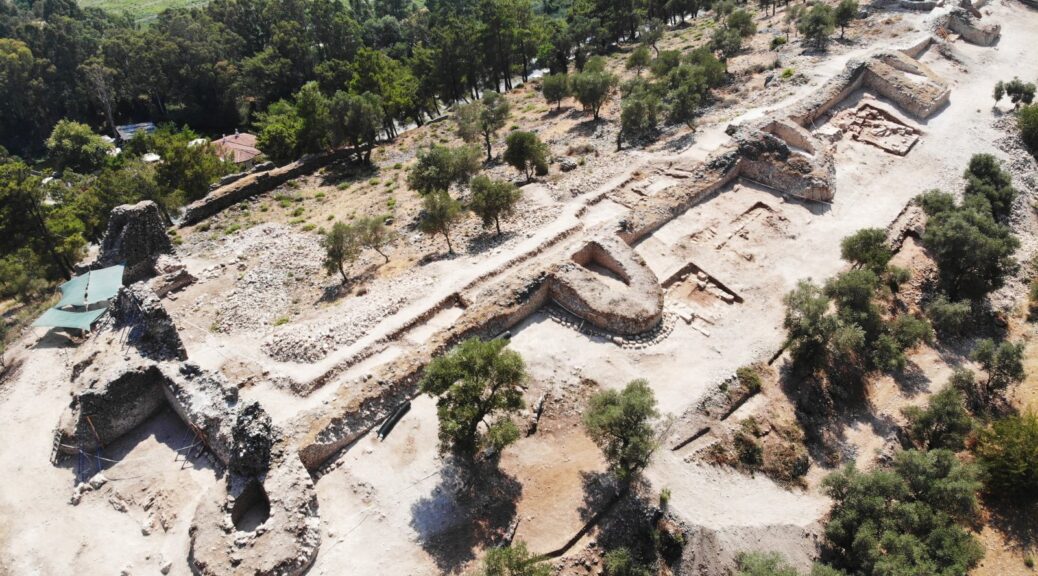
Excavation work was launched in Akyaka in the Ula district of southwestern Muğla province nearly a year ago to bring to light the historical sites of the town. Efforts to reveal the history of the town have been continuing without any interruption, and the archaeologists are now unearthing the medieval castle walls.

Akyaka is a popular destination that can be visited in any season. It is known for its authentic architecture and relaxing nature from the forests to the sea.

Whereas one is immediately overwhelmed by the town’s unique charm due to the spellbinding architecture, the tranquillity of it leaves people speechless.

Akyaka was welcomed into the Cittaslow International network in 2011. Cittaslow is an organization founded in Italy whose goals include improving the quality of life in towns by slowing down its overall pace, especially in a city’s use of spaces and the flow of life and traffic through it.

Akyaka is a perfect place for those in search of complete peace while enjoying the crystal clear waters of the Mediterranean. It offers a fascinating experience away from all hustle and bustle.

However, the town also bears historical and cultural mysteries and richness beneath its land as it houses a small settlement of the Idyma ancient city.

With the excavations that started last year, medieval castle walls and rock tombs from earlier periods have been discovered in the town, which is considered to date back approximately 2,700 years. Cleaning and restoration works are being carried out in these areas.

Turkish Archaeologists Find Byzantine Castle at Akyaka, Western Turkey
An aerial view from the medieval castle walls in Akyaka, Muğla, southwestern Turkey
Part of the Byzantine castle was found at the hillside Akyaka site in western Turkey.
Another view of the Byzantine castle walls found at the Akyaka site, which was once known as Idyma, an important Greek city-state that was first founded by the mysterious Carian culture.

Head of the excavation and Muğla Sıtkı Koçman University Archeology Department Lecturer Associate Professor Abdulkadir Baran told Anadolu Agency (AA) that the excavations in the region have been continuing for about 10 months without interruption.

Explaining that Akyaka is one of the important settlements of the Caria region in western Anatolia, Baran said, “We are currently excavating places where there are traces of the Hellenistic period, possibly related to the port. One of the most important areas we excavated and revived in the city is the medieval castle.”

A Lycian rock tomb in Akyaka, not far from the Byzantine castle dig site.
The Lycian rock-cut tombs at Dalyan Kaunos, which is located 32 miles (60 kilometres) southeast of Akyaka. Both ancient cities were built by the same cultures, and both were active during the Byzantine period.

They determined during the excavations that the castle was also used in the Ottoman and Seljuk periods. Baran pointed out that in addition to the excavations, archaeological research and scientific studies continue in the city.

“As our work progresses, our knowledge of the Carian culture, one of the ancient cultures of this region, will be fully completed. We are trying to connect the Akyaka and Ula districts to each other as a cultural route. We are working to gradually make these areas visible,” he said.

Baran stated that they also carried out work on mosaics found in previous years and added that their work will continue in the churches in the later period.