Category Archives: EUROPE

New Thoughts on the Origins of the Stonehenge

New Thoughts on the Origins of the Stonehenge

Traces of a Neolithic stone circle have been discovered in west Wales, near ancient bluestone quarries in the Preseli Hills, by a team of researchers led by Mike Parker Pearson of University College London, according to a Science Magazine report.

Around 3200 B.C.E., Stone Age farmers in Wales’s Preseli Hills built a great monument: They carved columns of unspotted dolerite, or bluestone, from a nearby quarry, then thrust them upright in a great circle aligned with the Sun. Exactly what the circle meant to them remains a mystery.

But new research reveals that several centuries later, their descendants took down many of the giant stones and hauled them 200 kilometers to the Salisbury Plain, where they created what is still the world’s most iconic prehistoric stone monument: Stonehenge.

New Thoughts on the Origins of the Stonehenge
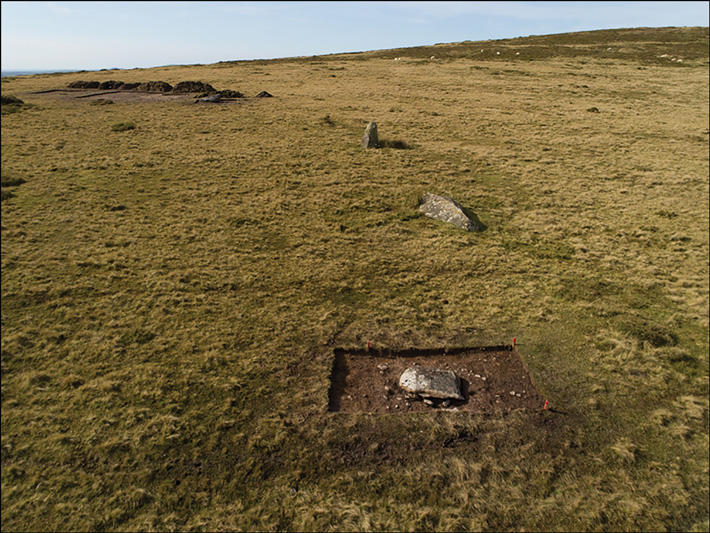
A few toppled bluestones are visible at the prehistoric stone circle of Waun Mawn in Wales

The paper’s authors “make a very good argument Stonehenge is a dismantled stone circle from Wales,” says Alison Sheridan, a curator emerita at the National Museum of Scotland who was not part of the research team. “They dealt with very tricky data but came up with a brilliant hypothesis.”

Researchers had already traced Stonehenge’s slabs of bluestone to the west coast of Wales; they’d even identified some of the quarries where the stones were extracted more than 5,000 years ago.

But radiocarbon dating showed a puzzling gap of several centuries between activity at the bluestone quarries and the earliest construction at Stonehenge.

Researchers wondered whether the distinctive, 2- to 3-meter-tall bluestones had been used to build other stone circles first, then moved to Stonehenge later. “They’re clearly not spending 200 years slowly moving them across the landscape,” says University of Southampton archaeologist Joshua Pollard, one of the co-authors. “It always seemed likely they were dismantling existing monuments.”

Over the past decade, researchers led by University College London archaeologist Michael Parker Pearson searched for ritual structures in the Preseli region that might have provided the stones—and the blueprint—for Stonehenge. In 2017 and 2018, they excavated parts of an ancient monument called Waun Mawn, where a handful of toppled bluestones similar to those at Stonehenge form a partial circle.

The excavations revealed distinctive socket-shaped pits where other stones had once stood. Connecting the dots between the empty sockets and toppled bluestones at Waun Mawn, researchers sketched out a circle 110 meters across—the same dimensions as the outer earthen ditch that was part of Stonehenge’s original layout. (The ritual center was rearranged multiple times over its 1000 year life span.) And, like at Stonehenge, the circle’s entrance was oriented toward sunrise on the midsummer solstice.

Parker Pearson’s team then measured the last time sediments inside the socket holes at Waun Mawn had been exposed to light, using optically stimulated luminescence; they also radiocarbon dated charcoal found inside the pits.

They estimate the missing stones were erected between 3400 and 3200 B.C.E. and then removed 300 or 400 years later, around the time the first construction at Stonehenge began, they report today in Antiquity. “We’re quite confident the reason they come down is they’ve gone to Stonehenge,” says Parker Pearson.

Researchers say the dismantling of Waun Mawn and the rise of Stonehenge could have been part of a larger migration from the Preseli Hills to the Salisbury Plain. Human and animal remain found at Stonehenge have chemical signatures suggesting their early years were spent on the Welsh coast. “We’ve got regular contact between the two regions,” Pollard says.

The results add to an emerging picture of Stonehenge’s origins in a complex, interconnected region centered on the Irish Sea that flourished in the fourth millennium B.C.E., Sheridan says.

“People and ideas and objects were moving over long distances, and the movement clearly had to do with the way society expressed power,” Sheridan says. “Uprooting stones is a classic example.”

Back in the Preseli Hills region, radiocarbon dates and pollen evidence suggest that millennia of farming and human occupation ended around the time the Waun Mawn circle was dismantled. “Evidence for human activity drops around 3400 B.C.E.,” Parker Pearson says, though researchers aren’t sure why the people left.

The researchers say the migrants from Wales might have relocated the stones as a way to stay symbolically connected to their past—or to draw on their ancestors’ authority to claim a new region. “They’re bringing ancestral symbols as an act of unification,” Parker Pearson says.
Erosion Reveals Possible Neolithic Village Site in Scotland

Erosion Reveals Possible Neolithic Village Site in Scotland

The Scotsman reports that erosion on the island of Orkney at the northern end of the Bay of Skaill has exposed deer antlers, a boar tooth, a cattle jawbone, and a large stone marked with incised triangles and a series of rectangular bands.

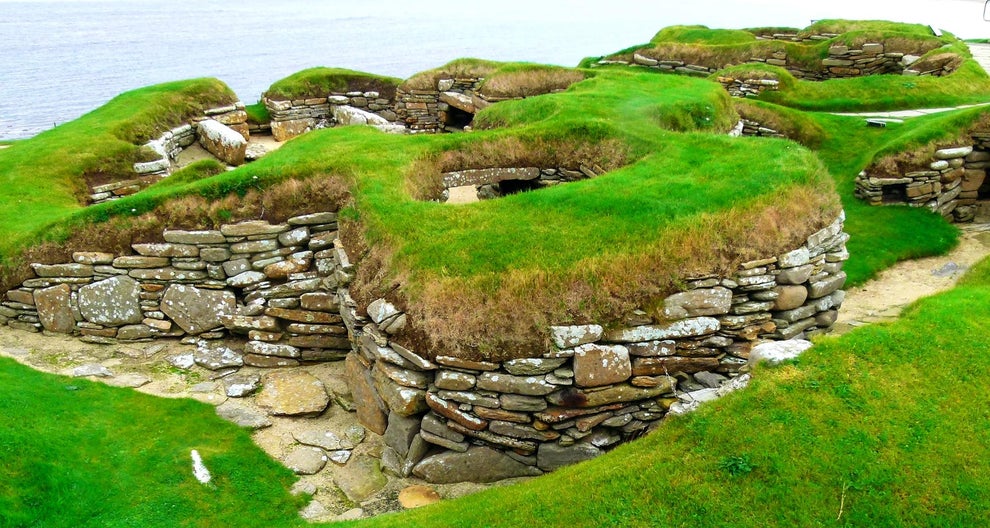
The artifacts were found about a half-mile away from the site of the Neolithic village of Skara Brae, which is located at the bay’s southern end.

Skara Brae is considered the best-preserved Neolithic settlement in Western Europe with people first making their home there around 3,100BC.

It was discovered in 1850 when a storm exposed part of the coastal site. Now, almost 170 years later, coastal erosion may have uncovered its neighbour.

A section of badly damaged wall has been exposed by the work of the pounding tides at the north end of the Bay of Skaill. Deer antlers, a boar tooth, a cattle jawbone, and a large decorated stone have also been discovered.

A boar tusk found at the north end of the Bay of Skaill.

Sigurd Towrie, the spokesman for the Archaeology Institute at the University of Highlands and Islands, said the finds “suggest there is another settlement at the Bay of Skaill – one that, from previous environmental sampling, is likely to be 4,000 to 5,000 years old”.

He said: “If this is the case, and based on the scale of the eroded section, we may well be looking at a Neolithic/Bronze Age site on a par with Skara Brae – albeit one that is now disappearing at an alarming rate.”

The large decorated stone found on the beach, which is similar to those found at Skara Brae.

The large decorated stone was discovered in the Bay of Skaill by Mr. Towrie after he noticed animal remains falling from an eroding section of shoreline.

Closer inspection found the stone marked with a pair of incised triangles and a series of rectangular bands running across the surface.

Dr. Antonia Thomas, the Archaeology Institute’s rock art specialist, confirmed the find was potentially a carved stone – one with designs similar to those recorded at Skara Brae.

The Bay of Skaill, where evidence of another potential Neolithic settlement has emerged.

It has long been thought that more Neolithic settlements may have dotted the bay surrounding Skara Brae. During building work in the 1930s, a wall was discovered to the north of the bay along with midden material, animal bone, and four burials, which were later moved.

The new finds have refreshed interest in who may have lived around the bay during the New Stone Age.

The discovery of deer remains is an unusual find for a Neolithic site on Orkney, with the animal perhaps used for rituals rather than food, it is understood.

The Bay of Skaill is now under close observation from the archaeology institute, although an excavation is unlikely in the near future given restrictions imposed by the coronavirus pandemic.

A section of wall which has been exposed at the Bay of Skaill which may have been part of an undiscovered Neolithic settlement.
The cow mandible recovered from the eroding shoreline section. Towrie discovered the stone while visiting the Bay of Bay Skaill after she noticed animal remains falling from an eroding section of shoreline

Mr. Towrie said: “UHI Archaeology Institute will continue to carefully monitor the extent of the coastal erosion and act as an when necessary.”

Skara Brae is considered the best-preserved prehistoric settlement of any period in the British Isles. Its preservation in the sand has left a vivid impression of life in a prehistoric village.

An ‘exceptional’ collection of artifacts recovered from the site tell a story of farming and fishing among its inhabitants, as well as jewellery making and crafts.

One of the houses at Skara Brae contains a hearth and stone beds. One bed, which is decorated, lies directly over the burial site of two mature women laid to rest in a crouched position.

Turkey: 1,550-year-old church’s Marble Floor meticulously restored

Turkey: 1,550-year-old church’s Marble Floor meticulously restored

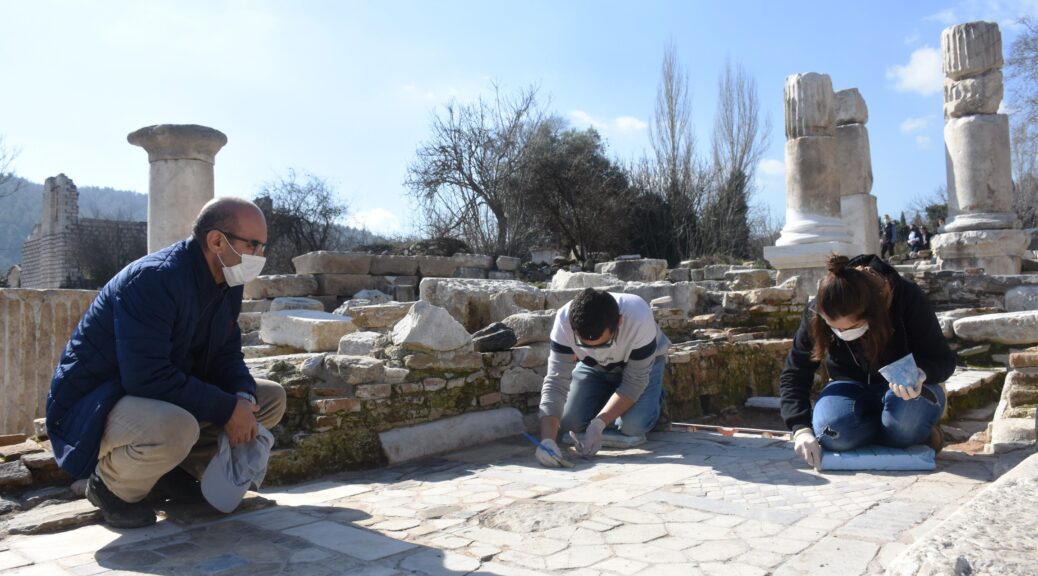
The Anadolu Agency reports that an ancient floor surface made up of at least four different colors of marble has been uncovered at the site of the ancient city of Stratonikeia in southwestern Turkey. 

The latest project on a 1,550-year-old Byzantine church and its marble floors stand out as one of the most eye-catching restoration projects in the ancient city recently.

The Byzantine church at the ancient site, which is on the UNESCO Tentative World Heritage List, historically used to serve religious people with an enchantingly colorful marble floor. The excavation and restoration project at the site will restore the marble structure back to its original, glorious state.

Professor Bilal Söğüt from Pamukkale University, head of excavations at Stratonikeia and Lagina sites, said that most of their archaeological work was focused on Western Street, where the church is also located. Söğüt said the church was built after an earthquake hit the city in 365 A.D. and stood until the seventh century.

“The region of the church, built on the colonnaded street, was turned into a graveyard in the later period. Today, we are unearthing both the graveyard and the church. Currently, we are working on restoring the church’s flooring,” Söğüt told Anadolu Agency (AA).

Söğüt stated that Stratonikeia was one of the largest marble ancient cities in the world and was home to many civilizations during its history, which helped retain its importance in Hellenistic, Roman, Ottoman, and Republic periods.

He explained that materials retrieved from the excavation site, which were ruined during the Byzantine era when the church was turned into a graveyard, are carefully reconstructed staying true to their original state, and are repaired in a place that could be described as a “stone hospital,” and then they are meticulously placed on the floor of the church.

Söğüt pointed out that given the church’s age, it had traces from many eras. “So, here we display the base and flooring of the Byzantine church but also samples of the Byzantine graves which were built on top of the church as well,” he said.

The professor said that the marble plates of the church floor had unique geometric patterns and they are collected by the archaeological team to restore. “The floor of the church is made of colorful marbles. This is the first time we have seen such a work in the city.

We reconstruct and refloor the church floor with marbles that we unearth during our excavations and give visitors a chance to see the ancient times.” Noting that they have so far discovered 62 graves at the church site, he added that they will display the most preserved of these alongside the church’s architecture.

Söğüt stated that the structures that the archaeological team discovered were also being worked on by an illustration team to transfer the ancient works into a digital 3D space. He said that these 3D drawings would be made available for viewing to visitors in the workshop area of the site.

City of historic remains

Stratonikeia was an ancient city built upon the remains of a Carian settlement, known as Idrias, which is thought to be the first settlement to be funded by the Lycians, another ancient Anatolian civilization.

According to Strabo, a Greek philosopher, and historian, the ancient city was founded in the Seleucid Empire during the reign of King Antiochus I Soter (281–261 B.C.), who named it after his wife, Stratonice, although that is contested amongst historians.

Selecuid Empire was a Hellenistic state in western Anatolia which existed between 312 BC to 63 B.C. Stratonikeia was founded as a confederation of several settlements surrounding the Carian settlement of Idrias with Anatolian and Macedonian settlers.

Although Stratonikeia’s later fell into ruin, its existence was never a secret. Richard Pococke, an English churchman and travel writer, even published a book called “A Description of the East, and Some Other Countries,” in which he described in great detail the city’s theater, bouleuterion (council house), and one of the city gates.

The city’s many historical remains include a gymnasium, a training facility for competitors in public games, which was built in second century B.C. and is the largest known gymnasium from the ancient period, a bouleuterion, which is located at the center of the city, and a theater, built on a natural slope in the southern part of the city. The Greco-Roman type theater, dated to the Hellenistic period, hosted approximately 12,000 people in its prime.

There is also the Augustus-Imperial Temple, which is situated on an upper terrace south of the theater and seems to be designed together with the theater.

The temple, designed as a peripteros, a type of ancient Greek or Roman temple surrounded by columns, is thought to be from the Early Imperial Period. The city also houses a Roman bath, dating back to the second century A.D., which is one of the three baths in Stratonikeia that are indicated in inscriptions.

The remains of the ancient city of Stratonikeia, Muğla, southwestern Turkey, Feb. 9, 2021.

The northern City Gate acts as an important entrance but at the same time as a ritualistic place because it allows the sacred road of Lagina Hecate to enter the city. The gate has a monumental arched entrance on both sides, and there is also a monumental fountain in between the entrances, with semicircular pools decorated with columns and statues in Corinthian order.

Besides, rock carvings of mythological masks shine out among the significant archaeological findings of the city. These masks depict the characters in the plays performed at the theater, ancient gods and goddesses, as well as animal figures.

Deep in a Cave in France Neanderthals Constructed Mysterious Ring Structures 176,000 Years Ago

Deep in a Cave in France Neanderthals Constructed Mysterious Ring Structures 176,000 Years Ago

In February 1990, thanks to a 15-year-old boy named Bruno Kowalsczewski, footsteps echoed through the chambers of Bruniquel Cave for the first time in tens of thousands of years.

The cave sits in France’s scenic Aveyron Valley, but its entrance had long been sealed by an ancient rockslide. Kowalsczewski’s father had detected faint wisps of air emerging from the scree, and the boy spent three years clearing away the rubble. He eventually dug out a tight, thirty-meter-long passage that the thinnest members of the local caving club could squeeze through.

They found themselves in a large, roomy corridor. There were animal bones and signs of bear activity, but nothing recent. The floor was pockmarked with pools of water. The walls were punctuated by stalactites (the ones that hang down) and stalagmites (the ones that stick up).

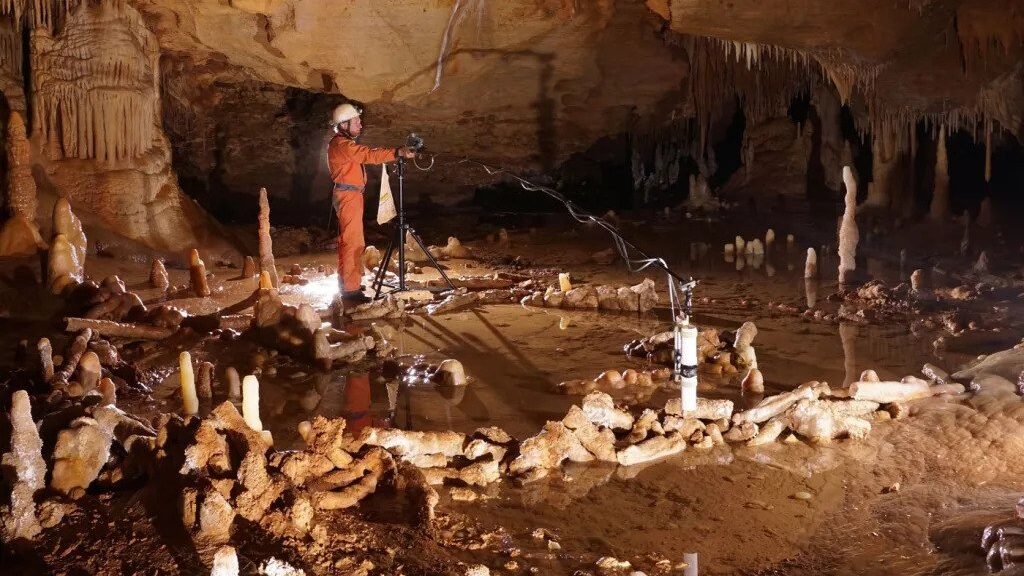
Some 336 meters into the cave, the caver stumbled across something extraordinary—a vast chamber where several stalagmites had been deliberately broken. Most of the 400 pieces had been arranged into two rings—a large one between 4 and 7 meters across, and a smaller one just 2 meters wide. Others had been propped up against these donuts. Yet others had been stacked into four piles. Traces of fire were everywhere, and there was a mass of burnt bones.  

These weren’t natural formations, and they weren’t the work of bears. They were built by people. Recognizing the site’s value, the caver brought in archaeologist Francois Rouzaud. Using carbon-dating, Rouzaud estimated that a burnt bear bone found within the chamber was 47,600 years old, which meant that the stalagmite rings were older than any known cave painting. It also meant that they couldn’t have been the work of Homo sapiens. Their builders must have been the only early humans in the south of France at the time: Neanderthals.

Deep in a Cave in France Neanderthals Constructed Mysterious Ring Structures 176,000 Years Ago
Scientists take measurements for the archaeo-magnetic survey in the Bruniquel Cave, where they found near-circular structures made of stalagmites.

The discovery suggested that Neanderthals were more sophisticated than anyone had given them credit for. They wielded fire, ventured deep underground, and shaped the subterranean rock into complex constructions. Perhaps they even carried out rituals; after all, there was no evidence that anyone actually lived in the cave, so what else were the rings and mounds for?  

Rouzaud would never know. In April 1999, while guiding colleagues through a different cave, he suffered a fatal heart attack. With his death, work on the Bruniquel Cave ceased, and its incredible contents were neglected. They’ve only now re-entered the limelight because Sophie Verheyden went on holiday.

A life-long caver, Verheyden works at the Royal Belgian Institute of Natural Sciences, where she specializes in stalagmites. She treats them as time capsules, using the chemicals within them to reconstruct the climate of past millennia. So when she learned about Bruniquel Cave, while visiting the region on holiday and seeing a display at a nearby castle, she had only one thought: Why hadn’t anyone dated the broken stalagmites themselves?”

She knew that Rouzaud’s date of 47,600 years was impressive but suspect. Carbon dating is only accurate for samples younger than 50,000 years, so the Bruniquel material was hitting the technique’s limits. They could well have been much older. To get a better estimate, Verheyden assembled a team including archaeologist Jacques Jaubert and fellow stalagmite expert Dominique Genty. In 2013, they got permission to study the site and crawled into it themselves. “I’m not very big, and I had to put one arm before me and one behind to get through,” says Verheyden. “It’s kind of magical, even without the structures.”

After drilling into the stalagmites and pulling out cylinders of rock, the team could see an obvious transition between two layers. On one side were old minerals that were part of the original stalagmites; on the other were newer layers that had been laid down after the fragments were broken off by the cave’s former users. By measuring uranium levels on either side of the divide, the team could accurately tell when each stalagmite had been snapped off for construction.

Their date? 176,500 years ago, give or take a few millennia.

“When I announced the age to Jacques, he asked me to repeat it because it was so incredible,” says Verheyden. Outside Bruniquel Cave, the earliest, unambiguous human constructions are just 20,000 years old. Most of these are ruins—collapsed collections of mammoth bones and deer antlers. By comparison, the Bruniquel stalagmite rings are well-preserved and far more ancient.

And if Rouzaud’s work made it unlikely that modern humans built the rings, Verheyden’s study grinds that possibility into the dust. Neanderthals must have been responsible. There simply wasn’t any other hominin in that region at that time.

This 3D reconstruction reveals the stalagmite structures in the Bruniquel Cave in France.

Why did they build the rings and mounds? The structures weren’t foundations for huts; the chamber contains no stone tools, human bones, or any other sign of permanent occupation, and besides, why build shelter inside a cave? “A plausible explanation is that this was a meeting place for some type of ritual social behavior,” says Paola Villa from the University of Colorado Museum.

“When you see such a structure so far into the cave, you think of something cultural or religious, but that’s not proven,” adds Verheyden. Indeed, despite some fanciful speculations about cave bear cults, no one really knows.

Nor is it clear how the Neanderthals made the structures. Verheyden says it couldn’t have been one lone artisan, toiling away in the dark. Most likely, there was a team and a technically skilled one at that. They broke rocks deliberately and arranged them precisely. They used fire, too. More than 120 fragments have red and black streaks that aren’t found elsewhere in the chamber of the cave beyond.

They were the result of deliberately applied heat, at intensities strong enough to occasionally crack the rock. “The Neanderthal group responsible for these constructions had a level of social organization that was more complex than previously thought,” the team writes.

These discoveries are part of the Neanderthals’ ongoing rehabilitation. Since their discovery, scientists have tried to understand why they died out and we did not, with the implicit assumption that they were inferior in some important way. Indeed, to describe someone as a Neanderthal today is to accuse them of unsophisticated brutishness.

But we now know that Neanderthals made tools, used fire, made art, buried their dead, and perhaps even had language. “The new findings have ushered a transformation of the Neanderthal from a knuckle-dragging savage rightfully defeated in an evolutionary contest, to a distant cousin that holds clues to our identity,” wrote Lydia Pyne in Nautilus.

And now, we have Bruniquel Cave with its structures that are unprecedented in their complexity, antiquity, and depth within the darkness. We know that 400,000 years ago, some ancient hominins chucked their dead into a cave at Sima de Los Huesos, but there’s no evidence of the careful constructions in Bruniquel. There’s evidence of painting and sculpture within caves, but none older than 42,000 years. There are signs that Neanderthals used caves, but nothing to suggest that they frequently ventured deeper than sunlight.

“I think we have several lines of evidence showing that the cognitive abilities and behaviors of Neanderthals were complex,” says Marie Soressi from Leiden University. “But we had no direct evidence of their ability to build. That changes the picture for me. It’s puzzling to find such structures so deep inside the cave.”

To solve these puzzles, Verheyden wants to start cutting into the cave’s floor. It has been covered by layers of calcite, which may conceal specimens that hint at the chamber’s purpose. Verheyden also notes that the entrance they’ve been using cannot possibly have been the only one. “We’re crawling through this small thing and there are bear hollows in the cave. I don’t think the bears went in that way!” she says. “There must have been some other passage that collapsed.”

50,000-Year-old Neanderthal Microbiome Analyzed

50,000-Year-old Neanderthal Microbiome Analyzed

Neanderthals’ gut microbiota already included some beneficial micro-organisms that are also found in our own intestine. An international research group led by the University of Bologna achieved this result by extracting and analyzing ancient DNA from 50,000-year-old fecal sediments sampled at the archaeological site of El Salt, near Alicante (Spain).

The 50,000 years old sedimentary faeces (the oldest sample of faecal material available to date) were collected in El Salt, Spain.

Published in Communication Biology, their paper puts forward the hypothesis of the existence of ancestral components of human microbiota that have been living in the human gastrointestinal tract since before the separation between the Homo Sapiens and Neanderthals that occurred more than 700,000 years ago.

“These results allow us to understand which components of the human gut microbiota are essential for our health, as they are integral elements of our biology also from an evolutionary point of view” explains Marco Candela, the professor of the Department of Pharmacy and Biotechnology of the University of Bologna, who coordinated the study.

“Nowadays there is a progressive reduction of our microbiota diversity due to the context of our modern life: this research group’s findings could guide us in devising diet- and lifestyle-tailored solutions to counteract this phenomenon.”

The Issues of the “Modern” Microbiota

The gut microbiota is the collection of trillions of symbiont micro-organisms that populate our gastrointestinal tract. It represents an essential component of our biology and carries out important functions in our bodies, such as regulating our metabolism and immune system and protecting us from pathogenic micro-organisms.

Recent studies have shown how some features of modernity — such as the consumption of processed food, drug use, life in hyper-sanitized environments — lead to a critical reduction of biodiversity in the gut microbiota. This depletion is mainly due to the loss of a set of microorganisms referred to as “old friends.”

“The process of depletion of the gut microbiota in modern western urban populations could represent a significant wake-up call,” says Simone Rampelli, who is a researcher at the University of Bologna and first author of the study. “This depletion process would become particularly alarming if it involved the loss of those microbiota components that are crucial to our physiology.”

Indeed, there are some alarming signs. For example, in the West, we are witnessing a dramatic increase in cases of chronic inflammatory diseases, such as inflammatory bowel disease, metabolic syndrome, type 2 diabetes, and colorectal cancer.

How the “Ancient” Microbiota Can Help

How can we identify the components of the gut microbiota that are more important for our health? And how can we protect them with targeted solutions? This was the starting point behind the idea of identifying the ancestral traits of our microbiota — i.e. the core of the human gut microbiota, which has remained consistent throughout our evolutionary history.

Technology nowadays allows to successfully rise to this challenge thanks to a new scientific field, paleomicrobiology, which studies ancient microorganisms from archaeological remains through DNA sequencing.

The research group analyzed ancient DNA samples collected in El Salt (Spain), a site where many Neanderthals lived. To be more precise, they analyzed the ancient DNA extracted from 50,000 years old sedimentary feces (the oldest sample of fecal material available to date). In this way, they managed to piece together the composition of the micro-organisms populating the intestine of Neanderthals. By comparing the composition of the Neanderthals’ microbiota to ours, many similarities aroused.

“Through the analysis of ancient DNA, we were able to isolate a core of microorganisms shared with modern Homo sapiens,” explains Silvia Turroni, a researcher at the University of Bologna and first author of the study.

“This finding allows us to state that these ancient micro-organisms populated the intestine of our species before the separation between Sapiens and Neanderthals, which occurred about 700,000 years ago.”

Safeguarding the Microbiota

These ancestral components of the human gut microbiota include many well-known bacteria (among which Blautia, Dorea, Roseburia, Ruminococcus and Faecalibacterium) that are fundamental to our health. Indeed, by producing short-chain fatty acids from dietary fiber, these bacteria regulate our metabolic and immune balance.

There is also the Bifidobacterium: a microorganism playing a key role in regulating our immune defences, especially in early childhood. Finally, in the Neanderthal gut microbiota, researchers identified some of those “old friends.” This confirms the researchers’ hypotheses about the ancestral nature of these components and their recent depletion in the human gut microbiota due to our modern life context.

“In the current modernization scenario, in which there is a progressive reduction of microbiota diversity, this information could guide integrated diet- and lifestyle-tailored strategies to safeguard the micro-organisms that are fundamental to our health,” concludes Candela. “To this end, promoting lifestyles that are sustainable for our gut microbiota is of the utmost importance, as it will help maintain the configurations that are compatible with our biology.”

Reference: “Components of a Neanderthal gut microbiome recovered from fecal sediments from El Salt” by Simone Rampelli, Silvia Turroni, Carolina Mallol, Cristo Hernandez, Bertila Galván, Ainara Sistiaga, Elena Biagi, Annalisa Astolfi, Patrizia Brigidi, Stefano Benazzi, Cecil M. Lewis Jr., Christina Warinner, Courtney A. Hofman, Stephanie L. Schnorr and Marco Candela, 5 February 2021,

Children’s ID tags unearthed at Nazi death camp in Poland

Children’s ID tags unearthed at Nazi death camp in Poland

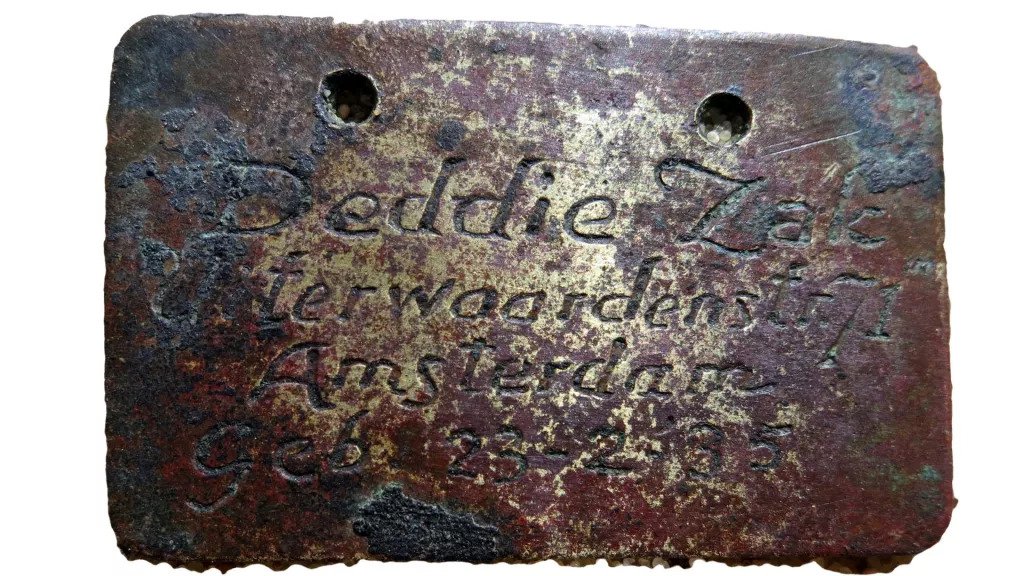
I.D. was found by archaeologists excavating the Sobibor extermination camp in Poland. The Yeshiva World notes the tags containing the names of four Jewish children from Amsterdam aged 5 to 11 who were sent to their deaths during the Second World War.

Yoram Haimi, an archaeologist at the Israel Antiquities Authority (IAA) who helped lead the dig, notes that the tags included the children’s birthdates and hometowns.

“Since the tags are very different from each other, it is evident that this was probably not some organized effort,” he says in a statement. “The children’s identity tags were prepared by their parents, who were probably desperate to ensure that the children’s relatives could be located in the chaos of the Second World War.”

Children's ID tags unearthed at Nazi death camp in Poland
Parents probably created the tags in hopes of finding their children again.

More than 70 years after the children’s murders, researchers were able to connect the tags to information kept at a memorial centre at the Westerbork transit camp in the Netherlands.

“I’ve been digging at Sobibor for 10 years,” Haimi tells Israel Hayom’s Yori Yalon. “This was the most difficult day. We called the centre and gave them the names. They sent pictures of young, smiling kids to our phones. The hardest thing is to hear that one of the kids [whose] tag you’re holding in [your] hand arrived at Sobibor on a train full of children ages 4 to 8, who were sent here to die alone.”

As Patrick Pester reports for Live Science, the team was able to trace all of the children through train records. Some were part of mass deportation of 1,300 small children who were sent to the gas chambers as soon as they arrived at the camp.

The archaeologists found the tag of 6-year-old Lea Judith De La Penha, who was killed in 1943, near the camp’s railway platform. They discovered the other three tags—belonging to 6-year-old Deddie Zak, 11-year-old David Juda Van der Velde and 12-year-old Annie Kapper—in the camp’s “killing area,” which housed a gas chamber, crematorium and mass grave, per Live Science. Only half of Van der Velde’s partially burned tag was found.

Deddie Zak (left) was murdered in 1943 at age 6.

“The Germans burned his body and on his neck was this tag,” Haimi tells Live Science.

According to the United States Holocaust Memorial Museum’s Holocaust Encyclopedia, Nazi authorities built Sobibor in the spring of 1942. It was the second of three killing centres—along with Belzec and Treblinka—that was part of Operation Reinhard, a plan to murder Jews living in the part of Nazi-occupied Europe known as the General Government.

Most of the camp personnel came from Operation T4, the Nazi’s first mass murder program, which targeted people with disabilities. The Operation Reinhard camps channelled carbon monoxide generated by large motor engines to fill gas chambers.

Ongoing excavations at Sobibor also revealed the camp’s gas chamber, a 3,700-square-foot building with eight rooms.

An aerial view of the extermination area of Sobibor death camp where three of the tags were found.

“We can say that every time you can put between 800 to 900 people in this gas chamber, turn on the motor of the tank and kill in 10 minutes 900 people,” Haimi tells Live Science. “It’s a factory of killing.”

Yad Vashem, Israel’s official Holocaust remembrance memorial, estimates the number of people murdered at Sobibor around 250,000. But Hami says the real number is likely higher.

“We will never know how many Jewish people [were] killed in this camp,” he tells Live Science. “I can tell you from the size of the mass graves—because they are huge—it must be much more than 250,000.”

Ofer Aderet of Haaretz reports that Haimi began excavating the site in 2007 as a “private undertaking.” He’s now working with Polish colleague Wojtek Mazurek and others to continue uncovering artefacts.

The team recently discovered several I.D. tags that identified some of the camp’s victims as North African Jews. Other discoveries include pins worn by the right-wing Jewish group Beitar, as well as jewellery, keys, shoes and other personal items owned by those killed at the camp.

Haimi tells Haaretz that he has also discovered a “huge number of alcohol bottles” apparently belonging to Nazis and other camp personnel. The archaeologists gave the items to a museum at the camp that opened last year but is currently closed due to the pandemic.

Sobibor remained in operation until October 1943, when prisoners staged an uprising. Around half of the 600 people then held at the camp escaped, but many were subsequently killed. About 50 former prisoners from the camp survived the war. After the uprising, the Nazis shut the centre down, shooting all prisoners who hadn’t managed to flee.

DNA reveals origins of first European farmers

DNA reveals origins of first European farmers

A team of international researchers led by ancient DNA experts from the University of Adelaide has resolved the longstanding issue of the origins of the people who introduced farming to Europe some 8000 years ago.

A detailed genetic study of one of the first farming communities in Europe, from central Germany, reveals marked similarities with populations living in the Ancient Near East (modern-day Turkey, Iraq and other countries) rather than those from Europe.

Project leader Professor Alan Cooper, Director of the Australian Centre for Ancient DNA (ACAD) at the University of Adelaide, says: “This overturns current thinking, which accepts that the first European farming populations were constructed largely from existing populations of hunter-gatherers, who had either rapidly learned to farm or interbred with the invaders.”

Europe First Farmers came from Turkey 8,000 Years ago
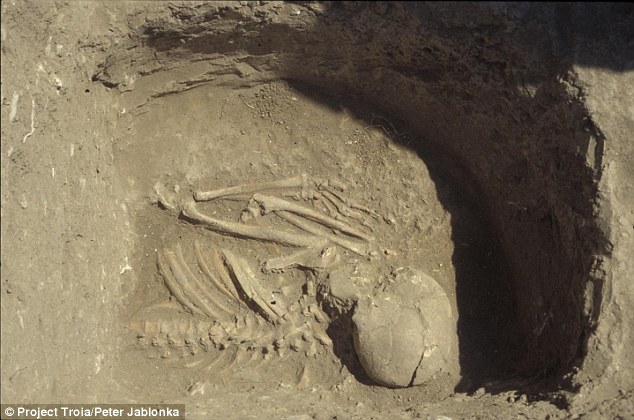
Ancient DNA from human remains (pictured) found in Anatolia, Turkey, has revealed that the farmers who lived there 8,000 years ago were among the first to spread into Europe. The farming revolution brought about changes in human culture that led to some of the first civilisations in history emerging.

The results of the study have been published in the online peer-reviewed science journal PLoS Biology.

“We have finally resolved the question of who the first farmers in Europe were — invaders with revolutionary new ideas, rather than populations of Stone Age hunter-gatherers who already existed in the area,” says lead author Dr Wolfgang Haak, Senior Research Associate with ACAD at the University of Adelaide.

“We’ve been able to apply new, high-precision ancient DNA methods to create a detailed genetic picture of this ancient farming population, and reveal that it was radically different to the nomadic populations already present in Europe.

“We have also been able to use genetic signatures to identify a potential route from the Near East and Anatolia, where farming evolved around 11,000 years ago, via south-eastern Europe and the Carpathian Basin (today’s Hungary) into Central Europe,” Dr Haak says.

The project involved researchers from the University of Mainz and State Heritage Museum in Halle, Germany, the Russian Academy of Sciences and members of the National Geographic Society’s Genographic Project, of which Professor Cooper is a Principal Investigator and Dr Haak is a Senior Research Associate.

The ancient DNA used in this study comes from a complete graveyard of Early Neolithic farmers unearthed at the town of Derenburg in Saxony-Anhalt, central Germany.

Neolithic farmers spread to replace hunter-gatherer populations in Europe. Wall paintings of hunters (pictured) found in Catal Hoyuk in Anatolia, Turkey is thought to have been made in 6,000BC, just as farming was beginning to spread into Europe. The new study suggests the area was a hub for the farming revolution

“This work was only possible due to the close collaboration of archaeologists excavating the skeletons, to ensure that no modern human DNA contaminated the remains, and nicely illustrates the potential when archaeology and genetics are combined,” says Professor Kurt Werner Alt from the collaborating Institute of Anthropology in Mainz, Germany.

‘Find of the century’: a medieval hoard of treasures unearthed in Cambridge

‘Find of the century’: a medieval hoard of treasures unearthed in Cambridge

A mediaeval graveyard with an excess of unidentified graves being uncovered underneath student accommodation in Cambridge University is listed as being one of the most exciting discoveries of Anglo-Saxon archaeology since the 19th century.

Medieval hoard of treasures unearthed in Cambridge
The human remains found at the Cambridge site are remarkably well preserved in the alkaline soil.

After demolishing a group of 1930s buildings that had recently housed graduates and employees in the west of the city, King’s College discovered the “extensive” cemetery, containing more than 60 graves, to make way for more modern halls.

Many objects (around 200 items) have been found in the graves, including bronze brooches, bead necklaces, knives, small blades, pottery and glass bottles.

A late Roman glass flask found at the site.

Most date from the early Anglo-Saxon period from 400 to 650, although evidence of iron-age structures and Roman earthworks has also been found. Caroline Goodson, who teaches early medieval history at King’s College, said the human remains they found were remarkably “well-preserved.”

“The alkaline soil, which is typical around here, hasn’t decomposed the bones,” she said.

This is significant because it would enable archaeologists to apply modern scientific techniques to reveal the diet and DNA of the dead, permitting analysis of migration and family relationships.

Goodson said excavators had been “surprised” to find so many graves and such an extensive early medieval cemetery surrounded by Roman ditches and so close to the remains of Roman Cambridge.

According to Bede’s Ecclesiastical History, which was written in the eighth century, Cambridge was abandoned — like many other Roman towns — when the Romans withdrew their military forces from England during the fifth century.

“We already know that Cambridge wasn’t fully abandoned. But what we’re seeing now is a greater and clearer picture of life in the post-Roman settlements,” she said.

Goodson speculated that people living in Cambridgeshire were a mix of descendants from earlier Roman populations and recent migrants to Britain from the continent, living in a post-imperial world.

“They are no longer living as the Romans did, they’re eating differently, dressing differently and finding different ways of exploiting the land. They are changing the way they are living during a period of considerable fluidity,” Goodson said.

Some of the finds throw up questions about the emotional connections people living at the time of the burials might have felt toward the Romans who lived in Cambridge before them.

In one grave, archaeologists found a body buried with what appears to be a late Roman piece of glass shaped like a small barrel for storing wine.

“It looks like a classic Roman object being reused in a post-Roman context, as grave goods,” Goodson said.

Another grave looks like a typical late Roman burial from the fifth century, suggesting there might have been continuity of use of the burial ground from the Roman period onward.

Archaeologists have so far not found “strong evidence” that people living in the sixth century were still choosing to bury their dead near late Roman graves, but few graveyards of this size have ever been scientifically excavated using modern methods and technologies, such as advanced radiocarbon dating techniques and isotopic analysis.

The site of the dig, in the west of the city.

“It would be great to say very clearly — and we’re going to need an ample suite of carbon-14 dates to do this — that we’ve got people using this site from the fifth until the seventh century,” Goodson said. “We can see that the burial of the dead and the treatment of their bodies is particularly significant to living in a way that is different from elsewhere in the post-Roman world.”

That points to a different world view and a different “cosmology”: “It’s a new form of commemoration,” she said.

She hoped to find out whether anyone in the cemetery died of the Justinianic Plague, a pandemic that raged across Europe in the 540s.