Category Archives: EUROPE

UK: Nurse discovers ‘medieval’ gold Bible worth $1.3mn near the property of King Richard III

UK: Nurse discovers ‘medieval’ gold Bible worth $1.3mn near the property of King Richard III

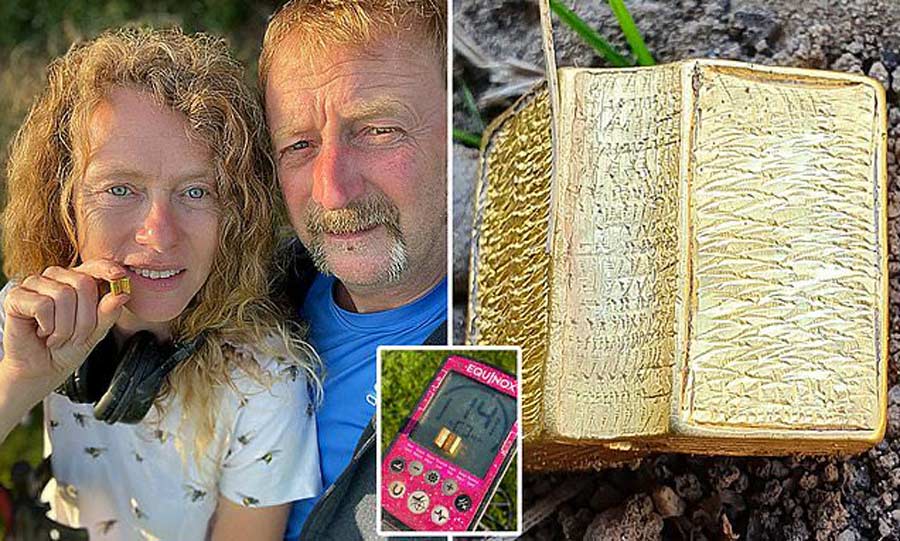
A metal detectorist discovered a little gold bible that had formerly belonged to a mediaeval aristocracy or royal. Buffy Bailey, an NHS nurse from Lancaster, came upon the book while searching for farmland near York with her husband Ian.

The 600-year-old object, which is just 0.5in (1.5cm) long, could be worth more than £100,000, Mrs Bailey said. An expert described it as an “exceptionally unique” artefact that would have originally been owned by someone “incredibly wealthy”.

Mrs Bailey, 48, said she and her husband chose York for detecting because they “knew it had a lot of history”.

UK: Nurse discovers ‘medieval’ gold Bible worth $1.3mn near the property of King Richard III
Buffy Bailey initially thought the find was a charm from a gift shop

With permission from the landowner, Mrs Bailey said she got a signal straight away.

“I dug down five inches and it was just there – I still didn’t believe it was anything special.”

It was only when she cleaned the item she realised she had found something special and not a charm from a gift shop.

“It was so heavy and shiny – just absolutely beautiful,” she said.

The object weighs just 0.2oz (5g) and is either 22 or 24ct gold, and is thought to date back to the 15th Century.

It is engraved with images of St Leonard and St Margaret, patron saints of childbirth, and could have been an object used for protection during pregnancy and childbirth.

The miniature book was found near property once owned by King Richard III

It was found on land near property once owned by Richard III (1483 to 1485) and it is speculated that it could have been owned by a female relative of his or of his wife Anne Neville.

It has been compared to the Middleham Jewel, a gold pendant set with a blue sapphire, found at Middleham Castle, about 40 miles (64km) away, also once owned by Richard III and the Neville family.

Julian Evan-Hart, the editor of Treasure Hunting magazine, said the book was an “exceptionally unique” historical artefact.

“The artwork is clearly iconographic and bears a close resemblance to the Middleham Jewel – there is every possibility that it was made by the same artist.”

“Whoever had it commissioned must have been incredibly wealthy,” Mrs Bailey said.

“There’s nothing else like it in the world. It could be worth £100,000 or more.”

The Yorkshire Museum, in York, is assessing the item before an auctioneer sets a valuation. At that point, the museum may decide to buy the item.

The museum paid £2.5m to acquire the Middleham Jewel in 1992.
Archaeologists stunned by 5,000-year-old ‘Scottish Pompeii’ settlement

Archaeologists stunned by 5,000-year-old ‘Scottish Pompeii’ settlement

Duncansby Head lighthouse marks the most northeasterly point of the British mainland. It’s almost 880 miles from Land’s End in the southwest of England. Just beyond here are the Orkney islands, over 70 of them, many of which hold ancient secrets.

While 20 of the islands are inhabited, most of the population of about 22,000, live on the largest one known as the Mainland.

Orkney’s history goes back thousands of years ago — around 6,000, it is believed.

It was here that the people of the Neolithic era — the New Stone Age — settled on Orkney.

The remnants of their vibrant culture remain scattered across the archipelago and were explored during the Smithsonian Channel’s documentary, ‘Aerial Britain: Scotland‘.

Archaeologists stunned by 5,000-year-old 'Scottish Pompeii' settlement
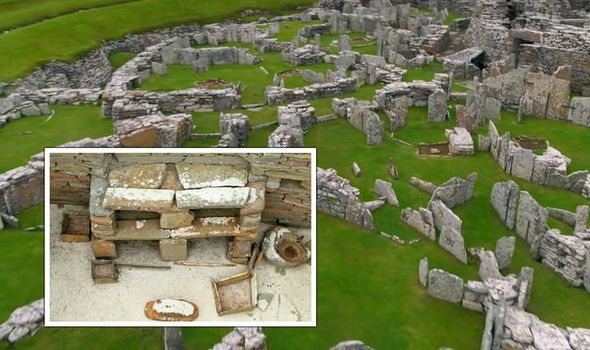
Archaeology: Skara Brae has stunned researchers, it is described as the ‘Scottish Pompeii’

Skara Brae on the Mainland’s west coast has attracted particular attraction, as the documentary’s narrator noted: “It’s a 5,000-year-old settlement that has been called the Scottish Pompeii.”

An incredible window into the lives of the ancient people who once lived there, it was only discovered in 1850 when a severe storm stripped the earth from the site.

Europe’s most complete Neolithic village, each house shares the same basic design — a single large room fitted with stone-built cupboards, dressers and beds, all laid out around a square hearth.

Here, the inhabitants would gather around the fire during Orkney’s long and dark winters.

The Broch of Gurness, also on the Mainland, is a later settlement dating from around 500 BC.

At its centre is a brooch or stone tower.

It would probably only originally have reached a height of around 30 feet and was most likely inhabited by the principal family or clan of the area.

The narrator said: “The entire settlement may have been home to as many as 40 families.”

In a rare find, archaeologists discover a 2000-year-old ‘slave room’ in the Italian city

In rare find, archaeologists discover 2000-year-old ‘slave room’ in Italian city

The room containing three beds and one window was excavated in a villa buried by the 79 A.D. volcanic eruption. Officials say it offers “a very rare insight into the daily life of slaves” in the ancient city.

Archaeologists have unearthed the remains of a “slave room” at a Roman villa in Pompeii, officials said Saturday.

They said the rare find in the ancient city, which was buried in ash when Mount Vesuvius erupted in 79 A.D., appeared to be in an excellent state of preservation.

In rare find, archaeologists discover 2000-year-old ‘slave room’ in Italian city
A “slaves room” at a Roman villa, containing beds, amphorae, ceramic pitchers and a chamber pot is discovered in a dig near the ancient Roman city of Pompeii, destroyed in 79 AD in a volcanic eruption, Italy, 2021.

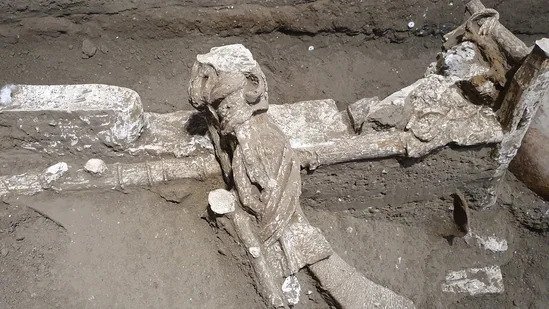
Earlier this year, a perfectly intact ceremonial chariot was also uncovered at the site in southern Italy. Archaeologists believe the room likely housed slaves who were charged with maintaining the chariot. 

What was found in the room?

The 16-square-meter (170-square-foot) room had three wooden beds, ceramic pitchers and a chamber pot.  Two beds were about 1.7 meters long (nearly 5 feet, 7 inches) and one just 1.4 meters. The room had only one small window. 

In the corners of the room, there were amphorae — a type of container — that seemingly belonged to the master of the house. Officials believe slaves kept their belongings in two amphorae under the beds.

The archaeologists also found a wooden box in the middle of the room and a drawbar leaning against the bed. 

Nearby, a wooden chest contained metallic objects and textiles that “appear to be parts of harnesses for horses,” according to the Pompeii archaeological park.

A ‘window’ on daily life of enslaved

Officials hailed the discovery as a rare insight into slavery and the daily life of the enslaved. 

“This is a window into the precarious reality of people who rarely appear in historical sources, written almost exclusively by men belonging to the elite,” said Gabriel Zuchtriegel, Pompeii’s director-general.

The “unique testimony” into how “the weakest in the ancient society lived … is certainly one of the most exciting discoveries in my life as an archaeologist,” Zuchtriegel said in a press release.

The room was discovered during a dig at a suburban villa. “We did not expect to find such a room. Yet we often walked past it,” said Zuchtriegel, who was born in the southwestern German state of Baden-Württemberg.

“This new important discovery enriches our understanding of the everyday life of the ancient Pompeians, especially that class in society about which little is still known,” Italian Culture Minister Dario Franceschini said.

Pompeii, which was rediscovered in the 18th century, is one of the most popular tourist attractions in Italy and repeatedly uncovers sensational finds.

Norfolk treasure newly declared as England’s biggest Anglo-Saxon coin hoard

Norfolk treasure newly declared as England’s biggest Anglo-Saxon coin hoard

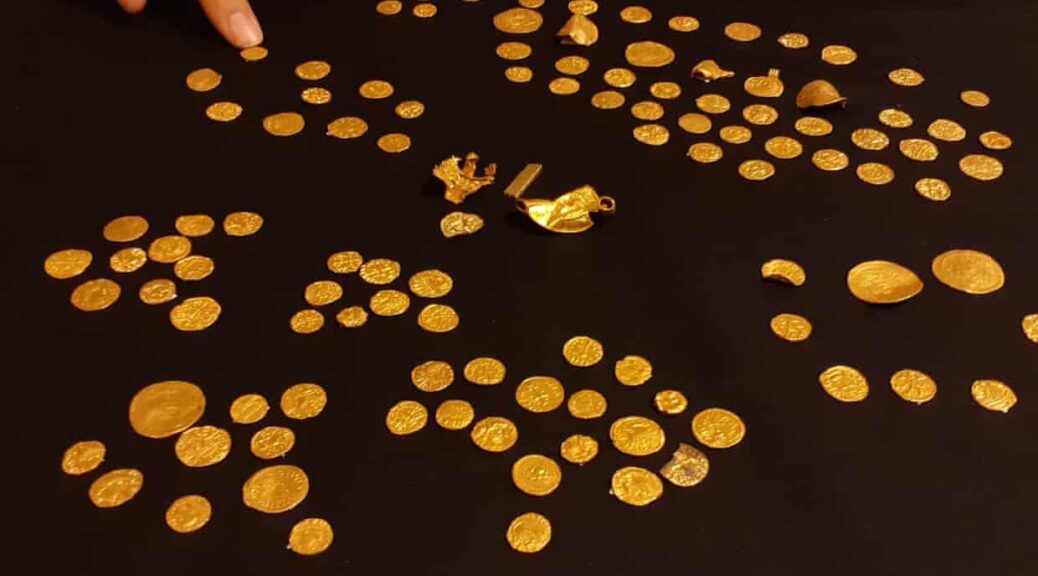
131 gold coins unearthed sporadically over the past 30 years from a single field in west Norfolk have been declared the largest trove of such items from the Anglo-Saxon period discovered in England.

Norfolk treasure newly declared as England’s biggest Anglo-Saxon coin hoard
Some of the gold coins, discovered in west Norfolk and thought buried around 600AD. Most are Frankish tremisses.

The coins, as well as four other gold objects dating around 1,400 years ago, were largely discovered by one metal detectorist who reported each find to local authorities.

According to a report from the Guardian, 10 coins were discovered by a local police officer, who was jailed for 16 months in 2017 for attempting to illegally sell them.

The Norfolk trove is mostly Frankish tremisses, a small gold coin used in Late Antiquity (about 284 C.E.–700 C.E.). Also found were nine solidi (a large coin from the Byzantine empire worth about three tremisses), a small gold bar, and a gold bracteate (a flat medal commonly worn as jewellery).

Gold bracteate, gold bar and two further artefacts thought to be jewellery fragments, discovered in Norfolk, part of a hoard that Norwich Castle Museum hopes to acquire.

The Norfolk coroner is currently examining the gold objects to determine whether they constituted treasure as defined by the 1996 Treasure Act of Great Britain, which would make the coins the property of the crown. (In the U.K., coroners are charged with investigating treasure claims, as well as adjudging causes of death.)

The Treasure Act states that any two or more coins comprised of more than 10% precious metal and that are more than 300 years old are considered treasures. Finders are legally obligated to report suspected treasure to local authorities.

The crown will claim the find if an accredited museum wishes to acquire the objects and can pay a reward equivalent to its market value. Currently, the Norwich Castle Museum hopes to acquire the hoard with the support of the British Museum.

In a statement, Tim Pestell, senior curator of archaeology at Norwich Castle Museum and Art Gallery, called the Norfolk hoard an “internationally significant find,” adding that “study of the hoard and its findspot has the potential to unlock our understanding of early trade and exchange systems and the importance of west Norfolk to East Anglia’s ruling kings in the seventh century.”

Until now, the largest coin hoard dating from the Anglo-Saxon period consisted of 101 coins discovered at Crondall, Hampshire, in 1828.

The most famous of such finds were made at Sutton Hoo in 1939 by amateur archaeologist Basil Brown and popularized by the 2021 Netflix drama The Dig. 

Brown and his team discovered beneath a mound an early medieval funerary monument filled with 37 gold coins, three blank coins and two small ingots, among silverware from Byzantium, military equipment, and other treasures.

The entire funeral chamber is housed at the British Museum in London.

Dig in Turkey finds theatre commode in the ancient city of Smyrna

Dig in Turkey finds theater commode in ancient city of Smyrna

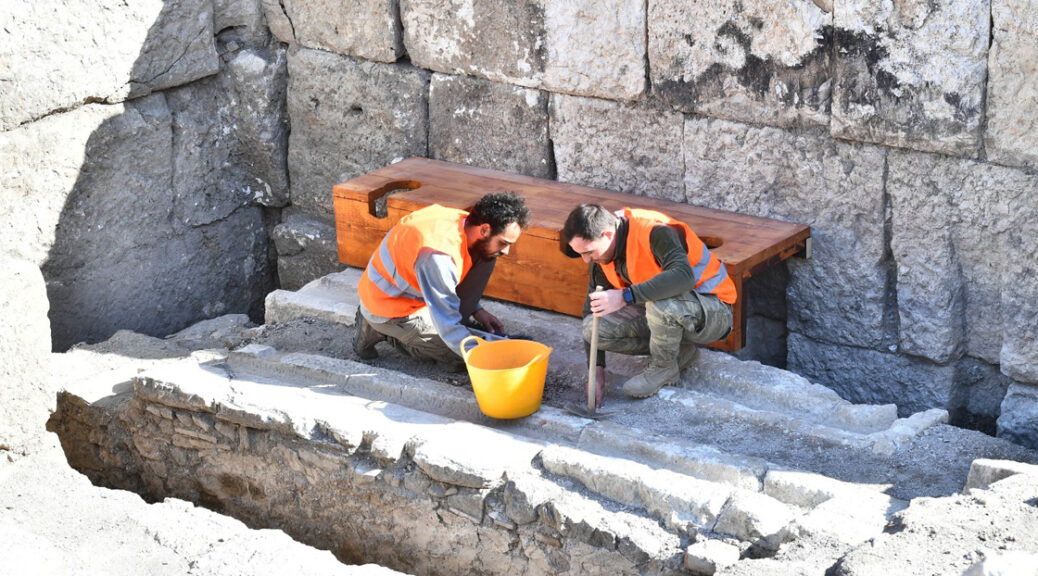
An ancient latrine unearthed in western Turkey WHEN? would have let more than a dozen people drop trou and ‘socialize’ and they did their business. The remains of the convivial commode were discovered in the ruins of a 2,000-year-old theatre in the ancient city of Smyrna, now located inside Izmir, Turkey’s third most populous city.

‘It is a toilet with a U-shaped seating arrangement… that 12-13 people can use together,’ Akin Ersoy, an archaeologist at Izmir’s Katip Çelebi University and leader of the excavation, said in a statement.  

‘The use of this toilet space by a large number of people also brought socialization.’ 

Such social bathroom arrangements were fairly common in ancient Anatolia, which overlaps with much of modern-day Turkey, but this is the first seemingly reserved for performers in a theatre.

‘We think it was used only by artists working in the stage building and performing in the theatre, as the stage building is closed to the audience,’ Ersoy said.

‘Since it is located in a closed area, it is possible to consider it an ‘artist toilet,’ he added, calling the find ‘a first among theatres in the Mediterranean region.’

Dig in Turkey finds theater commode in ancient city of Smyrna
A 1,600-year-old latrine was uncovered in the ruins of an ancient Roman theatre in western Turkey. Because the building would have been closed off to the public, archaeologists believe the toilet was reserved for actors. The performers would have sat on a U-shaped bench that could accommodate up to 13-people at once

‘There are latrines that serve the audience near the theatres we know, but it is a first for such a place to be used as a toilet in the stage building of the theatre,’ Ersoy said.

When nature called, the performers would have sat on a wooden U-shaped bench, which only rose about 16 inches off the ground and had holes spaced out about two feet apart, Daily Sabah reported, allowing them to sit side-by-side.

In front of the seating is a four-inch trough that would have had clean water flowing through it.

If you were using the latrine you would then dip a sponge on a stick into the trough to clean your backside.

The archaeologists constructed a replica of the wooden bench to confirm their theory about the structure’s use.

The theatre, which had a 20,000-spectator capacity, was built in the 2nd century B.C. when Smyrna and Anatolia would have been under Roman authority.

The latrines, though, were added during a major renovation about 400 years later. Both were in use until about the 5th century A.D. when the Roman empire evolved in the east into the Christianized Byzantine Empire.

The 20,000-seat theatre was built in the ancient city of Smyrna in the 2nd century BC
The theatre and latrine were unearthed at the site of the ancient city of Smyrna in modern-day Izmir, Turkey

Founded more than 2,400 years ago, Smyrna has been the site of numerous archaeological discoveries in recent years.

Ersoy’s team has been excavating the site for five years with support from the Izmir Metropolitan Municipality. In March, they reported finding a stone quarry used in the Hellenistic and Roman periods, according to the Municipality. 

Block stones and columns were transported to Smyrna from the ancient quarry, named Tırazlı-Kesikkaya, Ersoy said.

The roughly processed blocks were launched by sledges on stream beds and transported by sea to the Smyrna’s port, Ersoy said, at great cost and with great difficulty.   

2,000-Year-Old Battle Site Uncovered in Switzerland

2,000-Year-Old Battle Site Uncovered in Switzerland

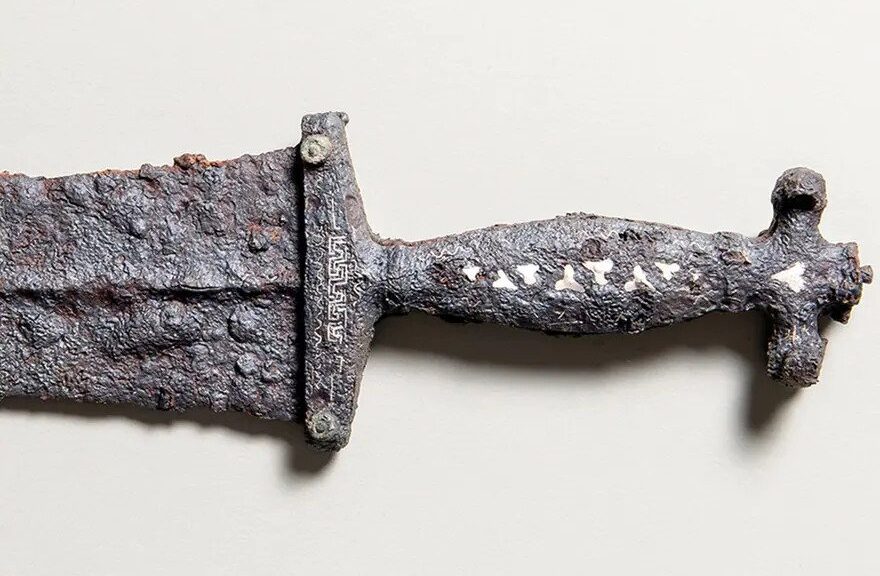
The finds – including a dagger, well-preserved slingshot stones, coins, nails and part of a shield – are assumed to have been left on the battlefield after a clash between Romans and a local tribe at around 15BC.

2,000-Year-Old Battle Site Uncovered in Switzerland
A dagger is one of the hundreds of objects uncovered on the ancient battlefield.

Lucas Schmid, who volunteers for the local archaeological association, uncovered the remains using a metal detector at a remote southeast corner of Switzerland, near the Crap-Ses gorge between the towns of Tiefencastel and Cunter.

Other artefacts had previously been unearthed at the location, but the site was considered to have been picked clean by previous sweeps.

Schmid proved this was not the case after discovering a 2,000-year-old Roman dagger. 

This alerted an archaeology team from the University of Basel who has found several hundred other objects during an ongoing search of the 35,000 square metre site in September. These artefacts have now been made public.

How the battle unfolded

It is assumed that a battle took place between Roman forces and a local Raetian tribe near Cunter in what is now canton Graubünden

“It looks like the locals were holed up and were shot at by the Romans with slingshot and catapults,” Peter Schwarz, professor of Provincial Roman Archaeology at the University of Basel, told Swiss public broadcaster, SRFExternal link.

Schwarz believes that as many as 1,500 soldiers took part in the battle, making it a fairly minor skirmish compared to other Roman battlegrounds in Europe.

The coins and type of shoe nails found offer firm evidence of the time period of the battle. But the team is hoping to narrow down the date even further and hypothesize that it could be linked to a known decree from Roman Emperor Augustus to bring the area under Roman control in 15BC.

“This is the first time that remnants from a Roman battle site have been found in Switzerland,” Schwarz told SWI swissinfo.ch. “It seems that the Romans attacked their enemy on one side of the valley and them drove them over a river to the other side, before attacking again.”

Dig to continue next year

Excavations will continue in the region next year, organised by the University of Basel along with the cantonal and federal authorities. So far no grave sites have been discovered and it is not known how many people died in the battle.

READ ALSO: UNDERWATER STONEHENGE THAT PREDATES THE PYRAMIDS CONFIRMED IN SWITZERLAND

Raetian tribes occupied the eastern Alps at the time of the battle, including parts of modern-day Austria and Italy. The Romans conquered the region and named the area Raetia under Augustus.

The Swiss portion of Raetia eventually became the modern-day canton Graubünden.

Archaeological evidence of the Roman occupation of Switzerland is regularly unearthed. One of the most spectacular finds was a collection of mosaics in the western town of Orbe.

Bronze Age Swords Unearthed in Greece

Bronze Age swords and sets of bounties Unearthed in Greece

The first period of this year’s excavation in the Trapeza plateau, eight kilometres southwest of Aegio, was completed, bringing to light, among other things, valuable sets of gifts and bronze swords. The place is identified with Rypes, a city that flourished in early historical times and participated in colonization, founding Croton in great Greece.

Excavation in the prehistoric settlement

The excavation focused on the research of the Mycenaean necropolis, which develops on the southwestern slope of the plateau and is located on the ancient road that led to the citadel of historical times. 

The tombs are chambered, carved into the soft sandy subsoil. Their use was long-lasting and intensive, already during the first palace period of the Mycenaean world, in parallel with the prosperity of the great centres of Mycenae, Tiryns and Pylos

Significant reuse of the tombs dates back to the 12th century BC, when the tombs were reopened and repeatedly while being a place of burial customs and complex ritual practices until the end of the Bronze Age, during the 11th century BC.

The excavation at the necropolis yielded valuable sets of gifts consisting of vases, a number of seal stones and all kinds of beads and voices from various materials – glass, faience, gold, corneol, mountain crystal – composing necklaces and ornate jewellery in the shape of jewels, in trade relations with the eastern Aegean and Cyprus.

The chamber of tomb 8, in the shape of a rectangle, which was investigated this year, presented a complex stratigraphy. In the first layer of tombs of the 12th c. BC, three burials were investigated by country, decorated with pseudo-mouthed amphorae. 

The bones of the older tombs had been removed and placed with respect and great care in two superimposed piles at the back of the chamber in contact with the walls of the tomb. At the top of these excavations, three written clay alabasters and an amphora date these first burials to the early palace period (14th century BC).

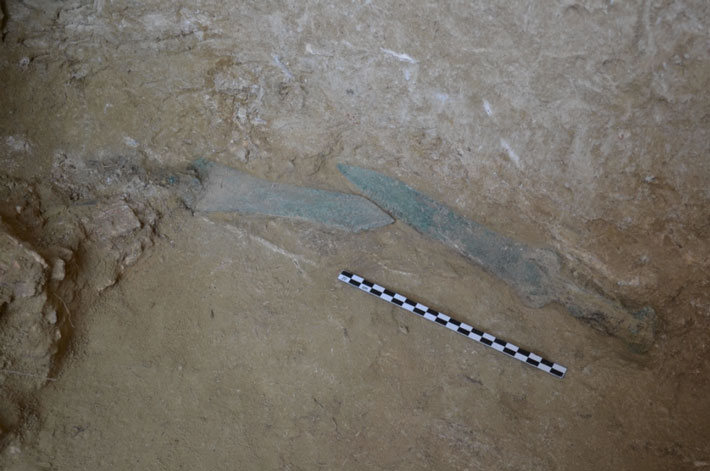
Among the bones and offerings that accompanied these ancient burials, glass beads and cornaline, a clay horse figurine, was placed an exceptionally preserved bronze sword. 

Bronze Age Swords Unearthed in Greece
The big sword between the bones of the recovery

At the base of the pile of bones, two more intact bronze swords were also found, which also save part of their wooden handles. The three swords belong to different types, Sandars D and E, and date back to the heyday of the Mycenaean palace period. 

The presence of these weapons, as well as the long spears of the same chronological period found during the excavation in neighbouring tombs in the necropolis of the Bank, is particularly important. It is distinguished from the other necropolises of Achaia by emphasizing the direct dependence of the local community on the powerful palace centres. 

The weapons are products of the palace workshops, perhaps of Mycenae, thus in line with the Epic and the mythological tradition handed down to us. 

According to it, Achaia belonged to the kingdom of Agamemnon and the conqueror of Mycenae gathered in neighbouring Aigio the most valuable men in order to discuss how the campaign against the Priam state should be carried out.

The location of the Mycenaean settlement of Trapeza is still not clear enough. 

Probably, during the early cycle of use of the necropolis, the settlement was located on a hill, about 100 meters south of the Bank. 

This year, in parallel with the research in the Mycenaean necropolis, the excavation of part of the settlement, revealed part of a building, perhaps a mansion. It is a wide rectangular room with a hearth in the centre and typical pottery that dates back to the 17th century. e.g.

READ ALSO: ARCHAEOLOGISTS DISCOVER “UNIQUE” CEREMONIAL BRONZE AGE SWORD IN DENMARK

The systematic excavation at Trapeza Aigio, ancient Pollutants, is led by Dr. Andreas G. Vordos, archaeologist of the Ephorate of Antiquities of Achaia. 

Elisabetta Borgna, Professor of Aegean Archeology at the University of Udine, participates in the interdisciplinary research program of the Mycenaean necropolis and the prehistoric settlement with a group of students from the Universities of Udine, Trieste and Venice, as well as postgraduate students.

The main sponsor of the excavation at the Bank of Egialia, ancient Pollutants, is the AG Foundation. Leventis. The excavation work is also supported by Olympia Odos SA.

Statuary heads of Greek gods unearthed in an ancient city in Turkey

Statuary heads of Greek gods unearthed in ancient city in Turkey

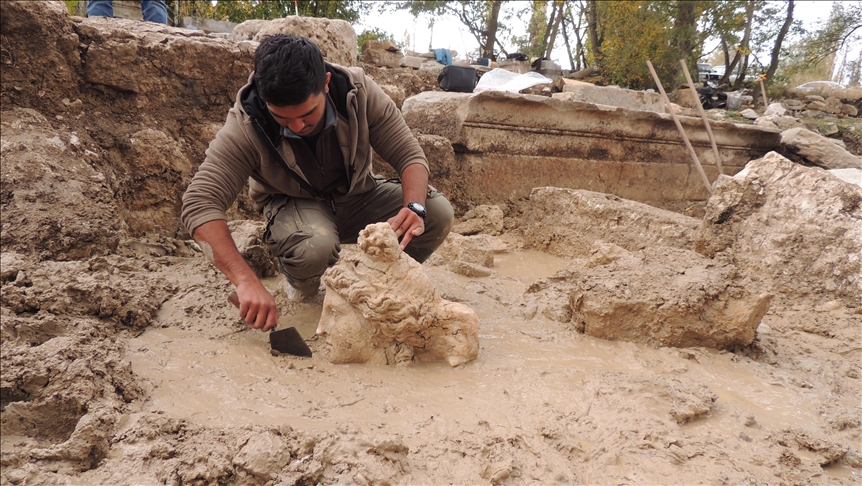
In excavations carried out in the ancient city of Aizanoi in western Kütahya province, the heads of statues of Aphrodite, the mythological goddess of love and beauty, and Dionysus, the god of wine, were unearthed.

Statuary heads of Greek gods unearthed in ancient city in Turkey
An archaeologist unearths the statue head of the goddess of love and beauty Aphrodite, Aizanoi, Kütahya, western Turkey, Oct. 29, 2021.

The excavations in the ancient city, which was included in the UNESCO World Heritage Tentative List in 2012 and located 50 kilometres (31 miles) from the city centre, are being continued by the Kütahya Museum Directorate.

Excavation coordinator Professor Gökhan Coşkun of Dumlupınar University told Anadolu Agency (AA) that the work in Aizanoi, a site which dates back 5,000 years, was carried on without interruption with 100 workers and 27 technical personnel.

Noting that they have been sustaining their work in a creek bed in the ancient city of Aizanoi recently, Coşkun told that the statuary heads of Aphrodite and Dionysus were unearthed in this creek bed.

“These are important findings for us, as they show that the polytheistic belief culture of ancient Greece existed for a long time without losing its importance in the Roman era,” he said.

READ ALSO: SCULPTURE OF GREEK GOD HERMES FOUND IN ATHENS

“The findings suggest that there may have been a sculpture workshop in the region.”

Home to one of the most well-preserved temples in Turkey, dedicated to the Greek god Zeus, the city of Aizanoi is easily comparable to Ephesus in its grandeur and importance.

Initially inhabited by the Phrygians, the area was converted into a city in the first century B.C. by the Romans and includes unique spots such as a temple; four roman bridges, two of which are still in use today; the world’s first known indoor marketplace, with inscriptions of the prices of goods sold still visible on the walls; theatres; roman baths and an ancient sacred cave.