Category Archives: EUROPE

Traces of Medieval Jewish Diet Uncovered in England

Traces of Medieval Jewish Diet Uncovered in England

According to a statement released by the University of Bristol, analysis of food remains recovered from the medieval Jewish quarter in historic Oxford suggests that the community followed dietary laws known as Kashruth

Keeping kosher is one of the oldest known diets across the world and, for an observant Jew, maintaining these dietary laws (known as Kashruth) is a fundamental part of everyday life. It is a key part of what identifies them as Jews, both amongst their own communities and to the outside world.

Oxford’s Jewish quarter was established around St. Aldates in the twelfth and thirteenth centuries, following William the Conqueror’s invitation to Jews in Northern France to settle in England.

Recent excavations by Oxford Archaeology at St Aldates, in the historic heart of Oxford, revealed evidence for two houses, which a medieval census suggested belonged to two Jewish families.

One was owned by Jacob f. mag. Moses and called Jacob’s Hall, and was said to be one of the most substantial private houses in Oxford and the other house was owned by an Elekin f. Bassina.

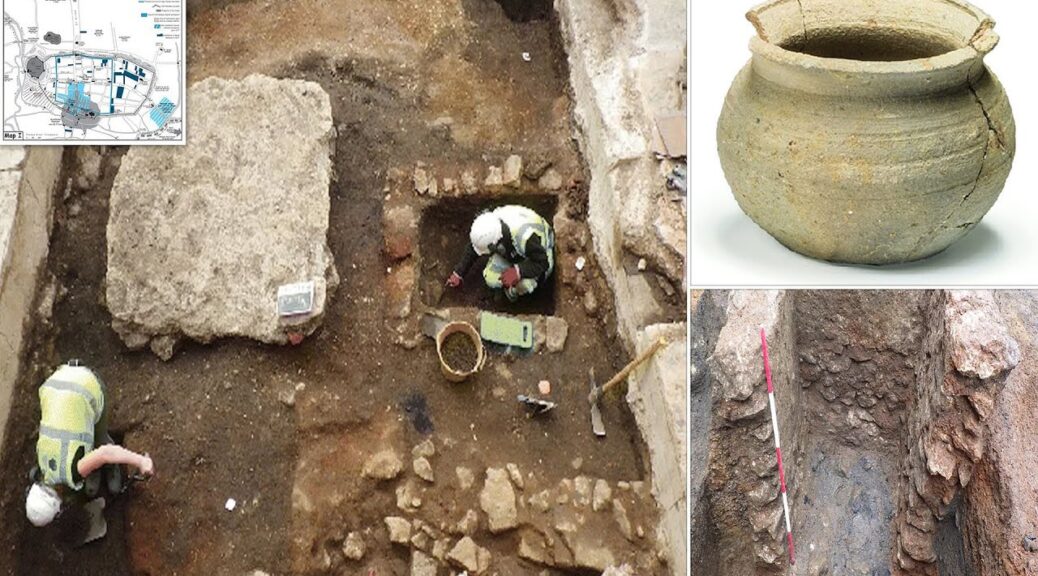
During excavations, archaeologists found a stone-built structure, identified as a latrine, and dated to the late 11th and 12th century.

View of excavations at St Aldates, Oxford, showing Carfax Tower in the background

A remarkable animal bone assemblage was unearthed in this latrine, dominated by domestic fowl (mainly goose), and with a complete absence of pig bones, hinting at a kosher diet.

Fishbones comprised only species such as herring which are kosher. This combination of species suggests a Jewish dietary signature, identified in British zooarchaeology for the first time, and just the third time in medieval Europe.

To investigate whether the inhabitants of the two houses were eating a Jewish diet, the team used a combined chemical and isotopic approach to identify and quantify the food residues absorbed into medieval vessels found at the site.

a. jar in Medieval Oxford Ware, probably used as a cooking-pot and dated to the late 11th or 12th century and b. near-complete miniature jar in Early Brill Coarseware from structure 3.1

Their findings, published recently in the journal Archaeological and Anthropological Sciences, showed that the possible Jewish vessels were only used to cook meats from cattle, sheep and goat.

Evidence for pig processing was entirely absent. However, the cooking and eating of pork were evident from the pottery residues and animal bones from a contemporaneous site outside of the Jewish Quarter in Oxford (The Queen’s College), and from the earlier Anglo-Saxon phase at St Aldates.

Lead author, Dr Julie Dunne from the University of Bristol’s School of Chemistry, said: “This is a remarkable example of how biomolecular information extracted from medieval pottery and combined with ancient documents and animal bones, has provided a unique insight into 800-year-old Jewish dietary practices.”

This is the first study of its kind that has been able to identify the practice of keeping kosher, with its associated ritual food practices and taboos, using ancient food residues found in cooking pots, opening the way for similar studies in future.  

Edward Biddulph, who managed the post-excavation project at Oxford Archaeology, said: “The results of the excavation at St Aldates and Queen Street have been astonishing, not only revealing rare archaeological evidence of a medieval Jewry in Britain but also demonstrating the enormous value of a carefully focused analysis that combines traditional finds and stratigraphic analysis with scientific techniques.”

Dr Lucy Cramp who is a senior lecturer in the Department of Anthropology and Archaeology at Bristol, and is a co-author of the study, added: “Human dietary choices are based on far more than availability or caloric content.

What’s really exciting is how this evidence for dietary patterns in Medieval Oxford informs us about the diversity of cultural practices and beliefs that were present in the past, as today.”

Professor Richard Evershed FRS who heads up Bristol’s Organic Geochemistry Unit and is a co-author of the study, added: “This is another remarkable example of just how far we are able to go with using archaeological science to define many aspects of the lives of our ancestors.”
5,000 Years old Pavlopetri is the oldest submerged city in the world

5,000 Years old Pavlopetri is the oldest submerged city in the world

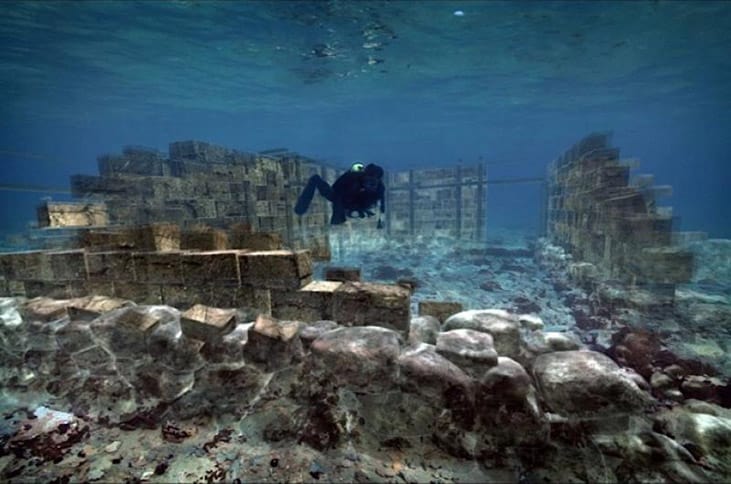
If you ask Greeks what do they know about Pavlopetri, they will probably look at you in amazement. Pavlopetri is the oldest submerged city in the world and only in 2011 became known to the world when BBC visited this place and using specialist laser scanning techniques on location accurately recreated three-dimensional models of artefacts!

In 1904 the geologist Fokion Negri reported an ancient city in the seabed between the island Elafonisos and beach Punta in southern Laconia.

Later, in 1967, oceanographer Dr Nicholas Flemming, University of Southampton, visited the underwater city and found the existence of an ancient submerged city in a depth of 3 – 4 meters!

In 1968 Dr Nicholas Flemming returned to Pavlopetri with a group of young archaeologists from the University of Cambridge and in collaboration with professor Angelos Delivorrias, they mapped and dated the sunken city.

They discovered a rare prehistoric residential town with many buildings, streets and even squares! Based on the findings, the team of the University of Cambridge announced that the Pavlopetri firstly inhabited in 2800 BC, while the buildings and streets dating from the Mycenaean period (1680-1180 BC)!!!

In 2007 Dr Jon Henderson and Dr Chryssanthi Frenchman from the University of Nottingham visited Pavlopetri and in collaboration with the Director of the Ephorate of Underwater Antiquities Ilias Spondilis undertook a research program for further archaeological investigations Pavlopetri.

The project had a duration of five years (2009-2013), and it aimed to shed light on research questions concerning the dating and character of the submerged village in Elaphonisos and the role of the town in the control of the Laconian Gulf.

So, if you are interested in underwater archaeology, this is the ideal place, as the architectural remains of this sunken city are visible at a depth of about three meters!

5,000 Years old Pavlopetri is the oldest submerged city in the world

Pavlopetri is in Lakonia, in Peloponnese, which is 4 hours drive from Athens or 2.5 hours from Kalamata International Airport.

Pavlopetri is a fantastic finding, and there is a beautiful documentary by BBC, which will reveal you a spectacular view of an unknown world and civilisation 5000 years ago!

The broken Amphorae of monte testaccio in Rome

The broken Amphorae of monte testaccio in Rome

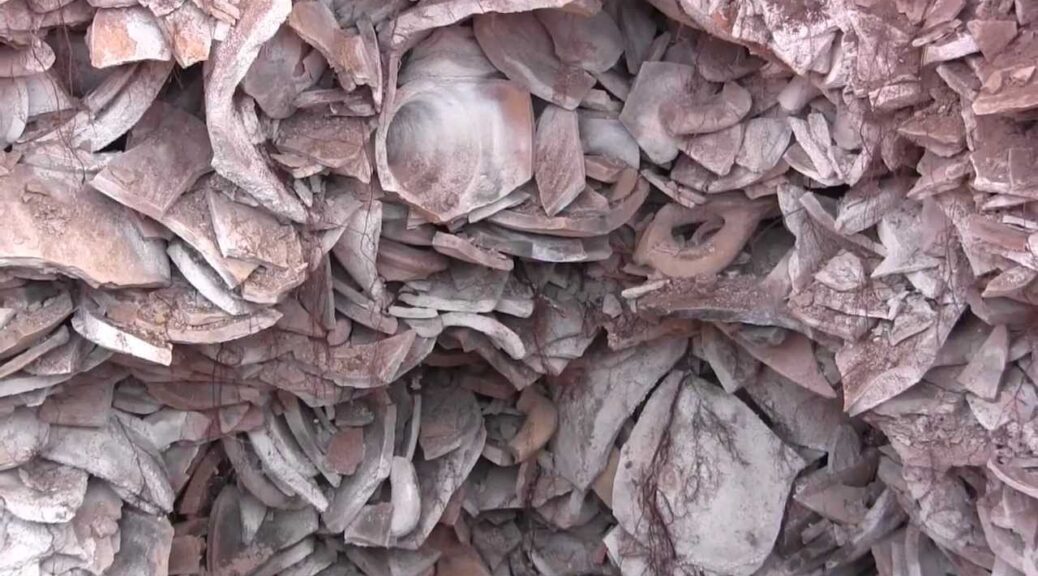
An immense mound overgrown with grass and small trees sits on the outskirts of Rome, near the Horrea Galbae, a short distance from the east bank of the River Tiber. It may seem to be just another hill, but it is actually an ancient landfill from the Roman era and one of the largest landfill of the ancient world.

It has a circumference of nearly a kilometre at its base covering an area of 20,000 square meters, and it stands 35 meters tall, though it was probably a lot higher in ancient times.

The hill is made entirely out of discarded Roman amphorae, a type of ceramic jar used to store olive oil. It has been estimated that the hill contains the remains of as many as 53 million olive oil amphorae, in which some 6 billion litres of oil were imported.

In ancient times, amphorae were the main containers used for transportation and storage of goods. They were massively produced because of their low cost and were usually recycled or destroyed once they reached their final destination.

Many amphorae were re-used to serve as drain pipes or flower pots, for instance. Broken amphorae were pounded into chips and mixed with concrete and widely used as a building material.

But the amphorae olive jars could not be recycled as they were too impregnated with oil which made them smelly and sticky. So they were dumped in landfills.

Monte Testaccio was not a haphazard waste dump, but a highly organized and carefully engineered refuse site. Excavations revealed that the mound had been raised as a series of level terraces with retaining walls made of nearly intact amphorae filled with shards to anchor them in place.

View of the Testaccio district of Rome, 1625.

Empty amphorae were probably carried up the mound intact on the backs of donkeys or mules and then broken up on the spot, with the shards laid out in a stable pattern. Lime was then spread over the broken jars to neutralize the smell of rotting oil.

The huge numbers of broken amphorae at Monte Testaccio illustrate the enormous demand for oil of imperial Rome, which was at the time the world’s largest city with a population of at least one million people.

Many of the amphorae still have the maker’s seal and other stamped inscriptions which record information such as the weight of the oil contained in the vessel, the place where it was bottled, who weighted it and the names of the exporter.

Studies of these inscriptions and the hill’s composition suggest Rome’s imports of olive oil reached a peak towards the end of the 2nd century AD when as many as 130,000 amphorae were being deposited on the site each year. It has been estimated that Rome was importing at least 7.5 million litres of olive oil annually.

Monte dei Cocci.
Types of Roman amphorae at Bodrum castle (Turkey) . 
The amphorae fragments were placed in an organized way.
Roman tituli picti from amphorae found at Monte Testaccio, Rome. From H. Dressel, Ricerche sul Monte Testaccio, Annali dell’Instituto di Correspondenza Archeologica [1878], plate L.
Broken amphorae on Monte Testaccio.

The Sword in the Stone at Montesiepi Chapel

The Sword in the Stone at Montesiepi Chapel

The sword trapped in stone, only to be freed by a future king’s forceful grip, is an essential part of King Arthur mythology. The question of whether there’s a historical basis for Arthur in the mists of chaotic Dark Ages Britain has haunted many historians, writers, and treasure seekers. Bits and pieces of the Arthur legend have been analyzed endlessly to see if some real person or place might fit.

Montesiepi chapel in Tuscany.

In a version of the story, Merlin foretold that only a true king was worthy to draw the sword, and when a boy, Arthur, is the one who succeeds in doing it, he reveals himself to be the son of the brave king Uther Pendragon. That sword then becomes Arthur’s powerful weapon, called Excalibur.

But what if the inspiration for the tale of the sword in the stone comes not from England but Italy, and the proof of that can be found in a 12th century stone still thrust into the bedrock in Tuscany?

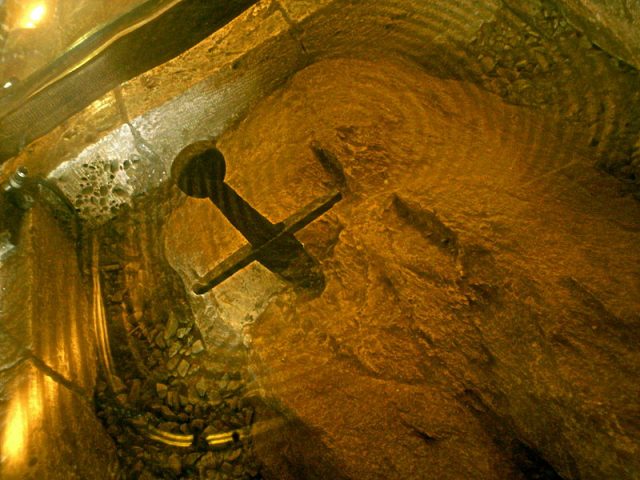
The Sword in the Stone of Saint Galgano can be seen today, in the Montesiepi chapel southwest of Siena. It was long a curiosity: Only the hilt, wooden grip and a few inches of the three-foot-long blade are visible to be seen in the chapel of a Cistercian abbey.

The story was that it was thrust into the stone by an Italian knight, Galgano Guidotti after he renounced war to become a hermit in 1180.

For years the sword was suspected of being some sort of fake. However, recent scientific tests dealt a surprise to skeptics. The metal of the sword was confirmed to be from the 12th century.

“Dating metal is a very difficult task, but we can say that the composition of the metal and the style are compatible with the era of the legend,” said Luigi Garlaschelli, of the University of Pavia, in an interview with The Guardian.

Interior of Montesiepi chapel, with the sword in the stone under the clear case.

“We have succeeded in refuting those who maintain that it is a recent fake.”

The sword from the medieval era and ground-penetrating radar analysis revealed that beneath the sword, there is a cavity that could be a burial recess, possibly containing a body.  “To know more we’d have to excavate,” said Garlaschelli.

The Italian academic Mario Moiraghi wrote a book suggesting that the stone’s Arthurian legend was inspired by the Tuscany sword.

Rotonda of Montesiepi chapel, with the sword in the stone below.

A 13th century English book about Merlin and the sword obviously came after the existence of the Italian sword in the stone, as did Malory’s Le Morte d’Arthur in the 14th century. However, Geoffrey of Monmouth wrote about Arthur, Merlin, and Excalibur, called Caliburnus (or Caliburn), in Historia, completed in 1138.

Moiraghi said in an interview, “The sword which, having being plunged into the stone becomes a cross; this is a true symbol of the Christian life — the transformation of violence into love.”

In the same chapel are two mummified hands; scientific testing has revealed that they too date to the 12th century. According to legend, anyone who tries to steal the sword in the Tuscany chapel would have his arms ripped off.

The sword in the Stone at Montesiepi Chapel, San Galgano.

The knight, Galgano, was the son of a feudal lord known for his arrogance and violence when he had a vision of the Archangel Michael inviting him to change his life.

Galgano supposedly decided that he should become a hermit. As he climbed the mountain where he would devote his life to contemplation, a voice told him he had to leave all traces of worldly sin, to which the saint replied, “It would be easier to cut a stone with this sword to do that.”

When Galgano stuck his sword in the rock to prove his point, the sword sank smoothly. It went into the rock as if it were as soft as butter, the story goes.

Galgano was a hermit for the rest of his life. Four years after his death he was canonized and a chapel was built around the sword.

The 2,50-year-old rug is a wonderful reflection of the Advanced Culture of the Pazyryk Nomads

The 2,50-year-old rug is a wonderful reflection of the Advanced Culture of the Pazyryk Nomads

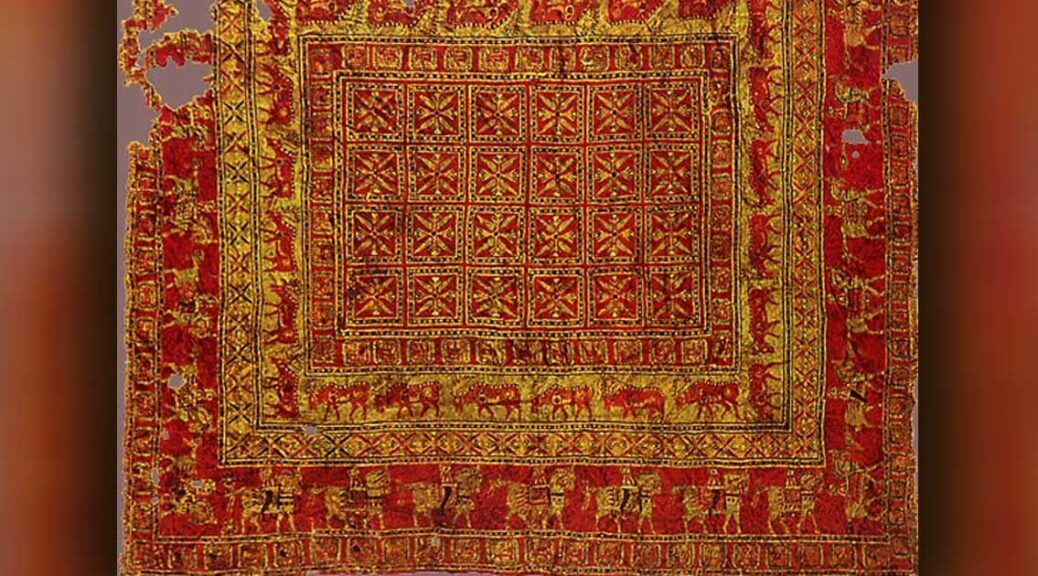
In 1948, Altai Mountains excavated the oldest hand-knotted oriental rug. It was discovered in the grave of the prince of Altai near Pazyryk, 5400 feet above sea level, and clearly shows how well hand-knotted rugs were produced thousands of years ago.

The Pazyryk carpet was woven in the 5th century B.C., making it approximately 2,500 years old, according to radiocarbon dating.

The advanced weaving techniques and the sophisticated design and construction, used in this rug, suggest the art of carpet weaving to go back much further than the 5th century B.C.. to be at least 4000 years old. Today the rug is in the Hermitage Museum in Leningrad, Russia.

Detail of the Pazyryk carpet from a replica in the Carpet Museum of Iran

When the prince of Altai died, he was buried in a grave mound with many of his prized possessions, including the Pazryk Carpet. Unfortunately, soon after, the grave mound was robbed of its prized possessions, with the exception of the rug.

The rug was semi-frozen because the thieves did not bother to cover up the hole they had dug to retrieve the items, rendering the hole exposed to the elements within the tomb.

The combination of low temperature and precipitation within the tomb subsequently froze the carpet, and preserved it in a thick sheet of ice, protecting it for twenty-five centuries. This somewhat ironic story is the reason that the Pazyryk rug still exists today.

Although it was found in a Scythian burial mound, most experts attribute the Pazyryk rug to Persia.

Pazyryk horseman. Circa 300 BCE. Detail from a carpet in the State Hermitage Museum in St Petersburg.

Its design is in the same style as the sculptures of Persepolis, The outer of the two principal border bands is decorated with a line of horsemen: seven on each side, twenty-eight in number — a figure which corresponds to the number of males who carried the throne of Xerxes to Perspolis. Some are mounted, while others walk beside their horses. In the inner principal band, there is a line of six elks on each side.

The extra figures inside the elks are depicting the inwards and the vertebra of the elk, all parts in real positions with nearly clinical precision:

1. The heart, just above the front legs (a yellow framed red sphere, black contoured).

2. The aorta (a long red protuberance on the heart).

3. The maw, on the right-hand side of the sphere (a large yellow area with a widening upwards on the end).

4. The intestine, in the rear end (a yellow square surrounded by a light blue and a yellow bow).

5. Possibly the urethra, on the upper part of the right hind leg (a yellow line with a black point), better to see on some others deer on the border.

6. The vertebra, directly below the brown back contour (an alternating black-white chain).

In Sweden, a long-lost runestone from a Viking monument has been discovered

In Sweden, a long-lost runestone from a Viking monument has been discovered

The valuable runestone was found on a bridge across a nearby river as part of an eight-piece 10th-century monument. The discovery, according to scholars, would unleash a wealth of knowledge in several areas, including art, religious history, and archaeology.

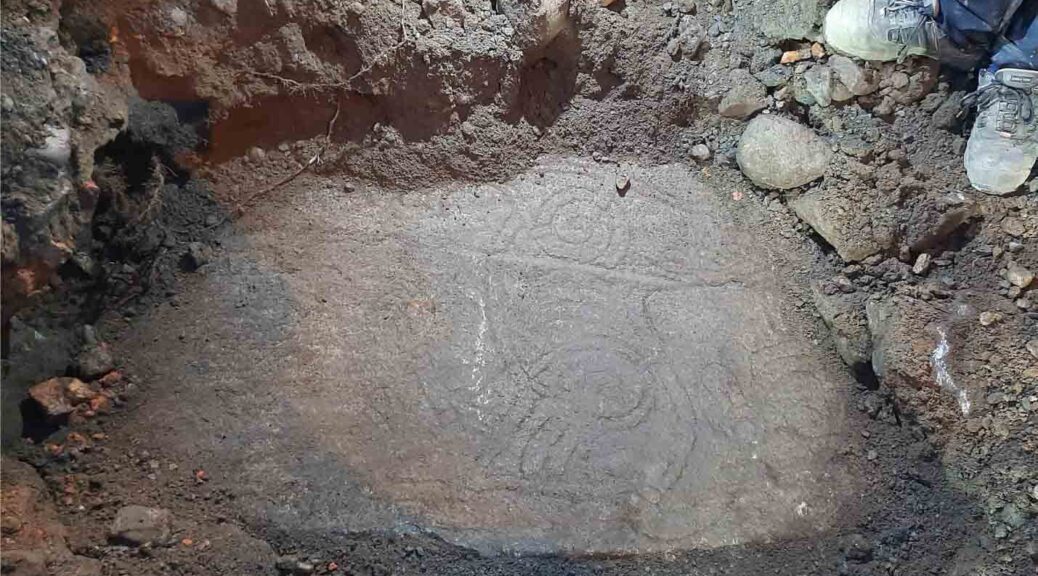
One of the Hunnestad runestones, which had been missing since the 18th century, was discovered during construction work for a future sewer pipe outside the town of Ystad in southern Sweden.

The Hunnestad monument is estimated to date back to the 10th century and is seen as one of the country’s most remarkable monuments from the Viking Age.

Long-Lost Runestone From Viking Monument Recovered In Sweden
Archaeologist Axel Krogh Hansen at the statue that was found during the excavation in front of a sewer line.

The monument consisted of eight stones, three with pictures and two runestones.

It was discovered in the early 18th century but later disappeared. Some of the stones were found on land near Marsvinsholm Castle in 1814 and are on exhibition in Lund.

The recent find was discovered on a bridge over the Hunnestadsån River.

“A fantastic find, which you didn’t expect to happen. This stone has been gone for so long that we thought it had been destroyed”, Magnus Källström, runologist at the Swedish National Heritage Board, said in a statement.

According to Källström, the find will unlock a lot of new knowledge in several areas, including art, religious history, and archaeology.

“The fact that we have found one of the Hunnestad stones is really sensational”, Britta Roos, head of the cultural environment unit at the County Administrative Board of Skåne, said.

The famous drawing of the Hunnestad Monument by Ole Worm (Ole Worm (1588-1654)

Local man Max Rosell, who lives barely 20 metres from the find, was also elated.

“It feels a little crazy that it was so d*mn close. But it’s great fun for the village, we have all talked about the stones, people have wondered where they went. Some are in museums, now one is found and then there is only one left”, says Max Rosell.

According to the runes from the stones in Lund, the monument was erected by Esbern and Tomme.

They are presumed to have been outstanding men who, according to field archaeologist Axel Hansen, may have had connections to the Danish monarchy.

The Viking Age (793-1066) is a period when Norsemen known as Vikings undertook large-scale raids, conquests, and trading throughout Europe and established settlements in present-day Russia, southern Europe, Iceland, Ireland, the British Isles, and Greenland, and even reached North America (which they called Vinland).

1,500-Year-Old Mosaic Discovered in Turkey

1,500-Year-Old Mosaic Discovered in Turkey

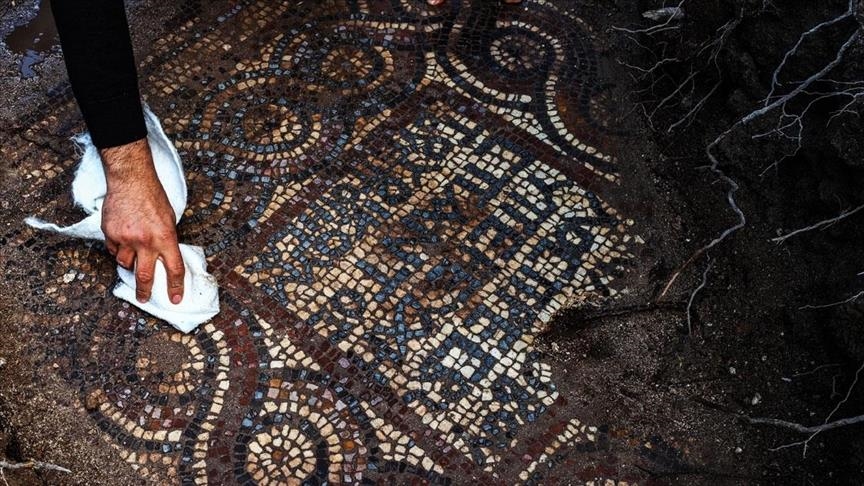
According to an Anadolu Agency report, researchers from the Izmir Archaeology Museum uncovered a 1,500-year-old mosaic in a remote, mountainous area of western Turkey.

A monastery built during the Roman era and a 1,500-year-old mosaic was unearthed in western Turkey as security forces nabbed two suspects conducting an illegal excavation.

Turkish Gendarmerie teams, acting on a tip, launched an operation in the mountainous area where there is no method of transportation by vehicle in the Aliaga District of Izmir province.

The suspects were nabbed trying to remove the historical remains about 2 meters (6.5 feet) below the ground.

Later, experts from the Izmir Archeology Museum investigated the region and the area was taken under protection.

1,500-Year-Old Mosaic Discovered in Turkey

The mosaic will be taken to a museum after initial studies are performed.

Hunkar Keser, the director of the Izmir Archeology Museum told Anadolu Agency that the team came to the region following the Turkish Gendarmerie’s notification.

“We detected the floor mosaic. This place was used as a monastery and has a basilica,” said Keser.

Explaining that the team estimates the monastery was used between the fourth and fourteenth centuries, Keser said the mosaic was very valuable archaeologically.

“It is located at a point where it can be reached by tractor from the pathways. This is a universal cultural asset and a rare artefact,” he said.

Dead bodies of 800 babies found in a septic tank at a former Irish home for unwed mothers

Dead bodies of 800 babies found in a septic tank at former Irish home for unwed mothers

The discovery of nearly 800 dead babies in the septic tank of a home run by nuns has set off a round of soul-searching in Ireland and sparked calls for accountability from government and Catholic Church officials.

The entrance to the site of a mass grave of hundreds of children who died in the former Bons Secours home for unmarried mothers is seen in Tuam, County Galway

According to new evidence, 796 children were secretly buried in the sewage tank of a home in Tuam, County Galway, where unmarried pregnant women were sent to give birth in an attempt to preserve the country’s devout Catholic image.

Officials said they were “horrified” at the discovery and said it revealed “a darker past in Ireland,” a country often haunted by its history of abuse within powerful church institutions.

Dead bodies of 800 babies found in a septic tank at former Irish home for unwed mothers
“Unclaimed bodies” used without consent for the “study of the anatomy and the structure of the human body.”

The home was run by nuns from the Bon Secours Sisters congregation between 1925 and 1961. It was one of the “mother and baby” homes across Ireland, similar to the Sean Ross Abbey, in Tipperary, where Philomena Lee gave her child up for adoption in a story that was this year made into the eponymous Oscar-nominated film “Philomena.”

People who lived near the home said they have known about the unmarked mass grave for decades, but a fresh investigation was sparked after research by local historian Catherine Corless purportedly showed that of the hundreds of children who died at the home, only one was buried at a cemetery.

Speaking to the Irish Mail, which first reported her research, she also said that health board records from the 1940s said conditions at the home were dire, with children suffering malnutrition and neglect and dying at a rate four times higher than in the rest of Ireland.

Local historian Catherine Corless at the site of the alleged mass grave in Tuam.

Charlie Flanagan, minister for children and youth affairs, said that there was a “cross-departmental initiative underway” to determine how to react to allegations.

“Many of the revelations are deeply disturbing and a shocking reminder of a darker past in Ireland when our children were not cherished as they should have been,” Flanagan said.

According to the Reuters news agency, Ireland’s Roman Catholic Church told the order of nuns who ran the former home that it must co-operate with any inquiry into the discovery. Tuam’s Archbishop Michael Neary said that the diocese had no part in running the home but urged the Bon Secours Sisters to “act upon their responsibilities in the interests of the common good.”

“I am horrified and saddened to hear of the large number of deceased children involved and this points to a time of great suffering and pain for the little ones and their mothers,” he said.

The Bon Secours congregation did not respond to NBC News’ request for comment.

A figurine in the infants’ graveyard at Sean Ross Abbey in Roscrea, Tipperary, which was mother and baby home operated by the Sisters of the Sacred Hearts of Jesus and Mary from 1930 to 1970.

The claims came to light after Corless obtained death records for the home and cross-checked them with local cemetery records. Two local boys reportedly unearthed the home’s concrete-covered tank while playing in 1975 and found hundreds of children’s bones inside. The tank has now been surrounded by a housing estate, but an officer from Ireland’s Gardai police force said remains had recently been found after a police survey at the site.

“We do not know what we’re dealing with here yet, it could go back much further,” the officer told NBC News on condition of anonymity. “This is a historical investigation going back to the 1950s.

“We are investigating this matter, the grounds have been surveyed and there is what appears to be human remains discovered. But [the remains] could go back as far as famine times, which is 160 years, we just don’t know yet.”

Police could not confirm if a full excavation of the site was planned.

Ireland’s once-powerful Catholic Church has been rocked by a series of scandals over children’s abuse and neglect in recent years. The Church operated as a quasi-social service in the 20th century and the mother and baby homes were run in a similar fashion to the Magdalene Laundries, where single women who became pregnant were sent away.

“Children went in there so the families could conceal their shame”

While government and church officials were quick to express their shock at reports of Tuam’s high infant mortality rate and allegations of mass burial, the traits were not uncommon for such institutions in Ireland, according to Eoin O’Sullivan, associate professor at Trinity College Dublin.

“Tuam was a former workhouse and conditions were pretty bleak,” said O’Sullivan, co-author of the 2001 book “Suffer the Little Children: The Inside Story of Ireland’s Industrial Schools.”

“Ireland’s first mother and baby home, at Bessborough, in Cork, had an even worse infant mortality rate of around 82 per cent: In the year ending March 31, 1944, 124 children were born or admitted there, and 102 died.”

O’Sullivan added that the practice of mass burial, often with just one headstone marking the site, was not uncommon in many mother and baby homes and psychiatric hospitals at the time.

“Remember that the children went in there so the families could conceal their shame, and the kids were often adopted,” he said. “The nuns were not going around grabbing pregnant women; the women were taken there by their families who knew what conditions were like.

“Why have politicians and the Church reacted with such shock? I’m not sure. I suppose they have to every time something like this comes out connected with religious institutions.”