Category Archives: EUROPE

Medieval ring with a skull emblem found in Wales declared treasure

Medieval ring with a skull emblem found in Wales declared treasure

Medieval ring with a skull emblem found in Wales declared treasure
Images of six of the medieval treasures found in Wales by metal detectorists in recent years.

A ‘Memento Mori‘ gold ring engraved with a skull is one of nine stunning medieval and post-medieval objects found in Wales. The ring, found in Carreghofa Community, Powys, would have been kept as a reminder of the inevitability of death. 

‘Memento Mori’ is a Latin term that literally means ‘remember you must die. Among the other priceless objects are three gold and silver coin hoards and the first ‘Anglo-Saxon style’ double-hooked fastener to be identified in Wales. 

All the nine finds were discovered by metal detectorists in Powys and Vale of Glamorgan and have been declared treasure by National Museum Wales. 

Pictured, ‘Treasure case 19.11’ – a post-medieval Memento Mori gold finger ring found in Carreghofa Community, Powys

They were all personal items owned by wealthy members of Welsh society from the 9th to the 17th centuries AD. The gold Memento Mori ring, dubbed ‘Treasure case 19.11’ was found in Carreghofa Community by metal detectorist David Balfour. 

Its flat bezel is engraved with what National Museum Wales calls ‘death’s head’ – a skull – inlaid with traces of white enamel. The skull is surrounded by the inscription ‘+ Memento Mori’ in a small neat italic script arranged in a circle.  The inscription, the style of the engraved skull and the neat italic lettering indicates that this ring dates between 1550 and 1650, according to National Museum Wales. 

The government body said in a blog post that it hopes to acquire this artefact for the Welsh national collection. 

‘This is a rare example of a Tudor or early Stuart memento mori ring with a clear Welsh provenance,’ said Dr Mark Redknap, deputy head of collections and research at National Museum Wales.

‘Its sentiment reflects the high mortality of the period, the motif and inscription acknowledging the brevity and vanities of life. 

‘This discovery increases our knowledge of attitudes to death in early modern Wales.’

Among the other findings, all listed by National Museum Wales this week, are a medieval silver annular brooch, a Tudor silver coin hoard and a medieval silver bar-mount. 

Three medieval gold coins (Treasure 19.44) were found by Chris Perkins and Shawn Hendry while metal detecting in Llanwrtyd Community, Powys in April 2019. 

The coins are ‘nobles’ from the reigns of Edward III and Richard II (1327-1399), with a total value of 20 shillings, which was about 50 days’ wages for a skilled tradesman. 

They were probably buried for safekeeping around the end of the 14th century but were never recovered by their owner. The newly opened Y Gaer Museum, Art Gallery & Library, in the town of Brecon in mid-Wales, hopes to acquire the gold coins for its new galleries. 

Late medieval silver-gilt finger ring found in the Tregynon area, Powys, Wales.

‘Very few gold coins have been discovered within south Powys, so we would welcome the possibility of adding these to Museums new medieval displays,’ said Senior Curator Nigel Blackamore. 

A group of five silver coins (Treasure 19.22), comprising 4 groats and a Burgundian ‘double patard’, was discovered by Aled Roberts and Graham Wood in May 2019, while metal detecting in Churchstoke Community, Powys. This small hoard was buried in about 1530 during the reign of Henry VIII, whose portrait features on three of the coins.

17th century gold coins found by metal detectorists in the Trefeglwys Community, Powys, Wales.

Y Lanfa Powysland Museum and Welshpool Library hopes to acquire this coin hoard to contribute to the museum’s collection, which does not yet include examples of locally found 16th century coins. 

‘It would be wonderful to have these coins within the museum’s collection and to put them on display for the public to enjoy,’ said Centre Manager, Saffron Price. 

Meanwhile, the early medieval decorated silver double hooked fastener (Treasure case 19.23) was found by Stuart Fletcher in Churchstoke Community, Powys on an undisclosed date. 

National Museum Wales says: ‘The stylisation of the debased zoomorphic motifs show that this is Anglo-Saxon work belonging to the ninth century, and it was probably used to fasten an upper garment, as functional costume jewellery.’ 

Treasure case 19.23, an early medieval silver double-hooked fastener found in Churchstoke Community, Powys

It hopes to acquire this artefact too for the national collection. This unusual object is the first Anglo-Saxon style double-hooked fastener to be identified in Wales,’ said Dr Redknap.

‘Reflecting the status of the original owner, it provides new evidence for the exposure of Anglo-Saxon styles within the early Welsh kingdoms, and of the melting-pot of styles and influences from which Welsh identity was to emerge.
Rabbits Uncover 9,000-Year-old Artifacts on a Welsh island

Rabbits Uncover 9,000-Year-old Artifacts on a Welsh island

A group of rabbits inadvertently uncovered a hoard of 9,000-year-old Stone and Bronze Age artefacts hidden on the small Welsh island of Skokholm this month, in a first-of-its-kind discovery.

Skokholm Island typically allows a select number of visitors to spend the night, but COVID-19 lockdowns have reduced its population to only two wardens — and a bunch of rabbits.

Skokholm Island sits in the Celtic Sea to the west of mainland Wales and is two miles off the Pembrokeshire coast. It is currently only inhabited by two wardens, seabird experts Richard Brown and Giselle Eagle, who made the startling discoveries.

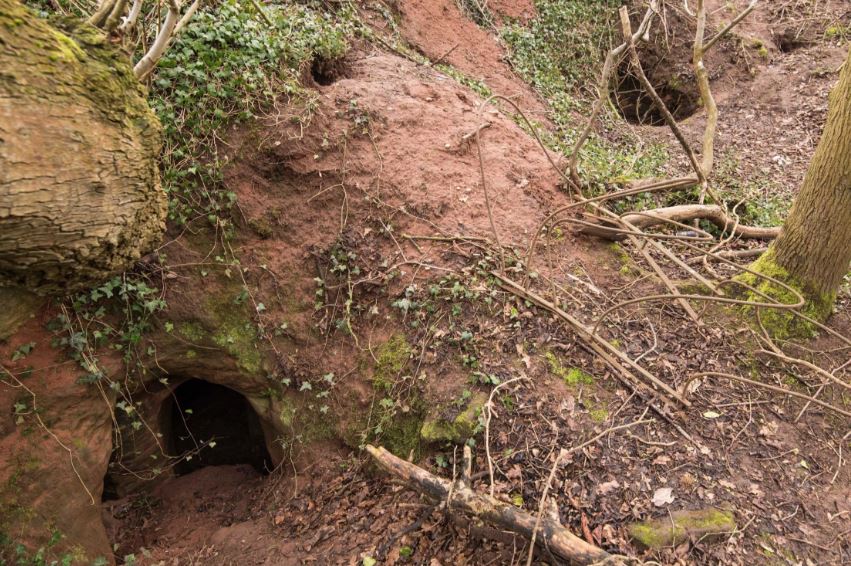
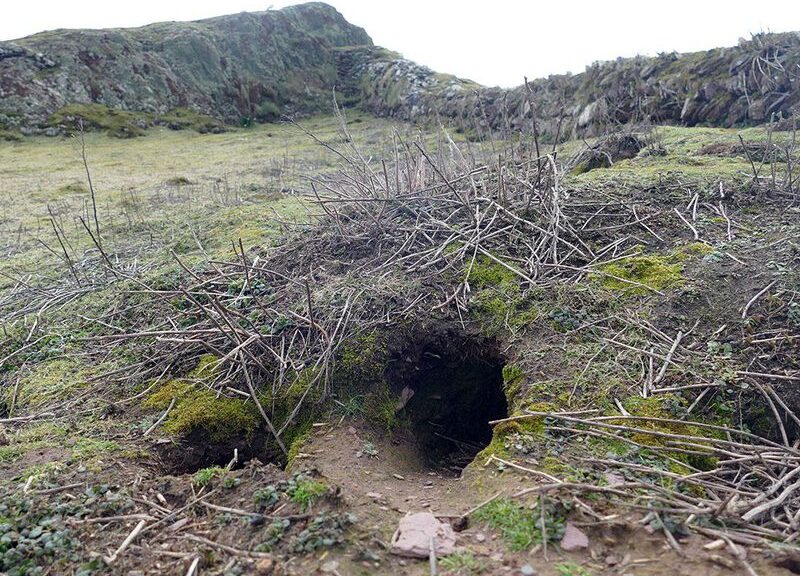
According to The Guardian, Brown and Eagle were making their usual patrol of the area when they discovered an artefact at the entrance of a rabbit burrow right by the island’s cottage.

Rabbits Uncover 9,000-Year-old Artifacts on a Welsh island
The discoveries were made at the same rabbit burrow which was apparently dug into an ancient hunter-gatherer site.

The wardens sent pictures of the piece to experts on the mainland, who identified it as a Mesolithic tool.

The tool was what researchers call a “beveled pebble,” and has since been estimated to be around 6,000 to 9,000 years old. Experts believe it was used by Stone Age hunter-gatherers to craft boats out of seal hides as well as to prepare foods like shellfish.

According to Andrew David, an expert who examined the prehistoric tool virtually, similar items have been found at coastal sites nearby, including Pembrokeshire and Cornwall, but this is a historic first for Skokholm Island.

However, the discoveries didn’t stop there.

This particular tool is believed to have been used to prepare shellfish and bolster ancient watercraft with animal skin.

Indeed, just a day later, Brown and Eagle spotted the second round of items at the entrance to the same rabbit burrow which included yet another Mesolithic-era stone tool and sizable pieces of pottery.

The wardens sent photos of these to the curator of prehistoric archaeology at the National Museum of Wales, Jody Deacon. She identified the pottery pieces as relics from a 3,750-year-old burial urn from the Early Bronze Age.

One particularly large fragment was found to have come from a rather thick pot. It was decorated with lined incisions, leading Deacon to conclude that it was likely used for cremation rituals.

For Toby Driver, an archaeologist at the Royal Commission of Wales, the discoveries ultimately suggest that the island’s cottage was built atop an ancient burial site which itself was built on top of an even older site.

“Skokholm is producing some amazing prehistoric finds,” he said. “It seems we may have an early Bronze Age burial mound built over a middle Stone Age hunter-gatherer site. It’s a sheltered spot, where the island’s cottage now stands and has clearly been settled for millennia.”

Experts believe this pottery fragment belonged to a funerary urn, an artefact never before found on Skokholm Island.

Finding prehistoric burial earns in Wales isn’t all that unusual. Discovering them on Skokholm, meanwhile — or on any of the western Pembrokeshire islands — is unprecedented.

Brown and Eagle, who moved to Skokholm Island in 2013, are helping to uncover more about the island’s ancient past.

While it’s barely a mile long and half a mile across, Skokholm Island has a fascinating history. The name itself is Norse, given by the Vikings who settled there in the late 10th or early 11th century. Then, Skokholm became a rabbit farm around the 15th century.

In 2006, the Wildlife Trust of South and West Wales purchased the isle in order to conserve it as a national nature reserve. While it’s typically open for a restricted number of visitors to spend the night, the coronavirus pandemic has left Brown and Eagle on their lonesome and documenting their observations on a blog.

These miraculous discoveries might lend some credence to the age-old superstition that rabbit’s feet bring luck.

Experts are eager to find out for themselves, with a fresh, exhaustive survey of Skokholm Island later this year. However, they will have to wait until pandemic lockdowns are lifted.

A farmer discovers an Ice Age cave hidden under his field that is over 11,000 years old

A farmer discovers an Ice Age cave hidden under his field that is over 11,000 years old

A farmer discovered an Ice Age cave that was naturally formed and used by humans. Adam Bryczek had been roaming his land near the town of Kraśnik in south-eastern Poland when he came across what appeared to be a large hole.

But what had originally been a small opening in the ground, had widened over time, before ultimately collapsing.

Startled Bryczek found the opening led down around 10 metres into an underground cave with an area of a few dozen square metres and a maximum height of up to around 140 cm – not enough for most adults to stand upright.

The cave is a few dozen square metres wide with a maximum height of around 140 cm – not enough for most adults to stand upright.

Bryczek reported his find to Dominik Szulc, the guardian of monuments in Kraśnik County, in January.

Since then, the site has been visited by archaeologists from Lublin, the capital of the region.

The underground space appears to be a solutional cave, which means that it was formed by the bedrock being dissolved by groundwater.

According to Szulc: “The cave undoubtedly dates back to the Pleistocene (2.58 million – 11,700 years ago), and more precisely, perhaps the so-called glaciations of the Nida or San (730,000-430,000 years ago).”

During this period, a Scandinavian ice sheet covered the Lublin Upland and the local area was covered by a thick layer of snow, he explains.

During temporary increases in temperature, there was a lot of flowing water, which dissolved the limestone rock, forming the walls, floor and ceiling of the cave.

Even though the cave formed naturally, the researchers point out that it was visited by humans, apparently to extract stone for building.

The cave’s walls show traces of mechanical work left by tools.

In a post on Facebook, Szulc did not publish the cave’s exact location, warning that it could be dangerous.

He wrote: “It is not suitable for access to visitors, because it is too small and low, with a steep and dangerous entrance leading to it.”

Experts are now working on a way to secure the cave so that people can enter it again to conduct scientific research.

6-yr old Indian-origin boy finds millions of years old fossil in UK garden

6-yr old Indian-origin boy finds millions of years old fossil in UK garden

A six-year-old boy has found a fossil up to 488 million years old while digging in his garden with a fossil-hunting set he received for Christmas.

Siddak Singh Jhamat was “digging for worms” when he made the discovery

Siddak Singh Jhamat, known as Sid, had been digging in his garden in Walsall, in the West Midlands, “for worms and things like pottery and bricks”, he said.

“I just came across this rock which looked a bit like a horn, and thought it could be a tooth or a claw or a horn, but it was actually a piece of coral which is called horn coral. I was really excited about what it really was.”

His father Vish Singh said: “We were surprised he found something so odd-shaped in the soil.

“He found a horn coral, and some smaller pieces next to it, then the next day he went digging again and found a congealed block of sand.

6-yr old Indian-origin boy finds millions of years old fossil in UK garden
The family were able to identify the fossil’s era on a Facebook group

“In that there were loads of little molluscs and seashells, and something called a crinoid, which is like a tentacle of a squid, so it’s quite a prehistoric thing,” Mr Singh added.

Fortunately for the pair, Mr Singh was able to identify the findings courtesy of a fossil group on Facebook which he was a member of.

The group identified the find as most like a Rugosa coral, estimated to be between 251-488 million years old.

Vish Singh estimates the fossil is between 251 to 488 million years old

“The period that they existed from was between 500 million and 251 million years ago, the Paleozoic era,” Mr Singh explained.

“England at the time was part of Pangea, a landmass of continents. England was all underwater as well.”

Unlike the south of England’s Jurassic Coast, the family said the area they live in isn’t well known for its fossils – although they have a lot of natural clay in the garden where Sid’s findings were unearthed.

The family added that they hoped to tell Birmingham University’s Museum of Geology about their discovery.

Mr Singh said: “Lots and lots of people have commented on how amazing it is to find something in the back garden.

“They say you can find fossils anywhere if you look carefully enough, but to find a significantly large piece like that is quite unique,” he added.

Sprawling 5,000-year-old cemetery and fortress discovered in Poland

Sprawling 5,000-year-old cemetery and fortress discovered in Poland

Archaeological treasures are usually discovered by digging deep into the earth. One Polish archaeologist, however, made an incredible discovery from the sky — and now he has unearthed a 5,000-year-old cemetery and a medieval fortress.

Jan Bulas, an independent archaeologist in Kraków, became intrigued after noticing straight lines on satellite images of a farm near the town of Dębiany — lines only visible from above. He went to investigate with fellow archaeologist Marcin Przybyła.

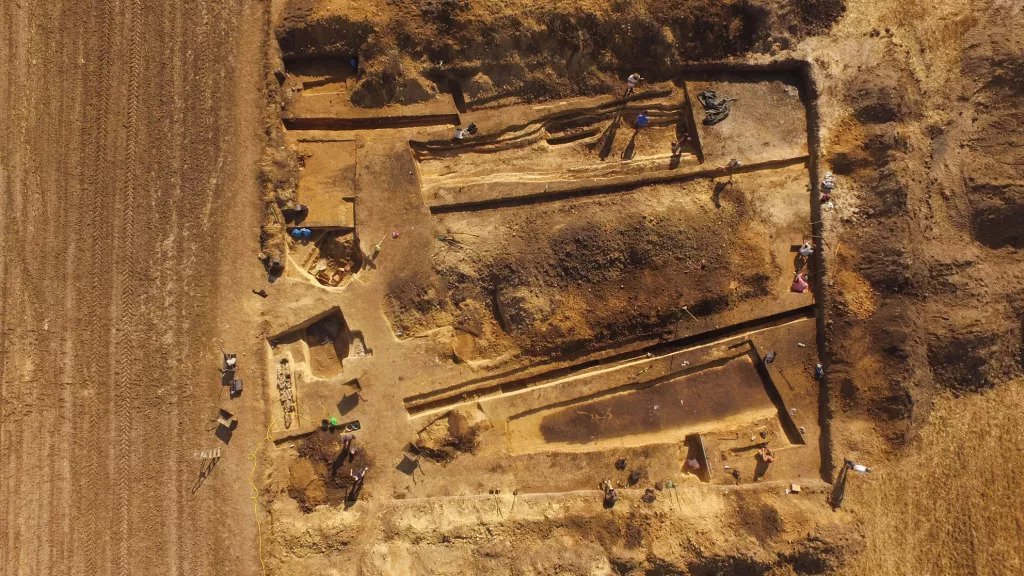
There, the pair made an astounding find: the sprawling cemetery, consisting of 12, roughly 150-foot tombs — and atop the cemetery, remains of a medieval fortress, complete with a moat.

Sprawling 5,000-year-old cemetery and fortress discovered in Poland
Archaeologists estimate the ancient cemetery in Poland dates from about 5,500 years ago. Seven barrows have been excavated so far and there may be more than a dozen.
No human remains have yet been identified in the central tombs, but the remains of several burials from the same period have been found in the embankments of the earth around them, including this burial of a Neolithic woman.

“The megalithic cemetery in Dębiany is one of the largest and most interesting sites of this type in Central Europe,” said Bulas and Przybyła.

Using magnetic gradiometers — which can detect where the ground has been disturbed in the past without digging up the earth — Bulas and Przybyła found the foundations of the medieval fortress. Beneath the fortress lay even more treasure: the cemetery, which Bulas and Przybyła estimate to be around 5,500 years old.

Since they started digging two years ago, archaeologists have found seven Neolithic tombs and two horses buried during the Bronze Age, some 3,500 years ago. But they think there’s even more to uncover. Bulas and Przybyła suspect that the site could contain a dozen tombs.

These two horses were buried side-by-side in a grave at the site that dates from the Middle Bronze Age, thousands of years after the Neolithic cemetery.

The tombs they’ve uncovered so far are between 130 and 165 feet long. Their longer walls were reinforced with wooden palisades, most of which have long since disintegrated — only the post holes remain. The shorter walls seem to contain an entrance to a funerary chapel.

These tombs were once barrow mounds — that is, raised earth over a grave. Bulas and Przybyła have called their discovery “megaxylons”, combining the Greek words for big (“mega”) and wood (“xylos”). The barrows they’ve found near Dębiany were once much higher. However, over time, they’ve eroded into the earth.

“Unfortunately, most of the remains of the deceased and equipment were removed from these burials while the cemetery was in operation,” Przybyła said. “It was a ritual behaviour that we often encounter in cemeteries from that period.”

Built above the cemetery — perhaps unknowingly — is a fortress from the ninth and 10th centuries. In fact, the fortress is what first caught Bulas’ eye. The lines he saw on the satellite image were the outline of the medieval structure and its moat.

Both find stretch back deep into early European history and could prove invaluable when it comes to understanding ancient cultures and their customs. The fortress even predates the establishment of the first kingdom of Poland, in 1025. Bulas and Przybyła are especially hopeful that their discovery can shed light on some of the region’s first farmers.

“[The cemetery] provides us with extraordinary data on the funeral customs of the Funnel Beaker Culture,” they said.

The Funnel Beaker people, named after the distinctive pottery they left behind, are thought to be the first farmers in Europe. They came from the Middle East, passed through the Balkans, and began to spread across Europe in 4100 B.C.

The cemetery discovered by Bulas and Przybyła bears the marks of the Funnel Beaker people. They routinely built barrow cemeteries like this one. One cemetery found in the Polish region of Kujawy contained burial mounds so big that they’re sometimes called “the Polish pyramids.”

The so-called “Polish pyramids” found in Kujawy.

Alongside the cemetery, archaeologists are eager to learn more about the fortress itself. It’s not presently clear what purpose it served or how many people lived there.

“[The fortress] was not permanently inhabited,” explained Przybyła. “Perhaps it served as a military camp or an object associated with religious or social rituals.”

Beyond the history — and mysteries — the fortress structure holds, it appears to be one-of-a-kind. “It is worth noting that this is the only such structure known in Poland,” Przybyła said.

For now, Bulas and Przybyła plan to continue their investigation of the site to see what other treasures from the past they can unearth.

They’ll continue to excavate the cemetery to learn more about the Neolithic barrows and tombs. And they’re curious to see what they can learn from the apparently more recent fortress — as well as what it can tell them about medieval life in Poland.

World’s oldest wooden statue is TWICE as old as Stonehenge

World’s oldest wooden statue is TWICE as old as Stonehenge

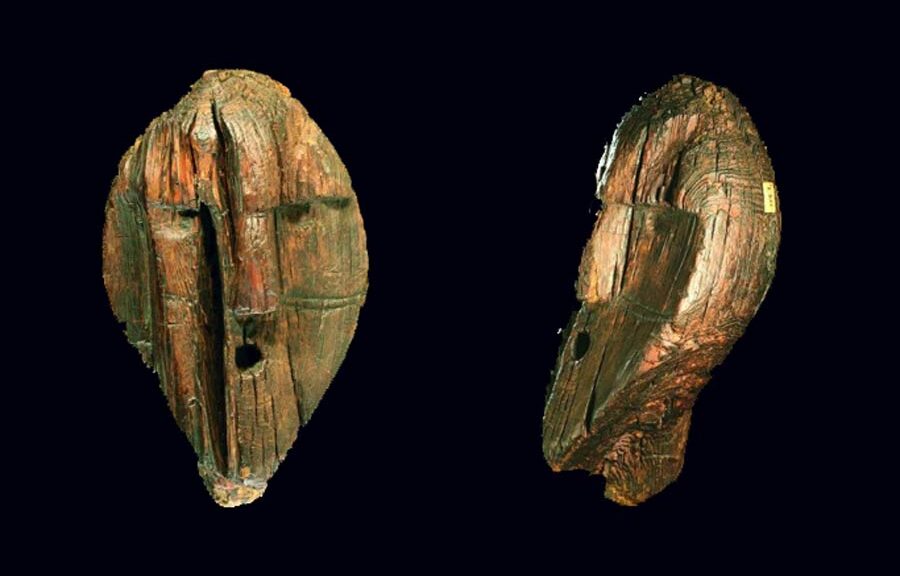
Gold prospectors first discovered the so-called Shigir Idol at the bottom of a peat bog in Russia’s Ural mountain range in 1890. The unique object—a nine-foot-tall totem pole composed of ten wooden fragments carved with expressive faces, eyes and limbs and decorated with geometric patterns—represents the oldest known surviving work of wooden ritual art in the world.

World's oldest wooden statue is TWICE as old as Stonehenge
Hunter-gatherers in what is now Russia likely viewed the wooden sculpture as an artwork imbued with ritual significance.

More than a century after its discovery, archaeologists continue to uncover surprises about this astonishing artefact. As Thomas Terberger, a scholar of prehistory at Göttingen University in Germany, and his colleagues wrote in the journal Quaternary International in January, new research suggests the sculpture is 900 years older than previously thought.

Based on extensive analysis, Terberger’s team now estimates that the object was likely crafted about 12,500 years ago, at the end of the Last Ice Age. Its ancient creators carved the work from a single larch tree with 159 growth rings, the authors write in the study.

“The idol was carved during an era of great climate change, when early forests were spreading across a warmer late-glacial to postglacial Eurasia,” Terberger tells Franz Lidz of the New York Times.

“The landscape changed, and the art—figurative designs and naturalistic animals painted in caves and carved in rock—did, too, perhaps as a way to help people come to grips with the challenging environments they encountered.”

According to Sarah Cascone of Artnet News, the new findings indicate that the rare artwork predates Stonehenge, which was created around 5,000 years ago, by more than 7,000 years. It’s also twice as old as the Egyptian pyramids, which date roughly 4,500 years ago.

As the Times reports, researchers have been puzzling over the age of the Shigir sculpture for decades. The debate has major implications for the study of prehistory, which tends to emphasize a Western-centric view of human development.

The wood used to carve the Shigir Idol is around 12,250 years old.
Shigir Idol – the oldest known wooden sculpture in the world.

In 1997, Russian scientists carbon-dated the totem pole to about 9,500 years ago. Many in the scientific community rejected these findings as implausible: Reluctant to believe that hunter-gatherer communities in the Urals and Siberia had created art or formed cultures of their own, says Terberger to the Times, researchers instead presented a narrative of human evolution that centered European history, with ancient farming societies in the Fertile Crescent eventually sowing the seeds of Western civilization.

Prevailing views over the past century adds Terberger, regarded hunter-gatherers as “inferior to early agrarian communities emerging at that time in the Levant. At the same time, the archaeological evidence from the Urals and Siberia was underestimated and neglected.”

In 2018, scientists including Terberger used accelerator mass spectrometry technology to argue that the wooden object was about 11,600 years old. Now, the team’s latest publication has pushed that origin date back even further.

As Artnet News reports, the complex symbols carved into the object’s wooden surface indicate that its creators made it as a work of “mobiliary art,” or portable art that carried ritual significance.

Co-author Svetlana Savchenko, the curator in charge of the artifact at the Sverdlovsk Regional Museum of Local Lore, tells the Times that the eight faces may contain encrypted references to a creation myth or the boundary between the earth and sky.

“Woodworking was probably widespread during the Late Glacial to early Holocene,” the authors wrote in the 2018 article. “We see the Shigir sculpture as a document of a complex symbolic behaviour and of the spiritual world of the Late Glacial to Early Mesolithic hunter-gatherers of the Urals.”

The fact that this rare evidence of hunter-gatherer artwork endured until modern times is a marvel in and of itself, notes Science Alert. The acidic, antimicrobial environment of the Russian peat bog preserved the wooden structure for millennia.

João Zilhão, a scholar at the University of Barcelona who was not involved in the study, tells the Times that the artefact’s remarkable survival reminds scientists of an important truth: that a lack of evidence of ancient art doesn’t mean it never existed.

Rather, many ancient people created art objects out of perishable materials that could not withstand the test of time and were therefore left out of the archaeological record.

“It’s similar to the ‘Neanderthals did not make art’ fable, which was entirely based on the absence of evidence,” Zilhão says. “Likewise, the overwhelming scientific consensus used to hold that modern humans were superior in key ways, including their ability to innovate, communicate and adapt to different environments. Nonsense, all of it.”

Head of the Shigir Idol, the world’s oldest known wood sculpture.

Hundreds of Skeletons Unearthed at World’s Oldest City Show How Violence and Disease Ravaged Civilization

Hundreds of Skeletons Unearthed at World’s Oldest City Show How Violence and Disease Ravaged Civilization

Around 9,000 years ago, a Neolithic settlement in central Turkey was starting to grow. The people living at Çatalhöyük had transitioned from foraging to farming, and the population of what would become one of the world’s first cities was increasing.

In a study published in the journal PNAS, scientists have now looked at how this shift impacted the people living there—and how ultimately the move toward urban lifestyles led to increased violence and disease.

Çatalhöyük, in Anatolia, was founded around 7100 B.C. Archaeologists discovered the site in the 1950s and quickly realized it was a cultural centre during the Neolithic period. Since then it has been declared a UNESCO World Heritage Site, providing important evidence about how people went from living in small villages to larger urban environments.

The site was occupied for over 1,000 years, with the population peaking between 3,500 and 8,000 people living there around 6,500 B.C. However, after a rapid decline, it was abandoned just over 500 years later, in 5950 B.C.

To understand the social changes that took place at Çatalhöyük, researchers looked at the remains of 749 individuals.

The team, led by Clark Spencer Larsen of The Ohio State University, notes that this sample encompasses the entire demographic—from the neonatal to the elderly. Bodies were normally buried under houses in burial pits, suggesting a sense of community.

By looking at changes to the skeletons over the period of occupation, the team was able to deduce certain changes that took place. “Çatalhöyük was one of the first proto-urban communities in the world and the residents experienced what happens when you put many people together in a small area for an extended time,” Larsen said in a statement.

The team discovered the population expanded rapidly during the Middle Period (6700−6500 B.C). Analysis of the mud houses shows that at its population peak, residents were experiencing extreme overcrowding.

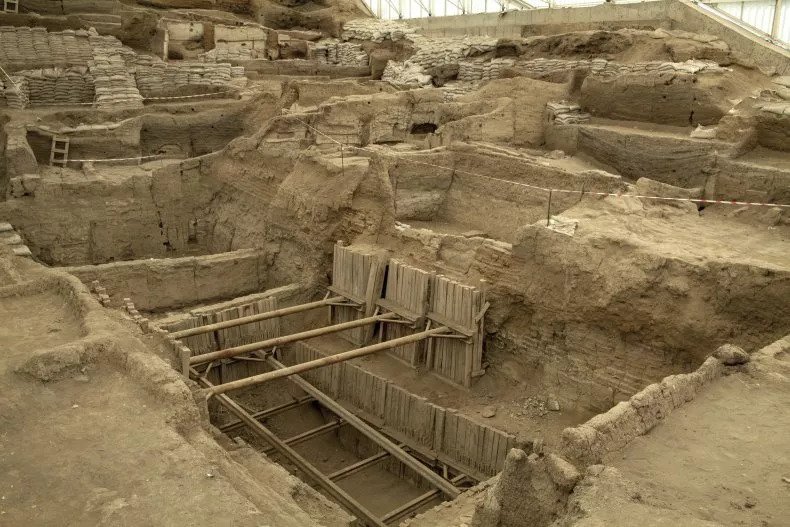
Residential dwellings were built like apartments and they could only be accessed by the roof, via ladders. The walls of the houses were found to have traces of animal and human faecal matter: “They are living in very crowded conditions, with trash pits and animal pens right next to some of their homes. So there is a whole host of sanitation issues that could contribute to the spread of infectious diseases,” Larsen said.

The headless skeleton of a young woman and her unborn child from Çatalhöyük.

Residents kept sheep and goats—the former of which is host to several human parasites. Living in close quarters in extremely cramped conditions could have contributed to public health problems—about a third of residents were living with infections in their bones, the analysis revealed.

The team also found an increase in interpersonal violence. Of 93 skulls in the sample, over a quarter were found to have suffered from fractures.

The shape of the injury suggests people were hit over the head with hard round objects—potentially clay balls that were also discovered at the site. Over half of the victims were women and many of the blows appear to have been inflicted when the victims were facing away from their attacker.

Researchers believe the increase in violence coincides with the changes to the population size: “An argument can be made for elevated stress and conflict within the community,” they wrote.

“This finding matches those from a number of settings today and in the archaeological past, confirming the association between violence and demographic pressure.”

Analysis of the bones revealed the diet of the residents was heavy in wheat, barley and rye. This may have caused tooth decay—findings revealed that between 10 and 13 per cent of the population suffered from cavities.

Over the period of occupation, residents were found to have walked significantly more toward the end of the occupation compared with the start.

This indicates that the people were having to travel further to find and farm fertile land—suggesting environmental degradation had taken place at the site. This, coupled with the climate becoming drier, could have contributed to the city’s demise, researchers say.

Larsen believes understanding what happened at Çatalhöyük could help with the challenges we face today, as the population increases and our cities get even more overcrowded.

“We can learn about the immediate origins of our lives today, how we are organized into communities. Many of the challenges we have today are the same ones they had in Çatalhöyük—only magnified,” he said.

Hundreds of Skeletons Unearthed at World's Oldest City Show How Violence and Disease Ravaged Civilization
View of Çatalhöyük, the neolithic archaeological site in Turkey.

Possible 2,000-Year-Old Port Found in Northern England

Possible 2,000-Year-Old Port Found in Northern England

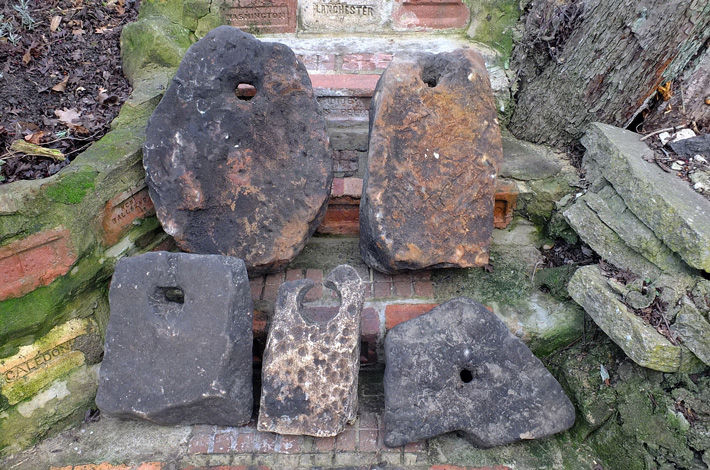
BBC News reports that Roman artefacts, including stone anchors fashioned with a single hole, coins, nails, sharpening tools, and a brooch, have been recovered from a possible port site in the River Wear in northeastern England.

One theory still to be examined is that it may have been home to a small port. Underwater archaeologist Gary Bankhead said he could not “over-emphasize” the importance of the discovery.

Although a dam is known to have existed in the area since Victorian times if theories are confirmed it would be only the second such port ever discovered in Britain.

Possible 2,000-Year-Old Port Found in Northern England
The five stone anchors found in the river suggest the vessels could have been part of a trading network

“It’s the first occasion in the UK where the anchors have been found in a river, normally they are found in a maritime environment offshore,” said Mr Bankhead, an honorary research associate at Durham University.

“The closest parallels we have are six that were found off Dunbar but they all had two holes in. The ones we found at Hylton had a single hole and that’s really useful dating evidence.

“We looked for parallels and one particular anchor found in Lulworth Cove in Dorset was found alongside some Mediterranean pottery dated from 100BC to 100 AD, that’s really useful evidence.

“That corresponds nicely with Romans in Northern Britain, where they were trying to suppress the Brigantes at the time and build the forts.”

Further up the River Wear were Roman forts at Chester-le-Street and Binchester. Four of the anchors found are made from local stone but one is a different material and believed to have come from south of Whitby, North Yorkshire.

“That suggests trade networks, a seagoing vessel, coming up the North East coast, coming in the mouth of the Wear, sailing up as far as it could and having to anchor up at low tide because it couldn’t go any further up.

“Potentially, what we think we have found is some sort of dam, bridge, wharf, or landing stage where these vessels are unloading cargo into smaller river-sized vessels to resupply the forts further upstream.

“Clearly this is an important multi-period site, we have nearly 2,000 years worth of occupation at that site, but we need to know what that is to get it done correctly.”

A circular Roman mount was found at the site
Other items found items found included a model boat

A community group has played a vital role in the discovery, carrying out fieldwork, with some spending 40 years trying to uncover its secrets. It also found coins, nails, a stone map, sharpening tools and a brooch.

“For 40 years I have been digging in the wrong place, that was the trouble,” laughed retired carpenter Ian Stewart.

“We moved to the site and the artefacts kept coming, it was amazing. You have got no idea how thrilled I was, especially when I started to find the timbers in the river bed that the dam was put on and all the stones that matched the stones at Roker Beach.

“Everything started to fit together, it was like doing a puzzle that’s 80 per cent underwater and scattered all over the North East, no wonder it took 40 years.”

The artefacts have been removed for further examination.