2,800-Year-Old Urartu Jars Uncovered In Eastern Turkey
At this time, using the common hand tool trowel, some researchers are looking into the secrets of an ancient kingdom. Historians believe they have discovered ruins that are estimated to be over 2,800 years old in the eastern Van region, Turkey.
The pithos burial chambers, which are like large ceramic jars, are thought to be from the Kingdom of Urartu, which ruled the country from the mid-ninth century BC until its defeat by the Medes.
Vans was the capital of the Urartian Kingdom until it fell early in the sixth century BC.
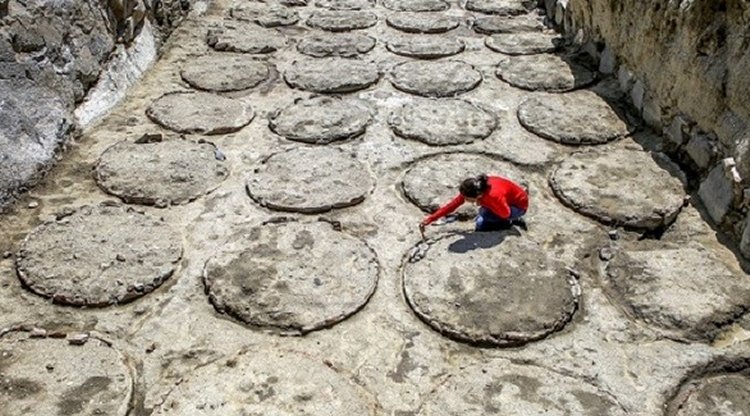
Painstaking: Archaeologists believe these 2,800-year-old pithos tombs from the Kingdom of Urartu
Every summer a team of around 50 archaeologists take part in an annual excavation at Van Fortress in a bid to uncover treasures that have been buried for thousands of years.
With permission from the country’s Ministry of Culture and Tourism university teams have been working together.
They are currently working at the top of the fortress, where a palace was located, and the northern quarter.
‘Our work is aimed at repairing and further protecting Old Van City,’ Dr Erkan Konyar from Istanbul University said according to Todays Zaman.
‘We are carrying out work to protect the areas that we have worked on in previous years. ‘
Just 38km from Van excavation work is also taking place at Urartu Castle. This year they discovered part of the walls.
Head of Excavation Doç. Dr Mehmet Işıklı, told Hurriyet Daily News: ‘This made us very excited, as even though these walls witnessed great earthquakes, their architecture remained quite robust and unchanged.
The pithos tombs, which are like large ceramic jars. Pictured: An archaeologist working to uncover the resting place
The ancient site where the pithos tombs were discovered thought to be from the Kingdom of Urartu, which ruled from the country from the mid-ninth century BC
Archaeologists discover ancient Rome may have been much larger than previously believed
The discovery made in 2015 of a large, 2500-year-old residence, in the central part of Rome, points to the possibility that the ancient city was considerably bigger than previously thought during its archaic period.
Found on the Quirinal Hill, somewhere between modern-day Via Veneto street and the Termini train station, the ancient rectangular house is remarkably well-intact, complete with clay-smeared walls, wooden beams and even a roof.
Although currently the location of the official residence of Italy’s Head of State, Sergio Mattarella, the Quirinal Hill was originally included within the city’s borders during the reign of the sixth Roman king, Servius Tullius.
Tullius was known for instituting the famous Servian Constitution, which made a departure from the ‘tribal’ institutions of curia and gentes and divided the society into five different classes (classis) according to wealth.
In any case, up until now, historians believed that the Quirinal was a sacred place, housing a number of temples and also a necropolis.
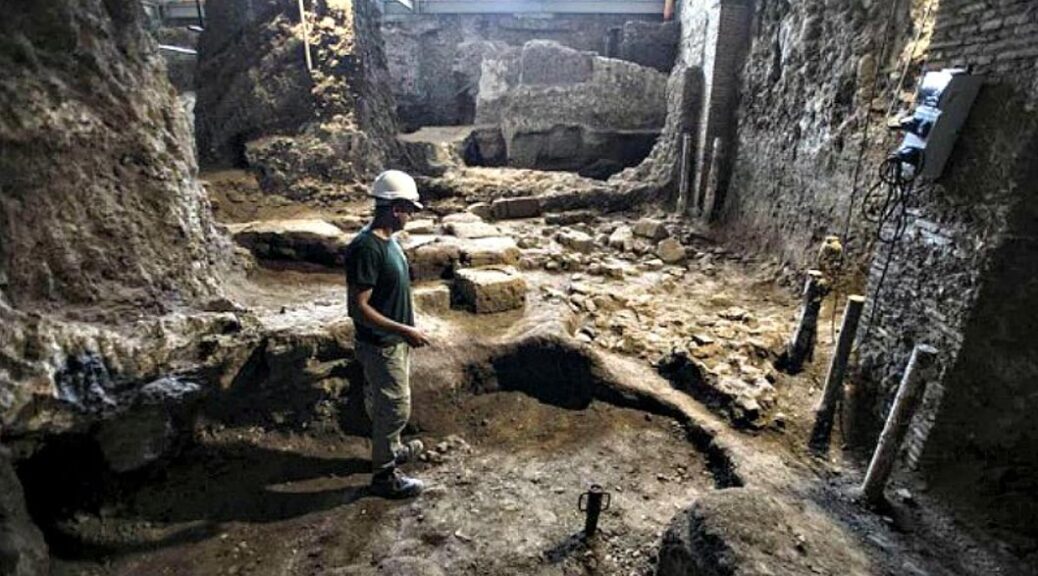
Ancient ruins on Quirinal Hill, Rome. Representational image.
The residential areas, it was previously thought, were situated close to the Forum, towards the south of the city. Speaking about the find, Francesco Prosperetti, of the Archaeological Heritage of Rome, said (in 2015):
This is an exceptional find, among the most important of the last 10 years… The remains of this house from the beginning of the sixth century BC is an almost unparalleled example of ancient archaic architecture in this city.
Constructed atop a commonly-found volcanic stone, known as tufa, the newly-uncovered house consisted of two rooms, with the porch acting as the main entrance. Further, the site contains several distinct clues that suggest the building was used for residential purposes.
According to Mirella Serlorenzi, the head of the excavation team, it could have been the residence of a custodian in charge of looking after a nearby temple, which was unearthed back in 2013. Serlorenze said:
At the beginning of the sixth century BC, Rome was much larger than we previously thought before this latest discovery.
In addition to being centered at the Forum, archaic Rome, researchers think, was spread over a much larger area than originally believed.
Darius Arya, an archaeologist who was then involved with the excavation works at Ostia Antica, added:
Many grand projects of restoration going on now are focused on the monuments we know, like the Colosseum and the Trevi Fountain, but there is much of Rome’s history that is not so well-preserve. What is so amazing is that this discovery dates back to Archaic Rome, a crucial period – the regal period — that made Rome so great.
Human Proteins Detected on Medieval “Birthing Girdle”
Live Science reports that biochemist Sarah Fiddyment of the University of Cambridge analyzed the surface of a medieval birthing girdle—a ten-foot-long strip of narrow parchment covered with Christian imagery including the wound on the side of the crucified Christ, dripping blood, crucifixion nails, a sacred heart and shield, and a human figure that may represent Jesus.
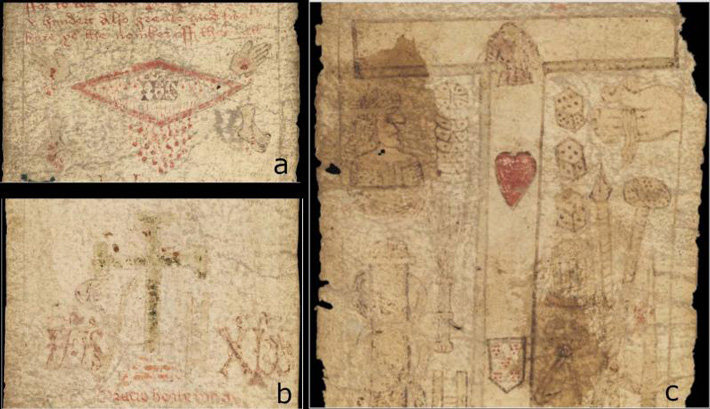
The medieval birthing scroll has illustrations from Christian imagery to protect a woman from the dangers of childbirth, including the wound on the side of the crucified Christ, dripping blood (upper left); a rubbed-away crucifix and holy monograms (lower left); and a tau (headless) cross adorned with a sacred heart and shield, alongside a standing figure that may be Jesus.
On the surface of the strip of parchment — called a “birthing girdle” or “birth scroll” — the researchers found traces of plant and animal proteins from medieval treatments used to treat common health problems during pregnancy, and of human proteins that match cervico-vaginal fluid. Those traces suggest the girdle was worn by women while they gave birth.
“This particular girdle shows visual evidence of having been heavily handled, as much of the image and text have been worn away,” biochemist Sarah Fiddyment of the archaeology department at the University of Cambridge told Live Science in an email. “It also has numerous stains and blemishes, giving the overall appearance of a document that has been actively used.”
Fiddyment is the lead author of the new study, which was published on Wednesday (March 10) in the journal Royal Society Open Science.
The long and narrow parchment was originally made, probably in the late 15th century, from four strips of sheepskin that had been scraped thin and stitched together. The resulting strip is illustrated with Christian imagery, including pictures of the nails of the crucifixion; the holy monogram IHS, which is a way of writing Jesus’ name; a standing figure, possibly Jesus; and his crucifixion wounds, dripping with blood. The text of Christian prayers also appears on both sides.
The birthing scroll has text from Christian prayers on both sides, and heavily worn illustrations — including the three crucifixion nails of Christ — that may have been pressed or kissed by its wearers.
Birthing girdles
The birthing girdle described in the study is a rare surviving example held in the Wellcome Collection, a museum and library of science, medicine, life, and art in London.
Such girdles were once commonplace as magical remedies to protect women from the dangers of childbirth, which was a leading cause of death for women in the medieval period.
There are several references to their use in medieval England, and churches and monasteries often loaned them out to pregnant women in return for a donation; when the wife of the English king Henry VII became pregnant, the sum of six shillings and eightpence was paid “to a monke that brought our Lady gyrdelle to the Queen,” according to historic records.
Women would wear the scrolls of illustrated parchment or silk wrapped around their waist and pregnancy bump in one of several configurations; the scrolls were about 4 inches (10 centimeters) wide and just about exactly 11 feet (3.3 m) long — it was thought that such a girdle would fit Mary, the mother of Jesus.
But birthing scrolls and other church rituals were targeted for destruction during Henry VIII’s so-called “Dissolution of the Monasteries” that began in 1536. Protestant reformers considered the rituals of childbirth as “sanctuaries for forbidden religious practices,” and they actively tried to suppress them — although recalcitrant midwives continued to use birthing girdles on the sly, wrote the researchers.
“One of the great anxieties of the Reformation was the adding of aid from supernatural sources beyond the Trinity,” study co-author Natalie Goodison, a historian at the universities of Durham and Edinburgh, explained in an email. “The birth girdle itself seems to have been particularly worrisome because it seems to harness both ritualistic and religious powers.”
Birthing scrolls were long and narrow strips of parchment or silk, decorated with prayers and illustrations, that women could wear around their bodies during the late stages of pregnancy and during childbirth.
Telltale proteins
The researchers made a non-invasive examination of the birthing girdle by applying dampened small disks of plastic film to its surface so that chemical traces from the material are transferred onto the disk — a technique that has been used previously to study fragile paper documents and even ancient mummified skin.
Their tests showed traces of proteins from honey, cereals, legumes — such as beans — and milk from sheep or goats, which are all ingredients from medieval treatments for childbirth and its associated health problems.
For example, beans were said to heal lesions of the womb and to start the flow of breast milk; and milk from goats was thought to give strength after blood loss, a frequent occurrence in childbirth, wrote the researchers.
The researchers also found traces of 55 human proteins on the parchment of the birth scroll, but only of two on a control sample of parchment that was known not to have been used in childbirth.
The proteins on the birthing parchment were overwhelmingly those found in the human cervico-vaginal fluid, the researchers wrote: “This can provide a further possible indication that the role was indeed actively used during childbirth.”
This particular birthing girdle dates to as far back as the early 15th century, and it was either forgotten or quietly stored away during the Dissolution of the Monasteries about 60 years later.
It is now one of only a few birthing girdles to have survived that initial purge and the fluctuations of power between subsequent Catholic and Protestant monarchs of England who influenced birthing practices during their reigns, including the use of birthing girdles.
“If it was employed by midwives on the sly, it could have been used for 150 years, but we think that the longer date is less likely,” Goodison said. “The very fact that this manuscript is so obviously worn indicates that it was very well used. … My impression is that it was used in hundreds of deliveries.”
Archaeologists Discover “Unique” Ceremonial Bronze Age Sword in Denmark
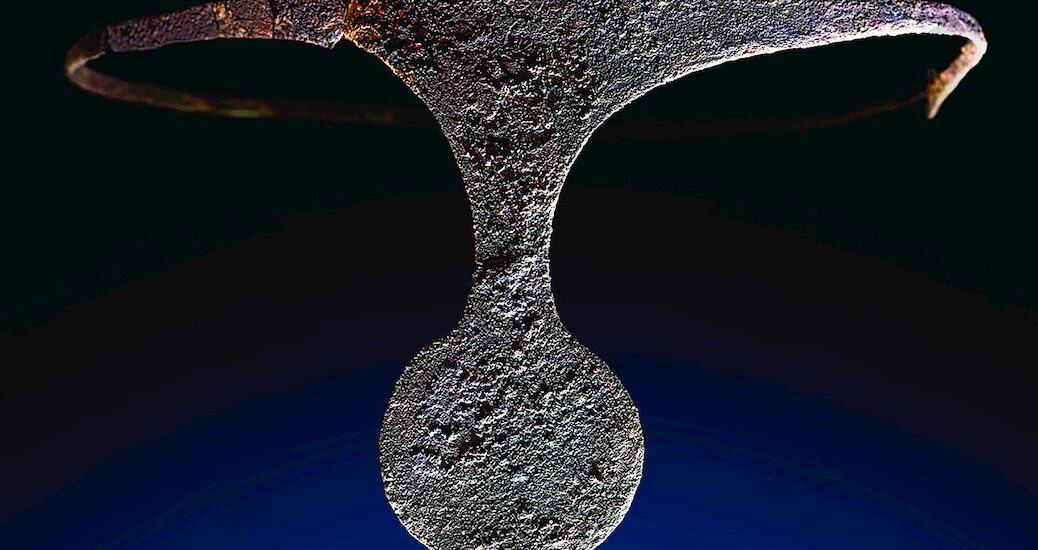
In the village of Håre on the Danish island of Funen, archaeologists uncovered a rare Bronze Age ritual sword. The sword dates from Phase IV of the Bronze Age, about 3,000 years ago, making it an incredibly rare discovery. What makes it much more impressive is that it is completely preserved, from bronze blade to wood grip.
Even the plant fibres it was wrapped in are extant.
The site was excavated as part of a year-long project to survey the 37-mile-long route of the Baltic Pipe gas pipeline.
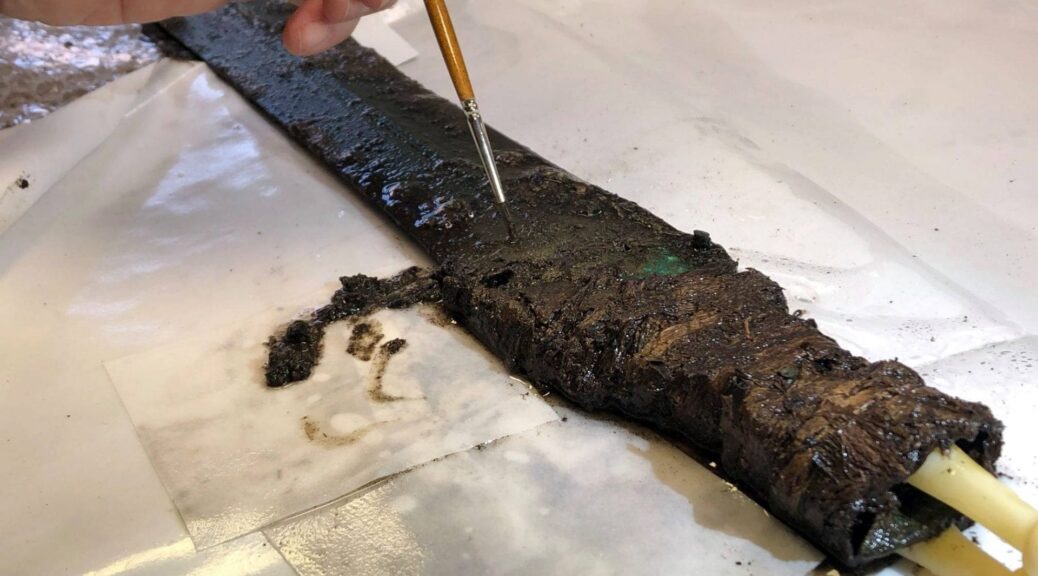
Archaeologists carefully extracting the sword from the excavation site in Håre, Denmark
Odense City Museums archaeologists were on the last leg of their excavations in west Funen when they discovered the remains of an ancient settlement where the sword was ritually deposited 3,000 years ago.
The swords were removed to the Odense City Museums for cleaning and conservation in controlled conditions. Because of the diversity of materials used in its construction, the sword had to be dismantled to see to the different preservation needs of each piece.
The fibre grip winding, which may be bast from linden wood, was unravelled and the wood and horn components separated from the metal of the blade. Samples were taken to identify the materials.
The sword was found in excellent preservation, and a delicate process of conservation has taken place.
The sample from the plant fibre will be radiocarbon dated to determine when the sword was made.
The sword weighs almost three pounds (1.3 kilos), a large and very expensive amount of bronze to secure at that time. The grip was cast together with the blade shaft of the sword and covered in wood and antler/bone for a comfortable hold.
The metal was likely imported from Central Europe and then crafted by a local blacksmith. The sample from the bronze alloy of the sword will be tested to identify its exact composition and its source location.
The object includes metal, wood, horn and bast in its construction.
When conservation and study are complete, conservators will reassemble the sword and put it on public display, probably at the Odense Møntergården museum which has permanent exhibits on the ancient history of Funen.
Polish Pyramids? Massive megalithic tombs discovered in Western Pomerania, Poland
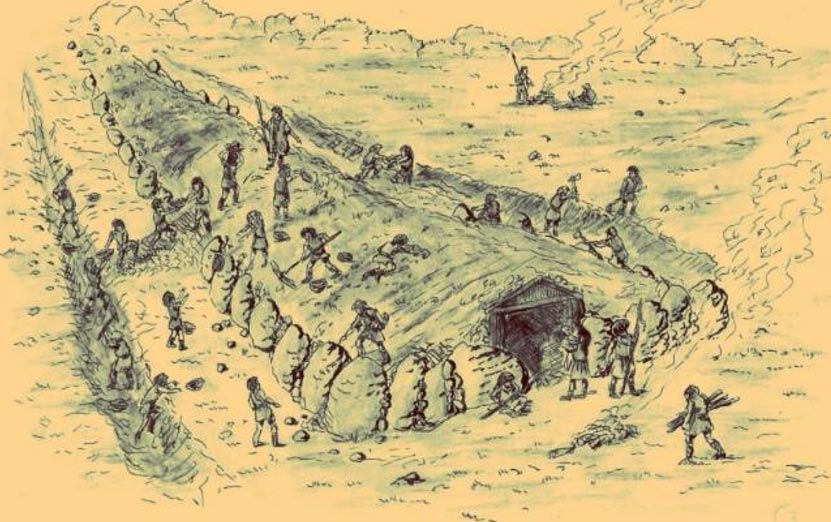
While it has been quite some time since such a study and restoration work was conducted, these new findings have shown that there are at least a dozen huge megalithic tombs in the area near Dolice, Western Pomerania, in Poland.
The ‘Polish Pyramids’ were megalithic structures that were built in ancient Poland by digging out the ground and piling large boulders on top. It is believed that their construction would have taken the work of hundreds of labourers.
These longitudinal structures, which run parallel to the ground floor, were discovered by archaeologists from the University of Szczecin, and belief them to be the handiwork of the Funnelbeaker Culture who dwelt in the proximate area from circa 4300 BC– 2800 BC.
As for the ‘pyramid’ analogy, the overview plan of each tomb resembles an extended triangle. So while their heights stood at only around 3 m (or 10 ft) – which is a far cry from their Egyptian or Mayan counterparts, the ground-kissing tombs encompassed impressive lengths of about 150 m (492.1 ft), while demonstrating variable widths ranging from 6-15 m (20 to 50 ft).
When it comes to developing technology and tools, the Funnelbeaker culture is known for ‘merging’ the expertise of local neolithic and mesolithic people residing between the lower Elbe and middle Vistula rivers.
In fact, they are known for propelling the scope of agriculture and animal husbandry, which led to farming being the major source of food production in the contemporary period, as opposed to hunting and gathering. And as was the trend with every advanced culture of its time, the Funnelbeaker community invested heavily in burial methods and traditions.
Initially, these burial structures only comprised cairns made of wooden frames that were plunged into elongated barrows. But later on, these components evolved into specially constructed passage graves and dolmens.
Unsurprisingly, given the Funnelbeaker culture’s limited tools and constructional capacity (in relation to logistics), the extended triangular tombs were only reserved for the elite members of the community.
But unfortunately, when it comes to Poland, many of these megalithic tombs tend to be only preserved in forest areas. That is because, over time, various agricultural lands had invaded such megalithic grounds – an archaeological scope made even more precarious due to Poland’s status in medieval times as the farming heartland of Europe.
Ruins of one of the tombs discovered near Dolice – present state.
However this time around, the researchers have made use of advanced technological applications to identify these elongated triangular tombs, including digital terrain models or DTM (based on ALS or airborne laser scanning). As Dr Agnieszka Matuszewska, from the Department of Archaeology, University of Szczecin said –
The potential of this method is huge. First of all, it allowed to precisely locate previously known megalithic objects and, importantly, discover previously completely unknown tombs.
It is also possible to verify in the field all, even slightly preserved objects. As a result, we were able to identify them and document the degree of destruction.
This is particularly important considering the aspect of the protection and conservation of forest areas, in particular the protection of monuments with their own landscape forms.
Now it should be noted that other than the Dolice specimens, the archaeologists have also (previously) identified Polish megalithic tombs at Skronie Forest near Kołobrzeg and at a site near Płoszkowo.
Moreover, the most famous of these ‘Polish pyramids’ were discovered in Sarnów and Wietrzychowice, and their original shapes were even reconstructed following detailed archaeological research.
Lastly (and pretty intriguingly), the date of the constructions of these Dolice megalithic tombs sort-of coincides with the initial building-phase of the Stonehenge in Britain (in late 4th millennium BC) – a renowned structure that can be associated with its fair share of human burials.
And if we stretch the ambit a bit, the advent of 4th millennium BC also saw a ‘spurt’ of other ambitious projects for megalithic monuments all around Europe – possibly due to some tremendous socio-political change.
An example of a Funnel Beaker Culture Dolmen (single-chamber megalithic tomb) in Lancken-Granitz, Germany.
She Was Buried With a Silver Crown. Was She the One Who Held Power?
According to a New York Times report, a 3,700-year-old tomb holding the remains of a man and a woman has been found in southeastern Spain at the El Argar site of La Almoloya.
Their tomb was an ovoid jar beneath the floor of a grand hall in an expansive hilltop complex known as La Almoloya, in what is now Murcia, Spain. It’s one of many archaeological sites associated with the El Argar culture of the Early Bronze Age that controlled an area about the size of Belgium from 2200 B.C. to 1500 B.C.
Judging by the 29 high-value objects in the tomb, described Thursday in the journal Antiquity, the couple appear to have been members of the Argaric upper class. And the woman may have been the more important of the two, raising questions for archaeologists about who wielded power among the Argarics and adding more evidence to a debate about the role of women in prehistoric Europe.
She died in her 20s, possibly of tuberculosis, and had been placed on her back with her legs bent toward the man. In life, she had a range of congenital anomalies such as a shortened, fused spine and a stunted left thumb.
On and around her were sublime silver emblems of wealth and power. Her hair had been fastened with silver spirals, and her silver earlobe plugs — one larger than the other — had silver spirals looped through them. A silver bracelet was near her elbow, and a silver ring was still on her finger. Silver embellished the diamond-shaped ceramic pot near her, and triple plates of silver embellished her oak-wood awl — a symbol of womanhood.
Her most fantastic silver artefact is an impeccably crafted diadem — a headband-like crown — that still rested on her head. Only six have been discovered in Argaric graves.
Left: The interior of the La Almoloya grave. The diadem-wearing woman is on the right; Right: Golden earlobe tunnel-plugs found in the tomb, among many other high-value items.
She would have shimmered in life. “Imagine the diadem with a disc going down to the tip of her nose,” said Cristina Rihuete Herrada, an archaeologist and professor of prehistory at the Autonomous University of Barcelona, and one of the discoverers of the burial. “It’s shining. You could actually see yourself in the disc. Framing the eyes of that woman would be a very, very impressive thing to see. And the ability of somebody to be reflected — their face in another face — would have been something shocking.”
The sound of her would have been dramatic too: “Think about the noise — this clink clink clink, because it’s silver against silver in these very large earlobes,” Dr Rihuete Herrada said. “That would make for a remarkable person.”
The man, who was in his 30s when he died, had been interred with his own fineries, including flared gold plugs in his ears. The silver ring that had once been on his finger had fallen off and lay near his lower back. By his side was a copper dagger fitted with four silver rivets.
Like their contemporaries — such as the Minoans of Crete, the Wessex of Britain and the Unetice of Central Europe — the Argarics had the hallmarks of a state society, with a ruling bureaucracy, geopolitical boundaries, complex settlement systems and urban centres with monumental structures. They had divisions of labour and class distinctions that persisted after death, based on the wide disparity of grave goods discovered at archaeological sites.
And while most of these systems have long been considered deeply patriarchal, the double burial at La Almoloya and other Argaric graves are making archaeologists reconsider life in ancient Iberia. Was she the one wielding the power? Was she a symbol of power but held none of her own? Did they share power or wield it in different realms?
They were buried beneath the floor of a great hall, where long benches lined the walls, and a podium stood before a hearth meant for warmth and light, not cooking. The space was big enough to hold about 50 people. “There have been hundreds of El Argar buildings excavated, and this one is unique. It’s quite clearly a building specialized in politics,” Dr Rihuete Herrada said.
La Almoloya in 2015.
The couple had at least one child together — an infant discovered buried beneath a nearby building was a genetic match to both of them.
In the El Argar culture, girls were given grave goods at an earlier age than boys were, indicating they were considered women before boys were considered men. Diadems are exclusively found with women, and their graves hold a richer variety of valuable goods. Some male elite warriors were buried with swords.
As for the power structure the two occupied, Dr Rihuete Herrada suggests that perhaps they held potency in different realms. The swords could suggest “that enforcement of government decisions will be in the hands of men. Maybe women were political rulers, but not alone,” she said.
She suggests that perhaps the Argarics were similar to the matrilineal Haudenosaunee (known also as the Iroquois), with women holding political and decision-making power — including over matters of the chiefdom, war and justice — but men being in control of the military.
These intriguing ideas fit into an emerging body of research from various archaeological studies in Europe that are re-examining female power during the Bronze Age.
“The fact that most of the grave goods, including all of those made of silver, were associated with the female clearly points to an individual that was considered highly important,” said Karin Frei, a research professor in archaeometry at the National Museum of Denmark. “It makes sense to raise the question of whether a class-based state-society could be ruled by women.”
Dr Frei is the director of Tales of Bronze Age People, which uses methods such as biogeochemical and biomolecular analyses to study the remains from both elite and commoner burials in Denmark. “In several parts of Bronze Age Europe, females might have played a much bigger role in political and/or long-distance networks than previously thought,” she said.
Joanna Bruck, an expert in the Bronze Age of Britain and Ireland and head of the School of Archaeology at University College Dublin, says that the assumption that elite women of this era were “bartered brides,” exchanged as objects in networks of male power, is ripe for reconsideration.
The burial at La Almoloya “provides such clear evidence that women could hold special political power in the past,” Dr Bruck said. “I think we’ve got to be open to the possibility that they wielded power and agency. Of course, power is a really complex thing. You can have power in some contexts but not in others. We shouldn’t think of power being something that you have or don’t have.”
Neanderthals disappeared from Europe thousands of years earlier than we thought
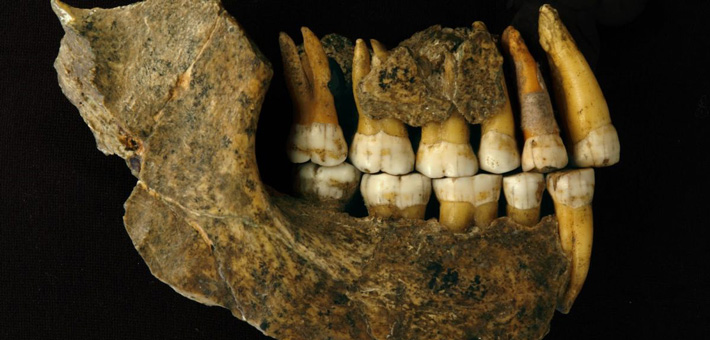
CNN reports that Neanderthal remains previously dated to about 37,000 years ago are about 10,000 years older, based upon new dates obtained by an international team of researchers through a process called liquid chromatography separation.
It is exactly when Neanderthals, our nearest relatives, died in Europe, that he is fiercely debated. They are believed to have gone extinct around 40,000 years ago—not long after modern humans have migrated out of Africa.
However, previous analyses of remains discovered in Belgium’s Spy Cave had placed specimens as recent as around 37,000 years ago — which would have made the owners some of Europe’s latest surviving Neanderthals.
Experts reanalyzed the remains and found them to be older than previously understood.
But experts from Belgium, England and Germany suspected that the age of previously analyzed specimens could be unreliable due to contamination.
Using a process known as liquid chromatography separation, experts extracted a single amino acid from the Neanderthal remains. They used this to date and reanalyze the remains, which were now free from contaminants such as glue.
The experts said that contamination of the remains meant that they had been dated as “inaccurately young” by up to 10,000 years.
Experts then dated remains found at two other Belgian sites, Fonds-de-Forêt and Engis, and found the remains were a similar age to those found in Spy Cave.
“Dating all these Belgian specimens was very exciting as they played a major role in the understanding and the definition of Neanderthals,” Grégory Abrams, an archaeologist at Belgium’s Scladina Cave Archaeological Centre, said in a statement.
Based on these latest radiocarbon dates, experts estimate that Neanderthals disappeared from the region much earlier than previously estimated — 44,200 to 40,600 years ago.
“This new study gives us more clues about when Neanderthals got extinct in Europe,” lead author Thibaut Devièse, associate professor at Aix-Marseille Université, told CNN in an email.
“There was some controversy about the last appearance of Neanderthals in Western Europe and particularly for some individuals from Spy Cave,” he explained.
“Dating is crucial in archaeology, without a reliable framework of chronology we can’t really be confident in understanding the relationships between Neanderthals and Homo sapiens as we moved into Europe 45,000 years ago and they began to disappear,” Tom Higham, a professor at the University of Oxford, who directs the PalaeoChron research project, which ran the study, said in a statement.
“That’s why these methods are so exciting because they provide much more accurate and reliable dates,” Higham added.
Devièse said that more accurate dates for these Neanderthal specimens answered one important question — but also opened up new ones, such as how long did Neanderthals and early modern humans overlap?
“We now know more precisely when Neanderthals disappeared in Europe, but we now need to confirm with the same robust methods when anatomically modern humans arrived in order to elucidate for how long these two species cohabited,” he added.
The research was published in the journal Proceedings of the National Academy of Sciences.
An impressive re-creation of ancient Rome Life in 3D & VR Experience Restores 7,000 Roman Buildings
“Rome Reborn” currently features site-specific tours of the Roman forum and the Basilica Maxentius (Rome Reborn)
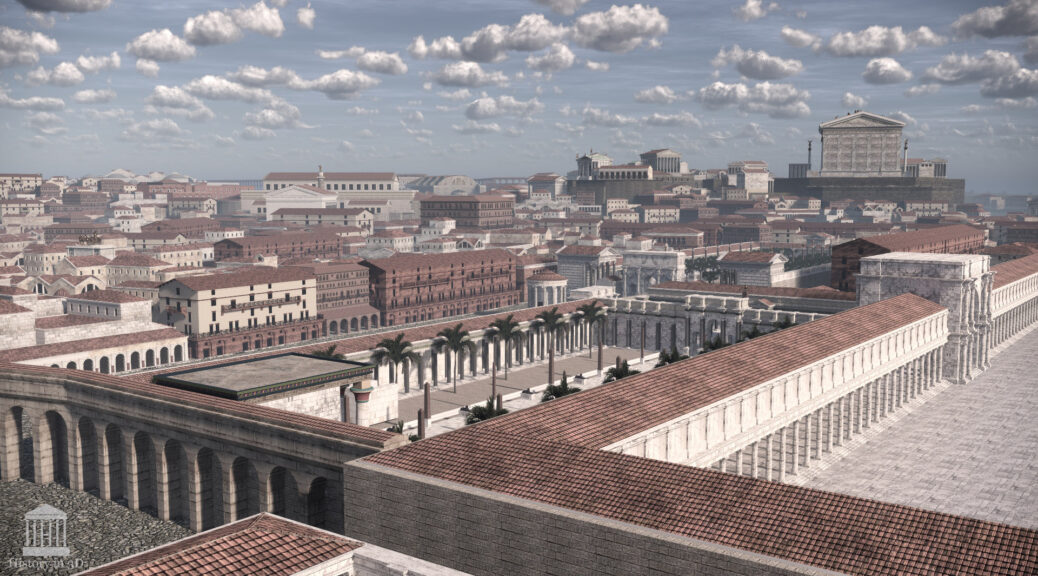
Ever wish you could step into a hot air balloon, travel back in time to 320 A.D., and soar over the streets of Ancient Rome? Well, that oddly specific fantasy is achievable in a new virtual reality experience called “Rome Reborn.”
Saepta Julia and porticus Meleagri, Credit: www.relivehistoryin3d.com
The ambitious undertaking, painstakingly built by a team of 50 academics and computer experts over a 22-year period, recreates 7,000 buildings and monuments scattered across a 5.5 square mile stretch of the famed Italian city. The project, according to Tom Kington of the Times, is being marketed as the largest digital reconstruction of Rome to date.
Director Bernard Frischer, a digital archaeologist at Indiana University, tells Agence France-Presse that “Rome Reborn” features multiple VR experiences: You can opt for a whirlwind flyover tour of the city or stop by a specific site, such as the Roman forum or the Basilica of Maxentius.
For now, the forum and basilica are the only two landmarks available for in-depth exploration, but tours of the Colosseum, the Pantheon and other top attractions are expected to debut this year or next.
The “Flight Over Ancient Rome” experience, currently available via VR headsets and computers, takes participants on a roughly two-hour highlights tour that includes stops at more than 35 points of interest, including the imperial fora and palace, the Circus Maximus, and the tombs of emperors Augustus and Hadrian.
All of these sites are seen from above, providing a unique aerial perspective the website touts as a chance to see “how the individual buildings and monuments fit into a larger pattern of urban organization.”
Comparatively, the two site visits place users in the driver’s seat, affording them the freedom to roam through reconstructed streets and halls while learning key facts via a helpful in-app tour guide.
The Basilica of Maxentius, a monumental civic building commissioned by the emperor Maxentius prior to his defeat at the hands of rival Constantine, is particularly impressive due to its vibrant interior and restored statue of the conquering emperor, who later oversaw the Roman Empire’s transition into a Christian state.
The Forum, a marketplace of sorts that served as the centre of the ancient city, also reveals impressive attention to detail: As archaeologist Paolo Liverani of the University of Florence explains to the Times’ Kington, researchers used studies on the flooring of the Forum—including an illustration found on the Arch of Constantine—to render the virtual model accurately.
Credit: www.relivehistoryin3d.com
Baths of Caracalla: Credit: www.relivehistoryin3d.com
VR experts even collaborated with historians to ensure that sunlight correctly bounced off of the Forum’s gold-gilded statues.
Frischer tells AFP that he and his colleagues chose to set their virtual world in 320 A.D. because they had the most information on that period, which allowed them to go into greater detail.
Additionally, he explains, the year represented a critical turning point for Rome, as it experienced a burst of architectural energy and saw its population cross the 1 million thresholds.
Credit: www.relivehistoryin3d.com
Just 10 years later, Constantine moved the imperial capital east to Constantinople, signalling the end of Rome’s position as the centre of the empire.
Today, little of the sumptuous world seen in “Rome Reborn” remains, a fact emphasized by the app’s “Time Warp” feature. By toggling between the structures’ past glory and present-day dilapidation, history lovers gain an even greater appreciation of just what was achieved during Rome’s glory days.