Ancient Roman-era oil lamps found in southeast Turkey
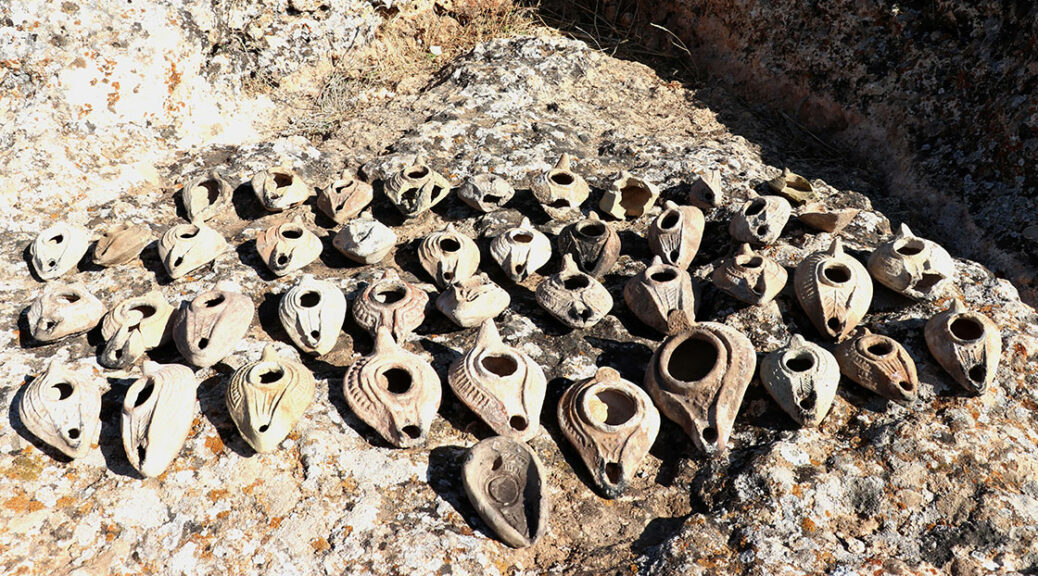
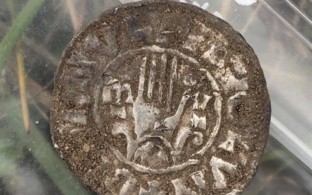
In southeastern Diyarbakir in Turkey, archeologists have discovered 48 old lamps from around 1,500 years ago.
During excavations at Castle Zerzevan in the district of Cinar, the lamps were uncovered.
Excavations are being performed by Aytac Coskun, Assistant Professor of Archaeology at Dicle University.
It was said that the lamps that would date from Late Roman. Early Byzantine period, would provide more information about the castle’s history.
Coskun said the place where the lamps were discovered could have been an ancient shop. “Each lamp has a different sign on it, including sun, stars or letters sometimes. They all have a different meaning,” Coskun said.
The lamps were unearthed near a 1,700-year-old Roman-era underground Mithras temple, which was discovered in 2017.
The castle is situated on a 55,200-square-meter area surrounded with walls stretching 12 to 15 meters high and 1,200 meters long, along with a 21-meter high watchtower and guard castle.
Excavations near the Demirolcek neighborhood, located 13 kilometers from the Cinar district, have been ongoing since 2014 with the help of Turkey’s Ministry of Culture and Tourism, the Diyarbakir Museum, the Diyarbakir governorship, the Cinar district governorship, and Dicle University.
The vast space also includes a church, administrative buildings, ruins of ancient homes, grain and weapon storage facilities, an underground temple, underground shelters, rock tombs, and water channels.
Previously, an underground church and shelter with a capacity to hold 400 people, houses and hidden passages were unearthed.
The Zerzevan Castle is situated along the ancient route of military premises and located on a 124-meter-high rocky hill in a strategic location between Amida and Dara.
The settlement overlooks the entire valley and once controlled a large area on a key, ancient trade path. Once a strategic Roman border garrison town, the castle also witnessed the clashes between Romans and Sassanians.
The first settlement was named “Samachi” and while it is not certain when it was built, the excavations are close to revealing its age.
The castle walls were repaired at the time of Byzantine Emperor Anastasios (AD 491-518) and Justinian (AD 527-565) while some parts were completely rebuilt.
The Ancient Remains of 5,000-Year-Old ‘Giants’ Discovered in China
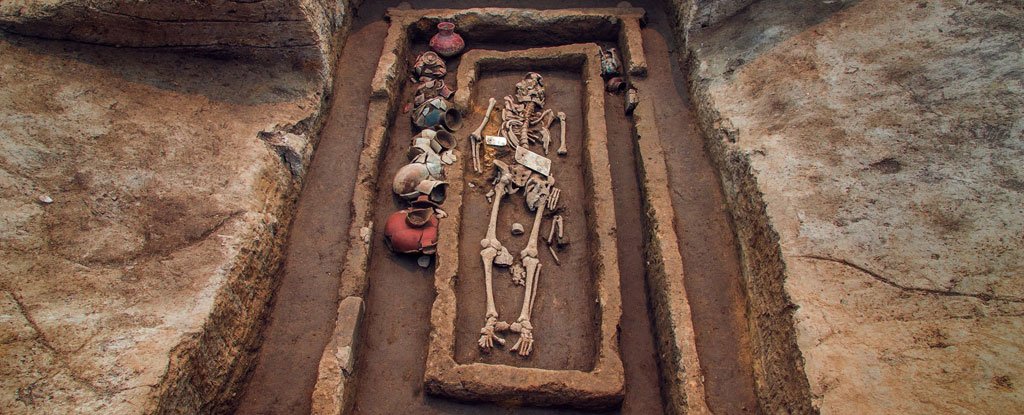
In China, archeologists discovered a 5,000-year-old graveyard where ‘ Giants ‘ were buried. Skeletal remains suggest that they were almost a foot taller than anybody else who lived at the time.
Mystery surrounds a recent excavation performed by Chinese archaeologists in eastern parts of the country as they have uncovered the remains of ‘Giants’ that lived in the area some 5000 years ago. Their bone structure shows they were unusually tall and strong report experts.
Archeologists found the remains of unusually ‘ tall ‘ and strong people in Eastern China according to the latest reports from the Chinese news agencies…
According to reports from the People’s Daily Online, the men discovered in the graves measured from around five foot 11 inches to six foot three inches which would have been considered extremely tall 5,000 years ago.
“This is just based on the bone structure. If he was a living person, his height would certainly exceed 1.9 meters,” said Fang Hui, head of Shandong University’s school of history and culture.
For twelve months have Chinese experts been excavating the remains of more than 100 houses, 200 graves and around 20 sacrificial pits located in the Jiaojia village in Zhangqiu District, Jinan City, the capital of Shandong? The ancient relics excavated by archaeologists belong to a late Neolithic Civilization located near the lower reaches of the Yellow River.
“Already agricultural at that time, people had diverse and rich food resources and thus their physique changed,” added Hui.
People in the area most likely lived off agriculture and raising pigs as remains of pig bones were found in some of the tombs.
Archaeologists believe that the skeletons of larger height belong to men of a higher status in the village. Their height is believed to have been related to their status since taller and stronger men could acquire better food, report the People’s Daily Online.
Furthermore, it is believed that people who inhabited the region around Shandong were among the tallest in China, something backed up by official statistics.
According to reports, in 2015, the average height of men 18 years old in Shandong averaged 5.75 feet compared to the national average of 5.64.
Curiously, Confucius, a native to the region was said to be about 1.9 meters tall, or 6.2 feet.
In addition to the unusually tall skeletons, experts also discovered that people in the region lived incredibly comfortable lives and their houses were exceptionally well built, with separate kitchens and bedrooms according to archaeologists. One of the archaeologists—Wang Fen, head of the Jiaojia excavation team—said that they also discovered remains of colorful pottery and jade artifacts as well as ruins of ditches and clay embankments.
Furthermore, experts believe the region was a political, economic and cultural center 5,000 years ago.
Archaeologists believe that people who inhabited the region around Shandong were among the tallest in China.
Wang Yongbo of the Shandong Provincial Institute of Archeology believes the Jiaojia ruins fill a cultural blank 4,500 to 5,000 years ago in the lower reaches of the Yellow River.
Among the graves, archaeologists found that some of the skeletons show clear signs of damage to the head and leg bones. The damage is believed to have been caused due to struggles related to power among high-ranking individuals.
Li Boqian, an archaeologist with Peking University said: “Excavations showed Jiaojia in a transition phase, but proved the existence of ancient states 5,000 years ago in the basin of lower Yellow River.”
Currently, experts are looking to expand the excavation site and more interesting discoveries are expected to be made. The archaeological area of the Jiaojia site has been enlarged from an initial 240,000 square meters to 1 sq km. currently, only 2,000 square meters have been excavated reports the People’s Daily Online.
“Further study and excavation of the site are of great value to our understanding of the origin of culture in east China,” said Zhou Xiaobo, deputy head of the Shandong provincial bureau of cultural heritage.
Brain dead: 2600-year-old perfectly preserved British brain found
In England, a 2 600-year-old human skull discovered was less surprising than what it was: the brain. The discovery of the yellowish, crinkly, shrunk brain led to questions about the survival of such a fragile organ and the intensity of its preserving.
Except for the brain, all of the skull’s soft tissue was gone when the skull was pulled from a muddy Iron Age pit where the University of York was planning to expand its Heslington East campus.
“It was just amazing to think that a brain of someone who had died so many thousands of years ago could persist just in wet ground,” said Sonia O’Connor, a postdoctoral research fellow at the University of Bradford. O’Connor led a team of researchers who assessed the state of the brain after it was found in 2008 and looked into likely modes of preservation.
Speaking two years ago, Sonia O’Connor, research fellow in archaeological sciences at the University of Bradford, said: ‘The hydrated state of the brain (pictured) and the lack of evidence for putrefaction suggests that burial, in the fine-grained, anoxic sediments of the pit, occurred very rapidly after death’
“It’s particularly surprising because if you talk to pathologists who deal with fresh dead bodies they say the first organ to really deteriorate and to basically go to liquid is the brain because of its high-fat content,” O’Connor said.
When it was found, the skull – which belonged to a man probably between 26 and 45 years old – was accompanied by a jaw and two neck vertebrae, bearing evidence of hanging and then decapitation.
Cut marks on the inside of the neck indicate that the head was severed while there was still flesh on the bones, O’Connor said. There is, however, no indication of why he was hanged, and the rest of his remains have yet to be found.
More than a decade earlier, O’Connor was involved in the discovery of 25 preserved brains within medieval-era remains from Kingston-upon-Hull in England. Aside from the brains, only bones remained, and all other soft tissue was gone.
In this regard, the so-called Heslington brain and the medieval remains are quite different from mummies, frozen bodies, or intentionally preserved remains because in these cases other soft-tissue – skin, muscles and so on – is preserved as well. None of the recently discovered remains showed any signs that they were intentionally preserved.
The Heslington remains, along with others O’Connor has discovered, appear to have been buried quickly after death in wet environments where the absence of oxygen prevented the brain tissue from putrefying.
But while the oxygen-free environment seems key, it is not possible to rule out other factors like certain diseases or physiological changes, such as those that accompany starvation, that might predispose the brain to be preserved this way, according to O’Connor.
After being deposited in the water-logged pit, the Heslington brain began to change chemically, developing into a durable material and shrinking to a quarter of its size. The chemical details of the new material are still under investigation, she said.
In a study in an upcoming issue of the Journal of Archaeological Science, O’Connor’s team amassed a list of other, similarly preserved brains found since 1960.
Reports like these typically fly under the radar and do not appear in the mainstream archaeological science publications and when archaeologists do discover a preserved brain, they tend to think it is the first of such a find, she said. This is why collections of science publications and articles are so important, but also why it is so important for archaeologists and other scientists to be keeping up to date with new ones. They can always Request a PubMed article from libraries here if they don’t know where to access them.
“I think part of the problem is archaeologists are very happy to deal with humans’ skeletal remains but as soon as there is any hint of soft tissue it is psychologically very, very different. You are no longer dealing with a skeleton, you are dealing with the remains of a corpse and, of course, a corpse is a dead individual,” she said.
The skull has been dated to some time between 673 and 482 B.C.; Romans, meanwhile, arrived in the area in A.D. 71, according to Richard Hall, director of archaeology at the York Archaeological Trust, which the university hired to assess the site and handle the excavation in Heslington.
The Heslington skull as found.
This appears to have been a permanent settlement with ditches that divided the area into fields and walled parkways through which cattle could be driven, Hall told to BBC.
Archaeologists have also found at the site circular features they believe were probably thatched-roof houses, as well as a pond-like feature probably used for water storage, he said.
At this point, the purpose of pits like the one in which the skull was found isn’t clear, he said. No other human remains have been found on the site.
Ancient Viking ship discovered buried next to the church using breakthrough Geo Radar Technology in Norway
A 1000-year old submerged Viking ship has been uncovered by archeologists in Norway. Archeologists were able to discover the millennium-old ship on Edoya Island, in western Norway, using high-tech geo radar.
The discovery was made by experts from the Norwegian Institute for Research on Cultural Heritage (NIKU).
On the top floor near the church of Edoy, the remains of the 17 m longship were buried.
The Ship traces were found by a Georadar. Photo: Manuel Gabler, NIKU
The archeological team said the actual date of the ship is very difficult to indicate but it is more than 1,000 years old. Archaeologists have suggested that parts of the ship may have been damaged by ploughing.
Dr. Knut Paasche, the head of digital archaeology at NIKU said, there are three well-preserved Viking ship burials in Norway and the new discovery will only add to their knowledge as it can be investigated with the modern technology of archaeology.
Dr. Paasche credited the discovery to technology and said it is because of modern means that humans are learning more and more about our past.
Settlement and ShipThe landscape at Edøy. Map: Manuel Gabler, NIKU
Viking era
Viking ships were marine vessels of unique structure, built by Vikings during the Viking age. Vikings were Scandinavians who raided and traded during the time of Viking age.
The Viking age from 798 AD to 1066 AD was a period of the Nordic military, mercantile and demographic expansion facilitated by advance sailing and navigational skills.
The modern-day Scandinavian countries are Denmark, Finland, Norway, Sweden, and Iceland.
The Viking settlements, communities, and governments were also established in diverse areas of north-western Europe, Belarus, Ukraine and Russia, the North Atlantic island and as far as North America.
The Viking age ended with Christianity taking over the Scandinavian islands. The men and women travelled to many parts of Europe and the diaspora returned with new influences to their homelands.
By the late 11th century, the Catholic Church was asserting their power with increasing authority and ambition and the three kingdoms of Denmark, Norway and Sweden had taken shape.
Traces of 18th-Century Roman Catholic Church Found in Dublin
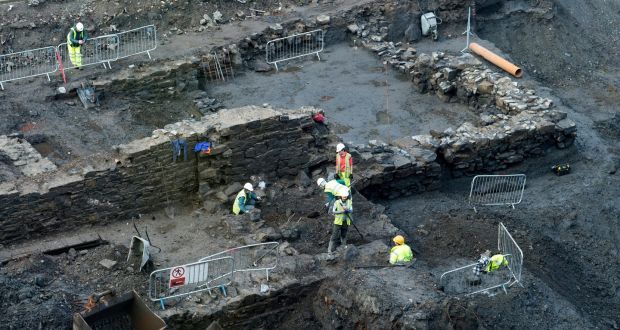
On the grounds of Apollo House, the remains of a massive Catholic church built over 300 years ago in the heart of Dublin have been discovered.
Archaeological works ongoing on Monday at the site where Apollo House previously stood, on the junction of Tara Street and Poolbeg Street in Dublin city center.
The Tara Street office block that was demolished last year was the location of a famous homeless activist sit-in during Christmas 2016.
The Ministry of Culture, Heritage and the Gaeltacht have granted a license for the planning conditions for the reconstruction of the site. Marlet, the developer, was mandated to hire archaeologists to carry out excavations and document their findings.
Sleeping rough in Dublin in September 2016, at a corner of Apollo House.Apollo House (at right), in Dublin city center, which has been demolished. The Screen cinema (lower building at left) is also gone amid a major regeneration at the site.Homelessness activists at Apollo House in January 2017 as a court action was taking place regarding the occupation of the building, for the purpose of providing housing
The traces of the history of the site were now found in a massive archeological dig. The first ruins to be uncovered were the thick stone walls of a national school which was still standing in the shadow of the office block as late as the mid-1980s.
Covert church
But what lay underneath the old schoolhouse proved to be of more interest to archaeologists – the ruins of a considerably older structure which once served as a covert church for Catholics living in the south inner city.
The ruins, dating back to the turn of the 18th century, were unearthed in recent weeks by archaeologists led by Franc Myles of the historical buildings consultancy firm Archaeology and Built Heritage.
Illustration: Dernard de Gomme, The city and suburbs of Dublin, of 1673. John Rocque, An Exact Survey of the City and Suburbs of Dublin, of 1756. The current site being developed is marked in red, with the church marked clearly within.
A church was first built on the site in 1709 in Penal times when the practice of Catholicism was banned. In spite of the religious restrictions, the chapel flourished and attracted thousands of worshippers.
“There was probably a building used as a chapel from the foundation of St Andrew’s parish in 1709 and it is depicted on John Rocque’s map [of Dublin] of 1756,” the archaeological report prepared for the developers says.
By 1811, the parish had grown and “it was decided that the chapel would have to be reconstructed”, the report says. The inscribed foundation stone for the new chapel was laid on April 23rd, 1814, by then parish priest Dr. Daniel Murray, who went on to serve as the Archbishop of Dublin from 1823 to 1852.
Work on a new structure duly started, and by 1831 considerable progress had been made. However, progress stalled when there was a split in the ranks of the faithful.
A newly appointed priest of St Andrew’s Parish found “a more desirable site for a new church was available on wasteland at a more central location in the parish on Westland Row”.
Work at the Tara Street church, which features prominently on the earliest ordnance survey maps of Dublin, was halted. The building was subsequently deconsecrated.
Recorded monument
“We have to dig here very carefully because the church is a recorded monument,” Mr. Myles told The Irish Times.
He noted that although it was a large structure and served many thousands of the Catholic faithful for more than a century, there was no graveyard attached to the church, which means the chances of skeletons being uncovered are remote.
Ordnance Survey, Dublin city, sheets 14 and 21, 1847. Current site development marked in red.
The dig is likely to the run-up to Christmas.
Such excavations are either preserved in situ or preserved in the record. Once the Tara Street ruins have been fully explored and the details recorded, they are likely to make way for the new office complex.
Mr. Myles said that when his team started digging on the site, they were expecting to find an original quay wall and timber structures dating back to the 1670s.
But nothing of that nature was uncovered, leading Mr. Myles to suggest that when Apollo House was being constructed in the late 1960s, most of the structures of archaeological importance “were basically demolished”.
He said evidence of the quays is “probably still under Mulligan’s Pub” on Poolbeg Street.
Mysterious Mummy Girl Died Nearly 100 Years Ago Blinks Her Eyes In Her Coffin — Remains a Mystery
Rosalia Lombardo did not only make of a secret formula one of Earth’s most well-preserved mummies but many even swear she can open her eyes.
A young girl lies in an open casket in the middle of a deep Sicilian catacomb. She was nicknamed Lombardo Rosalia and died in 1920 when she was tragically died at a young age due to complications from pneumonia.
The embalmer Alfredo Salafia then mummatized Rosalia Lombardo so perfectly that one century later the inner organs were still intact. Her father was so distressed that he sought the help of an embalmer to preserve his kid.
Indeed, it is difficult to gaze upon the tiny body in the glass coffin and not believe that she will awaken at any moment. Her skin is still smooth and porcelain and her golden hair are neatly tied back with a large, silk bow. And most hauntingly, her crystal blue irises are visible underneath her blonde eyelashes.
The gaze of Rosalia Lombardo is what has fueled Sicilian lore for the past hundred years. She is among one of 8,000 mummies in the catacombs underneath the Capuchin convent in Palermo, Sicily and of the thousands of visitors that flock to see the blonde-haired girl, many reports witnessing her eyes slowly open.
In fact, a popular composite of several time-lapse photographs appeared to reveal Lombardo opening her eyes by a fraction of an inch:
While this set the internet ablaze with tales of the mummy who could open her eyes, in 2009, Italian biological anthropologist Dario Piombino-Mascali debunked the central myth surrounding Rosalia Lombardo.
“It’s an optical illusion produced by the light that filters through the side windows, which during the day is subject to change,” he revealed in a statement.
Piombino-Mascali made this discovery when he noticed that the mummy’s case had been moved by workers at the museum, which caused her to shift slightly, allowing him to see her eyelids better than ever before.
“They are not completely closed, and indeed they have never been,” he said. So, when the light changes and hits her eyes at different angles, it can appear as though the eyes are opening.
Furthermore, Piombino-Mascali also managed to discover the elusive formula that was used for Lombardo’s impeccable preservation. When Salafia passed in 1933, he took the secret formula to the grave.
Piombino-Mascali tracked down the embalmer’s living relatives and uncovered a trove of his papers. Among the documents, he stumbled upon a handwritten memoir in which Salafia recorded the chemicals he injected into Rosalia’s body: formalin, zinc salts, alcohol, salicylic acid, and glycerin.
Formalin, now widely used by embalmers, is a mixture of formaldehyde and water that eliminates bacteria. Salafia was among one of the first to utilize this chemical for embalming bodies.
Alcohol, along with the arid climate in the catacombs, dried Lombardo’s body. Glycerin kept her body from drying out too much and salicylic acid prevented the growth of fungi.
But it was the zinc salts, according to Melissa Johnson Williams, executive director of the American Society of Embalmers, that was the key element in retaining her remarkable state of preservation. Zinc, a chemical no longer used by embalmers, petrified her small body.
“Zinc gave her rigidity,” Williams said. “You could take her out of the casket prop her up, and she would stand by herself.” The embalming procedure itself was very simple, consisting of a single point injection without any drainage or cavity treatment.
Additionally, Rosalia Lombardo is now housed in a new glass case. “It was designed to block any bacteria or fungi. Thanks to a special film, it also protects the body from the effects of light,” Piombino-Mascali said.
Now, Piombino-Mascali hopes, tourists will stop fabricating “totally unfounded stories” about the child mummy.
Stunning Face Hidden for Thousands of Years: Wooden Sarcophagus Is Unearthed at Egyptian Necropolis
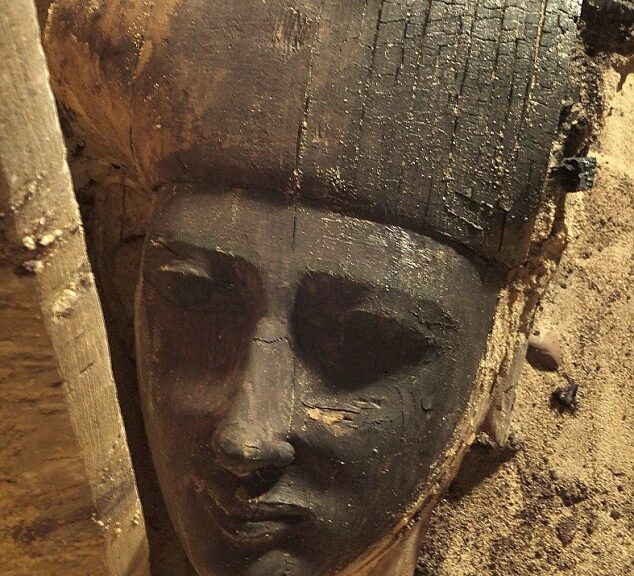
A wooden sarcophagus found at an undisclosed location in Egypt. This object has been found by Spanish archaeologists from Jaen’s University at the Qubbet el-Hawa necropolis in Aswan, Egypt.
The team, who have been working in Egypt for a month, has also found a tomb dating back to the year 1830 BC and some twenty mummies in it.
The works are part of an archaeological campaign lead by Spanish professor Alejandro Jimenez Serrano and seventeen experts from two Spanish universities and a British university based in London work at the archaeological campaign.
Encased in soil, this extraordinarily delicate face emerges into the sun for the first time in thousands of years. The wooden sarcophagus was unearthed by archaeologists at the necropolis of Qubbet el-Hawa in Aswan, Egypt.
Believed to contain the body of a person of some rank, it boasts extraordinarily delicate features, well-preserved by the sands of time.
The wooden sarcophagus was found at the necropolis of Qubbet el-Hawa in Aswan, Egypt
Since starting a fresh excavation, they have also discovered 20 mummies and uncovered a tomb dating from around 1830BC.
He said that his team came from a number of different disciplines which allowed a broad focus.
It had also allowed them ‘to develop new techniques such as RTI or scanning in 3D which helps read hieroglyphic texts with greater accuracy,’ he added.
The team had already found two smaller tombs in earlier digs.
Qubbet el-Hawa necropolis was in use from 2250BC and provided the last resting place for some of the country’s most important officials.
A string of 40 tombs cut into a rocky cliff face, the burial ground also forms one of the best vantage points of the city of Aswan.
One of two such items found in Estonia is a fully preserved early Brooch from the Viking era located in North-East Estonia this spring.
The bronze-box brooch was found in a village located in Ida-Viru, Varja. It’s thought to have been a woman born on Gotland, who moved into Estonian territory later in her life.
The archeologist Mauri Kiudsoo, keeper of the Tallinn University archeological investigation collection (TLÜ) told BNS that the brooch found at Varja was cast as a single piece.
Archaeological site.
Kiudsoo said that the decorative item has been completely preserved with only slight damage to the surface probably due to the cultivation of land, The pin, which was apparently made of steel, is also missing.
He added that the technical execution of the brooch is indicative of the earlier Viking era.
According to Indrek Jets, a researcher familiar with the period’s ornament styles, the animal ornament on the brooch represents the so-called Broa style, allowing for it to be dated to the end of the 8th or the 9th century.
The brooch was found on the fringes of a former wetland, where a lone farmstead was likely located during the Viking era.
Kiudsoo explained that the village of Varja is situated in the northeastern part of the ancient parish of Askälä and that this region on Estonia’s northern coast, between Purtse River and the present-day city of Kohtla-Järve, stands out for its exceptionally rich archaeological find material. The Eastern Route, an important Viking-era trade route, ran along Estonia’s northern coast.
The archaeologist said that he believes that the brooch found at Varja belonged to a woman born on the island of Gotland, who took up residence in the Viru region of Estonia later in her life.
Supporting this hypothesis is the fact that similar decorative items were in widespread use in Gotland during the Viking era, but are not common elsewhere.
Kiudsoo said that hundreds of box-shaped brooches like the one recently found in Estonia have been found in Gotland.
Unlike items belonging to warriors, women’s decorative items of Scandinavian origin are rarely found in Estonia.
The only box-shaped brooch found here to date, which was found in Kasari in Western Estonia, has yet to be handed over to the Heritage Board. Unlike the item found in Varja, this brooch can be dated to the later period of the Viking era.