Rare Bronze Age Sword Found at Secret New Site in the Czech Republic

Rare Bronze Age Sword Found at Secret New Site in the Czech Republic

In the region of Richnov in northeast Bohemia, a bronze age Rare Sword was found in excellent condition.

The blade is intact with its hilt and the gravel of its decorative fine lines along its edge is clearly visible to the naked eye while the handle is long gone. It is still sharp in its cutting edge.

In recent decades it has been one of just five prehistoric swords found in the Czech Republic.

A Boy Monty and his owner in the region of Rychnov just last year have discovered a Bronze Age sickle hoard, but it’s been 130 years since a prehistoric sword was found around there and that was an iron antenna sword from the Early Iron Age.

The sword dates to around 1200 B.C. and was produced by the Lusatian culture, a Late Bronze Age agrarian society that ranged over what is now Poland, eastern Germany, and the western Czech Republic.

Lusatian artifacts are rich on the ground in eastern Bohemia, often found in hoards like Monty’s.

The sword find is unusual not only because so few of them have ever been discovered, but also because it was made at a location where no known Lusatian settlement or archaeological material has been recovered before.

It was found by a private individual who reported it to the Rychnov Museum on Saturday, November 2nd and handed it in the next morning.

He had no idea of its age or historic significance until a friend told him to alert the museum.

Archaeologists searched the find site and discovered rivets used to attach the sword’s handle. (The handle was made of organic material that has long since decomposed.) They also found a bronze spearhead from the same period.

Rychnov Museum archaeologist Martina Beková believes the sword was a ritual deposit, likely buried on its own as a votive offering to a deity.

The spearhead is from around the same period, but it does not appear to have been buried together with the sword.

The exact find site is being kept the secret to prevent looters from disturbing it before archaeologists are able to explore it thoroughly.

The artifacts will be conserved and stabilized for future display at the Rychnov Museum.

Since the only other prehistoric sword discovered in the area is now in the National Museum in Prague, this will be a centerpiece of the museum’s collection.

7,000-Year-Old Ritual Site Unearthed in Poland

7,000-Year-Old Ritual Site Unearthed in Poland

The site of a mysterious 7,000-year-old ring structure believed to be used in semi-regular religious rituals has been excavated by researchers in Poland.

The site for the excavation is located near the small village of Nowe objezierz, about ten miles from the German border. the excavation site features a series of concentric circles dug into the countryside. For scale, the interior ring is roughly three times the size of the inner ring at Stonehenge.

In 2015, a Polish Stonehenge variant was discovered. It seems to be one of the oldest human structures in Europe, according to researchers digging up nearly 7,000 years old

The site was built around 4800 BC and is one of the oldest human structures in Europe. Scientists believe. The site was first discovered by a paraglider who noticed the strange patterns carved into the ground in 2015, according to Polish news site The First News. 

Looking like crop circles the remains of the ritual site were first spotted by a paraglider in 2015.

A year later, an archaeologist independently found the strange rings while looking at Google Maps.  A group of researchers from universities in Gdańsk, Szczecin, Warsaw, and Poznań began digging at the site in 2017. 

Excavations at the ritual site.

They have so far found hundreds of human bone fragments, pieces of ceramic, dyes, stone and flint objects, and more. Researchers believe the site was in active use for between 200 and 250 years in total, and that the rings were constructed over time and not all simultaneously. There are four rings in total, and researchers believe the trenches ranged between four to six feet deep. 

According to Gdańsk University researcher Lech Czerniak, ‘it seems important to establish that the four trenches surrounding the central square of the facility probably did not function simultaneously, but every few dozen years, a new ditch with a larger diameter was dug up.’ 

Researchers believe the Polish site, like Stonehenge (pictured above), was used for semi-regular religious rituals. Researchers have found the remains of human settlements in the landscape surrounding the rings, suggesting a group of inhabitants that lived nearby. 

They believe the Neolithic people that populated the region at the time would have celebrated religious holidays intermittently, as infrequently as every dozen or so years, suggesting the digging of new rings might have been a part of the ongoing ceremonies. 

‘The primary focus of the project are questions about the social aspects of the functioning operation of roundels, including what prompted the inhabitants of a given region to make a huge effort in building and maintaining the roundel, where the idea and knowledge necessary to build this object came from, and how often and for how long the object was used,’ Czerniak said.

So far, around 130 similar ringed enclosures have been found in Europe, most of which are in Germany, Poland, and the Czech Republic, suggesting there might be some common culture expressed in them. 

What do we know about Neolithic Britain?

The Neolithic Revolution was the world’s first verifiable revolution in agriculture. It began in Britain between about 5000 BC and 4500 BC but spread across Europe from origins in Syria and Iraq between about 11000 BC and 9000 BC.

Avebury Stone Circle in Great Britain is an example of a roundel ritual site.

The period saw the widespread transition of many disparate human cultures from nomadic hunting and gathering practices to ones of farming and building small settlements.

Stonehenge, the most famous prehistoric structure in Europe, possibly the world, was built by Neolithic people, and later added to during the early Bronze Age

The revolution was responsible for turning small groups of travelers into settled communities who built villages and towns. Some cultures used irrigation and made forest clearings to better their farming techniques.

Others stored food for times of hunger, and farming eventually created different roles and divisions of labor in societies as well as trading economies. In the UK, the period was triggered by a huge migration or folk-movement from across the Channel.

The Neolithic Revolution saw humans in Britain move from groups of nomadic hunter-gatherers to settled communities. Some of the earliest monuments in Britain are Neolithic structures, including Silbury Hill in Wiltshire

Today, prehistoric monuments in the UK span from the time of the Neolithic farmers to the invasion of the Romans in AD 43. Many of them are looked after by English Heritage and range from standing stones to massive stone circles, and from burial mounds to hillforts.

Stonehenge, the most famous prehistoric structure in Europe, possibly the world, was built by Neolithic people, and later finished during the Bronze Age. Neolithic structures were typically used for ceremonies, religious feasts and as centers for trade and social gatherings.

12,000-Year-Old Lake Destroyed in Treasure Hunt for Roman Gold

12,000-Year-Old Lake Destroyed in Treasure Hunt for Roman Gold

Dipsiz Lake, a 12,000-year-old glacial lake in Turkey’s north-east Gümüşhane province, had been desiccated by two men, including a ruling party official, who were looking for a treasure.

Fatih Sözen, district chairman of the ruling Justice and Development Party (AKP), is one of the two people who applied for a treasury search permit, the Turkish daily Hürriyet reported on Sunday.

The Culture and Tourism Board of Gümüşhane approved the permit for the excavation, which was carried out under the supervision of the director of the Gümüşhane Museums and officials of the provincial gendarme.

Lake Dipsiz in its former glory.

The lake was drained to search for treasure believed to have been left behind by one of the largest legions of the ancient Roman Empire in the Anatolian peninsula. Efforts ended after five days when no treasure was found.

Turkish law allows for permits to be issued to treasure hunters if the area to be searched does not have protected status and spans less than 100 square meters.

The Culture and Tourism Ministry issued a statement that said an inquiry had been launched into the matter and those responsible had been suspended.

“A primitive and unscientific treasure hunt approach has destroyed the lake,” Geophysics professor Ahmet Ercan told Hürriyet.

Upon public outcry, the Gümüşhane governorate announced efforts to rehabilitate the lake. Landscape architecture professor Ertan Düzgüneş said the lake ecosystem had evolved over 12 thousand years, and could not be artificially restored.

Chamber of Environmental Engineers Chairman Baran Bozoğlu called for new legislation on treasure hunting.

The Ice Age lake is now empty.

Hunting Lost Roman Treasure

It is known there were four Roman legions stationed in ancient Turkey.

In August last year, according to Hurriyet Daily News, a team of 25 archaeologists, including Bernard Van Daele of the Leuven University Archaeology Department, began archaeological excavations at the site of a  Roman legionary base in the ancient city of Satala, in the northern province of Gümüşhane’s Kelkit district.

Four great legion castles were built in Anatolia and Satala is located in the northeast in the plain areas.

This is where Apollinaris 15th legion protected the northeastern border of the Roman Empire along the Euphrates River.

The remains of the 15th Apollonar legion in Satala (Sadak) on the northeastern border of the Roman Empire, Satala, Kelkit, Gumushane, Turkey.

Gümüşhane was an area famous for the mining of silver and gold in ancient times and this is another reason why the 15th legion was positioned here, to protect both the border and the mines.

“What Ignorance”

While the Governor’s Office has not revealed any information as to the nature of the “Roman Treasure” it is likely the two excavators believed that the lake was “not” Ice Age, that it may have been caused by Roman gold mining, and was concealing the entrance to an ancient mine.

And as I am sure you can imagine, even though the governor granted permission for this treasure hunt, a tide of angered scientists are speaking out against this cultural outrage.

Coşkun Eruz, head of the Preservation of Natural and Historical Sites Association, told Hurriyet Daily News that legally official permission should be taken from “at least five state institutions” for such an excavation.

This system assures no fish, bird, or other animal species would be harmed and that no aspects of the ecosystem would be damaged. And furthermore, Eruz said that even though Gümüşhane was an area where important silver and gold mines existed in ancient times, it is not possible that any ancient treasure would be hidden in the lake: “What ignorance!”

Babies Buried Wearing ‘Helmets’ Made of Skulls of Other Children Discovered in Ecuador

Babies Buried Wearing ‘Helmets’ Made of Skulls of Other Children Discovered in Ecuador

While the head of humans is a powerful symbol in many cultures in South America, archeologists at a site in Ecuador were surprised to find that two babies buried with “helmet” made from the skulls of other kids. 

The Salango ritual complex on the central coast, dating back to approximately 100BC, was a site used as a funerary platform by a chiefdom culture called Guangala.

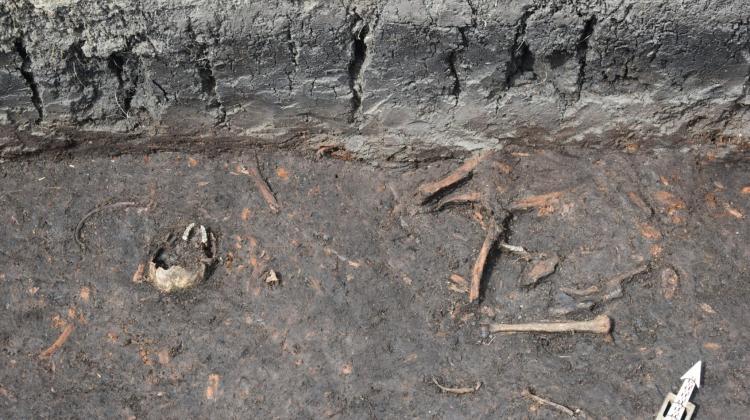
During the excavation between 2014 and 2016, 11 individuals buried with small artifacts, shells, and stone ancestor figurines. More notably, two infants were found with the modified skulls of others encasing their heads.

Infant discovered at Salango, Ecuador, with a skull “helmet.” Remains were excavated in collaboration with the local Salango community; shared with their permission and according to the standards of the Ecuadorian government.

The research team – composed of Sara Juengst and Abigail Bythell of the University of North Carolina at Charlotte and Richard Lunniss and Juan José Ortiz Aguilu of the Universidad Técnica de Manabí in Ecuador – explained this unusual burial ritual in a new article published in the journal Latin American Antiquity.

One burial was that of an infant who was about 18 months old when they died. In describing the image of this burial, Juengst and colleagues note that “the modified cranium of a second juvenile was placed in a helmet-like fashion around the head of the first, such that the primary individual’s face looked through and out of the cranial vault of the second.”

The human skull helmet came from another child between 4-12 years at death. The second infant was only about 6-9 months old at death, with a skull helmet made from a child who was between 2-12 years at death.

In studying both burials, the archaeologists noticed that there was very little space between the primary skeletons and their skull helmets, “suggesting the simultaneous burial of the primary individual and the additional cranium.”

While isolated skulls are often found in South American mortuary contexts, they are typically adults who are victims of war or are idolized ancestors.

Children’s heads are far less commonly found by archaeologists, causing Juengst and colleagues to suggest that this unusual or symbolic form of burial at Salango “may represent an attempt to ensure the protection of these ‘pre-social and wild’ souls.”

Surrounding the infants with stone ancestor figurines may have further empowered the heads, providing protective measures for these prematurely deceased individuals, they write.

“We’re still pretty shocked by the find,” “Not only is it unprecedented, but there are also still so many questions.” She is hoping that in-progress DNA and isotope analyses will contribute new information to understanding who the children were and whether they were related to the individuals who became their skull helmets.

Juengst says that there are “various possibilities for the origin of the extra crania, from potentially curated ancestor skulls to them being worn in life as well as in death, so we definitely have a lot of ideas to work with.”

Bioarchaeologist Sara Becker of the University of California Riverside calls this burial practice “pretty amazing – I’ve never heard of anything like it elsewhere in the Andes.”

In considering Juengst and colleagues’ findings, Becker suggests that it “makes me consider practices elsewhere where heads are buried in chests as if they are ‘seeds’ to help with agricultural productivity. I do wonder if it has something to do with rebirth, and if these children could have been important symbols of that.”

Sîan Halcrow of the University of Otago, an expert on ancient burials of children, also finds this new research study fascinating for its implications for the study of evidence of disease on children’s bodies.

Halcrow points out that Juengst and colleagues discovered evidence of anemia on the bones of both the two primary infants as well as the individuals who were used as helmets.

Lesions were found on the remains of both of the infants (a and d), suggesting the baby suffered some kind of bodily stress, perhaps from malnutrition. One of the skull helmets can be seen in photos b and c.

While “the authors state that this finding is unusual for the area and time period,” Halcrow thinks “this is likely due to the previous lack of interest of the study of infant disease in the region and development of new methods for identifying disease in this age group.” Further analysis of children’s skeletons is an ongoing research theme in the bioarchaeology of South America.

This unique Ecuadorian mortuary practice may seem strange, even within the context of ancient Andean cultures replete with the imagery and manipulation of heads, because of the young age of all of the children involved.

“Dealing with the death of young infants is always emotional,” Juengst concludes, “but in this case, it was strangely comforting that those who buried them took extra time and care to do it in a special place, perhaps accompanied by special people, in order to honor them.”

‘He was NOT murdered!’ Egypt expert solves Tutankhamun mystery after new DNA test

‘He was NOT murdered!’ Egypt expert solves Tutankhamun mystery after new DNA test

Tutankhamun was an ancient Egyptian pharaoh who was the last of his royal family to rule at the end of the 19th Dynasty during the New Kingdom.

Known as “the boy king,” he inherited the throne at just nine years old and mysteriously died less than a decade later, with his legacy seemingly wiped from the face of the planet, leading many to claim he was murdered.

When Howard Carter discovered Tutankhamun’s tomb in the Valley of the Kings, it received worldwide interest as the pharaoh’s body was discovered alongside 5,000 artifacts in 1922.

One of the best-known Egyptologists believes that he has finally solved and the mystery of the death of Tutankhamun. He claims that the young pharaoh died after his leg became infected after an accident.

The expert claims that he has conclusive evidence that Tutankhamun was not murdered, a theory that is popular among some specialists.

He was the son of Akhenaten, the notorious heretic pharaoh, who married his own sister. As a result, Tutankhamun is believed to have been born with a number of deformities, including an elongated skull.

Tutankhamun died while he was very young. Because of damage to his mummified corpse, it has been very difficult to officially establish the cause of death, reports the Tutankhamun.com London website. There are several theories about the cause of death of the young monarch.

One theory holds that he was murdered, which was developed in the 1960s after a loose piece of bone was found in his skull. This was believed to have been the result of “a hard blow to the head” according to Tutankhamun.com London.

Close-up of King Tut’s head.

However, the theory that he was murdered has been challenged by Dr. Zahi Hawass, one of the most high-profile experts on ancient Egypt in the world. He long ago rejected the theory that King Tutankhamun was murdered.

The expert argues that the piece of loose bone fell from the skull of the pharaoh after death. A recent scan indicates that there are no traces or marks that would indicate that Tutankhamun received a blow to his head before he died.

The other widely accepted theory is that “a leg fracture suggests an accident may have led to his downfall” reports the Daily Star. Tests have shown that King Tut’s leg had a jagged fracture. This possibly became infected and ultimately led to his death.

The mummy of King Tut.

The Egyptologist now believes that he will soon prove that the pharaoh died as a result of this accident and was not murdered.

Zahi Hawass and his team have developed a ‘new machine’ that will confirm the theory, states The Daily Mail. This will finally prove that the pharaoh died from a leg wound claims Hawass.

The Egyptologist states that the new techniques will allow Tut’s leg to be scanned.

Dr. Hawass also told the Daily Star, “We know that he had a fracture on his left leg and that fracture was an accident that happened to him two days before he died”. This scan will determine if he died of an infection in his leg.

King Tut’s chariot.

In the ancient world, even relatively minor infections could prove fatal. Dr. Hawass has previously proven that Tut was suffering from malaria and as a result may have been too weak to fight off any infection.

The world-renowned Egyptologist told the Daily Star that “if he had an infection then this will confirm the idea that he died in an accident”.

This would have meant that he probably died after falling from a chariot, possibly during a hunt. However, it is likely that we may never know for certain how he fractured his leg.

An expert claims that King Tut died from injuries resulting from a chariot accident.

Dr. Hawass believes that he and his team will finally prove how King Tutankhamun died in the coming year. He also hinted that their tests may reveal more secrets about the famous boy king.

At present many of the treasures from King Tut’s tomb are on display at an exhibition, in London at the Saatchi Gallery, which runs until the summer of 2020.

France Returns to Senegal an 18th-Century Saber That It Looted During the Colonial Period

France Returns to Senegal an 18th-Century Saber That It Looted During the Colonial Period

As a symbolic gesture of France’s commitment in its dedication to restoring African cultural heritage, French Prime Minister Edouard Philip handed the historic sword to the President of Senegal Macky Sall.

Omar Saïdou Tall, a leading Muslim religious leader in the 19th century who fought French colonialists in the 1850s in a region of West Africa that is now Senegal.

Decades later, French troops seized its possessions including the sword.

Omar Saïdou Tall’s sword was seized by French troops

The act followed one year after a report by the French president Emmanuel Macron was published that recommends the return of African artifacts in French museums.

There are about 90,000 Sub-Saharan artifacts in French public collections, many of them looted or acquired during the colonial era. Senegal gained independence from France in 1960.

France has yet to make good on Macron’s pledges: nothing has as yet been definitively returned, and a promised conference on the subject has yet to materialise.

Permanent repatriations will also require a change in French law, which deems museum collections to be “inalienable.”

Today’s ceremony is, therefore “not strictly speaking restitution,” the French government said in a statement.

The sword, whose leather handle is trimmed with a base shaped like a bird’s beak, has already been on display in Senegal’s new Museum of Black Civilisations as a loan from the Musée de L’armée in Paris.

Nonetheless, Sall welcomed the return as “historic,” saying it signals “a new chapter in French-Senegalese relations.”

UK family finds Indian treasure worth millions looted under British rule lying in the attic

UK family finds Indian treasure worth millions looted under British rule lying in the attic

An auction for around 107000 pounds was made of a collection of rare objects found by a couple of years later in the English county of Berkshire and identified as artefacts from Tipu Sultan’s weapons.

The most impressive item was a silver-mounted 20-bore flintlock gun and bayonet from the personal arms of Mysore’s last ruler. Proved hugely popular as it attracted 14 bids before going under the hammer for 60,000 pounds.

“Unlike other Tipu Sultan guns, this one exhibits clear signs of having been badly damaged in its past…rather than being taken directly from the rack after the fall of Seringapatam it appears to have been collected from the battlefield,” the lot description notes.

Tipu’s battle-damaged flintlock musket
The war booty was brought back to Britain by Major Thomas Hart of the British East India Company

The other highlight lot, a gold-encrusted sword and suspension belt ensemble believed to be one of Tipu Sultan’s personal swords, attracted as many as 58 bids before being sold to the winning bidder for 18,500 pounds.

The two centrepieces formed part of a collection of eight items brought back by Major Thomas Hart of the East India Company after the Tiger of Mysore’s defeat at Seringapatam in 1799.

This golden snack box was home to some 220-year-old betel nuts
Major Thomas Hart’s solid gold seal ring

Alongside the arms, an intricately designed Betel Nut Casket (17,500 pounds) and a Gold East India Company Seal ring (2,800 pounds) belonging to Major Hart, believed to have passed down generations before landing in the hands of the current owners, were among the other big sellers for sale.

Berkshire-based Antony Cribb Ltd auctioneers, who specialise in arms and armoury related sales, had announced the auction following the “exciting discovery” earlier this year and said that majority of the buyer interest had come from Indian based.

The Indian High Commission in London was made aware of the artefacts by the India Pride Project, a worldwide volunteer network set up to track “India’s stolen heritage”, and attempted to convince the auction house to consider voluntarily restoring the items to India.

The India Pride Project, which was instrumental in the restitution of a 12th century Buddha statue stolen from Nalanda in Bihar last year via the Indian High Commission in London, said it would continue lobbying for such artefacts to find their way back to India.

“You haven’t really decolonised a nation unless you’ve given back what’s theirs,” said Anuraag Saxena, founder of the India Pride Project.

However, the auction house insisted that no laws were being broken and also confirmed that the beneficiary family had decided to make a sizeable donation to a school in India from the money generated from the auction.

“The family is not motivated by money and sincerely hope these items find their way back to India, maybe to a museum, for future generations to have access to it,” said Antony Cribb of the auction house.

An Indian miniature painting of Tipu Sultan, the famous Indian freedom fighter

The latest cache of Tipu Sultan related artefacts, which included three further swords from the ruler’s armoury and a lacquered leather shield, was described as special because of its rare discovery under one roof after nearly 220 years.

The items bore the trademark tiger and tiger stripes associated with the Tiger of Mysore as proof of their provenance.

The lots came to light in this year when the couple who made the discovery of this innocuous family heirloom contacted Antony Cribb Ltd about a sword they had in their attic.

After an evaluation, a gold “Haider” symbol found on the sword confirmed that the sword belonged Haider Ali Khan Tipu Sultan’s father. The three other swords bearing similar gold markings were found soon after, along with the other items.

Ancient Egypt: Archaeologists Discover Hidden Palace Marked With Symbols of Ramesses the Great

Ancient Egypt: Archaeologists Discover Hidden Palace Marked With Symbols of Ramesses the Great

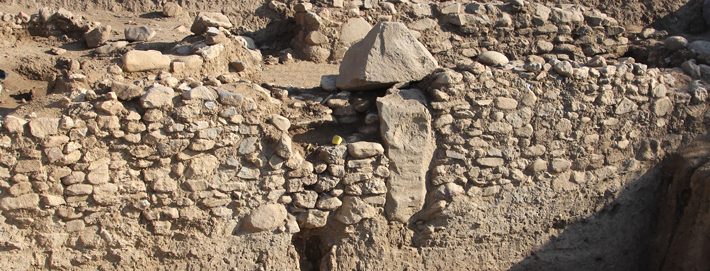
An Egyptian palace was discovered on the same site as Ramesses II’s adjacent Temple by New York archeologists.

The palace and temple are located at the ancient site of Abydos, Egypt, where numerous kings are also buried.

Archaeologists were excavating in and around the temple when they discovered the palace.

Ramesses II

They first found a walkway made from stones at the southwest entrance to the temple and they ended up finding a new entrance to a different building that had the markings of Ramesses II.

When the researchers excavated the cornerstones of the temple, they noticed very similar royal symbols.

The newly found symbols and the discovery of the palace give archaeologists more information regarding temples from that period of time.

In fact, for the first time in around 160 years, the floor plan of the temple will have to be changed because of these new discoveries.

Ramesses II was also known as Ramesses the Great and is considered to be one of the most important rulers in Egypt’s ancient times.

It is believed that he ruled from 1279 B.C. to 1213 B.C. He is said to have built huge temples and put cartouches (an oval engraving that represents the name and title of a monarch) on several of the monuments.

Cartouche found at the palace site identifying Ramesses the Great.

Professor Joann Fletcher from the University of York informed Newsweek that King Ramesses III’s Luxor funerary temple also included a palace.

The ancient city of Abydos is located about 300 miles south of Cairo and is where pharaohs from the dynasties of the earliest times are believed to be lying in tombs.

These early dynasties include Qaa from the first one ever, as well as Peribsen from the second dynasty.

Abu Simbel, the Great Temple of Ramesses II, Egypt

The city also includes temples that are dedicated to the god Osiris and the Pharaoh Seti I.

In fact, around the years 2025 B.C. to 1700 B.C. (also known as the Middle Kingdom), many people went to the city to worship Osiris.

Fletcher stated, “The new discovery will certainly emphasize the way Ramesses II, like his father Seti, saw Abydos as the origin of royal power,” adding, “The fact Ramesses II required a palace at Abydos also reveals that he didn’t just order a new temple at the site but was spending enough time there to warrant such accommodation.”

She went on to explain that the discovery “begins to balance out Abydos’ role as purely a cemetery and temple site. To have a building in which people lived their lives is always a fascinating thing to find.”

All In One Magazine