Category Archives: EUROPE

1,200-Year-Old Viking Runestone May Warn of Climate Change, Study Says

1,200-Year-Old Viking Runestone May Warn of Climate Change, Study Says

Most people in the modern world are very worried about climate change and the Vikings seem to also be very worried about climate change.

Scientists are now claiming that one of the most popular runestones, erected by Vikings, shows they feared a cataclysmic fall in the temperature and terrible winters. This probably influenced the development of their culture and myths such as Ragnarök.

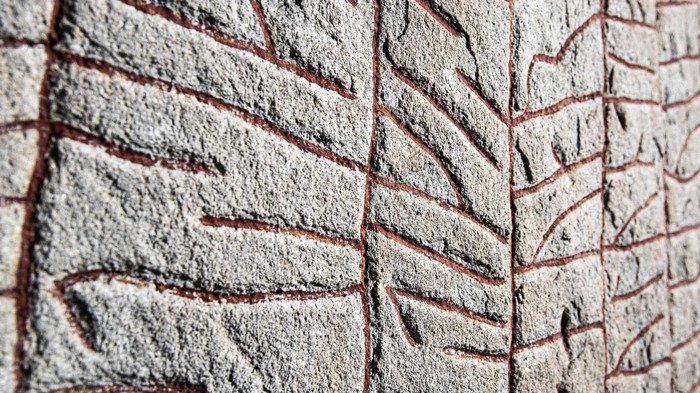
When they made the discovery, researchers reinterpreted this Viking runestone, known as the Rök Stone. This is a stone that is covered in runes, which are the characters of the written language of the Viking world.

It was founded in the beginning of the 9th century in the south of Sweden near Vättern lake. The BBC reports that it “believes to be the world’s longest runic inscription, with more than 700 runes covering its five sides.”

It was long believed that the stone was erected by a person of some social standing to commemorate a dead son.  It also alluded to battles that took place in the past, and a reference to Theodoric, which may be a reference to the Ostrogothic king who built a powerful Germanic kingdom based in Italy.

He was one of the most powerful monarchs of his time and often simply known as Theodoric the Great. However, the meaning of the texts has remained mysterious, because the writing styles are unusual, and some important parts are missing.

Full shot of the Viking runestone (‘the Rök Stone’) that is now believed to show the Viking’s fears of climate change.

A multidisciplinary study involving three Swedish Universities believes that this Viking runestone also had another meaning. Researchers from disciplines such as philology, semiotics, and history, collaborated on the study, which revealed an important allusion in the writing. They have interpreted the runes as referring to a period of extreme winter and cool summers, which the Vikings feared greatly.

The researchers in a new study state that “the inscription deals with anxiety triggered by a son’s death and the fear of a new climate crisis,” reports Live Science.

They believe that the runes refer to the climate crisis of 536 AD. A series of volcanic eruptions in the sixth century in the southern hemisphere, caused the temperature to fall, leading to very cold winters

The cooling in the climate caused harvest failures and famine.  The 6th-century crisis, as it is known, led to the population of Scandinavia falling by 50%. This cataclysmic time was passed down in the folk memory of the Vikings and may have been expressed in myths, particularly in the tale of the Fimbulwinter. This was a three-year winter that would proceed Ragnarök, the end of the world.

A scene from the last phase of Ragnarök, after Surtr has engulfed the world with fire, ‘the end of the world’.

Researchers believe that the Vikings feared that there would be a repeat of the climate crisis, even centuries after it devastated Scandinavia.

They believe that the references to battles may be allusions to drastic changes in the climate, which occurred in the 6th century. The experts argue that the battles may illustrate “the conflict between light and darkness, warmth and cold, life and death,” according to the BBC.

The Viking runestone does not only indicate an awareness of the impact of a past climate change but also a fear of a new one. Ominous events from the author of the runes are also recorded, which may have been seen as signs of an impending climate crisis. 

These included a solar eclipse and a cold summer that reduced crop yields. Bo Graslund, an archaeology professor at Upsala University, told Science Alert “even one of these events would have been enough to raise fears of another Fimbulwinter,” as in the myth of Ragnarök.

Uppsala University Publications, reports that the researchers interpret the runes as referring to “nine enigmatic questions. Five of the questions concern the sun, and four of them, it is argued, ask about issues related to the god Odin.”

The exact meaning of the questions is unknown, but they would seem to suggest anxiety about the sun and climatic cooling. They may indicate a concern that the sun may fail to warm the earth, as in the 6th-century climate crisis, leading to a long winter and the onset of Ragnarök.

The researchers’ new interpretation also found similarities between the texts and “early Scandinavian poetry, especially in the Eddic poem Vafþrúðnismál,” according to Uppsala University Publications.

This new interpretation of the Viking runestone is providing new insights. It demonstrates that the fear of climate change greatly influenced the Viking’s worldview and culture. Additionally, the runestone shows them to be deeply conscious of the fragility of their society and world.
Secrets of an astonishingly well-preserved 2,600-year-old human brain

Secrets of an astonishingly well-preserved 2,600-year-old human brain

Experts who researched an iron-age skull brain of 2,600 years of old have found evidence to explain why it survived until modern times in a mud pit. The answers could shed light on the treatment of brain diseases, including Alzheimer’s disease.

Secrets of an astonishingly well-preserved 2,600-year-old human brain
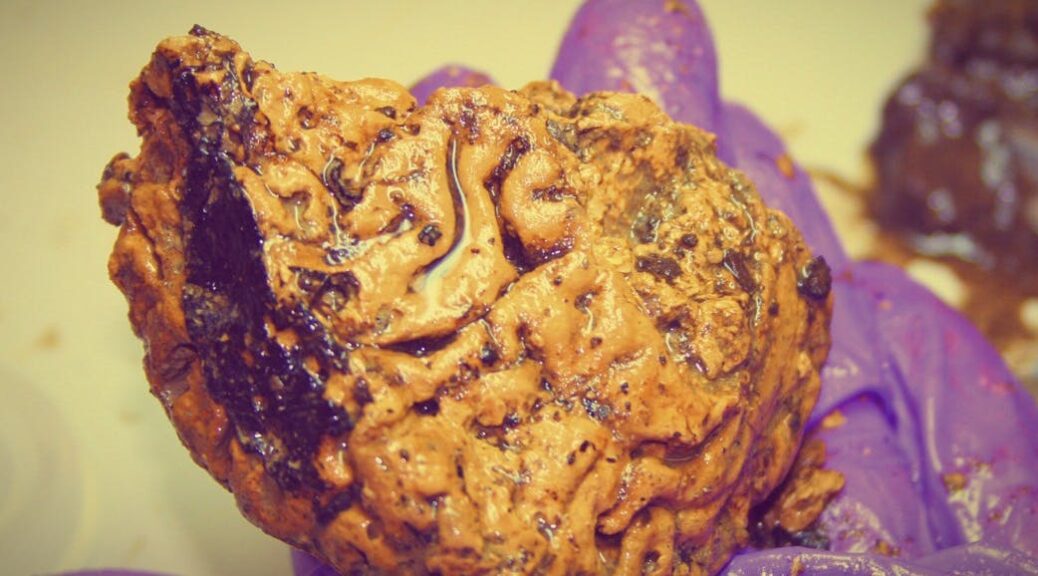
A sample of the Heslington brain.

The brain, that came from a UK man who died more than 2,000 years ago, survived all those years without decomposition, has been found by a team of international researchers.

This research, which was published in the Royal Society Interface Journal, reveals how the scientists examined brain tissue for months and concentrated on protein in the tissue to help them understand deeper the functioning of the brain.

The brain was discovered first in a hidden inside mud pit in Heslington, Yorkshire, England in 2008. The brain was known as the Heslington brain.

Many scientists claim that the brain is the oldest one ever found in Eurasia, being dubbed as the best-preserved brain worldwide. The brain dates to about 482 to 673 BC, which was the start of the Iron Age.

The analysis of the brain tissue showed that it was from a male who was likely decapitated. The brain tissue had withstood many factors but had managed to survive for thousands of years. Now, scientists have unlocked one of the mysteries surrounding the brain tissue.

The researchers have carried out the first-ever detailed analysis of the brain tissue using powerful microscopes. The team scanned the brain with a focused beam of electrons.

The brain was studied at a molecular level, focusing on the presence of proteins that are harder than any other material found in the brain.

The skull with preserved brain material inside.

They found more than 800 proteins in the tissue sample. Some were in good condition, and they were able to study and work up an immune response to them. Further, they found that the proteins had folded themselves into tight-packed stable aggregates that were more stable than those found in the normal and healthy brain today.

The skull within which the brain was found.

The formation of the aggregate explains how the brain was able to evade decomposition and got preserved for thousands of years.

They also pinpointed that the environment where the skull was discovered had helped in the preservation. The fine-grain sediment was cold and wet, which may have warded off oxygen that the flesh-eating microorganism need to survive.

The study findings can help scientists today study brains diseases, such as dementia, that are related to protein folding and aggregate formation.

Diseases such as dementia and Alzheimer’s disease involve the development of rogue proteins dubbed as amyloid and tau. These proteins work by killing brain cells when they clump together.

In the case of the preserved brain, it was the process of aggregate formation that allowed the brain to survive across more than 2,000 years.

The discovery of the tight-packed aggregates provided new proof for the long-lasting stability of non-amyloid protein aggregates, which permit the preservation of brain proteins.

The brain tissue offers a unique chance to use molecular tools to examine how to preserve human brain proteins. Eventually, this could help scientists to find a way to battle dementia, particularly Alzheimer’s disease.

Dementia affects around 50 million people worldwide, with 10 million new cases each year. By 2030, the projected number of people with dementia is 82 million and 152 million by 2050.

Alzheimer’s disease is a progressive and irreversible brain disorder that gradually damages memory and cognitive skills. In the long run, patients with the condition may have problems with simple tasks.

Alzheimer’s disease is the most common form of dementia, and in the United States, it is the 6th leading cause of death.

Remains of 50 skeletons from the dawn of Britain’s Roman occupation 2,000 years ago unearthed by construction workers building a new school in Somerset

Remains of 50 skeletons from the dawn of Britain’s Roman occupation 2,000 years ago unearthed by construction workers building a new school in Somerset

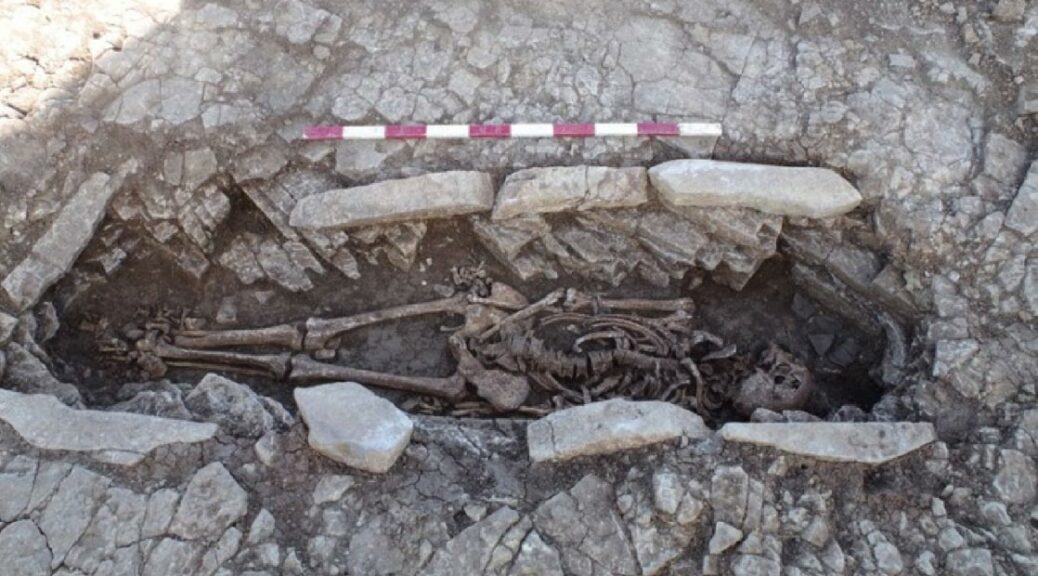
Building workers in the UK have unearthed a large  Roman-era cemetery. The burials are of an unusual type, showing spectacular changes in the funerary customs of locals in the 1st century AD.

This cemetery helps historians to understand better understand a key period in British history, namely the transition from a Celtic to Roman culture and society

When they worked on a new building that would replace the old one, the workers unearthed the Roman cemetery. It was found near Somerton, Somerset in Southern England. The relevant authorities were notified as required by law and work on the new building was paused.

One of the skeletons alongside a pot found at the Roman burial site.

The South West Heritage Trust then began to investigate the site and what they found was astonishing. Archaeologists conducted the most comprehensive excavation of a Roman burial site ever in the region. During the dig, they used drones and other innovative technology.

Steve Membery, of the Heritage Trust, told BBC that “this site is a significant discovery.” Just over fifty burials were found, and they are dated to the 1 st century AD.

This is the time when Rome conquered the Celtic tribes that had previously inhabited the area. It was an era of profound political, social and cultural changes.

One of the skeletons in the stone coffin structure with a pot (at bottom of the shot) unearthed at the Roman burial site.

The nature of the graves was something that astonished the archaeologists. Most of the graves  “were dug into the bedrock and lined with stone curbs to create a coffin structure,” reports the BBC. These slabs were also used in the construction of roofs in the early Roman period. 

The BBC reports that “in one particularly unusual grave, slabs were used to create a tent-like structure above the person who was buried.” This is similar to other burials in Western Europe, but it’s rare in England and this custom was possibly brought to the area by Romans.

The nature of the graves indicates that the early influence of Roman funerary customs. In the older graves, from before the invasion, the dead were simply compressed into a burial place.

After the conquest, the graves were built with more care and the bodies laid flat. Findings from the grave of one woman suggest that her head was propped on a pillow when she was buried.

Interestingly, small nails were found in the later graves, which seems to show that people were buried wearing hob-nailed boots. Membery told The Guardian that “the individuals were evidently of some status.” Additionally, some grave goods were found, including brooches, coins, and pottery.

One of the brooches found at the Roman burial site in Somerset.

One intact pot was found to have the remains of a chicken, who was possibly sacrificed during a burial ceremony. These finds show the influence of Rome on the local population, and how quickly it adopted the customs of the invaders.

The miraculously preserved pot uncovered at the Roman burial site.

DNA testing is being conducted on the bodies to determine their origin. It is believed that they are the remains of Romano-Britons. They had probably been Romanized and had adopted many of the beliefs and practices of the new ruling class.  They possibly came from a nearby villa. It should be noted that the outbuildings of this villa have been found but not the actual building.

However, archaeologists are reluctant to positively state the remains belong to Celts who had adopted the culture of Rome.

Recently some Roman-era graves were found that hold the remains of those with Asian ancestry. Membery is quoted by The BBC as saying that this “find means archaeologists in Somerset are hesitant to make assumptions about the possible origins of people whose remains are unearthed.”

Coins found at the Roman burial site dating back to Roman Emperor Vespasian.

The find is changing the history of the area. Local public representative Cllr Faye Purbrick, stated: “The findings are both exciting and extraordinary, providing us with valuable insight into Somerset’s early history.” Moreover, they are showing how quickly and profoundly the Romans changed the local people and their beliefs.

Based on the changing burial customs, the Romanization of the ancient Celtic people occurred very quickly. Further investigations are underway in Somerton and a summary of the findings will be published in an academic journal in the future.

Huge Hoard of 1000-year-old Yotvingian Weapons Unearthed in Poland

Huge Hoard of 1000-year-old Yotvingian Weapons Unearthed in Poland

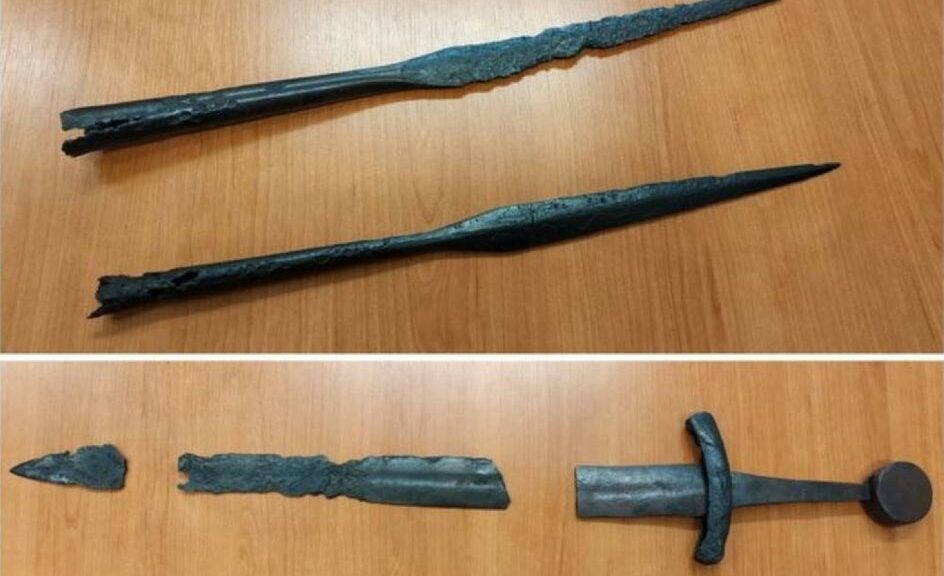
Among hundreds of artifacts from a long-disappeared person famous for its warrior culture, archeological specialists discovered rare swords, spears, and knives in the Suwałki region of eastern Poland.

Such weapons belonged to 500 artifacts that were excavated on the site of a Yotvingians cemetery dating back around 1,000 years

A Baltic people the Yotvingians had cultural ties to the Lithuanians and Prussians.

Occupying an area of land that now straddles parts of Poland, Lithuania and Belarus they spoke a language related to Old Prussian but were, over time, absorbed into the larger Slavic and Germanic groups that surrounded them.

They were famed for their warrior culture and were regarded as good fighters and hunters.

A map showing the ancient land of the Yotvingians.

The new find, described by archaeologists as the “biggest Yotvingian cemetery from the early Middle Ages,” has helped historians gain fresh information on an ancient people long lost to time.

Spearheads, helmets and other items found at the Germanic burial site in Kostrzyn, Poland, earlier this year.

“The area is very rich in Yotvingian culture and rituals,” Jerzy Siemaszko, an archaeologist from the Suwałki District Museum, told PAP. “Getting to the items has been quite easy because they are in a layer about 20-30 centimeters beneath the surface of the ground.

“The area was used by the Yotvingians in the early Middle Ages, between the 11th and 13th centuries,” he added. “It was the site of the very unusual crematory cemetery where the remains of funeral pyres were dumped along with gifts for the dead.”

Although the find has unearthed 500 items some 1,000 may have been stolen by grave robbers.

The excitement generated by the find has, however, been tempered by the fact that treasure hunters appeared to have got there first, stealing an estimated 1,000 items despite the fact that such actions are illegal and bring with them a stint in prison of up to 10 years.

The area of the find is now secured and it’s whereabouts kept secret to prevent further robbery.

Skeleton of Ancient Sports Fan Found Buried with Head-Shaped Jar

Skeleton of Ancient Sports Fan Found Buried with Head-Shaped Jar

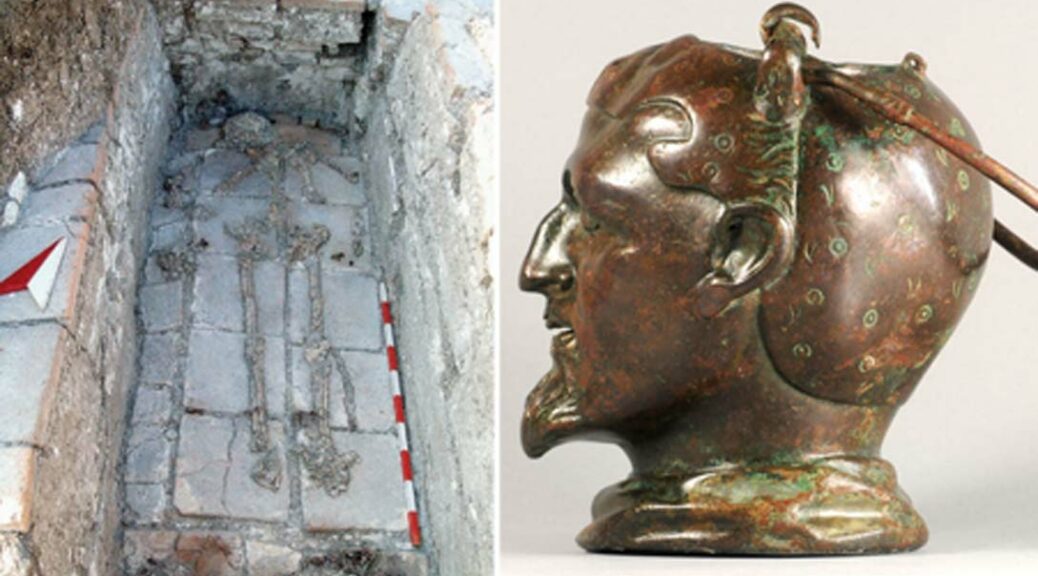
A 3rd-century A.D. man’s grave in Bulgaria contained a strigil and curiously crafted balsamarium- a vessel from skin- cleansing oils- in the shape of a man’s head fitted with a feline-skin cap, which may be a reference to the Nemean lion slain by Hercules.

In a Roman-era grave in Bulgaria, a unique brass vessel in the form of a man’s head was discovered. The tomb was found in the Kral Mezar tumulus in southeastern Bulgaria, near the village of Boyanovo.

Over the centuries the tumulus had been repeatedly plundered and agricultural activities changed their shape and size,  so a salvage archaeology mission was undertaken in 2015 to excavate it thoroughly.

Inside the tumulus, archaeologists discovered three burials — a sarcophagus, a brick grave, and a tomb. The limestone sarcophagus with a pitched roof lid (found broken on the side) dates to around 150-200 A.D. Sarcophagi are rare finds in Roman Thrace and are believed to have contained the remains of non-Thracians.

The tomb was built of stone and brick with plastered and painted interior walls. It was heavily looted, but the extant funerary goods include bone spindles, needles, glass beads, glass, and ceramic fragments and clay lamp fragments.

A silver denarius from the reign of Caracalla minted in 202 A.D. was found on the tomb floor. Because of the textile-making grave goods, archaeologists believe this was a woman’s tomb.

But it was the third burial, the brick grave, that contained a truly striking artifact. The rectangular pit was lined with bricks coated with a thick layer of white plaster.

Marks on top of the brick walls indicate there had once been wooden beams across the top forming a flat roof. This type of grave was popular in Roman Thrace, particularly in the 2nd and 3rd centuries.

The body had been placed in a wooden coffin of which only a few iron nails survive. The skeletal remains are still articulated and just shy of six feet long (1.82 meters). The osteological analysis found the deceased was an adult male about 35-40 years old at the time of death.

Inside the grave was a bronze coin of Caracalla minted in Hadrianopolis 198-217 A.D., fragments from a glass flask, the remains of two pairs of hobnailed shoes, a balsamarium, and a strigil.

“In our opinion, the grave belongs to a Thracian aristocrat, who has practiced sport in his everyday life, rather than to a professional athlete,” Daniela Agre, an archaeologist at the National Archaeological Institute with Museum at the Bulgarian Academy of Sciences, who led archaeological work at the site, told Live Science. 

“We think that the tumulus was used as a family necropolis and the deceased was a part of this family,” Agre said.

The strigil is brass, of a type found in other Bulgarian graves from the 2nd and 3rd centuries. The balsamarium is also brass, but it is far from a type seen in other Bulgarian graves of the period. In fact, it is unique in the archaeological record of Roman Thrace.

This type of container is believed to have been used to hold scented oils or perfumes for use in the baths, which is why they’re often found coupled with strigils that would have scraped the oil off the skin to clean and exfoliate.

It is 4.7 inches high, 4.2 inches wide and is shaped like the head of a man wearing an animal-skin skullcap. The visible features of the animal’s head — nostrils, eyes, canine teeth in the lower jaw — suggest it was a feline.

A neck draped with robes forms the foot of the vessel with a flat bottom made from a single metal sheet. There’s a hole in the top of the head for a hinged lid that is now lost. On either side of the opening are loops where a swing handle was attached. There’s still a handle attached through one of the loops; the other side of the handle is broken.

The man’s face is broad with shaved cheeks and a neatly shaped goatee. His nose viewed from profile has a proud aquiline bump. Seen from the front, it is bent to the left and widened at the base, suggesting that it has seen the business end of more than a few clenched fists. Five vessels with comparable features are found in museums in Los Angeles, France, and Germany.

Scholars believe these features — the bent aquiline nose, the goatee, the skullcaps, the lock of hair on the back of the head — represent the heads of boxers or wrestlers.

The Boyanovo piece is distinct from these comparables because it does not have the lock of hair and because of its feline skin cap. The former is likely necessitated by the latter; the sculptor couldn’t include both the lock of hair and the incredibly detailed feline skin covering the back of the hair.

Demon with Forked Tongue Found on Clay Tablet in Library of Assyrian Exorcists

Demon with Forked Tongue Found on Clay Tablet in Library of Assyrian Exorcists

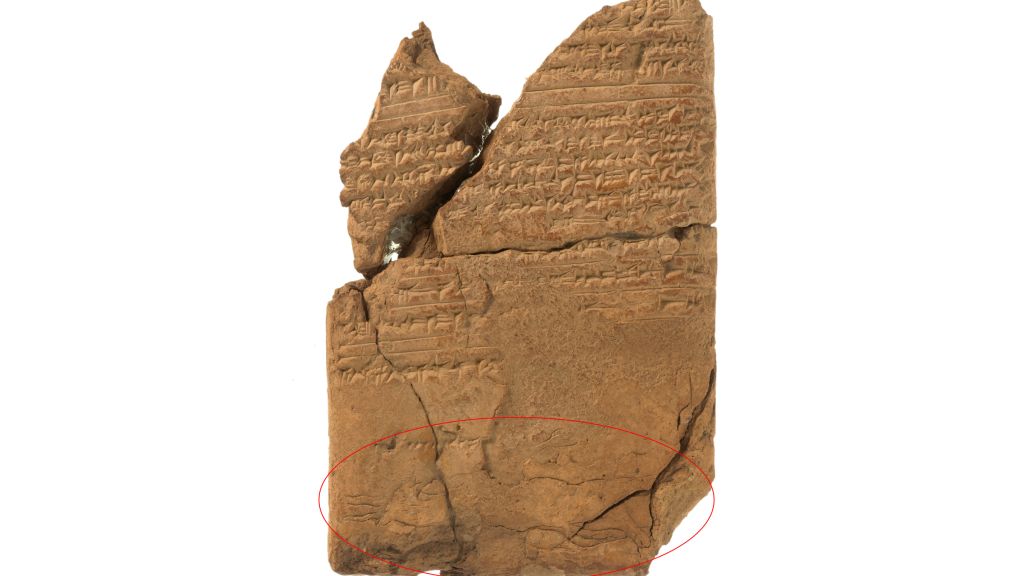
On a 2,700-year-old clay, a demonic figure with curved horns, a forked tongue, tail, and reptilian eyes long lurked was Unobserved is placed at housed of Berlin’s Vorderasiatisches Museum, a new study published in Le Journal des Médecines Cunéiformes suggests.

A scholar spotted the long-overlooked image (its horns and face are at left, its legs on the right) while conducting research at a Berlin museum.

The Assyriologist Troels Pank Arbøll of the University of Copenhagen discovered the rare illustration while studying the cuneiform text five years ago.

Researchers have known of the artifact’s existence for decades, but as Arbøll tells BBC Tom Metcalfe, he was the first to notice the creature’s damaged outline.

The writing on the tablet suggests its creator viewed the demon as the cause of convulsions and other involuntary movements then called bennu but now understood as epilepsy.

As per the study, the anthropomorphic figure measures around 2.5 inches tall and one inch wide. Its neck is long, and its body appears to be covered in scales or hair.

Although the majority of the demon’s torso has been effaced over the centuries, its claw-like hands and feet remain partially visible.

Magic and medicine were intertwined in ancient Assyria. According to a University of Copenhagen statement, the Assyrians believed diseases were caused by gods, demons or witchcraft. To treat these afflictions, healers turned to drugs, rituals or incantations.

Interestingly, explains Arbøll to Metcalfe, the newly described drawing differs from spiritual images typically found on cuneiform tablets. Unlike “comparable drawings, which generally depict a figurine made during a ritual to remove the illness,” the tablet depicts an “actual demon.”

As the researcher notes in the statement, the work presents the mystical being “as the healer who wrote the text must have imagined it.”

The drawing presents the mystical being “as the healer who wrote the text must have imagined it.” (Troels Pank Arbøll)

The tablet’s text indicates that ancient “doctors” would have blamed bennu’s occurrence on a demon acting on behalf of the Mesopotamian moon god Sîn.

The standard prescription, according to Arbøll, was to wear a leather amulet and breathe in smoke from certain ingredients charred on hot coals.

Arbøll previously completed a separate analysis of cuneiform tablets cataloging the medical training of a man named Kisir-Ashur.

This microhistory offered new insights on ancient Assyrian medical practices, including how doctors were “trained in the art of diagnosing and treating illnesses, and their causes,” the Assyriologist told ScienceNordic’s Bo Christensen in 2018.

Like the tablets studied for this earlier survey, the demon manuscript was unearthed in Kisir-Ashur’s private library. He and his family lived in the city of Assur, located in what is now northern Iraq, around 650 B.C., through BBC. Metcalfe points out that the bennu text in question was likely copied from a far older document.

Kisir-Ashur and others like him are often described as exorcists, but Arbøll told Christensen that this title is a mistranslation, as these individuals also handled non-spiritual issues.

“He does not work simply with religious rituals, but also with plant-based medical treatments,” the researcher said. “It is possible that he studied the effects of venom from scorpions and snakes on the human body and that he perhaps tried to draw conclusions based on his observations.”

Medieval Christian Artifacts Unearthed in Bulgaria

10th Century with Jesus Christ image, peacock ring seal found in Tudia fortress in Bulgaria’s sliven

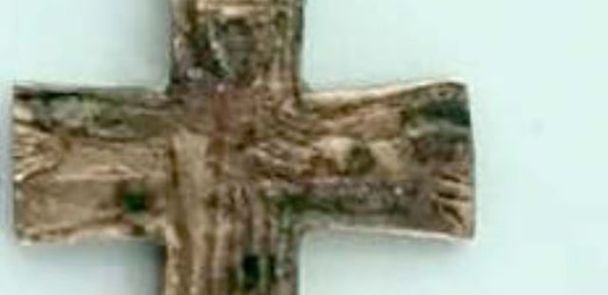
Archaeological excavations of the Late Roman, Early Byzantine and medieval Bulgarian fortress of Tuida in the city of Sliven. Found one of the most notable objects found during 2019 is the cross with an Image of Jesus Christ of the tenth century, during Bulgaria’s First Empire (632/680 – 1018), and a medieval ring seal with a peacock image.

This 10th century bronze cross depicting Jesus Christ has been discovered in the latest digs in the Tuida Fortress in Bulgaria’s Sliven

Tuida, now increasingly gaining popularity as a cultural tourism venue, was originally an Ancient Thracian settlement that grew into a Late Roman, Early Byzantine, and medieval Bulgarian fortress.

The Roman fortress itself was built after the capital of the Roman Empire was moved from Rome to Constantinople in 325 AD.

Among other things, the Tuida Fortress in the city of Sliven in Southeast Bulgaria is remarkable for having a well-preserved secret passage leading outside the stronghold to a nearby river, which was erected in the 6th century AD.

The 2019 archaeological excavations of the Tuida Fortress were conducted for a period of 20 days in the middle of the fall, and led to the discovery of a total of 103 archaeological artifacts, Nikolay Sirakov, Director of the Dr. Simeon Tabakov Regional Museum of History in Sliven has announced at a news conference.

A total of 103 archaeological artifacts have been found in the 2019 excavations in Tuida in Bulgaria’s Sliven.

The archaeological team of the Sliven Regional Museum of History has excavated a spot in the northern part of the Tuida Fortress, unearthing and researching part of a well-preserved home from the 9th – 10th century, a medieval water pipeline, and a total of nine medieval pits, which were part of the said home, Sirakov reveals, as cited by BTA.

The small 10th century cross with a depiction of Jesus Christ discovered in the latest digs in the Tuida Fortress in Sliven is made of bronze.

The partly restored ruins of the Tuida Fortress overlooking the city of Sliven in Southeast Bulgaria
The 10th-century bronze cross is one of the most intriguing archaeological artifacts found in relatively small-scale digs inside the Tuida Fortress in fall 2019.

In addition to the Christian artifacts, the Bulgarian archaeologists have also found a large number of medieval coins and bone artifacts in the latest digs in the Tuida Fortress in Sliven.

The latter finds are seen as a demonstration that bone processing and crafting were among the medieval crafts that were well-developed in the Tuida Fortress.

In addition to the excavations in Tuida, whose partly restored ruins overlook the modern-day city of Sliven, in 2019, the archaeologists from the city’s Regional Museum of History participated in two other exploration projects.

One has been performing rescue archaeological excavations in the town of Zornitsa, Haskovo District, along the route of the natural gas pipeline connecting Bulgaria and Greece (the “Stara Zagora – Komotini” natural gas pipeline, also known as Interconnector Bulgaria – Greece (IBG).

There the archaeologists found a number of artifacts from various time periods dating back as early as the prehistory, including loom weights, fishing tackles, a mold for ceramic lamps, iron arrow tips, and various types of bronze and silver coins.

The most notable artifact found in the digs near Zornitsa led by archaeologist Veselin Ignatov, however, is said to be the bronze umbo (shield boss) of a parade shield.

A Man Renovating His Home Discovered A Tunnel… To A Massive Underground City

A Man Renovating His Home Discovered A Tunnel… To A Massive Underground City

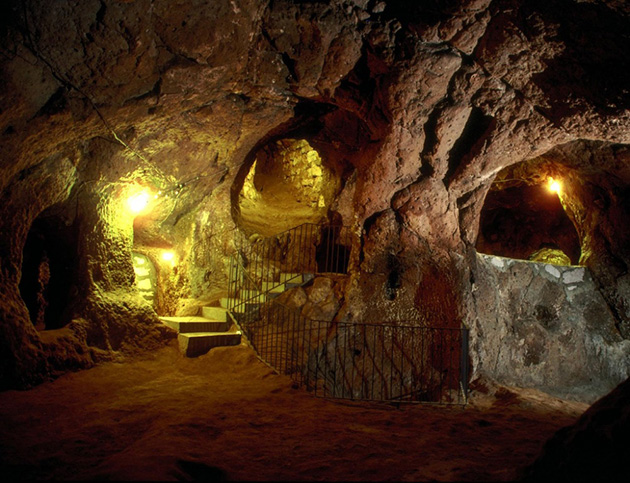
In 1963, a man in the Nevşehir Province of Turkey knocked down a wall of his home. Behind it, he discovered a mysterious room and soon discovered an intricate tunnel system with additional cave-like rooms. What he had discovered was the ancient Derinkuyu underground city in Turkey.

The underground city was home to approximately 20,000 residents.

The elaborate subterranean network included discrete entrances, ventilation shafts, wells, and connecting passageways. It was one of the dozens of underground cities carved from the rock in Cappadocia thousands of years ago. It remained hidden for centuries.

Located almost exactly in the center of Turkey in the region best known as “Cappadocia,” this particular complex is located in the modern town of Derinkuyu.

Researchers think that the underground corridors may go much deeper, nevertheless, the exact size of them remains unknown.

That the man found this complex while digging out his house was surprising, as was its size, but Cappadocia was already famous for its underground dwellings. There are over two hundred known underground “cities” of various sizes in the region (most of them would more properly be called “villages” or “hamlets”).

At least forty of them have three or more levels, with Kaymakli and Derinkuyu having eight and eighteen (!), respectively. Most archaeologists believe that the caves were begun by the Phrygian people (one of the many “sea peoples” that invaded the Aegean and Turkish area from the west, and who are mentioned in ancient texts) in about the 7th or 8th centuries B.C.

Some believe the caves are older, and date from the Hittite period some five hundred years before that. Regardless of who dug it, the cave system at Derinkuyu especially was not built by “stupid troglodytes”–these were exceedingly smart troglodytes.

Probably the last residents of the city were the early Christians, but they weren’t the actual builders.
Then the city was forgotten for more than 1,000 years.

As one can imagine, there are many good reasons for building a city underground. First and foremost was likely defense, but of course, shelter from the weather was an important factor too. No wind, no rain or snow, protection from the blazing Mediterranean sun.

Another factor was access to water. Rivers and lakes run dry and enemies might control water sources in an effort to subdue your people, but if you are sitting directly on top of an aquifer, you’ve got all the water you’ll ever need.

The cleverness of the people at Derinkuyu is illustrated by the fact that one of the wells there (over two hundred feet down) was controlled by those on the deepest levels. Access to the wells could be closed tight with wood and stone so those above could not attempt to poison the water below.

There were stone-wheel doors at the entrances to the tunnels to protect residents from invaders.
Even if the enemy had gotten inside, he would have never gotten back to the surface without knowledge of the secret passages and labyrinth plan.

The stone in Cappadocia is soft volcanic rock left eons ago. One might call it sandstone, from its looks, but it is not. Though relatively easy to dig through (compared to granite, for example), it was still no small undertaking for the people of Cappadocia to dig out.

This also means that the stone can be carved easily. Later troglodytic complexes include elaborate early Christian churches, with arches embedded in the ceiling.

Security was built in. Entrances were in high or in very well-hidden places. The tunnels and stairways are just wide enough for one adult to make their way through – enemy warriors could only fight one on one in the corridors.

Oil lamps lit the halls, stairways, and dwellings, and could be extinguished by retreating warriors and families to confuse invaders. Dead-ends known only to those living in the complex would also add to any confusion.

Large circular stones could be rolled into tunnels, blocking further advance. During the original Turkish invasions in the 10th century, and into the Ottoman era, these caves were used as refuge and defense.

Some of the smaller troglodyte dwellings (and that’s what they’re called) are still inhabited. Many of the others were lived in until early in the 20th century.

The large complex at Kaymakli was last used as a refuge by Anatolian Greeks fearing the massacres that were taking place in the war between Turkey and Greece in the early 1920s.

Today, many of these underground cities and towns are open to the public and are Turkish national treasures.

Tourists are allowed to visit only a small part of the city where the maze is fenced so that nobody gets lost.

The large complexes at Kaymakli and Derinkuyu offer guided tours through the approximately ten percent of the cave systems that are open to the public.