All posts by Archaeology World Team

What Lies Beneath? Finding North America’s lost medieval city

What Lies Beneath? Finding North America’s lost medieval city

At the time of its existence, this city was larger than Paris or London and housed about 30,000 citizens.  This is around the size of Juneau Alaska today (if you include the surrounding boroughs). If this estimate is correct, It was the largest city in the United States until the 1780s, when the population of Philadelphia finally surpassed it. So where was this lost historic capital?

The city was known as Cahokia. It reached its peak population in 1050 and was then abandoned in 1400. We don’t even know the name of the people who lived there.  The city was named after the tribe of Cahokia who lived there, but the tribe of Cahokia claimed no connection with the city; it was the European explorers who named it.

A group known as Mississippians are the original inhabitants. They were great builders and craftspeople, and they had a significant influence on the surrounding areas—just check out the extent of the territory they have been reported to have impacted.

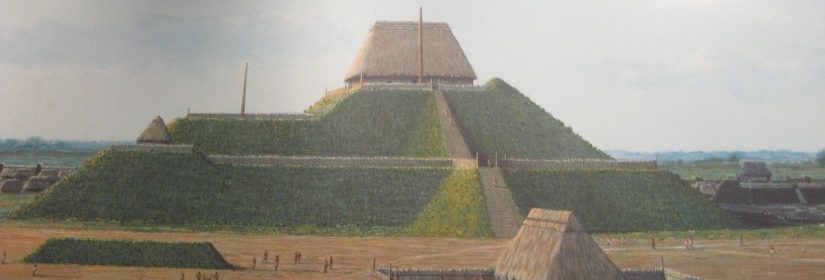
Artist’s recreation of downtown Cahokia, with Monk’s Mound at its centre.

Studies suggest that Cahokia was in fact the first melting pot in North America, drawing in people from surrounding areas (as much as one-third of their population consisting of immigrants from other tribes and groups). These people could have migrated away after the decline of the city, meaning that the Cahokia tribe might not be the descendants of the city builders.

So again, where was this metropolis hiding? How do we know it even existed at all? I bet you wouldn’t guess it was buried under the suburbs of St. Louis, would you? If this city was right under our noses all this time, why are we only really exploring it now?

They paved paradise and put up a parking lot

Exploration of the area occurred sporadically, and earthen mounds don’t make for particularly exciting discoveries like gold or jewels. So, this lost city went the way of most—instead of preserving the shifting space, for monuments or museums, it was used for growing room as the population in the area expanded.

The growth of human civilization can be a bit unforgiving at times to ancient historical sites. Famous historical cities of the world are built on the ruins of their own past. Cahokia is no different.

Up goes a drive-in movie theatre here, a subdivision there, and a variety of other infrastructure required of our time. The area today is like any other in modern America, crisscrossed by roads and highways like veins in an ever-changing landscape, but underneath all of that, it is filled with a rich history.

What was in the city?

While we have known about the ancient city for hundreds of years, our knowledge has largely been restricted to the awareness of mounds seen above the surface. Those mounds are pretty impressive though. Consider that all the mounds in Cahokia were built by hand. People dug up clay and transported it by hand, likely in woven baskets.

Aerial view of Monk’s Mound via WesternDigs
Evidence of the human sacrifices uncovered at Mound 72.

One of the most notable mounds is the one called Monks Mound. Monks Mound rises 100 feet high (about 30 meters) and has three distinct levels. Archaeological evidence shows that there was a building at the peak of the mound which could have risen another 50 feet (15 meters).

This mound is estimated to have taken as much as 250 years to build, but new evidence suggests it might have been completed in a mind-blowing 20 years. The entire structure was made up of an estimated 22 million cubic feet/623 thousand cubic meters of the earth (that’s a lot of baskets).

To put the size of the mound into perspective, the base of the mound is comparable to the Great Pyramid at Giza, and it is the largest prehistoric earthen construction in America north of Mexico.

Archaeological studies suggest that the city is so much more than just mounds. There are extensive ceremonial areas, including at least one Woodhenge – a structure similar to Stonehenge in the UK, that was used to monitor the movement of the sun and stars to predict events such as harvests.

There are also extensive living areas, the grand plaza gathering area, a copper workshop, burial sites, and evidence of an extensive wooden palisade (estimated at 15 feet tall, or 4.6 meters). Over 1,000 years ago, this was a pretty happening place.

Unfortunately, as the construction techniques in Cahokia involved using wood and earth, there are no stone ruins like we might see in Egypt or Rome. This means that the city was more easily reclaimed by nature—but that doesn’t make it any less impressive than its ancient counterparts.

Lessons from the past

If you’re thinking Cahokia sounds pretty amazing, you’re right. So, the obvious question is, why was it abandoned?

This is one of the most interesting questions about abandoned cities. In modern times the idea of abandoning a fully-formed city seems ludicrous (especially considering real estate prices in Toronto and Vancouver).

New studies of the flood patterns of the Mississippi River might be shedding some light on the situation. The rise of Cahokia falls in line with periods of relatively low flooding. This would have made farming and city expansion relatively easy. Then, towards the end of the city’s life, the floods returned, with one flood around the year 1200 being as much as 33 feet (10 meters) high. That’s the kind of stuff we make disaster movies about, so it is pretty easy to understand how that could contribute to the decline of the city.

Flood researchers are also careful to say that there was likely a multitude of causes contributing to the decline of the city, such as war or disease. It boggles the mind in many ways. Think of our modern cities. What would it take for us to abandon New Orleans, New York, or another metropolis?

The whole area was designated as a state historical site about 40 years ago and made a UNESCO World Heritage Site in 1982. It is always comforting to see history receive the recognition it so richly deserves, but this ancient metropolis also has a lesson for all of us in modern times: the greatest cities of mankind are often very dependent on specific environmental circumstances, and if those circumstances change they can have a very dramatic impact on the people who live in and around them.
The Qasr Al-Farid, The Lonely Castle Of The Nabataeans

The Qasr Al-Farid, The Lonely Castle Of The Nabataeans

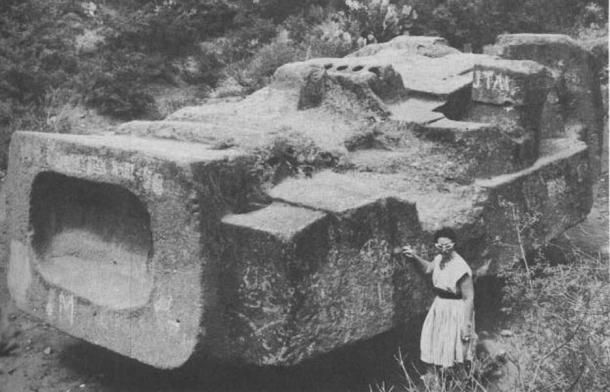
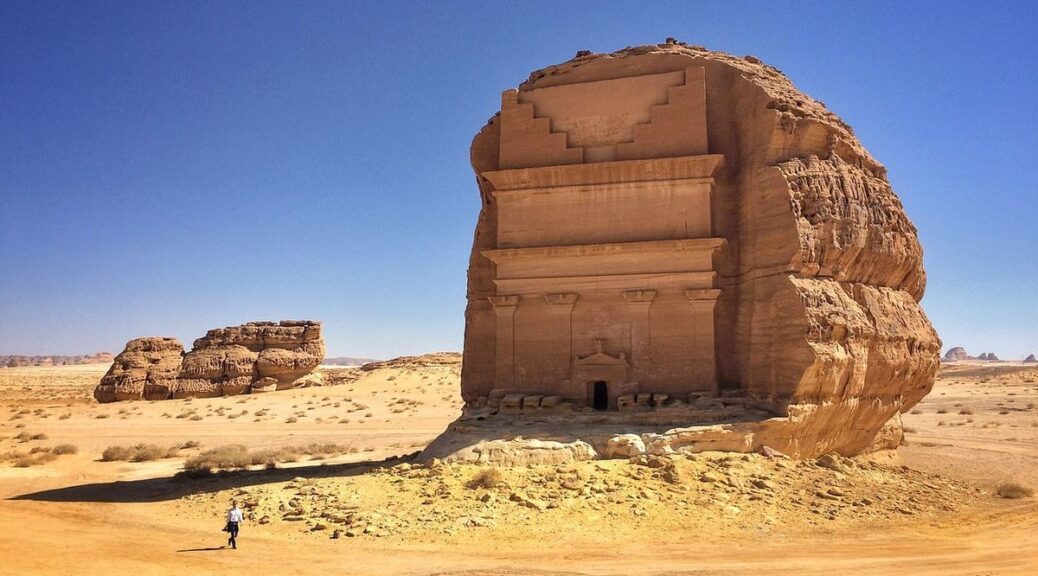
Among the Dozens of ruins located in the archaeological playground of Mada’in Saleh, one literally stands alone. Carved into a massive boulder, Qasr al-Farid, or “The Lonely Castle,” is a stunning ancient structure that rivals the majesty of any carved architecture in the world.

Created around the 1st century CE, the tall facade was never actually finished. The Nabateans had a unique construction technique that saw their tombs being chiselled right out of the rock from the top down.

Such is the case with Qasr al-Farid, although the monument appears to never have been completed, so the craftsmanship and precision of work slowly deteriorate closer to the base of the structure.

The Nabataeans were skilled craftsmen who carved their monuments out of solid roc

One of the most famous monuments of the Madain Saleh archaeological site, listed as a UNESCO World Heritage Site.

Called the “lonely castle”, Qasr Al-Farid is nevertheless a tomb. It was carved out of a rock that appeared out of nowhere about 2,000 years ago.

A construction left in suspense, suggested by the contrast between a facade meticulously carved with columns and crowns, and the other part of the rock still intact.

There seems to be no evidence of burial inside. With its unfinished taste and unusual location, the tomb of Qasr Al-Farid cultivates its mystery.

A tune from Petra to Madain Saleh

Between Qasr Al-Farid and the city of Petra, the resemblance is striking. And for good reason, both sites are from the Nabataean civilization.

The same meticulous work on the rock can be seen, although the Saudi tomb was carved from a block of stone stranded in the desert and not from a gigantic cliff.

The location of the Qasr Al-Farid tomb may suggest that it is completely independent. However, it is part of the vast archaeological site of Madain Saleh. Long unknown, the latter was only explored at the beginning of the 20th century, when a Franco-Saudi mission was commissioned to carry out excavation work.

Over 500 hectares, more than 100 tombs – remains of the Nabataean city of Hegra – have been discovered. In 2008, the site was declared a UNESCO World Heritage Site. A must if you are going to Saudi Arabia!

1,200-year-old pagan temple to Thor and Odin unearthed in Norway

1,200-year-old pagan temple to Thor and Odin unearthed in Norway

The remains of the 1,200-year-old pagan temple were dug up in Norway and provide a rare insight into the Viking religion. Archaeologists have dated the remains of the large wooden building to the end of the 8th century.

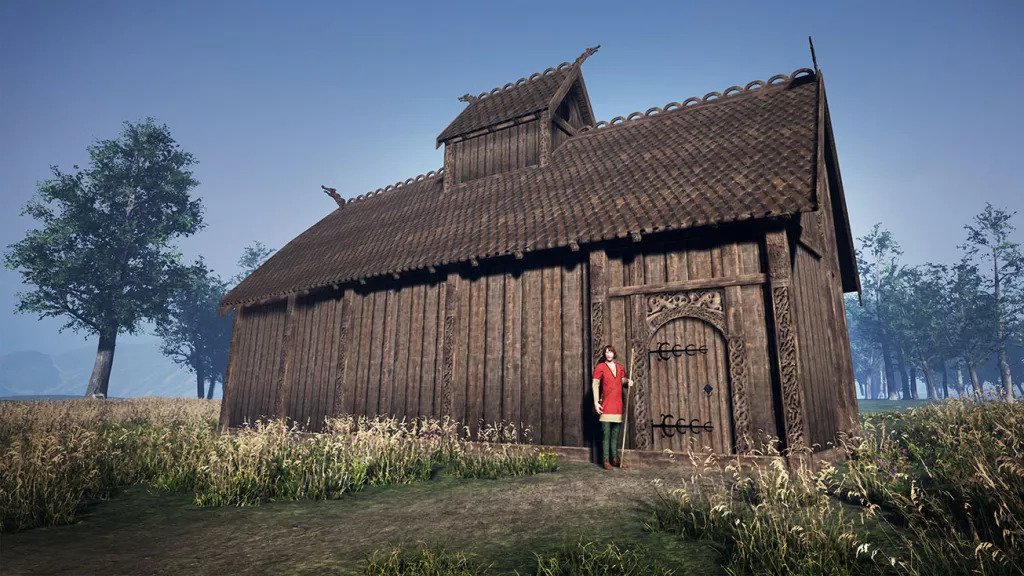
The Old Norse “god house” was built from wood about 1200 years ago to worship gods like Odin, Thor, and Freyr. Post-holes that show its distinctive shape, including its central tower, have been unearthed at the site.
1,200-year-old pagan temple to Thor and Odin unearthed in Norway
The god house (shown here in a digital reconstruction) was strongly built of beams and walls of wood; some lasted for hundreds of years. It included a central tower, patterned on Christian churches seen in lands further south.

They think it would have stood 40 feet high and was 45 feet long and 26 feet wide.

That’s just over half as tall as Buckingham Palace. It’s thought sacrifices and feasts would have occurred inside to honour the gods during the midsummer and midwinter solstices.

A large white penis shaped stone was previously found near the site and was linked to ancient fertility rituals. This is the first Old Norse temple to be found in Norway.

Old Norse is the ancient language associated with the Viking’s Archaeologist Søren Diinhoff of the University Museum of Bergen told Live Science: “This is the first time we’ve found one of these very special, very beautiful buildings.

“We know them from Sweden and we know them from Denmark. … This shows that they also existed in Norway.”

He added: “It is a stronger expression of belief than all the small cult places.

The temple was unearthed during a dig taking place before planned housing work

“This is probably something to do with a certain class of the society, who built these as a real ideological show.”

The foundations of the ancient building, or “god house” as they’re often called, were unearthed last month in a Norwegian riverside village called Ose.

Digging was happening there in preparation for new houses. Traces of early agricultural settlements were also found nearby. They dated to the earlier time of around 2,000 to 2,500 years ago.

The remains of the temple date to a later time when the area is thought to have been dominated by elite wealthy families. It is thought the families would have led the cult worship.

Experts think the elite likely wanted a “god house” built based on more Christian structures with a high tower on top. Before this time, Viking gods were more commonly worshipped in simplistic settings.

The wood of the temple no longer remains but you can see the postholes where the main beams would have stood and the area where the tall tower would have been.

Evidence of cooking pits and animal bones fit in with the theory that feasts and sacrifices occurred there. Food, drink, animal sacrifices, and precious metals were often offered to Old Norse gods.

The worshippers would then feast and enjoy the goods themselves because they knew the gods couldn’t come and join them. Instead, wooden figurines may have been used to represent the gods.

Popular Old Norse gods include storm god Thor and war god Odin. Norway’s kings enforced Christianity from around the 11th century so burned down a lot of Old Norse temples and religious sites. There’s no current evidence to suggest the Ose temple was burned down.

Viking Grave in Denmark Holds Remains of Mother and Son

Viking Grave in Denmark Holds Remains of Mother and Son

The Copenhagen Post reports that researchers at the Roskilde Museum have analyzed DNA samples from the remains of a man and woman discovered in a 1,000-year-old burial known as the Gerdrup Grave, and determined that the pair were mother and son.

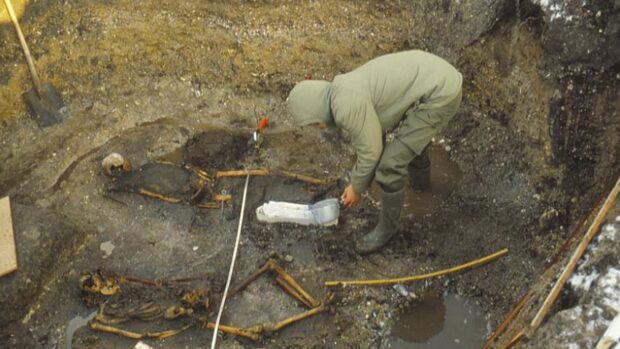
The grave contains the skeletons of a child and a woman, and archaeologists have long speculated who they might be and why they were buried together.

Another element of the mystery is that the child was killed at some point and buried next to the woman. 

The Gerdrup Grave has another important aspect to it: it was the first discovery that proved that Viking women were buried along with a weapon – in this case, a lance.

Familial link

Well, now some new information has surfaced about the longstanding mystery. DNA testing has revealed that the pair are actually mother and son and, as previously believed, a sacrificial slave. 

“It’s an incredibly exciting and surprising result we have here. We need to thoroughly consider what this means,” Ole Kastholm, an archaeologist and senior curator at Roskilde Museum, told TV2 Lorry.

The revelation means that the history of the Gerdrup Grave needs to be rewritten and that a new mystery needs to be solved.

“We need to look at whether other graves and other source material from the Viking Age could reveal some patterns that might help us solve this case,” said Kastholm.

Do Sagas hold the key?

The key to solving the enigma could be found in one of the old Icelandic Sagas, a series of narratives written between the 12th and 15th centuries covering Viking history.

The man in the grave looks to have been executed, hung, and bound before being laid in the grave. Meanwhile, the woman was weighed down with large stones.

One theory is that the lance belonging to the woman in the grave is actually a sorceress’s staff.

Something Odd about them?

One of the sagas tells the story of the sorceress Katla and her son Odd who were persecuted and executed. Odd was hung and Katla was stoned to death.

While the plot thickens and archaeologists work to solve the latest part of the puzzle, the skeletons can be viewed at Roskilde Museum.

The Rome of America: What Lies Under Teotihuacan? – The Real City of the Gods

The Rome of America: What Lies Under Teotihuacan? – The Real City of the Gods

It was a Massive, one of the first great cities of the Western Hemisphere. And its origins are a mystery. It was built by hand more than a thousand years before the swooping arrival of the Nahuatl-speaking Aztec in central Mexico. But it was the Aztec, descending on the abandoned site, no doubt falling awestruck by what they saw, who gave its current name: Teotihuacan.

The Pyramid of the Sun (top) is the largest structure in the ancient city of Teotihuacan, Mexico, and one of the largest buildings of its kind on the Western Hemisphere.

A famed archaeological site located fewer than 30 miles (50 kilometers) from Mexico City, Teotihuacan reached its zenith between 100 B.C. and A.D. 650. It covered 8 square miles (21 square kilometers) and supported a population of a hundred thousand, according to George Cowgill, an archaeologist at Arizona State University and a National Geographic Society grantee.

“It was the largest city anywhere in the Western Hemisphere before the 1400s,” Cowgill says. “It had thousands of residential compounds and scores of pyramid-temples … comparable to the largest pyramids of Egypt.”

Oddly, Teotihuacan, which contains a massive central road (the Street of the Dead) and buildings including the Temple of the Sun and the Temple of the Moon, has no military structures—though experts say the military and cultural wake of Teotihuacan was heavily felt throughout the region.

Who Built It?

Cowgill says the site’s visible surface remains have all been mapped in detail. But only some portions have been excavated.

Scholars once pointed to the Toltec culture. Others note that the Toltec peaked far later than Teotihuacan’s zenith, undermining that theory. Some scholars say the Totonac culture was responsible.

No matter its principal builders, evidence shows that Teotihuacan hosted a patchwork of cultures including the Maya, Mixtec, and Zapotec. One theory says an erupting volcano forced a wave of immigrants into the Teotihuacan valley and that those refugees either built or bolstered the city.

The main excavations, performed by Professors Saburo Sugiyama of Aichi Prefectural University in Japan and Rubén Cabrera, a Mexican archaeologist, have been at the Pyramid of the Moon. It was there, beneath layers of dirt and stone, that researchers realized the awe-inspiring craftsmanship of Teotihuacan’s architects was matched by a cultural penchant for brutality and human and animal sacrifice.

Inside the temple, researchers found buried animals and bodies, with heads that had been lobbed off, all thought to be offerings to gods or sanctification for successive layers of the pyramid as it was built.

Since 2003, archaeologist Sergio Gomez has been working to access new parts of the complex and has only recently reached the end of a tunnel that could hold a king’s tomb.

It’s unclear why Teotihuacan collapsed; one theory is that poorer classes carried out an internal uprising against the elite.

For Cowgill, who says more studies are needed to understand the lives of the poorer classes that inhabited Teotihuacan, the mystery lies not as much in who built the city or in why it fell.

“Rather than asking why Teotihuacan collapsed, it is more interesting to ask why it lasted so long,” he says. “What were the social, political, and religious practices that provided such stability?”

Megalithic stone blocks scattered in the vicinity of the pyramid of the Feathered Serpents at Teotihuacan.
Megalithic stone head from the earlier layer of construction.
Megalithic stone blocks scattered in the vicinity of the pyramid of the Feathered Serpents at Teotihuacan.

300 Million Year Old Machinery Found in Russia

300 Million-Year-Old Machinery Found In Russia, Experts Say Aluminum Gear Not The Result Of Natural Forces, May Be Extraterrestrial

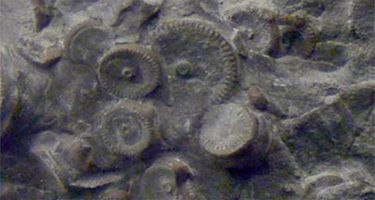
The Voice of Russia and other Russian sources are reporting that a 300 million-year-old piece of aluminum machinery has been found in Vladivostok. Experts say a gear rail appears to be manufactured and not the result of natural forces. 

According to Yulia Zamanskaya, when a resident of Vladivostok was lighting the fire during a cold winter evening, he found a rail-shaped metal detail which was pressed in one of the pieces of coal that the man used to heat his home. Mesmerized by his discovery, the responsible citizen decided to seek help from the scientists of the Primorye region. After the metal object was studied by the leading experts the man was shocked to learn about the assumed age of his discovery.

The metal detail was supposedly 300 million years old and yet the scientists suggest that it was not created by nature but was rather manufactured by someone. The question of who might have made an aluminum gear in the dawn of time remains unanswered.

The find was very much like a toothed metal rail, created artificially. It was like parts are often used in microscopes, various technical and electronic devices say writer Natalia Ostrowski at KP UA Daily. 

Nowadays, finding a strange artifact in coal is a relatively frequent occurrence. The first discovery of this sort was made in 1851 when the workers in one of the Massachusetts mines extracted a zinc silver-incrusted vase from a block of unmined coal which dated all the way back to the Cambrian era which was approximately 500 million years ago.

Sixty one years later, American scientists from Oklahoma discovered an iron pot which was pressed into a piece of coal aged 312 million years old. Then, in 1974, an aluminum assembly part of unknown origin was found in a sandstone quarry in Romania.

Reminiscent of a hammer or a support leg of a spacecraft “Apollo”, the piece dated back to the Jurassic era and could not have been manufactured by a human. All of these discoveries not only puzzled the experts but also undermined the most fundamental doctrines of modern science.

The metal detail which was recently found by Vladivostok resident is yet another discovery which perplexed the scientists. The coal in which the metal object was pressed was delivered to Primorye from Chernogorodskiy mines of Khakasia region. Knowing that the coal deposits of this region date 300 million years back, Russian experts inferred that the metal detail found in these deposits must be an age-mate of the coal.

Another question that interests Russian scientists is whether the aluminum alloy is of Earthly origin. It is known from the study of meteorites that there exists extra-terrestrial aluminum-26 which subsequently breaks down to magnesium-26. The presence of 2 percent of magnesium in the alloy might well point to the alien origin of the aluminum detail. It could also be evidence of some past, unknown civilization on Earth. Nonetheless, further testing is needed to confirm this hypothesis.

It is the first such finding in coal made in Russia, according to anomaly researcher and biologist Valery Brier, who took microscopic samples of the aluminum for testing.  Valery Brier performed X-ray diffraction analysis of the metal. It showed very pure aluminum with microimpurities of magnesium of only 2 – 4 percent.

The find is very much like a toothed metal rail, created artificially. It was like parts that are often used in microscopes, as well as various technical and electronic devices.

While exploring core samples (rock samples) that were raised from a 9-meter depth during the drilling of the seabed to support the bridge on a Russian island near Cape Nazimova,  strange metal alloys were discovered that were “preserved” in the prehistoric sandstone (age – 240 million years old).  

The  pieces of special alloys had an unusual composition and were clearly not used in the drilling machinery. The alloys, said Brier, were artificial and constructed by intelligent beings.  

Reconstruction of the item found near Cape Nazimova

Not so long ago in Russia a mechanical device was found in volcanic rock which was dated 400 million years before the current era (B.C.E)

It was found on the remote Kamchatka Peninsula, 150 miles from the village of Tigil, by archaeologists at the University of St. Petersburg among found strange fossils. The reliability of the finds has been certified. According to archaeologist Yuri Golubev the find amazed experts as it was some sort of a machine.

The most ancient vase on Earth was discovered in 1851 in Massachusetts when blasting in the quarry. It is a silver-zinc vase inlaid with fine silver in the form of the vine. The age of this vase, according to the rock in which it was found, is 534 million years old

Another strange artefact that was found in coal is the iron pot shown below. It was found in 1912 in Oklahoma in a piece of coal with an estimated age of 312 million years. 

In Romania in 1974, in a sandstone quarry of not less than 1 million years old was found aluminum parts, reminiscent of a hammer or a support leg landing spacecraft “Viking” and “Apollo”.

2,400-Year-Old Kitchen Uncovered in Turkey

2,400-Year-Old Kitchen Uncovered in Turkey

Hurriyet Daily News reports that a 2,400-year-old house, with a kitchen and a neighbouring room containing mirrors, ornaments, loom weights, and fragrance containers have been unearthed at the site of the ancient Lycian city of Patara. 

2,400-Year-Old Kitchen Uncovered in Turkey

The world of archaeology was delighted by the objects found during the excavations at Patara, the capital of the Lycian Union, where significant traces of human life were uncovered during the archaeological excavations.

Excavations take place in the area of Tepecik, where settlements of the city were established. The kitchen and the women’s room with mirrors, ornaments and fragrance containers have been found in this area.

Speaking to state-run Anadolu Agency, deputy head of Patara excavations, Associate Professor Erkan Dündar said that the Tepecik settlement in Patara is an area where the earliest finds and architectural structures of the ancient city were found.

Emphasizing that thanks to the excavations there, they reached information about the residential life during the Lycian Union period, Dündar said that besides residential buildings, there was a military garrison in Tepecik.

Stressing that Alexander the Great came to the Lycian region for a short time, Dündar said, “After he seized it, he set up a garrison as he did in many places.

The soldiers staying in the garrison brought their families here. It was a kind of military lodge. In addition to war tools such as stones, arrowheads and spears, we also found finds of residential life.”

What delighted them the most was the kitchen they found in an ancient house, Dündar said.

“We found the kitchen items in bulk. We found crush pots, storage pots, oil pots, casseroles and a hairpin.

The kitchen gave us important information about life in that period. We also found a women’s room during excavations. In a room called ‘women’s room,’ we found loom weights, small items belonging to women, mirrors, ornaments and fragrance pots. Women are women in every period. They always cared about their own beauty.”

Noting that the houses in the Tepecik region have stone foundations, Dündar said that the superstructures of the houses have flat roofs raised with mudbrick and that they resemble the highland houses in today’s Elmalı district.

Dündar said that the region does not attract much attention from visitors because it lacks aesthetics, but that academic and scientific data emerging from the region were very important for them.

Possible Roman Salt-Making Site Discovered in England

Possible Roman Salt-Making Site Discovered in England

Spalding Today reports that excavations ahead of road construction in England’s East Midlands have uncovered Roman pottery, charcoal, two ditches, and holding tanks that may have been used by the Romans to make and transport salt. “Before this, it was believed that the area did not have much activity up until recent times,” said project manager Mick McDaid. 

A team of archaeologists have been running an excavation in Pinchbeck as part of the preparation work for the Spalding Western Relief Road.

Lincolnshire County Council and South Holland District Council are working on the plans to create the 6.5km road to link the A1175 and A16 to the south and east of Spalding, to the B1356 to the north, via the B1172 Spalding Common.

Archaeologists at work on the site off Spalding Road as part of the Spalding Western Relief Road

Two substantial ditches and holding tanks have been uncovered during the 16-week excavation.

Project manager Mick McDaid said that this site has been a surprise.

He said: “Nothing was expected from the site prior to evaluation. There was an aerial photograph which showed a crop mark but there was no indication of the quality of the archaeology.

Archaeologists at work on the site off Spalding Road as part of the Spalding Western Relief Road

“This has really added to the knowledge of the area. Before this, it was believed that the area did not have much activity up until recent times.”

During the Roman period, Spalding and the surrounding area would have been creeks which would provide the ideal location for creating salt.

Romans would use a hearth to evaporate tidal water intobrine to create salt.

Mr McDaid said: “There are no signs that this was any sort of settlement but was purely for industrial use.

“We have what appears to be holding tanks for the brine.”